SUBSCRIBE TO OUR FREE NEWSLETTER
Daily news & progressive opinion—funded by the people, not the corporations—delivered straight to your inbox.
5
#000000
#FFFFFF
To donate by check, phone, or other method, see our More Ways to Give page.
Daily news & progressive opinion—funded by the people, not the corporations—delivered straight to your inbox.
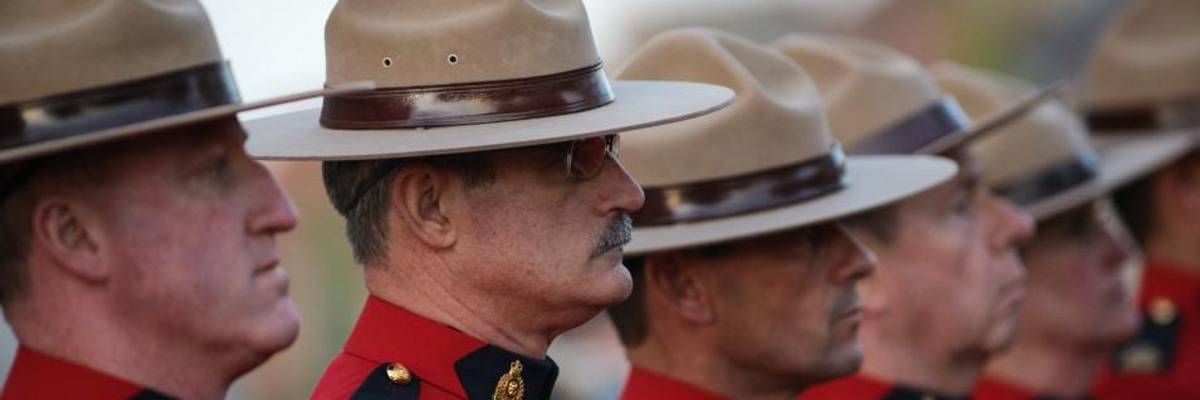
Royal Canadian Mounted Police parade following the Last Post ceremony in front of the Menin Gate Memorial to the Missing on April 6, 2017 in Ypres, Belgium. (Photo: Jack Taylor/Getty Images)
The impartiality of state institutions and international human rights obligations towards Indigenous land defenders are crucial elements in making space for peace.
This is coming to fore after the Hereditary Chiefs of the Wet'suwet'en Nation recently evicted TC Energy/Coastal GasLink from their territories in British Columbia. The Hereditary Chiefs have not given their free, prior, and informed consent to the construction of the Coastal GasLink fracked gas pipeline on their lands.
On Jan. 7, the Canadian Press reported that the United Nations Committee on the Elimination of Racial Discrimination had called for the RCMP and other security and police to withdraw from Wet'suwet'en traditional lands.
On Jan. 8, the RCMP stated: "We want to emphasize that we are impartial in this dispute and our priority is to facilitate a dialogue between the various stakeholders involved. We remain hopeful that these efforts will result in a resolution."
That statement from the RCMP merits examination.
On Jan. 7, 2019, heavily armed RCMP officers raided the Gidimt'en checkpoint situated within the Wet'suwet'en Nation. By Jan. 10, the Hereditary Chiefs said they would open the Unist'ot'en checkpoint to avoid further police violence.
The Guardian subsequently reported, "Canadian police were prepared to shoot Indigenous land defenders blockading construction of a natural gas pipeline in northern British Columbia... The RCMP commanders also instructed officers to 'use as much violence toward the gate as you want'... The RCMP were [also] prepared to arrest children and grandparents."
This despite, the article notes, police intelligence reporting "no single threat indicating that [land defenders] will use firearms."
Furthermore, Bruce McIvor, principal of First Peoples Law Corporation, has commented, "The sight of heavily armed RCMP officers scaling the checkpoint and forcibly subduing Indigenous people shakes and threatens constitutional legal principles painstakingly developed through a series of Supreme Court of Canada decisions including Calder (1973), Delgamuukw (1997), Marshall/Bernard (2005), and Tsilhqot'in (2014)."
On Oct. 17, 2013, hundreds of RCMP officers lined up across a road near a protest encampment established by the Elsipogtog First Nation in New Brunswick. Mi'kmaq land defenders had established the camp in opposition to seismic testing for fracking being conducted on their territories by Houston-based SWN Resources.
The following day, Vice reported, "what started out as a peaceful demonstration held by members of First Nations tribes turned into what resembled a war zone after the RCMP showed up with guns, Tasers, and dogs yesterday in New Brunswick, leading to five police cars getting torched and 40 people being arrested on charges ranging from intimidation, uttering threats, and mischief."
In September 2019, the CBC reported, "the independent Civilian Review and Complaints Commission investigated complaints about police conduct during the protests... In an email, a spokesperson for the commission confirmed the... report was delivered to the RCMP last March. When the RCMP commissioner's office reacts, the commission will prepare its final report, the spokesperson said."
There are concerns, as with the example noted below, that this is a delay tactic.
On March 7, 2014, the British Columbia Civil Liberties Association noted that it had "filed two complaints today against the Canadian Security Intelligence Service (CSIS) and the Royal Canadian Mounted Police (RCMP). The complaints allege that the two agencies illegally monitored and spied on the peaceful and democratic activities of community groups and First Nations opposed to the Enbridge Northern Gateway Pipeline project."
The BCCLA media release adds, "The BCCLA alleges that the RCMP and CSIS interfered with the freedoms of expression, assembly, and association protected by the Charter of Rights and Freedoms by gathering intelligence about citizens opposed to the Enbridge project through a range of sources."
The Civilian Review and Complaints Commission investigated the matter and sent its report to the RCMP for their comments in June 2017.
By August 2019, the CBC reported, "the RCMP has been sitting for two years on a watchdog report into alleged Mountie surveillance of anti-oil protesters, a civil liberties group charges... The commission cannot prepare a final report until the RCMP commissioner responds, which also means the findings can't be disclosed to the civil liberties association or the public."
In February 2015, The Globe and Mail reported on an RCMP intelligence assessment--dated Jan. 24, 2014--obtained by Greenpeace.
That article notes, "The report extolls the value of the oil and gas sector to the Canadian economy, and adds that many environmentalists 'claim' that climate change is the most serious global environmental threat, and 'claim' it is a direct consequence of human activity and is 'reportedly' linked to the use of fossil fuels."
In response to that RCMP report, Clayton Thomas-Muller, a member of the Mathais Colomb Cree Nation and a campaigner with 350.org, commented, "I think that attempted criminalization of indigenous dissent in this country is nothing new."
The RCMP falls under the jurisdiction of the federal Minister of Public Safety Bill Blair.
Rachel LaFortune, a legal fellow with Amnesty International Canada, has written: "International human rights law requires governments to respect, protect, and promote the right of Indigenous peoples to make their own decisions about their lives and futures according to their own customs and traditions. This obligation flows from the right of self-determination, which lies at the heart of the U.N. Declaration on the Rights of Indigenous Peoples."
As the world watches the Wet'suwet'en Nation, it is essential that Canada uphold its constitutional and international human rights obligations.
Dear Common Dreams reader, It’s been nearly 30 years since I co-founded Common Dreams with my late wife, Lina Newhouser. We had the radical notion that journalism should serve the public good, not corporate profits. It was clear to us from the outset what it would take to build such a project. No paid advertisements. No corporate sponsors. No millionaire publisher telling us what to think or do. Many people said we wouldn't last a year, but we proved those doubters wrong. Together with a tremendous team of journalists and dedicated staff, we built an independent media outlet free from the constraints of profits and corporate control. Our mission has always been simple: To inform. To inspire. To ignite change for the common good. Building Common Dreams was not easy. Our survival was never guaranteed. When you take on the most powerful forces—Wall Street greed, fossil fuel industry destruction, Big Tech lobbyists, and uber-rich oligarchs who have spent billions upon billions rigging the economy and democracy in their favor—the only bulwark you have is supporters who believe in your work. But here’s the urgent message from me today. It's never been this bad out there. And it's never been this hard to keep us going. At the very moment Common Dreams is most needed, the threats we face are intensifying. We need your support now more than ever. We don't accept corporate advertising and never will. We don't have a paywall because we don't think people should be blocked from critical news based on their ability to pay. Everything we do is funded by the donations of readers like you. When everyone does the little they can afford, we are strong. But if that support retreats or dries up, so do we. Will you donate now to make sure Common Dreams not only survives but thrives? —Craig Brown, Co-founder |
The impartiality of state institutions and international human rights obligations towards Indigenous land defenders are crucial elements in making space for peace.
This is coming to fore after the Hereditary Chiefs of the Wet'suwet'en Nation recently evicted TC Energy/Coastal GasLink from their territories in British Columbia. The Hereditary Chiefs have not given their free, prior, and informed consent to the construction of the Coastal GasLink fracked gas pipeline on their lands.
On Jan. 7, the Canadian Press reported that the United Nations Committee on the Elimination of Racial Discrimination had called for the RCMP and other security and police to withdraw from Wet'suwet'en traditional lands.
On Jan. 8, the RCMP stated: "We want to emphasize that we are impartial in this dispute and our priority is to facilitate a dialogue between the various stakeholders involved. We remain hopeful that these efforts will result in a resolution."
That statement from the RCMP merits examination.
On Jan. 7, 2019, heavily armed RCMP officers raided the Gidimt'en checkpoint situated within the Wet'suwet'en Nation. By Jan. 10, the Hereditary Chiefs said they would open the Unist'ot'en checkpoint to avoid further police violence.
The Guardian subsequently reported, "Canadian police were prepared to shoot Indigenous land defenders blockading construction of a natural gas pipeline in northern British Columbia... The RCMP commanders also instructed officers to 'use as much violence toward the gate as you want'... The RCMP were [also] prepared to arrest children and grandparents."
This despite, the article notes, police intelligence reporting "no single threat indicating that [land defenders] will use firearms."
Furthermore, Bruce McIvor, principal of First Peoples Law Corporation, has commented, "The sight of heavily armed RCMP officers scaling the checkpoint and forcibly subduing Indigenous people shakes and threatens constitutional legal principles painstakingly developed through a series of Supreme Court of Canada decisions including Calder (1973), Delgamuukw (1997), Marshall/Bernard (2005), and Tsilhqot'in (2014)."
On Oct. 17, 2013, hundreds of RCMP officers lined up across a road near a protest encampment established by the Elsipogtog First Nation in New Brunswick. Mi'kmaq land defenders had established the camp in opposition to seismic testing for fracking being conducted on their territories by Houston-based SWN Resources.
The following day, Vice reported, "what started out as a peaceful demonstration held by members of First Nations tribes turned into what resembled a war zone after the RCMP showed up with guns, Tasers, and dogs yesterday in New Brunswick, leading to five police cars getting torched and 40 people being arrested on charges ranging from intimidation, uttering threats, and mischief."
In September 2019, the CBC reported, "the independent Civilian Review and Complaints Commission investigated complaints about police conduct during the protests... In an email, a spokesperson for the commission confirmed the... report was delivered to the RCMP last March. When the RCMP commissioner's office reacts, the commission will prepare its final report, the spokesperson said."
There are concerns, as with the example noted below, that this is a delay tactic.
On March 7, 2014, the British Columbia Civil Liberties Association noted that it had "filed two complaints today against the Canadian Security Intelligence Service (CSIS) and the Royal Canadian Mounted Police (RCMP). The complaints allege that the two agencies illegally monitored and spied on the peaceful and democratic activities of community groups and First Nations opposed to the Enbridge Northern Gateway Pipeline project."
The BCCLA media release adds, "The BCCLA alleges that the RCMP and CSIS interfered with the freedoms of expression, assembly, and association protected by the Charter of Rights and Freedoms by gathering intelligence about citizens opposed to the Enbridge project through a range of sources."
The Civilian Review and Complaints Commission investigated the matter and sent its report to the RCMP for their comments in June 2017.
By August 2019, the CBC reported, "the RCMP has been sitting for two years on a watchdog report into alleged Mountie surveillance of anti-oil protesters, a civil liberties group charges... The commission cannot prepare a final report until the RCMP commissioner responds, which also means the findings can't be disclosed to the civil liberties association or the public."
In February 2015, The Globe and Mail reported on an RCMP intelligence assessment--dated Jan. 24, 2014--obtained by Greenpeace.
That article notes, "The report extolls the value of the oil and gas sector to the Canadian economy, and adds that many environmentalists 'claim' that climate change is the most serious global environmental threat, and 'claim' it is a direct consequence of human activity and is 'reportedly' linked to the use of fossil fuels."
In response to that RCMP report, Clayton Thomas-Muller, a member of the Mathais Colomb Cree Nation and a campaigner with 350.org, commented, "I think that attempted criminalization of indigenous dissent in this country is nothing new."
The RCMP falls under the jurisdiction of the federal Minister of Public Safety Bill Blair.
Rachel LaFortune, a legal fellow with Amnesty International Canada, has written: "International human rights law requires governments to respect, protect, and promote the right of Indigenous peoples to make their own decisions about their lives and futures according to their own customs and traditions. This obligation flows from the right of self-determination, which lies at the heart of the U.N. Declaration on the Rights of Indigenous Peoples."
As the world watches the Wet'suwet'en Nation, it is essential that Canada uphold its constitutional and international human rights obligations.
The impartiality of state institutions and international human rights obligations towards Indigenous land defenders are crucial elements in making space for peace.
This is coming to fore after the Hereditary Chiefs of the Wet'suwet'en Nation recently evicted TC Energy/Coastal GasLink from their territories in British Columbia. The Hereditary Chiefs have not given their free, prior, and informed consent to the construction of the Coastal GasLink fracked gas pipeline on their lands.
On Jan. 7, the Canadian Press reported that the United Nations Committee on the Elimination of Racial Discrimination had called for the RCMP and other security and police to withdraw from Wet'suwet'en traditional lands.
On Jan. 8, the RCMP stated: "We want to emphasize that we are impartial in this dispute and our priority is to facilitate a dialogue between the various stakeholders involved. We remain hopeful that these efforts will result in a resolution."
That statement from the RCMP merits examination.
On Jan. 7, 2019, heavily armed RCMP officers raided the Gidimt'en checkpoint situated within the Wet'suwet'en Nation. By Jan. 10, the Hereditary Chiefs said they would open the Unist'ot'en checkpoint to avoid further police violence.
The Guardian subsequently reported, "Canadian police were prepared to shoot Indigenous land defenders blockading construction of a natural gas pipeline in northern British Columbia... The RCMP commanders also instructed officers to 'use as much violence toward the gate as you want'... The RCMP were [also] prepared to arrest children and grandparents."
This despite, the article notes, police intelligence reporting "no single threat indicating that [land defenders] will use firearms."
Furthermore, Bruce McIvor, principal of First Peoples Law Corporation, has commented, "The sight of heavily armed RCMP officers scaling the checkpoint and forcibly subduing Indigenous people shakes and threatens constitutional legal principles painstakingly developed through a series of Supreme Court of Canada decisions including Calder (1973), Delgamuukw (1997), Marshall/Bernard (2005), and Tsilhqot'in (2014)."
On Oct. 17, 2013, hundreds of RCMP officers lined up across a road near a protest encampment established by the Elsipogtog First Nation in New Brunswick. Mi'kmaq land defenders had established the camp in opposition to seismic testing for fracking being conducted on their territories by Houston-based SWN Resources.
The following day, Vice reported, "what started out as a peaceful demonstration held by members of First Nations tribes turned into what resembled a war zone after the RCMP showed up with guns, Tasers, and dogs yesterday in New Brunswick, leading to five police cars getting torched and 40 people being arrested on charges ranging from intimidation, uttering threats, and mischief."
In September 2019, the CBC reported, "the independent Civilian Review and Complaints Commission investigated complaints about police conduct during the protests... In an email, a spokesperson for the commission confirmed the... report was delivered to the RCMP last March. When the RCMP commissioner's office reacts, the commission will prepare its final report, the spokesperson said."
There are concerns, as with the example noted below, that this is a delay tactic.
On March 7, 2014, the British Columbia Civil Liberties Association noted that it had "filed two complaints today against the Canadian Security Intelligence Service (CSIS) and the Royal Canadian Mounted Police (RCMP). The complaints allege that the two agencies illegally monitored and spied on the peaceful and democratic activities of community groups and First Nations opposed to the Enbridge Northern Gateway Pipeline project."
The BCCLA media release adds, "The BCCLA alleges that the RCMP and CSIS interfered with the freedoms of expression, assembly, and association protected by the Charter of Rights and Freedoms by gathering intelligence about citizens opposed to the Enbridge project through a range of sources."
The Civilian Review and Complaints Commission investigated the matter and sent its report to the RCMP for their comments in June 2017.
By August 2019, the CBC reported, "the RCMP has been sitting for two years on a watchdog report into alleged Mountie surveillance of anti-oil protesters, a civil liberties group charges... The commission cannot prepare a final report until the RCMP commissioner responds, which also means the findings can't be disclosed to the civil liberties association or the public."
In February 2015, The Globe and Mail reported on an RCMP intelligence assessment--dated Jan. 24, 2014--obtained by Greenpeace.
That article notes, "The report extolls the value of the oil and gas sector to the Canadian economy, and adds that many environmentalists 'claim' that climate change is the most serious global environmental threat, and 'claim' it is a direct consequence of human activity and is 'reportedly' linked to the use of fossil fuels."
In response to that RCMP report, Clayton Thomas-Muller, a member of the Mathais Colomb Cree Nation and a campaigner with 350.org, commented, "I think that attempted criminalization of indigenous dissent in this country is nothing new."
The RCMP falls under the jurisdiction of the federal Minister of Public Safety Bill Blair.
Rachel LaFortune, a legal fellow with Amnesty International Canada, has written: "International human rights law requires governments to respect, protect, and promote the right of Indigenous peoples to make their own decisions about their lives and futures according to their own customs and traditions. This obligation flows from the right of self-determination, which lies at the heart of the U.N. Declaration on the Rights of Indigenous Peoples."
As the world watches the Wet'suwet'en Nation, it is essential that Canada uphold its constitutional and international human rights obligations.