SUBSCRIBE TO OUR FREE NEWSLETTER
Daily news & progressive opinion—funded by the people, not the corporations—delivered straight to your inbox.
5
#000000
#FFFFFF
To donate by check, phone, or other method, see our More Ways to Give page.
Daily news & progressive opinion—funded by the people, not the corporations—delivered straight to your inbox.

The Ferry Building is seen as crowds march up Market Street during the "Rise For Climate" global action on September 8, 2018 in downtown San Francisco, California. - "Rise For Climate" is a global day of action demanding real climate solutions from local leaders. (Photo: Amy Osborne / AFP / Getty Images)
There's no shortage of solutions to the climate crisis. Rapidly developing clean-energy technology, reducing energy consumption and waste, increasing efficiency, reforming agricultural practices and protecting and restoring forests and wetlands all put us on a path to cleaner air, water and soil, healthier biodiversity and lower climate-altering greenhouse gas emissions.
Clean-energy technologies, including energy-storage methods, are improving as costs are dropping. Exciting new inventions like artificial photosynthesis, machines that remove atmospheric carbon to create fuels and windows that convert light to electricity show what people are capable of when we put our minds to resolving challenges.
It's critical that we continue to develop, deploy and scale up solutions, so why are we still mired in outdated ways and business as usual? For decades, experts have been warning about the consequences of rapidly burning fossil fuels, yet greenhouse gas emissions continue to rise as the planet heats up faster.
Europe is in the midst of a record heat wave; Chennai, India, has run out of water; farmers in Canada and the U.S. are seeing diminishing returns after prolonged droughts; refugees are flooding borders as extreme conditions, water scarcity and failing agriculture increase conflict and displace millions -- all caused or exacerbated by climate change. Even in rainy Vancouver where I live, the city implemented early water restrictions when the usual spring showers didn't arrive.
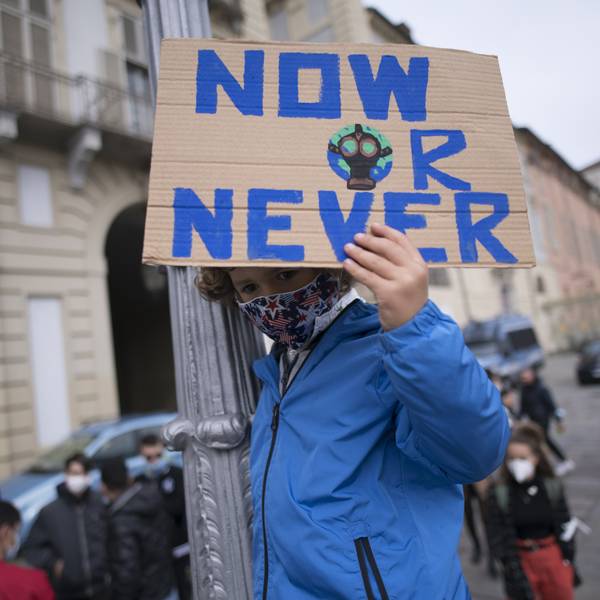
People and organizations from the entire spectrum of society are calling for action. Students are marching in the streets, progressive decision-makers are putting climate disruption at the top of the political agenda, and Indigenous Peoples are asserting their rights to protect lands and waters from fossil fuel projects.
In the U.S., more than 70 leading health organizations -- including the American Medical Association, Lung Association, Heart Association and College of Physicians -- issued a statement urging political candidates "to recognize climate change as a health emergency." The Canadian Medical Association, Nurses Association, Public Health Association, Association of Physicians for the Environment and the Urban Public Health Network issued a similar statement.
To their credit, every major political party in Canada has a climate plan, some more detailed than others, and the current federal government has implemented many strong policies, despite its continued approval of fossil fuel projects. But we're still not on track to meet our Paris Agreement commitments.
Here and elsewhere, the fossil fuel industry still rules, enjoying massive government subsidies and tax breaks and government and media promotion. If we understand the problem and its urgency -- and mountains of scientific evidence amassed from around the world over decades confirms we do -- and we have solutions, why are we so slow to act?
Astonishingly, despite the overwhelming evidence and what people worldwide are clearly experiencing, many still refuse to believe there's a problem, or if there is, that's it's human-caused or urgent. Some may be overcome with denial in the face of such frightening prospects; others have been duped by continuing efforts of the fossil fuel industry and its media and government advocates to cast doubt on the evidence. Some may realize the problem exists but choose to elevate short-term profits and economic gains above the conditions we need for health and survival. Some people are afraid that the necessary changes will cause too much disruption -- a prospect that becomes more likely the longer we delay. Others are unwilling to admit that our prevailing economic paradigms no longer fit current conditions.
Fortunately, many people and organizations are refusing to let the barriers stop them. Many reject the propaganda and conspiracy theories and are working hard to develop and implement solutions, and to demand better of our elected representatives.
We're at a pivotal point. Fossil fuels, plastics and private automobiles have brought benefits to many parts of the world, but our wasteful, consumer-oriented ways have also created enormous challenges for humanity. The Intergovernmental Panel on Climate Change warns we have less than a dozen years to cut emissions so they don't build to a point that puts us on a path to climate catastrophe. Resolving the issue will offer numerous other benefits, from cleaner air and better health to greater innovation and equality.
It's time for us all to accept reality and work together to address the challenge.
Written by David Suzuki with contributions from Senior Editor and Writer Ian Hanington.
This country and this world are at a monumental crossroads. US voters have an opportunity to beat back the forces of fascism and confront the billionaires who are rigging the economy, our media system, and our democracy, making it increasingly impossible for ordinary people to get by. We’re not just talking about the election. We’re talking about what must be done once these fascist elements are vanquished from power. We need a bolder set of solutions than what either major party has so far been willing to offer and a working-class movement ready to fight like hell for it. Trump didn't emerge from nowhere. The conditions that fueled MAGA authoritarianism were created by decades of radical neoliberal economic policies and a corrupt political system dominated by corporate interests. They slashed taxes on the super-rich, promising that the benefits would trickle down. They said giveaways to the corporate titans would make life more affordable for the rest of us. It was all bullshit. And when a bitter, betrayed populace searches for someone to blame, right-wing demagogues have little trouble finding scapegoats. People know when they're being lied to, but you won't hear any of this from the corporate media. Only independent journalism—powered and funded by people who believe in building a better world—can deliver truly trustworthy daily news. If you share our vision, please contribute whatever you can to sustain our work. |
There's no shortage of solutions to the climate crisis. Rapidly developing clean-energy technology, reducing energy consumption and waste, increasing efficiency, reforming agricultural practices and protecting and restoring forests and wetlands all put us on a path to cleaner air, water and soil, healthier biodiversity and lower climate-altering greenhouse gas emissions.
Clean-energy technologies, including energy-storage methods, are improving as costs are dropping. Exciting new inventions like artificial photosynthesis, machines that remove atmospheric carbon to create fuels and windows that convert light to electricity show what people are capable of when we put our minds to resolving challenges.
It's critical that we continue to develop, deploy and scale up solutions, so why are we still mired in outdated ways and business as usual? For decades, experts have been warning about the consequences of rapidly burning fossil fuels, yet greenhouse gas emissions continue to rise as the planet heats up faster.
Europe is in the midst of a record heat wave; Chennai, India, has run out of water; farmers in Canada and the U.S. are seeing diminishing returns after prolonged droughts; refugees are flooding borders as extreme conditions, water scarcity and failing agriculture increase conflict and displace millions -- all caused or exacerbated by climate change. Even in rainy Vancouver where I live, the city implemented early water restrictions when the usual spring showers didn't arrive.
People and organizations from the entire spectrum of society are calling for action. Students are marching in the streets, progressive decision-makers are putting climate disruption at the top of the political agenda, and Indigenous Peoples are asserting their rights to protect lands and waters from fossil fuel projects.
In the U.S., more than 70 leading health organizations -- including the American Medical Association, Lung Association, Heart Association and College of Physicians -- issued a statement urging political candidates "to recognize climate change as a health emergency." The Canadian Medical Association, Nurses Association, Public Health Association, Association of Physicians for the Environment and the Urban Public Health Network issued a similar statement.
To their credit, every major political party in Canada has a climate plan, some more detailed than others, and the current federal government has implemented many strong policies, despite its continued approval of fossil fuel projects. But we're still not on track to meet our Paris Agreement commitments.
Here and elsewhere, the fossil fuel industry still rules, enjoying massive government subsidies and tax breaks and government and media promotion. If we understand the problem and its urgency -- and mountains of scientific evidence amassed from around the world over decades confirms we do -- and we have solutions, why are we so slow to act?
Astonishingly, despite the overwhelming evidence and what people worldwide are clearly experiencing, many still refuse to believe there's a problem, or if there is, that's it's human-caused or urgent. Some may be overcome with denial in the face of such frightening prospects; others have been duped by continuing efforts of the fossil fuel industry and its media and government advocates to cast doubt on the evidence. Some may realize the problem exists but choose to elevate short-term profits and economic gains above the conditions we need for health and survival. Some people are afraid that the necessary changes will cause too much disruption -- a prospect that becomes more likely the longer we delay. Others are unwilling to admit that our prevailing economic paradigms no longer fit current conditions.
Fortunately, many people and organizations are refusing to let the barriers stop them. Many reject the propaganda and conspiracy theories and are working hard to develop and implement solutions, and to demand better of our elected representatives.
We're at a pivotal point. Fossil fuels, plastics and private automobiles have brought benefits to many parts of the world, but our wasteful, consumer-oriented ways have also created enormous challenges for humanity. The Intergovernmental Panel on Climate Change warns we have less than a dozen years to cut emissions so they don't build to a point that puts us on a path to climate catastrophe. Resolving the issue will offer numerous other benefits, from cleaner air and better health to greater innovation and equality.
It's time for us all to accept reality and work together to address the challenge.
Written by David Suzuki with contributions from Senior Editor and Writer Ian Hanington.