SUBSCRIBE TO OUR FREE NEWSLETTER
Daily news & progressive opinion—funded by the people, not the corporations—delivered straight to your inbox.
5
#000000
#FFFFFF
To donate by check, phone, or other method, see our More Ways to Give page.
Daily news & progressive opinion—funded by the people, not the corporations—delivered straight to your inbox.
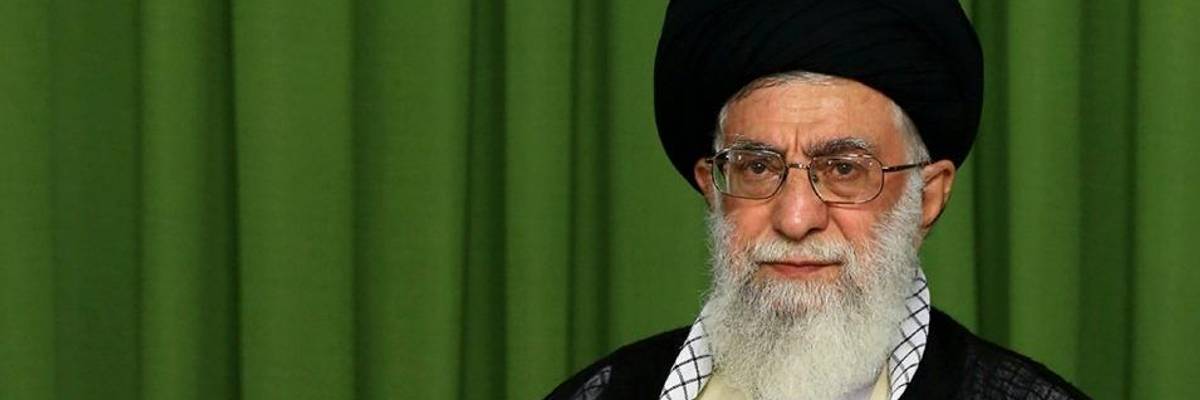
Ayatollah Ali Khamenei, the supreme leader of Iran, has repeatedly said his nation has no desire for a nuclear weapon and would never preemptively invade or attack a foreign nation. (Photo: AP file)
When it comes to Iran, do basic facts matter? Evidently not, since dozens and dozens of journalists keep casually reporting that Iran has a "nuclear weapons program" when it does not--a problem FAIR has reported on over the years (e.g., 9/9/15). Let's take a look at some of the outlets spreading this falsehood in just the past five days:
The problem with all of these excerpts: Iran does not have a nuclear weapons program. It has a civilian nuclear energy program, but not one designed to build weapons. Over 30 countries have civilian nuclear programs; only a handful--including, of course, the US and Israel--have nuclear weapons programs. One is used to power cities, one is used to level them.
If you are skeptical, just refer to a 2007 assessment by all 16 US intelligences agencies (yes, those 16 US intelligence agencies), which found Iran had "halted" its nuclear weapons program. Or look at the same National Intelligence Estimate in 2012, which concluded again that there "is no hard evidence that Iran has decided to build a nuclear bomb." Or we can listen to the Israeli intelligence agency Mossad, which concurred with the US intelligence assessment (Haaretz, 3/18/12).
The "Iran Deal," formally known as the Joint Comprehensive Plan of Action (JCPOA), is built on curbing Iran's civilian nuclear program, out of fear--fair or not--that it could one day morph into a nuclear weapons program. But at present, there is no evidence, much less a consensus, that Iran has an active nuclear weapons program. JCPOA cannot be used as per se evidence such a program exists today; indeed, it is specifically designed to prevent such a program from developing down the road.
A slightly less egregious variant of this canard is when outlets suggest the JCPOA stopped an ongoing existing weapons program--though they don't make the mistake of saying it still exists: The JCPOA "called for the elimination of economic sanctions Iran in exchange for Tehran giving up its nuclear weapons program," USA Today (10/13/17) wrote. US and Israeli intelligence do claim that Iran once had a nuclear weapons program--but they say it ended in 2003, not in 2015 as a result of the JCPOA.
The distinction between nuclear energy and nuclear weapons is, of course, non-trivial. Every time the media mindlessly report Iran has a "nuclear weapons program" rather than a "nuclear program" (or, better, a "nuclear energy" or "nuclear power program"), they further advance the myth that Iran's intentions or "ambitions" are to build a nuclear bomb, which is something we have no evidence it is doing or plans to do--at least since the Ayatollah Ali Khamenei issued a fatwa against building nuclear weapons in 2003 (Foreign Policy, 10/16/14).
So why do some many reporters keep mucking this up? A few reasons: It's just a mantra repeated ad infinitum, and journalists and pundits often mindlessly repeat an oft-repeated phrase. Some, such as nuclear arms expert Jeffrey Lewis at the Center for Nonproliferation Studies at Middlebury Institute, think it's simply an issue of reporters not knowing how to express a complicated idea.
"I often see this point [about the civilian vs weapons program] mangled. I don't think it's malice, just a writer or editor not knowing how to express an idea," he said on social media. "The JCPOA imposes measures that constrain Iran's nuclear energy program to provide confidence that the program remains peaceful," he added, offering an example of how that idea can be expressed.
Another major reason for this recurring falsehood, as FAIR (7/6/17) noted after the New York Times twice "mistakenly" accused Iran of carrying out 9/11 (one of the smears going uncorrected for over three years), is that one can say pretty much anything about Iran without any professional or public backlash. Because Iran is an Official US Enemy, and its motives are therefore always deemed sinister, the idea that it is plotting to violate the Nuclear Non-Proliferation Treaty and build a nuclear weapon is simply taken as a given. The lack of hard evidence for this is irrelevant: Intentions of those in the crosshairs of US power are always presented as cynical and malicious; those of the US and its allies benevolent and in good faith. Iran's sinister motives are simply the default setting--no matter much evidence points to the contrary.
Dear Common Dreams reader, It’s been nearly 30 years since I co-founded Common Dreams with my late wife, Lina Newhouser. We had the radical notion that journalism should serve the public good, not corporate profits. It was clear to us from the outset what it would take to build such a project. No paid advertisements. No corporate sponsors. No millionaire publisher telling us what to think or do. Many people said we wouldn't last a year, but we proved those doubters wrong. Together with a tremendous team of journalists and dedicated staff, we built an independent media outlet free from the constraints of profits and corporate control. Our mission has always been simple: To inform. To inspire. To ignite change for the common good. Building Common Dreams was not easy. Our survival was never guaranteed. When you take on the most powerful forces—Wall Street greed, fossil fuel industry destruction, Big Tech lobbyists, and uber-rich oligarchs who have spent billions upon billions rigging the economy and democracy in their favor—the only bulwark you have is supporters who believe in your work. But here’s the urgent message from me today. It's never been this bad out there. And it's never been this hard to keep us going. At the very moment Common Dreams is most needed, the threats we face are intensifying. We need your support now more than ever. We don't accept corporate advertising and never will. We don't have a paywall because we don't think people should be blocked from critical news based on their ability to pay. Everything we do is funded by the donations of readers like you. When everyone does the little they can afford, we are strong. But if that support retreats or dries up, so do we. Will you donate now to make sure Common Dreams not only survives but thrives? —Craig Brown, Co-founder |
When it comes to Iran, do basic facts matter? Evidently not, since dozens and dozens of journalists keep casually reporting that Iran has a "nuclear weapons program" when it does not--a problem FAIR has reported on over the years (e.g., 9/9/15). Let's take a look at some of the outlets spreading this falsehood in just the past five days:
The problem with all of these excerpts: Iran does not have a nuclear weapons program. It has a civilian nuclear energy program, but not one designed to build weapons. Over 30 countries have civilian nuclear programs; only a handful--including, of course, the US and Israel--have nuclear weapons programs. One is used to power cities, one is used to level them.
If you are skeptical, just refer to a 2007 assessment by all 16 US intelligences agencies (yes, those 16 US intelligence agencies), which found Iran had "halted" its nuclear weapons program. Or look at the same National Intelligence Estimate in 2012, which concluded again that there "is no hard evidence that Iran has decided to build a nuclear bomb." Or we can listen to the Israeli intelligence agency Mossad, which concurred with the US intelligence assessment (Haaretz, 3/18/12).
The "Iran Deal," formally known as the Joint Comprehensive Plan of Action (JCPOA), is built on curbing Iran's civilian nuclear program, out of fear--fair or not--that it could one day morph into a nuclear weapons program. But at present, there is no evidence, much less a consensus, that Iran has an active nuclear weapons program. JCPOA cannot be used as per se evidence such a program exists today; indeed, it is specifically designed to prevent such a program from developing down the road.
A slightly less egregious variant of this canard is when outlets suggest the JCPOA stopped an ongoing existing weapons program--though they don't make the mistake of saying it still exists: The JCPOA "called for the elimination of economic sanctions Iran in exchange for Tehran giving up its nuclear weapons program," USA Today (10/13/17) wrote. US and Israeli intelligence do claim that Iran once had a nuclear weapons program--but they say it ended in 2003, not in 2015 as a result of the JCPOA.
The distinction between nuclear energy and nuclear weapons is, of course, non-trivial. Every time the media mindlessly report Iran has a "nuclear weapons program" rather than a "nuclear program" (or, better, a "nuclear energy" or "nuclear power program"), they further advance the myth that Iran's intentions or "ambitions" are to build a nuclear bomb, which is something we have no evidence it is doing or plans to do--at least since the Ayatollah Ali Khamenei issued a fatwa against building nuclear weapons in 2003 (Foreign Policy, 10/16/14).
So why do some many reporters keep mucking this up? A few reasons: It's just a mantra repeated ad infinitum, and journalists and pundits often mindlessly repeat an oft-repeated phrase. Some, such as nuclear arms expert Jeffrey Lewis at the Center for Nonproliferation Studies at Middlebury Institute, think it's simply an issue of reporters not knowing how to express a complicated idea.
"I often see this point [about the civilian vs weapons program] mangled. I don't think it's malice, just a writer or editor not knowing how to express an idea," he said on social media. "The JCPOA imposes measures that constrain Iran's nuclear energy program to provide confidence that the program remains peaceful," he added, offering an example of how that idea can be expressed.
Another major reason for this recurring falsehood, as FAIR (7/6/17) noted after the New York Times twice "mistakenly" accused Iran of carrying out 9/11 (one of the smears going uncorrected for over three years), is that one can say pretty much anything about Iran without any professional or public backlash. Because Iran is an Official US Enemy, and its motives are therefore always deemed sinister, the idea that it is plotting to violate the Nuclear Non-Proliferation Treaty and build a nuclear weapon is simply taken as a given. The lack of hard evidence for this is irrelevant: Intentions of those in the crosshairs of US power are always presented as cynical and malicious; those of the US and its allies benevolent and in good faith. Iran's sinister motives are simply the default setting--no matter much evidence points to the contrary.
When it comes to Iran, do basic facts matter? Evidently not, since dozens and dozens of journalists keep casually reporting that Iran has a "nuclear weapons program" when it does not--a problem FAIR has reported on over the years (e.g., 9/9/15). Let's take a look at some of the outlets spreading this falsehood in just the past five days:
The problem with all of these excerpts: Iran does not have a nuclear weapons program. It has a civilian nuclear energy program, but not one designed to build weapons. Over 30 countries have civilian nuclear programs; only a handful--including, of course, the US and Israel--have nuclear weapons programs. One is used to power cities, one is used to level them.
If you are skeptical, just refer to a 2007 assessment by all 16 US intelligences agencies (yes, those 16 US intelligence agencies), which found Iran had "halted" its nuclear weapons program. Or look at the same National Intelligence Estimate in 2012, which concluded again that there "is no hard evidence that Iran has decided to build a nuclear bomb." Or we can listen to the Israeli intelligence agency Mossad, which concurred with the US intelligence assessment (Haaretz, 3/18/12).
The "Iran Deal," formally known as the Joint Comprehensive Plan of Action (JCPOA), is built on curbing Iran's civilian nuclear program, out of fear--fair or not--that it could one day morph into a nuclear weapons program. But at present, there is no evidence, much less a consensus, that Iran has an active nuclear weapons program. JCPOA cannot be used as per se evidence such a program exists today; indeed, it is specifically designed to prevent such a program from developing down the road.
A slightly less egregious variant of this canard is when outlets suggest the JCPOA stopped an ongoing existing weapons program--though they don't make the mistake of saying it still exists: The JCPOA "called for the elimination of economic sanctions Iran in exchange for Tehran giving up its nuclear weapons program," USA Today (10/13/17) wrote. US and Israeli intelligence do claim that Iran once had a nuclear weapons program--but they say it ended in 2003, not in 2015 as a result of the JCPOA.
The distinction between nuclear energy and nuclear weapons is, of course, non-trivial. Every time the media mindlessly report Iran has a "nuclear weapons program" rather than a "nuclear program" (or, better, a "nuclear energy" or "nuclear power program"), they further advance the myth that Iran's intentions or "ambitions" are to build a nuclear bomb, which is something we have no evidence it is doing or plans to do--at least since the Ayatollah Ali Khamenei issued a fatwa against building nuclear weapons in 2003 (Foreign Policy, 10/16/14).
So why do some many reporters keep mucking this up? A few reasons: It's just a mantra repeated ad infinitum, and journalists and pundits often mindlessly repeat an oft-repeated phrase. Some, such as nuclear arms expert Jeffrey Lewis at the Center for Nonproliferation Studies at Middlebury Institute, think it's simply an issue of reporters not knowing how to express a complicated idea.
"I often see this point [about the civilian vs weapons program] mangled. I don't think it's malice, just a writer or editor not knowing how to express an idea," he said on social media. "The JCPOA imposes measures that constrain Iran's nuclear energy program to provide confidence that the program remains peaceful," he added, offering an example of how that idea can be expressed.
Another major reason for this recurring falsehood, as FAIR (7/6/17) noted after the New York Times twice "mistakenly" accused Iran of carrying out 9/11 (one of the smears going uncorrected for over three years), is that one can say pretty much anything about Iran without any professional or public backlash. Because Iran is an Official US Enemy, and its motives are therefore always deemed sinister, the idea that it is plotting to violate the Nuclear Non-Proliferation Treaty and build a nuclear weapon is simply taken as a given. The lack of hard evidence for this is irrelevant: Intentions of those in the crosshairs of US power are always presented as cynical and malicious; those of the US and its allies benevolent and in good faith. Iran's sinister motives are simply the default setting--no matter much evidence points to the contrary.