SUBSCRIBE TO OUR FREE NEWSLETTER
Daily news & progressive opinion—funded by the people, not the corporations—delivered straight to your inbox.
5
#000000
#FFFFFF
To donate by check, phone, or other method, see our More Ways to Give page.

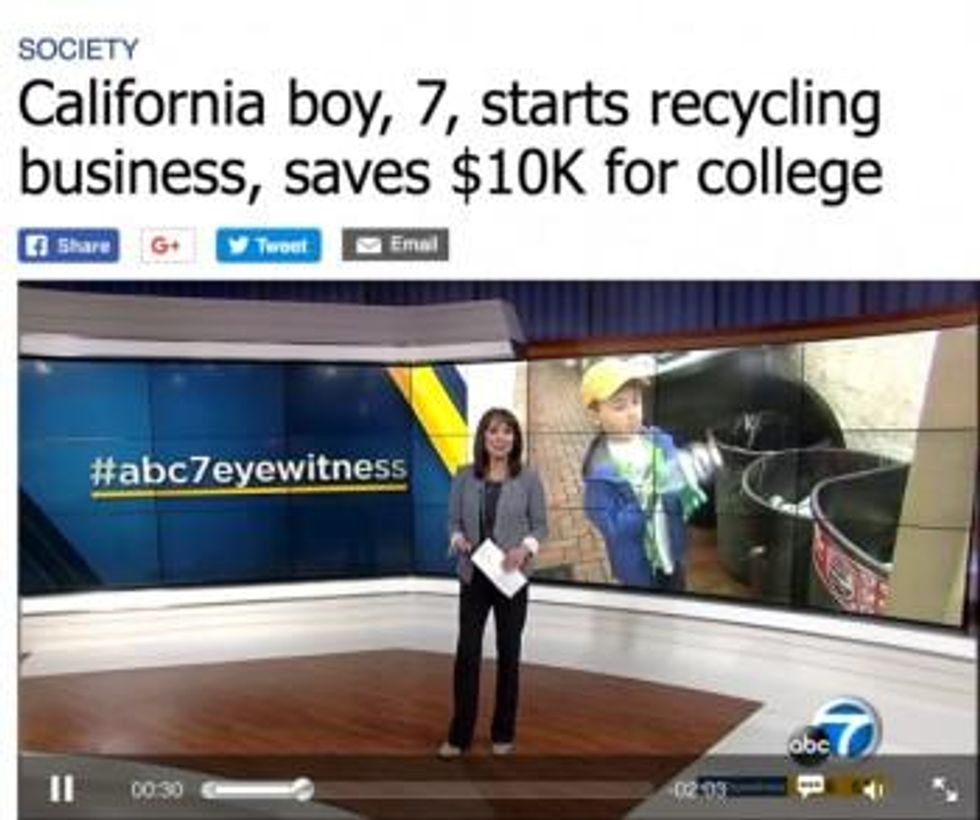
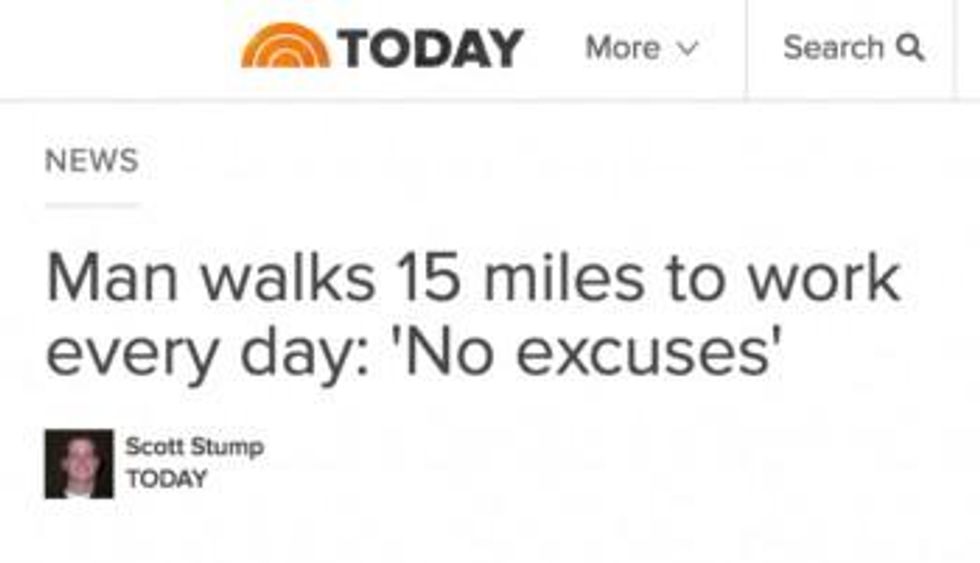
You've seen or heard or read the personal interest story a thousand times: An enterprising seven-year-old collects cans to save for college (ABC7, 2/8/17), a man with unmatched moxie walks 15 miles to his job (Today, 2/20/17), a low-wage worker buys shoes for a kid whose mother can't afford them (Fox5, 12/14/16), an "inspiring teen" goes right back to work after being injured in a car accident (CBS News, 12/16/16). All heartwarming tales of perseverance in the face of impossible odds--and all ideological agitprop meant to obscure and decontextualize the harsh reality of dog-eat-dog capitalism.
These stories are typically shared for the purposes of poor-shaming, typically under the guise of inspirational life advice. "This man is proof we all just need to keep walking, no matter what life throws at us," insisted Denver ABC7 anchor Anne Trujillo, after sharing one of those stories of a poor person forced to walk thousands of miles a year to survive.
A healthy press would take these anecdotes of "can do" spirit and ask bigger questions, like why are these people forced into such absurd hardship? Who benefits from skyrocketing college costs? Why does the public transit in this person's city not have subsidies for the poor? Why aren't employers forced to offer time off for catastrophic accidents? But time and again, the media mindlessly tells the bootstrap human interest story, never questioning the underlying system at work.
One particularly vulgar example was CBS News (12/16/16) referring to an "inspiring" African-American kid who had to work at his fast food job with an arm sling and a neck brace after a car accident. To compound the perseverance porn, he was, at least in part, doing so to help donate to a local homeless charity. Here we have a story highlighting how society has colossally failed its most vulnerable populations--the poor, ethnic minorities,children and the homeless--and the take-home point is, "Ah gee, look at that scrappy kid."
Journalism is as much--if not more--about what isn't reported as what is. Here a local reporter is faced with a cruel example of people falling through the cracks of the richest country on Earth, and their only contribution is to cherry-pick one guy who managed--just barely--to cling on to the edge.
It's part of a broader media culture of anecdotes in lieu of the macro, moralizing "success" rather than questioning systemic problems. Perseverance porn may seem harmless, but in highlighting handpicked cases of people overcoming hardship without showing the thousands that didn't--much less asking broader questions as to what created these conditions--the media traffics in decidedly right-wing tropes. After all, if they can do it, so can you--right?
You've seen or heard or read the personal interest story a thousand times: An enterprising seven-year-old collects cans to save for college (ABC7, 2/8/17), a man with unmatched moxie walks 15 miles to his job (Today, 2/20/17), a low-wage worker buys shoes for a kid whose mother can't afford them (Fox5, 12/14/16), an "inspiring teen" goes right back to work after being injured in a car accident (CBS News, 12/16/16). All heartwarming tales of perseverance in the face of impossible odds--and all ideological agitprop meant to obscure and decontextualize the harsh reality of dog-eat-dog capitalism.
These stories are typically shared for the purposes of poor-shaming, typically under the guise of inspirational life advice. "This man is proof we all just need to keep walking, no matter what life throws at us," insisted Denver ABC7 anchor Anne Trujillo, after sharing one of those stories of a poor person forced to walk thousands of miles a year to survive.
A healthy press would take these anecdotes of "can do" spirit and ask bigger questions, like why are these people forced into such absurd hardship? Who benefits from skyrocketing college costs? Why does the public transit in this person's city not have subsidies for the poor? Why aren't employers forced to offer time off for catastrophic accidents? But time and again, the media mindlessly tells the bootstrap human interest story, never questioning the underlying system at work.
One particularly vulgar example was CBS News (12/16/16) referring to an "inspiring" African-American kid who had to work at his fast food job with an arm sling and a neck brace after a car accident. To compound the perseverance porn, he was, at least in part, doing so to help donate to a local homeless charity. Here we have a story highlighting how society has colossally failed its most vulnerable populations--the poor, ethnic minorities,children and the homeless--and the take-home point is, "Ah gee, look at that scrappy kid."
Journalism is as much--if not more--about what isn't reported as what is. Here a local reporter is faced with a cruel example of people falling through the cracks of the richest country on Earth, and their only contribution is to cherry-pick one guy who managed--just barely--to cling on to the edge.
It's part of a broader media culture of anecdotes in lieu of the macro, moralizing "success" rather than questioning systemic problems. Perseverance porn may seem harmless, but in highlighting handpicked cases of people overcoming hardship without showing the thousands that didn't--much less asking broader questions as to what created these conditions--the media traffics in decidedly right-wing tropes. After all, if they can do it, so can you--right?
You've seen or heard or read the personal interest story a thousand times: An enterprising seven-year-old collects cans to save for college (ABC7, 2/8/17), a man with unmatched moxie walks 15 miles to his job (Today, 2/20/17), a low-wage worker buys shoes for a kid whose mother can't afford them (Fox5, 12/14/16), an "inspiring teen" goes right back to work after being injured in a car accident (CBS News, 12/16/16). All heartwarming tales of perseverance in the face of impossible odds--and all ideological agitprop meant to obscure and decontextualize the harsh reality of dog-eat-dog capitalism.
These stories are typically shared for the purposes of poor-shaming, typically under the guise of inspirational life advice. "This man is proof we all just need to keep walking, no matter what life throws at us," insisted Denver ABC7 anchor Anne Trujillo, after sharing one of those stories of a poor person forced to walk thousands of miles a year to survive.
A healthy press would take these anecdotes of "can do" spirit and ask bigger questions, like why are these people forced into such absurd hardship? Who benefits from skyrocketing college costs? Why does the public transit in this person's city not have subsidies for the poor? Why aren't employers forced to offer time off for catastrophic accidents? But time and again, the media mindlessly tells the bootstrap human interest story, never questioning the underlying system at work.
One particularly vulgar example was CBS News (12/16/16) referring to an "inspiring" African-American kid who had to work at his fast food job with an arm sling and a neck brace after a car accident. To compound the perseverance porn, he was, at least in part, doing so to help donate to a local homeless charity. Here we have a story highlighting how society has colossally failed its most vulnerable populations--the poor, ethnic minorities,children and the homeless--and the take-home point is, "Ah gee, look at that scrappy kid."
Journalism is as much--if not more--about what isn't reported as what is. Here a local reporter is faced with a cruel example of people falling through the cracks of the richest country on Earth, and their only contribution is to cherry-pick one guy who managed--just barely--to cling on to the edge.
It's part of a broader media culture of anecdotes in lieu of the macro, moralizing "success" rather than questioning systemic problems. Perseverance porn may seem harmless, but in highlighting handpicked cases of people overcoming hardship without showing the thousands that didn't--much less asking broader questions as to what created these conditions--the media traffics in decidedly right-wing tropes. After all, if they can do it, so can you--right?