Trump Signs Bill to Roll Back Privacy Rules into Law
A measure to roll back crucial privacy protections has crossed the finish line, and Internet users are worse off for it.
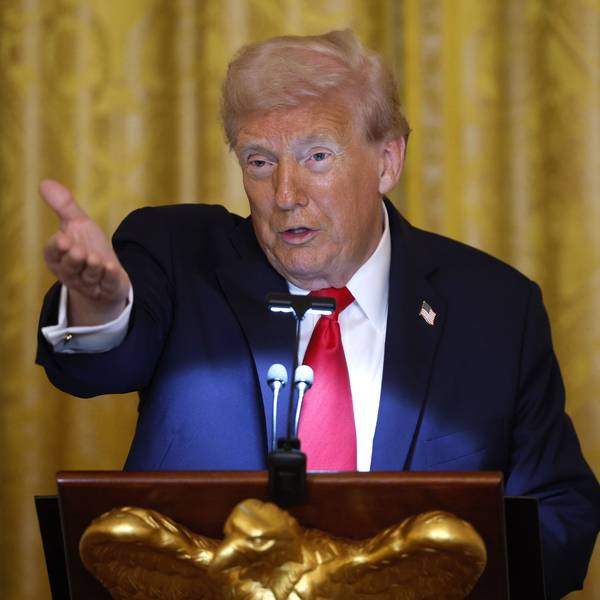
Despite massive backlash from the American people, Congress passed and President Donald Trump signed into law a resolution that repeals the Federal Communications Commission (FCC) rules to protect consumers from privacy invasions by their Internet service providers (ISPs) like Comcast, AT&T, Verizon, and Time Warner Cable.
The rules--which codified and expanded on existing online privacy protections--were passed by the FCC in October of last year and set to go into effect later this year. They would have kept ISPs from selling customers' data and using new invasive ways to track and deliver targeted ads to customers. Additionally, the rules would have required those companies to protect customers' data against hackers.
Tens of thousands of people called on lawmakers to protect those rules, but Republicans in Congress repealed them by narrowly passing a Congressional Review Act resolution.
That measure not only repeals the rules, it also prevents the FCC from writing similar rules in the future, throwing into question how much the FCC can do to police ISPs looking to trade off their customers' privacy for higher profits. Because of the current legal landscape, the FTC can't police ISPs either, leaving customers without a federal agency that can clearly protect them in this space.
We'll continue pushing for these specific privacy protections where we can. We urge state lawmakers and technology providers to look for ways to shore up individual privacy until Congress is ready to listen to the consumers who don't want to trade away their basic privacy rights in order to access the Internet.
We've spoken up, and many lawmakers got the message that privacy is important to their constituents. Thanks to your actions, we've together laid the groundwork to keep fighting for privacy protections.
We are at a crossroads
This country and this world are at a monumental crossroads. In a few short weeks, US voters will have an opportunity to beat back the forces of fascism and confront the billionaires who are rigging the economy, our media system, and our democracy, making it increasingly impossible for ordinary people to get by. We’re not just talking about the election. We’re talking about what must be done once these fascist elements are vanquished from power. We need a bolder set of solutions than what either major party has so far been willing to offer and a working-class movement ready to fight like hell for it. Trump didn't emerge from nowhere. The conditions that fueled MAGA authoritarianism were created by decades of radical neoliberal economic policies and a corrupt political system dominated by corporate interests. They slashed taxes on the super-rich, promising that the benefits would trickle down. They said giveaways to the corporate titans would make life more affordable for the rest of us. It was all bullshit. And when a bitter, betrayed populace searches for someone to blame, right-wing demagogues have little trouble finding scapegoats. People know when they're being lied to, but you won't hear any of this from the corporate media. Only independent journalism—powered and funded by people who believe in building a better world—can deliver truly trustworthy daily news. Our Fall Campaign is underway, and we need your help. To power our newsroom through the rest of the year, we need to raise $125,000 by midnight on October 31. So if you share our vision, please contribute whatever you can to sustain our work. |
A measure to roll back crucial privacy protections has crossed the finish line, and Internet users are worse off for it.
Despite massive backlash from the American people, Congress passed and President Donald Trump signed into law a resolution that repeals the Federal Communications Commission (FCC) rules to protect consumers from privacy invasions by their Internet service providers (ISPs) like Comcast, AT&T, Verizon, and Time Warner Cable.
The rules--which codified and expanded on existing online privacy protections--were passed by the FCC in October of last year and set to go into effect later this year. They would have kept ISPs from selling customers' data and using new invasive ways to track and deliver targeted ads to customers. Additionally, the rules would have required those companies to protect customers' data against hackers.
Tens of thousands of people called on lawmakers to protect those rules, but Republicans in Congress repealed them by narrowly passing a Congressional Review Act resolution.
That measure not only repeals the rules, it also prevents the FCC from writing similar rules in the future, throwing into question how much the FCC can do to police ISPs looking to trade off their customers' privacy for higher profits. Because of the current legal landscape, the FTC can't police ISPs either, leaving customers without a federal agency that can clearly protect them in this space.
We'll continue pushing for these specific privacy protections where we can. We urge state lawmakers and technology providers to look for ways to shore up individual privacy until Congress is ready to listen to the consumers who don't want to trade away their basic privacy rights in order to access the Internet.
We've spoken up, and many lawmakers got the message that privacy is important to their constituents. Thanks to your actions, we've together laid the groundwork to keep fighting for privacy protections.
A measure to roll back crucial privacy protections has crossed the finish line, and Internet users are worse off for it.
Despite massive backlash from the American people, Congress passed and President Donald Trump signed into law a resolution that repeals the Federal Communications Commission (FCC) rules to protect consumers from privacy invasions by their Internet service providers (ISPs) like Comcast, AT&T, Verizon, and Time Warner Cable.
The rules--which codified and expanded on existing online privacy protections--were passed by the FCC in October of last year and set to go into effect later this year. They would have kept ISPs from selling customers' data and using new invasive ways to track and deliver targeted ads to customers. Additionally, the rules would have required those companies to protect customers' data against hackers.
Tens of thousands of people called on lawmakers to protect those rules, but Republicans in Congress repealed them by narrowly passing a Congressional Review Act resolution.
That measure not only repeals the rules, it also prevents the FCC from writing similar rules in the future, throwing into question how much the FCC can do to police ISPs looking to trade off their customers' privacy for higher profits. Because of the current legal landscape, the FTC can't police ISPs either, leaving customers without a federal agency that can clearly protect them in this space.
We'll continue pushing for these specific privacy protections where we can. We urge state lawmakers and technology providers to look for ways to shore up individual privacy until Congress is ready to listen to the consumers who don't want to trade away their basic privacy rights in order to access the Internet.
We've spoken up, and many lawmakers got the message that privacy is important to their constituents. Thanks to your actions, we've together laid the groundwork to keep fighting for privacy protections.