SUBSCRIBE TO OUR FREE NEWSLETTER
Daily news & progressive opinion—funded by the people, not the corporations—delivered straight to your inbox.
5
#000000
#FFFFFF
To donate by check, phone, or other method, see our More Ways to Give page.
Daily news & progressive opinion—funded by the people, not the corporations—delivered straight to your inbox.
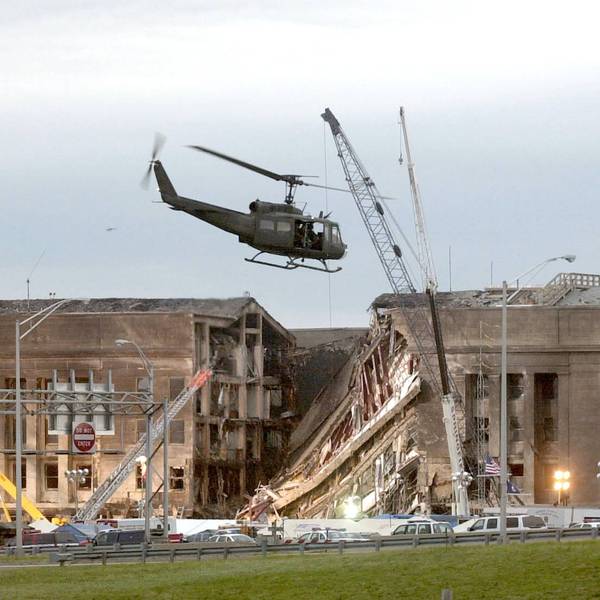
Last week, as the anniversary of the 9/11 attacks approached, members of Congress gathered on the Capitol steps to pray, followed by a rendition of "God Bless America." Then, evidently energized, they went inside and passed a bill that would allow relatives of 9/11 victims to sue Saudi Arabia for its apparent support of the attackers. President Obama is likely to veto it. Emotion could lead Congress to override his veto.
Last week, as the anniversary of the 9/11 attacks approached, members of Congress gathered on the Capitol steps to pray, followed by a rendition of "God Bless America." Then, evidently energized, they went inside and passed a bill that would allow relatives of 9/11 victims to sue Saudi Arabia for its apparent support of the attackers. President Obama is likely to veto it. Emotion could lead Congress to override his veto. That would have a shattering effect on American and global politics.
Americans love to sue. Our society is one of the world's most litigious. We have come to believe that almost anything can be adjudicated in court. That is lamentable at home, but applying the principle of tort liability to foreign policy is far more threatening. It opens the United States to an avalanche of lawsuits from victims of our actions around the world.
"First in line to sue the United States would be relatives of Iraqis, Afghans, Yemenis, and others who have been killed by American drone attacks."
One sponsor of the newly passed bill, Representative Jerrold Nadler of New York, has dismissed this possibility. No one could sue the United States for damages, he reasoned, because "the United States does not engage in international terrorist activity." He may honestly believe that, but judges in other countries might disagree.
First in line to sue the United States would be relatives of Iraqis, Afghans, Yemenis, and others who have been killed by American drone attacks. In Pakistan alone, by one count, these attacks have killed 160 children. Parents of every one of them would have a case in court. Victims of "extraordinary rendition" and "enhanced interrogation methods" might also be able to persuade judges that their ordeals were the product of state terrorism directed from Washington.
From there, the list is almost endless. Every country where US intervention has produced bloody results would become fertile ground for lawsuits. Guatemalans could sue for our long support of regimes in their country that carried out murder on a grand scale. So could families of Salvadorans, Chileans, Brazilians, and others who were tortured and killed by US-trained military units. Indonesians could claim that the hundreds of thousands of people slaughtered in 1965 were victims of a policy set in motion by the United States. A Cambodian or Laotian or Vietnamese who has lived without limbs as a result of American bombing, or been deformed by napalm or Agent Orange, would have a good case. Survivors of Mexicans killed by drug dealers using weapons bought in Arizona could claim that weak American gun laws are to blame, and demand compensation. Iran could sue the United States for its cyberattacks on Iranian computer systems. How about Brazil suing because a member of our Olympic team, Ryan Lochte, harmfully defamed Brazil by fabricating stories about being attacked by police there?
This circus would run in both directions. If Americans can sue Saudi Arabia because its government supports terror groups, they can also sue Pakistan. Since the 9/11 attacks were directed from Afghanistan, it could also be on the target list. An American judge might even find Germany guilty of negligence for failing to monitor the attackers while they were living in Hamburg.
"The fact that a foreign government may have aided and abetted terrorism is infuriating to the families if justice is not done," Senator Chuck Schumer of New York said last week. He is correct. Americans have a right to be furious with some foreign governments. People in other countries have an equal right to be furious with the United States. We best address that fury not with lawsuits, but by changing the way we approach the world.
Dear Common Dreams reader, It’s been nearly 30 years since I co-founded Common Dreams with my late wife, Lina Newhouser. We had the radical notion that journalism should serve the public good, not corporate profits. It was clear to us from the outset what it would take to build such a project. No paid advertisements. No corporate sponsors. No millionaire publisher telling us what to think or do. Many people said we wouldn't last a year, but we proved those doubters wrong. Together with a tremendous team of journalists and dedicated staff, we built an independent media outlet free from the constraints of profits and corporate control. Our mission has always been simple: To inform. To inspire. To ignite change for the common good. Building Common Dreams was not easy. Our survival was never guaranteed. When you take on the most powerful forces—Wall Street greed, fossil fuel industry destruction, Big Tech lobbyists, and uber-rich oligarchs who have spent billions upon billions rigging the economy and democracy in their favor—the only bulwark you have is supporters who believe in your work. But here’s the urgent message from me today. It's never been this bad out there. And it's never been this hard to keep us going. At the very moment Common Dreams is most needed, the threats we face are intensifying. We need your support now more than ever. We don't accept corporate advertising and never will. We don't have a paywall because we don't think people should be blocked from critical news based on their ability to pay. Everything we do is funded by the donations of readers like you. When everyone does the little they can afford, we are strong. But if that support retreats or dries up, so do we. Will you donate now to make sure Common Dreams not only survives but thrives? —Craig Brown, Co-founder |
Last week, as the anniversary of the 9/11 attacks approached, members of Congress gathered on the Capitol steps to pray, followed by a rendition of "God Bless America." Then, evidently energized, they went inside and passed a bill that would allow relatives of 9/11 victims to sue Saudi Arabia for its apparent support of the attackers. President Obama is likely to veto it. Emotion could lead Congress to override his veto. That would have a shattering effect on American and global politics.
Americans love to sue. Our society is one of the world's most litigious. We have come to believe that almost anything can be adjudicated in court. That is lamentable at home, but applying the principle of tort liability to foreign policy is far more threatening. It opens the United States to an avalanche of lawsuits from victims of our actions around the world.
"First in line to sue the United States would be relatives of Iraqis, Afghans, Yemenis, and others who have been killed by American drone attacks."
One sponsor of the newly passed bill, Representative Jerrold Nadler of New York, has dismissed this possibility. No one could sue the United States for damages, he reasoned, because "the United States does not engage in international terrorist activity." He may honestly believe that, but judges in other countries might disagree.
First in line to sue the United States would be relatives of Iraqis, Afghans, Yemenis, and others who have been killed by American drone attacks. In Pakistan alone, by one count, these attacks have killed 160 children. Parents of every one of them would have a case in court. Victims of "extraordinary rendition" and "enhanced interrogation methods" might also be able to persuade judges that their ordeals were the product of state terrorism directed from Washington.
From there, the list is almost endless. Every country where US intervention has produced bloody results would become fertile ground for lawsuits. Guatemalans could sue for our long support of regimes in their country that carried out murder on a grand scale. So could families of Salvadorans, Chileans, Brazilians, and others who were tortured and killed by US-trained military units. Indonesians could claim that the hundreds of thousands of people slaughtered in 1965 were victims of a policy set in motion by the United States. A Cambodian or Laotian or Vietnamese who has lived without limbs as a result of American bombing, or been deformed by napalm or Agent Orange, would have a good case. Survivors of Mexicans killed by drug dealers using weapons bought in Arizona could claim that weak American gun laws are to blame, and demand compensation. Iran could sue the United States for its cyberattacks on Iranian computer systems. How about Brazil suing because a member of our Olympic team, Ryan Lochte, harmfully defamed Brazil by fabricating stories about being attacked by police there?
This circus would run in both directions. If Americans can sue Saudi Arabia because its government supports terror groups, they can also sue Pakistan. Since the 9/11 attacks were directed from Afghanistan, it could also be on the target list. An American judge might even find Germany guilty of negligence for failing to monitor the attackers while they were living in Hamburg.
"The fact that a foreign government may have aided and abetted terrorism is infuriating to the families if justice is not done," Senator Chuck Schumer of New York said last week. He is correct. Americans have a right to be furious with some foreign governments. People in other countries have an equal right to be furious with the United States. We best address that fury not with lawsuits, but by changing the way we approach the world.
Last week, as the anniversary of the 9/11 attacks approached, members of Congress gathered on the Capitol steps to pray, followed by a rendition of "God Bless America." Then, evidently energized, they went inside and passed a bill that would allow relatives of 9/11 victims to sue Saudi Arabia for its apparent support of the attackers. President Obama is likely to veto it. Emotion could lead Congress to override his veto. That would have a shattering effect on American and global politics.
Americans love to sue. Our society is one of the world's most litigious. We have come to believe that almost anything can be adjudicated in court. That is lamentable at home, but applying the principle of tort liability to foreign policy is far more threatening. It opens the United States to an avalanche of lawsuits from victims of our actions around the world.
"First in line to sue the United States would be relatives of Iraqis, Afghans, Yemenis, and others who have been killed by American drone attacks."
One sponsor of the newly passed bill, Representative Jerrold Nadler of New York, has dismissed this possibility. No one could sue the United States for damages, he reasoned, because "the United States does not engage in international terrorist activity." He may honestly believe that, but judges in other countries might disagree.
First in line to sue the United States would be relatives of Iraqis, Afghans, Yemenis, and others who have been killed by American drone attacks. In Pakistan alone, by one count, these attacks have killed 160 children. Parents of every one of them would have a case in court. Victims of "extraordinary rendition" and "enhanced interrogation methods" might also be able to persuade judges that their ordeals were the product of state terrorism directed from Washington.
From there, the list is almost endless. Every country where US intervention has produced bloody results would become fertile ground for lawsuits. Guatemalans could sue for our long support of regimes in their country that carried out murder on a grand scale. So could families of Salvadorans, Chileans, Brazilians, and others who were tortured and killed by US-trained military units. Indonesians could claim that the hundreds of thousands of people slaughtered in 1965 were victims of a policy set in motion by the United States. A Cambodian or Laotian or Vietnamese who has lived without limbs as a result of American bombing, or been deformed by napalm or Agent Orange, would have a good case. Survivors of Mexicans killed by drug dealers using weapons bought in Arizona could claim that weak American gun laws are to blame, and demand compensation. Iran could sue the United States for its cyberattacks on Iranian computer systems. How about Brazil suing because a member of our Olympic team, Ryan Lochte, harmfully defamed Brazil by fabricating stories about being attacked by police there?
This circus would run in both directions. If Americans can sue Saudi Arabia because its government supports terror groups, they can also sue Pakistan. Since the 9/11 attacks were directed from Afghanistan, it could also be on the target list. An American judge might even find Germany guilty of negligence for failing to monitor the attackers while they were living in Hamburg.
"The fact that a foreign government may have aided and abetted terrorism is infuriating to the families if justice is not done," Senator Chuck Schumer of New York said last week. He is correct. Americans have a right to be furious with some foreign governments. People in other countries have an equal right to be furious with the United States. We best address that fury not with lawsuits, but by changing the way we approach the world.