Why There's No Outcry
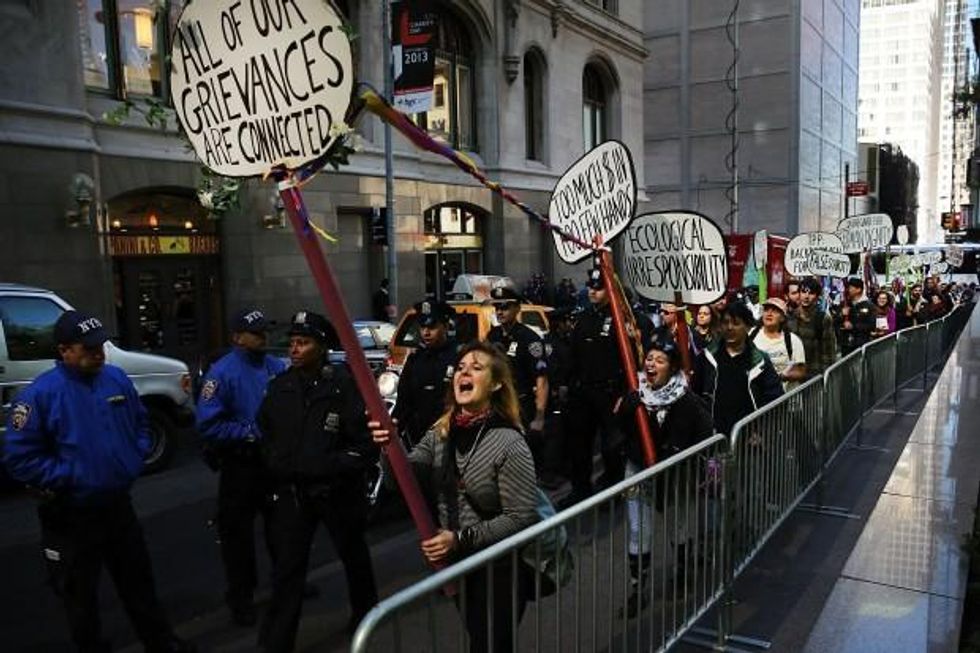
People ask me all the time why we don't have a revolution in America, or at least a major wave of reform similar to that of the Progressive Era or the New Deal or the Great Society.

Middle incomes are sinking, the ranks of the poor are swelling, almost all the economic gains are going to the top, and big money is corrupting our democracy. So why isn't there more of a ruckus?
The answer is complex, but three reasons stand out.
First, the working class is paralyzed with fear it will lose the jobs and wages it already has.
In earlier decades, the working class fomented reform. The labor movement led the charge for a minimum wage, 40-hour workweek, unemployment insurance, and Social Security.
No longer. Working people don't dare. The share of working-age Americans holding jobs is now lower than at any time in the last three decades and 76 percent of them are living paycheck to paycheck.
No one has any job security. The last thing they want to do is make a fuss and risk losing the little they have.
Besides, their major means of organizing and protecting themselves -- labor unions -- have been decimated. Four decades ago more than a third of private-sector workers were unionized. Now, fewer than 7 percent belong to a union.
Second, students don't dare rock the boat.
In prior decades students were a major force for social change. They played an active role in the Civil Rights movement, the Free Speech movement, and against the Vietnam War.
But today's students don't want to make a ruckus. They're laden with debt. Since 1999, student debt has increased more than 500 percent, yet the average starting salary for graduates has dropped 10 percent, adjusted for inflation. Student debts can't be cancelled in bankruptcy. A default brings penalties and ruins a credit rating.
To make matters worse, the job market for new graduates remains lousy. Which is why record numbers are still living at home.
Reformers and revolutionaries don't look forward to living with mom and dad or worrying about credit ratings and job recommendations.
Third and finally, the American public has become so cynical about government that many no longer think reform is possible.
When asked if they believe government will do the right thing most of the time, fewer than 20 percent of Americans agree. Fifty years ago, when that question was first asked on standard surveys, more than 75 percent agreed.
It's hard to get people worked up to change society or even to change a few laws when they don't believe government can possibly work.
You'd have to posit a giant conspiracy in order to believe all this was the doing of the forces in America most resistant to positive social change.
It's possible, of course, that rightwing Republicans, corporate executives, and Wall Street moguls intentionally cut jobs and wages in order to cow average workers, buried students under so much debt they'd never take to the streets, and made most Americans so cynical about government they wouldn't even try for change.
But it's more likely they merely allowed all this to unfold, like a giant wet blanket over the outrage and indignation most Americans feel but don't express.
An Urgent Message From Our Co-Founder
Dear Common Dreams reader, It’s been nearly 30 years since I co-founded Common Dreams with my late wife, Lina Newhouser. We had the radical notion that journalism should serve the public good, not corporate profits. It was clear to us from the outset what it would take to build such a project. No paid advertisements. No corporate sponsors. No millionaire publisher telling us what to think or do. Many people said we wouldn't last a year, but we proved those doubters wrong. Together with a tremendous team of journalists and dedicated staff, we built an independent media outlet free from the constraints of profits and corporate control. Our mission has always been simple: To inform. To inspire. To ignite change for the common good. Building Common Dreams was not easy. Our survival was never guaranteed. When you take on the most powerful forces—Wall Street greed, fossil fuel industry destruction, Big Tech lobbyists, and uber-rich oligarchs who have spent billions upon billions rigging the economy and democracy in their favor—the only bulwark you have is supporters who believe in your work. But here’s the urgent message from me today. It's never been this bad out there. And it's never been this hard to keep us going. At the very moment Common Dreams is most needed, the threats we face are intensifying. We need your support now more than ever. We don't accept corporate advertising and never will. We don't have a paywall because we don't think people should be blocked from critical news based on their ability to pay. Everything we do is funded by the donations of readers like you. When everyone does the little they can afford, we are strong. But if that support retreats or dries up, so do we. Will you donate now to make sure Common Dreams not only survives but thrives? —Craig Brown, Co-founder |

Middle incomes are sinking, the ranks of the poor are swelling, almost all the economic gains are going to the top, and big money is corrupting our democracy. So why isn't there more of a ruckus?
The answer is complex, but three reasons stand out.
First, the working class is paralyzed with fear it will lose the jobs and wages it already has.
In earlier decades, the working class fomented reform. The labor movement led the charge for a minimum wage, 40-hour workweek, unemployment insurance, and Social Security.
No longer. Working people don't dare. The share of working-age Americans holding jobs is now lower than at any time in the last three decades and 76 percent of them are living paycheck to paycheck.
No one has any job security. The last thing they want to do is make a fuss and risk losing the little they have.
Besides, their major means of organizing and protecting themselves -- labor unions -- have been decimated. Four decades ago more than a third of private-sector workers were unionized. Now, fewer than 7 percent belong to a union.
Second, students don't dare rock the boat.
In prior decades students were a major force for social change. They played an active role in the Civil Rights movement, the Free Speech movement, and against the Vietnam War.
But today's students don't want to make a ruckus. They're laden with debt. Since 1999, student debt has increased more than 500 percent, yet the average starting salary for graduates has dropped 10 percent, adjusted for inflation. Student debts can't be cancelled in bankruptcy. A default brings penalties and ruins a credit rating.
To make matters worse, the job market for new graduates remains lousy. Which is why record numbers are still living at home.
Reformers and revolutionaries don't look forward to living with mom and dad or worrying about credit ratings and job recommendations.
Third and finally, the American public has become so cynical about government that many no longer think reform is possible.
When asked if they believe government will do the right thing most of the time, fewer than 20 percent of Americans agree. Fifty years ago, when that question was first asked on standard surveys, more than 75 percent agreed.
It's hard to get people worked up to change society or even to change a few laws when they don't believe government can possibly work.
You'd have to posit a giant conspiracy in order to believe all this was the doing of the forces in America most resistant to positive social change.
It's possible, of course, that rightwing Republicans, corporate executives, and Wall Street moguls intentionally cut jobs and wages in order to cow average workers, buried students under so much debt they'd never take to the streets, and made most Americans so cynical about government they wouldn't even try for change.
But it's more likely they merely allowed all this to unfold, like a giant wet blanket over the outrage and indignation most Americans feel but don't express.

Middle incomes are sinking, the ranks of the poor are swelling, almost all the economic gains are going to the top, and big money is corrupting our democracy. So why isn't there more of a ruckus?
The answer is complex, but three reasons stand out.
First, the working class is paralyzed with fear it will lose the jobs and wages it already has.
In earlier decades, the working class fomented reform. The labor movement led the charge for a minimum wage, 40-hour workweek, unemployment insurance, and Social Security.
No longer. Working people don't dare. The share of working-age Americans holding jobs is now lower than at any time in the last three decades and 76 percent of them are living paycheck to paycheck.
No one has any job security. The last thing they want to do is make a fuss and risk losing the little they have.
Besides, their major means of organizing and protecting themselves -- labor unions -- have been decimated. Four decades ago more than a third of private-sector workers were unionized. Now, fewer than 7 percent belong to a union.
Second, students don't dare rock the boat.
In prior decades students were a major force for social change. They played an active role in the Civil Rights movement, the Free Speech movement, and against the Vietnam War.
But today's students don't want to make a ruckus. They're laden with debt. Since 1999, student debt has increased more than 500 percent, yet the average starting salary for graduates has dropped 10 percent, adjusted for inflation. Student debts can't be cancelled in bankruptcy. A default brings penalties and ruins a credit rating.
To make matters worse, the job market for new graduates remains lousy. Which is why record numbers are still living at home.
Reformers and revolutionaries don't look forward to living with mom and dad or worrying about credit ratings and job recommendations.
Third and finally, the American public has become so cynical about government that many no longer think reform is possible.
When asked if they believe government will do the right thing most of the time, fewer than 20 percent of Americans agree. Fifty years ago, when that question was first asked on standard surveys, more than 75 percent agreed.
It's hard to get people worked up to change society or even to change a few laws when they don't believe government can possibly work.
You'd have to posit a giant conspiracy in order to believe all this was the doing of the forces in America most resistant to positive social change.
It's possible, of course, that rightwing Republicans, corporate executives, and Wall Street moguls intentionally cut jobs and wages in order to cow average workers, buried students under so much debt they'd never take to the streets, and made most Americans so cynical about government they wouldn't even try for change.
But it's more likely they merely allowed all this to unfold, like a giant wet blanket over the outrage and indignation most Americans feel but don't express.