SUBSCRIBE TO OUR FREE NEWSLETTER
Daily news & progressive opinion—funded by the people, not the corporations—delivered straight to your inbox.
5
#000000
#FFFFFF
To donate by check, phone, or other method, see our More Ways to Give page.

The appeal had added urgency after the USDA recently published its initial recommendation to deregulate Dow Chemical's 2,4-D resistant corn and soybeans. Perhaps the most pernicious GMO crops yet, 2,4-D crops threaten to severely increase the spraying of 2,4-D, a component in the Vietnam era defoliant, "Agent Orange."
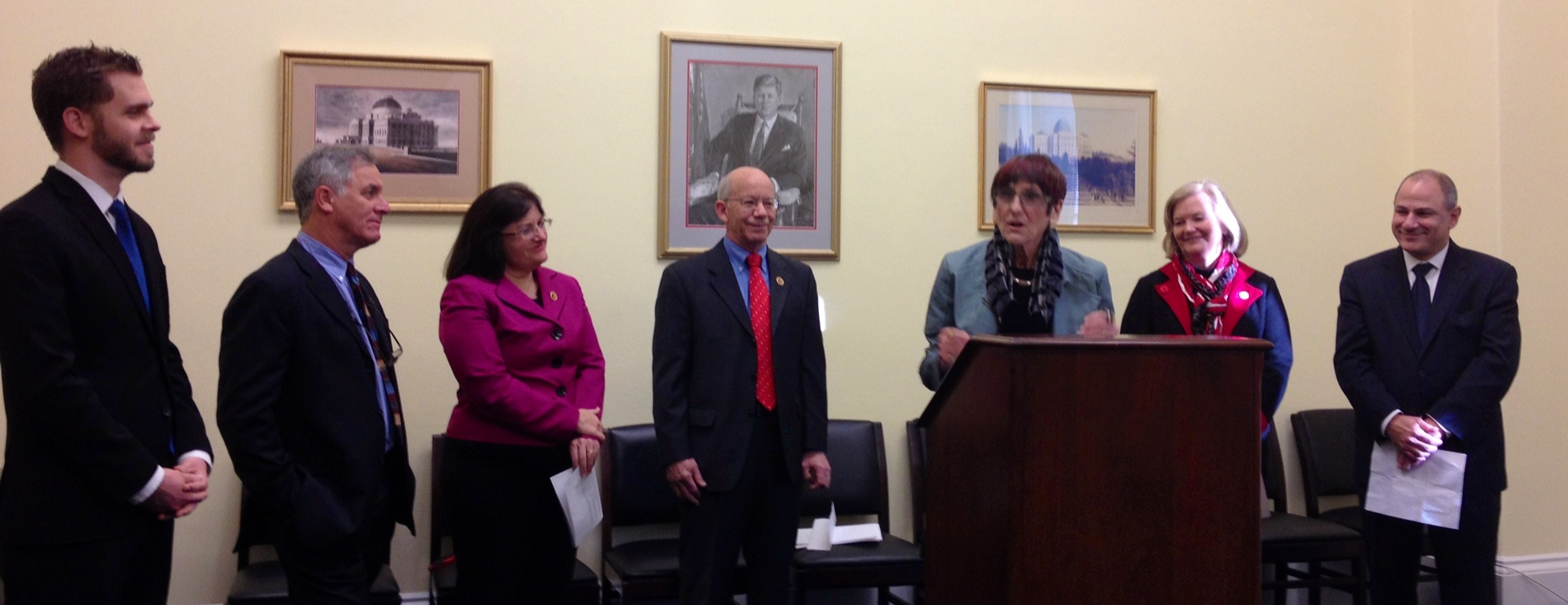
"Right-to-Know Act" sponsor, Rep. Peter DeFazio (D-OR), food and nutrition champion Rep. Rosa Delauro (D-CT), organic farmer Rep. Chellie Pingree (D-ME), and Rep. Ann Kuster (D-NH) gave remarks together with Center for Food Safety, Environmental Working Group and organic food industry leader, Gary Hirschberg of Stonyfield Farms.
"We need the federal government to step up. People across the U.S deserve labeling," said Rep. Kuster. "It's all about the consumer's right to know," Rep. DeFazio explained. "I'm fed up with voluntary initiatives. We need mandatory labeling," added Rep. DeLauro.
Although the FDA doesn't need congressional authorization in order to mandate a federal labeling standard for GMOs, federal lawmakers have become increasingly vocal on the issue. Following former Congressman Dennis Kucinich's lead, Rep. DeFazio and Senator Boxer (D-CA) last year introduced bipartisan companion labeling bills, and Senate committees have voted twice in favor of labeling genetically engineered fish.
When polled, 93 percent of the American public said they supported the labeling of genetically engineered food and ingredients. Sixty-four countries already have GMO labeling standards.
Last year, 26 states considered a labeling bill of some form or another. That number is expected to grow in 2014. According to Center for Food Safety's Colin O'Neil, food manufacturers and the pesticide industry spent nearly $70 million fighting ballot initiatives in just two of those states, California and Washington State.
Given both the cost and the urgency of regulation, the debate has shifted to Washington, D.C., with 1.4 million people asking the FDA to implement mandatory GMO labeling. According to advocates at the press conference today, this is the second largest number of signatures on any issue in FDA's history. The highest -- not to deregulate genetically engineered (GMO) salmon!
And it's not just consumers. Weed and soil scientists are giving grave warnings as to the effects of GMO crops on the escalating use of chemicals in agriculture. With the majority of GMO crops designed to withstand pesticide applications, use of the chemicals has skyrocketed.
"This isn't complicated," said Scott Faber of the Environmental Working Group, "this is a question of whether the government will stand with a few chemical companies, or the 93 percent of the American people who want labeling."
There is ample precedent. As well as basic ingredients, labels also disclose country of origin, irradiation and even, orange juice 'made from concentrate'. FDA's labeling requirements are not based on solely on safety concerns and nutrition, a common myth propped up by the food and chemical industries. A federal labeling standard would give consumers the opportunity to make their own choices about the foods they bring home to their families.
"It's simple. I'm a farmer. I know what I grow. I know what I put on the food I grow. Processors and manufacturers know the same. They know what is in your food. They label ingredients. They can label GMOs," said Rep. Pingree.
"Transparency is essential for public trust," stated Obama in 2007. Now perhaps would be a good time to come true on his pledge?
The White House has not yet responded.
The appeal had added urgency after the USDA recently published its initial recommendation to deregulate Dow Chemical's 2,4-D resistant corn and soybeans. Perhaps the most pernicious GMO crops yet, 2,4-D crops threaten to severely increase the spraying of 2,4-D, a component in the Vietnam era defoliant, "Agent Orange."
"Right-to-Know Act" sponsor, Rep. Peter DeFazio (D-OR), food and nutrition champion Rep. Rosa Delauro (D-CT), organic farmer Rep. Chellie Pingree (D-ME), and Rep. Ann Kuster (D-NH) gave remarks together with Center for Food Safety, Environmental Working Group and organic food industry leader, Gary Hirschberg of Stonyfield Farms.
"We need the federal government to step up. People across the U.S deserve labeling," said Rep. Kuster. "It's all about the consumer's right to know," Rep. DeFazio explained. "I'm fed up with voluntary initiatives. We need mandatory labeling," added Rep. DeLauro.
Although the FDA doesn't need congressional authorization in order to mandate a federal labeling standard for GMOs, federal lawmakers have become increasingly vocal on the issue. Following former Congressman Dennis Kucinich's lead, Rep. DeFazio and Senator Boxer (D-CA) last year introduced bipartisan companion labeling bills, and Senate committees have voted twice in favor of labeling genetically engineered fish.
When polled, 93 percent of the American public said they supported the labeling of genetically engineered food and ingredients. Sixty-four countries already have GMO labeling standards.
Last year, 26 states considered a labeling bill of some form or another. That number is expected to grow in 2014. According to Center for Food Safety's Colin O'Neil, food manufacturers and the pesticide industry spent nearly $70 million fighting ballot initiatives in just two of those states, California and Washington State.
Given both the cost and the urgency of regulation, the debate has shifted to Washington, D.C., with 1.4 million people asking the FDA to implement mandatory GMO labeling. According to advocates at the press conference today, this is the second largest number of signatures on any issue in FDA's history. The highest -- not to deregulate genetically engineered (GMO) salmon!
And it's not just consumers. Weed and soil scientists are giving grave warnings as to the effects of GMO crops on the escalating use of chemicals in agriculture. With the majority of GMO crops designed to withstand pesticide applications, use of the chemicals has skyrocketed.
"This isn't complicated," said Scott Faber of the Environmental Working Group, "this is a question of whether the government will stand with a few chemical companies, or the 93 percent of the American people who want labeling."
There is ample precedent. As well as basic ingredients, labels also disclose country of origin, irradiation and even, orange juice 'made from concentrate'. FDA's labeling requirements are not based on solely on safety concerns and nutrition, a common myth propped up by the food and chemical industries. A federal labeling standard would give consumers the opportunity to make their own choices about the foods they bring home to their families.
"It's simple. I'm a farmer. I know what I grow. I know what I put on the food I grow. Processors and manufacturers know the same. They know what is in your food. They label ingredients. They can label GMOs," said Rep. Pingree.
"Transparency is essential for public trust," stated Obama in 2007. Now perhaps would be a good time to come true on his pledge?
The White House has not yet responded.
The appeal had added urgency after the USDA recently published its initial recommendation to deregulate Dow Chemical's 2,4-D resistant corn and soybeans. Perhaps the most pernicious GMO crops yet, 2,4-D crops threaten to severely increase the spraying of 2,4-D, a component in the Vietnam era defoliant, "Agent Orange."
"Right-to-Know Act" sponsor, Rep. Peter DeFazio (D-OR), food and nutrition champion Rep. Rosa Delauro (D-CT), organic farmer Rep. Chellie Pingree (D-ME), and Rep. Ann Kuster (D-NH) gave remarks together with Center for Food Safety, Environmental Working Group and organic food industry leader, Gary Hirschberg of Stonyfield Farms.
"We need the federal government to step up. People across the U.S deserve labeling," said Rep. Kuster. "It's all about the consumer's right to know," Rep. DeFazio explained. "I'm fed up with voluntary initiatives. We need mandatory labeling," added Rep. DeLauro.
Although the FDA doesn't need congressional authorization in order to mandate a federal labeling standard for GMOs, federal lawmakers have become increasingly vocal on the issue. Following former Congressman Dennis Kucinich's lead, Rep. DeFazio and Senator Boxer (D-CA) last year introduced bipartisan companion labeling bills, and Senate committees have voted twice in favor of labeling genetically engineered fish.
When polled, 93 percent of the American public said they supported the labeling of genetically engineered food and ingredients. Sixty-four countries already have GMO labeling standards.
Last year, 26 states considered a labeling bill of some form or another. That number is expected to grow in 2014. According to Center for Food Safety's Colin O'Neil, food manufacturers and the pesticide industry spent nearly $70 million fighting ballot initiatives in just two of those states, California and Washington State.
Given both the cost and the urgency of regulation, the debate has shifted to Washington, D.C., with 1.4 million people asking the FDA to implement mandatory GMO labeling. According to advocates at the press conference today, this is the second largest number of signatures on any issue in FDA's history. The highest -- not to deregulate genetically engineered (GMO) salmon!
And it's not just consumers. Weed and soil scientists are giving grave warnings as to the effects of GMO crops on the escalating use of chemicals in agriculture. With the majority of GMO crops designed to withstand pesticide applications, use of the chemicals has skyrocketed.
"This isn't complicated," said Scott Faber of the Environmental Working Group, "this is a question of whether the government will stand with a few chemical companies, or the 93 percent of the American people who want labeling."
There is ample precedent. As well as basic ingredients, labels also disclose country of origin, irradiation and even, orange juice 'made from concentrate'. FDA's labeling requirements are not based on solely on safety concerns and nutrition, a common myth propped up by the food and chemical industries. A federal labeling standard would give consumers the opportunity to make their own choices about the foods they bring home to their families.
"It's simple. I'm a farmer. I know what I grow. I know what I put on the food I grow. Processors and manufacturers know the same. They know what is in your food. They label ingredients. They can label GMOs," said Rep. Pingree.
"Transparency is essential for public trust," stated Obama in 2007. Now perhaps would be a good time to come true on his pledge?
The White House has not yet responded.