SUBSCRIBE TO OUR FREE NEWSLETTER
Daily news & progressive opinion—funded by the people, not the corporations—delivered straight to your inbox.
5
#000000
#FFFFFF
To donate by check, phone, or other method, see our More Ways to Give page.
In a move consistent with his past positions on international issues, Senator Robert Menendez, the Democratic Chairman of the U.S. Senate Foreign Relations Committee, accused the White House of using "over the top" rhetoric and "fear mongering tactics" to try to stop new sanctions on Iran. These new sanctions were to take effect after the United States brokered an interim deal with Iran over its nuclear program.
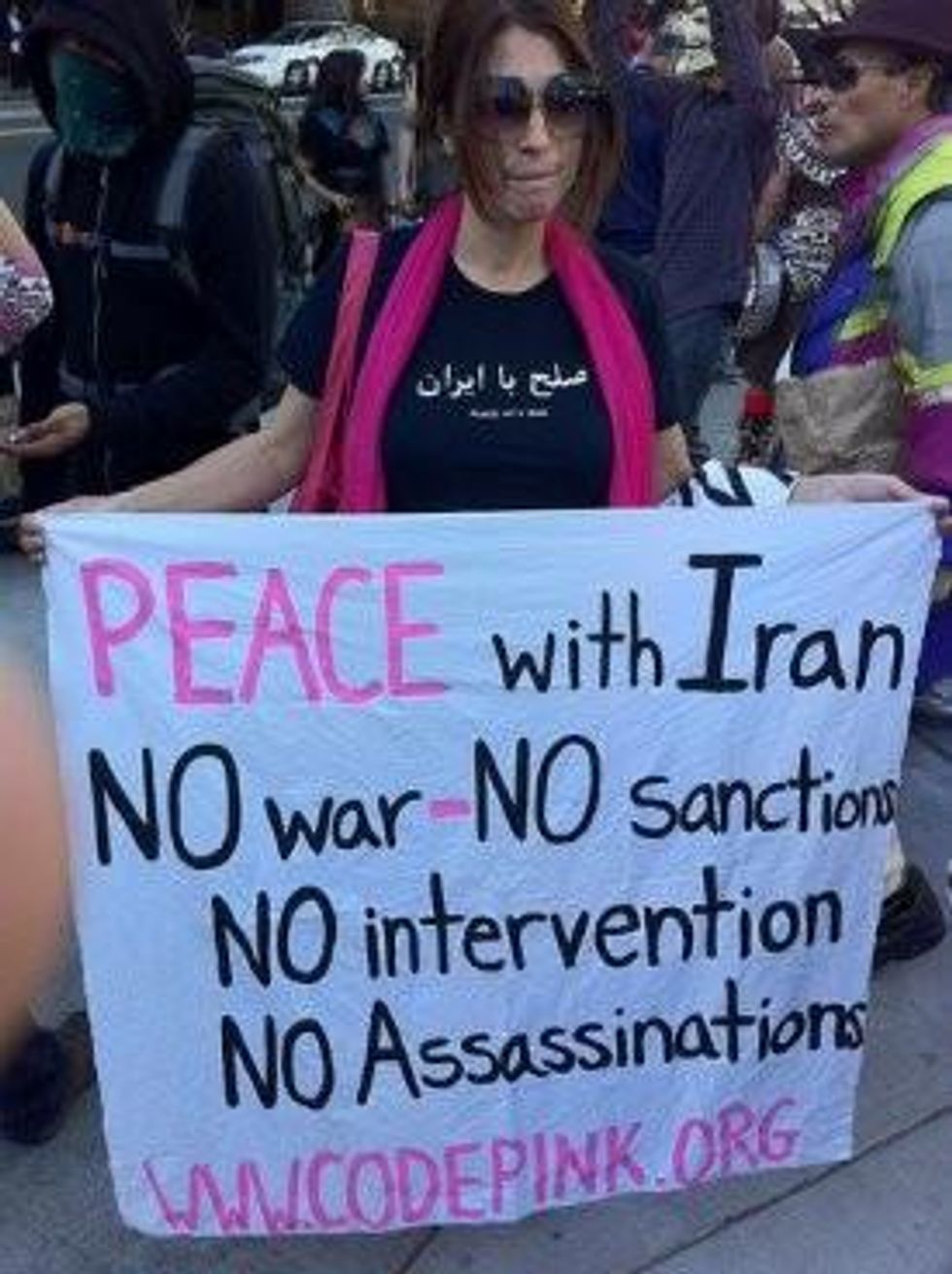
Under the deal agreed with Iran, that country will accept restrictions on its nuclear program. In exchange, the U.S. and other world powers will provide limited relief from economic sanctions that have considerably damaged the economy, cut significantly into the country's oil exports and seriously affected the Iranians' quality of life.
Senator Menendez, who often supports President Obama, stated on the National Public Radio program "All Things Considered," "What I don't appreciate is when I hear remarks out of the White House spokesman that...if we're pursuing sanctions we're marching the country off to war. I think that's way over the top, I think that's fear mongering."
Sens. Robert Menendez, D-N.J., and Mark Kirk, R-Ill are preparing a bill to be ready for consideration when the Senate returns Dec. 9 from its two-week recess. The Menendez-Kirk proposal would require the administration to certify every 30 days that Iran is fulfilling the terms of the agreement reached in Geneva and that it hasn't been involved in any act of terrorism against the United States.
Among the reasons the Obama administration has sought a deal with Iran is that limiting U.S. military commitments and resources in the Greater Middle East will allow the U.S. to free them up for use elsewhere or make substantial savings in its military expenditures.
Senator Menendez doesn't seem to see these advantages, and prefers instead to lead an effort to strengthen sanctions and thus increase the animosity with the Iranian government that can only have ominous consequences in any efforts to secure peace with Iran.
Also important to consider is that actions proposed by Senator Menendez hinder the possibility of obtaining Iran's help in solving pressing problems such as the situation in Syria and Afghanistan's rehabilitation efforts. Daud Moradian, the Director of the Afghan Institute of Strategic Studies stated recently that both the U.S. and Iran had started to cooperate in the rehabilitation of Afghanistan's infrastructure.
In spite of that, Senator Robert Menendez said, after the Geneva agreement was announced, "I do not believe we should further reduce our sanctions, nor abstain from preparations to impose new sanctions," something which, if carried out, would again put the region on the path to war.
Regarding these new developments Uri Avnery, one of Israel's leading peace activists stated, "To save itself from the image of utter failure, the American Israel Public Affairs Committee (AIPAC) has started to order its senators and congressmen to work out new sanctions to be instituted in some indefinite future."
New sanctions would destroy the possibility for peaceful coexistence with Iran and would crush Iran's president Hassan Rouhani's efforts to face the hardliners in his country. Trita Parsi, president of the National Iranian American Council and a noted expert on Iranian affairs declared that new sanctions would seriously limit Rouhani's ability to maintain his "soft position" on the negotiations.
A war with Iran would be everybody's loss. This is a fact that American legislators must consider to avoid war or further conflict in the region.
____________________
In a move consistent with his past positions on international issues, Senator Robert Menendez, the Democratic Chairman of the U.S. Senate Foreign Relations Committee, accused the White House of using "over the top" rhetoric and "fear mongering tactics" to try to stop new sanctions on Iran. These new sanctions were to take effect after the United States brokered an interim deal with Iran over its nuclear program.
Under the deal agreed with Iran, that country will accept restrictions on its nuclear program. In exchange, the U.S. and other world powers will provide limited relief from economic sanctions that have considerably damaged the economy, cut significantly into the country's oil exports and seriously affected the Iranians' quality of life.
Senator Menendez, who often supports President Obama, stated on the National Public Radio program "All Things Considered," "What I don't appreciate is when I hear remarks out of the White House spokesman that...if we're pursuing sanctions we're marching the country off to war. I think that's way over the top, I think that's fear mongering."
Sens. Robert Menendez, D-N.J., and Mark Kirk, R-Ill are preparing a bill to be ready for consideration when the Senate returns Dec. 9 from its two-week recess. The Menendez-Kirk proposal would require the administration to certify every 30 days that Iran is fulfilling the terms of the agreement reached in Geneva and that it hasn't been involved in any act of terrorism against the United States.
Among the reasons the Obama administration has sought a deal with Iran is that limiting U.S. military commitments and resources in the Greater Middle East will allow the U.S. to free them up for use elsewhere or make substantial savings in its military expenditures.
Senator Menendez doesn't seem to see these advantages, and prefers instead to lead an effort to strengthen sanctions and thus increase the animosity with the Iranian government that can only have ominous consequences in any efforts to secure peace with Iran.
Also important to consider is that actions proposed by Senator Menendez hinder the possibility of obtaining Iran's help in solving pressing problems such as the situation in Syria and Afghanistan's rehabilitation efforts. Daud Moradian, the Director of the Afghan Institute of Strategic Studies stated recently that both the U.S. and Iran had started to cooperate in the rehabilitation of Afghanistan's infrastructure.
In spite of that, Senator Robert Menendez said, after the Geneva agreement was announced, "I do not believe we should further reduce our sanctions, nor abstain from preparations to impose new sanctions," something which, if carried out, would again put the region on the path to war.
Regarding these new developments Uri Avnery, one of Israel's leading peace activists stated, "To save itself from the image of utter failure, the American Israel Public Affairs Committee (AIPAC) has started to order its senators and congressmen to work out new sanctions to be instituted in some indefinite future."
New sanctions would destroy the possibility for peaceful coexistence with Iran and would crush Iran's president Hassan Rouhani's efforts to face the hardliners in his country. Trita Parsi, president of the National Iranian American Council and a noted expert on Iranian affairs declared that new sanctions would seriously limit Rouhani's ability to maintain his "soft position" on the negotiations.
A war with Iran would be everybody's loss. This is a fact that American legislators must consider to avoid war or further conflict in the region.
____________________
In a move consistent with his past positions on international issues, Senator Robert Menendez, the Democratic Chairman of the U.S. Senate Foreign Relations Committee, accused the White House of using "over the top" rhetoric and "fear mongering tactics" to try to stop new sanctions on Iran. These new sanctions were to take effect after the United States brokered an interim deal with Iran over its nuclear program.
Under the deal agreed with Iran, that country will accept restrictions on its nuclear program. In exchange, the U.S. and other world powers will provide limited relief from economic sanctions that have considerably damaged the economy, cut significantly into the country's oil exports and seriously affected the Iranians' quality of life.
Senator Menendez, who often supports President Obama, stated on the National Public Radio program "All Things Considered," "What I don't appreciate is when I hear remarks out of the White House spokesman that...if we're pursuing sanctions we're marching the country off to war. I think that's way over the top, I think that's fear mongering."
Sens. Robert Menendez, D-N.J., and Mark Kirk, R-Ill are preparing a bill to be ready for consideration when the Senate returns Dec. 9 from its two-week recess. The Menendez-Kirk proposal would require the administration to certify every 30 days that Iran is fulfilling the terms of the agreement reached in Geneva and that it hasn't been involved in any act of terrorism against the United States.
Among the reasons the Obama administration has sought a deal with Iran is that limiting U.S. military commitments and resources in the Greater Middle East will allow the U.S. to free them up for use elsewhere or make substantial savings in its military expenditures.
Senator Menendez doesn't seem to see these advantages, and prefers instead to lead an effort to strengthen sanctions and thus increase the animosity with the Iranian government that can only have ominous consequences in any efforts to secure peace with Iran.
Also important to consider is that actions proposed by Senator Menendez hinder the possibility of obtaining Iran's help in solving pressing problems such as the situation in Syria and Afghanistan's rehabilitation efforts. Daud Moradian, the Director of the Afghan Institute of Strategic Studies stated recently that both the U.S. and Iran had started to cooperate in the rehabilitation of Afghanistan's infrastructure.
In spite of that, Senator Robert Menendez said, after the Geneva agreement was announced, "I do not believe we should further reduce our sanctions, nor abstain from preparations to impose new sanctions," something which, if carried out, would again put the region on the path to war.
Regarding these new developments Uri Avnery, one of Israel's leading peace activists stated, "To save itself from the image of utter failure, the American Israel Public Affairs Committee (AIPAC) has started to order its senators and congressmen to work out new sanctions to be instituted in some indefinite future."
New sanctions would destroy the possibility for peaceful coexistence with Iran and would crush Iran's president Hassan Rouhani's efforts to face the hardliners in his country. Trita Parsi, president of the National Iranian American Council and a noted expert on Iranian affairs declared that new sanctions would seriously limit Rouhani's ability to maintain his "soft position" on the negotiations.
A war with Iran would be everybody's loss. This is a fact that American legislators must consider to avoid war or further conflict in the region.
____________________