
The long awaited Syrian peace talks -- instigated by power brokers Russia and the United States -- had already passed their initial due date, and are now officially stillborn.
The peace talks are dead because the U.S.-backed rebels are boycotting the negotiations, ruining any hope for peace, while threatening to turn an already-tragic disaster into a Yugoslavia-style catastrophe...or worse.
The U.S. backed rebels are not participating in the talks because they have nothing to gain from them, and everything to lose.
In war, the purpose of peace negotiations is to copy the situation on the battlefield and paste it to a treaty: the army winning the war enters negotiations from a dominant position, since its position is enforceable on the ground.
The U.S.-backed rebels would be entering peace talks broken and beaten, having been debilitated on the battlefield. The Syrian army has had a string of victories, pushing the rebels back to the border areas where they are protected by U.S. allies Turkey, Jordan, and northern Lebanon. Peace talks would merely expose this reality and end the war on terms dictated by the Syrian government.
A rebel leader was quoted in The New York Times revealing this motive for the rebel's abandonment of peace talks:
"What can we [rebels] ask for when we go very weak to Geneva [for peace talks]?... The Russians and the Iranians and the representatives of the [Syrian] regime will say: 'You don't have any power. We are controlling everything. What you are coming to ask for?'"
This is the reality as it exists in Syria, and realistic peace talks would recognize the situation in Syria and end the conflict immediately.
But first the rebel's supporters -- the United States and its lackeys Turkey, Saudi Arabia, and Qatar -- must acknowledge this reality and demand that the rebels forge ahead with peace talks, on threat of being cut off politically, financially, and militarily.
If this happens, war is over.
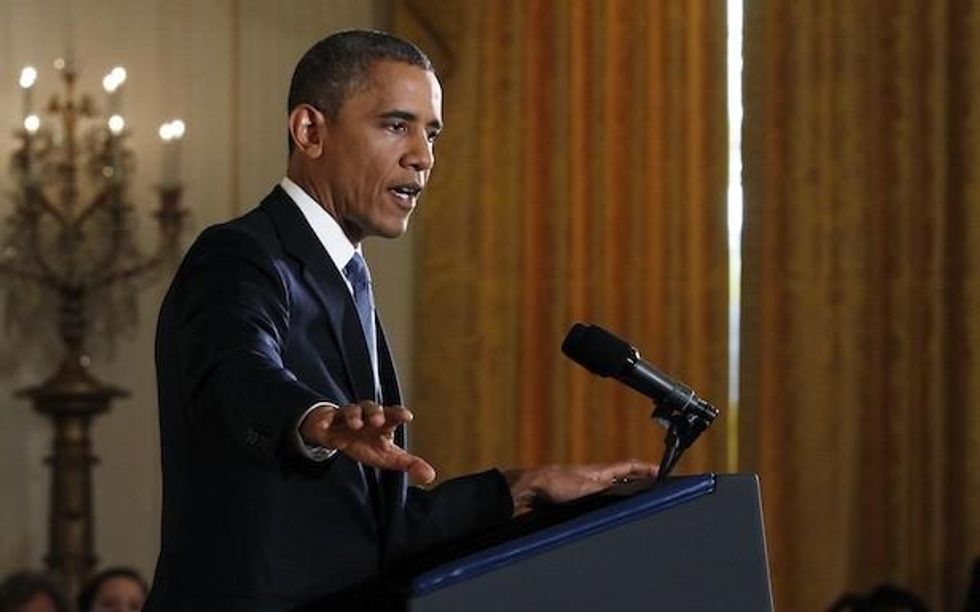
But if the war ended tomorrow, Syrian President Bashar Assad, would still be in power, and President Obama has said repeatedly, "Assad must go." Obama would be further humiliated by his Syria policy if he had to again recognize Assad as president after spending a year recognizing a group of rich Syrian exiles as "the legitimate government of Syria" and after his administration repeatedly announced that the Assad regime had ended over a year ago.
More importantly, if Assad stayed in power, U.S. foreign policy would appear weak internationally, which is one main reason that the U.S. political establishment wants to go "all in" for regime change in Syria: super powers must back up their threats, since otherwise other nations might choose to challenge the United States.
This is the real reason peace talks will not be held. The U.S. and its European allies want regime change in Syria, and they are prepared to allow many more people to die to make it so. This was made clear by the Obama administration. The New York Times reports:
"[Syrian] President Bashar al-Assad's gains on the battlefield have called the United States' strategy on Syria into question, prompting the Obama administration to again consider military options, including arming the rebels and conducting airstrikes to protect civilians and the Syrian opposition, administration officials said on Monday."
The above quote mentions "conducting airstrikes to protect civilians." This is the infamous language of the UN resolution that allowed U.S.-NATO to intervene in Libya; but Obama immediately overstepped "protecting civilians" and quickly jumped into "regime change," a gross violation of international law and a Bush-like war crime.
The UN -- though especially China and Russia -- have learned from the Libya example and will doubtfully ever again approve of a "protect civilian" UN resolution. If the U.S. intervenes in Syria, it will do so with a Bush-style "coalition of the willing," i.e. U.S. allies.
Obama's dream of having a post-Assad Syria is further complicated by the fact that Assad is apparently more popular than he has ever been.
Many Syrians that didn't previously support Assad now do, having concluded that Assad in power is better than their country being obliterated in an Iraq-style invasion, or being dominated by Islamic extremists, as the majority of the Syrian rebel groups are.
Further helping Assad's popularity is that Israel has bombed Syria recently on multiple occasions, while Syrians watch the unpopular United States funnels massive amounts of weapons to the rebels. As a result, Assad can now successfully portray himself as a defender of Syria's sovereignty against foreign aggression.
But, Obama will not be deterred. After it became clear that the rebels were losing the war, the U.S. and its European allies removed the remaining legal barriers to further arming the rebels, while the religious leaders of Saudi Arabia and Qatar -- both U.S. allies -- assisted in the war effort by calling for Jihad against the Syrian government (the same week the leader of al-Qaeda did).
Behind this frenzy of rebel support lies the sick logic that, in order for successful peace negotiations to take place, the rebels need to be in a stronger battlefield position. Arm the rebels to the teeth for peace!
In response to this twisted logic, Oxfam International -- a disaster relief coalition -- responded by saying:
"Sending arms to the Syrian opposition won't create a level playing field. Instead, it risks further fueling an arms free-for-all where the victims are the civilians of Syria. Our experience from other conflict zones tells us that this crisis will only drag on for far longer if more and more arms are poured into the country."
Ultimately, the Syrian rebels would have already been defeated -- and thousands of lives spared -- if they had not been receiving support from the U.S. and other countries. The U.S.-backed rebels have said that a pre-condition for peace is "Assad must go;" but this demand does not coincide with the reality on the ground: the rebels are in no position to demand this, and the U.S. is using this unrealistic demand to artificially lengthen an already-bloody war.
Obama can either use his immense influence to end this bloody conflict now by withdrawing support to the rebels, or he can extend the conflict and further tear to shreds the social fabric of the Middle East, while risking a multi-nation war that history will denounce as an easily preventable holocaust.
Our work is licensed under Creative Commons (CC BY-NC-ND 3.0). Feel free to republish and share widely.
The long awaited Syrian peace talks -- instigated by power brokers Russia and the United States -- had already passed their initial due date, and are now officially stillborn.
The peace talks are dead because the U.S.-backed rebels are boycotting the negotiations, ruining any hope for peace, while threatening to turn an already-tragic disaster into a Yugoslavia-style catastrophe...or worse.
The U.S. backed rebels are not participating in the talks because they have nothing to gain from them, and everything to lose.
In war, the purpose of peace negotiations is to copy the situation on the battlefield and paste it to a treaty: the army winning the war enters negotiations from a dominant position, since its position is enforceable on the ground.
The U.S.-backed rebels would be entering peace talks broken and beaten, having been debilitated on the battlefield. The Syrian army has had a string of victories, pushing the rebels back to the border areas where they are protected by U.S. allies Turkey, Jordan, and northern Lebanon. Peace talks would merely expose this reality and end the war on terms dictated by the Syrian government.
A rebel leader was quoted in The New York Times revealing this motive for the rebel's abandonment of peace talks:
"What can we [rebels] ask for when we go very weak to Geneva [for peace talks]?... The Russians and the Iranians and the representatives of the [Syrian] regime will say: 'You don't have any power. We are controlling everything. What you are coming to ask for?'"
This is the reality as it exists in Syria, and realistic peace talks would recognize the situation in Syria and end the conflict immediately.
But first the rebel's supporters -- the United States and its lackeys Turkey, Saudi Arabia, and Qatar -- must acknowledge this reality and demand that the rebels forge ahead with peace talks, on threat of being cut off politically, financially, and militarily.
If this happens, war is over.
But if the war ended tomorrow, Syrian President Bashar Assad, would still be in power, and President Obama has said repeatedly, "Assad must go." Obama would be further humiliated by his Syria policy if he had to again recognize Assad as president after spending a year recognizing a group of rich Syrian exiles as "the legitimate government of Syria" and after his administration repeatedly announced that the Assad regime had ended over a year ago.
More importantly, if Assad stayed in power, U.S. foreign policy would appear weak internationally, which is one main reason that the U.S. political establishment wants to go "all in" for regime change in Syria: super powers must back up their threats, since otherwise other nations might choose to challenge the United States.
This is the real reason peace talks will not be held. The U.S. and its European allies want regime change in Syria, and they are prepared to allow many more people to die to make it so. This was made clear by the Obama administration. The New York Times reports:
"[Syrian] President Bashar al-Assad's gains on the battlefield have called the United States' strategy on Syria into question, prompting the Obama administration to again consider military options, including arming the rebels and conducting airstrikes to protect civilians and the Syrian opposition, administration officials said on Monday."
The above quote mentions "conducting airstrikes to protect civilians." This is the infamous language of the UN resolution that allowed U.S.-NATO to intervene in Libya; but Obama immediately overstepped "protecting civilians" and quickly jumped into "regime change," a gross violation of international law and a Bush-like war crime.
The UN -- though especially China and Russia -- have learned from the Libya example and will doubtfully ever again approve of a "protect civilian" UN resolution. If the U.S. intervenes in Syria, it will do so with a Bush-style "coalition of the willing," i.e. U.S. allies.
Obama's dream of having a post-Assad Syria is further complicated by the fact that Assad is apparently more popular than he has ever been.
Many Syrians that didn't previously support Assad now do, having concluded that Assad in power is better than their country being obliterated in an Iraq-style invasion, or being dominated by Islamic extremists, as the majority of the Syrian rebel groups are.
Further helping Assad's popularity is that Israel has bombed Syria recently on multiple occasions, while Syrians watch the unpopular United States funnels massive amounts of weapons to the rebels. As a result, Assad can now successfully portray himself as a defender of Syria's sovereignty against foreign aggression.
But, Obama will not be deterred. After it became clear that the rebels were losing the war, the U.S. and its European allies removed the remaining legal barriers to further arming the rebels, while the religious leaders of Saudi Arabia and Qatar -- both U.S. allies -- assisted in the war effort by calling for Jihad against the Syrian government (the same week the leader of al-Qaeda did).
Behind this frenzy of rebel support lies the sick logic that, in order for successful peace negotiations to take place, the rebels need to be in a stronger battlefield position. Arm the rebels to the teeth for peace!
In response to this twisted logic, Oxfam International -- a disaster relief coalition -- responded by saying:
"Sending arms to the Syrian opposition won't create a level playing field. Instead, it risks further fueling an arms free-for-all where the victims are the civilians of Syria. Our experience from other conflict zones tells us that this crisis will only drag on for far longer if more and more arms are poured into the country."
Ultimately, the Syrian rebels would have already been defeated -- and thousands of lives spared -- if they had not been receiving support from the U.S. and other countries. The U.S.-backed rebels have said that a pre-condition for peace is "Assad must go;" but this demand does not coincide with the reality on the ground: the rebels are in no position to demand this, and the U.S. is using this unrealistic demand to artificially lengthen an already-bloody war.
Obama can either use his immense influence to end this bloody conflict now by withdrawing support to the rebels, or he can extend the conflict and further tear to shreds the social fabric of the Middle East, while risking a multi-nation war that history will denounce as an easily preventable holocaust.
The long awaited Syrian peace talks -- instigated by power brokers Russia and the United States -- had already passed their initial due date, and are now officially stillborn.
The peace talks are dead because the U.S.-backed rebels are boycotting the negotiations, ruining any hope for peace, while threatening to turn an already-tragic disaster into a Yugoslavia-style catastrophe...or worse.
The U.S. backed rebels are not participating in the talks because they have nothing to gain from them, and everything to lose.
In war, the purpose of peace negotiations is to copy the situation on the battlefield and paste it to a treaty: the army winning the war enters negotiations from a dominant position, since its position is enforceable on the ground.
The U.S.-backed rebels would be entering peace talks broken and beaten, having been debilitated on the battlefield. The Syrian army has had a string of victories, pushing the rebels back to the border areas where they are protected by U.S. allies Turkey, Jordan, and northern Lebanon. Peace talks would merely expose this reality and end the war on terms dictated by the Syrian government.
A rebel leader was quoted in The New York Times revealing this motive for the rebel's abandonment of peace talks:
"What can we [rebels] ask for when we go very weak to Geneva [for peace talks]?... The Russians and the Iranians and the representatives of the [Syrian] regime will say: 'You don't have any power. We are controlling everything. What you are coming to ask for?'"
This is the reality as it exists in Syria, and realistic peace talks would recognize the situation in Syria and end the conflict immediately.
But first the rebel's supporters -- the United States and its lackeys Turkey, Saudi Arabia, and Qatar -- must acknowledge this reality and demand that the rebels forge ahead with peace talks, on threat of being cut off politically, financially, and militarily.
If this happens, war is over.
But if the war ended tomorrow, Syrian President Bashar Assad, would still be in power, and President Obama has said repeatedly, "Assad must go." Obama would be further humiliated by his Syria policy if he had to again recognize Assad as president after spending a year recognizing a group of rich Syrian exiles as "the legitimate government of Syria" and after his administration repeatedly announced that the Assad regime had ended over a year ago.
More importantly, if Assad stayed in power, U.S. foreign policy would appear weak internationally, which is one main reason that the U.S. political establishment wants to go "all in" for regime change in Syria: super powers must back up their threats, since otherwise other nations might choose to challenge the United States.
This is the real reason peace talks will not be held. The U.S. and its European allies want regime change in Syria, and they are prepared to allow many more people to die to make it so. This was made clear by the Obama administration. The New York Times reports:
"[Syrian] President Bashar al-Assad's gains on the battlefield have called the United States' strategy on Syria into question, prompting the Obama administration to again consider military options, including arming the rebels and conducting airstrikes to protect civilians and the Syrian opposition, administration officials said on Monday."
The above quote mentions "conducting airstrikes to protect civilians." This is the infamous language of the UN resolution that allowed U.S.-NATO to intervene in Libya; but Obama immediately overstepped "protecting civilians" and quickly jumped into "regime change," a gross violation of international law and a Bush-like war crime.
The UN -- though especially China and Russia -- have learned from the Libya example and will doubtfully ever again approve of a "protect civilian" UN resolution. If the U.S. intervenes in Syria, it will do so with a Bush-style "coalition of the willing," i.e. U.S. allies.
Obama's dream of having a post-Assad Syria is further complicated by the fact that Assad is apparently more popular than he has ever been.
Many Syrians that didn't previously support Assad now do, having concluded that Assad in power is better than their country being obliterated in an Iraq-style invasion, or being dominated by Islamic extremists, as the majority of the Syrian rebel groups are.
Further helping Assad's popularity is that Israel has bombed Syria recently on multiple occasions, while Syrians watch the unpopular United States funnels massive amounts of weapons to the rebels. As a result, Assad can now successfully portray himself as a defender of Syria's sovereignty against foreign aggression.
But, Obama will not be deterred. After it became clear that the rebels were losing the war, the U.S. and its European allies removed the remaining legal barriers to further arming the rebels, while the religious leaders of Saudi Arabia and Qatar -- both U.S. allies -- assisted in the war effort by calling for Jihad against the Syrian government (the same week the leader of al-Qaeda did).
Behind this frenzy of rebel support lies the sick logic that, in order for successful peace negotiations to take place, the rebels need to be in a stronger battlefield position. Arm the rebels to the teeth for peace!
In response to this twisted logic, Oxfam International -- a disaster relief coalition -- responded by saying:
"Sending arms to the Syrian opposition won't create a level playing field. Instead, it risks further fueling an arms free-for-all where the victims are the civilians of Syria. Our experience from other conflict zones tells us that this crisis will only drag on for far longer if more and more arms are poured into the country."
Ultimately, the Syrian rebels would have already been defeated -- and thousands of lives spared -- if they had not been receiving support from the U.S. and other countries. The U.S.-backed rebels have said that a pre-condition for peace is "Assad must go;" but this demand does not coincide with the reality on the ground: the rebels are in no position to demand this, and the U.S. is using this unrealistic demand to artificially lengthen an already-bloody war.
Obama can either use his immense influence to end this bloody conflict now by withdrawing support to the rebels, or he can extend the conflict and further tear to shreds the social fabric of the Middle East, while risking a multi-nation war that history will denounce as an easily preventable holocaust.