SUBSCRIBE TO OUR FREE NEWSLETTER
Daily news & progressive opinion—funded by the people, not the corporations—delivered straight to your inbox.
5
#000000
#FFFFFF
To donate by check, phone, or other method, see our More Ways to Give page.
Daily news & progressive opinion—funded by the people, not the corporations—delivered straight to your inbox.
You may know I've just returned from Niger. There, tens of thousands of people are facing extreme hunger because of the droughts of the last two years.
The rainy season is under way but the rains around the capital of Niamey have been torrential and persistent. It's not what is needed. The water is not nourishing the soil. It's washing away the crops. It's washing away homes. It is destroying lives.
The trouble there comes as Pakistan struggles to cope with the worst floods since the creation of the state. Millions of people are homeless. The UN predicts the devastation will be worse than the Asian Tsunami, which struck several countries.
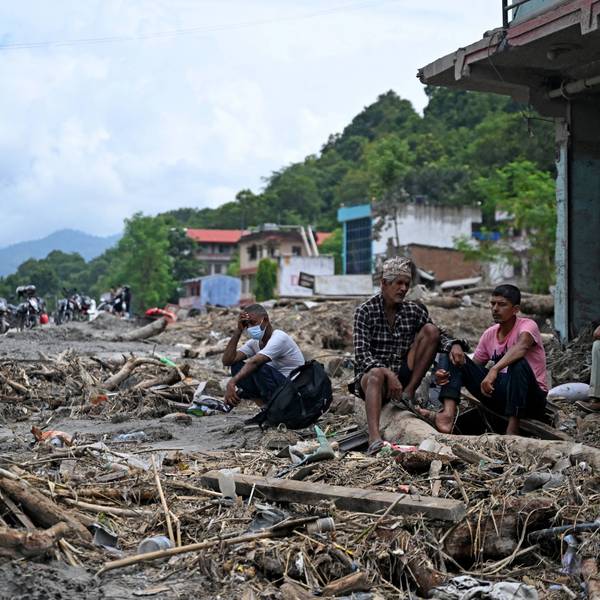
Torrential rain has swept through China. The official death toll is creeping up all the time. It is going to be in the thousands. Mudslides have brought havoc to many places across the country's northwest.
In Russia's capital, Moscow, forest fires - started in scorching hot temperatures - have left the air quality so poor, the authorities are telling people who cannot leave the city to stay indoors.
In Greenland, a mass of ice has broken away from a glacier. Four times the size of Manhattan Island; it's the biggest iceberg in more than half a century. Scientists say arctic ice is melting at record pace and 16 countries have recorded record temperatures this year.
Yet despite the evidence of floods and flames, of drought and danger, there is no concerted international action towards reaching an agreement on the best way to fight climate change.
Most countries of the world gathered in Denmark in December. I know because I was there. They left after ten days suggesting there had been substantial progress, that things were moving in the right direction and it takes time for an international agreement to be hammered out.
There were hopes that a comprehensive, legally binding deal could be reached when the next round of talks convened in Cancun in Mexico in November 2010.
That was both optimistic and unlikely. The politicians smiled and used honeyed words of good intention, but already the process leading up to Cancun is, in the words of a leading environmental journalist, in "semi-crisis".
There is a preparatory meeting scheduled for China in October. What should happen there is that a draft text is agreed so that the politicians can roll up, sign the deal and depart looking like they've saved the world. Sound familiar? Well, that was what was meant to happen in Barcelona last year.
Instead, what we have is a forty page document which has to be negotiated line by line. And there simply isn't the time to do that.
There is an optimistic idea that with countries suggesting things to be added to the text, it means they are now fully engaged in trying to reach a balanced agreement.
In Copenhagen last year, developing countries reacted angrily to the deal, which was tabled. The idea was the Kyoto Protocol, the only legally binding agreement on reducing carbon emissions, would be scrapped, replaced by a new agreement which would allow industrialised countries to set their own targets and timetables to make the changes needed.
The countries most at risk raised their voices loud. They felt they were being told that they must reduce their minor emissions and deprive their people of developing a stronger economy while richer nations did little to minimise the impact of more than 100 years of mass industrialisation.
The US is the largest historical emitter and the second biggest carbon polluter in the world. China overtook it in 2007. Its plan to help remains essentially the same - cut emissions by four per cent on the 1990 figure; a suggestion widely derided in Copenhagen, and a sign the US isn't quite ready to face the pain of significant changes to the lifestyle its people enjoy or the way it uses fuel.
The poorest countries are getting angry again. More than 100 of them are now calling for any future climate change agreement to limit the global temperature rise to 1.5C - not the 2C everyone has been talking about. They are demanding more money to help with fighting the costs of climate change - saying the $100bn a year already suggested simply isn't enough. And they want much more from richer countries that aren't willing to give.
And that's where the basis of future disappointment in Cancun lies. If the rich don't want to do anything - despite the howls of protests outside the halls and the demands for action from charities and non-governmental organisations - then nothing will happen.
And Cancun will be remembered for failure in the same way that Copenhagen is remembered. The countries will leave, claim they're taking important steps and push for agreement in 2011, or 2012 or 2013. And the whole process starts again.
Meanwhile, the floods and fires, the droughts and disasters will continue.
Dear Common Dreams reader, It’s been nearly 30 years since I co-founded Common Dreams with my late wife, Lina Newhouser. We had the radical notion that journalism should serve the public good, not corporate profits. It was clear to us from the outset what it would take to build such a project. No paid advertisements. No corporate sponsors. No millionaire publisher telling us what to think or do. Many people said we wouldn't last a year, but we proved those doubters wrong. Together with a tremendous team of journalists and dedicated staff, we built an independent media outlet free from the constraints of profits and corporate control. Our mission has always been simple: To inform. To inspire. To ignite change for the common good. Building Common Dreams was not easy. Our survival was never guaranteed. When you take on the most powerful forces—Wall Street greed, fossil fuel industry destruction, Big Tech lobbyists, and uber-rich oligarchs who have spent billions upon billions rigging the economy and democracy in their favor—the only bulwark you have is supporters who believe in your work. But here’s the urgent message from me today. It's never been this bad out there. And it's never been this hard to keep us going. At the very moment Common Dreams is most needed, the threats we face are intensifying. We need your support now more than ever. We don't accept corporate advertising and never will. We don't have a paywall because we don't think people should be blocked from critical news based on their ability to pay. Everything we do is funded by the donations of readers like you. When everyone does the little they can afford, we are strong. But if that support retreats or dries up, so do we. Will you donate now to make sure Common Dreams not only survives but thrives? —Craig Brown, Co-founder |
You may know I've just returned from Niger. There, tens of thousands of people are facing extreme hunger because of the droughts of the last two years.
The rainy season is under way but the rains around the capital of Niamey have been torrential and persistent. It's not what is needed. The water is not nourishing the soil. It's washing away the crops. It's washing away homes. It is destroying lives.
The trouble there comes as Pakistan struggles to cope with the worst floods since the creation of the state. Millions of people are homeless. The UN predicts the devastation will be worse than the Asian Tsunami, which struck several countries.
Torrential rain has swept through China. The official death toll is creeping up all the time. It is going to be in the thousands. Mudslides have brought havoc to many places across the country's northwest.
In Russia's capital, Moscow, forest fires - started in scorching hot temperatures - have left the air quality so poor, the authorities are telling people who cannot leave the city to stay indoors.
In Greenland, a mass of ice has broken away from a glacier. Four times the size of Manhattan Island; it's the biggest iceberg in more than half a century. Scientists say arctic ice is melting at record pace and 16 countries have recorded record temperatures this year.
Yet despite the evidence of floods and flames, of drought and danger, there is no concerted international action towards reaching an agreement on the best way to fight climate change.
Most countries of the world gathered in Denmark in December. I know because I was there. They left after ten days suggesting there had been substantial progress, that things were moving in the right direction and it takes time for an international agreement to be hammered out.
There were hopes that a comprehensive, legally binding deal could be reached when the next round of talks convened in Cancun in Mexico in November 2010.
That was both optimistic and unlikely. The politicians smiled and used honeyed words of good intention, but already the process leading up to Cancun is, in the words of a leading environmental journalist, in "semi-crisis".
There is a preparatory meeting scheduled for China in October. What should happen there is that a draft text is agreed so that the politicians can roll up, sign the deal and depart looking like they've saved the world. Sound familiar? Well, that was what was meant to happen in Barcelona last year.
Instead, what we have is a forty page document which has to be negotiated line by line. And there simply isn't the time to do that.
There is an optimistic idea that with countries suggesting things to be added to the text, it means they are now fully engaged in trying to reach a balanced agreement.
In Copenhagen last year, developing countries reacted angrily to the deal, which was tabled. The idea was the Kyoto Protocol, the only legally binding agreement on reducing carbon emissions, would be scrapped, replaced by a new agreement which would allow industrialised countries to set their own targets and timetables to make the changes needed.
The countries most at risk raised their voices loud. They felt they were being told that they must reduce their minor emissions and deprive their people of developing a stronger economy while richer nations did little to minimise the impact of more than 100 years of mass industrialisation.
The US is the largest historical emitter and the second biggest carbon polluter in the world. China overtook it in 2007. Its plan to help remains essentially the same - cut emissions by four per cent on the 1990 figure; a suggestion widely derided in Copenhagen, and a sign the US isn't quite ready to face the pain of significant changes to the lifestyle its people enjoy or the way it uses fuel.
The poorest countries are getting angry again. More than 100 of them are now calling for any future climate change agreement to limit the global temperature rise to 1.5C - not the 2C everyone has been talking about. They are demanding more money to help with fighting the costs of climate change - saying the $100bn a year already suggested simply isn't enough. And they want much more from richer countries that aren't willing to give.
And that's where the basis of future disappointment in Cancun lies. If the rich don't want to do anything - despite the howls of protests outside the halls and the demands for action from charities and non-governmental organisations - then nothing will happen.
And Cancun will be remembered for failure in the same way that Copenhagen is remembered. The countries will leave, claim they're taking important steps and push for agreement in 2011, or 2012 or 2013. And the whole process starts again.
Meanwhile, the floods and fires, the droughts and disasters will continue.
You may know I've just returned from Niger. There, tens of thousands of people are facing extreme hunger because of the droughts of the last two years.
The rainy season is under way but the rains around the capital of Niamey have been torrential and persistent. It's not what is needed. The water is not nourishing the soil. It's washing away the crops. It's washing away homes. It is destroying lives.
The trouble there comes as Pakistan struggles to cope with the worst floods since the creation of the state. Millions of people are homeless. The UN predicts the devastation will be worse than the Asian Tsunami, which struck several countries.
Torrential rain has swept through China. The official death toll is creeping up all the time. It is going to be in the thousands. Mudslides have brought havoc to many places across the country's northwest.
In Russia's capital, Moscow, forest fires - started in scorching hot temperatures - have left the air quality so poor, the authorities are telling people who cannot leave the city to stay indoors.
In Greenland, a mass of ice has broken away from a glacier. Four times the size of Manhattan Island; it's the biggest iceberg in more than half a century. Scientists say arctic ice is melting at record pace and 16 countries have recorded record temperatures this year.
Yet despite the evidence of floods and flames, of drought and danger, there is no concerted international action towards reaching an agreement on the best way to fight climate change.
Most countries of the world gathered in Denmark in December. I know because I was there. They left after ten days suggesting there had been substantial progress, that things were moving in the right direction and it takes time for an international agreement to be hammered out.
There were hopes that a comprehensive, legally binding deal could be reached when the next round of talks convened in Cancun in Mexico in November 2010.
That was both optimistic and unlikely. The politicians smiled and used honeyed words of good intention, but already the process leading up to Cancun is, in the words of a leading environmental journalist, in "semi-crisis".
There is a preparatory meeting scheduled for China in October. What should happen there is that a draft text is agreed so that the politicians can roll up, sign the deal and depart looking like they've saved the world. Sound familiar? Well, that was what was meant to happen in Barcelona last year.
Instead, what we have is a forty page document which has to be negotiated line by line. And there simply isn't the time to do that.
There is an optimistic idea that with countries suggesting things to be added to the text, it means they are now fully engaged in trying to reach a balanced agreement.
In Copenhagen last year, developing countries reacted angrily to the deal, which was tabled. The idea was the Kyoto Protocol, the only legally binding agreement on reducing carbon emissions, would be scrapped, replaced by a new agreement which would allow industrialised countries to set their own targets and timetables to make the changes needed.
The countries most at risk raised their voices loud. They felt they were being told that they must reduce their minor emissions and deprive their people of developing a stronger economy while richer nations did little to minimise the impact of more than 100 years of mass industrialisation.
The US is the largest historical emitter and the second biggest carbon polluter in the world. China overtook it in 2007. Its plan to help remains essentially the same - cut emissions by four per cent on the 1990 figure; a suggestion widely derided in Copenhagen, and a sign the US isn't quite ready to face the pain of significant changes to the lifestyle its people enjoy or the way it uses fuel.
The poorest countries are getting angry again. More than 100 of them are now calling for any future climate change agreement to limit the global temperature rise to 1.5C - not the 2C everyone has been talking about. They are demanding more money to help with fighting the costs of climate change - saying the $100bn a year already suggested simply isn't enough. And they want much more from richer countries that aren't willing to give.
And that's where the basis of future disappointment in Cancun lies. If the rich don't want to do anything - despite the howls of protests outside the halls and the demands for action from charities and non-governmental organisations - then nothing will happen.
And Cancun will be remembered for failure in the same way that Copenhagen is remembered. The countries will leave, claim they're taking important steps and push for agreement in 2011, or 2012 or 2013. And the whole process starts again.
Meanwhile, the floods and fires, the droughts and disasters will continue.