

SUBSCRIBE TO OUR FREE NEWSLETTER
Daily news & progressive opinion—funded by the people, not the corporations—delivered straight to your inbox.
5
#000000
#FFFFFF
To donate by check, phone, or other method, see our More Ways to Give page.
Daily news & progressive opinion—funded by the people, not the corporations—delivered straight to your inbox.
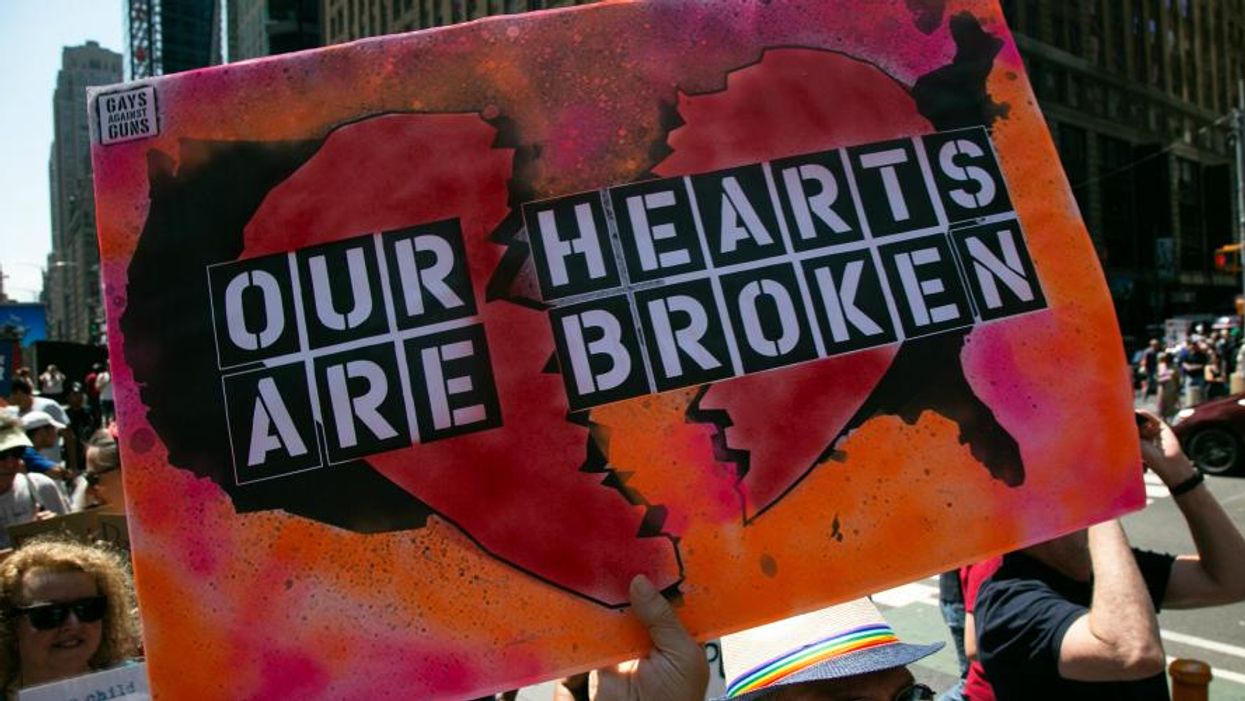
I'm sitting here typing away at the dining room table in the home of friends a few miles along the road from Newtown, Connecticut. In a span of just thirteen hours, there have been mass killings in El Paso, Texas, and Dayton, Ohio. Many more are wounded.
Lone, young white gunmen have murdered more than thirty men, women and children. In Texas, the dead were shopping for back-to-school sale bargains at Wal-Mart. In Ohio, they were enjoying a weekend evening out.
Each assailant legally obtained his weapon. The killer in Dayton's AR-15-style rifle used a double drum magazine that holds 100 rounds of ammo for non-stop shooting. You can order it online for $129.95.
I sat at this same table less than seven years ago during the weekend of the 27 murders at Newtown's Sandy Hook Elementary School and wrote, "As many as 100 bullets were fired in Newtown; last year, a total of 85 were fired at people by the police in all of Germany and 49 of them were warning shots. We will hear all these and other statistics in the days ahead, and in a week or so they will fade until the next time. Unless this time we stand up and say no."
There have been, of course, too many next times. And so far, as hard as we try, every time it happens again we apparently have not stood up in sufficient numbers or shouted loud enough to make the massacres stop. What does it take? The story keeps repeating.
July 2012: In the wake of the killings at a Colorado movie theater, my colleague Bill Moyers and I wrote, "We are fooling ourselves. Fooling ourselves that the law could allow even an inflamed lunatic to easily acquire murderous weapons and not expect murderous consequences. Fooling ourselves that the Second Amendment's guarantee of a 'well-regulated militia' be construed as a God-given right to purchase and own just about any weapon of destruction you like, a license for murder and mayhem. A great fraud has entered our history."
January 2013: Less than a month after the Newtown murders, we wrote, "Naturally, in a country where even life and death are measured by the profit margin, the cure for gun violence is, yes, more guns! Bigger profits."
October 2017: After 57 were killed in Las Vegas, I said, "To claim as a constitutional right the possession of firearms intended for nothing less than brutal, gruesome warfare strains credulity. These are killing machines with no purpose other than to maim and destroy. Of course, we've said this time and again and will doubtless say it again because the foolish cycle remains unchanging."
February 2018: I wrote, "An AR-15 is what 19-year old Nikolas Cruz bought for his rampage at Marjory Stoneman Douglas High in Parkland [Florida]... These are not sports weapons and they sure as hell don't belong in the hands of any civilian, much less the mentally disturbed."
And so it goes. A pizzeria owner who was at the murder scene in Dayton tells The New York Times he had watched the news from El Paso earlier in the day but thought it was, "just another mass shooting that we hear about all the time, and you never think it's going to hit home."
Is that what needs to happen? Must every community endure a tragedy of its own to understand that gun violence not only slays individuals but also kills us as a society?
Rather than face the truth, our elected leaders try to cover it all up, pointing fingers at everyone but themselves and blaming the gun deaths on video games and mental problems. When their hands are not fraudulently folded in prayer, they greedily reach out for more and more campaign cash from the National Rifle Association.
Here's a truth for you. This is domestic terrorism. Here's another: According to the NRA Campaign Spending Tracker run by The Trace, an independent news organization that investigates guns in the United States, "In the 2018 election cycle, the NRA... spent $5,362,861 supporting 265 candidates... and $4,369,083 opposing 71 candidates... in congressional races across 44 states." Over the past decade, they've spent more than $100 million.
The NRA donated $30.3 million to Trump's 2016 presidential campaign. Where it all came from remains a secret. Keep that cash in mind; then remember how he incites white supremacist crowds at his rallies. Never forget all the vicious things Donald Trump has said about people of color, the constant anti-immigrant rhetoric, much of it in the past few days leading up to the shootings.
In characteristic cover-his-ass mode, he now lies and tells the public, "Hate has no place in our country," and that when it comes to guns, "We have done much more than most administrations. That's not talked about very much. But we've done actually a lot. But perhaps more has to be done." Perhaps?
Monday morning, Trump, bowing to pressure, called for "strong background checks," but naturally then blamed the media for the problem--"Fake News has contributed greatly to the anger and rage that has built up over many years," he tweeted--as ever, misleading and trying to divert the blame away from the leading offender, himself.
Yet he's just the latest in a long list of culprits. More than twelve years ago--twelve years!--the day after 32 were shot and killed at Virginia Tech in April 2007, I asked, "How many times do mass killings... have to occur before we get it through our thick, wired for the Stone Age skulls? For that matter, how many times do people have to write a column like this one decrying the insanity of gun violence in America?"
Here's that column once again. Will I ever be able to stop writing it?
Wade Michael Page, the Wisconsin gunman who opened fire inside a Sikh Temple during Sunday services this weekend, joins a string of men in recent US history -- guided by rage, insanity, or some combination of both -- who acted alone with murderous results. But Page had more in common with those men than just the urge and capacity to execute such a hideous act: he had the same perfectly designed weapon they had, too.
Like Seung-hui Cho, the Virginia Tech University student who killed 32 people and then himself in 2007, Jared Loughner who killed six people in Arizona in 2011, and James Holmes who murdered twelve in a Colorado movie theater last month, Wade Michael Page on Sunday carried out his assault with a highly concealable, high capacity semiautomatic handgun.
According to a Reuters report and based on new details emerging from the weekend tragedy, Page's gun, a Springfield 9mm, was purchased legally at a Wisconsin gun shop and was likely chosen, experts say, for being "adaptable to using high-capacity magazines."
Josh Sugarmann, executive director of the Violence Policy Center, a nonprofit group that advocates to reduce gun violence, told Reuters these kinds of guns -- especially when using the high-capacity clips available for them -- allow the shooters to fire the maximum number of bullets in a short period of time.
"There is no valid reason for civilians to have assault rifles, semiautomatic handguns and high-capacity magazines," he said. "We have to start ratcheting down the firepower in civilian hands in the United States."
# # #
Thousands of people across the country have poured into the streets -- from New York to Sanford, Florida -- to demand justice for Trayvon Martin. Hundreds of thousands more stepped up to protest online. In response to the public outcry, the Sanford chief of police has temporarily stepped down and the state prosecutor has stepped aside. But nearly one month after 17-year-old Trayvon Martin was stopped, stalked, shot and killed while walking home from a convenience store, armed only with a bag of Skittles and a can of iced tea, his killer, George Zimmerman, has not been arrested. Today, the Children's Defense Fund released its new report, Protect Children, Not Guns 2012, dedicated to the memory of Trayvon Martin and the thousands of children and teenagers killed by guns in America, including the 5,740 children killed in 2008 and 2009 according to the latest data from the U.S. Centers for Disease Control and Prevention.
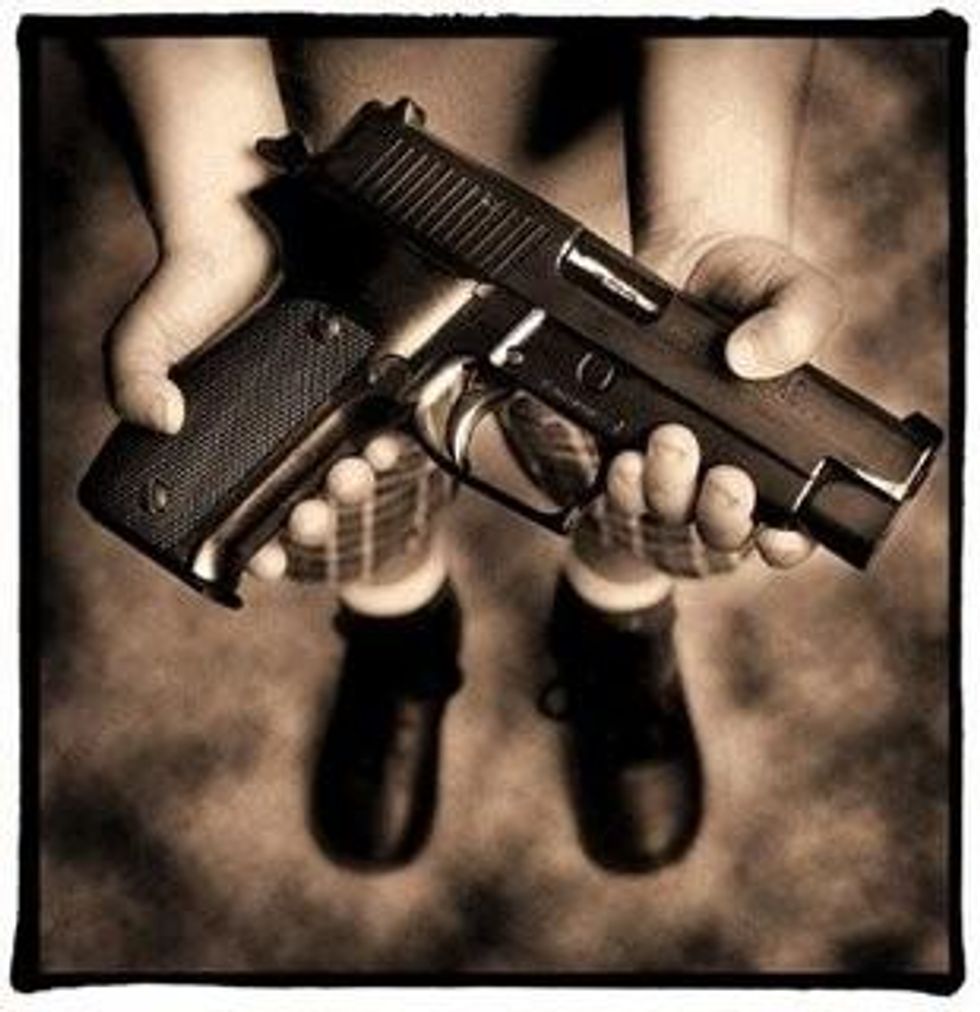
Where is the outrage over every single one of the thousands of children and teens killed by guns -- too many by gun slinging Americans unrestrained by common sense gun control laws. Florida's "Stand Your Ground" law, also known as the "shoot first, ask questions later" law, is now under national scrutiny. But will it and others be changed to protect children rather than gun owners and sellers?
April 16 marks the fifth anniversary of the Virginia Tech massacre where 32 students and faculty were killed by a gun, 25 others were injured, and many more were traumatized. Each year since then has seen gun victims -- young children, teenagers, young adults, a member of Congress, a federal judge and many more. Days, weeks, months and years go by and little or nothing -- except fleeting headlines, tears, trauma and talk -- is done to protect children instead of guns.
By any standards of human and moral decency, children in America are under assault, and by international standards, America remains the unchallenged world leader in children and teen gun deaths.
Analysis of the most recent data from 23 high-income countries reported that 87 percent of all firearm deaths of children under 15 were in the United States. The rate of U.S. gun homicides for teens and young adults 15 to 24 was 42.7 times higher than the overall gun homicide rate for that same age group in the other countries.
Why are common-sense gun regulations so shockingly absent in our country? Even in the wake of the Tucson tragedy and the near-fatal shooting of one of their own, Congress failed to act. Calls for banning high-volume ammunition clips and tightening up the federal background check system were ignored. Our leaders once again capitulated to the powerful gun lobby over the rights of children and citizens to life and safety. In November 2011, the U.S. House of Representatives passed the National Right-to-Carry Reciprocity Act. If a similar bill is passed by the Senate and becomes law, a person with a permit to carry a concealed handgun in one state -- a person like George Zimmerman in Sanford, Florida -- could carry that concealed weapon in another state even if it was against the second state's law. Proponents of such dangerous laws maintain the fiction that guns promote personal safety. It is long past time to acknowledge gun violence as a hugely serious threat to children, teens, and overall public health and safety.
Our leaders in Washington, D.C. are not alone in refusing to make America safer. Forty-two states have adopted preemption laws to ensure state legislatures control of gun policy, impeding the ability of cities to develop local solutions to gun violence in their own communities. In 2011, Kansas, Mississippi and Utah enacted laws allowing concealed weapon permit holders to carry loaded, concealed firearms in or on the grounds of elementary and secondary schools. With all eyes on Florida's "Stand Your Ground" law, few noticed a law passed last year that, if upheld, threatens loss of a medical license for doctors who ask patients about whether a gun is in the home although it is not at all unusual or inappropriate for pediatricians particularly to ask patients and parents of patients about possible safety hazards in the home including guns.
We have so much work to do to build safe communities for our children. We need leaders at all levels of government who will protect children over guns. We need a relentless, powerful citizens' voice to break the gun lobby's veto on common sense gun policy. Our laws must control who can obtain firearms and close the gun show loophole, require consumer safety standards and childproof safety features for all guns, and strengthen child access prevention laws that ensure guns in the home are stored safely and securely. And all must take action and ask political candidates this fall what steps they will take to protect children from guns. We must remove guns from our homes where children so often find them and put themselves and others in harm's way and combat cultural glorification of guns and violence. As a nation, we must aspire and act to become the world leader in protecting children against guns rather than leading the world in child victims of guns. Every child's life is sacred and it is long past time that we protect it.
Oklahoma City (1995--168 killed), Columbine High (1999--12 killed), Virginia Tech University (2007--32 killed), and now Ft. Hood (13 killed). What do these memorable places have in common?
They are each sites where Americans killed Americans in a culture whose violence extends from here to places like Iraq and Afghanistan. They are symptoms of a deep problem not likely to disappear without serious intervention.
Connections exist among the violence here at home and American violence in wars abroad, which indicate a pattern. These incidents are among growing signs that we should analyze carefully, now, before additional warnings happen and perhaps even worsen. The root causes of such eruptions should be studied.
Responses to Ft. Hood could develop into what is described as a "tipping point" in the best-selling book of that title by Malcolm Gladwell. Others describe such a time as a "turning point." Perhaps we could turn away from such extreme violence.
Where might terror strike next and who might be the perpetrator(s) and victims? More students, soldiers, or some other group? How is such domestic terrorism bred and what can we do to interrupt it? It's time to look inside, rather than seek outside scapegoats. Raising haunting questions is more important now than rushing to facile answers and seeking revenge.
At Oklahoma City an anti-government activist detonated the bombing of a federal building. At Columbine two high school students pulled triggers on other students and a teacher. At Virginia Tech a college student killed other college students. At Ft. Hood the suspect is an Army physician who killed five other psychotherapists and an additional eight people, and wounded some 31.
What does it say that a mental health professional seems to have endured so much trauma that he broke under the stress and engaged in a mass shooting? It is too easy to just blame these individuals.
As a former Army officer whose military family gave its name to Ft. Bliss, Texas, who was raised partly near Ft. Hood, this massacre struck close to home. As a college professor, when I read about shooting at schools, I think about my responsibility to help protect students.
The American shoot-'em-up approach to solving problems is not new, especially in Texas and the remaining Wild West. These recent tragedies have lessons to teach us, so that the likelihood of other such incidents can be reduced.
Rather then merely indict the individuals that committed these heinous crimes, we could benefit from looking beyond them to consider our own responsibilities as citizens to reduce such violence and improve the context that spawns it.
It is easier to demonize the killers, rather than try to understand why these desperate men felt driven to such violence that would likely take their own lives or lead to extreme punishment. Their anguish and agony must have been substantial.
Punishment of the perpetrator alone is unlikely to break the cycle of violence that Americans commit here at home and carry abroad. A careful study of patterns would be more helpful.
The recent violence at Ft. Hood and in the town of Killeen, where it is located, is not new. The area "has been beset by crime and violence since the wars in Afghanistan and Iraq began," according to the "New York Times" on Nov. 10. "Reports of domestic abuse have grown by 75 percent since 2001," it continues. Soldiers come home from combat and beat their wives, sometimes to death. 76 suicides by personnel assigned to Ft. Hood have occurred since 2003.
There is no one to blame other than Americans. We did it. Not Muslims, Arabs, or outside "terrorists." Not external enemies. "We have met the enemy, and it is us," asserts a famous line from a Pogo cartoon from my childhood. It is time for us to reflect on the context that breeds such self-destructiveness.
From the day after the Ft. Hood massacre on Thursday to Sunday I mainly read and clipped many articles, while continuing my regular life. I was especially struck by the heroism of civilian Sgt. Kimberly Munley, who bravely took the shooter down, even as she went down with four bullets in her body.
It was not until Sunday night that I really felt the horror. I became numb, immobilized, depressed.
Fortunately, earlier that day I emailed my Sonoma State University students toput Ft. Hood on the lesson plan for my "War and Peace" class. I wanted to gently encourage them to get beyond denial to express their feelings, develop opinions, and engage in critical thinking. The students were attentive and thought deeply about the implications of Ft. Hood and what it reflects about us as a nation and our future.
"It takes a little while before the grieving starts," reads the last quotation in a Nov. 8 article in our local daily "The Press Democrat." It opened me to my own grief. The words are those of Col. Bill Rabena, who runs the new post-Ft. Hood massacre Spiritual Fitness Center. It offers counseling, soothing music, a religious library and meditation space, among other services, to help survivors cope with psychological trauma.
While I was in the Army during the l960s and the American Wars in Vietnam, Cambodia, and Laos we did not have such centers. So I have felt mainly alone during the some 40 years after my discharge and having to de-militarize myself and deal with my own trauma. I am still recovering and easily triggered, especially by loud sounds.
We need to work to enhance the safety of our students, soldiers, and citizens as a whole, or future similar incidents are likely. Public places-such as schools, government buildings, and even military bases-have become less safe during this 21st century.
Perhaps the Ft. Hood massacre can awaken us to the pain and suffering of our military personnel and the lives that they touch overseas and in their families. On the other hand, a Nov. 16 "Newsweek" column on the new book "American Homicide" by Ohio State professor of history and criminology Randolph Roth notes "that gun and ammunition sales are up nearly 50 percent from a year ago." What does that say about the state of our union and our future?
Now is a time to grieve our national losses and work to minimize such losses in the future. Such collective grief can inform and educate us.
The Chicago Tribune wrote, "Laws Failing To Keep Guns Out Of Hands Of Disturbed," and, "Suspect Had History Of Bizarre Acts."
But the headlines weren't about Stephen Phillip Kazmierczak of the Northern Illinois University shootings in February or Seung-Hui Cho of the Virginia Tech massacre last year.
They were about a 30-year-old former babysitter who shot six students at an elementary school in an affluent Chicago suburb, one of whom died, and another man before killing herself twenty years ago -- and ushering in the era of the school shooting.
Like Kazmierczak and Cho, Laurie Dann of Winnetka, IL had an extensive police and psychiatric record before her rampage in May of 1988 and there were ample warning signs.
She had been investigated by authorities in three states for repeated threats to kill people and even stabbed her ex-husband with an ice pick.
She had a "thing" for raw meat, putting it under her mattress at college while she slept and stealing it from the refrigerators of families for whom she babysat.
She rode elevators for hours wearing rubber gloves to avoid touching the metal.
Two days before the shootings, Dann mailed arsenic laced snacks to former acquaintances and her psychiatrist and hand delivered others, leaking and appearing foul, to fraternities at Northwestern University in Evanston, IL.
And the day of the shootings she started fires at a Winnetka home and a different school from the one she shot up.
P.S. She was on psychiatric drugs.
But long before Columbine, campus-wide email alerts and "crazed gunman" drills in schools, the community didn't ask how it failed Dann.
It didn't consider bills to let students carry guns to class for future Danns.
It wanted to know how the hell a violent criminal owned three legal guns.
In fact, at a town meeting to discuss a handgun ban after the shootings at the local high school, gun advocate Susan Craig was booed off the stage and shown the door after "screaming that criminals will make their own guns anyway," and that the "handgun ban will hurt people," according to the Chicago Sun-Times.
Try booing a gun advocate today.
At a different town meeting, Rabbi Harold Kudan of nearby Temple Am Shalom went on record as challenging aggressive leaflets the gun lobby circulated a month after the shootings that claimed, "If Jews had been armed they could have fought the Nazis."
"If Jews had guns in Nazi Germany, no one would have survived. It would have been an excuse for Nazis to kill with even greater abandon," he told the assemblage, according to the Chicago Tribune.
Of course criminals "making their own guns anyway" or at least not obeying prevailing gun laws is the fulcrum on which gun lobby logic turns.
Not only can we not stop criminals and the mentally ill from getting guns goes the High Noon logic, gun laws will stop us Good Guys from protecting ourselves when they do.
But there's a flaw to "the paranoid paradise of the gunslinger's imagination," as Hall Crowther calls it on indyweek, "a world so dangerous that an unarmed citizen is taking an irrational risk," and "only anti-social behavior will keep you alive."
The flaw is that Dann, Kazmierczak and Cho were legal gun owners several times over.
They passed their background checks with flying colors.
So did gunmen and women Latina Williams, who killed three at Louisiana Technical College in Baton Rouge in February, Sulejman Talovic who killed five in Salt Lake City's Trolley Square mall in 2007, Vincent J. Dortch who killed three at the Philadelphia Naval Shipyard in 2007, Jennifer Sanmarco who killed six at a Goleta, CA postal facility in 2006, Bart Ross, who killed a Federal judge's husband and mother in Chicago in 2005, Terry Ratzmann, who killed seven in a church service in Milwaukee in 2005 and Chai Vang, who killed six Wisconsin hunters in 2004.
And while you can't stop the actions of criminals and the mentally ill, they're not likely to commit drive by stabbings.
Sixteen years after the Dann shootings, officials at Hubbard Woods School where the shootings occurred, have not lost their resolve. They withdrew an invitation for First Lady Laura Bush to read to children during a Chicago visit in 2004, according to Wilmette Life, citing the Bush administration's "lax stance on gun control."
Martha Rosenberg is a cartoonist for the Evanston Roundtable in Evanston, Illinois.
So, what's with August? Since George W. Bush became president, August has either been a month when terrible things happened or it has foreshadowed a precedent. Let's look at the evidence year by year:
2001
During the President Bush's month-long vacation at his Crawford ranch, then-National Security Advisor Condoleezza Rice presented him with the memo "Bin Laden determined to attack inside the U.S." September 11 resulted.
2002
The rumblings of war began in earnest as Bush started talking about Saddam's threat to the United States. Troops and materiel began moving en masse toward the region. On March 19, 2003, war began.
2003
Americans were impatient that the war had not yet ended. And neither Saddam, the WMDs, or Osama bin Laden had been found. A July Gallup poll showed that 42 percent of the public thought the war was going badly, up 13 percent since May when Bush proclaimed that major hostilities in Iraq had ended. The United States was spending about a billion a week on the war and Bush lobbied Congress for an additional $87.3 billion, which he got in October.
This was the first of many installments he would request. So far, the war has cost $448.67 billion, according to www.nationalpriorities.org and some say it is expected to reach between $1-2 trillion before it's over.
Bush's approval ratings had nose-dived to 50 percent as people began to feel that they had been duped into war. Nevertheless, the mainstream media were reluctant to dig out the truth on this matter. Meanwhile, Bush supporters defended him and called the peace activists traitors whose demonstrations were responsible for the deteriorating situation in Iraq.
There was so much discord in the country that people were lulled into denial, said New York Times columnist Paul Krugman. By September 11, people were apparently so weary of war that many skipped the second anniversary observances. World opinion of America was plummeting because of Bush's unilateral, preemptive invasion of Iraq. This action would come back to haunt the president in October when he failed to enlist the aid of our allies and the United Nations in Iraq.
2004
The presidential race between George W. Bush and John Kerry got dirty early when the Swift boat veterans, who allegedly served with Kerry in Vietnam, kicked off an advertising campaign against him. First, they accused him of having been unfit to lead them. Then they trashed him for criticizing U.S. policy in Vietnam before the Senate Foreign Relations Committee in 1971. Finally, they disputed Kerry's claim about being in Cambodia on a secret mission. Kerry delayed addressing these ads and his wait affected the election's outcome in November.
2005
Cindy Sheehan camped outside of the president's ranch requesting a meeting with him regarding the death of her son, Casey, who was killed in Iraq the previous year.
She drew worldwide media attention to the callousness of Bush who refused to meet the mother of a dead soldier. He also had not and still has not attended one funeral of a fallen Iraq War soldier or marine. Sheehan's standing up to Bush re-energized the peace movement. The movement's presence had been made invisible partly because it was largely ignored by the administration and the mainstream media and partly because peace activists were demoralized that they had not prevented the war from starting and can't get it to end.
On August 29, Hurricane Katrina blew away New Orleans and Americans discovered that the federal government was not only unprepared to deal with domestic emergencies, it was unwilling to help Americans, especially if they were poor. National Guard troops who would have been there to help with disaster relief were in Iraq. The Federal Emergency Management Agency (FEMA) completely botched its rescue duty and Director Michael "Brownie" Brown, resigned his post in disgrace in September. He would be one of the first incompetent Bush appointees to go.
2006
Preparations stepped up for the November elections that would result in the Democrats winning both houses of Congress. The war in Iraq was the single issue that brought people out to vote against the president and Republican Party candidates.
War broke out between Israel and Lebanon. Amnesty International said Israel violated international law by deliberately destroying Lebanon's civilian infrastructure. The United Nations' humanitarian chief accused Israel of its "completely immoral" use of cluster bombs. Israeli reserve soldiers protested their country's provocation of the attacks and called for Prime Minister Ehud Olmert's resignation as well as an investigation over the failures of the conflict. Meanwhile, Hezbollah captured and held two Israeli soldiers.
It was discovered that former U.S. Deputy Secretary of State Richard Armitage had originally revealed the identity of CIA operative Valerie Plame to columnist Robert Novak in 2003. I. Lewis "Scooter" Libby (who was born in August), Vice President Dick Cheney's former chief of staff, would be indicted in March 2007 for his role in disclosing Plame's identity. Libby was sentenced to 30 months in federal prison and $250,000 but President Bush commuted his prison sentence because, he said, it was too severe. Such action coincided with a growing list of situations where Bush would claim "executive privilege" as a way of evading responsibility.
Virginia Tech closed its campus and canceled classes as police searched for a man suspected of murdering a hospital security guard and a police officer. Eight months later on April 16, Seung-Hui Cho, a senior majoring in English, killed 32 people before he took his own life.
2007
This year we started the month of August with the collapse of the Minneapolis I-35 bridge over the Mississippi River. Such a tragedy calls attention to the safety of America's nearly 600,000 bridges. The U.S. Department of Transportation reports that one-quarter of the nation's bridges, including the 40-year-old Minneapolis bridge, were considered "structurally deficient and functionally obsolete" in 2005.
Bridges are part of the nation's aging highway infrastructure that is in desperate need of repair with an estimated cost of $68 billion, according to NBC News. After all the tax cuts-both state and federal-and the wars in Iraq and Afghanistan, where is the money going to come from? Let's not forget that the Republicans gained control of government in 2004 by promoting tax cuts. It's chilling to think about what the Minneapolis bridge collapse might foreshadow.
As we get over the shock of the tragedy at Virginia Tech, the religious questions will soon begin: How could God let this happen? What kind of God allowed it? How can I believe in God when bad things like this happen?
Jesuit theologian Jon Sobrino can offer us some help. He knows a lot about tragedy. He nearly escaped assassination on March 16, 1989, in El Salvador when members of the military broke into the rectory and killed his brother priests, the housekeeper and her daughter. He was out of town that night.
After the peace finally came to El Salvador after 12 years of civil war (1980-92), an earthquake in 2001 killed over 800 people, injured nearly 5,000 and destroyed more than 108,000 houses and 150,000 buildings. The Salvadoran government didn't provide the necessary rebuilding support so the people did it themselves, first by digging out victims of the earthquake with their bare hands because they had no equipment. Sobrino concluded that God wasn't in the tragedy of the earthquake or even in the government's disregard for the people. God was in the people's response to the tragedy.
By declaring Cho sick and insane in plain view on America's TV and Internet screens, we essentially remove ourselves from any response for the killings and salve ourselves instead with anger or fear or denial or avoidance. We did this after Columbine and again, after 9/11. What is missing in our response to all these tragedies, however, is the "we." How are we part of the madness that drove the perpetrators? How are we preventing further heinous acts of violence? How are we making ourselves feel unsafe?
Many people will react to the VT tragedy by installing more cameras, more guards, more lock-downs, more security keys. Only those in the security business will benefit from this strategy as they willing sell institutions their goods. Administrators tend to adopt such measures because they look as though they're doing something. However, fear prevails because these security devices are constant reminders that campus is unsafe and everyone is at risk.
Many people will choose an avoidance strategy where they break some pattern they think relates to the tragedy. For example, the mother of one of my students advised him to forego applying for a residence hall assistant position because resident assistants at VT were among those killed.
When tragedy strikes, and it always does, some people go on with their lives without thought or reflection on it. This denial strategy essentially leads one to believe that nothing happened and all is normal. We try to get on with life without dealing with life's reality. We then prevent ourselves from acting against such tragedies because we refuse to relate to them or find meaning in them-or to find God in them.
I'm not suggesting a Pollyanna approach saying that all is well and God will provide. Actually, I'm suggesting a more confrontational approach against these evil acts of violence and terrorism.
* Join with others to form or strengthen your community, neighborhood or campus. Talk about these issues and figure out what YOU can do about them to respond without fear, hatred or denial but rather with love, compassion or reconciliation. After the Jesuits were executed in El Salvador, the gardener, who lost his wife and daughter in the killings, planted rose bushes in the same place where they were killed.
* Defy the inclination to give in to fear by objecting to stepped up security measures and instead organize people to look out for each other. Refuse to watch the repetitive news reports or analysis of the tragedy by turning off the TV and the Internet. Challenge people who say mean and nasty things about others to stop such vitriol.
* Sublimate your anger, sadness and fear by being silent within. Meditate. Take a walk in the woods. Breathe deeply. These strategies cleanse the body and help you face the tragedy.
For the present, it's clear that we are going to have to deal with terrorists in our world. Let us confront them by pulling together and allowing our communities to be transformed. So far, we're getting nowhere through our anger, fear or denial.
The tragedy at Virginia Tech tears at the heart of everyone. Thirty-two innocent students and teachers, in the normal activities of their lives, are suddenly shot dead. Each one of them has a mother, a father, friends, classmates, siblings, and others who held them dear. And all of these have had their hearts torn, or torn out. There is now emptiness and grief where once there was a person.
Americans in their sharing of this sadness should consider how others in the world have similar feelings when facing similar loss and tragedy. These 32 senseless deaths are a chance for empathy with other communities who have also lost 32 loved persons to sudden death.
A search of Google using the search expression: "Iraq AND ("32 killed" OR "32 died" OR "killing 32")" finds the following news headlines and news text (in brackets):
3 March 2004:
Bremer: U.S. to bolster Iraq border security ("killing 32 people")
24 April 2004:
At least 32 killed, nearly 60 injured in another day of violence in Iraq
1 June 2004:
3rd of detainees who died were assaulted ("32 died in Iraq over 12 months")
16 July 2004:
32 killed as attacks rock Iraq
17 September 2004:
32 killed as US Forces continued their relentless strikes in Baghdad
15 October 2004:
At least 32 killed in Iraq violence
28 December 2004:
32 killed in attacks in Tikrit
23 June 2005:
32 killed in coordinated attacks
14 November 2005:
On American attacks in Iraq ("American navy announced killing 32 gunmen")
9 December 2005:
Suicide bomber on Iraqi bus kills 32
6 January 2006:
Scores killed on Iraq's bloodiest day ("32 killed by a suicide bomber at a Shiite funeral")
2 March 2006:
Iraqi parties want Jaafari out of Prime Minister race ("more violence struck Iraq, killing 32 people")
24 March 2006:
32 killed in attacks across Iraq
14 May 2006:
32 killed in violence
27 June 2006:
Seven Sunni groups seek truce in Iraq ("32 killed in violence")
28 July 2006: IRAQ:
32 killed in Baghdad blasts
8 December 2006:
At least 32 killed in attack on two families in Iraq
10 January 2007:
Weather blamed for plane crash near Baghdad ("killing 32")
30 January 2007:
At least 32 killed in Iraq holy day violence
15 March 2007:
Suicide bomber apparently targeting senior city official devastates busy square in Baghdad ("killing 32 people")
10 April 2007:
Bombings kill 32 in Iraq; U.S. raids hit civilians
15 April 2007:
Dozens killed in Iraqi holy city ("killing at least 32 people")
In each of these tragic events, each one of the 32 people also had a mother, a father, friends, classmates, siblings, and others who held them dear. And all of these also have had their hearts torn, or torn out, to be filled with emptiness and grief.
The tragedy at Virginia Tech was caused by lone gunman, probably deranged. It was a one-time event. It is finished. The tragedy in Iraq was caused by the US government, with the over-whelming support of the US Congress, most of the US media, and much of the US population. This war was planned and executed by rational men and women, none of them deranged.
The US decided to start the war against Iraq.
The US decided to destroy the infrastructure of Iraq.
The US decided to destroy the Iraqi government and to disband its police and army.
The US decided to send too few soldiers to secure the nation after doing these destructive deeds.
And the tragedy of Iraq is not a one-time event. It is not finished. It continues, apparently without end.
By many reports, the US is now preparing to start another war, this time against Iran.
Americans feeling the shock and grief of the tragedy at Virginia Tech should look into their hearts and realize that they through their government are bringing this same tragedy again, and again, and again, and again, and again, endlessly and needlessly, to other people in the world who also have hearts that can be torn out, who also feel grief and loss when family and friends are suddenly killed when doing ordinary things of life, like going to school.
Tragic deaths force us to feel our humanity and to see we are similar to others in the world. The tragic deaths in Virginia might serve to motivate Americans to curb their militarism and to minimize the tragedies of sudden death that they have been bringing to other families in the world.
Floyd Rudmin is a professor of psychology at the University of TromsAfA, in Norway. He is also affiliated with the Centre for Peace Studies and is a member of Science for Peace.
On Sunday, the National Rifle Association wrapped up its 136th annual convention in St. Louis. Sixty-thousand attended. NRA Executive Vice President Wayne LaPierre fired up the crowd, telling them, "Today, there is not one firearm owner whose freedom is secure."
On Monday, one of those owners shot more than fifty students, staff and teachers at Virginia Polytechnic Institute. Thirty-two of them died, the worst such massacre in American history. So much for their freedom.
At that same St. Louis meeting -- amidst sessions on African big game hunting, "methods of concealed carry," and quick draw competitions -- Chris Cox, executive director of the NRA's Institute for Legislative Action, chillingly warned of an event remarkably like Monday's shootings. Warned, not because of the bloodshed or the anguish it would bring the bereaved families, but because such an incident would give gun control advocates "a green light to do it all," by which he meant, he said, "gun bans, gun registration, gun owner licensing, gun rationing, taxes and fees."
Cox callously declared that for those in favor of stricter gun laws such a tragedy would be "the Hail Mary of their playbook." Hours after his remarks, innocent victims lay dying, shot down by a maniac with a pair of handguns.
Frankly, I wish Cox were right about at least some of what he propagandizes as the vast power of the gun control lobby. How many times do mass killings such as what happened in Blacksburg, Virginia, have to occur before we get it through our thick, wired for the Stone Age skulls? For that matter, how many times do people have to write a column like this one decrying the insanity of gun violence in America?
And how many times do we have to put up with NRA bullies and loudmouths screaming about the right to bear arms? You can have your guns for hunting and collecting and skeet, trap and target practice. Hell, you can have a permit for a gun to protect your business or home, even though it's 22 times more likely to kill a member of your family than an intruder. But the rest?
Let's face it, the reality is that NRA officials have a much broader agenda than most of their four million members probably realize. At its root is opposition to government regulation of any kind. They mention the United Nations as an alien force almost as often as those black helicopter loons in Idaho. Former UN Ambassador John Bolton was even one of their convention's guest speakers, inveighing against the perfidy of international arms trafficking treaties.
Maybe here in New York City we're more hyper on the issue. Thirty years ago I had a handgun pointed at me during a robbery on a Manhattan cross street. It got my attention. And don't start with me, suggesting that if I'd had a gun I could have fought back. More likely, I'd be dead.
Friends have had similar close calls. And a month ago, just a few blocks from my apartment, two unarmed auxiliary policemen were gunned down by a lunatic not unlike Monday's campus killer.
As for Virginia, well, to modify their tourist slogan, the state is indeed for lovers -- of firearms. "Having a gun is not a liability in this state for a politician," George Mason University politics professor Mark Rozell explained to the Washington Post last month. This was after an aide to the state's new junior senator, Democrat James Webb, was arrested with a loaded handgun and ammunition, entering a US Senate office building. He said the gun belonged to Webb.
The senator is "clearly committed to the Second Amendment and has a gun close by when he is in Virginia," Virginia Commonwealth University political scientist Robert Holsworth told the Post. Senator Webb, a former Marine marksman, proudly showed off his carry permit during last year's election campaign and received an NRA approval grade of "A."
The Brady Campaign to Prevent Gun Violence gives Virginia a grade of C- on legislation preventing gun violence (New York State gets a B+, Mississippi an F). Virginia has no law requiring gun registration, although a permit is needed to carry a concealed weapon. If you buy firearms from a licensed dealer in Virginia, you have to pass a criminal background check, but there is no such rule for buying weapons from unlicensed dealers at gun shows, a loophole both congressional and state legislation aim to close (the bills are vehemently opposed by the NRA).
The Virginia Tech killings will be blamed on a variety of things, just as Columbine was. Regardless of the true motive, some will suggest that the shootings were an aberrant incident timed to mark the anniversary of Columbine, Waco, Oklahoma City -- even the 1775 Battle of Lexington and Concord and Hitler's birthday -- all of which took place at this time of the month. Or that if this young murderer is, as the Chicago Sun-Times was reporting Monday night, a Chinese national on a student visa and not an American, it somehow doesn't count.
Polling indicates that although a majority of Americans favor stricter gun control, they tend to blame such senseless massacres more on a poor family upbringing and the dark influence of popular culture than a lack of sensible gun laws. There's some truth to that, of course. The argument also will be made that regardless of the law, a lunatic or criminal can get hold of a gun.
Yet take a look at a study released last fall by Johns Hopkins' Center for Gun Policy and Research. In 1999, a gun store in the Milwaukee area was found to be the leading seller of guns in America that later turned up in the hands of criminals. The shop cleaned up its act, observed the laws and there was a 44 percent decrease in new guns going to local bad guys. According to Daniel Webster, the study's lead author, "Increased scrutiny of the few gun dealers linked to the most crime guns has the potential to significantly reduce the supply of new guns to criminals in many other US cities." (According to the Bureau of Alcohol, Tobacco and Firearms, one percent of licensed dealers are responsible for more than half the guns recovered from criminals.)
We have some 200 million, privately owned firearms in America, 65 million of which are handguns, the primary purpose of which is to threaten, hurt and kill people. Every year, there are 30,000 gun deaths and 300,000 gun-related assaults in this country. All of this violence costs America an estimated $100 billion a year. Toys are regulated with greater care and safety concerns.
Over the next days and weeks and months, there will be much wringing of hands and gnashing of teeth and rending of garments but what will be done? If the past is any guide, the majority who favor stricter control will in all likelihood be shouted down by the vitriol, and the electoral and lobbying money power, of the well-armed few. Oh well, we all too probably will say. Until the next time. And the time after that. Unless we make a noise. Now.
Sadly, perhaps the person with the sanest, existential perspective on all this was Jamal Albarghouti, the Virginia Tech grad student who shot the cell phone video that has been seen on all the networks. What was he going to do next, an anchorwoman asked him. "Get on with my life. What else can I do?" he replied.
"Of course," he added, by way of an explanation, "I'm from the Middle East."
Michael Winship is a Writers Guild of America Award winner and former writer with Bill Moyers.
Copyright 2007 Messenger Post Newspapers