

SUBSCRIBE TO OUR FREE NEWSLETTER
Daily news & progressive opinion—funded by the people, not the corporations—delivered straight to your inbox.
5
#000000
#FFFFFF
To donate by check, phone, or other method, see our More Ways to Give page.
Daily news & progressive opinion—funded by the people, not the corporations—delivered straight to your inbox.
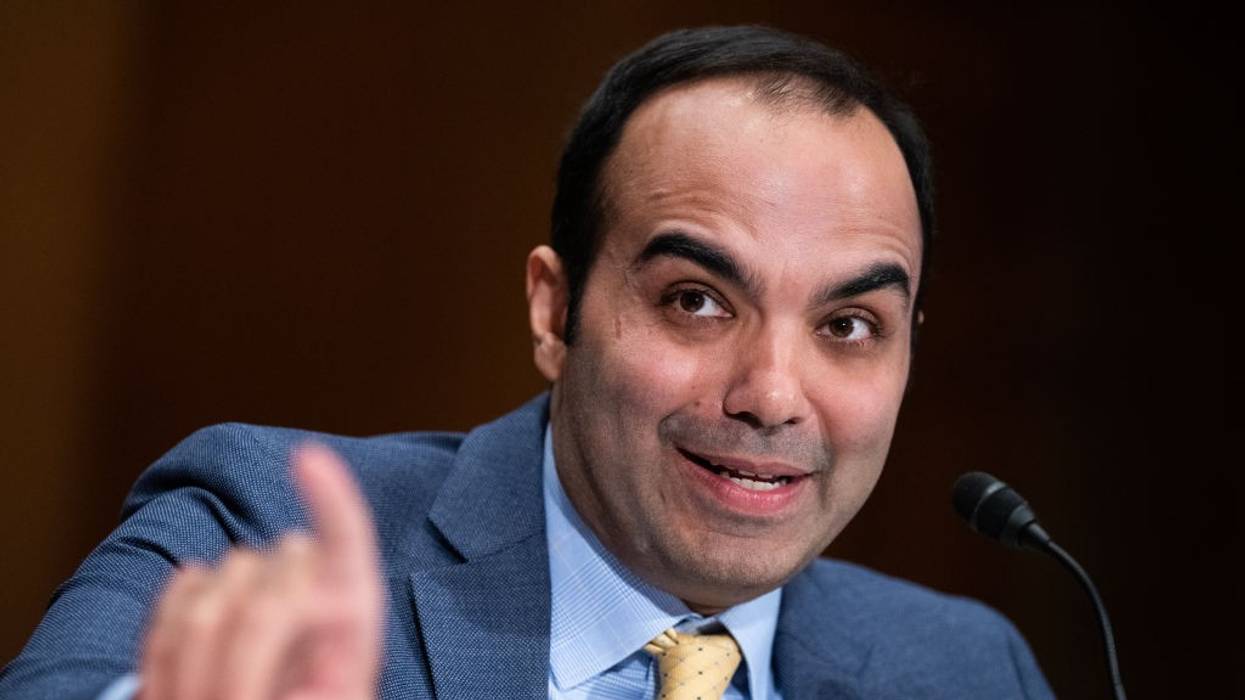
Amid celebrations over the ruling, one legal expert warned, "Don't confuse 'SCOTUS slaps down a wackadoodle 5th Circuit decision' with 'SCOTUS is more moderate than its critics claim.'"
Legal experts and progressive advocates on Thursday applauded the U.S. Supreme Court's 7-2 decision to uphold the Consumer Financial Protection Bureau's funding mechanism but also cautioned against praising the far-right justices.
While Justices Samuel Alito and Neil Gorsuch dissented, fellow right-winger Clarence Thomas penned the opinion in CFPB v. Consumer Financial Services Association of America, joined by the other three conservatives and three liberals—two of whom wrote concurring opinions.
In the majority opinion, the court held that "Congress' statutory authorization allowing the bureau to draw money from the earnings of the Federal Reserve System to carry out the bureau's duties satisfies the appropriations clause" of the U.S. Constitution.
In a statement welcoming the ruling, the CFPB said that "for years, lawbreaking companies and Wall Street lobbyists have been scheming to defund essential consumer protection enforcement. The Supreme Court has rejected their radical theory that would have devastated the American financial markets. The court repudiated the arguments of the payday loan lobby and made it clear that the CFPB is here to stay."
The bureau continued:
Congress created the CFPB to be the primary federal watchdog protecting consumers from predatory and abusive practices in the financial sector. Since the CFPB opened its doors in 2011, it has delivered more than $20 billion in consumer relief to hundreds of millions of consumers and has handled more than 4 million consumer complaints.
Today's decision is a resounding victory for American families and honest businesses alike, ensuring that consumers are protected from predatory corporations and that markets are fair, transparent, and competitive.
This ruling upholds the fact that the CFPB's funding structure is not novel or unusual, but in fact an essential part of the nation's financial regulatory system, providing stability and continuity for the agencies and the system as a whole. As we have done since our inception, the CFPB will continue carrying out the vital consumer protection work Congress charged us to perform for the American people.
The CFPB was far from alone in cheering the court's decision in the case, which Demand Progress corporate power director Emily Peterson-Cassin said "was nothing more than a cynical attempt by payday lenders to sabotage the CFPB, so they could continue to prey on American consumers."
"This case was simple: the Constitution requires Congress to pass a law authorizing funds for the CFPB, and Congress did that," she explained. "Today's decision will preserve stability in the financial markets and ensure the CFPB can continue its important work protecting the American people."
U.S. Sen. Elizabeth Warren (D-Mass.), a key architect of the agency, agreed that "this is a big win for working people."
Devon Ombres, senior director for courts and legal policy at the Center for American Progress, also celebrated a ruling he said would allow the agency "to continue fighting to protect the American people from corporate bad actors, fraudsters, and scammers."
While praising the decision, Ombres pointed out that "the justices reversed yet another extreme opinion from the 5th Circuit Court of Appeals that could have placed the entire financial regulatory system at risk and roiled financial markets."
Accountable.US similarly declared that in this case, "consumers win," and blasted the far-right appellate court.
"The reason the Consumer Financial Protection Bureau is so effective at making wronged consumers whole is because of its independence, which is why shady industry CEOs and lawmakers in their pocket wanted to jam up the agency's funding with politics and lobbyist money," said Accountable.US president Caroline Ciccone.
"Among the biggest losers in this decision is the conservative 5th Circuit that gleefully advanced this lawsuit from predatory lenders and has sided with industry over consumers in a number of cases citing the same baseless arguments," Ciccone added. "The 5th Circuit's credibility continues to suffer as it willingly plays along with industry judge and venue shopping schemes that corrupt our judicial system."
Legal experts took aim at not only the appellate court but also right-wingers on the country's top court. Slate's Mark Joseph Stern said that "today's decision is a HUGE victory for the CFPB and a major defeat not only for the corporate lobby, but for the 5th Circuit, which embraced a theory so radically anti-historical and atextual that JUSTICE THOMAS wrote the opinion emphatically reversing it."
"Today's CFPB decision has a lot in common with the last Obamacare case: The 5th Circuit went so far off the tracks that it got a spanking in the form [of] a vehement 7-2 reversal by SCOTUS, with even Justice Thomas concluding that the 5th Circuit's nihilistic arsonists lost the plot," he added. "That said, no one should interpret today's CFPB decision as proof that the Supreme Court is 'moderating' or 'compromising' or 'shifting to the center.' Not at all. The decision is evidence of how totally lawless the 5th Circuit has become—because this case shouldn't even exist!"
CNN Supreme Court analyst and University of Texas School of Law professor Steve Vladeck warned: "Don't confuse 'SCOTUS slaps down a wackadoodle 5th Circuit decision' with 'SCOTUS is more moderate than its critics claim.' 'Not as radical as the 5th Circuit' is not the same as 'moderate.'"
Supporters of Thursday's decision also warned that the fight isn't over. Groundwork Collaborative chief economist Rakeen Mabud said that "today's Supreme Court decision was decisively in favor of federal oversight on consumer protection, but we know that big business and their lobbyists won't stop trying to dismantle an agency dedicated to protecting everyday Americans."
"This makes it all the more important that the Consumer Financial Protection Bureau continues its critical work," Mabud added of an agency that has recently cracked down on credit card and overdraft fees.
U.S. PIRG consumer campaign director Mike Litt suggested that "all Americans should still breathe a sigh of relief now that the constitutionality of the CFPB's funding is a settled matter. The CFPB extending its nearly 13-year run of protecting consumers no longer hangs in the balance."
"That said, we know those who oppose the CFPB and its work will keep attacking this crucial agency," he added. "Congress must reject efforts to change the CFPB's reliable and constitutional source of funding, which has enabled it to return $19 billion to consumers."
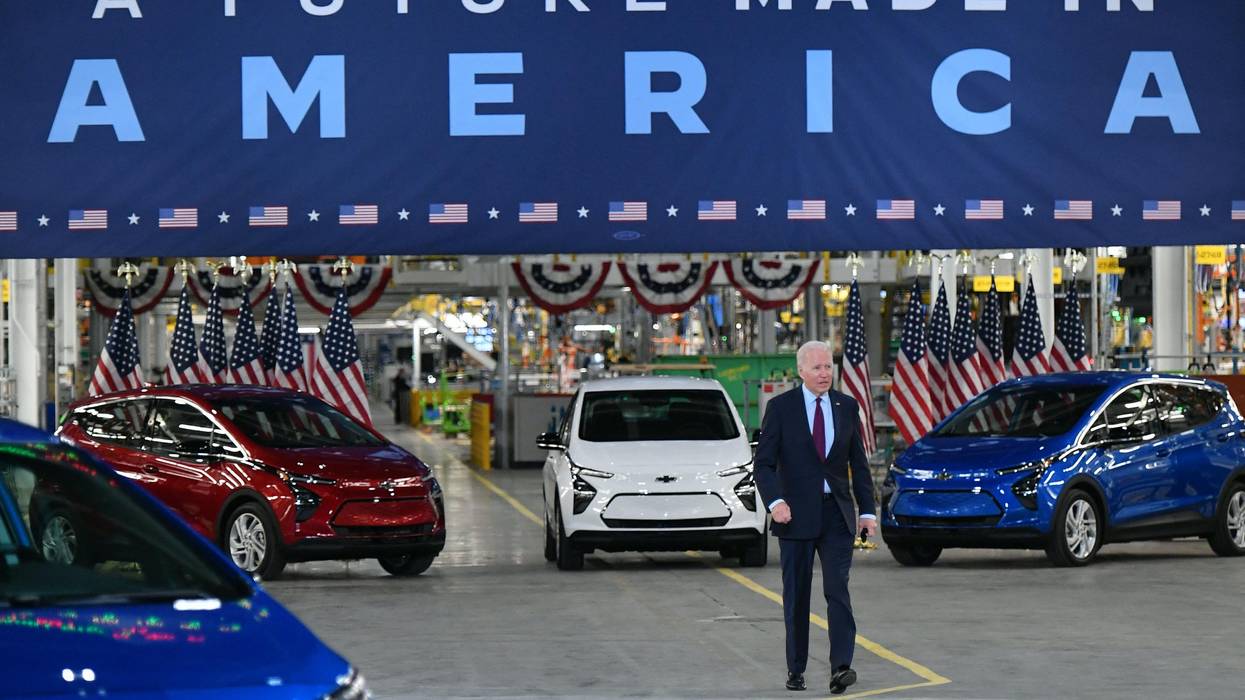
Climate and environmental campaigners on Thursday cheered the Biden administration's new $5 billion plan to build a national electric vehicle charging network with funding from an infrastructure law the president signed last year.
"With this money flowing to states, we can start to build for the electric vehicle revolution we know is coming."
Funding for the new network will come from the National Electric Vehicle Infrastructure (NEVI) Formula Program created under the Infrastructure Investment and Jobs Act, which President Joe Biden signed last November.
Morgan Folger, director of the Destination: Zero Carbon program at the advocacy group Environment America, said in a statement that "with this money flowing to states, we can start to build for the electric vehicle revolution we know is coming."
Will Anderson, deputy legislative director at the Sierra Club, said the group was "pleased to see these critical funds going out the door to states to build electric vehicle chargers, an important investment to support our nation's transition to electric vehicles and prioritize domestic manufacturing."
"In addition to fully funding the Biden administration's goal of 500,000 chargers across the nation, the passage of legislation investing in climate, jobs, and justice will ensure that communities have access to a range of critical clean transportation priorities," he added, "including consumer incentives that support unionized workforces and credits for used EVs, electric school buses, and more accessible and frequent public transit service."
Mac Dressman, transportation associate at the U.S. Public Interest Research Group, said that "this step toward an all-electric, zero-emission future is essential to ensure cleaner air for all."
According to the Department of Transportation's Federal Highway Administration, the new program "will provide nearly $5 billion over five years to help states create a network of EV charging stations along designated Alternative Fuel Corridors, particularly along the Interstate Highway System."
The agency added:
The total amount available to states in fiscal year 2022 under the NEVI Formula Program is $615 million. States must submit an EV Infrastructure Deployment Plan before they can access these funds. A second, competitive grant program designed to further increase EV charging access in locations throughout the country, including in rural and underserved communities, will be announced later this year.
"A century ago, America ushered in the modern automotive era; now America must lead the electric vehicle revolution," said U.S. Transportation Secretary Pete Buttigieg. "The president's bipartisan infrastructure law will help us win the EV race by working with states, labor, and the private sector to deploy a historic nationwide charging network that will make EV charging accessible for more Americans."
"The key to unlocking a more climate-friendly future featuring electric cars on every block is to make owning an EV more convenient and affordable."
U.S. Energy Secretary Jennifer Granholm added that "we are modernizing America's national highway system for drivers in cities large and small, towns, and rural communities, to take advantage of the benefits of driving electric. The bipartisan infrastructure law is helping states to make electric vehicle charging more accessible by building the necessary infrastructure for drivers across America to save money and go the distance, from coast-to-coast."
The administration's announcement came two days after Biden said that Tritium, an Australian company that makes EV chargers, will build a manufacturing facility in Tennessee that will employ 500 workers and produce 30,000 chargers annually.
While the Biden administration is under pressure to more broadly overhaul the U.S. transportation system--which, as a recent analysis showed, leaves the poor and people of color behind while exacerbating inequality and the climate emergency--campaigners still celebrated Thursday's announcement as progress.
Related Content

Environment America's Folger said that "a more prolific charging network makes it easier for people to choose to drive an electric car and feel confident they have a place to power up along the way."
"The key to unlocking a more climate-friendly future featuring electric cars on every block is to make owning an EV more convenient and affordable," she added. "Restoring the electric vehicle tax credit is the next step Congress should take to ensure these cars are affordable."
Noting that "tragically, pollution from cars, trucks, and other vehicles cuts short an estimated 58,000 lives every year," Dressman asserted that "building a national network of EV charging stations is just what the U.S. needs to make the transition to electric vehicles."
"It gives Americans the right infrastructure to reduce air pollution and tackle the climate crisis by making it easier to switch to zero-emission vehicles," he added.

As the climate movement vowed Monday to "rise up" after a new United Nations report signaled a "code red for humanity," activists and experts highlighted the specific policies and actions that decision-makers must now take to prevent the most catastrophic impacts of "unprecedented" global heating--particularly a prompt end to fossil fuels.
"The exigency of this situation must not lead us to despair, rather it should propel us into action."
--Mary Robinson, The Elders
The Intergovernmental Panel on Climate Change (IPCC) report on the the physical science of the human-caused climate emergency--which comes during a summer of devastating drought, fires, floods, and heatwaves--shows the world is rapidly running out of time to take the steps necessary limit global temperature rise this century to the Paris agreement's goal of 1.5degC.
"The latest IPCC report confirms what we already know: It is time to act on climate," declared Matt Casale, environment campaigns director at U.S. PIRG. "We're already seeing the impacts of global warming, and they're already taking a human toll."
Noting the deadly heat that struck the Pacific Northwest earlier this year and mounting fears about the destruction this Atlantic hurricane season could bring, Casale said that "as the new IPCC report makes clear, these events will only get worse if we fail to act."
"But as bad as it might sound, this is not a report to despair over. Because while the consequences of inaction would be catastrophic, there is no reason we still can't avoid the worst of it," he added. "The solutions are at our fingertips."
Morgan Folger, Environment America's Destination: Zero Carbon campaign director, echoed Casale's call for focusing on known solutions.
"There is no single act that will save the world from climate change, but working together we can spark shifts across our society that will reduce harmful planet-warming pollution and help us lead healthier lives," she said. "Rather than despairing over what we could lose, let's focus on what we stand to gain by getting to work for a better future."
Though there isn't a quick fix for driving down greenhouse gas (GHG) emissions to the degree that scientists say is necessary, there is widespread agreement that a rapid shift away from fossil fuels is the most significant step the world can take to save lives and ensure a habitable planet.
As the advocacy group 350.org put it in a tweet about the IPCC's latest findings: "We have the solutions to prevent further harm to people and the planet--it's time to implement them. We must start by putting an immediate end to fossil fuels."
Ending the extraction and use of fossil fuels means transitioning more than just global power systems. Casale explained that "we have to end our reliance on fossil fuels and transition to clean renewable energy, electrified transportation systems, and carbon-free buildings."
That kind of transformation requires ambitious, coordinated global action.
The IPCC report is the first of a three-part assessment, and the only piece that will be finalized before parties to the Paris agreement come together in Glasgow, Scotland beginning October 31 for the two-week U.N. climate summit known as COP 26.
"This is a rallying cry," Mim Black from the civil society COP 26 Coalition said of the report. "This November, the people will be out in force. We will challenge governments' and corporations' green rhetoric, empty promises, and downright hypocrisy. Thousands will take to the streets in Glasgow and across the world to demand urgent and meaningful action is finally taken, which holds big polluters to account while looking after those least responsible for this crisis."
350 Africa, in a statement, addressed the latest inadequate emissions reduction plans that governments have unveiled ahead of the summit:
The IPCC are showing us that the midcentury net-zero pledges being loudly celebrated by governments, businesses, and oil companies are not going to be enough to change this trajectory. We need decisive action within this decade, if we want to have a chance to keep the planet from warming above 1.5degC. Today's report shows that we must urgently phase out fossil fuels, provide workers with green and sustainable jobs, and deliver financial support for impacted communities as a top priority.
As governments prepare to meet in Glasgow for the COP 26 climate talks, they need to recognize that no climate plan that does not include phasing out fossil fuels is a real climate plan.
Inger Andersen, executive director of the U.N. Environment Program, pointed out that just 110 of 191 parties to Paris have submitted new or updated pledges, officially nationally determined contributions (NDCs). She also emphasized the need to go beyond ending fossil fuels.
"Governments need to make their net-zero plans an integral part of their Paris commitments," Andersen said. "They must finance and support developing countries to adapt to climate change, as promised in the Paris agreement. They must decarbonize faster. Restore natural systems that draw down carbon. Cut out methane and other greenhouse gases faster. Get behind the Kigali Amendment to the Montreal Protocol to cut the climate impact of the cooling industry. And every business, every investor, every citizen needs to play their part."
"Leaders must show they understand the seriousness of the science and turn in stronger national commitments ahead of the COP 26 climate talks this November," said Mary Robinson, chair of the Elders and former Irish president. "The big question leaders must reckon with in Glasgow is whether these plans add up to what is needed--and if not, how they will close the remaining gap."
"The exigency of this situation must not lead us to despair, rather it should propel us into action," she added. "To those who seek to argue that it's too hard, or too late, and so not worth trying--the report is a reminder that every fraction of a degree of warming really does matter."
While expressing hope that "COP 26 delivers the necessary commitments to protect our rights and our planet from climate catastrophe," EarthRights International executive director Ka Hsaw Wa highlighted that the report was released on International Day of the World's Indigenous Peoples and confirms "what Indigenous and frontline communities experiencing the worst effects of the climate crisis have been telling the world for years."
"From land grabs in Latin America and Southeast Asia to the Line 3 pipeline in Minnesota," he also said, "we see fossil fuel projects continuing to undermine human rights worldwide, particularly those of Indigenous and ethnic minority communities."
Ka Hsaw Wa implored U.S. President Joe Biden "to take this moment to realize the United States' significant contributions to the climate crisis and reassess our addiction to fossil fuels and unnecessary fossil fuel infrastructure projects." He further called on the president "to reject Line 3 and any provisions in the new infrastructure bill that would allow fossil fuel corporations to access millions of dollars in subsidies."
"The latest IPCC report confirms what communities on the frontlines of fighting big polluters already know," said Miya Yoshitani, executive director of Asian Pacific Environmental Network.
Yoshitani, who also serves on the Climate Justice Alliance board and White House Environmental Justice Advisory Committee, explained that "we need bold, community-led solutions that meet the scale of the climate crisis, not failed market-based schemes that allow big polluters to pump more poison into our communities and further destabilize our climate."
Implementing such solutions--as Jill Tauber, Earthjustice's vice president of litigation for climate and energy, noted Monday--requires legislative action.
"President Biden, Congress, and leaders at every level must take bold action now to move towards a zero-emissions and 100% clean energy economy that works for everyone," Tauber said. "That means passing legislation that centers environmental justice, cleans up pollution, and invests in climate solutions. We must put an end to dangerous fossil fuel projects that threaten communities and lock us into decades of more greenhouse gas emissions."
The report comes as the White House and Congress are working on both a bipartisan infrastructure bill and a broader $3.5 trillion budget reconciliation package that Democrats plan to send to Biden's desk without any Republican support.
"This latest IPCC report must be a wake-up call for Biden and Congress that the half measures they've proposed are not nearly enough to end the climate crisis," Varshini Prakash, executive director of the youth-led Sunrise Movement, said in a statement.
"In the coming months, Biden and Congress have the chance to pass historic legislation that could begin the decade of the Green New Deal. If Biden really wants to be a world leader on climate, he'll heed this call and pass the boldest reconciliation bill possible," she added. "Anything less than delivering the full scope of climate action in reconciliation is ignoring science, ignoring the IPCC report, and failing our generation."
The movement calls for a reconciliation package that includes a fully funded Civilian Climate Corps (CCC); significant spending on public housing, schools, transit, and renewable energy; worker protections from the PRO Act; major investments in frontline communities; and an end to fossil fuel subsidies.
As Extinction Rebellion highlighted Monday, the U.S. government isn't alone in needing to cut off subsidies to the world's polluters.
"This report tells us, in dramatic fashion, what we already know: Governments have failed thus far to do much of anything to address climate change," asserted Food & Water Watch policy director Mitch Jones, who specifically took aim at the Biden administration and Congress.
"Our political leaders must immediately demonstrate that they are serious by working to enact policies that stop all forms of fossil fuel extraction while making massive, necessary investments in clean, renewable energy," he said. "Inadequate technologies like carbon capture and net-zero accounting gimmicks are not going to cut it."
Pointing out that the report flags "the immense damage currently being done to our climate by methane emissions, most notably from oil and gas fracking," Jones added that the current U.S. administration "could immediately show its commitment to taking this crisis seriously by halting approval for any new fracking on federal lands--a pledge made during the campaign that Biden has yet to make good on."
Some politicians also responded to the IPCC report by calling out the U.S. government for inadequate action on the climate emergency.
Sen. Ed Markey (D-Mass.)--a leader on key progressive climate legislation including the Green New Deal Resolution, a CCC bill, and the THRIVE Act--declared that "if senators truly followed the science in this report, we'd have 100 votes for climate action to match the 100% certainty that human-caused climate change is destroying our planet."
"This IPCC report reaffirms what we are seeing and suffering right now across our country," he said. "Previous IPCC reports should have been roadmaps for action... This report must be the final warning to the world that time has run out to save the planet from dangerous and irreversible climate change."
"With that said, we can't agonize--we must organize, just like the young people across the country and world who are demanding action from their leaders," Markey added. "With policies to drive deep cuts in emissions, protect communities from climate impacts, and provide equity and justice to overburdened communities, we can respond to overwhelming evidence and take the necessary action to save our people and our planet."
This post has been updated with the IPCC's proper name.

Replacing fossil fuel-based heating and cooking systems with electric technologies in the majority of U.S. residential and commercial buildings over the next three decades would lead to a substantial reduction in greenhouse gas emissions--equivalent to removing 65 million cars from the road, according to a new study out Tuesday.
"Change is upon us--we just need to embrace it."
--Susan Rakov, Environment America
Assembled by Environment America Research & Policy Center, U.S. PIRG Education Fund, and Frontier Group, the report--entitled Electric Buildings: Repowering Homes and Businesses for Our Health and Environment--documents how cutting fossil fuel usage out of homes and offices through electrification would decrease the carbon emissions driving the climate emergency, lower utility bills, and improve public health.
As the report notes:
Wind and solar power are rapidly replacing dirty fossil fuels like coal as leading sources of our electricity. As our electricity grid becomes cleaner, replacing the direct burning of gas, heating oil, and propane in our buildings with electricity will reduce pollution of our air, land, and water from fossil fuel production and use.
New and improved technologies are putting clean, efficient electric space heating and water heating, and electric appliances like stoves, within the reach of most American households. Analysis shows that electrifying the vast majority of America's residences and commercial spaces by 2050 could reduce net greenhouse gas emissions from the residential and commercial sectors by about 306 million metric tons of carbon dioxide in 2050... It would also reduce pipeline gas usage by 7,012.9 trillion cubic feet.
"We have the tools and technology right now to make every home and most businesses in America run--and run better--on clean renewable energy," Susan Rakov, chair of Environment America Research & Policy Center's Clean Energy program, said in a statement.
"When my gas stove failed this year, I bought an induction stove," Rakov continued. "It sure is different--and I love it. It boils water faster than my old gas stove, it doesn't release dangerous air pollutants into my home when we're cooking, and I no longer have to worry about escaping methane from the stove contributing to global warming."
Induction stoves are just one of the high efficiency electric appliances highlighted in the report. Additional electric technologies that can help the U.S. end its reliance on dirty, polluting energy sources include air-source and geothermal heat pumps and water heaters.
In addition to its environmental and public health advantages, building electrification can also benefit household pocketbooks.
"Advances in these technologies make choosing a fully electric system for homes and commercial buildings an efficient and affordable decision for owners in almost all new construction situations," Environment America pointed out. "In some cities, installing a heat pump over fossil fuel heating methods in a new home could save between $1,600 and $6,800 for space and water heating over a 15-year period. In other locations, savings could reach as high as $13,700 during the same timespan."
There are nearly 140 million housing units and 5.6 million commercial buildings in the U.S. According to Environment America, "fossil fuel combustion in U.S. homes and businesses accounted for almost 9%" of the nation's total carbon emissions in 2018.
That's why the authors of the report stress that repowering the built environment is a crucial part of slashing emissions, improving efficiency, and putting the country on a path toward 100% renewable energy. To accelerate the transition from fossil fuels to clean electricity in U.S. buildings, they make the following recommendations to policymakers at the local, state, and federal levels:
While building electrification might sound unprecedented, Johanna Neumann, senior director of Environment America Research & Policy Center's Campaign for 100% Renewable Energy, put the process into a longer and more familiar context.
"Last century, many families saw their quality of life improve when they switched from a coal-burning stove to an electric or gas range, or an icebox to an electric refrigerator," Neumann said. "Today, a new technological revolution is underway to replace fossil fuel heating and cooking with electric technologies."
"The sooner America makes the switch," she added, "the sooner we'll realize the benefits of cleaner and more efficient energy."
According to Rakov, "Change is upon us--we just need to embrace it."

In a joint letter Wednesday to the Democratic and Republican leaders in Congress, six consumer rights groups expressed concern that "a broad range of businesses are seeking immunity from potential liability related to contracting Covid-19" and urged the federal lawmakers to block any attempts to weaken state-level protections.
Public Citizen, Consumer Federation of America, Consumer Reports, the National Association of Consumer Advocates, National Consumer League, and U.S. PIRG wrote that they all "oppose vigorously any proposals that the federal government override state-law claims and remedies that enable workers and consumers to hold companies accountable through the civil justice system."
"Such proposals, if enacted, would undermine consumer and worker protections, excuse negligent conduct, and show unwarranted disrespect for state law, including centuries-old state-law remedies," the groups warned House Speaker Nancy Pelosi (D-Calif.), House Minority Leader Kevin McCarthy (R-Calif.), Senate Majority Leader Mitch McConnell (R-Ky.), and Senate Minority Leader Chuck Schumer (D-N.Y.).
"Businesses' calls for immunity are premised on a false choice between the return to a healthy economy and allowing businesses to be held accountable if their carelessness causes people to get sick," the letter argues. "Companies' purported concern about lawsuits leading to catastrophic bankruptcies is a smokescreen for an opportunistic attempt to use the anxiety that we all share today to push through a groundbreaking weakening of the law."
The letter notes that since far before the pandemic, businesses have worked to weaken "crucial" state laws that enable injured individuals to sue companies or stores, and details the history of businesses being held liable for failing to meet basic standards of care. The groups also highlighted some examples of cases that may be brought in relation to the current public health crisis.
"A nursing home that failed to take precautions recommended by its state health department, or a company that encouraged employees to come to work after an outbreak at the facility--these businesses should not be immune from liability," the letter says. "As in any litigation, the businesses may have defenses that will prevail in court--but they should not be immune from liability."
Recognizing the role that states have played in protecting those on the front lines of this crisis, the letter adds that "good public policy, a commitment to worker and public health and safety, respect for the states and our federalist system, and common sense--all counsel against immunizing companies from liability when their own conduct causes harm."
In a statement Wednesday, Public Citizen noted that the new message to congressional leadership--which was published in full online--followed an April 29 letter from 118 groups similarly pressuring Congress to block any effort to "establish nationwide immunity for businesses that operate in an unreasonably unsafe manner, causing returning workers and consumers to risk Covid-19 infection."
Both letters also echo public sentiment, according to polling results released (pdf) Wednesday by Hart Research. Among a nationally representative sample of 1,202 voters, 64% of all respondents "oppose giving guaranteed immunity to companies from lawsuits in cases involving coronavirus infection."
Notably, that was the majority opinion across the U.S. political spectrum. Granting businesses immunity was opposed by 72% of Democrats, 64% of Independents, and 56% of Republicans surveyed. The poll also found that 61% of all voters believe that granting corporations immunity would lead to more Covid-19 cases.
The Senate Judiciary Committee, chaired by Sen. Lindsey Graham (R-S.C.), has scheduled a hearing for May 12 entitled "Examining Liability During the Covid-19 Pandemic." According to The Post and Courier, dozens of business groups in Graham's state "are calling on federal legislators to protect employers from legal liability if workers develop Covid-19 after returning to the workplace."
As the Charleston-based newspaper reported Thursday, "Led by the South Carolina Chamber of Commerce, a coalition of organizations representing manufacturers, truckers, retailers, and others say efforts to restart the economy are threatened by the risk of employers 'becoming the targets of coronavirus-related lawsuits,' according to an open letter to the state's senators and representatives."
Leading watchdog groups are opposing the Regulatory Accountability Act (RAA), which is set to be voted on in committee Wednesday, over fears that the bill would make it even harder for federal agencies to manage safeguards for workers, consumers, and the environment.
| #GoAwayRAA Tweets |
The RAA, sponsored by Sens. Rob Portman (R-Ohio) and and Heidi Heitkamp (D-N.D.), would require offices to adopt the most "cost-effective" standards for corporations, which the consumer group U.S. PIRG warned Tuesday are undefined and impossible to meet, and replaces the current rule-making process with other procedures that opponents say are meant to bog down the agencies with red tape while big businesses evade accountability.
"Agencies already are required to address every single benefit-cost and other requirement in this bill," said Ed Mierzwinski, the Consumer Program director at U.S. PIRG. "So let's be very clear that the real purpose of the RAA is to put a full stop to agency efforts to protect consumers, workers, and the environment from health, safety, and financial threats."
Heidi Shierholz of the Economic Policy Institute (EPI) Policy Center added, "This bill reveals a willingness to place corporate concerns ahead of the American people. The purpose of regulations is to keep workers safe, protect consumers, and safeguard the environment. This bill is a chance for members of Congress to show whose side they are on."
Shierholz and EPI's Celine McNicholas wrote a letter to the Senate Committee on Homeland Services and Government Affairs, which is hearing the bill, urging lawmakers to vote against it, warning that it would "fundamentally alter the regulatory process by requiring agencies to place cost considerations ahead of all others."
The RAA, also known as S. 951, "provides corporate interests with unprecedented power to interfere with and delay the regulatory process, and prioritizes industry profits over health, safety, and other public goods," they wrote.
For example, they said, the Department of Labor's "silica rule," which is meant to protect construction workers from breathing in lung disease-causing dust, would have been threatened by the RAA because businesses would have had to spend money on safety equipment. The RAA would have required the Labor Department to consider only those costs, rather than the benefits of lives saved over decades.
"The intent of the RAA is crystal clear," said McNicholas. "The bill puts corporate profits ahead of the public interest, gutting federal agencies' ability to issue rules that protect workers and consumers. It will further draw out already-lengthy rule-making procedures and give corporate special interests unprecedented power to interfere with and delay the regulatory process, all at a cost to taxpayers."
Sen. Elizabeth Warren (D-Mass.) has also spoken out against the rule, stating, "The Republicans' RAA gives big businesses a bunch of new ways to delay, dilute, or flat-out kill these kinds of standards that keep us safe."
The RAA is a companion bill to HR 5 in the House of Representatives, which has already passed.
America's Fortune 500 companies are "playing by different rules" when it comes to the federal tax system and, according to a new report out Tuesday, are stashing $2.1 trillion in offshore tax havens--with as much as $620 billion owed to the U.S. taxpayers who are left footing the bill.
The report, Offshore Shell Games 2015: The Use of Offshore Tax Havens by Fortune 500 Companies (pdf), examines the accounting tricks that have enabled the country's most profitable companies to hide their earnings.
"The American multinationals that take advantage of tax havens use our roads, benefit from our education system and large consumer market, and enjoy the security we have here, but are ultimately taking a free ride at the expense of other taxpayers." --Michelle Surka, US PIRG"U.S.-based multinational corporations are allowed to play by a different set of rules than small and domestic businesses or individuals when it comes to the tax code," wrote advocacy organizations Citizens for Tax Justice and the U.S. Public Interest Research Group (U.S. PIRG), which together authored the study.
Nearly 72 percent of the these mega-corporations operate tax haven subsidiaries in countries like Bermuda, Ireland, Luxembourg, and the Netherlands, according to the groups' examination of 2014 financial filings with the Securities and Exchange Commission.
In some cases, U.S. law allows a company to simply maintain a post office box at an offshore site to reap the tax benefits. For example, one five-story office building in the Cayman Islands serves as the registered address for 18,857 registered subsidiaries.
According to the study, the 30 worst offenders account for 65 percent of the total estimated offshore profits, booking as much as $1.4 trillion overseas for tax purposes.
With $181.1 billion offshore, Apple has booked more than any other company that reported its international holdings. According to the study, the Silicon Valley giant would owe $59.2 billion in U.S. taxes if these profits were registered within the U.S. The report notes, "A 2013 Senate investigation found that Apple has structured two Irish subsidiaries to be tax residents of neither the United States, where they are managed and controlled, nor Ireland, where they are incorporated. This arrangement ensures that they pay no tax to any government on the lion's share of their offshore profits."
Walmart, which for the past ten years has publicly reported zero tax haven subsidiaries, has had its offshore profits grow from $6.8 billion in 2005 to $23.3 billion in 2014. What's more, the study found that "in reality the corporation operates 75 tax haven subsidiaries."
Morgan Stanley, which has been implicated in facilitating individual tax evasion through its Swiss banking division, reports having 210 subsidiaries in offshore tax havens and officially holds $7.4 billion offshore.
The repeated failure by U.S. lawmakers to crack down on tax avoidance schemes has enabled a significant loss in U.S. tax income, the report notes. To stop this flow, the study authors recommend that Congress "end incentives for companies to shift profits offshore, close the most egregious offshore loopholes, strengthen tax enforcement, and increase transparency."
"When corporations dodge their taxes, the public ends up paying," said Michelle Surka, program associate with the U.S. PIRG Education Fund. "The American multinationals that take advantage of tax havens use our roads, benefit from our education system and large consumer market, and enjoy the security we have here, but are ultimately taking a free ride at the expense of other taxpayers."
As Volkswagen CEO Martin Winterkorn stepped down Wednesday over the company's large-scale diesel emissions-fixing scheme, consumer advocates charged that the resignation does not recuse the corporation itself from paying for the harm it has done.
"VW must still pay full penalties under law and grant full rebates to the customers it deceived into buying pollution-spewing cars that led to massive, undeserved profits," declared Ed Mierzwinski, consumer program director of U.S. PIRG, in a statement issued Wednesday.
In announcing his resignation, Winterkorn acknowledged the scandal, which is now known to have affected 11 million cars worldwide, but declared "I am not aware of any wrong doing on my part." According to the Environmental Protection Agency (EPA), the company built a software "defeat device" that allowed cars to cheat on emissions control tests and spew up to 40 times the level of pollutants legally permitted.
"Not only did the company deliberately deceive consumers, but Volkswagen consciously poisoned the air with gases that cause respiratory illness and exacerbate climate change," said Robert Weissman, president of Public Citizen, in a press statement Tuesday.
Now it is time for the corporation to pay for its crimes, say consumer advocates, and they are launching a campaign to make this happen.
"When they were caught, they denied it as long as they could but now VW admits it broke the law when it engaged in a scheme to trick pollution controls and ripped off hundreds of thousands of consumers who thought they were buying clean vehicles," argued Mierzwinski. "Our Make VW Pay Campaign will hold VW fully accountable while preventing future corporate lawbreaking that cheats consumers or places health, safety, wallets or the environment at risk."
"Volkswagen consciously poisoned the air with gases that cause respiratory illness and exacerbate climate change."
--Robert Weissman, Public Citizen U.S. PIRG says the company must buy back all of the flawed cars with full rebates. Going beyond that, the organization is calling on the EPA impose "tough penalties" of up to $37,500 per vehicle.
In addition, U.S. PIRG wants Congress to do away with a legal loophole that helps executives dodge prosecution for putting the public in danger. And they want the Department of Justice to "stop allowing tax write-offs for wrongdoing."
"We've fought against tax write-offs for JP Morgan, BP and other companies when they were forced to pay penalties for violations of our laws," said U.S. PIRG. "We'll keep fighting to end these write-offs for VW, GM and other companies."
The demands come amid warnings that the VW scandal, which has caused the company's stocks to tank, could extend far beyond this one corporation.
Just last week, the Department of Justice let General Motors settle for just $900 million for faulty ignition switches responsible for the deaths of more than 100 people. Critics lambasted the deal as permissive of corporate wrongdoing.