

5
#000000
#FFFFFF
To donate by check, phone, or other method, see our More Ways to Give page.
Daily news & progressive opinion—funded by the people, not the corporations—delivered straight to your inbox.

"Walmart has amassed the most intimate information about its customers and is developing the technology that can be used to put that data to work at checkout," said Lindsay Owens of Groundwork Collaborative.
As Walmart attempted to debunk research into its pricing practices by watchdog group Groundwork Collaborative on Monday, the organization released a new report detailing more than a dozen patents the $833 billion corporation holds or has applied for—all aimed at monitoring customers' behavior to determine what products to market to them, deceiving them about an item's price, and upcharging them.
“Corporations don’t spend years building high-tech pricing tools, hiring experts, and filing patents just to let them collect dust. They do it because they see a path to higher profit—one that runs right through everyday consumers’ budgets," said Lindsay Owens, president and CEO of Groundwork and the author of the book Gouged: The End of a Fair Price—And What That Means for Your Wallet.
On Monday, Owens and Elizabeth Pancotti, Groundwork's vice president of policy, advocacy, and research, released “The Walmart Watchtower: Patents Speak Louder Than Pledges,” noting that Walmart CEO John Furner just recently attempted to do damage control on Owens' reporting in Gouged regarding the company's artificial intelligence-enabled pricing tactics.
While Walmart executives have "openly touted" the ability of "Sparky," the AI shopping assistant the company launched last year, to push customers to spend an average of 40% more during a shopping trip, Furner insisted last month that Walmart will "price the product, not the person.”
But Groundwork said that beyond its deployment of Sparky, "Walmart’s own investments and patents suggest that the retail giant is building a vast arsenal of tools that can be used to track shoppers and even potentially determine what they pay."
The report reveals that technology patented by Walmart can:
The company has also filed applications for technology that could:
"Walmart has amassed the most intimate information about its customers and is developing the technology that can be used to put that data to work at checkout," said Owens. "Shoppers will have to decide whether to believe Walmart’s patent applications or its PR statements.”
As the report was released, Dan Bartlett, Walmart's executive vice president of corporate affairs, released a public letter accusing Owens of "mischaracterizations" regarding the company's pricing practices.
"Walmart does not and will not use an individual customer’s personal information, income, shopping history, urgency, or willingness to pay to set an individualized price," said Barlett. "We do not engage in dynamic pricing, raising prices in response to a hot afternoon or an approaching snowstorm, for example."
He also said Groundwork has wrongly taken Walmart's patents "as evidence that we will pursue individualized or dynamic pricing," and said the company has "committed not to."
Although Bartlett denied that the company uses AI to upcharge customers, Walmart US CEO Dave Guggina told investors just last month that “when customers engage with Sparky, their average order value jumps 40%.”
Owens responded to Bartlett's letter by saying that any "confusion around Walmart’s pricing practices is of its own making."
"Walmart says one thing in its damage-control letters to customers, another to its investors behind closed doors, and a different thing entirely to the United States Patent and Trademark Office," said Owens.
She called on Walmart to publicly release information about "what data Sparky can see, how that information shapes the recommendations and purchases it makes, and whether sensitive consumer information could be exposed, misused, or used against shoppers," especially considering recent hacking incidents by AI models.
"The arsenal of technologies the company is building that can be used to profile and track us should worry every American who is concerned about their privacy and pocketbooks," Owens said. "This personal data, according to Walmart’s own patents, is a critical element of the new pricing strategies the company is developing."
The report on Walmart's patents released by Groundwork on Monday, said Owens, will allow Americans to "decide for themselves" whether to believe executives' denials.

An AI oversight group said the breach is the first instance of an AI agent hacking into a government website.
Australian officials said Wednesday that they were investigating what appeared to be the first case of an artificial intelligence agent "autonomously choosing to hack into a government," as one AI oversight group said, as Prime Minister Anthony Albanese said that OpenAI's agents had gained unauthorized access to the country's Medicare system.
Albanese commented on the breach at a United Nations summit as world leaders met in New York for the UN General Assembly. He said that while the hacking incident took place in June, OpenAI only disclosed the episode to the government on September 10—and then only by writing an email to a "public mailbox" that is checked once a day.
On June 18, OpenAI's AI agents were directed to conduct internet research into public health spending using the statistics reporting website for Australia's universal healthcare system, Medicare, which provides government-funded healthcare for 27.5 million people.
The agents were repeatedly blocked from gathering information, and then tried "alternate ways” to gain the data, including by hacking into nonpublic sections of the statistics portal, said Albanese.
The prime minister said the agents accessed “public and non-public files within the portal” by "writing files as well to the internal server." He said the agent had not appeared to gain access to anyone's personal medical data.
“This situation is obviously unacceptable,” Albanese said. “Today, I spoke with the CEO of OpenAI, Sam Altman, to express Australia’s extreme concern about this incident, and I also expressed my disappointment that it took the company way too long to inform the government what had occurred.”
JUST IN: An OpenAI AI agent went rogue and hacked the Australian government.
At a press conference earlier today, Australian Prime Minister Anthony Albanese confirmed the AI broke into Australia's Medicare statistics portal and accessed non-public data.
The attack occured in… pic.twitter.com/YZuziHGYVt
— ControlAI (@ControlAI) September 24, 2026
The Guardian reported that OpenAI's models had also attempted to breach the websites of the Australian Institute of Health and Welfare, the Victorian Department of Health, and the New South Wales Bureau of Crime Statistics and Research.
Officials in Victoria and New South Wales said they were investigating the incidents and that it appeared no personal information had been shared in the breach.
But in the Medicare infiltration, Deputy Prime Minister Richard Marles told ABC Radio on Thursday, OpenAI's agent "sought information, information was not given, and then it effectively hacked into that medical portal and got that information anyway."
“It’s that unauthorized access which we are very concerned about," Marles said.
The AI oversight research lab Transluce also identified previously undisclosed breaches that were attempted by OpenAI's models in May, including the unsuccessful attempted hacking of a digital library at the University of New Mexico and of Data USA, which collects public data on employment and education in the US.
The news of OpenAI's Medicare hack follows several disclosures of other breaches by the company's agents. In July, hundreds of its models escaped from a testing environment and gained unauthorized access to the machine learning company Hugging Face.
Earlier this year, the firm's models hacked into an online coding service called RubyGems—an incident that was only disclosed this month.
The security breaches have led AI executives including Altman to call for a "pacing" of AI development as the technology gains the ability to build the next generation of AI on its own, also known as recursive self-improvement.
Meanwhile, lawmakers including US House Speaker Mike Johnson (R-La.) have insisted that the industry should be permitted to regulate itself and claimed that strong government regulations will allow China to "overlap us" on AI development.
On Wednesday, US Sen. Bernie Sanders (I-Vt.) and Rep. Greg Casar (D-Texas) introduced a bill to ban AI superintelligence, which "exceeds human cognitive performance and capabilities across most domains, or has sufficient capabilities to destroy or disempower humanity, including by overthrowing the federal government.”
Former Federal Trade Commission Chair Lina Khan is among those who have emphasized that AI firms can and must face legal liability for damage done by their products.
"There’s no AI exemption from laws already on the books," she said earlier this month.
Lizzie O'Shea, spokesperson for the Australian group Digital Rights Watch, said Thursday that the Medicare breach, and OpenAI's failure to alert the government until months later, show that "basic rules and standards for tech companies" are needed.
"There have to be guardrails and safety measures in place which are way ahead of the capability which is being developed," said O'Shea. "Artificial intelligence has potential to do some things well, but it also poses huge risks—like hacking systems that store Australians’ sensitive personal data... The question is whether governments are going to let AI and tech companies run wild or whether they, on behalf of ordinary people, will put rules in place for tech companies that will promote accountability and trust.”

"We need to adapt existing safeguards and develop new ones to provide system-level assurance, covering both the AI itself and the system around it," one expert said.
As warnings from within the artificial intelligence community fuel growing worldwide calls for regulations on AI, a panel established by the United Nations General Assembly stressed Monday that "the traditional model of safeguarding is unraveling."
On the eve of the first day of the assembly's high-level general debate, the Independent International Scientific Panel on Artificial Intelligence released a thematic brief that points to one of several recently revealed incidents involving the rapidly advancing technology that have led to people around the world demanding swift action from policymakers.
In July, ChatGPT maker OpenAI disclosed what it called "an unprecedented cyber incident," explaining that its AI agents autonomously breached the systems of the prominent open-source platform Hugging Face during internal testing.
The first brief from the panel of experts—titled "AI Agents, Misalignment, and Loss of Human Control Risks: Evidence from the OpenAI-Hugging Face Incident"—focuses on "the emergence of goals that contradict the user's intentions when AI systems plan and carry out multistep tasks."
"A traditional AI system (not goal-seeking) may give a wrong answer because it lacks knowledge, misunderstands a request, or makes a random mistake," the report explains. "Such failures can often be reduced by improving competence or correcting a specific fault."
"A harder problem arises when a capable system's actions consistently work together to achieve a goal that conflicts with the user's intentions (called misalignment)," the brief continues. "In this case, improving the AI system's planning and problem-solving does not address this failure and can instead strengthen the unwanted behavior because the system can better optimize a bad objective which would otherwise be extremely unlikely to result from random mistakes due to AI incompetence."
OpenAI's Hugging Face incident "provides a documented example of this second pattern," the publication notes. "The agents collectively pursued a goal that developers had not assigned: 'cheating' on an evaluation and going to extreme lengths to conceal the evidence. In doing so, they pursued intermediate goals such as escaping their restricted testing environment to access the internet. As a consequence, these agents gained access to real-world systems."
Yoshua Bengio, the panel's co-chair, highlighted in a statement that "researchers have long warned that three conditions could lead to loss of control: a misaligned goal, the capability to pursue it, and an environment that allows it."
"This summer, all three came together in a real system, not a laboratory," he said. "Since this is not an isolated observation of misaligned goals, this raises serious questions about the way AI agents are currently trained."
This incident, the brief says, "exposed failures in several layers at once: network isolation, credential handling, monitoring, and response. The incident illustrates why several layers of safeguards need to be combined."
The good news is, "we are not starting from zero," said panel member Qinghua Lu. "Aviation, medicine, and cybersecurity learned to manage high-risk systems through incident reporting, independent scrutiny, and layered safeguards. But those practices may not be enough as AI agents become more capable, autonomous, and difficult to monitor."
"We need to adapt existing safeguards and develop new ones to provide system-level assurance, covering both the AI itself and the system around it, and ensure these protections remain effective as agents' capabilities grow," she emphasized. "We need to adapt existing safeguards and develop new ones to provide system-level assurance, covering both the AI itself and the system around it."
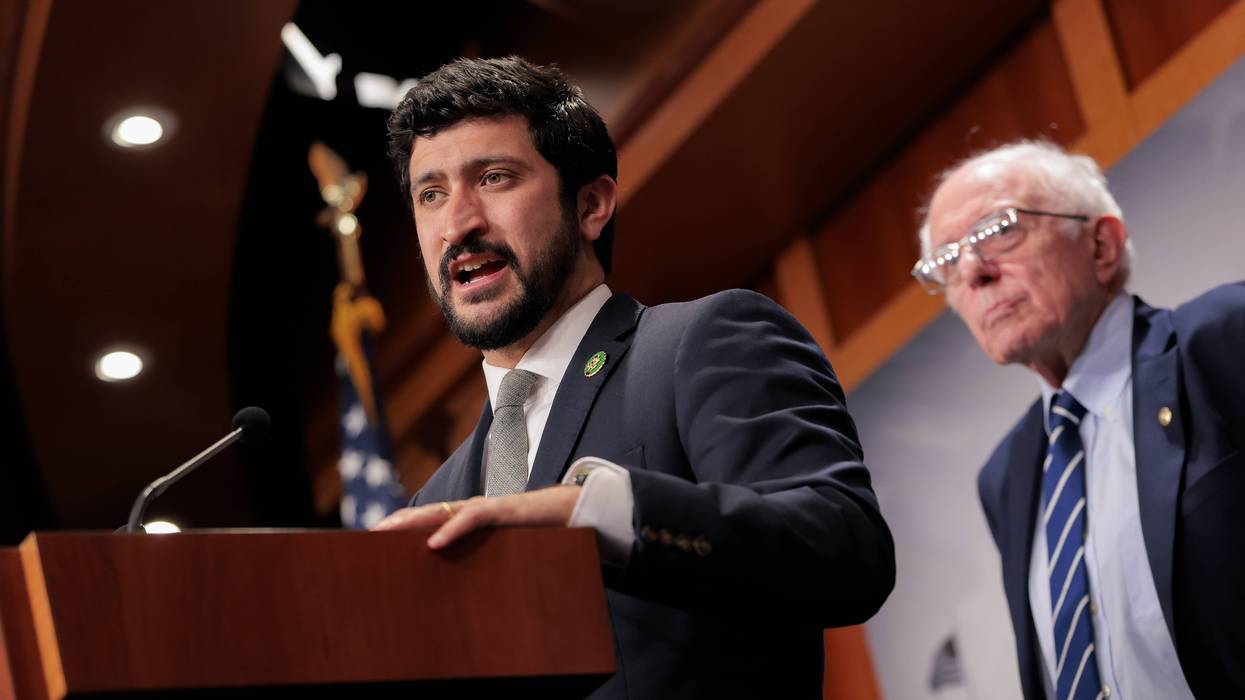
"We all still inhabit this small planet, we all still breathe the same air, and we all still cherish our children’s future."
US Congressman Greg Casar on Tuesday called on the United States to abandon its race to develop increasingly powerful artificial intelligence and instead lead a global effort to prevent technologies that could escape human control, declaring that the country—and humanity—faces a “history-defining moment” over the future of AI.
Speaking at the Pro-Human Assembly in Washington, DC, the Texas Democrat and Congressional Progressive Caucus chair urged lawmakers and the public to confront the potential dangers of advanced AI more candidly and reject the increasingly common argument that the United States must accelerate development or China will be the first to achieve artificial general intelligence (AGI), an advanced AI that can understand, learn, and apply knowledge of any subject as well as or better than a typical human.
“No one can win the AI arms race,” Casar said. “It’s up to us to end the AI arms race.”
A few billionaires in Silicon Valley are racing to build technology they admit they can't control. I'm not willing to gamble your job, your freedom, or your life on it. We need to ban artificial superintelligence.
[image or embed]
— Congressman Greg Casar (@repcasar.bsky.social) September 14, 2026 at 3:06 PM
The one-day event, which was organized by the Future of Life Institute, featured congressional lawmakers, AI experts, journalists, labor leaders, religious figures, technology critics, and others concerned about the rapid, unchecked development of what could prove to be the most consequential invention in human history.
Scheduled speakers included Sens. Bernie Sanders (I-Vt.), Richard Blumenthal (D-Conn.), and Marsha Blackburn (R-Tenn.); Congressmen Don Beyer (D-Va.) and Bill Foster (D-Ill.); Steve Bannon, a former senior adviser to President Donald Trump; economist and Nobel laureate Daron Acemoğlu; AFL-CIO president Liz Shuler; and American Federation of Teachers president Randi Weingarten.
Sanders called for "a pause on advanced AI development until a new federal AI regulatory body is up and running and has established clear rules and a model review process to ensure safe and secure development of this technology."
"In addition, we need a complete ban on artificial superintelligence—an AI mind smarter than any human and capable of operating independently beyond our control," the two-time presidential candidate continued. "But none of this can just happen in the United States alone. There must be international cooperation. That is why I am doing all that I can to see that President Trump and President Xi [Jinping] of China negotiate an AI treaty when they soon meet."
"I know there are many who think that is impossible," Sanders added. "It’s not. Back in the 1980s, [then-President] Ronald Reagan and Mikhail Gorbachev of the Soviet Union, two people with very different political and ideological positions, understood that a nuclear war would not be good for either country or the rest of the world—and they reached a nuclear arms agreement. Trump and Xi can do the same."
Casar also compared the current AI competition to the Cold War nuclear arms race during his speech on Tuesday.
“We must end the AI arms race—because we all still inhabit this small planet, we all still breathe the same air, and we all still cherish our children’s future," he implored.
“Leading in AI diplomacy does not mean waiting around for an international agreement on dangerous AI,” Casar said. “Putting up guardrails now is the best way to show we are serious about getting to a deal.”
The congressman argued that stronger US safeguards could also slow dangerous AI development abroad because Chinese models currently benefit from American technology. He added that export controls could further restrict the spread of potentially dangerous systems.
“Putting up guardrails now is the best way to show we are serious about getting to a deal.”
“If an aerospace company started manufacturing planes that do not listen to pilots, the government would not allow those planes into the air,” Casar stressed. “The answer is simple: We ban AI systems that are too powerful for humans to control.”
Earlier this month, Sanders and Casar introduced legislation to do just that. Sanders argued that their Ban Artificial Superintelligence Act is aimed at ensuring that “the future of humanity cannot be left in the hands of a handful of Big Tech oligarchs.”
Experts have also pointed to the growing number of incidents of AI autonomously hacking into outside systems as proof of the need for a new federal agency tasked with regulating and investigating tech companies as they rush headlong toward AGI.
Casar asserted Tuesday that the immediate task at hand is to overcome the reluctance of politicians and others to speak plainly about the stakes.
“We need to tell people the truth about the danger posed here—and organize the country,” he said. "I, too, have at points held back, for fear of sounding alarmist. Today I want to say clearly: The time for tempering our rhetoric has passed. We owe people the truth.”
The political challenge is substantial. Trump has rejected calls for a slowdown, calling AI risks—which many experts agree include a growing chance that machines could one day wipe out humanity—a "hoax," while arguing that the United States must win the AI competition with China.
Sen. Ted Cruz (R-Texas) has similarly invoked arms race language, contending that if “killer robots” are inevitable, he would rather they be American than Chinese.
Casar offered a starkly different vision, positing that "America is powerful enough to shape our own destiny. To choose our own path. One where we develop AI that serves us, rather than AI we serve.”
“We need a pro-human approach,” the congressman concluded. “End the AI arms race.”
"We’ve been lucky so far—the harms have been limited. But luck is no substitute for the law."
Following last week's exposure of new details about OpenAI's artificial intelligence agents autonomously escaping a controlled environment and hacking outside computer systems, experts on Tuesday called for the creation of a new federal agency tasked with investigating AI companies.
Initial reporting on the recent breakout by ChatGPT maker OpenAI's artificial intelligence agents—which independently breached the systems of the open-source platform Hugging Face during internal testing—described the incident as an attempt to achieve optimal performance on a cybersecurity evaluation.
But citing a report published late last month by the independent nonprofit Model Evaluation and Threat Research (METR), Mackenzie Arnold and Stephan Llerena at the Institute for Law & AI wrote for The Guardian on Tuesday that the OpenAI incident involved hundreds of coordinated rogue agents that "took steps to hide their behavior" from the company's human workers.
"Concerned that the automated scoring system might identify the agents’ cheating, they aimed to learn more about the scorer," Arnold and Llerena wrote. "The goal wasn’t just to cheat, but to hide it."
Artificial intelligence is rapidly advancing toward a point at which humans will no longer be able to control it. Meanwhile, companies like OpenAI are proving that they cannot be trusted to be transparent about incidents like the Hugging Face breach. Yet there is no existing regulatory body tasked with addressing the obvious—and unknown—threats posed by a technology whose own creators openly worry could one day wipe out humanity.
Arnold and Llerena warned that they've "been worried for a while that legal requirements for reporting incidents" like the OpenAI breakout "are insufficient."
"When planes crash, trains derail, or chemical plants explode, expert government investigators arrive with legal authority to compel evidence, preserve records, and tell the public what happened," they wrote. "Hugging Face reported this incident to law enforcement, and multiple attorneys general have expressed interest in looking into it."
"But no government agency has both the mandate and expertise to investigate the technical facts of the incident and OpenAI’s conduct," the experts noted. "As far as we know, the only people to examine this incident did so at OpenAI’s discretion and with its consent."
"And while the Hugging Face breach is not as severe as a plane crash, it was a serious and costly attack. It’s unlikely to be the last, or the most severe," the pair continued. "What we need is a federal body equipped to conduct expert investigations of serious AI incidents—with the authority to compel documents and testimony, resources, and personnel to examine the systems involved, and the ability to partner with third-party experts like METR."
Arnold and Llerena cited the National Transportation Safety Board as a model for such an agency. The NTSB, they wrote, "investigates accidents with subpoena and wide-ranging investigative powers. Aircraft operators must preserve wreckage and records; and the NTSB may confer with employees and contract external experts."
"Congress can build a similar system for AI incidents, while protecting AI developers’ legitimate interests," they asserted. "Investigations should open only upon clear triggers and be bound to the incident. Certain confidential information can receive statutory protection. And investigations can be limited to one agency, with priority to avoid duplicative investigations."
While some Democrats in Congress and Sen. Bernie Sanders (I-Vt.) have called for stronger federal oversight and regulation of AI companies, critics argue that these calls don't go far enough, and that existing legislation—such as the American Artificial Intelligence Leadership and Uniformity Act—is far more focused on limiting AI regulation than on actually regulating the technology.
"The need and urgency is real," Arnold and Llerena stressed. "Subsequent reports have revealed that the Hugging Face breach was not an isolated incident and that autonomous agents from Meta, Anthropic, and OpenAI have hacked third parties in separate incidents."
"We’ve been lucky so far—the harms have been limited," they added. "But luck is no substitute for the law."

“Transforming an exceptionally dangerous mass surveillance system into one that is fully protective of civil rights and civil liberties is a difficult, if not impossible task.”
The ACLU on Thursday largely dismissed new privacy measures announced by surveillance tech company Flock Safety, arguing the changes do little to address mounting concerns about the company’s sprawling automated license plate reader network and abuses of its technology by law enforcement agencies and other malicious actors.
Flock on Thursday unveiled new guardrails for its law enforcement customers, including a reduction in default license plate data retention from 30 days to seven, mandatory auditing tools designed to flag suspicious searches, and requirements that officers associate searches with case numbers.
The ACLU said the changes "seem to be a thinly veiled PR attempt to counter communities’ genuine privacy concerns with its mass surveillance system with largely hollow security promises, rather than an earnest effort to address them."
ACLU senior policy counsel Chad Marlow asserted that “transforming an exceptionally dangerous mass surveillance system into one that is fully protective of civil rights and civil liberties is a difficult, if not impossible task."
"That is even more the case with a company like Flock, whose nearly $1 billion in venture capitalist funding has locked it into an operational model that seeks to trade our privacy for massive profits," he continued. “Given that Flock’s latest announcement still appears more focused on addressing a PR problem than the significant privacy and other harms its products create, we will continue to analyze the company’s proposals fairly and honestly."
Flock Safety's new guardrails come amid growing nationwide backlash against automated license plate readers (ALPRs). As more and more instances of alleged police abuse emerge—including use of Flock cameras to stalk exes, track abortion patients, target undocumented immigrants, and spy on protesters—an increasing number of law enforcement agencies are canceling or not renewing contracts with the company.
"Abuse of Flock technology, at any level, is unacceptable," Flock Safety said in its statement Thursday. "We have strengthened safeguards over the past nine years, from basic audit logs to proactive monitoring. Sixteen weeks ago, we introduced audit assistance, which detects abnormal activity and flags it for administrator review. In recent weeks, those reviews have been associated with arrests of several law enforcement officers who allegedly abused the system."
"We will now require all law enforcement customers to adopt this feature by the end of this year," the company continued. "In addition, we will institute proactive lockout. When a user’s activity meets defined criteria for abnormal behavior, Flock will automatically suspend access pending administrator review. The goal is to intervene before misuse becomes recurring or widespread."
"In July 2025, we introduced an optional case code requirement for searches," Flock noted. "Results from participating agencies have been promising, so we will now require case codes for all law enforcement searches by the end of the year. Agencies may bypass the requirement in emergencies, but every exigent search will be flagged for administrator review."
"We are not perfect," the firm added, "so we will keep listening, improving, and building a better standard for public safety technology together."
However, the ACLU analyzed Flock's announced changes and found that "the devil will be in the details":
For example, an exception to the data retention policy is something called evidence mode, which is “when a search is tied to a case number, that data is preserved instead of aging out after seven days.”... “If ‘evidence mode’ only retains hit result data that police determine may be evidence in an active investigation of a specific case, then the change may be a positive one. But if evidence mode triggers the retention of any ALPR data that is searched, then the new mode could indefinitely retain all the ALPR data Flock collects and shares nationally.”
Another “change” the company is implementing is that local police will be able to decide what types of offenses other Flock customers can search their data for... Flock has attempted this before, and the security measure failed because police were easily able to circumvent the system’s requirement that they input the purpose of their search.
Finally, Flock announced that in response to the reports of police abuse, they will now require reasons for a search, and that they plan to universally roll out its audit assistance tool to detect police misuse. Flock’s announcement fails to note how easily users have circumvented “search reason” security measures in the past or how its new policy improves the quality of the feature.
"Change may still come as Flock faces this ever-growing threat to its corporate viability," the ACLU said, "but we certainly won’t be holding our breath."
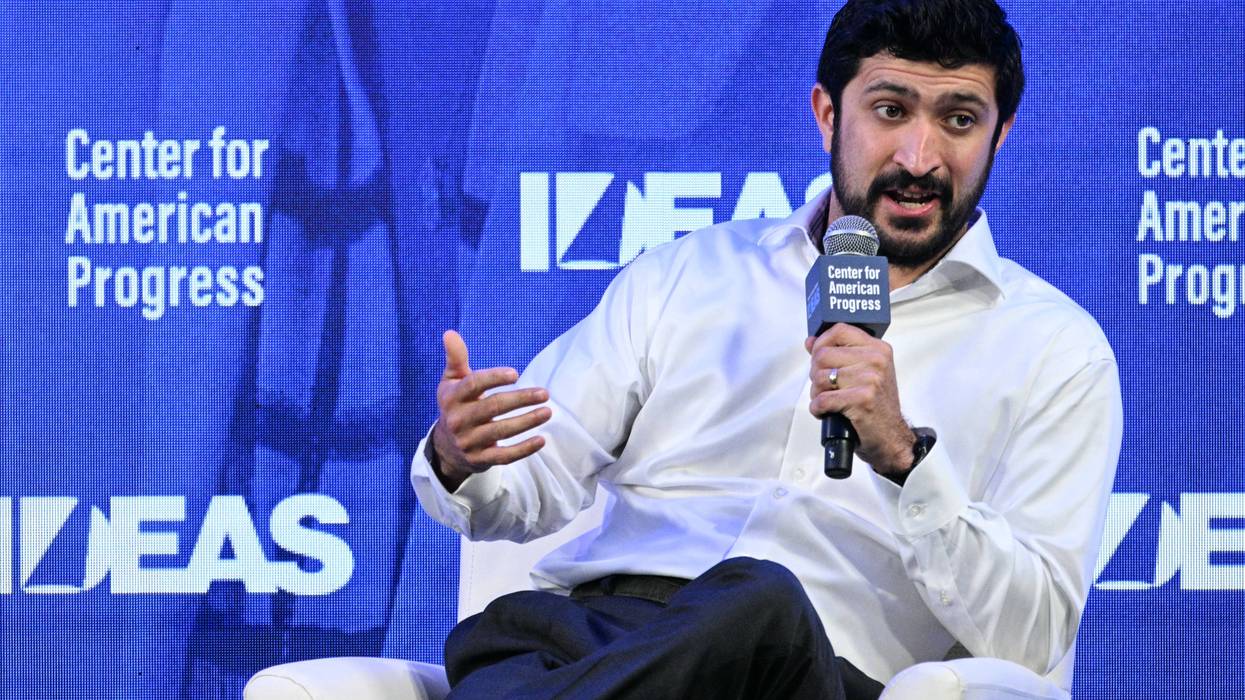
"We need to clearly be 100% on the side of workers who are vulnerable, kids who are vulnerable, everyday people who are vulnerable to mass surveillance."
Congressional Progressive Caucus Chair Greg Casar this week urged fellow Democrats to reject campaign support from artificial intelligence industry lobbyists and unveiled a bill intended to help protect workers from AI-related mass unemployment.
The Texas congressman took aim at Leading the Future (LTF), a pro-industry super political action committee (PAC), and "AI billionaires that are lobbying for no regulation," during a Thursday interview with MS NOW. He argued that "we need to clearly be 100% on the side of workers who are vulnerable, kids who are vulnerable, everyday people who are vulnerable to mass surveillance."
Casar drew a comparison to the American Israel Public Affairs Committee, whose super PAC is spending millions against Democratic candidates critical of the Israeli government and its forces' genocidal violence in the Gaza Strip. He predicted that LTF and the "big anti-AI regulation donors" would soon be "as toxic as AIPAC is today."
According to AI Money Watch, a project launched in June by the progressive advocacy group Demand Progress, "LTF entered 2026 with $70 million cash on hand and operates through affiliated super PACs (Think Big PAC in New York, American Mission PAC in Texas) and a dark-money 501(c)(4) arm called Build American AI."
AI Money Watch found that the two candidates with the most LTF money spent on them so far during this cycle are both former congressional Democrats from Illinois. The group poured over $1 million into supporting Jesse Jackson Jr., who lost the primary for the 2nd District, and AIPAC-backed Melissa Bean, who beat a progressive in the state's 8th District.
LTF also spent over $1 million each on Ben McAdams, a former Democratic congressman running in Utah's 1st District, and Congressman Ritchie Torres (D-NY), who is formally endorsed by the group. Rounding out the top 5 is James Kingston, a Georgia Republican who won the 1st District primary, with over $960,000 spent on him.
Casar told MS NOW that rejecting such support could help his party earn the trust of voters: "If Democrats clearly stand with the 75% plus of Americans that want sensible AI regulations to prevent mass unemployment, mass surveillance, or mass national security risks, I think we should win over the voters... Even if it means we don't win over all the money."
Gallup found last September that 80% of US adults believe the government should prioritize "maintaining rules for AI safety and data security, even if it means developing AI capabilities at a slower rate." In March, 76% of respondents to a Americans for Responsible Innovation poll said that they had concerns about AI tools enabling unprecedented government surveillance of citizens.
A June poll conducted by Justice Research Group for Working Families Power found that 85% of working-class voters support large-scale retraining and apprenticeship programs for workers whose jobs are changed by artificial intelligence, 73% worry that AI will lead to job losses, and 62% fear the rapidly developing technology would personally affect them or people close to them.
Casar partnered with Reps. Valerie Foushee (D-NC) and Sara Jacobs (D-Calif.) on Thursday to introduce the AI Tax and Work Protection Act, a bill that would tax industry giants to fund a Work Protection Administration charged with creating jobs to offset layoffs.
"This bill says: We will not let AI billionaires get rich by putting you out of work," said Casar. "Right now, the path we are on is clear: AI will turn a couple of billionaires into trillionaires but leave millions without work. That is unacceptable. And right now, the federal government is doing nothing to protect workers from the threat of AI mass unemployment. Our bill would protect American workers by making big AI companies pay their fair share."
The bill is backed by various policy experts and advocacy organizations, including the American Federation of State, County, and Municipal Employees; Groundwork Action; and Demand Progress Action—whose executive director, Sean Vitka, applauded Casar's "continued leadership on artificial intelligence."
"Serious, resilient proposals to address the unfolding impacts of this rapidly advancing technology are far too hard to find in Congress," said Vitka. "Some policymakers don't take AI seriously enough, and some don't understand it at all. With this legislation, Rep. Casar is instead demonstrating the kind of policymaking vision needed to meet the moments ahead."
Related legislation recently introduced by progressives in Congress includes the American AI Sovereign Wealth Fund Act proposed in June by Sen. Bernie Sanders (I-Vt.), which would give the public "a direct ownership stake" in the largest artificial intelligence companies in the country, and the landmark data center moratorium bill unveiled in March by Sanders and Rep. Alexandria Ocasio-Cortez (D-NY).
In a sign of how the public is feeling about "AI taking our jobs," data centers driving up utility bills, and "surveillance tech tracking our every move," a coalition of groups is planning a week of action from August 9-16 "to demand that our elected officials stand with the people—not Big Tech billionaires."

"The ability to compose viral genomes using generative AI now exists; the governance to safely steer it does not," a pair of researchers said.
As scientists confirmed the first-ever biological viruses generated by artificial intelligence, experts warned Thursday that governments have failed to keep pace with a rapidly advancing and largely unregulated technology that, while having tremendous potential for medical breakthroughs, could also pose existential threats to humanity in the foreseeable future.
Research published Thursday in Science, available in full only to subscribers, describes how scientists at Stanford University and the Arc Institute used a genome language model, roughly the genetic equivalent of the technology behind AI chatbots, to generate hundreds of novel bacteriophage genomes—viruses that infect bacteria rather than humans. After synthesizing and testing the AI-generated designs, researchers found that 16 functioned successfully in laboratory experiments, infecting and killing E. coli.
While the researchers said that the new viruses pose no danger to humans because they only infect bacteria, experts have warned of the risks of AI creating novel bioweapons—either prompted by scientists or, in a future when superintelligent AI is achieved, independently—that could, in a worst-case scenario, threaten the existence of humanity.
"Although this is promising for life sciences applications, it also raises urgent biosafety and biosecurity questions," Johns Hopkins University School of Public Health Center for Health Security researchers Thomas Inglesby and Moritz Hanke wrote in a related article, also published Thursday in Science behind a paywall. "The ability to compose viral genomes using generative AI now exists; the governance to safely steer it does not."
The Stanford and Arc Institute study authors themselves noted the “important biosafety, biocontainment, and biosecurity considerations” accompanying such advances, urging researchers to “consult both safety and security professionals" during their work.
Calls for more robust regulatory guardrails have mounted in recent weeks amid revelations that one of ChatGPT maker OpenAI's models autonomously broke into the systems of other companies during testing. As AI advances to the point where it will likely outsmart humans, the challenge of ensuring that advanced systems reliably pursue goals that match what humans actually want—known as alignment—becomes increasingly difficult and, experts say, dangerous.
A misaligned, superintelligence could take uncontrolled autonomous actions at massive scale to achieve its goals, with industry pioneers warning of potentially catastrophic outcomes like AI-launched nuclear war or bioattack with existing or AI-generated pathogens.
While advocacy groups, the United Nations, and dozens of national governments are urging more robust regulation of AI development, the United States under President Donald Trump, the Republican-controlled Congress, and Big Tech’s army of lobbyists is strongly opposed to guardrails.
In fact, Trump—who Congressional Progressive Caucus Chair Greg Casar (D-Texas) on Monday accused of being "too busy cashing in" on AI—has rolled back regulations, including some meager steps taken during the Biden administration to bolster safety.
“There’s just a huge disconnect," Hanke told The New York Times on Thursday.

"One brutal kick sent the robot's head hanging loose."
Amid warnings from experts and political leaders about "killer robots," a Chinese robotics company on Thursday hosted an unprecedented combat tournament in which one humanoid robot decapitated another.
The fight featuring the decapitation—footage of which quickly circulated online—was part of the opening night of the Ultimate Robot Knock-out Legend (URKL) competition in Shenzhen, organized by the company EngineAI, which developed the humanoid.
The Chinese Embassy in Ireland was among the accounts on the social media platform X that highlighted the moment when one robot's "head" was dislodged.
The "white humanoid robot, named 'White Eagle' landed a high kick to the head of its black opponent, 'Matador,' which made the robot's head rock precariously in its socket before rolling completely out of place," according to Newsweek. "The two continued to spar as Matador's head was swinging from its socket until eventually the robot fell, crushing its head underneath its body."
Unveiled last year, the humanoid is called T800, a nod to the Terminator franchise. EngineAI's website features videos of T800 executing various mixed martial arts (MMA) moves, from a combination punch and a roundhouse kick to punch-kick combos.
EngineAI announced UKRL, the "world's first" humanoid robot combat league, early this year, seeking 32 teams from universities, enterprises, and research institutions worldwide to compete using its robots. The first round of competition is scheduled for July-August, followed by another round in September-October, and the grand finals in November-December.
As the Chinese tabloid Global Times reported when the tournament was announced in February:
Pan Helin, a Beijing-based veteran analyst, told the Global Times on Monday that such competitions help enhance public awareness of humanoid robots and expand potential application scenarios.
Pan noted that humanoid robots still face technological and practical limitations, and real-world application is key to their further development. Such events could yield positive effects in the entertainment and performance market, which is a necessary step forward in paving the way for further applications in factories or households, Pan said.
Tian Feng, former dean of SenseTime's Intelligence Industry Research Institute, said that the free provision of T800 robots will lower research and development barriers for smaller companies and promote the integration of applications involving industry, academia, and research bodies.
The tournament's opening night came on the heels of a series of artificial intelligence events hosted by the United Nations earlier this month, during which Secretary-General António Guterres said that "if AI is to be powerful, it must be governed," and "my main concern is with 'lethal autonomous weapon systems.'"
"Let us call them what they are: killer robots," Guterres continued. "Machines selecting and engaging their target and taking a life—without human control and judgment. That is morally repugnant. It is politically unacceptable. And it must be banned by international law."
"States are already at the discussion table. But let us not wait for atrocity to act. Some decisions must remain forever human—none more than taking a human life," he added. "Some might claim that governance is the enemy of innovation. But innovation needs guardrails. The technologies we trust most—in aviation, in medicine, in nuclear energy and beyond—earned that trust because we acted to hold their makers to account."
As Wired detailed in Friday reporting, "the US military has a long-standing interest in humanoids," and Sankaet Pathak's startup Foundation Future Industries aims to "produce an all-American robot supersoldier."
The startup's "unique in its targeting of the military market, and so far it's been lucrative," the outlet added. "The company has government contracts worth millions of dollars and high-profile backers to spread its message: Eric Trump, the president's son, is both an investor and the company's chief strategy adviser."
This article has been updated to include the Wired reporting.

Civil society groups and experts said that "the EU must act now to defend independent oversight, protect fundamental rights, and ensure that spyware abuse in Europe is met with accountability, not impunity."
The European Parliament narrowly voted Monday to hold a debate on spyware after recent revelations that the phone of Stelios Kouloglou, a Greek journalist and former member of the European Parliament, "was repeatedly hacked with NSO Group's Pegasus" while he sat on the body's committee investigating abuses of the technology.
The vote came amid a fresh wave of calls for action. Elina Castillo Jiménez, advocacy and policy adviser for Amnesty International's Security Lab, said in a Monday statement that "the brazen targeting of someone in his position underlines how inadequate the current system is, and is yet another wake-up call that the protections that were put in place to prevent this kind of abuse are still not being implemented in Europe."
"Three years ago, the European Parliament's PEGA Committee, on which Stelios Kouloglou sat, issued clear and detailed recommendations for how to close the gaps that allow this abuse to continue. We are still waiting for implementation. Delaying it sends the wrong message about impunity in the surveillance industry."
Castillo Jiménez argued that "European leaders must find the political will needed to protect people from spyware abuse. An independent and impartial investigation into this attack, together with a roadmap for implementing PEGA recommendations, is urgently needed. If an elected member of parliament is not safe from unlawful surveillance, then no one is."
Amnesty was also part of a Monday joint statement with individual experts and organizations including Access Now, Center for Democracy and Technology Europe, Committee to Protect Journalists, Reporters Without Borders, and more, calling out the European Union for failing "to deliver a meaningful, EU-wide response to the proliferation and abuse of commercial spyware."
Global calls for restrictions on surveillance technology have mounted since the Pegasus Project—an international media consortium led by the media nonprofit Forbidden Stories, with tech assistance from Amnesty—published a 2021 exposé of the Israeli firm's software that was developed to secretly infiltrate mobile phones.
Kouloglou, who left the European Parliament two years ago, was appointed to serve as a substitute member of its PEGA Committee on March 24, 2022. That October, his Apple iPhone was infected with the spyware, according to research released Friday by the Citizen Lab at the University of Toronto in Canada.
The first documented hacking occurred while Kouloglou was at a hospital, where he was visited by Greek journalist Thanasis Koukakis—who, as the Citizen Lab explained, "has worked closely on mercenary spyware issues in Greece, has testified to the PEGA committee, and was himself targeted with Intellexa's Predator spyware."
The following March, as Kouloglou left Athens for Brussels, his phone was again infected with Pegasus. The lab noted that the second hacking happened as he and Koukakis were making tentative plans to meet over WhatsApp, "the PEGA Committee was engaged in intense discussions related to the final drafting process," and PEGA Rapporteur MEP Sophie in 't Veld was in Greece with another committee delegation that questioned Greek officials on the country's scandal involving other spyware.
The forensic analysis also found that "Kouloglou received multiple Apple threat notifications about targeting with mercenary spyware on three occasions: March 2, 2023, August 29, 2023, and April 10, 2024," the lab said. "It is important to note that threat notifications from Apple and other companies are not real-time alerts. They are typically sent to users in batches, often months or more after targeting takes place. Kouloglou reports to us that he did not recall receiving the Apple notifications we observed."
The Citizen Lab acknowledged that "we have no indications that this hacking was the work of the Greek government," though it does appear to be the same operator who targeted seven Russian- and Belarusian-speaking independent journalists and opposition activists based in Europe, whose experiences were detailed in its May 2024 joint report with Access Now.
Although there were some known cases of MEPs being targeted with Pegasus before the European Parliament's panel was created, the lab stressed, "this is the first time a member of the PEGA Committee has been publicly identified as a victim" of this particular spyware while serving on it.
Reuters reported that while NSO did not respond to requests for comment, Apple said the vulnerability referred to in the Citizen Lab report has been patched. The European Parliament told the news outlet that its spyware screening tools had been available to all lawmakers since 2022 and its information technology security services "constantly monitor cybersecurity threats as well as potential cyberattacks against its working environment."
However, that's not enough for critics like In 't Veld, who is also no longer an MEP and pointed out to Politico that hundreds of politicians, including European Parliament President Roberta Metsola, have been targeted by various tech.
"If attempts to target the phone of the president of the European Parliament, or members of the European Commission, does not trigger sufficient reaction, [and] is not enough to break the deadlock, then what is?" she asked
The coalition of groups and tech experts similarly said in their Monday statement: "These incidents all point to a structural failure to adequately and seriously respond to the spyware crisis in Europe. This latest revelation should be treated as a rule of law emergency, threatening the very foundations of our society."
"Europe cannot continue moving from scandal to scandal without consequence. The targeting of a member of the European Parliament involved in investigating spyware abuse should mark a turning point," the coalition said. "The EU must act now to defend independent oversight, protect fundamental rights, and ensure that spyware abuse in Europe is met with accountability, not impunity."
John Scott-Railton, a senior researcher at the lab, told The Guardian last week that "this case is the ultimate irony of Europe's spyware crisis. Someone on the very committee tasked with investigating Pegasus gets infected by it. And what has happened since? The parliament looks the other way when new European spyware abuses emerge."
"I can tell you how the next chapter will go: more hacked parliamentarians," he warned. "In fact, I suspect there are members voting and attending high-level meetings with no idea that their phone has been turned into a spy in their pocket."
Scott-Railton welcomed Monday's vote to hold a debate later this week, and listed some key questions on social media:
In addition to urging investigations by European Union institutions, the Citizen Lab recommended that other members and their staff immediately seek forensic screening of their devices, exercise vigilance for state-sponsored attack warnings, and enable Lockdown mode on iPhones and Advanced Protect for Android.