

SUBSCRIBE TO OUR FREE NEWSLETTER
Daily news & progressive opinion—funded by the people, not the corporations—delivered straight to your inbox.
5
#000000
#FFFFFF
To donate by check, phone, or other method, see our More Ways to Give page.
Daily news & progressive opinion—funded by the people, not the corporations—delivered straight to your inbox.

"JD Vance has a lot of nerve showing up in Texas to shake down wealthy donors... while Texans are paying through the nose at the pump and can’t get through the airport his party broke,” said one Democratic state lawmaker.
Vice President JD Vance's scheduled attendance at three $100,000-per-couple fundraisers has raised eyebrows and ire as Americans struggle to make ends meet due to the Trump administration economic policies and experts warn that the US-Israeli war on Iran could cause tens of millions of people in the Global South to suffer acute hunger.
Vance—who is widely expected to run for president in 2028—is in Texas this week for Republican National Committee fundraisers in Austin on Monday and Dallas on Tuesday. The vice president is also scheduled to attend another similar fundraising event in Nashville, Tennessee on March 30.
According to the Houston Chronicle, Joe Lonsdale, the billionaire founder of the controversial data analytics company Palantir, is hosting the Austin event. Billionaire investor and real estate developer Ray Washburne will co-host the Dallas fundraiser along with Chris Buskirk, founder of the venture capital firm where Donald Trump Jr. works. Buskirk openly advocates for an American "aristocracy" that "takes care of the country and governs it well so that everyone prospers.”
Also set to co-host the Dallas event is David Hininger, the former CEO of CoreCivic, a leading private prison firm in an industry that has gloated about the "unprecedented" profit potential of Trump's mass arrest and deportation campaign against undocumented immigrants.
Donors were reportedly asked to pay $250,000 to host one of the fundraisers.
"While Vance dines with billionaire donors, Americans are struggling to get by in the Trump-Vance economy as prices on everything from gas to groceries soar and working families dip into their savings to make ends meet," the Democratic National Committee said in a statement Monday.
"Trump and Vance’s war with Iran has already claimed the lives of 13 US service members and injured over 230, while driving up global oil prices and gas prices for Americans back home," the DNC added, without mentioning the thousands of Iranians killed or wounded by the illegal war of choice. "According to [the American Automobile Association], the average price for a gallon of gas is $3.96 nationwide, up from $2.94 just one month ago."
Trump campaigned on promises of no new wars and lower consumer prices, including gas, on "day one." Since returning to office, he has ordered the bombing of seven countries. Gas prices are up around 30% since Trump returned to the White House in January 2020.
“Prices on everything from gas to groceries to rent are soaring because of the Trump-Vance agenda, and what is JD Vance up to? He’s rubbing elbows with billionaires and special interests while working families struggle to make ends meet," DNC Chair Ken Martin said Monday. "Everyday Americans are stretching every dollar just to get by, and Vance is worried about lining his own pockets.”
Texas House Democratic Campaign Committee Chair Rep. Christina Morales (D-145) told the Houston Chronicle Monday that "JD Vance has a lot of nerve showing up in Texas to shake down wealthy donors for a quarter of a million dollars a head while Texans are paying through the nose at the pump and can’t get through the airport his party broke."
The war on Iran and its cascading global economic impacts could also fuel a sharp rise in acute hunger around the world, the United Nations World Food Program warned last week. WFP said the closure of the Strait of Hormuz is driving higher energy and fertilizer prices, which in turn can result in more expensive food.
“If this conflict continues, it will send shockwaves across the globe, and families who already cannot afford their next meal will be hit the hardest," Carl Skau, WFP’s deputy executive director and chief operating officer, said. “Without an adequately funded humanitarian response, it could spell catastrophe for millions already on the edge.”
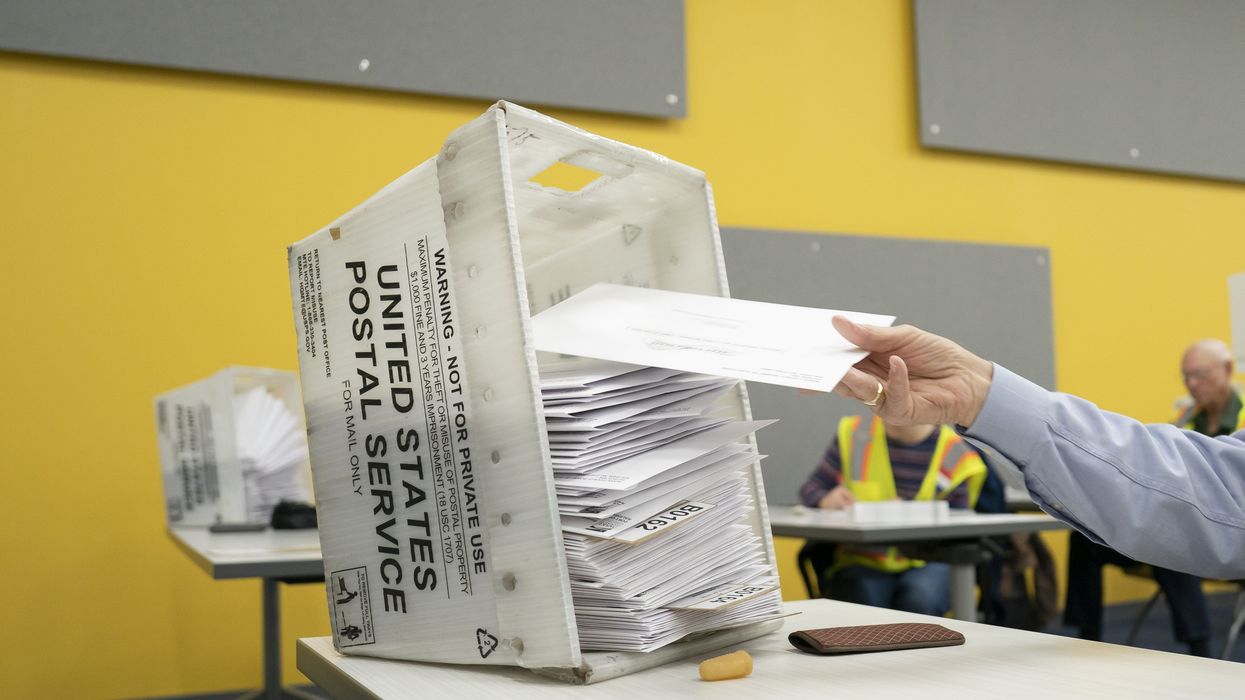
While experts hope the justices will reverse an "objectively insane" appellate decision, a ruling in favor of the Republican National Committee could reduce the rights of Americans who vote by mail.
As President Donald Trump on Monday pardoned leaders who tried to overturn his 2020 loss, the US Supreme Court took up the national Republican Party's argument that counting mailed ballots shortly after Election Day violates federal law.
Voting by mail has long been a target of the GOP president, who has falsely claimed that the practice fuels voter fraud. This case concerns a Mississippi law that allows mailed ballots postmarked by Election Day to be counted as long as they arrive within five business days, which three Trump appointees on the US Court of Appeals for the 5th Circuit struck down last year.
That lawsuit was brought by the Republican National Committee (RNC) and the Mississippi Libertarian Party. Another Republican, Mississippi Attorney General Lynn Fitch‚ is asking the nation's top court to reject the 5th Circuit's decision, arguing that it "defies statutory text, conflicts with this court's precedent, and—if left to stand—will have destabilizing nationwide ramifications."
The Supreme Court—which has a conservative supermajority that includes three Trump appointees—agreed to hear Watson v. RNC and decide "whether the federal Election Day statutes preempt a state law that allows ballots that are cast by federal Election Day to be received by election officials after that day."
The Supreme Court will review an objectively insane 5th Circuit decision that prohibited states from counting ballots that were mailed before Election Day but arrive shortly after. (More than half the states have such laws.) www.supremecourt.gov/orders/court...
[image or embed]
— Mark Joseph Stern (@mjsdc.bsky.social) November 10, 2025 at 9:44 AM
The Associated Press pointed out Monday that "Mississippi is among 18 states and the District of Columbia that accept mailed ballots received after Election Day as long as the ballots are postmarked on or before that date," and "an additional 14 states allow the counting of late-arriving ballots from some eligible voters, including overseas US service members and their families."
Legal experts have condemned the appellate decision as "awful" and "bonkers." The justices are expected to hear arguments early next year and issue a ruling by the end of June, months before the crucial midterm elections.
National Vote At Home Institute executive director Barbara Smith Warner welcomed their decision to take the case and potentially reverse the 5th Circuit's "upside-down" opinion, telling Democracy Docket: "The idea that a ballot that is postmarked on or by Election Day and received afterwards... is like voting after Election Day? That is ridiculous."
Unfortunately I am here to tell you: it's time to worry about what the Supreme Court is going to do to mail ballots postmarked by election day that arrive after election day, in states across the country. This could be enormous.www.democracydocket.com/news-alerts/...
[image or embed]
— jen rice (@jenrice.bsky.social) November 10, 2025 at 11:19 AM
Alexia Kemerling, director of accessible democracy at the American Association of People with Disabilities, was also hopeful.
"We really hope that the Supreme Court takes the responsibility seriously to make sure that every voter can use their power," she said. "'The millions of voters with disabilities who cannot vote in person or voters who are overseas who cannot vote in person—this is their only way to participate in the system. They should not be disenfranchised for the ways that our system moves slowly."
The New York Times noted that Watson v. RNC "is a potential blockbuster and adds to the court's other elections and voting cases for the term, which include a case about who can sue to challenge Illinois' mail-in ballot rules and a challenge to the Louisiana congressional district map that could gut a remaining pillar of the Voting Rights Act."
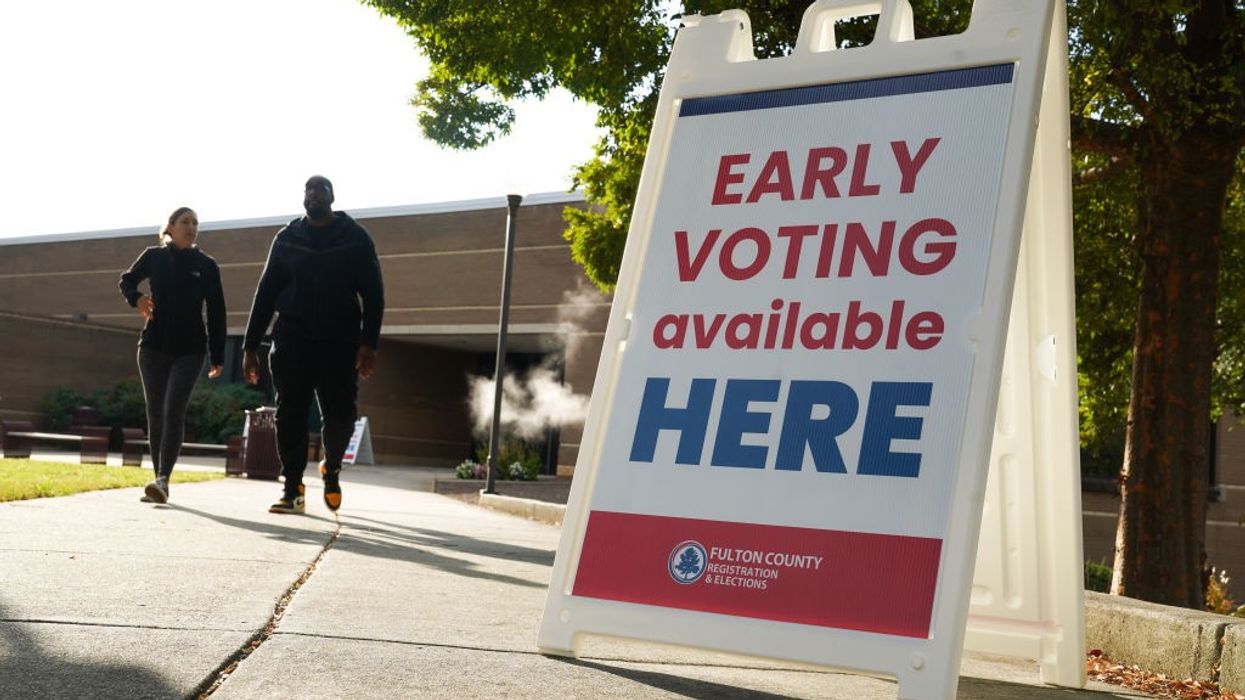
One advocate praised the court for refusing to allow the State Election Board "to inject chaos and confusion into our democratic system."
Voting rights advocates on Tuesday cheered the Georgia Supreme Court's unanimous decision to reject Republican efforts to require a hand count of votes and another rule that could delay certification of the results for the November 5 election.
After Fulton County Superior Court Judge Robert McBurney last week struck down the State Election Board's (SEB) hand-count policy and ruled that local election officials must certify results regardless of their beliefs that "voter fraud" has taken place, the Republican National Committee and Georgia GOP sought an expedited appeal before Election Day.
"The high court's one-page order leaves in place a Fulton County judge's ruling last week that seven new election rules are 'illegal, unconstitutional, and void,'" The Atlanta Journal-Constitution reported Tuesday. "The order noted the appeal can proceed on a normal schedule."
Although Republican attacks on voting rights in the state persist, advocates still celebrated what Democracy Docket called "a win for voters."
Andrea Young, executive director of the ACLU of Georgia, said that "with this ruling, the court keeps the status quo in place, refusing to allow the SEB to inject chaos and confusion into our democratic system."
"We are excited about the record early voting numbers in Georgia and glad that now all can focus on participating in this important election without disruption," Young added.
Georgia is just one of several states where early voting is already underway and was a key focus of former Republican President Donald Trump's attempt to reverse his 2020 loss. Trump—who faces a criminal case in Fulton County over his "Big Lie" efforts during the last cycle—is now the Republican nominee running against Democratic Vice President Kamala Harris.
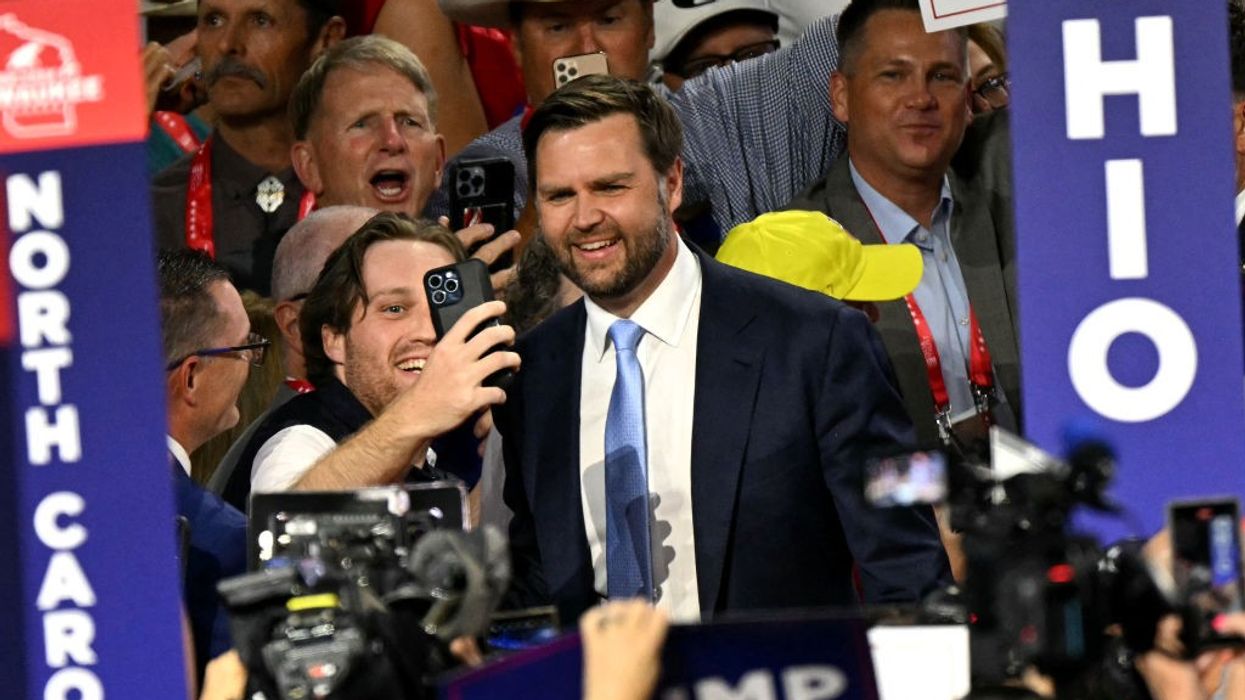
The Big Lie that the 2020 election was “stolen” remains an inextricable centerpiece of Trumpism, while any meaningful pushback has been eliminated within the party.
With the nomination of Ohio Sen. JD Vance for vice president at the Republican National Convention on Monday, the GOP has doubled down on its insistence on election denialism as central to its DNA. The Big Lie that the 2020 election was “stolen” remains an inextricable centerpiece of Trumpism, while any meaningful pushback has been eliminated within the party.
Once a “never-Trumper,” Vance reversed course on entering the 2020 Senate race in Ohio, becoming an outspoken supporter of the then-president and a spokesperson for the Big Lie. Both before and after the 2020 presidential election, he claimed that people voted illegally “on a large-scale basis” and spread other conspiracy theories about the election. When asked in an ABC interview earlier this year what he would have done if he had been vice president on January 6, 2021, Vance admitted that he would not have certified the election results.
In fact, this election cycle only those who embrace election denialism and are therefore deemed sufficiently loyal to former U.S. President Donald Trump have remained within the Republican Party fold. In March of this year, longtime chair of the Republican National Committee (RNC) Ronna McDaniel was forced to resign from her position under pressure amid rising tension between Trump and the RNC. Under her leadership, the RNC had dutifully promoted Trump’s false claims of voter and electoral fraud, as well as downplayed the severity of the insurrection on January 6.
The complete takeover of the GOP by election deniers is on full display at the Republican National Convention in Milwaukee this week.
McDaniel’s rapid fall from grace within the RNC was shocking in many ways given her unflinching loyalty to Trump and willingness to utilize the RNC to further his interests. Georgia’s National Committeeman Jason Thompson suggested in April that her ouster as chair had been sealed by her refusal to allow the RNC to cover the legal costs of indicted fake electors. According to him, McDaniel said it was, “Not our problem.” Thompson points to her refusal as the driving force behind “the downfall of Ronna.”
McDaniel was replaced by Trump-approved loyalists, with North Carolina GOP Chair Michael Whatley and Trump’s daughter-in-law, Lara Trump, elected as RNC chair and co-chair, respectively. Whatley previously promoted 2020 election lies and supported legal efforts to overturn the results, and Lara Trump has accused the Democrats of “massive fraud” in 2020.
Staffers at the RNC were laid off en masse following the shakeup, with more than 60 officials booted from their positions. Reporting by The Washington Post revealed that under the new leadership, prospective RNC employees were asked during their job interviews if they believed the 2020 election was stolen, essentially making election denialism the new litmus test for employment at the RNC.
Since then, the RNC has announced an “election integrity” initiative to mobilize thousands of polling place monitors, poll workers, and attorneys in swing states during the November election. “We can never go back and repeat 2020, but we can learn the lessons from 2020,” said Lara Trump at the kickoff event for the initiative. The RNC has also filed lawsuits in battleground states to bar mail-in ballots from being counted after Election Day.
The complete takeover of the GOP by election deniers is on full display at the Republican National Convention in Milwaukee this week. On Monday, the event opened with the Pledge of Allegiance led by Debbie Kraulidis, a J6 protester. Convention speakers feature prominent Republicans who have spread Trump’s baseless claims of election fraud, including Charlie Kirk of Turning Point USA, U.S. Representative Marjorie Taylor Greene (R-Ga.), former Secretary of State Mike Pompeo, and Arizona Senate candidate Kari Lake, among many others.
At least 16 delegates invited to this year’s convention signed fraudulent Electoral College documents in their states in the aftermath of the 2020 presidential election, serving as “fake electors” in a coordinated attempt to subvert the outcome of the election in seven battleground states. In addition, at least four convention delegates had been slated to act as fake electors before others were chosen in their place. The fake electors from Arizona, Michigan, and Nevada are currently facing felony charges, except for one whose charges were dropped in exchange for cooperation. As of last August, 3 of 16 fake electors in Georgia have been indicted in connection with the state’s massive racketeering case against Trump and 18 co-defendants.
Other prominent election deniers are also serving as delegates at this week’s convention, including Georgia National Committeewoman Amy Kremer, who was one of the most active fundraisers in the Stop the Steal movement and whose organization secured the permit for the Save America rally in Washington on January 6, and Michigan delegate Matthew DePerno, who currently faces criminal charges for an alleged effort to tamper with voting machines following the 2020 election.

"Voters don't want abortion bans," said one advocate. "Republicans know it and this plan shows just how desperate Trump and the MAGA GOP are to strip away our reproductive freedom."
Reproductive freedom advocates on Monday warned against trusting the Republican Party, whose 2024 policy platform now "reads like the transcript" from one of former U.S. President Donald Trump's rallies—including its section on abortion.
" Republicans want to criminalize abortion care and impose a nationwide ban," declared U.S. House Minority Leader Hakeem Jeffries (D-N.Y.). "The far-right extremists lied to the American people about respecting the precedent of Roe v. Wade. They are lying once again."
Trump, a frequent liar, attacked reproductive freedom as president and has bragged about appointing half of the U.S. Supreme Court justices who reversed Roe with a Dobbs v. Jackson Women's Health Organization ruling that paved the way for strict bans in over a dozen states.
However, Trump has also tried to distance himself from some extreme and devastating policies, recognizing them as politically risky as he runs for the White House against embattled President Joe Biden, a Democrat campaigning on his support for reproductive rights.
The GOP abortion policy appears on the second-to-last page of the 2024 platform, released just a week before the Republican National Convention is set to kick off in Milwaukee, Wisconsin. It states:
Republicans Will Protect and Defend a Vote of the People, from within the States, on the Issue of Life
We proudly stand for families and Life. We believe that the 14th Amendment to the Constitution of the United States guarantees that no person can be denied Life or Liberty without Due Process, and that the States are, therefore, free to pass Laws protecting those Rights. After 51 years, because of us, that power has been given to the States and to a vote of the People. We will oppose Late Term Abortion, while supporting mothers and policies that advance Prenatal Care, access to Birth Control, and IVF (fertility treatments).
Trump says he supports states making abortion policies. The Associated Press reported that the platform reflects his position, "omitting the explicit basis for a national ban for the first time in 40 years."
According to Politico, "Trump didn't just edit the platform language, but wrote some parts of the 15-page draft himself."
The Republican National Committee's (RNC) platform panel approved the document in an 84-18 vote, noted The New York Times, which added that Trump "was especially focused on softening the language on abortion."
In response to the Times reporting, journalist Paul Blest asserted on social media that "this is such a ridiculous framing on this story about the Republican platform."
"The platform didn't soften the abortion [stance], it just didn't mention it, and the people whose job is to advocate for abortion bans are totally fine with it," Blest continued. "Why do you think that would be?"
"If there's a landslide thanks to Biden's hubris you can bet the GOP will try to jam through a 15-week ban, then a 12-week ban, then a six-week ban, then a full ban with exceptions, then a full ban with no exceptions," he warned. "Whether the platform says it or not."
University of Texas law professor Liz Sepper explained what is included in the platform, saying: "Y'all, the RNC draft platform does not 'moderate' on abortion. It commits to constitutional personhood for fetuses. It takes the view that it is not a mere statute but rather the Constitution that bans abortion nationwide."
"Allow me to anti-abortion translate: The 14th Amendment to the U.S. Constitution protects life of fetuses," Sepper said. "With Roe, states could not so legislate. After Dobbs, they can legislate this view. And the 14th Amendment prohibits denial of fetal life IN ALL STATES."
"This is commitment to full constitutional personhood for blastocysts/embryos/fetuses," she continued. "That is, the RNC is committing to ensure embryos have rights equal to a full human person. There is no universe where embryos have constitutional rights and IVF can still happen on any scale."
Addressing the platform in an email, Biden's campaign said that "in a desperate attempt to conceal his extreme stance on abortion, Donald Trump directed the RNC to hide the ball on their unpopular plans to ban abortion nationwide—with or without Congress."
"Trump has endorsed every extreme abortion ban, including those with no exceptions for rape or incest, and has even said states should have the right to punish and prosecute women who have an abortion and monitor their pregnancies," the campaign added. "No one is buying Trump's sudden backtracking, including his fellow abortion banners."
The Biden campaign and other critics highlighted praise for the platform from leaders of anti-choice groups including Americans United for Life, Students for Life of America, and Susan B. Anthony Pro-Life America.
Meanwhile, Mini Timmaraju, who leads Reproductive Freedom for All, said that "the GOP wants to ban abortion nationwide—and their platform shows that they'll try to use the 14th Amendment to do it."
"Voters don't want abortion bans," she emphasized. "Republicans know it and this plan shows just how desperate Trump and the MAGA GOP are to strip away our reproductive freedom."
Number of people killed in the June 12 massacre at Pulse, an LGBT dance club in Orlando, Florida, by a man who reportedly expressed animus toward LGBT people and who may have been a gay or bisexual person himself: 49
Number of people injured in the shooting, which took place on the club's Latin-themed night and whose victims were overwhelmingly Latino: more than 50
Rank of LGBT people among various minority groups most likely to be the targets of a hate crime, with transgender women of color at greatest risk: 1
Number of hate crimes reported nationally in 2014 that targeted people based on sexual orientation or gender identity, a figure that's likely an underestimate as it's based on local, non-mandatory reporting: 1,100
Number of anti-LGBT bills introduced in state legislatures last year, sparking rhetoric that demonizes LGBT people, portrays them as predators, and accuses them of threatening other people's civil rights: 125
Number of anti-LGBT bills introduced this year: about 200
Of the 12 states The Advocate recently named most anti-LGBT because of legislation introduced, number that are in the South: 7
Months before tweeting his condolences to the Orlando shooting victims' families that North Carolina Gov. Pat McCrory (R) signed into law House Bill 2, the state's controversial anti-LGBT "bathroom law" passed to nullify a transgender anti-discrimination ordinance in Charlotte along with all local anti-discrimination and minimum-wage ordinances across the state: less than 3
Days following the Orlando shooting that the North Carolina Values Coalition -- a group that opposes expanding LGBT rights and whose executive director led the 2012 effort to pass a state constitutional amendment banning same-sex marriage that was later overturned by the U.S. Supreme Court -- joined with dozens of Latino ministers for a press conference to defend House Bill 2: 2
Date on which McCrory attended a prayer rally organized by a far-right Christian group and allowed its leader to lay hands on him while saying the U.S. is a "lost country" that "deserves judgment" for, among other things, "homosexuals praying at the inauguration" of President Obama: 9/26/2015
Date on which McCrory issued an executive order to protect state workers from discrimination but which excluded protections for LGBT people: 6/30/2014
Months before tweeting that flags at state buildings would fly at half-mast in memory of the Orlando shooting victims that Tennessee Gov. Bill Haslam (R) signed into law a bill allowing therapists to discriminate against gay clients: almost 2
Years before former Arkansas Gov. Mike Huckabee (R) tweeted his condolences to the Orlando victims and their families that he called homosexuality "an aberrant, unnatural and sinful lifestyle": 14
Month in which Republican presidential candidate Donald Trump -- who blamed the Orlando massacre on "radical Islam" and called for banning Muslims from entering the U.S. even though the shooter was born in New York City -- appointed as his "liaison for Christian policy" Frank Amedia, who has called AIDS a "disease that comes because of unnatural sex": 5/2016
When the Republican National Committee released its initial statement on the Orlando massacre, number of sentences that vaguely acknowledged the violence was committed against a group of people because of their "orientation": 1
When the statement was revised a day later, number of sentences that acknowledged why the club's patrons were targeted: 0
Number of days after the Orlando massacre that U.S. House Republicans blocked a vote on an amendment reintroduced in the tragedy's wake that would have prohibited federal contractors from discriminating against LGBT workers, despite the sponsor's argument that allowing the vote would have demonstrated solidarity with the LGBT community: 2
Number of states that have anti-discrimination laws in place protecting LGBT people in the workplace: 18
Number of those states that are in the South: 0