

SUBSCRIBE TO OUR FREE NEWSLETTER
Daily news & progressive opinion—funded by the people, not the corporations—delivered straight to your inbox.
5
#000000
#FFFFFF
To donate by check, phone, or other method, see our More Ways to Give page.
Daily news & progressive opinion—funded by the people, not the corporations—delivered straight to your inbox.
Haaretz also reported that Hamas immediately offered to release all the Israeli hostages it had taken in the attack, demanding nothing in return, but Israel refused the deal.
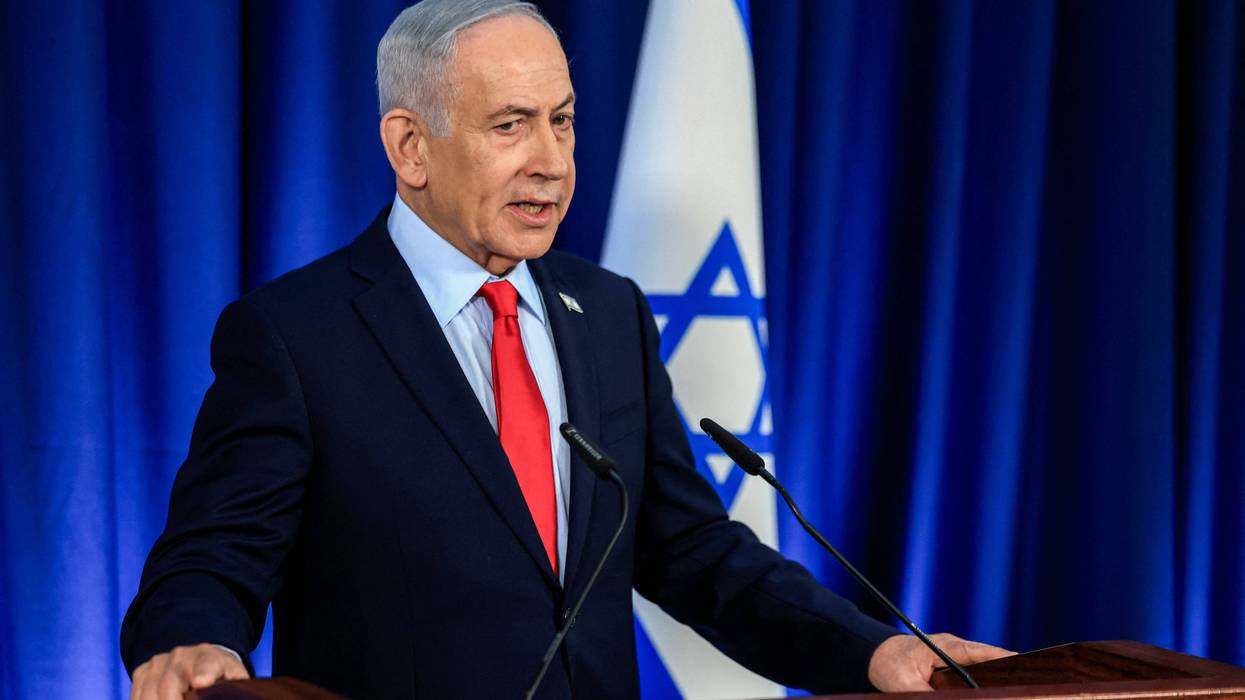
Policy experts in the US and Middle East on Tuesday were among those responding to an "astonishing" new investigation from Haaretz, which detailed how Israeli Prime Minister Benjamin Netanyahu was alerted weeks before the Hamas-led October 7, 2023 attack that a "major event" was being planned by the Palestinian group—an assault that killed more than 1,200 Israelis and which Israel has responded to by slaughtering more than 73,000 Palestinians so far in Gaza.
Highlighting revelations contained in an upcoming book called Hostages: 843 Days of Abandonment, by journalists Shlomi Eldar and Ruth Yuval, the Israeli newspaper reported that Netanayahu dismissed a warning about the attack from United Arab Emirates President Mohammed bin Zayed, which came in a phone call in September 2023.
An adviser to bin Zayed said that according to the president, Hamas leader Yahya Sinwar "was preparing for a major event" and "Israel should be ready."
The UAE leader advised Netanyahu to "find an economic solution" for Gaza and to calm tensions in the West Bank to "prevent escalation."
At the time, Hamas had been holding talks for months with intermediaries in hopes of pushing Israel to lift its blockade on Gaza, which it had imposed at varying levels of intensity for nearly two decades, since Hamas won legislative elections in 2006. Before the 2023 attack and Israel's retaliatory assault on Gaza—which has been called a genocide by human rights groups and Holocaust experts—Israel's blockade had left 80% of Palestinians in Gaza dependent on aid and had raised the poverty rate from 40% in 2005 to 61.6% in 2023.
Hamas' talks had also focused on exchanging four Israeli prisoners who had been held in Gaza for several years for Palestinian prisoners, more than 5,200 of whom were being held in Israel at the time.
Haaretz reported that an intermediary known as "coal eyes," a member of the Fatah political party in Palestine who was trusted by both Hamas and the Israeli security agency Shin Bet, was told by Sinwar: "Convey a message to them that I am preparing the mother of all surprises. A terrifying operation. Something extraordinary."
The intermediary then conveyed the message to bin Zayed, who spoke directly to Netanyahu.
The Israeli prime minister, who is facing several opponents as he aims to hold onto power in Israel's upcoming elections, scheduled for October 27, reportedly told the UAE president that Israel was prepared for any attack and that the government believed Hamas was planning to operate in the West Bank.
He did not inform security or intelligence leaders about the information he received from the bin Zayed, Haaretz reported.
Netanyahu called the Haaretz report an "absolute lie" on Tuesday, while his top rival in the elections, former military commander Gadi Eisenkot, said on social media that the prime minister "received dozens of warnings for October 7 and ignored them all."
"His is unfit," said Eisenkot.
As Middle East Eye noted Tuesday, it has previously been reported by media outlets in Israel and elsewhere that Netanyahu had received a warning from Egyptian intelligence in the days before the Hamas-led attack.
Haaretz also reported that Hamas offered to release all the civilians it had taken captive during the October 7 attack, in the immediate aftermath of the attack. The group did not demand anything in return, but Israeli officials reportedly rejected the offer.
The Israel Defense Forces have bombed schools, hospitals, and refugee camps and have killed thousands of children as well as journalists and aid workers in Gaza—all while claiming to be targeting Hamas. Attacks have continued, killing hundreds of Palestinians, even after a ceasefire deal was reached last October.
Settler attacks have also ramped up in the West Bank as Israeli officials have pushed to further annex the territory and make the creation of a Palestinian state impossible.
Judge Rossie Alston Jr. ruled the plaintiffs had failed to prove the groups provided "ongoing, continuous, systematic, and material support for Hamas and its affiliates."
A federal judge appointed in 2019 by US President Donald Trump has dismissed a lawsuit filed against pro-Palestinian organizations that alleged they were fronts for the terrorist organization Hamas.
In a ruling issued on Friday, Judge Rossie Alston Jr. of the United States District Court for the Eastern District of Virginia found that the plaintiffs who filed the case against the pro-Palestine groups had not sufficiently demonstrated a clear link between the groups and Hamas' attack on Israel on October 7, 2023.
The plaintiffs in the case—consisting of seven Americans and two Israelis—were all victims of the Hamas attack that killed an estimated 1,200 people, including more than 700 Israeli civilians.
They alleged that the pro-Palestinian groups—including National Students for Justice in Palestine, WESPAC Foundation, and Americans for Justice in Palestine Educational Foundation—provided material support to Hamas that directly led to injuries they suffered as a result of the October 7 attack.
This alleged support for Hamas, the plaintiffs argued, violated both the Anti-Terrorism Act and the Alien Tort Statute.
However, after examining all the evidence presented by the plaintiffs, Alston found they had not proven their claim that the organizations in question provide "ongoing, continuous, systematic, and material support for Hamas and its affiliates."
Specifically, Alston said that the claims made by the plaintiffs "are all very general and conclusory and do not specifically relate to the injuries" that they suffered in the Hamas attack.
"Although plaintiffs conclude that defendants have aided and abetted Hamas by providing it with 'material support despite knowledge of Hamas' terrorist activity both before, during, and after its October 7 terrorist attack,' plaintiffs do not allege that any planning, preparation, funding, or execution of the October 7, 2023 attack or any violations of international law by Hamas occurred in the United States," Alston emphasized. "None of the direct attackers are alleged to be citizens of the United States."
Alston was unconvinced by the plaintiffs' claims that the pro-Palestinian organizations "act as Hamas' public relations division, recruiting domestic foot soldiers to disseminate Hamas’s propaganda," and he similarly dismissed them as "vague and conclusory."
He then said that the plaintiffs did not establish that these "public relations" activities purportedly done on behalf of Hamas had "aided and abetted Hamas in carrying out the specific October 7, 2023 attack (or subsequent or continuing Hamas violations) that caused the Israeli Plaintiffs' injuries."
Alston concluded by dismissing the plaintiffs' case without prejudice, meaning they are free to file an amended lawsuit against the plaintiffs within 30 days of the judge's ruling.

"We must fight like hell for the living," said the anti-occupation group Jewish Voice for Peace. "Today, we recommit ourselves to that fight."
Monday marked a day of mourning for those appalled by the deadly Hamas-led attack that took place exactly one year ago and the devastating Israeli response, which continues in the present with no end in sight.
But while mourning is necessary, it is not enough, said the anti-Zionist advocacy group Jewish Voice for Peace (JVP) in its statement on the somber anniversary.
"We believe that every life is precious," said JVP, which has spent the past 12 months organizing tirelessly in support of a cease-fire and hostage-release agreement and against U.S. complicity in Gaza, where nearly the entire population is displaced, hungry, and at growing risk of disease due to Israel's relentless airstrikes and siege that began hours after the Hamas-led attack.
"Every life taken, every parent, child, grandchild killed this past year was someone else's entire world," the group continued. "We mourn the at least 42,000 Palestinians killed by the Israeli military, knowing the true death toll is likely far higher. We mourn the 1,200 Israelis killed in Hamas' attacks. And we mourn the 2,000 Lebanese killed by Israeli bombardment."
"But we cannot only mourn, with millions under current threat—we must fight like hell for the living," said JVP. "Today, we recommit ourselves to that fight: for an end to U.S. bombs and funding to the Israeli military, for a cease-fire and the release of 100 Israeli and 10,000 Palestinian hostages, and for an end to Israeli genocide and apartheid. To a future of liberation for all."
IfNotNow, a youth-led American Jewish group, echoed that sentiment.
"October 7 is not where the story begins or ends, and the pain we feel today has spanned generations. We reject the lie that decades of occupation, apartheid, and siege that has subjugated Palestinians will ever keep Jews or Israelis safe," the group said in a statement posted to social media. "To truly honor the lives lost, we must commit to building a world where freedom and safety are not reserved for some, but for all."
"Mourn the dead. Fight for the living," the group added. "Not another bomb. Free them all."
Israel's yearlong, U.S.-backed bombing campaign has left much of Gaza in ruins: According to United Nations estimates, Israel's airstrikes have left roughly 40 million tons of debris and rubble that could take a decade and a half to clear.
Officially, Israel's assault has killed just over 41,900 people in Gaza, more than half of them women and children. But the Gaza health ministry's tally is likely a dramatic underestimate, given that tens of thousands of people are missing and believed to be dead under the enclave's destroyed homes and buildings.
A group of American medical professionals who served in Gaza wrote to U.S. President Joe Biden last week that "it is likely that the death toll from this conflict is already greater than 118,908, an astonishing 5.4% of Gaza's population."
Biden's role in fueling Israel's catastrophic military campaign—which has relied heavily on American weaponry and diplomatic support—was a major subject of reflection on the one-year anniversary of the war's start.
"The Hamas attacks of October 7, 2023 were an abominable crime. The Israeli government had both the right and responsibility to protect its people. Biden was right to respond with support and solidarity," Matt Duss, executive vice president of the Center for International Policy (CIP) and a former foreign policy adviser to U.S. Sen. Bernie Sanders, wrote for The New Republic on Monday.
"It was also right to expect him, at some point over the last year, to pivot to real pressure to end the war and save human lives. He never did," Duss noted. "By taking the option of suspending military aid off the table, Biden signaled from the outset that his red lines were meaningless. His stubborn refusal to impose any costs on Netanyahu (except for a token suspension of a few shipments of bombs that was quickly superseded by massive deliveries of new weapons) is what all but ensured that his May cease-fire proposal would wither and die."
Duss' organization published a brief Monday outlining five steps it is urging the Biden administration to take to bring Israel's war on Gaza to an end, prevent the entire region from plunging into all-out war, and lay the groundwork for a sustainable peace.
The steps are:
"We see the anguish of Israelis who lost loved ones and whose government has prioritized clinging to power above the return of hostages taken among other atrocities in the Hamas-led attacks against Israeli communities one year ago," said Nancy Okail, CIP's president and CEO. "We cannot look away from the tens of thousands of Palestinian civilians killed, wounded, orphaned, and malnourished as a result of Israel's ongoing and often indiscriminate assault on Gaza."
"And we are outraged," Okail added, "as the United States government continues to arm this carnage in violation of its own laws, hobbling the diplomacy it is engaged in to end the fighting and stop its spread to Lebanon and beyond."
"These last 12 months are not only a marker of the brutal violence inflicted on Palestinians but an indictment of our collective humanity."
Since October 7, the Biden administration has sent Israel over 50,000 tons of weaponry and other military equipment. A report released Monday by the Costs of War project estimates that the U.S. government has approved $17.9 billion in "security assistance for Israeli military operations in Gaza and elsewhere since October 7."
That aid, along with the assistance of other world powers and the inertia of global institutions, has helped Israel's military inflict incalculable physical and psychological damage on Gaza's population, which is overwhelmingly young.
"These last 12 months are not only a marker of the brutal violence inflicted on Palestinians but an indictment of our collective humanity," said the Association of International Development Agencies, a coalition of more than 80 aid organizations. "It reflects the failure of the international order—particularly powerful nations whose inaction and enabling of Israel's actions have compounded Palestinian suffering and shattered international norms. This failure extends far beyond Gaza, undermining the very foundations of what the global community has strived to uphold since its establishment."
Amnesty International secretary-general Agnès Callamard, who previously served as a U.N. special rapporteur, also decried the violence of the past year and the inability to secure a cease-fire as "a collective failure of humanity."
"This anniversary is a sobering reminder of the urgent need to address the root causes, cut the supply of arms to all parties, and end longstanding impunity that have seen Israeli forces, Hamas, and other armed groups flout international law for decades without fearing any consequences," said Callamard. "The world must never forget the victims and the anguish of the affected families. Humanity must prevail."
This story has been updated to characterize Jewish Voice for Peace as an anti-Zionist group, not just anti-occupation.

IDF soldiers were reportedly ordered to "turn the area around the border fence into a killing zone."
The Israeli newspaper Haaretz reported Sunday that Israel's military repeatedly employed a protocol known as the "Hannibal Directive" during the October 7 Hamas-led attack in an attempt to prevent the kidnapping of Israeli soldiers—even if it meant putting the lives of army captives and civilians at risk.
Haaretz found based on documents and interviews with soldiers and senior Israeli officers that Hannibal—an operational order developed in 1986 that "directs the use of force to prevent soldiers being taken into captivity" by enemy militants—was used "at three army facilities infiltrated by Hamas, potentially endangering civilians as well."
During the first hours of the Hamas-led attack, according to Haaretz, Israeli soldiers were given an order: "Not a single vehicle can return to Gaza."
"At this point, the IDF was not aware of the extent of kidnapping along the Gaza border, but it did know that many people were involved," the newspaper continued. "Thus, it was entirely clear what that message meant, and what the fate of some of the kidnapped people would be."
The full text of the Hannibal Directive has never been published. But according to a Haaretz story about the directive from more than two decades ago, part of it states that "during an abduction, the major mission is to rescue our soldiers from the abductors even at the price of harming or wounding our soldiers."
"Light-arms fire is to be used in order to bring the abductors to the ground or to stop them," it adds. "If the vehicle or the abductors do not stop, single-shot (sniper) fire should be aimed at them, deliberately, in order to hit the abductors, even if this means hitting our soldiers. In any event, everything will be done to stop the vehicle and not allow it to escape."
Israeli authorities have acknowledged "multiple incidents of our forces firing on our forces" on October 7. In April, Israel's military said that one of the hostages taken by Hamas militants during the October attack was likely killed by Israeli helicopter fire.
But the IDF, which has killed more than 38,000 people in Gaza since October 7, has declined to say whether Hannibal was used during the Hamas-led attack.
Haaretz stressed Sunday that it "does not know whether or how many civilians and soldiers were hit due to these procedures, but the cumulative data indicates that many of the kidnapped people were at risk, exposed to Israeli gunfire, even if they were not the target."
The first of the known uses of the Hannibal Directive on October 7 came "when an observation post at the Yiftah outpost reported that someone had been kidnapped at the Erez border crossing, adjacent to the IDF's liaison office," Haaretz reported.
"'Hannibal at Erez' came the command from divisional headquarters, 'dispatch a Zik.' The Zik is an unmanned assault drone, and the meaning of this command was clear," the newspaper found.
The directive was employed at least two additional times during the attack, according to Haaretz, which cited one unnamed source in Israel's Southern Command as saying that the country's forces were instructed to "turn the area around the border fence into a killing zone, closing it off toward the west."
The newspaper continued:
One case in which it is known that civilians were hit, a case that received wide coverage, took place in the house of Pessi Cohen at Kibbutz Be'eri. Fourteen hostages were held in the house as the IDF attacked it, with 13 of them killed. In the coming weeks, the IDF is expected to publish the results of its investigation of the incident, which will answer the question of whether Brig. Gen. Barak Hiram, the commander of Division 99 who was in charge of operations in Be'eri on October 7, was employing the Hannibal procedure. Did he order the tank to move ahead even at the cost of civilian casualties, as he stated in an interview he gave later to The New York Times?
Haaretz's reporting comes weeks after a United Nations investigation concluded that the IDF "had likely applied the Hannibal Directive" on October 7, killing more than a dozen Israeli civilians.
However, the World Court did not grant Germany's request to dismiss the case‚ in which Nicaragua accuses Berlin of enabling Israeli genocide in Gaza.
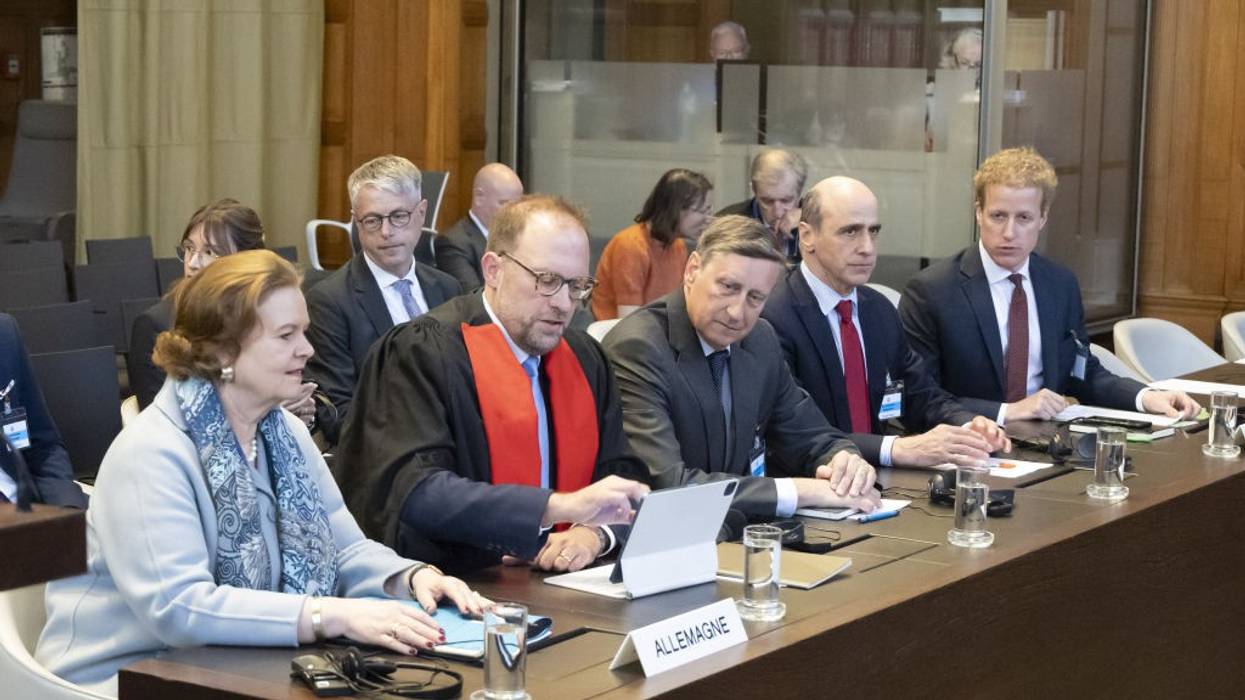
The top United Nations court on Tuesday overwhelmingly rejected Nicaragua's request for an emergency order directing Germany to halt arms sales to Israel as it wages what the tribunal previously called a "plausibly" genocidal war against Palestinians in Gaza.
International Court of Justice (ICJ) judges voted 15-1 against the Nicaraguan motion, finding an absence of legal conditions for issuing an order blocking Germany from selling arms to Israel.
"Based on the factual information and legal arguments presented by the parties, the court concludes that, at present, the circumstances are not such as to require the exercise of its power... to indicate provisional measures," ICJ President Nawaf Salam wrote in the ruling.
However, the court did not grant Germany's request for an outright dismissal and will hear arguments on the merits of the Nicaraguan case, a process expected to take months to complete.
Carlos José Argüello Gómez, the head of Nicaragua's legal team and its ambassador to the Netherlands, said after the ruling that the court's decision "doesn't mean that Germany hasn't violated... international law."
"Germany has—from our point of view—violated international law" by providing weapons for Israel, Argüello contended.
Nicaragua’s representative Carlos Jose Arguello Gomez says ICJ ruling doesn't mean that Germany has not violated international law by providing military aid to Israel.
🟠 LIVE updates: https://t.co/FqbkLyF2ZA pic.twitter.com/3cnPizIXps
— Al Jazeera English (@AJEnglish) April 30, 2024
Nicaragua asserts that Germany—which provided nearly 30% of Israel's exported arms last year—is complicit in Israeli war crimes and is enabling genocide against Palestinians in Gaza. Palestinian and international officials say that more than 123,000 Palestinians have been killed, maimed, or left missing by Israel's relentless 207-day onslaught and siege, which has also displaced around 90% of Gaza's 2.3 million people and driven at least hundreds of thousands of people to the brink of starvation. The majority of those killed have been women and children.
"Germany is failing to honor its own obligation to prevent genocide or to ensure respect of international humanitarian law," Argüello argued during case hearings earlier this month.
According to the Lawyers' Collective—a Berlin-based group that is suing to stop German arms sales to Israel—Germany's government issued €326.5 million ($348.7 million) worth of weapons export licenses for Israel last year, the majority of which were approved after October 7, 2023. That's a tenfold increase from 2022. The group says these transfers violate Germany's obligations under the War Weapons Control Act, which requires arms exports to comply with international humanitarian law.
Germany counters that its weapons sales to Israel have decreased since the October 7 attack and emphasizes what it says are the defensive nature of recent arms transfers. Berlin also says it has robust internal mechanisms and processes to consider the human rights implications of German arms sales.
Top German diplomat Tania von Uslar-Gleichen, who is leading Germany's legal team at the ICJ, said during hearings that Nicaragua's allegations "have no basis in fact or law."
Reacting to the ICJ ruling, the German Foreign Office said that "Germany is not a party to the conflict in the Middle East. On the contrary, we are working day and night for a two-state solution."
"We are the largest donor of humanitarian aid to the Palestinians," the ministry added. "We are working to ensure that aid reaches the people in Gaza."
The German government has been intensely criticized for its stauch support for Israel and for violently cracking down on pro-Palestinian protests since October. Numerous observers contend that Germany's actions are driven by historical guilt over the Holocaust, with some critics claiming the German government is weaponizing that guilt in order to demonize Palestinians and their defenders.
Israel—which is not a party to the case—vehemently denies genocide charges, arguing it is defending itself in the wake of the Hamas-led attacks that left more than 1,100 people dead and around 240 others taken hostage. Israeli forces are believed to have killed numerous Israelis on October 7 and an unknown number of hostages since then during the bombardment and invasion of Gaza.
In addition to Nicaragua's motion, the ICJ is considering a case brought by South Africa and supported by over 30 nations asserting that Israel's Gaza assault is genocidal because it is "intended to bring about the destruction of a substantial part of the Palestinian national, racial, and ethnical group."
On January 26, the tribunal issued a provisional ruling that found Israel is "plausibly" committing genocide in Gaza and ordered the country to prevent genocidal acts. Critics accuse Israel of ignoring the order by continuing to block humanitarian aid from reaching Gazans as children and other vulnerable people starve to death.
Citing "the worsening conditions of life faced by Palestinians in Gaza, in particular the spread of famine and starvation," the ICJ last month issued another provisional order directing Israel to allow desperately needed aid into the embattled enclave and reiterating its earlier order to prevent genocidal acts.
Also last month, the U.N. Human Rights Council
published a draft report that found "reasonable grounds to believe" that Israel is committing genocide in Gaza.

Nothing can "reverse the damage done to Palestine and to Palestinians," said the professors, "but the Times could still reverse some of the damage it has done to itself with its silence."
A front-page New York Times story that Israel used to galvanize public support for its U.S.-backed assault on Gaza must be subject to an independent review, said more than 50 journalism professors in a letter to the newspaper on Monday, as growing protests signified widespread outrage over the destruction that followed the bombshell article.
The professors, many of whom worked as full-time journalists before turning to academia, wrote to Times publisher A.G. Sulzberger, executive editor Joe Kahn, and international editor Philip Pan, calling for a "thorough and independent review" into the article "'Screams Without Words': Sexual Violence on Oct. 7."
The letter urged the newspaper to form a commission made up of journalism experts to examine the "reporting, editing, and publishing processes" for the story.
The article came under scrutiny shortly after it was published, having been reported by not only international correspondent Jeffrey Gettleman but also two inexperienced freelancers based in Israel. One, Anat Schwartz, is a "former air force intelligence official" with whom the Times cut ties after it was revealed that she had "liked" a social media post calling for Gaza to be turned into a "slaughterhouse."
"It appears that extraordinary trust was invested in these individuals and the Times would benefit from publicly explaining the circumstances that justified such unusual reliance on freelancers for such an important story," wrote the professors, including Mohamad Bazzi of New York University, Shahan Mufti of University of Richmond, and Jeff Cohen, who retired from Ithaca College.
Mufti joined Northwestern University assistant professor Steven Thrasher in gathering the signatures, and told The Washington Post that after "serious consideration and deliberation," the academics "came to the conclusion that this is necessary."
In addition to questions that have been raised about Schwartz's and Sella's experience and bias, the professors pointed to the newspaper's acknowledgment on March 26 that "new video evidence 'undercut' some important details" in "Screams Without Words," as well as Gettleman's comment suggesting he did not view the information in the story as hard "evidence."
"Can the paper 'establish' fact if its own reporter does not consider his information 'evidence'?" asked the professors.
In March, a spokesperson for Kibbutz Be'eri told The Intercept that victims of the Hamas-led attack on southern Israel were not sexually assaulted, and the family of one woman who was a key figure in "Screams Without Words" has denied the report's graphic details of sexual abuse were true.
The Intercept also reported that in reporting on the alleged sexual assaults, Schwartz relied on interviews with a rescue group that was "documented to have mishandled evidence and spread multiple false stories about the events of October 7, including debunked allegations of Hamas operatives beheading babies."
Al Jazeera journalist Laila Al-Arian called Monday's letter a "major development" and urged the Times to "do the right thing."
The methods used by Schwartz, The Intercept noted earlier this month, were the building blocks for a story that "instantly served as a powerful reference in a mounting campaign waged by Israel and its supporters" to excuse Israel's assault on Gaza.
"The impact of The New York Times story is impossible to fathom," the professors wrote on Monday. "This is wartime and in the minds of many people, the Times' story fueled the fire at a pivotal moment when there might have been an opportunity to contain it before, as the International Court of Justice has ruled, the situation devolved into the 'plausible' realm of genocide. Considering these grave circumstances, we believe that the Times must waste no time in extending an invitation for an independent review."
The article, said one signatory, Sandy Tolan of the University of Southern California, was published "as the death toll mounted in Gaza, and criticism was beginning to focus more on Israel."
"Being cognizant of the potential damages of and consequences of the timing," Tolan told the Post, "given that it didn't appear to be as well-reported as it should have been, there's all the more reason why an external review is appropriate."
The signatories pointed out that there is significant precedent for newspapers conducting independent reviews of articles that have raised questions about bias and veracity.
"If an independent review finds that the Times did nothing gravely wrong, then it will be a win not just for the Times but for all journalism," the professors wrote. "In the worst case, if an investigation does find remarkable errors or negligence in the way the newsroom operated, nothing that the Times would do in response could ever reverse the damage done to Palestine and to Palestinians but the Times could still reverse some of the damage it has done to itself with its silence."
"Doing nothing, however," they added, "and allowing a cloud of doubt to hang over this historically consequential story will ensure that all the journalism that The New York Times produces in the course of this conflict will remain under a dark shadow."
"The U.S. cut funding to a vital aid agency during a crisis, but isn't up to speed on reports that directly impact that funding?" asked one observer.
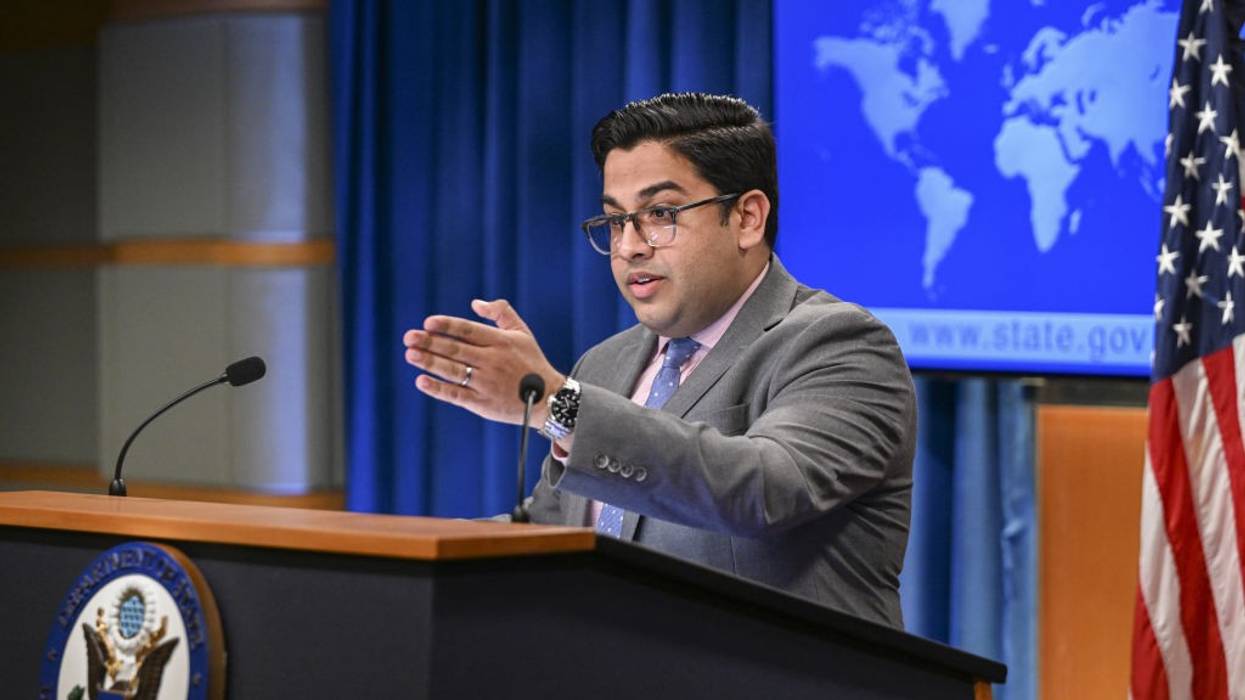
A Biden administration spokesperson on Monday attempted to avoid addressing allegations by employees of the United Nations agency for Palestinian refugees that they were tortured while in Israeli detention by claiming the U.S. State Department has not seen any media reporting on the accusations.
Ryan Grim, The Intercept's Washington, D.C. bureau chief, asked deputy State Department spokesperson Vedant Patel if he believes the United Nations Relief and Works Agency for Palestine Refugees in the Near East (UNRWA) staff members who say they were tortured by Israeli interrogators into making false confessions about involvement with the Palestinian militant group Hamas, which led the October 7 attacks on Israel. Israeli officials claimed that at least 12 out of UNRWA's 13,000 staff in Gaza had ties to Hamas and October 7.
"The U.S. cut funding to a vital aid agency during a crisis, but isn't up to speed on reports that directly impact that funding?"
"When you originally talked about the allegations against the 12 staff, you have said that UNRWA itself was the one who forwarded those allegations alone. You said you found them credible, but since then UNRWA itself has said that its staff were tortured by Israel in order to get some of those confessions extracted," said Grim. "Does that change your view of the evidence that was presented by Israel, and if UNRWA was credible enough for you believe the allegations the first time, is UNRWA credible enough when they make an allegation of torture against its staff?"
Patel replied, "I've not seen that reporting, Ryan," adding that "we continue to find the allegations that were laid out a number of months ago to be credible."
The U.S. and more than a dozen other nations suspended funding for UNRWA in the wake of the Israeli allegations. In what UNRWA Commissioner-General Philippe Lazzarini later called an act of "reverse due process," the agency terminated nine employees in response to Israel's claims, despite admitting to having no evidence to support their firing.
The European Union and nations including Canada, Sweden, and Australia subsequently reinstated funding for UNRWA, which Lazzarini said "is facing a deliberate and concerted campaign to undermine its operations."
The controversy over UNRWA has unfolded as the agency struggles to provide shelter and humanitarian aid to Gazans, who are suffering not only Israeli bombs and bullets but also a genocidal siege and blockade that are exacerbating growing famine in the embattled enclave.
U.S. Sen. Chris Van Hollen (D-Md.) this week called Israeli claims that UNRWA is a Hamas proxy a "flat-out lie."
"If you cut off funding for UNRWA in Gaza entirely, it means more people will starve, more people won't get the medical assistance they need, and so it would be a huge mistake," the senator warned.
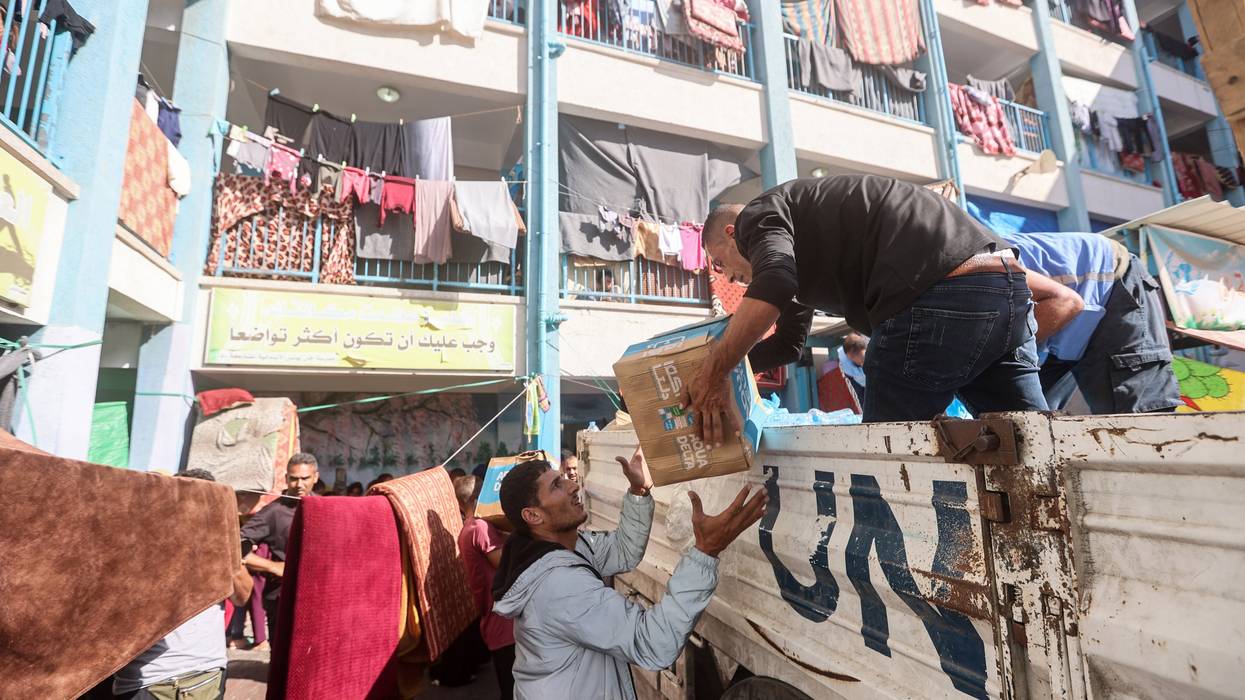
"Countries must reverse these funding suspensions, uphold their duties towards the Palestinian people, and scale up humanitarian assistance for civilians in dire need in Gaza and the region."
More than 20 humanitarian aid organizations on Monday condemned the decision by the United States and a growing list of nations to suspend funding for the United Nations agency that provides vital services to Palestinians suffering through a genocidal Israeli assault on the Gaza Strip.
Following Israeli claims—reportedly extracted from Palestinian prisoners in an interrogation regime rife with torture and abuse—that 12 of the more than 13,000 United Nations Relief and Works Agency for Palestine Refugees in the Near East (UNRWA) workers in Gaza were involved in the October 7 Hamas-led attacks on southern Israel, the United States and nine other nations cut off funding to the largest humanitarian aid organization operating in the besieged coastal enclave.
UNRWA has fired several employees in the wake of the Israeli allegations, while the U.N. Office of Internal Oversight Services, the world body's highest investigative authority, has launched a probe of the matter.
"We welcome UNRWA's swift investigation into the alleged involvement of a small number of U.N. staff members in the October 7 attacks. We are shocked by the reckless decision to cut a lifeline for an entire population by some of the very countries that had called for aid in Gaza to be stepped up and for humanitarians to be protected while doing their job," the 21 NGOs said in a statement.
"This decision comes as the International Court of Justice ordered immediate and effective action to ensure the provision of humanitarian assistance to civilians in Gaza," the groups continued, referring to last week's ICJ interim ruling in a South African-led case that found Israel is "plausibly" perpetrating genocide. "The countries suspending funds risk further depriving Palestinians in the region of essential food, water, medical assistance and supplies, education, and protection."
"We urge donor states to reaffirm support for the vital work that UNRWA and its partners do to help Palestinians survive one of the worst humanitarian catastrophes of our times," the statement added. "Countries must reverse these funding suspensions, uphold their duties towards the Palestinian people, and scale up humanitarian assistance for civilians in dire need in Gaza and the region."
According to UNRWA chief Phillipe Lazzarini, more than 2 million of Gaza's 2.3 million people depend upon UNRWA for their "sheer survival." With more than 90% of Gazans displaced by Israel's bombardment and invasion, over 1 million Palestinians are living in UNRWA-run shelters. As Gaza teeters on the brink of famine and hundreds of thousands of its residents suffer infectious diseases, the agency is providing critical food, medicine, and healthcare. It also runs hundreds of schools in the strip.
All this while working under relentless Israeli bombardment that's sometimes targeted UNRWA convoys, schools, shelters, and other facilities. The agency says at least 152 of its employees have been killed by Israeli bombs and bullets since October 7. Overall, more than 26,600 Palestinians have been killed and over 65,300 others wounded during Israel's 115-day onslaught, according to Gaza officials. Most of these casualties have been women and children.
"We urge donor states to reaffirm support for the vital work that UNRWA and its partners do to help Palestinians survive one of the worst humanitarian catastrophes of our times."
This isn't the first time the U.S. has suspended funding for UNRWA. The Trump administration did so in 2018, describing the agency as "irredeemably flawed." In 2021, U.S. President Joe Biden restored funding for UNRWA as it reeled from a crisis caused largely by the loss of around $360 million in American financial contributions.
U.S. Congresswoman Alexandria Ocasio-Cortez (D-N.Y.) on Monday urged the Biden administration to "immediately" restore UNRWA funding, which came a day after U.N. Secretary-General António Guterres said that while the alleged complicity of a few UNRWA employees in the October 7 attacks "must have consequences," the "tens of thousands of men and women who work for UNRWA, many in some of the most dangerous situations for humanitarian workers, should not be penalized."
"The dire needs of the desperate populations they serve must be met," he added.
Helen Clark, a member of the Elders and a former prime minister of New Zealand, on Monday praised countries—including New Zealand, Norway, Spain, and Ireland—that "have shown a better approach" by continuing to financially support UNRWA.
"Gazans cannot suffer further collective punishment through suspension of UNRWA funding," Clark said on social media.
Norway's Representative Office to Palestine affirmed on social media that "the situation in Gaza is catastrophic, and UNRWA is the most important humanitarian organization there."
"Norway continues our support for the Palestinian people through UNRWA," the office added. "International support for Palestine is needed now more than ever."

"How has the U.S. reacted to these allegations against UNRWA? It suspended funding," said one British expert. "How has the U.S. reacted to the International Court of Justice ruling that there are plausible grounds that Israel is committing genocide? Nothing."
Note: This article has been updated to include comments from UNRWA Commissioner-General Philippe Lazzarini.
The Israeli government's allegations that 12 employees of the United Nations Palestinian refugees agency were involved in Hamas' October 7 attack pushed the United States to promptly halt funding for the organization on Friday—leading journalists and advocates to note that a top international court's finding that Israel is "plausibly" committing a genocide in Gaza has not convinced the U.S. to stop arming the Israeli military.
Hours after the International Court of Justice (ICJ) announced its preliminary ruling in a case brought by South Africa, ordering Israel to stop acts of genocide in Gaza, the United Nations Relief and Public Works Agency for Palestine Refugees in the Near East (UNRWA) announced it had fired 12 of its 30,000 workers after the Israeli Foreign Ministry called for "an urgent investigation by UNRWA regarding the involvement of its employees in the terrorist events of 10/7."
"The Israeli authorities have provided UNRWA with information about the alleged involvement of several UNRWA employees in the horrific attacks on Israel on October 7," Philippe Lazzarini, commissioner-general of the agency, said in a statement.
Lazzarini said the agency was opening a thorough investigation into the allegations, while the U.S. State Department quickly released a statement saying it had "temporarily paused additional funding for UNRWA" while the investigation takes place.
As The New York Times reported Saturday, "it's not entirely clear" what Israel's precise allegations are, how the employees were allegedly involved in the attack on southern Israel, or "what kind of work they did or how senior they were" at UNRWA.
The agency is almost wholly funded by donations from U.N. member states. After the State Department announced its suspension of some of its funding,
countries including Canada, the United Kingdom, Finland, Australia, and Italy said they were following suit.
Chris Doyle, director of the Council for Arab-British Understanding, told Sky News that the decision by several countries to slash funding for the UNRWA "on the basis of allegations, not proven claims," was "a disgrace."
"The rest of the world is looking at this—they are aghast quite frankly," said Doyle. "How has the U.S. reacted to these allegations against UNRWA? It suspended funding. How has the U.S. reacted to the International Court of Justice ruling that there are plausible grounds that Israel is committing genocide? Nothing. Did the U.S. say it would be suspending the sale of arms, the massive bombs that have been used in the Gaza Strip to destroy civilian infrastructure, as part of [what] might constitute genocide? Not a bit. Is it continuing? Yes."
UNRWA is one of the largest employers of Palestinians in Gaza—where nearly half of adults are unemployed—and operates schools, medical clinics, and shelters while administering housing assistance, emergency loans, and overseeing other operations.
Lazzarini said Saturday that the suspension of funding would "threaten our ongoing humanitarian work across the region including and especially in the Gaza Strip" and said it was "shocking" that countries would halt funding even as the workers in question were fired—particularly since Israel and other countries were long aware of all the employees working for UNRWA:
UNRWA shares the list of all its staff with host countries every year, including Israel. The Agency never received any concerns on specific staff members.
Meanwhile, an investigation by OIOS into the heinous allegations will establish the facts. Moreover, as I announced on 17 January, an independent review by external experts will help UNRWA strengthen its framework for the strict adherence of all staff to the humanitarian principles.
I urge countries who have suspended their funding to re-consider their decisions before UNRWA is forced to suspend its humanitarian response. The lives of people in Gaza depend on this support and so does regional stability."
Cutting funding to the agency is akin to accelerating "genocide by collective punishment, cutting desperately needed relief aid," said historian and former British ambassador Craig Murray.
Doyle wasn't alone in noticing the contrast between the U.S. responses to the ICJ and to Israel's allegations.
"It took [U.S. Secretary of State] Antony Blinken about three seconds to suspend UNRWA aid based on mere allegations that 12 employees [were] linked to Hamas' attack, but despite concrete evidence that the Israel Defense Forces has indiscriminately and deliberately massacred tens of thousands of Palestinians—plausibly a genocide, ICJ said—ZERO suspension of Israel military aid,"
said Sarah Leah Whitson, executive director of Democracy for the Arab World Now.
Following the ICJ ruling, U.S. Reps. Rashida Tlaib (D-Mich.) and Cori Bush (D-Mo.), who have led lawmakers in a call for the U.S. to demand a cease-fire since October, released a statement arguing the court's findings put "the U.S. government on notice for enabling violations of the Genocide Convention."
"The Biden administration must not only affirm the legitimacy of this ruling and facilitate an immediate cease-fire—it must comply with federal and international law by suspending military assistance to the Israeli government," said Tlaib and Bush.
Like Israeli officials, the Biden administration has dismissed the findings of the ICJ, with National Security Council spokesperson John Kirby saying Friday that the court did not find Israel "guilty" of genocide.
Journalist and rights advocate Daniel Denvir pointed out that hours after the ICJ said South Africa's claim that Israel is committing genocidal acts in Gaza is "plausible," the news was dwarfed at the
Times by its coverage of the UNRWA allegations.
"Israel has killed 101 UNRWA workers in Gaza and has bombed its schools and camps. Guess what you get when you google UNRWA & Israel now?"
said Al Jazeera's Sana Saeed.
Historian Remi Brulin noted that Israel has previously designated Palestinian civil rights organizations as terrorist groups "on wholly spurious grounds."
"None of this necessarily means that the specific allegations about these 12 UNRWA members are untrue," said Brulin. "But evidence needs to be provided. And it is quite remarkable that the U.S. could decide so quickly that cutting all funds to UNRWA was the correct, necessary measure here."

"Israel thought they could blackmail everyone, including the U.N., into collaboration with the propaganda cover of their crimes," said one Palestinian critic.
Israel's foreign ministry said Monday it would deny visas for multiple United Nations employees after officials and agencies within the world body—including a panel on which an Israeli expert accused the country of genocide—continued their sharp criticism of the war on Gaza.
"I instructed the Ministry of Foreign Affairs not to extend the visa of one of the organization's employees in Israel, and to deny the visa request of another employee," Foreign Minister Eli Cohen said on social media. "The conduct of the U.N. since October 7th is a disgrace to the organization and the international community."
Francesca Albanese, the U.N. special rapporteur on Palestine, slammed the new policy.
"Baseless attacks against the U.N. only proves moral cowardice," Albanese said in response to Cohen in a social media post. "The UN has been weakened by decades of Israeli impunity for breaches of international law, including colonization of occupied territories and Palestinian forced displacement. The UN must hold Israel to account if it is to salvage its reputation and purpose."
The alternative to accountability, she continued, "is playing itself out in Gaza today. With freedom for all, there will be freedom for none."
Albanese called for an immediate ceasefire, release of Israeli hostages as well as arbitrarily detained Palestinians, and the end of occupation in order to restore peace, full protection for all civilians, and put the region on a path towards justice.
In his post, Cohen alleged that U.N. Secretary-General António Guterres "legitimized war crimes and crimes against humanity" when he noted that the October 7 attacks "did not happen in a vacuum," a reference to decades of Israeli oppression of Palestinians including ethnic cleansing, illegal occupation, settler colonization, and apartheid.
He also accused the U.N. Office of the High Commissioner for Human Rights of disseminating "unsubstantiated blood libels" for publishing witness accounts of Israel Defense Forces (IDF) troops allegedly executing military-age Palestinian men in front of women and child relatives, who were also injured, during a December 19 raid in Gaza City.
Cohen further slammed U.N. women's agency, "an organization that for two months ignored the acts of rape committed against Israeli women" by the October 7 attackers.
"We will stop working with those who cooperate with the Hamas terrorist organization's propaganda," he added.
Israeli government spokesperson Eylon Levy, who accused the U.N. of being "complicit partners" with Hamas, said visa applications for United Nations personnel would no longer be granted automatically, but would instead be considered on a case-by-case basis.
In what critics claim is an attempt to justify Israel's killing of at least 134 United Nations workers in Gaza, Israeli officials have accused members of the U.N. Relief and Works Agency for Palestine Refugees in the Near East of being members of or having ties to Hamas, whose political wing governs the Gaza Strip.
Cohen did not name the officials whose visas would be denied. Earlier this month, Israel revoked the visa of Lynn Hastings, the U.N. humanitarian coordinator for the Palestinian territories after she decried Israel's failure to allow humanitarian aid into Gaza.
Cohen's announcement came amid sustained criticism of Israel's wartime conduct by various offices and officials of the world body, which has repeatedly and overwhelmingly voted in favor of cease-fire resolutions only to be stymied by the United States, Israel's most powerful supporter at the United Nations.
Speaking during a U.N. Committee on the Exercise of the Inalienable Rights of the Palestinian People panel earlier this month, Israeli Holocaust scholar Raz Segal—who is not employed by the agency—accused his country's government and military of acting with "genocidal intent" as they perpetrate an "unprecedented level of mass killings" in Gaza.
Gaza's Ministry of Health said Tuesday that 20,915 Palestinians have been killed and 54,918 wounded, since October 7.
Intensified Israeli airstrikes killed hundreds of Gazans in recent days, including at least 76 members of the al-Mughrabi family slain in a Gaza City home on Saturday and at least 106 people killed in Sunday strikes on the Maghazi refugee camp in central Gaza—an area where Israeli authorities had earlier ordered Palestinians to flee for safety.
Thousands of Gazans are missing and believed buried beneath the rubble of bombed buildings. More than 1.9 million of Gaza's 2.3 million people have also been forcibly displaced and face growing hunger, winter cold, and disease.
"A humanitarian cease-fire is the only way to begin to meet the desperate needs of people in Gaza and end their ongoing nightmare," Guterres insisted Friday after the U.N. Security Council passed a resolution—watered down by the United States—calling for "urgent and extended humanitarian pauses and corridors."