

SUBSCRIBE TO OUR FREE NEWSLETTER
Daily news & progressive opinion—funded by the people, not the corporations—delivered straight to your inbox.
5
#000000
#FFFFFF
To donate by check, phone, or other method, see our More Ways to Give page.
Daily news & progressive opinion—funded by the people, not the corporations—delivered straight to your inbox.

The nominees "took an oath to 'support and defend the Constitution against all enemies, foreign and domestic,'" said retired Maj. Gen. Dennis Laich. "Through their actions, or inaction, they are violating that oath."
A network of former intelligence, military, and national security officials on Tuesday launched the Profiles in Cowardice Award and urged the public to vote for nominees who are "silent in the face of the country's descent into fascism," a march led by U.S. President Donald Trump.
"We are in a constitutional crisis," says the Eisenhower Media Network's (EMN) website for the award. "Trump is amassing power in the executive branch, ignoring Congress and the courts. Meanwhile, leaders who have sworn an oath to support and defend the Constitution are sitting on their hands."
The new honor is the inverse of the John F. Kennedy Profile in Courage Award, created by the late president's family "to recognize and celebrate the quality of political courage that he admired most." This year's recipient is Trump's former vice president, Mike Pence, "for putting his life and career on the line to ensure the constitutional transfer of presidential power on January 6, 2021," when Trump incited an insurrection and his supporters stormed the U.S. Capitol.
"We, the American people, are here to remind them of who they serve, and that it's time to do their constitutional duty by standing up to this administration and its authoritarian bent."
Nominees for the inaugural Profiles in Cowardice Award are former President George W. Bush, former Secretary of State Anthony Blinken, Sen. Jack Reed (D-R.I.), Rep. Nancy Mace (R-S.C.), retired Gens. David Petraeus and Mark Milley, the Joint Chiefs of Staff, and the Republican members of the Senate Armed Services Committee.
"The 'Profiles in Cowardice' Award was created to call out those weak souls who are failing to engage in efforts to keep our country from sleepwalking into fascism," said EMN's director, retired Maj. Gen. (ret.) Dennis Laich, in a statement.
"These leaders, both past and present, took an oath to 'support and defend the Constitution against all enemies, foreign and domestic,'" he noted. "Through their actions, or inaction, they are violating that oath. We, the American people, are here to remind them of who they serve, and that it's time to do their constitutional duty by standing up to this administration and its authoritarian bent."
The public can vote at ProfilesInCowardice.org until August 1, after which the award will be presented to the winner "at the most inconvenient time possible," according to the website.
The site lays out why people were nominated as "cowards." For example, "Bush has a long and storied history of cowardice" and "is solidifying his legacy" by retreating rather than serving as a leader in the Republican Party and standing up to Trump.
In Congress, "Mace is a one-woman culture war content machine—exactly how the military-industrial complex and mainstream media like it," the site continues. Reed, the top Democrat on the Senate Armed Services Committee, "has chosen to push through Trump's agenda of unfettered militarism and confirm unqualified MAGA loyalists like Pete Hegseth," the defense secretary. Republicans on that committee also "rubber-stamped Pete Hegseth to cater to Trump and his blindly loyal MAGA cronies."
Among former military leaders, the site says, "Milley attempted to make a principled stand after the January 6th insurrection—but cowardice won out in the end," and Petraeus said at a conference that "the world was in for 'exciting times' under Trump."
"The Joint Chiefs of Staff are tasked with defending the Constitution against all enemies, foreign and domestic," the site notes. "But as reckless U.S. military actions push the world closer to nuclear catastrophe, they've chosen silence over service. No resignations. No public warnings."
As for Blinken, who served under former President Joe Biden, "he ignored a flood of real-time reports detailing Israeli human rights violations—and now we know his public claims of 'working overtime' on cease-fires were outright lies," the site adds. "With American diplomacy in free fall, Blinken chose complicity and cover stories over truth and action."
Christian Sorenson, EMN's associate director, said that "it takes courage to do the right thing... It takes even more courage to do the right thing when the system itself fosters militarism and war profiteering."
"Targeting 'leaders' in the nation's capital, Profiles in Cowardice highlights the craven and the pushovers, as well as those who eagerly abet authoritarianism and nonstop war for personal and professional gain," Sorenson added. "Virtue and public service will arrive in D.C. one way or another. Profiles in Cowardice is part of that broader effort."
"Even when individuals have done nothing wrong—and in fact have done the right thing—and will ultimately be exonerated, the mere fact of being investigated or prosecuted can irreparably damage reputations and finances," said the outgoing president.
This is a developing news story... Please check back for possible updates...
In the final hours of his presidency, Joe Biden on Monday issued preemptive pardons to a number of current and former lawmakers and public officials whom President-elect Donald Trump has attacked.
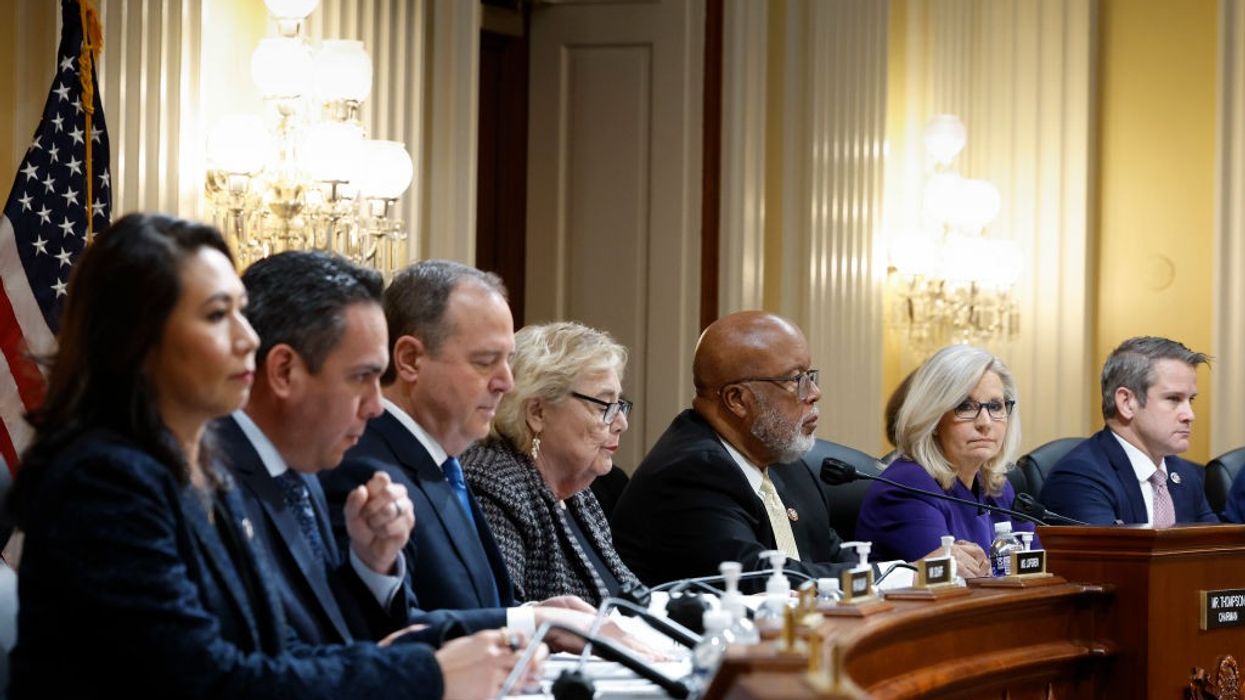
Those pardoned include Anthony Fauci, the former director of the National Institute of Allergy and Infectious Diseases; Mark Milley, former chairman of the Joint Chiefs of Staff; and members of the House select committee that investigated the January 6, 2021 insurrection incited by Trump, who has pledged to pursue retribution against his political opponents.
"The issuance of these pardons should not be mistaken as an acknowledgment that any individual engaged in any wrongdoing, nor should acceptance be misconstrued as an admission of guilt for any offense," Biden said in a statement. "Our nation owes these public servants a debt of gratitude for their tireless commitment to our country."
"These are exceptional circumstances, and I cannot in good conscience do nothing," the outgoing president continued. "Even when individuals have done nothing wrong—and in fact have done the right thing—and will ultimately be exonerated, the mere fact of being investigated or prosecuted can irreparably damage reputations and finances."
Biden has made sweeping use of his clemency powers in the final days of his White House term, commuting the sentences of thousands of people convicted for nonviolent drug offenses and almost completely emptying federal death row.
But Biden has not granted clemency to several high-profile individuals whose causes progressive lawmakers and human rights organizations have championed, including Charles Littlejohn—a former IRS contractor serving a five-year prison sentence for leaking the income tax records of thousands of rich Americans, Trump among them—and Steven Donziger, who faced an unprecedented legal assault led by Chevron after he helped secure a historic settlement against the company over oil dumped in the Amazon rainforest.
"Do you see what they did there, on their own network?"
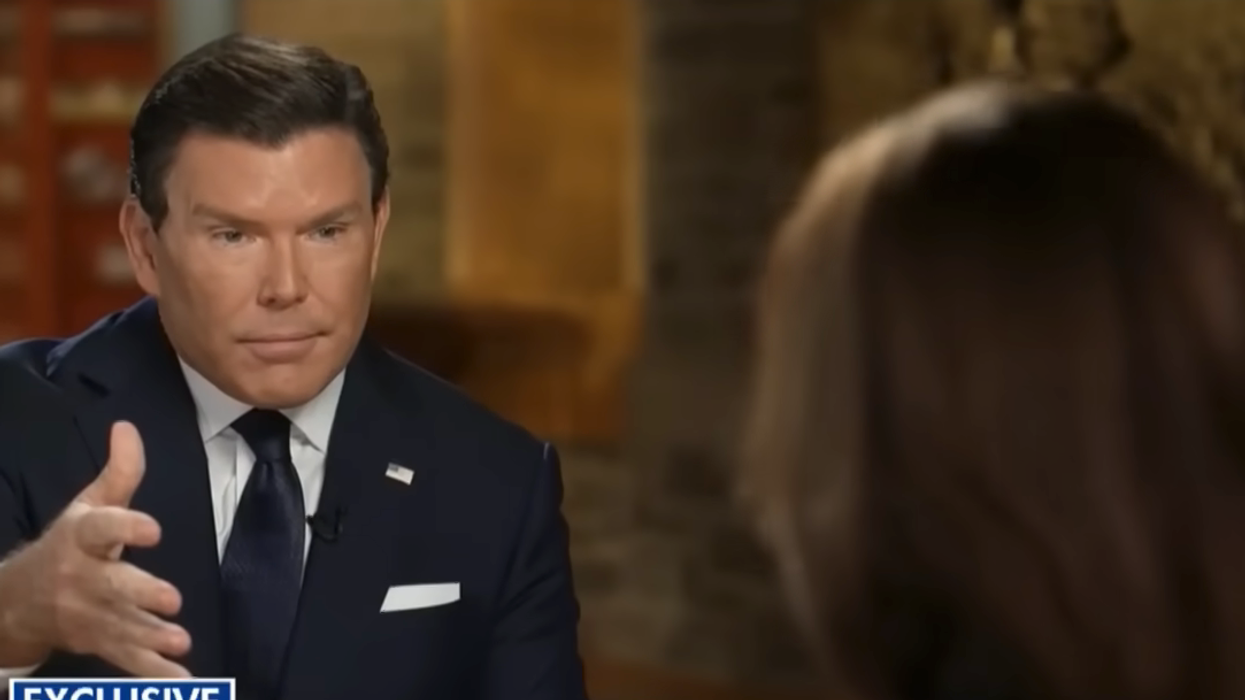
MSNBC's evening news anchor Chris Hayes walked his audience through an overt deception perpetrated by Fox News Wednesday night as the right-wing cable outlet used selective editing of Donald Trump during Bret Baier's primetime interview with Kamala Harris.
The line of questioning from Baier stemmed from recent public remarks Trump made in which he said "the enemy from within" was the most serious danger to the nation and that he would use both the National Guard and U.S. military to go after "radical-left lunatics," which he claimed included Rep. Adam Schiff (D-Calif.), a centrist member of the Democratic Party currently running for U.S. Senate in California.
When Harris invoked these comments to criticize Trump for threatening to turn the U.S. military against people who have different political beliefs than him, Baier interrupted her to say that the former Republican president had been asked about those very remarks earlier in the day during a separate town hall-style event, also hosted by Fox.
But in the clip shown by Baier to the television audience and to which Harris was asked to respond, Fox only included a small part of what Trump actually said on the subject during the town hall, leaving out his clear repetition of calling Schiff and others "the enemy from within" who must be dealt with.
As Hayes explains during his examination of what transpired, Baier used a selected "soundbite to try to clear Donald Trump of saying a thing in which he cut out the part where says it."
Watch the segment:
"Do you see what they did there, on their own network?" asked Hayes of the selective editing by Fox producers. "[Trump] said—he repeated—'They are the enemy within... they're sick people... they're evil.' He repeated it! And then Brett Baier's like, 'Let me play you what [Trump] said today,' and just cut out the big chunk."
In her reaction to the clip showed by Baier, Harris said, "Bret, I'm sorry and with all due respect—that clip was not what he has been saying about the 'enemy within' when he has been speaking about the American people. That's not what you just showed."
When Baier tried to explain that he was just trying to show his response to a question, Harris interjected, "You and I both know that he has talked about turning the American military on the American people. He has talked about going after people who are engaged in peaceful protest. He has talked about locking people up because they disagree with him."
"This is a democracy," Harris continued. "And in a democracy, the president of the United States should be able to handle criticism without saying they are going to lock people up for doing it. And this is what's at stake, which is why you have someone like the former chairman of the Joint Chiefs of Staff saying what Mark Milley has said about Donald Trump being a threat to the United States of America."
For his part, Hayes said the entire episode—in which Trump refused to climb down from his fascist positions, but Fox still tried to "clean up" for him—represents "the same playbook we see over and over from Fox."

An official announcement is expected very soon.
The Biden administration is considering providing Ukraine with cluster bombs and may announce this decision in early July, NBC News reports.
“We have been thinking about DPICM for a long time,” Gen. Mark A. Milley, chairman of the Joint Chiefs of Staff, said Friday at the National Press Club. “Yes, of course, there’s a decision-making process ongoing.”
Dual-purpose improved conventional munitions (DPICMs) are surface-to-surface warheads that burst and disperse deadly multiple, smaller bomblets over a wide area. Many bomblets fail to explode on initial impact, leaving duds that can indiscriminately wound and kill, like landmines, for many years.
DPICMs can be fired from the U.S.'s howitzer artillery systems already provided to Ukraine. Ukraine has asked the U.S. for DPICMs since last year, but the idea has met resistance.
Over 120 countries, including 23 NATO countries, ban them under the Convention on Cluster Munitions treaty.
The Convention on Cluster Munitions prohibits cluster munitions' use, production, acquisition, transfer, and stockpiling and requires the destruction of stockpiles.
The U.S., Ukraine, and Russia are not signatories to the treaty.
This week, in a letter obtained by POLITICO, 14 Senate Democrats wrote to Biden's national security adviser Jake Sullivan that “the humanitarian costs and damage to coalition unity of providing U.S. cluster munitions would outweigh the tactical benefits, and urge the president not to approve such a transfer.”
“They are indiscriminate, and they harm civilians,” said Washington director of Human Rights Watch, Sarah Yager told the Washington Post. “We are also talking about breaking a global norm against using cluster munitions, at least for countries that believe in humanity even in times of war.”
“These duds are dangerous because they are so easily triggered, making them a threat to everyone who enters an area where they have been fired,” said Brian Castner, a senior crisis adviser at Amnesty International. “It’s like scattering random booby traps across the battlefield.”
This is the text of a recent letter to President Biden:
Wednesday, June 14, 2023
Dear Mr. President,
We, the undersigned organizations, write with grave concerns over the potential transfer of United States cluster munitions to Ukraine. We sincerely appreciate your Administration’s firm stance in not transferring any U.S. cluster munitions to Ukraine to date. Despite recent calls from members of Congress and Ukrainian leaders for the United States to transfer cluster munitions to Ukraine, we strongly urge you to remain steadfast.
The U.S. Cluster Munition Coalition condemns in the strongest possible terms the use, production, transfer, or stockpiling of cluster munitions by any party. Cluster munitions are among the most harmful weapons to civilians, as they are designed to disperse indiscriminately across a wide area and often fail to explode on initial use, littering communities with unstable unexploded ordnance and causing devastating harm to civilians, and especially children, years after a conflict ends.
Cluster munitions have been used repeatedly by the Russian military since its full-scale invasion in February of 2022, with devastating impacts on civilians and civilian objects, including homes, hospitals, and schools, according to Human Rights Watch. The Ukrainian military has also used cluster munitions on multiple occasions.iii On April 8, 2022, a cluster munitions attack by Russia killed at least 58 civilians and injured over 100 others in the city of Kramatorsk—this is just one of the hundreds of documented, reported, or credibly alleged, cluster munition attacks in Ukraine since the 2022 invasion. The United States must not be complicit in the use of these indiscriminate weapons.
Any claims of potential tactical benefits of the transfer and subsequent use of cluster munitions by Ukraine in the defense of its territory, dismisses both the substantial danger that cluster munitions pose to civilians, and the international consensus on their prohibition.
Were the United States to transfer these prohibited weapons, it would run counter to the global consensus, embodied in the 123 countries who are signatories or states parties to the Convention on Cluster Munitions, which bans the use, production, transfer, and stockpiling of these weapons. While neither the Russian Federation, Ukraine nor the United States are party to the Convention, 23 NATO members are among the state parties. Beyond making the United States a global outlier, acting in contradiction to partner nations’ and NATO allies’ express ban on the transfer and use of these weapons could hurt the U.S.’ ability to forge and maintain coalitions that have been so crucial to supporting Ukraine. It would also harm efforts to promote other arms control agreements.
Although the United States is regrettably not party to the Convention, a long-standing congressional mandate prohibits the transfer of any cluster munitions with a failure rate greater than 1%, which effectively forbids the transfer of any existing U.S. stockpiled cluster munitions.iv Additionally, twice in the past year,v members of Congress have written your Administration calling for the United States to “be leading the global effort to rid the world of these weapons, not continuing to stockpile them” and urged you to “promptly order a review of U.S. policy on cluster munitions with the goal of halting their use, production, export, and stockpiling and putting the United States on a path to join the Convention on Cluster Munitions.” We urge your Administration to continue to heed this congressional mandate and intent.
Cluster munitions are indiscriminate weapons that disproportionately harm civilians, both at the time of use and for years after a conflict has ended. We greatly appreciate your committed stance against transferring these weapons while supporting the Ukrainian people – and we urge you to remain resolute in resisting recent calls.
Sincerely,
U.S. Cluster Munition Coalition (USCMC) Members:
American Friends Service Committee
Amnesty International USA
Arms Control Association
Center for Civilians in Conflict (CIVIC)
Democracy for the Arab World Now (DAWN)
Friends Committee on National Legislation
Human Rights Watch
Humanity & Inclusion
Landmines Blow!
Legacies of War
Maryknoll Office for Global Concerns
Mines Advisory Group (MAG) US
Nobel Women's Initiative
Physicians for Human Rights
Presbyterian Church, (USA) Office of Public Witness
Proud Students Against Landmines and Cluster Bombs (PSALM)
The Quincy Institute for Responsible Statecraft
UNICEF USA
United Church of Christ, Justice and Local Church Ministries
West Virginia Campaign to Ban Landmines and Cluster Munitions
Win Without War
Partners:
18 Million Rising
Aurora Commons
Center for International Policy
Children of Vietnam
Church of the Brethren, Office of Peacebuilding and Policy
Foreign Policy for America
No Ethics in Big Tech
Nonviolent Peaceforce
Oxfam America
Pax Christi USA
Peace Action
Plan International USA
RootsAction.org
Saferworld
Shadow World Investigations
Sisters of Mercy of the Americas - Justice Team
Spirit of Soccer
cc: National Security Advisor Jake Sullivan, Secretary of State Antony Blinken, Secretary of Defense Lloyd Austin
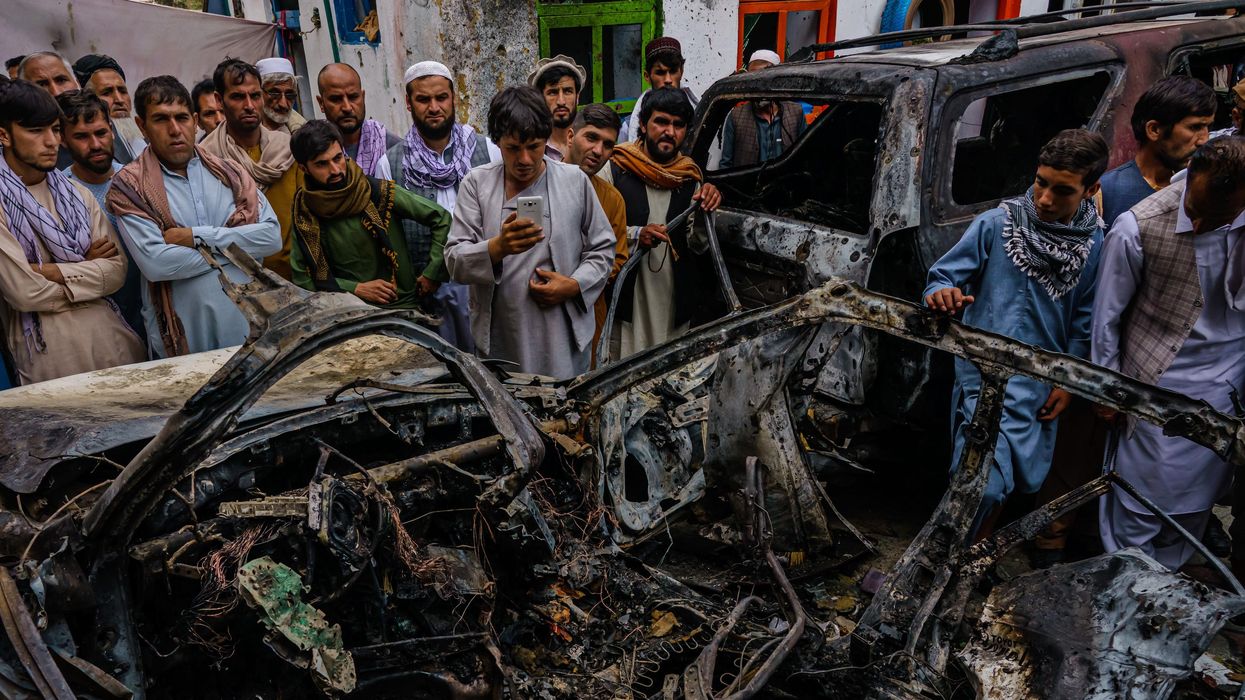
An annual report published Tuesday by the Pentagon claiming that the U.S. military only killed 12 noncombatants last year was met with skepticism by civilian casualty monitors, who perennially accuse the United States of undercounting the people killed by its bombs and bullets.
"They were targeting people. It was intentional."
The U.S. Department of Defense "assesses that there were approximately 12 civilians killed and approximately five civilians injured during 2021 as a result of U.S. military operations," the report--the fifth of its kind--states.
However, the U.K.-based monitor group Airwars counted between 12 and 25 civilians likely killed by U.S. forces, sometimes working with coalition allies, in Syria alone last year, with another two to four people killed in Somalia and one to four killed in Yemen.
"Once again the confirmed civilian casualty count is below what communities on the ground are reporting," Airwars director Emily Tripp told Al Jazeera.
Airwars does not count civilians killed or wounded in Afghanistan, where all of the 2021 casualties acknowledged by the Pentagon occurred. These incidents include an errant August 29 drone strike that killed 10 people--most of them members of one family--including seven children.
No one was ever held accountable for the attack, which Joint Chiefs of Staff Chair Gen. Mark Milley first described as a "righteous strike."
However, nearly 20 witnesses who spoke to CNN after a suicide bomber killed more than 100 Afghans and 13 U.S. troops on August 26 during the rushed American withdrawal from the country said that U.S. and British troops opened fire on the panicking crowd, killing and wounding many civilians.
"They were targeting people. It was intentional," said one survivor. "In front of me, people were getting shot at and falling down."
Although the U.S. military claimed all of the casualties at the airport that day were caused by the bombing, a doctor working at a local hospital said that "there were two kinds of injuries... people burnt from the blast with lots of holes in their bodies. But with the gunshots, you can see just one or two holes--in the mouth, in the head, in the eye, in the chest."
The Italian-run Emergency Surgical Center in Kabul said it received nine bodies with gunshot wounds following the bombing.
Despite all this--and forensic analysts' assertions that so many people could not have been killed by a single bomb--a spokesperson for U.S. Central Command refuted the claim that U.S. troops shot civilians at Kabul's airport, attributing eyewitness accounts, including by people who were shot, to "jumbled memories."
U.S. administrations have long been accused of undercounting civilians killed by American forces. During the administration of former President George W. Bush, top officials dismissed the carnage that critics warned the so-called "War on Terror" would cause, with one top general declaring that "we don't do body counts." The vast majority of the hundreds of thousands of civilians killed in the war died during Bush's two terms.
While civilian casualties declined dramatically during the tenure of former President Barack Obama, his administration was criticized for relying heavily upon unmanned aerial drones--whose strikes killed hundreds of civilians in more nations than were bombed by Bush--and for redefining "militant" to mean all military-aged males in a targeted strike zone in a bid to falsely lower noncombatant casualty figures.
Former President Donald Trump dispensed with pretenses, relaxing rules of engagement meant to protect civilians from harm and vowing to "bomb the shit out of" Islamic State militants and "take out their families." Then-Defense Secretary James Mattis--who earned his "Mad Dog" moniker during the fight for Fallujah in which hundreds of civilians were killed or wounded by American forces--said in 2017 that noncombatant deaths "are a fact of life" as the U.S. transitioned from a policy of "attrition" to one of "annihilation" in the war against Islamic State.
The result was a sharp increase in civilian casualties as U.S. and allied forces laid waste to entire cities like Mosul, Iraq and Raqqa, Syria, killing and wounding thousands of men, women, and children. As Common Dreams reported at the time, Trump's decision to loosen rules of engagement was blamed for a more than 300% spike in civilian casualties in Afghanistan as well.
Related Content

U.S.-caused civilian casualties have declined precipitously with the withdrawal of U.S. troops from Afghanistan, although deadly incidents still occasionally occur. The initial annual Pentagon civilian casualty report, released during the Trump administration's first year, admitted to 499 civilians killed by U.S. forces. The true figure is believed to be much higher.
Last month, human rights groups cautiously welcomed news that the U.S. military--which has killed more civilians in foreign wars than any other armed force on Earth in the post-World War II era--published a plan aimed at reducing noncombatant casualties.

Anti-war advocates accused the Biden administration of continued warmongering late Friday into Saturday after President Joe Biden confirmed he plans to send U.S. troops to Eastern Europe.
"I'll be moving troops to Eastern Europe in the NATO countries in the near term," Biden told reporters at Joint Base Andrews late Friday. "Not too many."
Earlier this week, the president announced that 8,500 troops were standing ready for a potential deployment to confront what the White House says is an imminent attack by Russian forces in Ukraine--despite pleas by Ukrainian President Volodymyr Zelensky to stop creating "panic."
In a phone call Thursday night, Zelensky reportedly questioned the Biden administration's belief--promoted by the corporate media--that a Russian invasion is "imminent."
"I'm the president of Ukraine, I'm based here and I think I know the details deeper than any other president," Zelensky told the press after the call. "The image that mass media creates is that we have troops on the roads, we have mobilization, people are leaving for places. That's not the case. We don't need this panic."
Veteran journalist John Pilger tweeted that Zelensky's comments exposed "the warmongering of Biden... as a crime."
As Common Dreams reported Friday, U.S. Defense Secretary Lloyd Austin expressed hope that a diplomatic approach could avoid conflict with Russia, which has demanded a guarantee that Ukraine will be excluded from NATO, along with other security measures.
Joint Chiefs of Staff Chairman Mark Milley also spoke Friday and called on Russian President Vladimir Putin to pursue diplomacy--after Putin reportedly spoke to French President Emanuel Macron about implementing a diplomatic agreement forged in 2014.
Milley warned that there will be "horrific" consequences if Russia invades Ukraine.
"Given the type of forces that are arrayed, the ground maneuver forces, the artillery, the ballistic missiles, the air forces, all of it packaged together--if that was unleashed on Ukraine, it would be significant, very significant, and it would result in a significant amount of casualties," he told reporters.
Peace group CodePink accused the Biden administration of reaching "putting the entire world at risk" while the U.S. public and international leaders make clear their anti-war stance.
"Russia doesn't want war. Ukraine doesn't want war. The American people don't want war," tweeted the group. "The Biden administration needs to get with the program and STOP endangering us all."

Amid President Donald Trump's transparent efforts to sow doubt and discord around this year's election, his desire to confirm a right-wing Supreme Court justice ahead of November's contest, and his refusal to commit to a peaceful transfer of power regardless of the outcome, the specter of Trump ordering active-duty troops to quash protests during a possibly chaotic interregnum has reportedly provoked anxiety at the Pentagon.
According to Friday reporting by the New York Times, high-ranking military leaders have vowed to keep the armed forces out of the electoral process and its potentially chaotic aftermath, with Defense Department officials saying top generals could resign if the commander in chief tries to deploy them to U.S. streets.
As the Times reports:
Senior leaders at the Pentagon, speaking on the condition of anonymity, acknowledged that they were talking among themselves about what to do if Mr. Trump, who will still be president from Election Day to Inauguration Day, invokes the Insurrection Act and tries to send troops into the streets, as he repeatedly threatened to do during the protests against police brutality and systemic racism.
The Insurrection Act gives the president the power to deploy active-duty military personnel to neutralize civil unrest even if governors are opposed to it. General Mark Milley, chairman of the Joint Chiefs of Staff, and Defense Secretary Mark Esper both objected to taking that route this summer, and Trump yielded, though not before nearly firing Esper.
But the Times noted that Trump, "who refers to the armed forces as 'my military' and 'my generals,' has lumped them with other supporters like Bikers for Trump, who could offer backup in the face of opposition" this fall and winter.
"Which side will our military be on when this happens?" tweeted Charles Idelson of National Nurses United earlier this week after Trump refused to commit to a peaceful transfer of power if he is defeated at the polls. In other countries, a head of state's threat to "get rid of the ballots" to ensure a "continuation" rather than a "transfer" of power would be called a coup d'etat, Idelson remarked.
Many have been wondering for weeks what will happen if Trump, who has declined more than once to abide by the results of the election and has repeatedly and baselessly attacked mail-in ballots in an attempt to undermine the validity of the vote--which is already underway in some states--loses and refuses to voluntarily leave office.
On August 11, retired Army officers John Nagl and Paul Yingling argued in an open letter to Milley that "you may have to choose between defying a lawless president or betraying your constitutional oath... If Donald Trump refuses to leave office at the expiration of his constitutional term, the U.S. military must remove him by force, and you must give that order."
As CNN reported last month, Nagl and Yingling's "advocacy for having the armed forces get involved in settling a disputed election prompted backlash from both the Pentagon and other experts in the field of civilian-military relations."
When answering questions posed by Rep. Elissa Slotkin (D-Mich.) and Rep. Mikie Sherril (D-N.J.), both members of the House Armed Services Committee, Milley in late August was emphatic that the military would play no role in resolving a disputed election.
"I believe deeply in the principle of an apolitical U.S. military," Milley told lawmakers. "In the event of a dispute over some aspect of the elections, by law U.S. courts and the U.S. Congress are required to resolve any disputes, not the U.S. military. I foresee no role for the U.S armed forces in this process."
As the Associated Press reported last month, Milley "anchored many of his responses" in the U.S. Constitution. "Asked if the military would refuse an order from the president if he was attempting to use military action for political gain rather than national security, Milley said, 'I will not follow an unlawful order.'"
Milley was sharply criticized in June by current and former lawmakers and members of the armed forces for participating in Trump's militarized stunt in which protesters in Lafayette Square near the White House were violently dispersed by the National Guard so that Trump could be photographed holding a bible in front of St. John's Church.
Milley publicly apologized for escorting Trump through the park, much to the chagrin of the president.
According to the Times, in private discussions at the Defense Department about "the possibility of Mr. Trump trying to use any civil unrest around the elections to put his thumb on the scales... several Pentagon officials said that such a move could prompt resignations among many of Mr. Trump's senior generals, starting at the top with General Milley" and likely including General Charles Brown, the Air Force chief of staff.
Earlier this year, Rosa Brooks, a Georgetown University law professor and past Defense Department official under former President Barack Obama, was the head of a bipartisan team of more than 100 former national security officials and election experts who simulated the most significant risks to a peaceful transfer of power.
The Transition Integrity Project stressed that there is "a high degree of likelihood that November's elections will be marked by a chaotic legal and political landscape," and it is likely that Trump will "contest the result by both legal and extra-legal means, in an attempt to hold onto power."
But the analysis highlighted that "these risks can be mitigated," and the report (pdf) states:
The worst outcomes of the exercises are far from a certainty. The purpose of this report is not to frighten, but to spur all stakeholders to action. Our legal rules and political norms don't work unless people are prepared to defend them and to speak out when others violate them. It is incumbent upon elected officials, civil society leaders, and the press to challenge authoritarian actions in the courts, in the media, and in the streets through peaceful protest.
In a letter released Thursday, nearly 500 retired military leaders and national security officials from both major political parties said Trump is unfit for office and endorsed Democratic Party nominee Joe Biden.
The Times reported that Milley on Thursday during a virtual question-and-answer session with U.S. service members around the world urged them to "keep the Constitution close to your heart."

The U.S. is suffering from numerous biological and human plagues. Trump is an autocrat whose role models are Putin, Bolsonaro, and Duterte. He is now doing everything in his power to obstruct a free and fair election in November, and there is great danger that he will refuse to leave office through constitutionally prescribed means.
It is likely that the election will generate many court challenges and political contestation involving governors, state legislatures and Congress. We may also see civil violence fomented by Trump's far-right supporters, many of whom are armed and dangerous and have already shown their willingness to brandish their weapons in public.
It is thus also likely that citizens who care about democracy will be called upon to defend it through their own direct action.
Two commentaries published in recent days warrant special attention.
The central point of Frances Fox Piven and Deepak Bhargava's "What if Trump Won't Leave?" is encapsulated in this subtitle: "We must lay the groundwork now for the kind of mass action that defends democracy and evicts this despicable, racist, wannabe authoritarian from the White House." This piece neatly outlines the kinds of challenges such preparations will involve and the reasons why they are necessary.
"' . . . All Enemies Foreign and Domestic': An Open Letter to Gen. Milley," co-authored by John Nagl and Paul Yingling--two highly respected retired U.S. Army Officers closely associated with the "Petraeus Brain Trust" during the Iraq war--is a very important piece that deserves wide circulation. No doubt speaking for many retired and current U.S. military officers, Nagl and Yingling outline the dangers that Trump poses to democracy, and then call on Milley, chairman of the Joint Chiefs of Staff, to defend the Constitution in the event that Trump refuses to leave office as required by law, and instead seeks to encourage his supporters to defend him, even by force of arms:
"As the senior military officer of the United States, the choice between these two options lies with you. In the Constitutional crisis described above, your duty is to give unambiguous orders directing U.S. military forces to support the Constitutional transfer of power. Should you remain silent, you will be complicit in a coup d'etat. You were rightly criticized for your prior active complicity in the president's use of force against peaceful protesters in Lafayette Square. Your passive complicity in an extralegal seizure of political power would be far worse. "
It is striking and indeed horrifying that such an open letter would need to be published, now, just as it is striking that retired General James Mattis and retired Admiral Mike Mullen only recently published similar warnings. We are at a moment of great peril, and whether the coercive power of the state will be deployed in constitutionally democratic ways is genuinely in question.
Nagl and Yingling's letter is the perfect complement to Piven and Bhargava's powerful call, from the left, for preparations for mass street protest.
Piven and Bhargava present their strategy as a rebuke to establishment forces: "The professional communicators, technocrats, and lawyers in much of the mainstream Democratic Party and some in the media will be horrified by this call for a mass nonviolent uprising in response to the theft of an election." I think the extraordinary BLM protests of this summer have "normalized" protest for many. I also think they exaggerate the radicalism of their proposal, which is essentially a strategy of demonstrating through nonviolent protest that Trump must be "evicted." Their very nuanced piece does not call for the seizing of the White House. It envisions the use of protest and direct citizen action as a way of enforcing the law. This means convincing the state and its police and military forces to uphold the law and not to use violence against citizens in defense of a dictator.
No serious person imagines that we are on the cusp of a genuinely "revolutionary situation," which would be an utter disaster along every imaginable dimension--including the fact that the "masses" who are armed and organized are right-wing militias not likely to support radical democracy. The point of taking to the streets, if this becomes necessary, is to work in tandem--a complex and agonistic collaboration to be sure--with professional politicians, communicators, lawyers, bureaucrats, and police and military officers to defend the rule of law.
And "in the last instance," this means that the people at the top of the military command do exactly as Nagl and Yingling entreat them to do: say "no" to Trump, evict him and his miserable ilk from the White House, and tell his angry mobs of supporters to obey the law and go home.
We thus need to prepare to defend the November election by all legal means necessary.
But first, we must do everything in our power to win it.
Trump must go. And then the real work of democratic politics can continue.

Assume Joe Biden wins the presidency. Assume as well that he genuinely intends to repair the damage our country has sustained since we declared ourselves history's "Indispensable Nation," compounded by the traumatic events of 2020 that demolished whatever remnants of that claim survived. Assume, that is, that this aging career politician and creature of the Washington establishment really intends to salvage something of value from all that has been lost.
If he seriously intends to be more than a relic of pre-Trump liberal centrism, how exactly should President Biden go about making his mark?
Here, free of charge, Joe, is an action plan that will get you from Election Night through your first two weeks in office. Follow this plan and by your 100th day in the White House observers will be comparing you to at least one President Roosevelt, if not both.
On Election Night (or whatever date you are declared the winner): Close down your Twitter account. Part of your job, Joe, is to restore some semblance of dignity to the office of the presidency. Twitter and similar social media platforms are a principal source of the coarseness and malice that today permeate American politics. Remove yourself from that ugliness. Your predecessor transformed a presidency that had acquired imperial pretensions into an office best described as a cesspool of grotesque demagoguery. One of your central tasks will be to model a genuine alternative: a presidency appropriate for a constitutional republic, where reason, candor, and a commitment to the common good really do prevail over partisan name-calling. That's a lot to ask for, but returning to a more traditional conception of the Bully Pulpit would certainly be a place to start.
During the transition: Direct your press secretary to announce that on January 20th there will be no ritzy Inaugural balls. Take your cues from Franklin Delano Roosevelt's inauguration for his fourth term in office, a distinctly low-key event. After all, in January 1945, the nation was still at war; victory had not yet arrived; celebration could wait. Our present-day multifaceted crisis bears at least some comparison to that World War II moment. So, as you plan your own inauguration, ditch the glitz. A secondary benefit: you won't have to hit up wealthy donors for the dough to pay for the party. And with no party, you won't have to worry about inaugural festivities triggering another spike in Covid-19 infections.
In addition to selecting a cabinet and ignoring your predecessor's bleating, the main focus of your transition period has to be policy planning. When you take office, the coronavirus pandemic will still be with us: that's a given. Even if optimistic predictions of an effective vaccine becoming available by early 2021 were to pan out, we won't be out of the woods. Not faintly. So your number-one priority during the transition must be to do what Trump never came close to doing: devise a concrete national strategy for limiting the spread of the virus along with a blueprint for prompt and comprehensive vaccine distribution when one is ready.
That said, it would also be prudent to engage in quiet contingency planning to lay out possible courses of action should your predecessor refuse to acknowledge his defeat ("rigged election!") or leave the White House.
On January 20th, the big day arrives.
Noon, Eastern Standard Time: With the chief justice of the Supreme Court presiding, take the oath of office in the East Room of the White House in the presence of Vice President Kamala Harris and your immediate family. No inaugural address, no parade, no festivities whatsoever. Make like you're George Washington: he wasn't into making a fuss. When the ceremony ends, have lunch and get down to work.
That afternoon: Issue an executive order directing the formation of a National Commission on Reconciliation and Reparations, or NCRR. Recruit Harvard professor Henry Louis Gates or another scholar of comparable stature to head the effort. While likely to be a lengthy and contentious endeavor, the NCRR will provide a point of departure for addressing the persistence of American racism by taking on this overarching question: What does justice require?
That evening: Speak to the nation from the Oval Office. Make it brief. Your address will set the tone for your administration. The nation has its hands full with concurrent crises. The moment calls for humility and hard work, not triumphalism. Don't overpromise. Consider Abraham Lincoln's second inaugural address as a model. Curb your inclination to blather. Abe only needed 701 words. See if you can better that.
Day 2: In a letter to House and Senate leaders, unveil the details of your coronavirus strategy, which must include: 1) a national plan to curb the existing Covid-19 outbreak and prevent future ones; 2) a nationwide approach to vaccine distribution; 3) a strategy for averting and, if needed, curbing the outbreak of comparable diseases; 4) adequate funding of key government pandemic relief and prevention facilities and activities. In the process, identify near-term and longer-term funding requirements that will require congressional action.
Day 3: Issue an executive order reversing the announced withdrawal of the United States from the Paris Climate Accords. Describe this as just an initial down payment on the $2 trillion Green New Deal you promised Americans during the election campaign. Joe, if you can make meaningful progress toward curbing climate change, future generations will put you on Mount Rushmore in place of one of those slaveholders.
Day 4: Send a personal message to the German chancellor, the British prime minister, and the presidents of China, France, and Russia, declaring your intention to recommit the United States to the Iran nuclear deal that Donald Trump ditched in 2018. Quietly initiate the process of opening a back channel to the Iranian leadership. (I've got colleagues who might be able to lend a hand in laying the groundwork. Let me know if the Quincy Institute can be of help.)That same day, on your first visit as president to the White House press room, casually mention that the United States will henceforth adhere to a policy of no-first-use regarding its nuclear weapons. Simultaneously, tell the Pentagon to stop work on "modernizing" the U.S. nuclear arsenal. That's $2 trillion that can be better spent elsewhere. No first use will flush "fire and fury like the world has never seen" down the toilet. Generals, weapons contractors, and aging Cold Warriors will tell you that you're taking a great risk. Ignore them and you will substantially reduce the possibility of nuclear war.
Day 5: Issue an executive order suspending any further work on your predecessor's border "wall." At the same time, announce your intention to form a non-partisan task force to recommend policies related to border security and immigration, whether legal or otherwise. Ask former Secretary of Housing and Urban Development Julian Castro to chair that task force, with a report due prior to the 100th day of your presidency.
Day 6: Accompanied by Secretary of State Elizabeth Warren, visit the State Department for an all-hands-on-deck meeting. Let it be known that your administration will reserve all senior diplomatic appointments for seasoned Foreign Service officers. No more selling of ambassadorships to campaign contributors or old friends hoping to acquire an honorific title. Make clear your intention to revitalize American diplomacy, recognizing that the principal threats to our wellbeing are transnational and not susceptible to military solutions. The Pentagon can't do much to alleviate pandemics, environmental degradation, and climate change. Those true national security crises will require collaborative action. Also use this occasion to announce the formation of a non-partisan task force that will recommend ways to reform and re-professionalize the Foreign Service. Top-flight diplomacy requires top-drawer diplomats. Ask former Ambassadors Chas Freeman and Thomas Pickering, both savvy global thinkers and seasoned diplomats, to co-chair that effort, with instructions to report back by July 11th, the birthday of John Quincy Adams, our greatest secretary of state.
Day 7: Begin your morning by inviting General Mark Milley to the Oval Office for a one-on-one meeting. Ask him to tender his immediate resignation as chairman of the Joint Chiefs of Staff. Milley'sparticipation in the infamous Lafayette Square stunt, even if unwitting, renders him unfit for further employment. Later that same day, visit the remaining chiefs in the Pentagon. Explain your intention to commence a wholesale reevaluation of the U.S. military's global posture -- command structure, bases, budgets, priorities, and above all emerging threats. Ask for their forthright assistance in this endeavor, making it clear that anyone obstructing the process will be gone.
Day 8: Call on Ruth Bader Ginsberg in her chambers at the Supreme Court. Invite her to retire now that the Senate is in Democratic hands. Offer private assurances that her successor will be a) liberal; b) a woman; c) a person of color; and d) a distinguished jurist.
Day 9: Do what your predecessor vowed to do, but didn't: end America's endless wars. At your first full-fledged cabinet meeting, charge your new Defense Secretary James Webb with providing a detailed schedule for a deliberate, but comprehensive withdrawal (no ifs, ands, or buts) of U.S. forces from Afghanistan and the Persian Gulf, with a completion date by the end of your first year in office.
Day 10: Visit Mexico City. Engage in a trilateral discussion with President Andres Manuel Lopez Obrador and Canadian Prime Minister Justin Trudeau. At day's end, sign the Declaration of Tenochtitlan affirming a common commitment to democracy, the rule of law, human rights, economic growth, and continental security. Your predecessors have taken Mexico and Canada for granted. You will correct that oversight. In fact, no two countries on the planet are of greater importance to the wellbeing of the American people.
Day 11: Invite China's president Xi Jinping for an informal meeting at Camp David at a date of his choosing. As you know, Joe, the United States and China are hurtling toward a new Cold War. Reversing the momentum of events will prove difficult indeed. This will require considerable personal diplomacy on your part. Given the need for the planet's two major economic powers to cooperate on lowering greenhouse gasses globally, nothing is more important than this. Start now.
Day 12: Announce plans to visit NATO headquarters in the near future. Begin quiet consultations with European members of the alliance to nudge them toward taking responsibility for their own security. Let them know that before the year is out you intend to make public a 10-year timetable for withdrawing all U.S. forces from Europe. That will concentrate minds in London, Paris, Berlin, and elsewhere in the alliance.
Day 13: Convene a meeting of the best minds in tech (which, by the way, does not necessarily mean the wealthiest tech tycoons). Pick their brains on the issue of privacy. This challenge will extend beyond your presidency. You can at least highlight the problem.
Day 14: You're 78, the oldest man ever to walk into the Oval Office as president. Be smart. Take a day totally off to recharge your batteries. You have a long way to go.
Joe, you're a bit long in the tooth for the duties you're about to assume. Keep in mind the adage that applies to all us old folks: time is fleeting. We never know how much we have left, so seize the moment. No offense, but your days (like mine) are numbered.
Good luck. I'll be pulling for you.
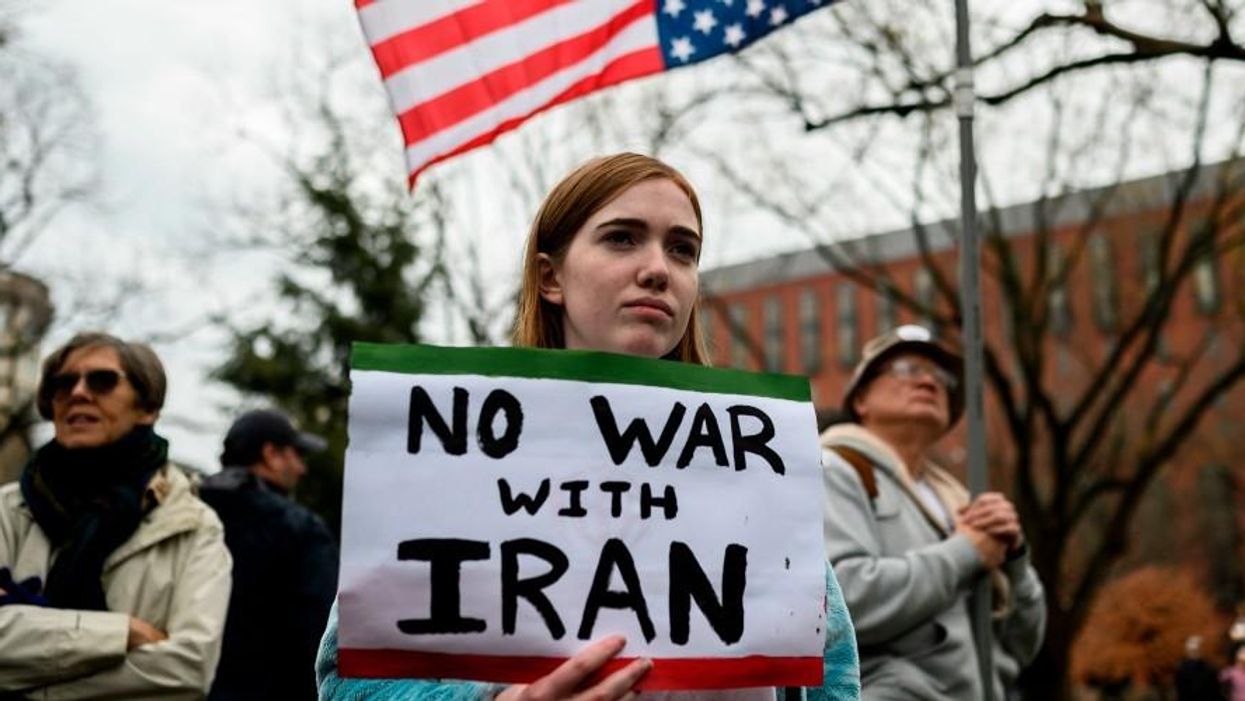
Was Donald Trump's January 3rd drone assassination of Major General Qasem Soleimani the first step in turning the simmering Cold War between the United States and Iran into a hot war in the weeks before an American presidential election? Of course, there's no way to know, but behind by double digits in most national polls and flanked by ultra-hawkish Secretary of State Mike Pompeo, Trump is a notoriously impetuous and erratic figure. In recent weeks, for instance, he didn't hesitate to dispatch federal paramilitary forces to American cities run by Democratic mayors and his administration also seems to have launched a series of covert actions against Tehran that look increasingly overt and have Iran watchers concerned about whether an October surprise could be in the cards.
Much of that concern arises from the fact that, across Iran, things have been blowing up or catching fire in ways that have seemed both mysterious and threatening. Early last month, for instance, a suspicious explosion at an Iranian nuclear research facility at Natanz, which is also the site of its centrifuge production, briefly grabbed the headlines. Whether the site was severely damaged by a bomb smuggled into the building or some kind of airstrike remains unknown. "A Middle Eastern intelligence official said Israel planted a bomb in a building where advanced centrifuges were being developed," reported the New York Times. Similar fiery events have been plaguing the country for weeks. On June 26th, for instance, there was "a huge explosion in the area of a major Iranian military and weapons development base east of Tehran." On July 15th, seven ships caught fire at an Iranian shipyard. Other mysterious fires and explosions have hit industrial facilities, a power plant, a missile production factory, a medical complex, a petrochemical plant, and other sites as well.
"Some officials say that a joint American-Israeli strategy is evolving--some might argue regressing--to a series of short-of-war clandestine strikes," concluded another report in the Times.
Some of this sabotage has been conducted against the backdrop of a two-year-old "very aggressive" CIA action plan to engage in offensive cyber attacks against that country. As a Yahoo! News investigative report put it: "The Central Intelligence Agency has conducted a series of covert cyber operations against Iran and other targets since winning a secret victory in 2018 when President Trump signed what amounts to a sweeping authorization for such activities, according to former U.S. officials with direct knowledge of the matter... The finding has made it easier for the CIA to damage adversaries' critical infrastructure, such as petrochemical plants."
Meanwhile, on July 23rd, two U.S. fighter jets buzzed an Iranian civilian airliner in Syrian airspace, causing its pilot to swerve and drop altitude suddenly, injuring a number of the plane's passengers.
For many in Iran, the drone assassination of Soleimani--and the campaign of sabotage that followed--has amounted to a virtual declaration of war. The equivalent to the Iranian major general's presidentially ordered murder, according to some analysts, would have been Iran assassinating Secretary of State Pompeo or Chairman of the Joint Chiefs of Staff Mark Milley, although such analogies actually understate Soleimani's stature in the Iranian firmament.
In its aftermath, Iran largely held its fire, its only response being a limited, telegraphed strike at a pair of American military bases in Iraq. If Soleimani's murder was intended to draw Iran into a tit-for-tat military escalation in an election year, it failed. So perhaps the U.S. and Israel designed the drumbeat of attacks against critical Iranian targets this summer as escalating provocations meant to goad Iran into retaliating in ways that might provide an excuse for a far larger U.S. response.
Such a conflict-to-come would be unlikely to involve U.S. ground forces against a nation several times larger and more powerful than Iraq. Instead, it would perhaps involve a sustained campaign of airstrikes against dozens of Iranian air defense installations and other military targets, along with the widespread network of facilities that the United States has identified as being part of that country's nuclear research program.
The "Art" of the Deal in 2020
In addition to military pressure and fierce sanctions against the Iranian economy, Washington has been cynically trying to take advantage of the fact that Iran, already in a weakened state, has been especially hard hit by the Covid-19 pandemic. Those American sanctions have, for instance, made it far harder for that country to get the economic support and medical and humanitarian supplies it so desperately needs, given its soaring death count.
According to a report by the European Leadership Network,
"Rather than easing the pressure during the crisis, the U.S. has applied four more rounds of sanctions since February and contributed to the derailing of Iran's application for an IMF [International Monetary Fund] loan. The three special financial instruments designed to facilitate the transfer of humanitarian aid to Iran in the face of secondary sanctions on international banking transactions... have proven so far to have been one-shot channels, stymied by U.S. regulatory red tape."
To no avail did Human Rights Watch call on the United States in April to ease its sanctions in order to facilitate Iran's ability to grapple with the deadly pandemic, which has officially killed nearly 17,000 people since February (or possibly, if a leaked account of the government's actual death figures is accurate, nearly 42,000).
Iran has every reason to feel aggrieved. At great political risk, President Hassan Rouhani and Supreme Leader Ali Khamenei agreed in 2015 to a deal with the United States and five other world powers over Iran's nuclear research program. That accord, the Joint Comprehensive Plan of Action (JCPOA), accomplished exactly what it was supposed to do: it led Iran to make significant concessions, cutting back both on its nuclear research and its uranium enrichment program in exchange for an easing of economic sanctions by the United States and other trade partners.
Though the JCPOA worked well, in 2018 President Trump unilaterally withdrew from it, reimposed far tougher sanctions on Iran, began what the administration called a campaign of "maximum pressure" against Tehran, and since assassinating Soleimani has apparently launched military actions just short of actual war. Inside Iran, Trump's confrontational stance has helped tilt politics to the right, undermining Rouhani, a relative moderate, and eviscerating the reformist movement there. In elections for parliament in February, ultraconservatives and hardliners swept to a major victory.
But the Iranian leadership can read a calendar, too. Like voters in the United States, they know that the Trump administration is probably going to be voted out of office in three months. And they know that, in the event of war, it's more likely than not that many Americans--including, sadly, some hawkish Democrats in Congress, and influential analysts at middle-of-the-road Washington think tanks--will rally to the White House. So unless the campaign of covert warfare against targets in Iran were to intensify dramatically, the Iranian leadership isn't likely to give Trump, Pompeo, and crew the excuse they're looking for.
As evidence that Iran's leadership is paying close attention to the president's electoral difficulties, Khamenei only recently rejected in the most explicit terms possible what most observers believe is yet another cynical ploy by the American president, when he suddenly asked Iran to reengage in direct leader-to-leader talks. In a July 31st speech, the Iranian leader replied that Iran is well aware Trump is seeking only sham talks to help him in November. (In June, Trump tweeted Iran: "Don't wait until after the U.S. Election to make the Big deal! I'm going to win!") Indeed, proving that Washington has no intention of negotiating with Iran in good faith, after wrecking the JCPOA and ratcheting up sanctions, the Trump administration announced an onerous list of 12 conditions that would have to precede the start of such talks. In sum, they amounted to a demand for a wholesale, humiliating Iranian surrender. So much for the art of the deal in 2020.
October Surprises, Then and Now
Meanwhile, the United States isn't getting much support from the rest of the world for its thinly disguised effort to create chaos, a possible uprising, and the conditions to force regime change on Iran before November 3rd. At the United Nations, when Secretary of State Pompeo called on the Security Council to extend an onerous arms embargo on Iran, not only did Russia and China promise to veto any such resolution but America's European allies opposed it, too. They were particularly offended by Pompeo's threat to impose "snapback" economic sanctions on Iran as laid out in the JCPOA if the arms embargo wasn't endorsed by the council. Not lost on the participants was the fact that, in justifying his demand for such new U.N. sanctions, the American secretary of state was invoking the very agreement that Washington had unilaterally abandoned. "Having quit the JCPOA, the U.S. is no longer a participant and has no right to trigger a snapback at the U.N.," was the way China's U.N. ambassador put it.
That other emerging great power has, in fact, become a major spoiler and Iranian ally against the Trump administration's regime-change strategy, even as its own relations with Washington grow grimmer by the week. Last month, the New York Times reported that Iran and China had inked "a sweeping economic and security partnership that would clear the way for billions of dollars of Chinese investments in energy and other sectors, undercutting the Trump administration's efforts to isolate the Iranian government." The 18-page document reportedly calls for closer military cooperation and a $400 billion Chinese investment and trade accord that, among other things, takes direct aim at the Trump-Pompeo effort to cripple Iran's economy and its oil exports.
According to Shireen Hunter, a veteran Middle Eastern analyst at Georgetown University, that accord should be considered a world-changing one, as it potentially gives China "a permanent foothold in Iran" and undermines "U.S. strategic supremacy in the [Persian] Gulf." It is, she noted with some alarm, a direct result of Trump's anti-Iranian obsession and Europe's reluctance to confront Washington's harsh sanctions policy.
On June 20th, in a scathing editorial, the Washington Post agreed, ridiculing the administration's "maximum pressure" strategy against Iran. Not only had the president failed to bring down Iran's government or compelled it to change its behavior in conflicts in places like Syria and Yemen, but now, in a powerful blow to U.S. interests, "an Iranian partnership with China... could rescue Iran's economy while giving Beijing a powerful new place in the region."
If, however, the traditional Washington foreign policy establishment believes that Trump's policy toward Iran is backfiring and so working against U.S. hegemony in the Persian Gulf, his administration seems not to care. As evidence mounts that its approach to Iran isn't having the intended effect, the White House continues apace: squeezing that country economically, undermining its effort to fight Covid-19, threatening it militarily, appointing an extra-hardliner as its "special envoy" for Iran, and apparently (along with Israel) carrying out a covert campaign of terrorism inside the country.
Over the past four decades, "October surprise" has evolved into a catch-all phrase meaning any unexpected action by a presidential campaign just before an election designed to give one of the candidates a surprise advantage. Ironically, its origins lay in Iran. In 1980, during the contest between President Jimmy Carter and former California Governor Ronald Reagan, rumors surfaced that Carter might stage a raid to rescue scores of American diplomats then held captive in Tehran. (He didn't.) According to other reports, the Reagan campaign had made clandestine contact with Tehran aimed at persuading that country not to release its American hostages until after the election. (Two books, October Surprise by Gary Sick, a senior national security adviser to Carter, and Trick or Treason by investigative journalist Bob Parry delved into the possibility that candidate Reagan, former CIA Director Bill Casey, and others had engaged in a conspiracy with Iran to win that election.)
Consider it beyond irony if, this October, the latest election "surprise" were to take us back to the very origins of the term in the form of some kind of armed conflict that could only end terribly for everyone involved. It's a formula for disaster and like so many other things, when it comes to Donald J. Trump, it can't be ruled out.