

SUBSCRIBE TO OUR FREE NEWSLETTER
Daily news & progressive opinion—funded by the people, not the corporations—delivered straight to your inbox.
5
#000000
#FFFFFF
To donate by check, phone, or other method, see our More Ways to Give page.
Daily news & progressive opinion—funded by the people, not the corporations—delivered straight to your inbox.
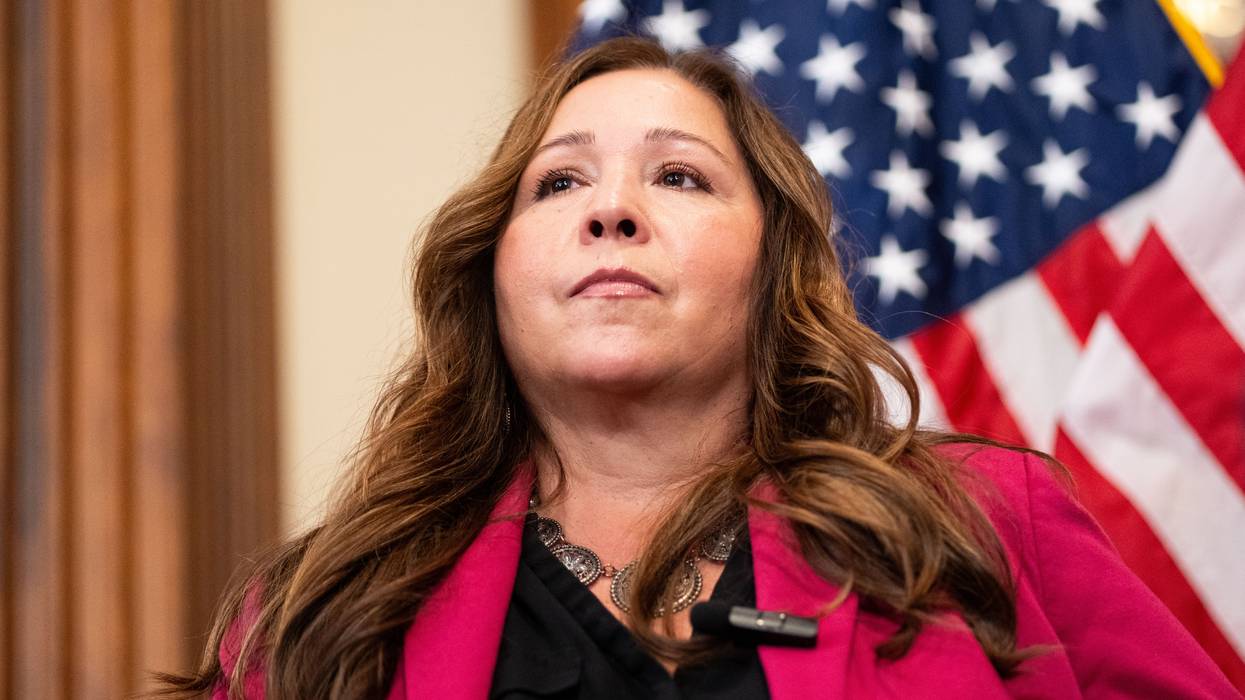
"The voters of southern Arizona made their choice, yet for four weeks, he has refused to seat a duly elected member of Congress—denying Southern Arizona its constitutional representation," said the rep.-elect.
Arizona Attorney General Kris Mayes and Democratic Rep.-elect Adelita Grijalva filed a highly anticipated federal lawsuit on Tuesday over Republican Speaker of the House Mike Johnson's refusal to administer the oath of office for nearly a month.
"On September 23, 2025, the voters in Arizona's 7th Congressional District elected Adelita Grijalva to serve as their representative in the House, with 68.94% of the vote," notes the complaint, filed in a the district court in Washington, DC. "The election was canvassed and the certificate of election delivered to the House on October 14, 2025."
Grijalva's victory in the special election for her late father's seat came shortly before a government shutdown. Johnson (La.) has used the ongoing shutdown as an excuse and denied that he is intentionally delaying her oath to avoid a vote on releasing files about deceased sex offender Jeffrey Epstein, a former friend of President Donald Trump.
"Speaker Mike Johnson is actively stripping the people of Arizona of one of their seats in Congress and disenfranchising the voters of Arizona's 7th Congressional District in the process," Mayes—who had threatened legal action last week—said Tuesday. "By blocking Adelita Grijalva from taking her rightful oath of office, he is subjecting Arizona's 7th Congressional District to taxation without representation. I will not allow Arizonans to be silenced or treated as second-class citizens in their own democracy."
The court filing came a day after Johnson publicly suggested he would swear in Grijalva as soon as the shutdown ends, and fired back at her for repeatedly calling him out on social media. The speaker said that "instead of doing TikTok videos, she should be serving her constituents," even though she lacks the resources to do so, because she hasn't yet taken the oath of office.
"I don't have constituents until I'm sworn in," Grijalva told the Associated Press before the suit was filed, noting that the delay means she can't sign a lease on office space in her district.
After the filing, she said in a statement that "Speaker Johnson's obstruction has gone far beyond petty partisan politics—it's an unlawful breach of our Constitution and the democratic process. The voters of Southern Arizona made their choice, yet for four weeks, he has refused to seat a duly elected member of Congress—denying Southern Arizona its constitutional representation."
"I'm proud to join Attorney General Mayes in standing up for the more than 800,000 Arizonans who have been stripped of their voice in Congress," Grijalva added. "Speaker Johnson cannot continue to disenfranchise an entire district and suppress their representation to shield this administration from accountability and block justice for the Epstein survivors."
Welcoming the suit, Sen. Ruben Gallego (D-Ariz.) said that Mayes "isn't playing around. She just filed a lawsuit against pedo protector Mike! Maybe now he'll stop covering for predators and start giving the people of AZ-07 a voice in Congress."
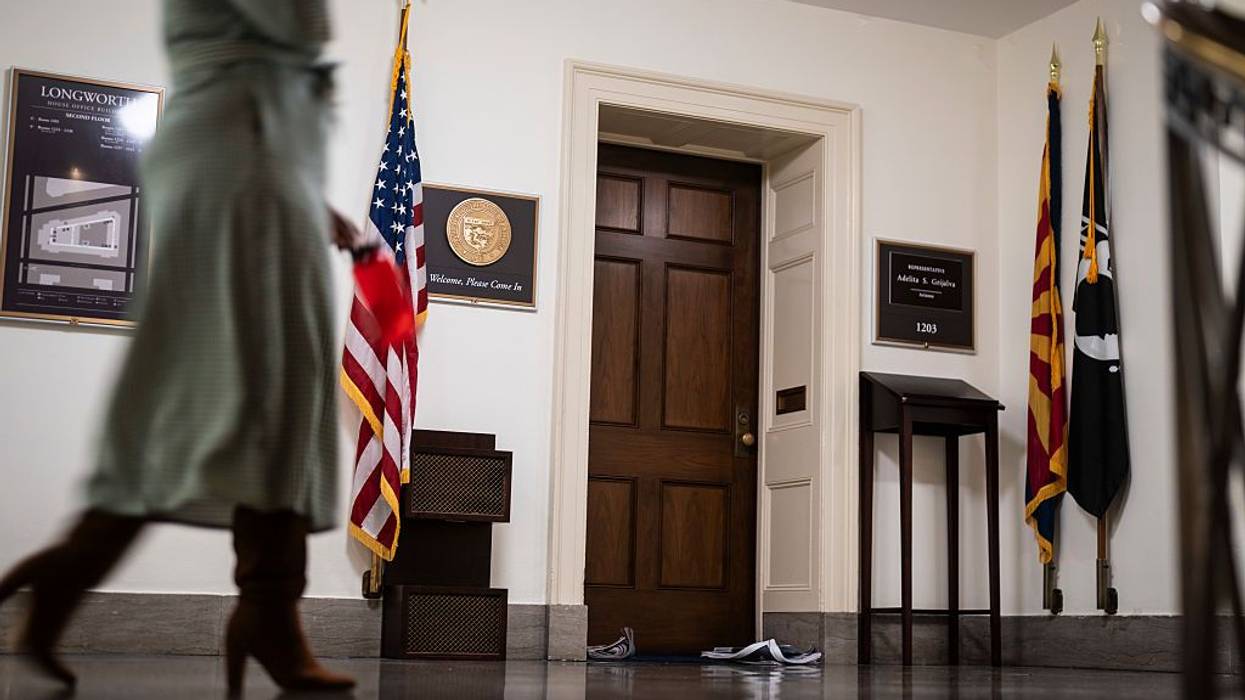
"With the House in possession of the certificate of election," Kris Mayes noted, "it is now a simple ministerial duty to administer the oath of office."
Arizona Attorney General Kris Mayes sent a letter to US Speaker of the House Mike Johnson on Tuesday, threatening to "seek judicial relief" if the Louisiana Republican does not immediately swear in Democratic Rep.-elect Adelita Grijalva or "otherwise provide a reasonable explanation as to when she will be seated."
Grijalva won the special election for her late father's seat in Arizona's 7th District last month, before the ongoing federal government shutdown. Democrats in Congress and other critics have accused Johnson of dragging his feet because she is a key vote to make the US Department of Justice release files related to deceased sex offender Jeffrey Epstein, a former friend of President Donald Trump. Although the speaker denied that claim a week ago, he has still declined to swear her in.
"The House of Representatives' uniquely democratic function makes frustrating the will of the voters in selecting their representative particularly egregious," Mayes wrote to Johnson, highlighting that Grijalva "was elected with nearly 70% of the vote, and unofficial results were provided to you by the Arizona secretary of state."
"Grijalva and the state expected that you would follow your usual practice and swear her into office at the earliest opportunity, just as you had done with five previous members elected in special elections," she continued, pointing to Reps. Celeste Maloy (R-Utah), Vince Fong (R-Calif.), Jimmy Patronis (R-Fla.), Randy Fine (R-Fla.), and James Walkinshaw (D-Va.).
Shortly after the letter was sent on Tuesday, Arizona Secretary of State Adrian Fontes completed the canvas, and Democratic Gov. Katie Hobbs transmitted a certificate of election. As Mayes explained, that means "Grijalva no longer needs a House resolution to be sworn into office. With the House in possession of the certificate of election, it is now a simple ministerial duty to administer the oath of office."
The attorney general noted that Johnson and his staff "have provided ever-shifting, unsatisfactory, and sometimes absurd stories as to why Ms. Grijalva has not been sworn in. In a particularly worrisome comment, an aide connected the swearing-in and admission to the ongoing budget fight, suggesting that the House is trying to use Arizona's constitutional right to representation in the House as a bargaining chip."
Mayes is threatening legal action if her office doesn't hear from Johnson within two days. Grijalva welcomed the development, thanking the attorney general, governor, and secretary of state "for standing up for the voices of 800,000+ Arizonans who currently do not have representation in Congress."
Grijlava also shared a video of the event, during which the state's top leaders reiterated their demands of Johnson.
Asked about the Epstein files and Grijlava on Tuesday, the speaker claimed again that not seating her has nothing to do with the files and contended that the delay is due to her winning after the House was out of session. He then, again, blamed Democrats for the shutdown and suggested she won't be seated until it ends.
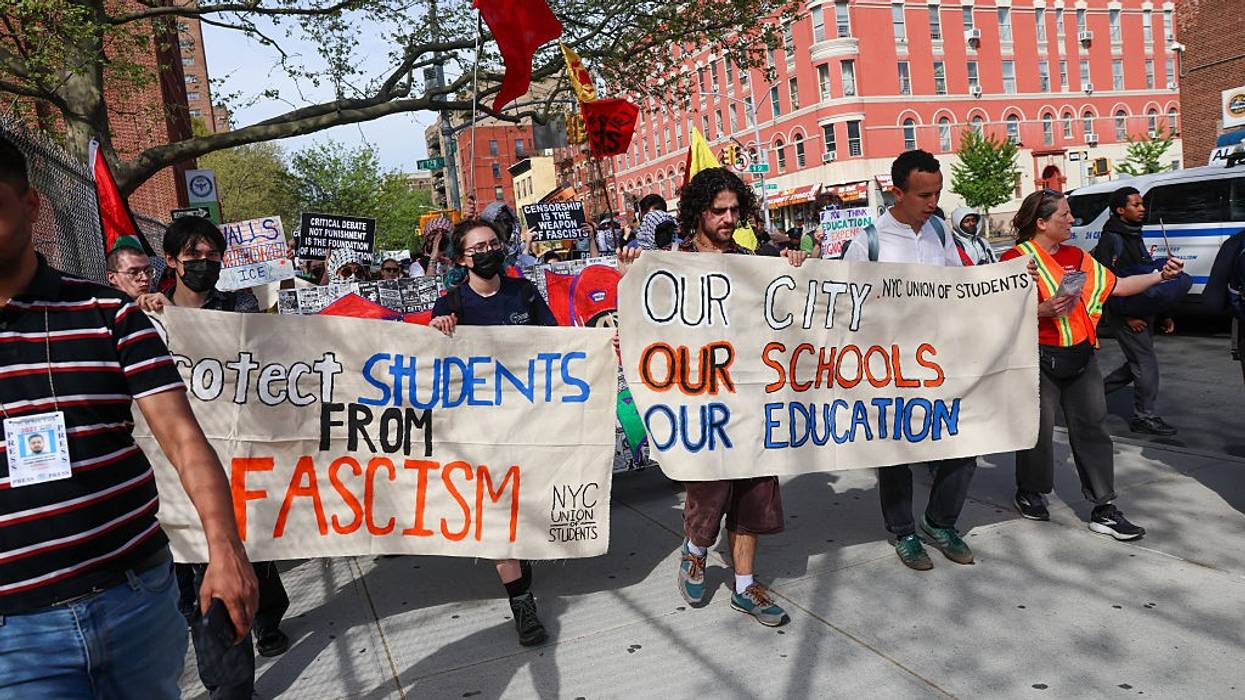
"This administration deserves no credit for just barely averting a crisis they themselves set in motion," said one Democratic senator.
While welcoming reporting that the Trump administration will release more than $5 billion in federal funding for schools that it has been withholding for nearly a month, U.S. educators and others said Friday that the funds should never have been held up in the first place and warned that the attempt to do so was just one part of an ongoing campaign to undermine public education.
The Trump administration placed nearly $7 billion in federal education funding for K-12 public schools under review last month, then released $1.3 billion of it last week amid legal action and widespread backlash. An administration official speaking on condition of anonymity told The Washington Post that all reviews of remaining funding are now over.
"There is no good reason for the chaos and stress this president has inflicted on students, teachers, and parents across America for the last month, and it shouldn't take widespread blowback for this administration to do its job and simply get the funding out the door that Congress has delivered to help students," U.S. Senate Appropriations Committee Vice Chair Patty Murray (D-Wash.) said Friday.
"This administration deserves no credit for just barely averting a crisis they themselves set in motion," Murray added. "You don't thank a burglar for returning your cash after you've spent a month figuring out if you'd have to sell your house to make up the difference."
🚨After unlawfully withholding billions in education funding for schools, the Trump Admin. has reversed course.This is a massive victory for students, educators, & families who depend on these essential resources.And it's a testament to public pressure & relentless organizing.
[image or embed]
— Congresswoman Ayanna Pressley (@pressley.house.gov) July 25, 2025 at 1:42 PM
Skye Perryman, president and CEO of Democracy Forward—which represents plaintiffs in a lawsuit challenging the Trump administration's funding freeze—said Friday that "if these reports are true, this is a major victory for public education and the communities it serves."
"This news following our legal challenge is a direct result of collective action by educators, families, and advocates across the country," Perryman asserted. "These funds are critical to keeping teachers in classrooms, supporting students in vulnerable conditions, and ensuring schools can offer the programs and services that every child deserves."
"While this development shows that legal and public pressure can make a difference, school districts, parents, and educators should not have to take the administration to court to secure funds for their students," she added. "Our promise to the people remains: We will go to court to protect the rights and well-being of all people living in America."
Democratic Arizona Attorney General Kris Mayes—a plaintiff in a separate lawsuit challenging the withholding—attributed the administration's backpedaling to litigatory pressure, arguing that the funding "should never have been withheld in the first place."
They released the 7 B IN SCHOOL FUNDS!! This is a huge win. It means fighting back matters. Fighting for what kids & communities need is always the right thing to do! www.washingtonpost.com/education/20...
[image or embed]
— Randi Weingarten (@rweingarten.bsky.social) July 25, 2025 at 11:46 AM
Becky Pringle, president of the National Education Association—the largest U.S. labor union—said in a statement: "Playing games with students' futures has real-world consequences. School districts in every state have been scrambling to figure out how they will continue to meet student needs without this vital federal funding, and many students in parts of the country have already headed back to school. These reckless funding delays have undermined planning, staffing, and support services at a time when schools should be focused on preparing students for success."
"Sadly, this is part of a broader pattern by this administration of undermining public education—starving it of resources, sowing distrust, and pushing privatization at the expense of the nation's most vulnerable students," Pringle added. "And they are doing this at the same time Congress has passed a budget bill that will devastate our students, schools, and communities by slashing funds meant for public education, healthcare, and keeping students from their school meals—all to finance massive tax breaks for billionaires."
While expanding support for private education, the One Big Beautiful Bill Act signed by President Donald Trump earlier this month weakens public school programs including before- and after-school initiatives and services for English language learners.
"Sadly, this is part of a broader pattern by this administration of undermining public education."
Trump also signed an executive order in March directing Education Secretary Linda McMahon to begin the process of shutting down the Department of Education—a longtime goal of Project 2025, the Heritage Foundation-led roadmap for a far-right takeover and gutting of the federal government closely linked to Trump, despite his unconvincing efforts to distance himself from the highly controversial and unpopular plan.
Earlier this week, the nonpartisan Government Accountability Office determined that the U.S. Health and Human Services Department illegally impounded crucial funds from the Head Start program, which provides comprehensive early childhood education, health, nutrition, and other services to low-income families.
"Instead of spending the last many weeks figuring out how to improve after-school options and get our kids' reading and math scores up, because of President Trump, communities across the country have been forced to spend their time cutting back on tutoring options and sorting out how many teachers they will have to lay off," Murray noted.
"It's time for President Trump, Secretary McMahon, and [Office of Management and Budget Director] Russ Vought to stop playing games with students' futures and families' livelihoods—and end their illegal assault on our students and their schools," the senator added.
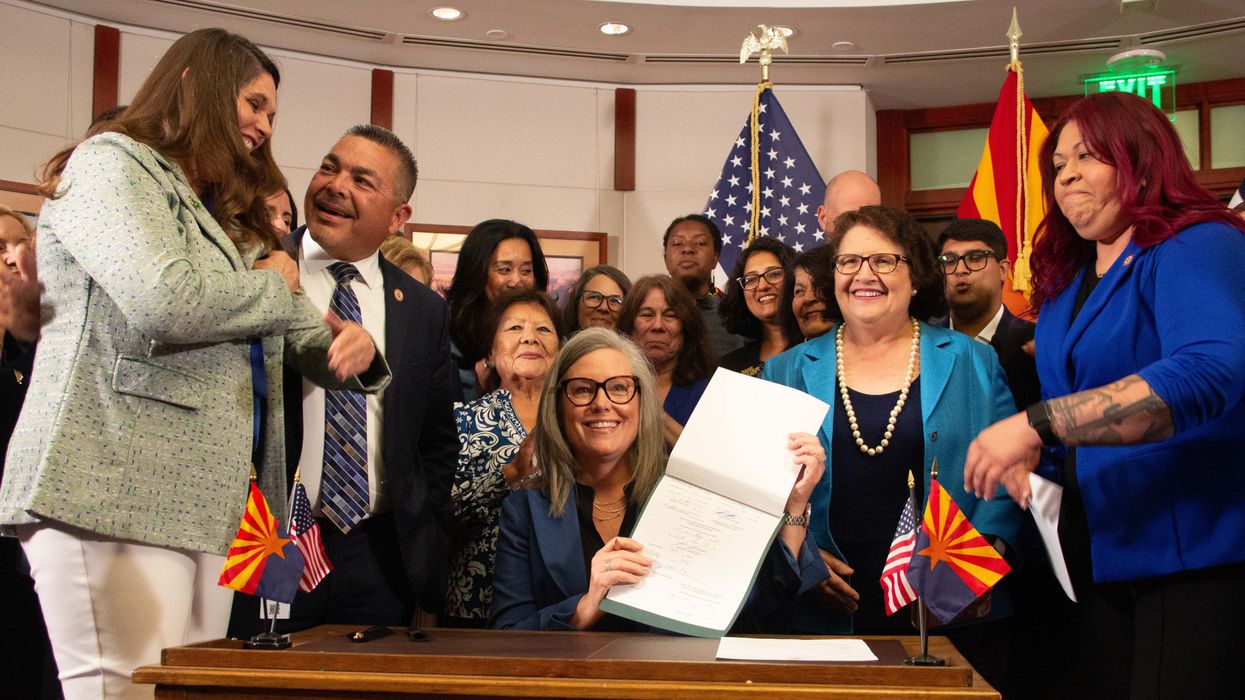
"We cannot afford to celebrate or lose momentum. The threat to our reproductive freedom is as immediate today as it ever was," said the campaign behind the ballot initiative.
While Democratic Arizona Gov. Katie Hobbs on Thursday signed legislation repealing an 1864 abortion ban, reproductive rights advocates in the state reiterated that fuller freedom over family planning requires passing a November ballot measure.
In response to an
Arizona Republic opinion piece noting that there is no emergency clause in House Bill 2677, the law repealing the ban, "which means it won't go off the books until 90 days after the Legislature adjourns," Arizona for Abortion Access stressed that "Arizonans will still be living under a law that denies us the right to make decisions about our own health."
"We cannot afford to celebrate or lose momentum. The threat to our reproductive freedom is as immediate today as it ever was," the campaign behind the ballot initiative said, adding that only passing the Arizona Abortion Access Act "changes that for good."
The Arizona Abortion Access Act is a proposed state constitutional amendment that would prohibit many limits on abortions before fetal viability and safeguard access to care after viability to protect the life or physical or mental health of the patient. Arizonans were fighting for it even before the state Supreme Court reinstated the 160-year-old ban.
Even Hobbs recognized that the battle for reproductive freedom is far from over, saying Thursday that "today, we should not rest, but we should recommit to protecting women's bodily autonomy, their ability to make their own healthcare decisions, and the ability to control their lives."
"Let me be clear: I will do everything in my power to protect our reproductive freedoms, because I trust women to make the decisions that are best for them, and know politicians do not belong in the doctor's office," the Democrat pledged.
Her signature came just a day after the Arizona Senate approved H.B. 2677, following its state House passage last month. In both cases, a couple of Republican lawmakers voted with Democrats to advance the legislation—defying not only party members in the state but a national GOP that is hellbent on ending access to abortion care.
Democratic Arizona Attorney General Kris Mayes said Wednesday that the Senate vote "to repeal the draconian 1864 abortion ban is a win for freedom in our state" and she was looking forward to Hobbs signing the bill.
"However, without an emergency clause that would allow the repeal to take effect immediately, the people of Arizona may still be subjected to the near-total abortion ban for a period of time this year," Mayes acknowledged. "Rest assured, my office is exploring every option available to prevent this outrageous 160-year-old law from ever taking effect."
Law Dork's Chris Geidner pointed out that "on Tuesday—though technically unrelated—Mayes' office asked the Arizona Supreme Court to stay the issuance of the mandate in the case holding the near-total ban enforceable."
According to Geidner:
If granted, that would push the issuance of the mandate to July 25—90 days beyond the date when the Arizona Supreme Court denied Mayes' request for reconsideration—which would then block enforcement to at least 45 days beyond that, to September 8.
At that point, the repeal law passed on Wednesday likely will have gone into effect—meaning that the 15-week ban would remain the applicable law throughout this entire time—and the expected vote on the proposed constitutional amendment will be less than two months away.
Planned Parenthood Arizona took similar action after the Senate vote on Wednesday. The group's CEO, Angela Florez, explained that "we have said all along that we will use every possible avenue to safeguard essential care for our patients and all Arizonans, and that's exactly what we're doing with today's motion."
"While anti-abortion extremists in the state Legislature will continue to do everything in their power to undermine Arizonans' freedom and criminalize essential healthcare, Planned Parenthood Arizona is taking action to prevent a harmful total ban on abortion from taking effect in our state," Florez continued. "The court's April 9 ruling was both tragic and wrong, but it rested on trying to discern legislative intent. The Legislature has now spoken and clearly does not want the 1864 ban to be enforced."
"We hope the court stays true to its word and respects this long-overdue legislative action, by quickly granting our motion to end the uncertainty over the future of abortion in Arizona," added Florez, whose group supports the ballot measure.
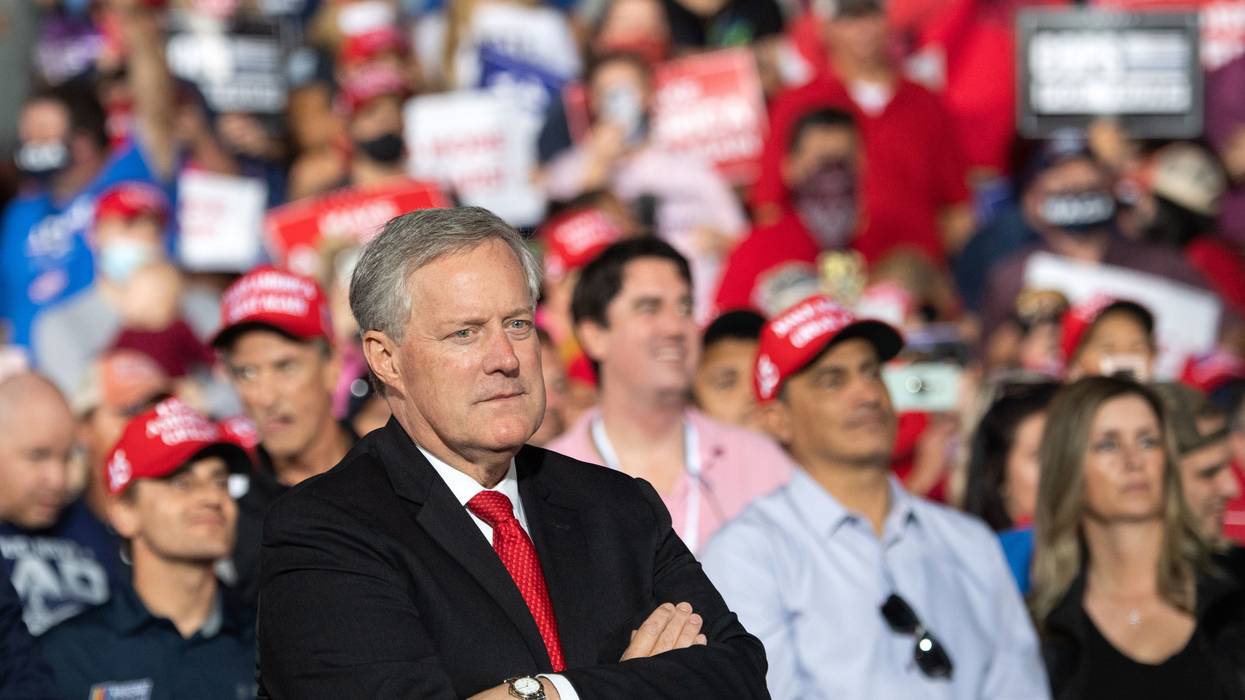
Had it succeeded, said the state's attorney general, the scheme would have "deprived Arizona's voters of their right to have their votes counted for their chosen president."
A grand jury in Arizona on Wednesday charged seven aides to Donald Trump and nearly a dozen Republican officials over a "fake electors" scheme in the state that aimed to keep the former president in power after his 2020 loss to President Joe Biden.
Trump, who is currently facing nearly 90 charges across four criminal cases as he runs for another White House term, was described as "unindicted co-conspirator 1" in the 58-page indictment, which was announced by Arizona Attorney General Kris Mayes.
"The people of Arizona elected President Biden," Mayes, a Democrat, said Wednesday. "Unwilling to accept this fact, the defendants charged by the state grand jury allegedly schemed to prevent the lawful transfer of the presidency. Whatever their reasoning was, the plot to violate the law must be answered for."
The indictment names former Arizona Republican Party Chair Kelli Ward, sitting state Republican Sens. Jake Hoffman and Anthony Kern, former U.S. Senate candidate Jim Lamon, and seven others as the "fake electors" who sought to declare Trump the rightful winner of the state's presidential contest.
The names of other individuals indicted by the state grand jury are redacted, but the document's descriptions make clear that former White House Chief of Staff Mark Meadows, former Trump attorney Rudy Giuliani, and top Trump legal strategist Boris Epshteyn are among those facing felony charges—including fraud, forgery, and conspiracy.
"In Arizona, defendants, unindicted coconspirators, and others pressured the three groups of election officials responsible for certifying election results to encourage them to change the election results," the document reads. "Discussions about using the Republican electors to change the outcome of the election began as early as November 4, 2020. Those plans evolved during November based on memos drafted by [an attorney for the Trump campaign, Kenneth Chesebro]."
Mayes said Wednesday that had the fake elector scheme succeeded, it would have "deprived Arizona's voters of their right to have their votes counted for their chosen president."
"It effectively would have made their right to vote meaningless," said Mayes.
A state grand jury, made up of everyday, regular Arizonans, has handed down felony indictments in the ongoing investigation into the fake elector scheme in Arizona. pic.twitter.com/Nu8GcD4ZqJ
— AZ Attorney General Kris Mayes (@AZAGMayes) April 24, 2024
Alex Gulotta, state director of All Voting Is Local Action Arizona, said Wednesday that "the indictment of the eleven fake electors is one of the first steps required in holding these election deniers accountable for their alleged attempts to take power away from voters by disrupting our free and fair elections."
"Arizonans deserve to trust the election officials responsible for administering our elections and preserving our democracy," said Gulotta, "and this is a positive step forward as we continue to strengthen the foundations of our democracy and restore faith in our elections."
The Arizona Republic reported Wednesday that "several of the Arizona electors have previously claimed they were merely offering Congress a backup plan, though nothing in the documents they sent to Congress and the National Archives backs up that assertion."
"The indictment includes several statements the false electors made on social media that contradict those claims," the newspaper observed.
Jenny Guzman, director of Common Cause's Arizona program, said the indictment "marks the start of a new chapter for the fake elector scheme that has plagued Arizona."
"Arizonans are still dealing with the fallout from the false electors and the Big Lie about the 2020 elections," said Guzman. "We are relieved that the investigation by Attorney General Mayes has concluded and Arizonans can now know that what comes next is accountability. These efforts by these fake electors to undermine the will of Arizona’s voters have had implications far beyond their failed attempt to overthrow the 2020 election."
"This indictment can reassure all Arizonans that if anyone, regardless of their political affiliation, attempts to undermine their vote, consequences will follow," Guzman added.

"No company, even one as big as Apple, is above the law," said Arizona's attorney general.
The U.S. Department of Justice and 16 states on Thursday filed an antitrust lawsuit accusing Apple of illegally monopolizing the smartphone market by throttling competitors and stifling innovation.
The lawsuit, filed in a New Jersey federal court, alleges that the California-based tech titan unlawfully blocks innovative competitive apps, suppresses mobile cloud streaming services, excludes cross-platform messaging apps, diminishes the functionality of non-Apple smartwatches, and limits third-party digital wallets.
These actions, the DOJ says, run afoul of Section 2 of the Sherman Act, one of three main federal antitrust laws.
"Each step in Apple's course of conduct built and reinforced the moat around its smartphone monopoly," the lawsuit states. "The cumulative effect of this course of conduct has been to maintain and entrench Apple's smartphone monopoly at the expense of the users, developers, and other third parties who helped make the iPhone what it is today."
"Despite major technological changes over the years, Apple's power to control app creation and distribution and extract fees from developers has remained largely the same, unconstrained by competitive pressures or market forces," the filing continues. "That this conduct is impervious to competition reflects the success of Apple's efforts to create and maintain its smartphone monopoly, the strength of that monopoly, and the durability of Apple's power."
U.S. Attorney General Merrick Garland said in a statement that "consumers should not have to pay higher prices because companies violate the antitrust laws."
"If left unchallenged, Apple will only continue to strengthen its smartphone monopoly," Garland added.
Attorney General Merrick Garland announces antitrust lawsuit against Apple: "Apple has maintained its power not because of its superiority, but because of its unlawful exclusionary behavior." pic.twitter.com/2ow6rWH2YV
— CSPAN (@cspan) March 21, 2024
Democratic New Jersey Attorney General Matthew Platkin said that "Apple's dominance in the smartphone market is not an accident."
"Instead, Apple has gone to great lengths to create a monopoly that affected not only the smartphone industry, but also the choice of apps, payment systems, smartwatches, and more," Platkin continued. "The end result is you pay more for an inferior product—all while Apple collects billions in profits."
Kris Mayes, Arizona's Democratic attorney general, contended that "Apple has used its monopoly power to block competition, stifle innovation, and extract higher prices from consumers."
"No company, even one as big as Apple, is above the law," she continued. "Apple's anticompetitive behavior has violated antitrust law and harmed consumers. Holding Apple accountable is critical to ensuring a competitive market where innovation can flourish and consumers can access a wide range of affordable products and services."
"Fair competition protects consumer choice and encourages innovation, leading to better products and services for everyone," Mayes added.
Apple said in a statement that "this lawsuit threatens who we are and the principles that set Apple products apart in fiercely competitive markets."
"If successful, it would hinder our ability to create the kind of technology people expect from Apple—where hardware, software, and services intersect," the company added. "It would also set a dangerous precedent, empowering government to take a heavy hand in designing people's technology."
As The New York Times reported:
Apple has effectively fought off other antitrust challenges. In a lawsuit over its App Store policies that Epic Games, the maker of Fortnite, brought in 2020, Apple persuaded the judge that customers could easily switch between its iPhone operating system and Google's Android system. It has presented data showing that the reason few customers change phones is their loyalty to the iPhone.
It also has defended its business practices in the past by saying its "approach has always been to grow the pie" and "create more opportunities not just for our business, but for artists, creators, entrepreneurs and every 'crazy one' with a big idea."
Consumer advocates welcomed the suit.
"Apple has been an outlier in its willingness to make changes to products and services to the benefit of consumers and developers," Sumit Sharma, senior researcher for tech competition at Consumer Reports, said in a statement.
"We've seen Apple limit access to hardware and software for competing services and products like smartwatches and contactless payments, and that's harmed innovation and competition," Sharma added. "Apple claims to be a champion of protecting user data, but its app store fee structure and partnership with Google search erode privacy."
Barry Lynn, executive director of the Open Markets Institute, said that "for more than a decade, Apple has engaged in unfair competition designed to entrench its monopoly control in the smartphone market and in multiple closely related marketplaces such as wireless apps."
"Today's groundbreaking lawsuit seeks to fully pry open Apple's restrictive practices so that fair competition can thrive in ways that deliver the public real choice and opportunity, and improve the quality of both hardware and software products," Lynn added.
The lawsuit is the latest effort by the Biden administration to tackle Big Tech monopolies. The administration has previously targeted companies including Amazon, Google, and Meta.
Apple is also under scrutiny by European regulators. Earlier this month, the European Commission hit the company with a $2 billion fine for violating antitrust rules by suppressing competition from rival music streaming services including Spotify.