
SUBSCRIBE TO OUR FREE NEWSLETTER
Daily news & progressive opinion—funded by the people, not the corporations—delivered straight to your inbox.
5
#000000
#FFFFFF
To donate by check, phone, or other method, see our More Ways to Give page.


Daily news & progressive opinion—funded by the people, not the corporations—delivered straight to your inbox.
I found faces, hundreds of them, of children, mothers, teachers, tired men with empty pockets and broken sandals. Each looked directly into my eyes and asked, without accusation or anger: Are you still human?
Nothing prepared me for Gaza.
As a US physician trained in emergency medicine, I’ve spent decades in trauma bays across the United States, watching lives come undone. I’ve worked in rural hospitals where people arrived too late and urban trauma centers where they came too often. I’ve seen the machinery of US healthcare grind the spirit out of caregivers and patients alike.
But nothing prepared me for the weeks I spent volunteering at a hospital in Gaza. Nothing prepared me for the faces.
Not the statistics. Not the headlines. Not even 40 years of watching the Israeli occupation strangle Palestinian life with checkpoints, silence, and administrative cruelty.
No one should need more proof to feel the inhuman precision with which children are being targeted in Gaza, crushed not by chance, but by design.
When I arrived at Nasser Hospital in Khan Younis, I thought I might be helpful. I had skills, experience, knowledge. But I found something else entirely: a theology of suffering, a human Blue Mosque, a Hagia Sophia built of tarps and rebar and ash. A sacred geometry laid down in grief.
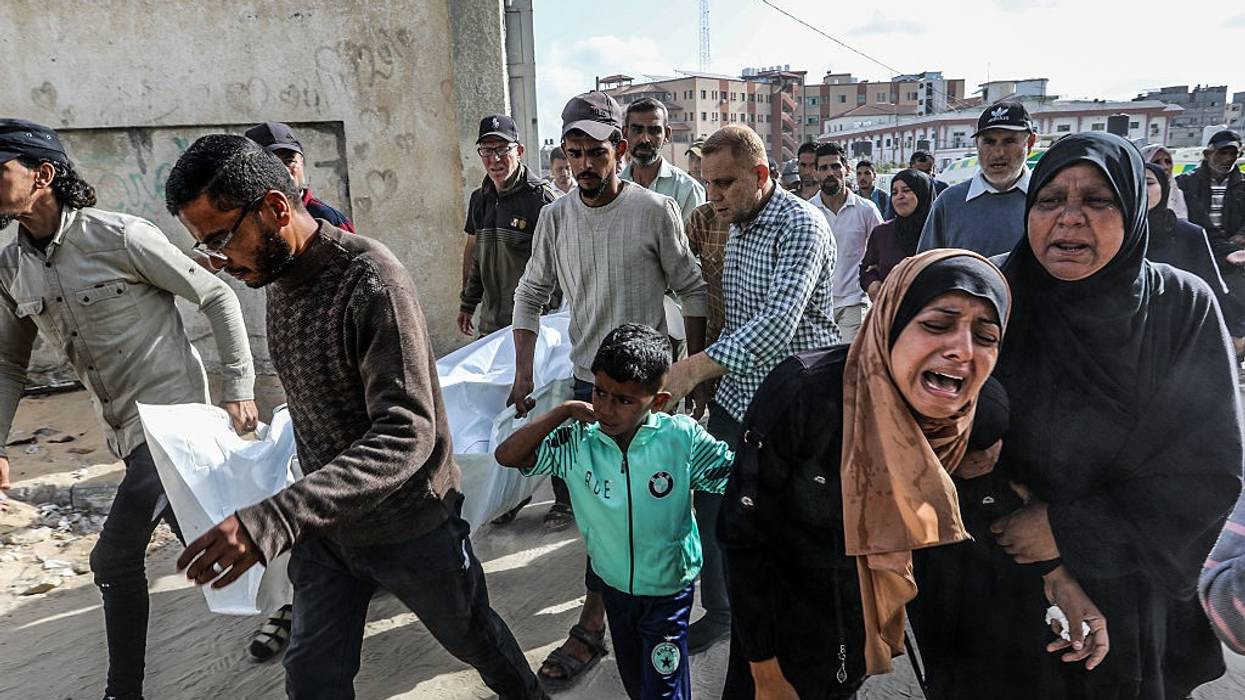
A place where stones have been replaced by the soft bones of children, and the call to prayer is now the wail of a mother whose baby was just wrapped in a death shroud. Gaza is not rubble; it is a broken house of God, a mosque of flesh and resilience, where every injured child is a mihrab pointing them back to their humanity.
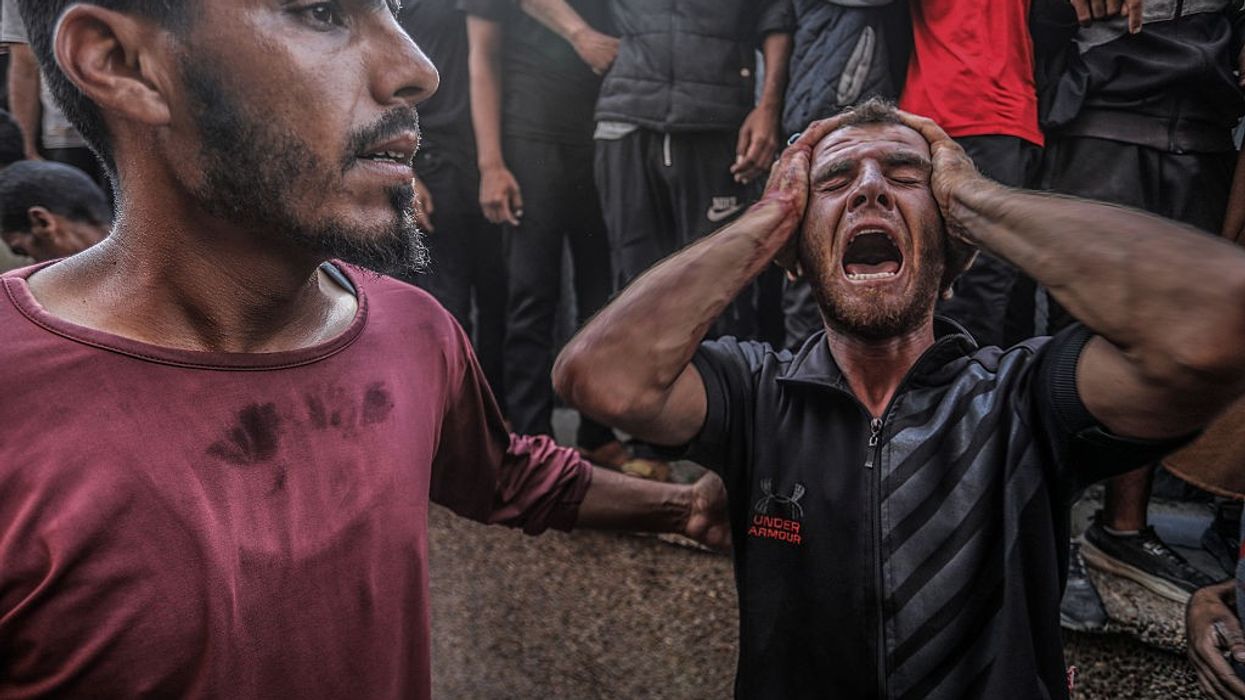
I found faces, hundreds of them, of children, mothers, teachers, tired men with empty pockets and broken sandals. Each looked directly into my eyes and asked, without accusation or anger: Are you still human?
The French Jewish philosopher Emmanuel Levinas wrote that “the face of the Other” is the foundation of ethics. Not a metaphorical face, but the literal presence of another human, staring at you in their radical vulnerability. Not asking for anything. Just being, and in that being, commanding you: Thou shalt not kill. And thou art responsible.
That’s Gaza. It is the face of the Other turned toward us. We, the West, armchair allies, media skeptics, Israel Defense Forces apologists, and progressive handwringers alike, are being looked at.
And we are failing.
There is no universe, no scripture, no coda, no strand of human DNA where it is natural to shoot children in the back of the head as they carry sacks of flour. There is no ethical system, no wartime doctrine, no security calculus in which a mother killed while reaching for fava beans can be explained away without doing violence to language itself.
What is happening in Gaza is not war or strategy or self-defense. It is the ritualized and systematic destruction of the most vulnerable, performed in broad daylight under the collapsing architecture of international law.
It is unnatural. Not just wrong, not just cruel, but a rupture in the moral biology of our species. It offends the fundamental contract of being alive. It is a humiliation of biology and a heresy against physics. It is unnatural, like fission: a tearing apart of what was never meant to be touched. It belongs to the stars, to the great incomprehensibility, to cataclysm, to apocalypse. It does not belong on Earth, and never in the body of a child.
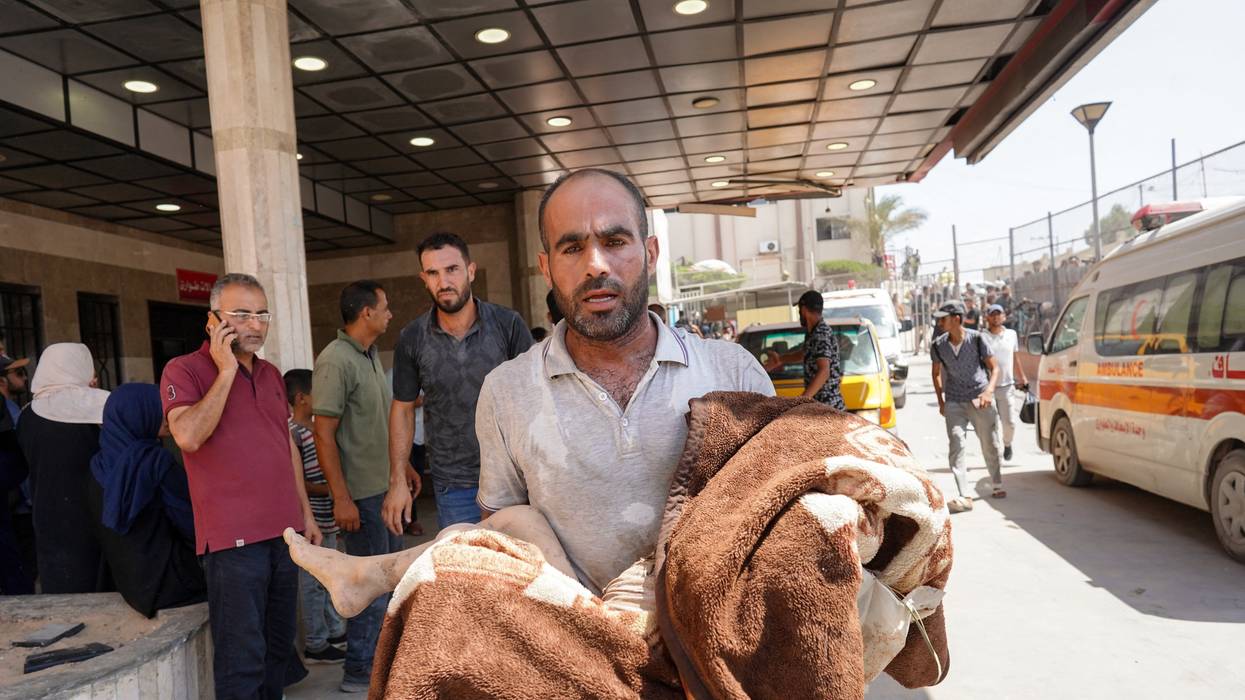
There is a room in the emergency department at Nasser Hospital with six trauma bays. As in any hospital, there are monitors and equipment. But what defines the room is the floor: a mosaic of congealed, scrubbed, and recongealed blood. Every 20 minutes, a crew enters the stage, they pick up debris, tissue, IV tubing, and gauze, then throw water across the floor. With long squeegees, they push the red tide into the drain. It is mechanical, but also meticulous and highly orchestrated. Still, it cannot erase the smell. Or the taste of blood in the air. Or the faces.
A 14-year-old child came in while I was there. She was brought from Mawasi, where the “safe zone” is nothing but coordinates agreed upon by artillery software. My fellow US physician had passed a tent school in Mawasi earlier, likely the same kind of school where my patient studied: a school that had been turned inside out by a drone toting a high-velocity rifle.
The girl’s shoulder was gone. Not dislocated. Not fractured. Gone. Replaced by shredded muscle and smoke and dirt. Her dark eyes were open. She was conscious. Her mouth moved, but she did not speak. That is Levinas’ face: the face that makes no demand but reveals everything.
The children killed while retrieving food were not on a battlefield. They were in the ruins of a society that has been deliberately starved. This is not collateral damage. This is intentional. It is the predictable outcome of a siege that has weaponized hunger and then punished the hungry for trying to survive it.
What makes it more obscene is the silence following each killing. The Western governments that mouth the words “civilian casualties” like they are a clerical error. The media that speak of “complexities” and “context,” as if complexity justifies targeting starving people and context renders a dead toddler’s face invisible. The theological contortionists who try to fit this into some redemptive historical arc, as if a baby’s flesh split open by shrapnel is somehow part of prophecy.
It is not. It is a desecration of everything sacred. And it is being done with the money, silence, and diplomatic cover of the so-called civilized world.
I did not go to Gaza to be a hero. I went because I’ve watched the slow, humiliating collapse of US medicine, where we document more than we listen, discharge patients without follow-up, fight insurance companies harder than sepsis. I went to remember what it means to be a physician, not a provider or a billing unit. Someone who kneels by a body and stays.
And here’s what I found. In Gaza, where there are no electronic medical records, no scribes, no Joint Commission audits, no Press Ganey scores to measure patients’ experience, I found something we have lost: time. Not time in the capitalist sense of billable hours or productivity, but sacred time, shared time, human time. In Gaza, physicians sit with people. They bear witness. Sometimes they fix them. Sometimes they just keep the face of the human being before them from being alone.
I also found a clarity of purpose. In Gaza, the distance between patient and physician collapses. There is no buffer, no euphemism, no illusion. Physicians get their hands bloody and hold patients as they die. And they do it without glory, recognition, or compensation.
They do it, and I did it, because the face is looking at us. Because it is not a child from Gaza. It is a child. Period.
For reasons rooted in privilege, the words of white US witnesses seem to carry more weight. But some truths are self-evident. No one should need more proof to feel the inhuman precision with which children are being targeted in Gaza, crushed not by chance, but by design.
During my stay, I thought often of my children back home. Although they are adults, I missed them with an ache that broke open every time I heard a child cry.
Before I went, I recorded a video in case I didn’t return. I wasn’t trying to inspire them or ask them to follow; I just needed to say the truth. The world is on fire in some places, and sometimes I feel I have to move toward it. Because if I don’t, something in me goes quiet and stays quiet. Silence doesn’t belong in Gaza. Not now.
So I say clearly: It is unnatural to kill children for being hungry. It is unnatural to shoot a girl in the spine because she walked near a food truck. It is unnatural to erase a family for the crime of standing in line for aid.
And if we allow that to become natural, if we flinch and say nothing, we are no longer witnesses; we are participants. And we will deserve the severity of history’s judgment.
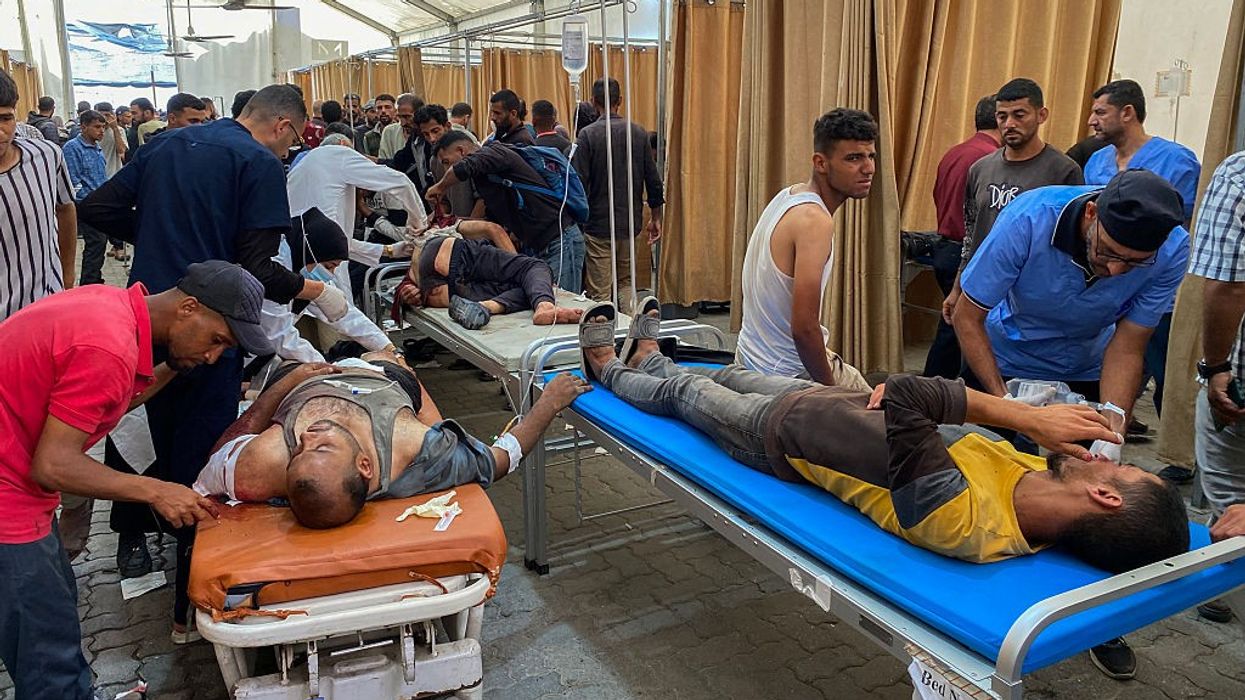
On the television show The Pitt, the fictional “never-ending” mass casualty scene featured 112 patients. We saw nearly four times that number in a single afternoon.
On Tuesday, June 17, the staff at Nasser Hospital in Khan Younis, Gaza, experienced a mass casualty event that began at around 9:00 am in the morning and didn’t stop until nearly 6 in the afternoon. It wasn’t one incident. It was a continuous flood of broken, bleeding, dying human beings.
By the end of the day, we had seen over 400 patients. Around 250 were critically injured. Ninety died in the resuscitation room, many on the floor.
I’m a doctor and I was in Gaza as a volunteer with an organization called Rahma Worldwide. Before Gaza, I had never worked a true mass casualty. The only ones I’d ever experienced were at Nasser itself in the days leading up to this one, trauma surges that already felt unbearable. But this was different. This was so much more. This wasn’t a surge. This was a human tide.
To put it into perspective, on the television show The Pitt, the fictional “never-ending” mass casualty scene featured 112 patients. We saw nearly four times that number in a single afternoon. And every one of them was real. Every injury was real. Every death was real.
It wasn’t an unfortunate consequence of war. It was the logical outcome of a system that has decided some lives are worth less than others.
Moreover, these weren’t random wartime injuries. This was the result of deliberate, targeted violence. People were shot while waiting for food at Gaza Humanitarian Foundation distribution points. Tanks opened fire on crowds. Families just trying to survive were torn apart by weapons never meant for civilians. Some of the bodies came to us in pieces. Many had no names.
Inside Nasser’s emergency department, the conditions were beyond description. Patients were laid on top of each other, not because of neglect or lack of care, but because there was simply no space left. The floor became our only option. Blood from multiple patients pooled across the tile, thick and dark, mixing with dust and sand and bits of shrapnel. I remember crouching over one patient while reaching to clamp another’s bleeding artery. There was nowhere to move without stepping in blood.
At one point, I swung around quickly trying not to slip, and my elbow struck one of the nurses directly in the face. She took two steps back, lifted her head, and just smiled at me and moved on. That was the kind of day it was. That’s the kind of people I worked with.
The injuries were horrific. Gunshots to the chest, neck, and face. Limbs blasted off. Pregnant women with abdominal wounds and no fetal heart tones. Toddlers with missing eyes, fractured skulls, or no pulse at all. We intubated and transfused nonstop. Massive transfusion protocols ran dry. Every resource was pushed past its limit.
And still, the staff kept working.
Local emergency physicians, residents, and medical students. International volunteers like me, working through organizations like Rahma Worldwide and Glia. And above all, the nurses. These nurses, many unpaid and all overworked, showed up anyway. They stood in the blood and fire and brought order to hell. They triaged, charted, held hands, cleaned wounds, comforted children, and kept going long after the rest of us were spent.
The surgical teams on the floor above us moved at a nearly impossible pace. One after another, they attended to the worst of the worst casualties and tried to save them. When the day finally slowed, many of the doctors rinsed off what they could, stepped over rubble, and walked back to their tents to sleep for a few hours. Then they came back a few hours later to do it again.
This is not medicine. This is something entirely different. It is not war in the way most people think of war. It is something colder. It is targeted, purposeful, mechanized human erasure.
What happened at Nasser Hospital that day in June was not an accident. It wasn’t an unfortunate consequence of war. It was the logical outcome of a system that has decided some lives are worth less than others. The world needs to stop pretending this is too complicated to understand.
The Pitt is fictional. Gaza is not.
Let’s stop the genocide. Let’s stop the funding to the Israel Defense Forces (IDF) using the only recognized and well established U.S. law designed to do this: the Leahy Law. To sign the petition go to https://sign.moveon.org/p/LeahyReviewNow. For more background information go to www.LeahyReviewNow.org.
"It was a massacre," said one witness, adding that Israeli troops continued firing on people as they fled.
With the world's eyes on the escalating Israel-Iran conflict, the Israel Defense Forces on Tuesday killed at least dozens of people waiting for food trucks in the Gaza Strip, yet another IDF massacre of starving Palestinians seeking humanitarian aid.
Eyewitnesses told journalists that while Palestinians were gathered on a route used by humanitarian assistance trucks in Khan Younis, Israeli forces conducted an airstrike on a nearby home and then targeted the crowd with gun and tank fire.
The Gaza Health Ministry and Nasser Hospital initially confirmed that more than 50 people were dead and over 200 others were wounded. Al Jazeera later reported that the ministry said the death toll had risen beyond 70.
People in the crowd were "blown to pieces, body parts were scattered all over the place," witness Saeed Abu Lebda told the outlet. "The number of victims is way more than those brought to the hospital. But no one could reach them to provide help."
At Nasser Hospital, a witness named Alaa recalled to Reuters that "all of a sudden, they let us move forward and made everyone gather, and then shells started falling, tank shells."
"No one is looking at these people with mercy," Alaa added. "The people are dying, they are being torn apart, to get food for their children. Look at these people, all these people are torn to get flour to feed their children."
As The Associated Press reported:
Yousef Nofal, an eyewitness, said he saw many people motionless and bleeding on the ground after Israeli forces opened fire. "It was a massacre," he said, adding that the soldiers continued firing on people as they fled from the area.
Mohammed Abu Qeshfa said he heard a loud explosion followed by heavy gunfire and tank shelling. "I survived by a miracle," he said.
"A witness who spoke with Haaretz said that the Palestinians were hit in an area that the army considers an active combat zone, and they were not in the vicinity of an established distribution center nearby," according to the Israeli newspaper.
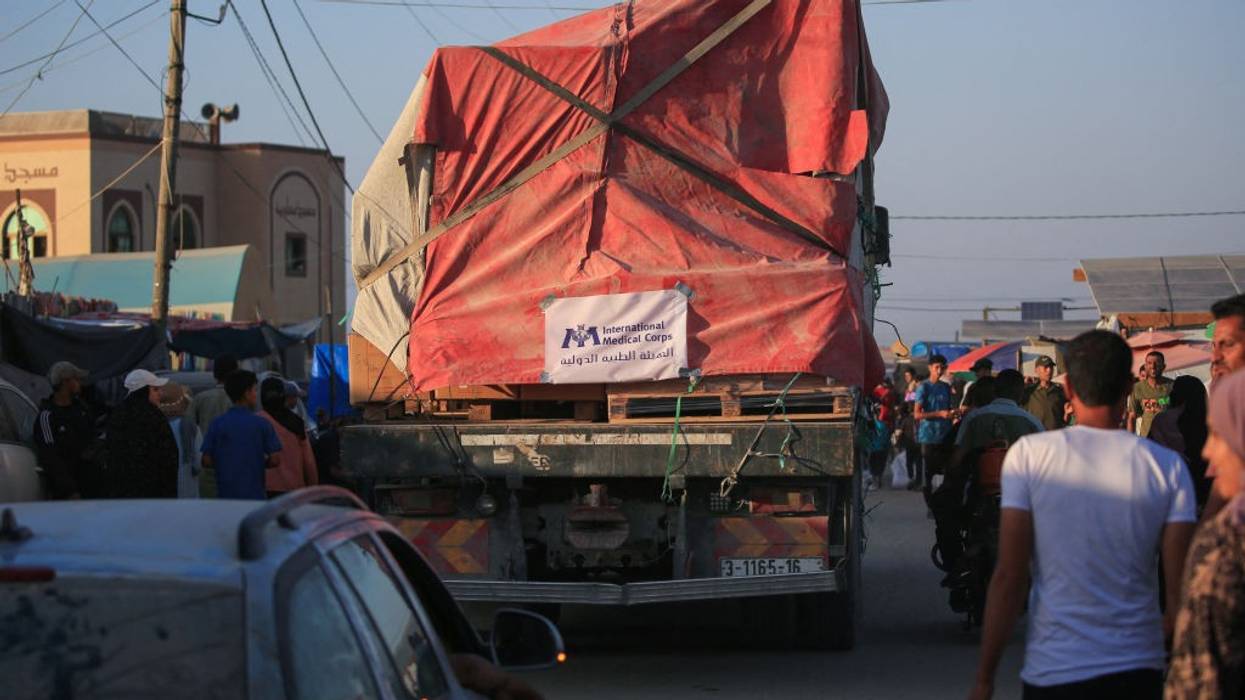
The Israel Defense Forces said in a statement that "earlier today, a gathering was identified adjacent to an aid distribution truck that got stuck in the area of Khan Younis, and in proximity to IDF troops operating in the area."
"The IDF is aware of reports regarding a number of injured individuals from IDF fire following the crowd's approach. The details of the incident are under review," the Israeli military continued. "The IDF regrets any harm to uninvolved individuals and operates to minimize harm as much as possible to them while maintaining the safety of our troops."
The Gaza Health Ministry said Monday that since the Hamas-led October 7, 2023 attack, the Israeli assault on the Palestinian enclave had killed at least 55,432 people, with thousands more missing in rubble and presumed dead.
Over the past 20 months, the IDF has repeatedly slaughtered Palestinians trying to access food assistance, including at hubs recently set up by the U.S.- and Israel-backed Gaza Humanitarian Foundation (GHF) following an Israeli blockade on aid.
The Euro-Mediterranean Human Rights Monitor said in a lengthy Tuesday statement that GHF "is directly responsible for the escalating Israeli crimes against starved Palestinian civilians near aid distribution points in central and southern Gaza."
"The foundation's operational model involves luring civilians to specific locations coordinated with the Israeli army, where they are subjected to killing, injury, and cruel and degrading treatment," Euro-Med Monitor said. "These points have effectively become death traps used as tools in Israel's ongoing genocide against the Palestinian population for over 20 months."
The monitor called for independent international investigations into the Tuesday killings and GHF's role "in facilitating and executing serious crimes committed against Palestinian civilians," as well as a halt on all financial or logistical support to the foundation, criminal probes against all individuals affiliated with it, and civil lawsuits for implicated entities and individuals.
"Euro-Med Monitor also calls on all states, individually and collectively, to uphold their legal obligations and take urgent action to stop the ongoing genocide in Gaza in all its forms," the group added. "Finally, Euro-Med Monitor urges the international community to impose economic, diplomatic, and military sanctions on Israel in response to its systematic and grave violations of international law."
The United Nations human rights chief called Israel's intensifying assault on Gaza "tantamount to ethnic cleansing."
The Israeli military on Monday designated Gaza's second-largest city a combat zone and ordered all residents to evacuate ahead of an "unprecedented attack," the latest escalation of Israel's U.S.-backed genocidal assault on the enclave's besieged and starving population.
The forced displacement order came as Israeli tanks and troops pushed further into the Gaza Strip as part of a renewed ground assault on the territory, which has been decimated by relentless bombings that began in the aftermath of the Hamas-led October 7, 2023 attack.
The Euro-Mediterranean Human Rights Monitor said Monday that the rate of Israeli killings in Gaza has intensified significantly in recent days, crushing any lingering hope of an imminent cease-fire and heightening alarm over the rapidly deteriorating humanitarian emergency on the ground.
The group estimated that more than 300,000 Palestinians were forcibly displaced between May 12 and 18, with that number set to grow with the evacuation of Khan Younis.
"This surge in lethal attacks is part of a broader escalation by the Israeli military, marked by a scorched-earth policy and the systematic destruction of Gaza's remaining residential areas and infrastructure," said Euro-Med. "The ongoing campaign—now in its 19th month—has been characterised by mass killings, enforced starvation, and the deliberate dismantling of life-sustaining systems, with the explicit aim of eradicating the Palestinian population in Gaza and eliminating any possibility of return or reconstruction."
Avichay Adraee, a spokesperson for the Israeli Defense Forces (IDF), wrote in a social media post early Monday that "from this moment, Khan Younis governorate will be considered a dangerous combat zone."
"The IDF will launch an unprecedented attack to destroy the capabilities of terrorist organizations in this area," Adraee continued. "For your safety, evacuate immediately."
Video footage posted to social media showed Israeli airstrikes pounding the area and residents scrambling to evacuate their families, many of whom have already been displaced multiple times since late 2023.
"They are literally forcing all of Gazans into a concentration camp in what used to be Rafah in southern Gaza, after destroying it. They are now planning on annihilating Khan Younis," Elia Ayoub, a researcher based in the United Kingdom, wrote Monday. "There's never been a genocide so thoroughly documented as it was live-streamed straight to our phones."
The east of Khanyounis is evacuating. Gaza. pic.twitter.com/ujGnrCq2Xc
— TIMES OF GAZA (@Timesofgaza) May 19, 2025
Israeli Prime Minister Benjamin Netanyahu, who is facing an International Criminal Court arrest warrant for war crimes in Gaza, said Monday that the IDF is moving to seize "full control" of the "entire strip" while allowing in "minimal" humanitarian aid—remarks that deepened concerns about Israeli plans to starve out Gaza's population and annex the territory.
"If this means annexation, it violates international law," Swedish Foreign Minister Maria Malmer Stenergard said in response to Netanyahu's comments. "Sweden maintains that the territory of Gaza must not be changed or reduced."
"There needs to be a cease-fire and end to the fighting, and the hostages must be released," she added. "No more statements or plans from the Israeli government that exacerbate the situation for civilians in Gaza."
Over the past 24 hours, Israeli airstrikes have killed more than 130 people, bringing the official death toll since October 2023 to 53,486, according to Gaza's Ministry of Health.
In a statement late last week, United Nations human rights chief Volker Türk warned that Israel's "latest barrage of bombs" and "methodical destruction of entire neighborhoods"—as well as the cut-off of humanitarian assistance—signals "a push for a permanent demographic shift in Gaza that is in defiance of international law and is tantamount to ethnic cleansing."
"We must stop the clock on this madness," said Türk.
The humanitarian aid group, which lost seven workers earlier this year in an attack by Israeli forces, said it was working with "incomplete information" about the latest strikes in Khan Younis.
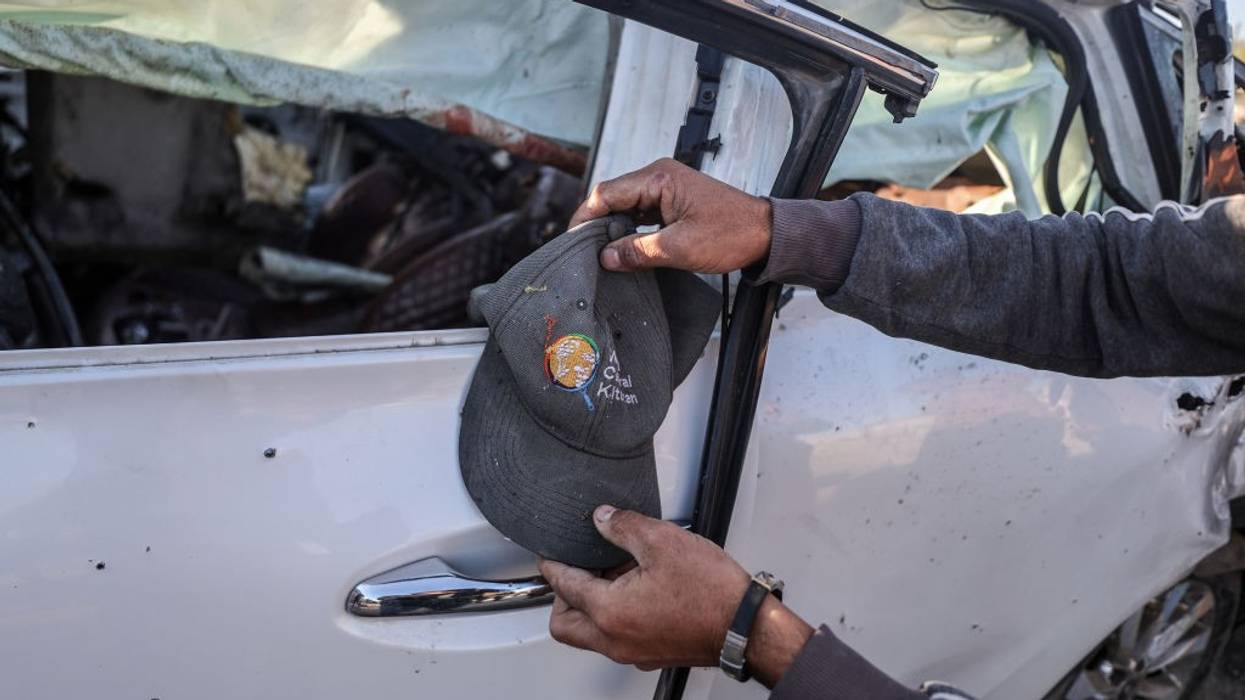
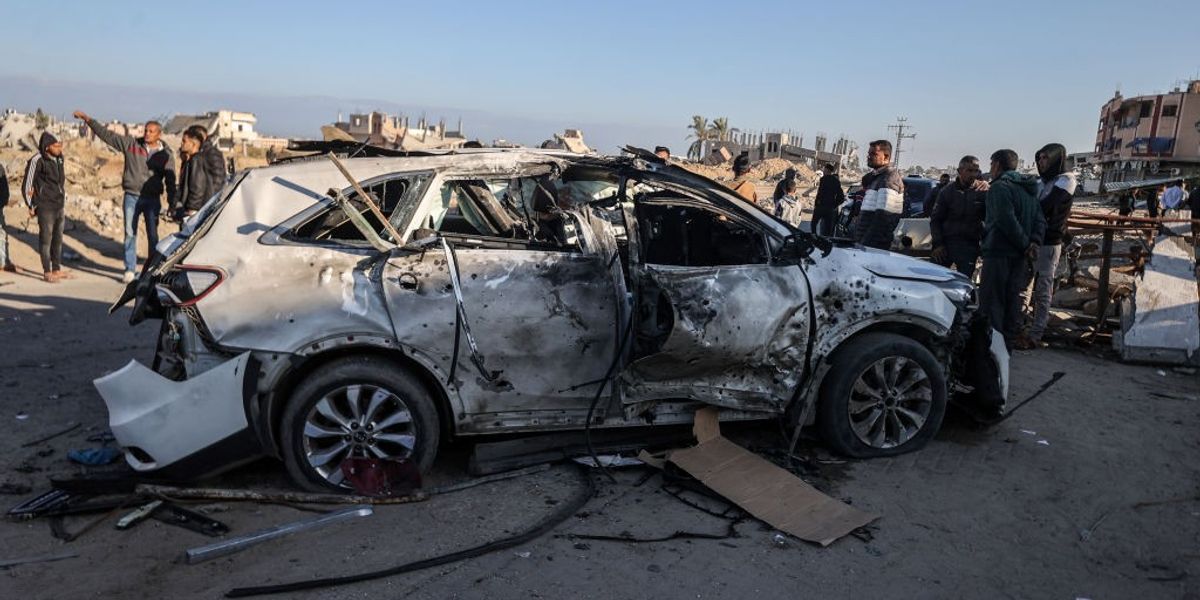
Israel bombed a humanitarian vehicle in Gaza on Saturday, reportedly killing three aid workers with World Central Kitchen and Palestinian bystanders who tried to come to help after an initial strike.
"We are heartbroken to share that a vehicle carrying World Central Kitchen colleagues was hit by an Israeli airstrike in Gaza," the U.S.-based aid group founded by chef José Andrés, said in a statement.
"At this time, we are working with incomplete information and are urgently seeking more details," the group said.
While Israeli officials said the vehicle was carrying a wanted Palestinian militant, WCK said it had "no knowledge that any individual in the vehicle had alleged ties to the October 7th Hamas attack." The group said it was pausing operations in Gaza for the time being. "Our hearts," they said, "are with our colleagues and their families in this unimaginable moment."
According to reports, the WCK vehicle was targeted on Salah al-Din Street in Khan Younis. After the three aid workers were killed in the first strike, Middle East Eye reports two other people "tried to help" but "were also targeted and killed" by what is known as a double-tap strike.
"The vehicle carried rice and other food supplies," Tamer Sammour, an eyewitness, told the news outlet.
MEE spoke with other witnesses:
Mohammed Abu Abed, a Khan Younis resident, identified one of the two men killed in the second strike as Adel Sammour.
"He asked me last night for bread, but I couldn’t help him," Abu Abed told MEE.
"The two men were farmers heading to work to make ends meet," he explained.
"They were waiting to be picked up for work when the first strike hit the vehicle nearby,”"he continued.
"When they tried to assist, they were also targeted and killed. They were just trying to make a living. They were innocent."
In April, a multi-vehicle WCK convoy was bombed by Israel, killing seven of the organization's workers. The attack sparked global condemnation but did little to end Israel's blocking of humanitarian aid.

Earlier this month, as Common Dreams reported, an analysis showed the delivery of life-saving aid into Gaza had "fallen to an all-time low," largely due to Israel's obstruction.
Across Gaza over the last 24 hours, at least 19 people were killed in attacks by Israel.
Following the attack on WCK vehicle, Al-Jazeera's Hind Khoudary reported from Khan Younis on the organization's decision to halt its operations in the area.
"After today's attack, the community kitchens did not work and serve people," Khoudary reported. "So, it's beyond attacking Palestinians, Palestinian workers, aid organizations, it’s attacking all sources of aid, and all sources of community kitchens, and those who have been working tirelessly to prevent starvation in Gaza."
"The question remains," she added, "why does Israel continue to target the World Central Kitchen community and their employees in the Gaza Strip?"
"The most effective action the U.S. could take to halt Israel's genocidal war would be cutting off weapons."
A wave of fresh bombings and military ground operations by Israel were underway in the city of Khan Younis on Friday as images of Palestinian families once again forced to flee plastered global news sites and world leaders, including the United States, refused to intervene to stop the relentless assault being inflicted on the people of Gaza.
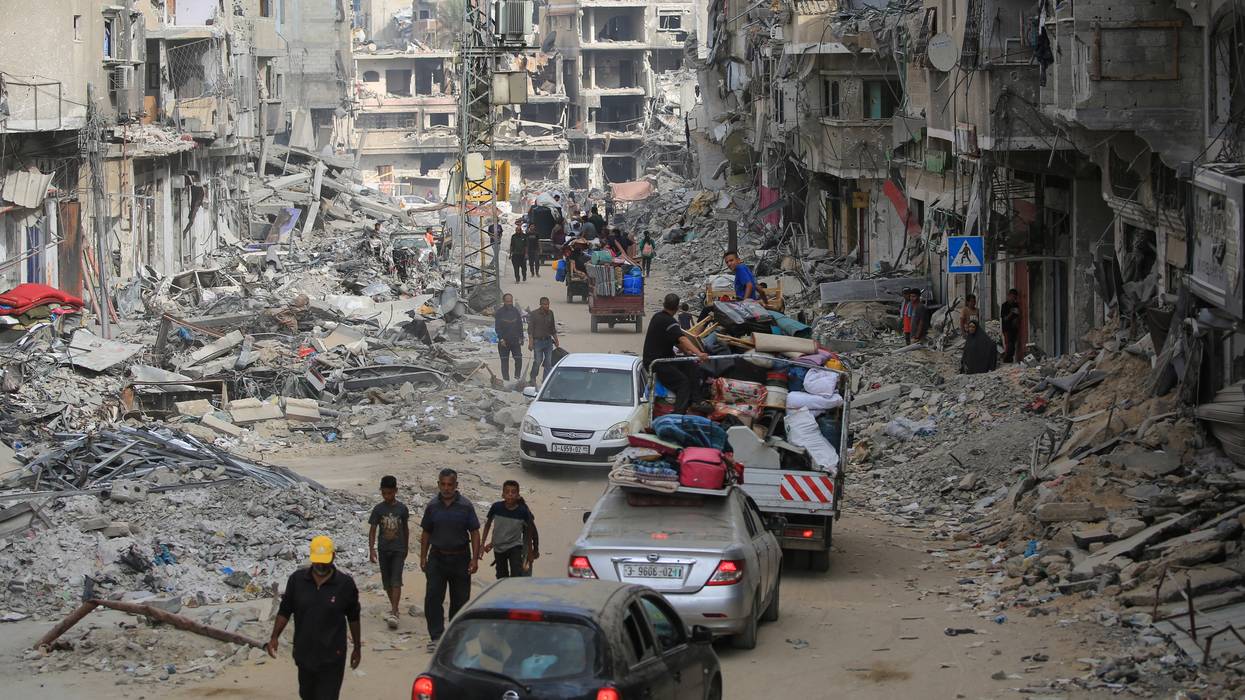
Al-Jazeera reports the southern city—which its reporter on the ground, Hani Mahmoud, described as "uninhabitable" and turning into a "wasteland"— was bombed approximately 30 times in "just a few hours" overnight. With evacuation orders by the Israeli military sweeping up and down the Gaza Strip week after week, the internally displaced population is forced to move time and again.
"What we see on the ground is recurrent displacement for many families who just made their way back to their homes," Mahmoud reported early Friday.
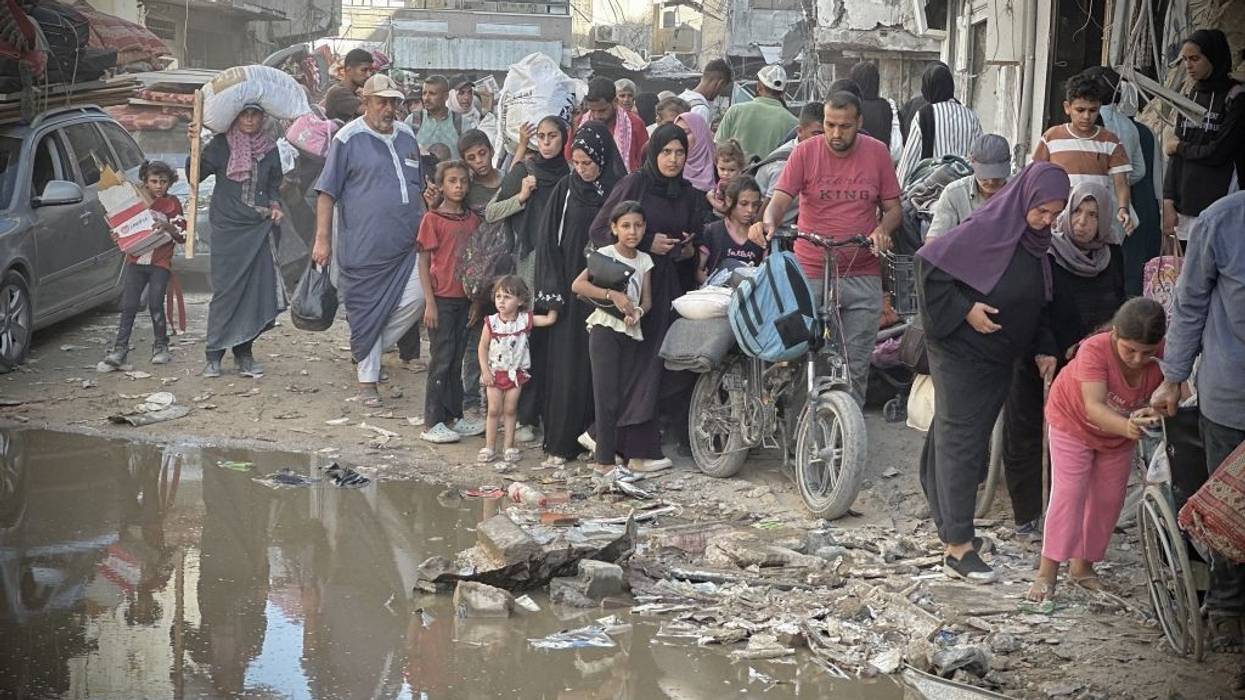
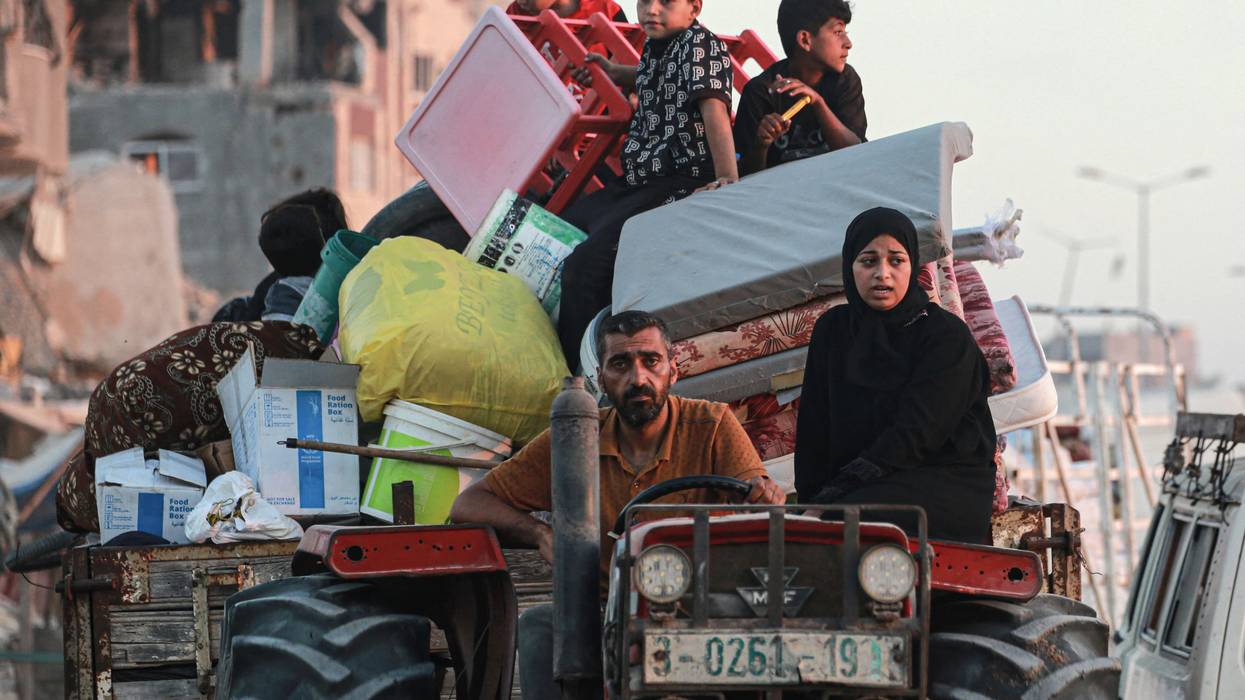
With tanks on the ground, adding shelling to the bombs being dropped from the air, Reuters reports how families "fled eastern Khan Younis in vehicles and on foot, belongings heaped on donkey carts and motorcycle rickshaws as they made their slow escape along congested roads."
Ghazi Abu Daka, one evacuee fleeing Khan Younis, told the Associated Press Thursday that this was was the fourth time he and his family had been forced to flee the city.
"Every day there is war. Every day there are rockets. There is no safe place in the eastern area. Now, we are displaced in the streets and don't know where to go," he said, carrying his son in his arms in the scorching heat.
The intensified overnight bombing came just hours after a joint statement Thursday evening from the United States, Qatar, and Egypt signaled a fresh round of mediated negotiations between Israel and Hamas to end the onslaught in exchange for the release of Israeli prisoners still being held since last year's cross-border attack on October 7 of last year.
"There is no further time to waste nor excuses from any party for further delay," the joint statement read in part, indicating that a framework for an agreement would be the basis for the new round of talks that were derailed completely last month after Hamas leader Ismail Haniyeh was assassinated, almost certainly by Israel, in Tehran last month.
While French President Emanuel Macron welcomed news of news talks, posting on X that the "war in Gaza must stop," the United States, under President Joe Biden, has continued to give Israel the green light to carry out its campaign—and provided many of the weapons to sustain it—despite months of presented evidence that the nature of Israel's assault has resulted in war crimes and crimes against humanity.
At a rally in Detroit, Michigan on Wednesday evening, protesters calling for an end to the genocidal assault on Gaza demanded that Vice President Kamala Harris, now the presidential Democratic nominee, commit to supporting an arms embargo against Israel as a way to bring the war to an end.
While Harris suggested a willingness to engage with those interrupting the rally and address their concerns, members of her team later clarified Harris "does not support" such an embargo.
Despite miniscule hopes that fresh talks next week could broker some progress, Drop Site journalist Jeremy Scahill Thursday agreed with those who argue that the "most effective action the U.S. could take to halt Israel's genocidal war would be cutting off weapons."
The southern Gaza city is the latest region where Israeli forces have issued an evacuation order, displacing hundreds of thousands of people.
At least 129 people have been killed in the last five days of Israeli shelling and artillery fire in the southern Gaza city of Khan Younis, where the Israel Defense Forces earlier this week gave people "a couple of minutes only" to evacuate earlier this week, according to Al Jazeera reporter Hind Khoudary, before the bombardment began.
Al Jazeera reported on Thursday that "the vast majority of dead and injured are women and children," as Israeli snipers have also been deployed in the city and are firing at Palestinians indiscriminately.
The snipers "are shooting anyone who is moving," wrote Tareq Abu Azzoum in a dispatch, reporting that the eastern part of Khan Younis is the main target of Israel's current assault.
The Palestine Red Crescent Society (PRCS) noted that the latest evacuation order reduced the area that Israel has claimed is a "humanitarian zone," as the order covered about 15% of al-Mawasi, where people from cities including Rafah and Gaza City have fled in recent months as the IDF has launched assaults in those cities.
The group told Al Jazeera that "there is no more space, even for a single tent, in the so-called 'humanitarian area' of al-Mawasi because of the overwhelming number of people displaced there."
Israel's reported indiscriminate assault on the city has included medical workers, said PRCS, which posted a video on social media Thursday of an ambulance that had been hit by live bullets fired by the IDF while medics were transporting an injured person.
The Euro-Mediterranean Human Rights Monitor noted on Monday that the true death toll in Khan Younis—as with the rest of Gaza—may not be known for months, "with many victims remaining trapped under the rubble and in the streets, where rescue workers have not been able to retrieve their bodies."
The group also said the IDF had perpetrated "a kind of deception of the residents" of Khan Younis and villages in the area, including Bali Suhaila, where soldiers entered "amid very violent bombardment, even though the Israeli army had said in its orders that the displacement was going to be temporary."
The forced evacuation, false information about the order, and shrinking of the humanitarian zone were "all part of Israel's media disinformation campaign and psychological warfare tactics, since military assaults on forcibly displaced people and their tents have occurred continually in this area for several weeks now, resulting in hundreds of deaths and injuries," the Euro-Med Monitor.
The reports of indiscriminate shooting by snipers also bolster an account given by Dr. Mark Perlmutter, who volunteered at European Hospital in Khan Younis in April, to CBS News earlier this week.
"I had sniper bullets," said Perlmutter. "I have children that were shot twice... I have two children that I have photographs of, that were shot so perfectly in the chest... and directly on the side of the head on the same child. No toddler gets shot twice by mistake by the world's best sniper. And they're dead-center shots."
Perlmutter is among nearly four dozen doctors and nurses who wrote to President Joe Biden, Vice President Kamala Harris, and First Lady Jill Biden on Thursday, describing what they saw while volunteering at hospitals across Gaza since Israel began bombarding the enclave and blocking nearly all humanitarian aid, including medications and medical supplies, nearly 10 months ago.
"Children are universally considered innocents in armed conflict," wrote the medical workers. "However, every single signatory to this letter treated children in Gaza who suffered violence that must have been deliberately directed at them. Specifically, every one of us on a daily basis treated pre-teen children who were shot in the head and chest."
"We wish you could hear the cries and screams our consciences will not let us forget," they added. "We cannot believe that anyone would continue arming the country that is deliberately killing these children after seeing what we have seen."
"The areas Israel has defined as 'humanitarian' and 'safe' are, in reality, the polar opposite."
The global humanitarian group Oxfam condemned the Israeli military on Thursday for attempting to force hundreds of thousands of Gaza civilians out of the eastern part of Khan Younis and into overcrowded parts of the besieged territory with no guarantee of safety or humanitarian assistance.
"Pushing hundreds of thousands more people into what is essentially a death trap, devoid of any facilities, is barbaric and a breach of International Humanitarian Law," said Sally Abi Khalil, Oxfam's Middle East director. "Yet again, we are seeing vast numbers of people being forced to flee under Israeli military orders, with no heed for their safety or dignity."
"The areas Israel has defined as 'humanitarian' and 'safe' are, in reality, the polar opposite, leaving families with the horrific choice between staying in an active combat zone or moving somewhere that is already desperately overcrowded, dangerous, and unfit for human existence," Khalil added.
Oxfam said its staff members who are sheltering in the supposed safe zones to which Israel has directed Gazans reported "medieval conditions," with people "camping in the streets" amid "rapidly spreading disease."
"None of the declared safe routes in Gaza are actually safe," the group said. "Israel's military has also systematically attacked civilians and aid workers, including in those clearly marked 'safe zones' and 'evacuation routes.' Israel has repeatedly failed to comply with international law, which compels it to take all possible measures to ensure satisfactory conditions of shelter, hygiene, health, safety, and nutrition, and that family members are not separated."
Oxfam's statement came days after the U.S.-armed Israel Defense Forces (IDF) issued fresh evacuation orders for Khan Younis, a city to which many Gazans fled after Israeli forces began their full-scale assault on Rafah in May.
The IDF instructed people to move to al-Mawasi, a tiny coastal area that Israeli forces have previously attacked. The Financial Times recently described al-Mawasi as a "fetid, thirsty, and disease-filled refuge of tens of thousands of Palestinians."
Hours after issuing the orders, the IDF killed at least nine people—including three children and two women—in an airstrike on a home in Khan Younis.
The United Nations estimates that nine out of 10 people in Gaza have been internally displaced at least once since Israel began its latest assault on the enclave following a deadly Hamas-led attack in October. Some Gazans have been displaced as many as 10 times, according to the U.N.
The Washington Post reported Wednesday that while the European Hospital in Khan Younis is now "completely empty" following the IDF's evacuation order, "there are signs that many of the thousands who fled fearing the new Israeli incursion" in the city "are trickling back after being unable to find new shelter in the crowded parts of the Gaza Strip still accessible to them."
"For many in Khan Younis, this week's evacuation order was only the latest in a long string of forced displacements," the Post added. "Though the United Nations said up to a quarter-million Palestinians were affected by the order, some have already returned to Khan Younis, saying there is nowhere left in Gaza for them to go."
Oxfam's Khalil said Thursday that "the human cost of the military offensive in Gaza is unacceptable" and implored "all parties to push for an immediate and lasting cease-fire in order to end the bloodshed and suffering."
"It means yet another day, week, chapter of misery for these hundreds of thousands of people," said one United Nations worker.
Hearing once again from the Israel Defense Forces that they must evacuate to a so-called "humanitarian zone," hundreds of thousands of Palestinian people in the southern Gaza city of Khan Younis on Tuesday were forced to search for safety ahead of a likely ground offensive in the city.
The United Nations Relief and Works Agency for Palestine Refugees in the Near East (UNRWA) said that roughly 250,000 people are living and seeking shelter in the evacuation zone—more than 10% of Gaza's population of 2.3 million.
The evacuation order, which was posted on social media on Monday, also includes nearby localities including al-Qarara and Bani Suhaila.
The IDF said after the order was announced that patients and healthcare providers at European Hospital, the largest operating medical facility in Gaza, were not required to evacuate, but the hospital director told the Associated Press that most had already been relocated.
"The hospital staff and the patients decided to already evacuate themselves," said Rik Peeperkorn, World Health Organization representative for the occupied Palestinian territories, in a press briefing. "We plea the European Gaza hospital will be spared, will be non-damaged."
Peeperkorn said three patients remained at the hospital.
Since Israel began its assault on Gaza and its near-total blockade on humanitarian aid in retaliation for a Hamas-led attack in October, the IDF has attacked hospitals across the enclave, even as they have served as shelters for forcibly displaced people.
The IDF has ordered evacuations from places including northern Gaza and the southern city of Rafah—only to bomb so-called "safe" zones after displacing people.
In late May, at least 46 people were killed when Israel bombed a tent encampment in a "humanitarian area" in Rafah after beginning a full-scale ground invasion of the city, where more than a million people had been displaced. At least 25 people were killed in another attack on an encampment in the area last month.
Sam Rose, a planning director for UNRWA, told Al Jazeera that the latest evacuation order put a quarter of a million people in a "harrowing, horrific, and incredibly difficult" situation.
"It means yet another day, week, chapter of misery for these hundreds of thousands of people," said Rose. "Most of them have been displaced several times. Some had just returned from Rafah where they were displaced a few weeks ago... They go without knowing precisely where they will end up because this evacuation order told people to go urgently—they know that if they don't go out within 24 hours the worst is to come."
Soon after the evacuation order, at least nine people were killed in an Israeli strike on a home near European Hospital in Khan Younis.
Rose noted that the coastal area of al-Mawasi, where many people will likely go, is "already so overcrowded. There is no room to pitch a tent, there is no water, no infrastructure, no sanitary services. Many spend the night in vehicles or they sleep on their donkey carts."
Louise Wateridge, a spokesperson for UNRWA, told The Washington Post that the forced displacement is taking place amid temperatures over 86°F "every day."
"Even the healthiest people will struggle to make a move in this heat with lack of food, with lack of water," she said. "And then where do they go? That's the next question."
Ahmed al-Najjar, a 26-year-old resident of the Bani Suhaila neighborhood, told Agence France Presse that with nowhere to flee, his family has been forced to stay in the area after first attempting to leave.
"We did not know where we would go and we do not have enough money to buy a new tent," he said. "We had to spend the night on the street and that has increased our stress. This morning we decided to go home again. There is nowhere else... Whatever happens, happens. We have nothing to lose now."
The IDF's apparent plan to expand its assault on Khan Younis came as The New York Times reported that security leaders in Israel are pushing for a cease-fire in Gaza, objecting to Prime Minister Benjamin Netanyahu's plan to continue the assault until Hamas is eliminated—an objective even some top Israeli military officials believe is impossible—and all Israeli hostages are released.
The Times reported that senior military officials believe a cease-fire is the "swiftest way" to free captives remaining in Gaza.
"Public health concerns are beyond crisis levels" in the areas where Palestinians have been forced to shelter, and "the sounds, the smells, the everyday life, are horrific and apocalyptic," a U.N. official said.
More than 1 million Palestinians have fled Rafah as the city comes under a continued Israeli assault, forcing many to shelter in badly damaged buildings in the nearby city of Khan Younis, according to the United Nations.
The assault on Rafah, a city in the southern Gaza Strip, has left the displaced in "unspeakable" conditions, the United Nations Relief and Works Agency for Palestine Refugees in the Near East (UNRWA) said on social media. Approximately 1.7 million displaced people are now in Khan Younis and "Gaza Middle Areas," according to UNRWA.
Forced displacement has pushed over 1 million people away from Rafah.
Thousands of families now shelter in damaged & destroyed facilities in Khan Younis, where @UNRWA keeps providing essential services despite increasing challenges. Conditions are unspeakable.#CeasefireNOW pic.twitter.com/qRVnWmfZSr
— UNRWA (@UNRWA) June 3, 2024
Khan Younis, which saw sustained fighting earlier in the war, still does not appear to be a safe zone: Israeli military vehicles entered the city in recent hours after advancing to two towns just east of Khan Younis with "heavy gunfire and artillery shelling," Al Jazeera reported.
Since early May, the Israel Defense Forces (IDF) has issued evacuation orders for parts of Rafah, telling people to go to an "expanded humanitarian zone" in Al-Mawasi, located roughly 12 miles from the city.
Israeli forces subsequently launched attacks on designated safe zones, including in Al-Mawasi. Two strikes killed 45 and 21 people last week, mostly women and children. The first of the attacks, known as the "tent massacre," was carried out with U.S. weapons, later analysis showed.
Many of the people fleeing Rafah are having to move for at least the second time during the war. Roughly 1 million Palestinians who'd been displaced elsewhere had gone to Rafah for refuge earlier in the war. They began to leave Rafah nearly four weeks ago as Israeli started its assault on the city. Before the war, Rafah's population was about 275,000, but the governorate reached a population of 1.4 million by February as Israel ordered Palestianians to move there from northern Gaza. This meant squeezing more than half of Gaza's prewar population of 2.3 million into one governorate, NPR reported.
More than 18,500 pregnant women have been forced to leave Rafah, while about 10,000 pregnant women remain in the city in "desperate conditions," the U.N. reported.
"They're exhausted, traumatized, dehydrated, and malnourished," the U.N. Population Fund wrote on social media of pregnant women dealing with "Israel's terrifying military operation in Rafah."
"Pregnant women in Gaza are living in an unrelenting nightmare," the agency added.
After successive operations last month, Israel now controls the entire Gaza-Egypt border. Humanitarian corridors have shut down, with many agencies and aid groups pausing operations in Rafah due to lack of supplies and security concerns.
"We are living and working precariously in the south," Matthew Hollingsworth said, World Food Program (WFP) country director in Palestine, said late last week, the U.N. reported. The areas where the displaced have been forced to shelter are nightmarish, he said.
" Public health concerns are beyond crisis levels" and "the sounds, the smells, the everyday life, are horrific and apocalyptic," Hollingsworth added.
More than half of the structures in the Gaza Strip have been damaged, destroyed, or possibly destroyed during the eight-month Israeli assault, the United Nations Satellite Centre (UNOSAT) concluded, in findings released Monday.
🏚️ According to our analysis, we identified 36,591 destroyed structures, 16,513 severely damaged, 47,368 moderately damaged, and 36,825 possibly damaged structures. A total of 137,297 structures, or about 55% of the total in Gaza, are affected. #DamageAssessment #SatelliteImagery pic.twitter.com/UZjh64o0j7
— UNOSAT (@UNOSAT) June 3, 2024
The mass displacement from Rafah continued as the Biden administration sought to arrange a cease-fire after after being pressured for months to end its military support for Israel’s onslaught. President Joe Biden called for an end to the war on Friday and backed a roadmap to a deal, which drew praise from Palestine defenders—the Council on American-Islamic Relations called it "long overdue" and a "positive step"—as well as criticism that it did not address the root causes of the conflict.
Israeli Prime Minister Benjamin Netanyahu said Monday that the deal would not stop the war, which could not end until "total victory" had been achieved, according to Israeli National News.