
SUBSCRIBE TO OUR FREE NEWSLETTER
Daily news & progressive opinion—funded by the people, not the corporations—delivered straight to your inbox.
5
#000000
#FFFFFF
To donate by check, phone, or other method, see our More Ways to Give page.


Daily news & progressive opinion—funded by the people, not the corporations—delivered straight to your inbox.
According to a new report, the crisis is "only going to get worse."
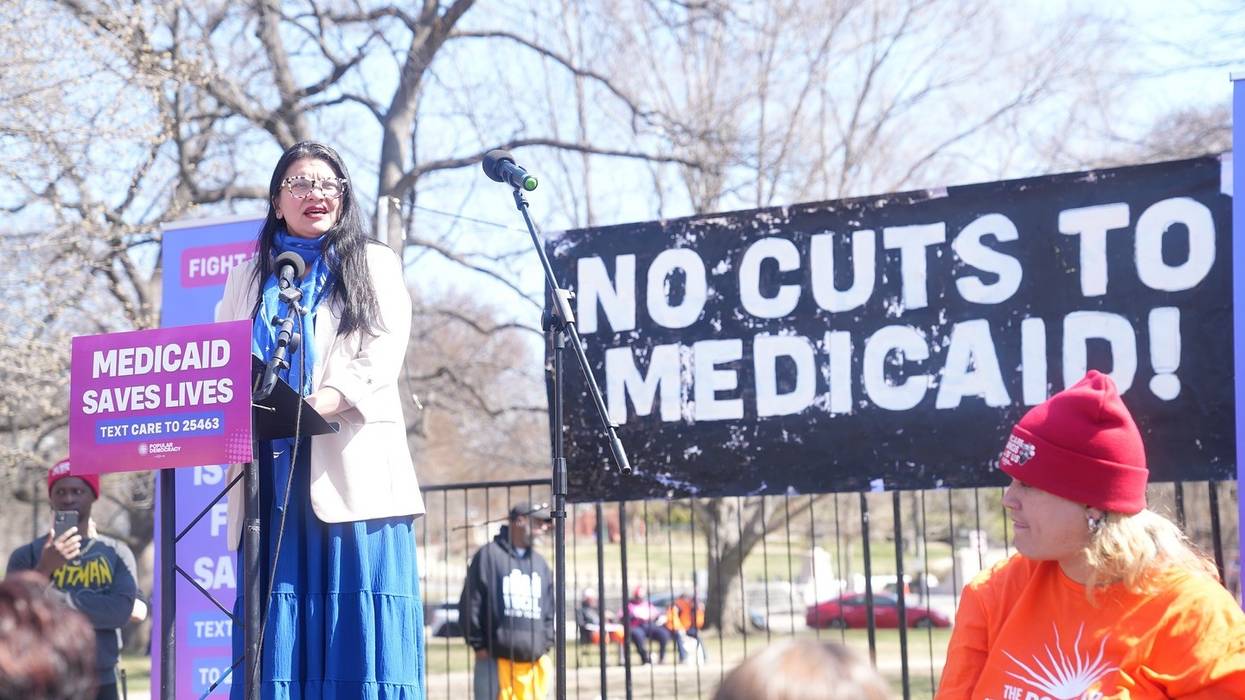
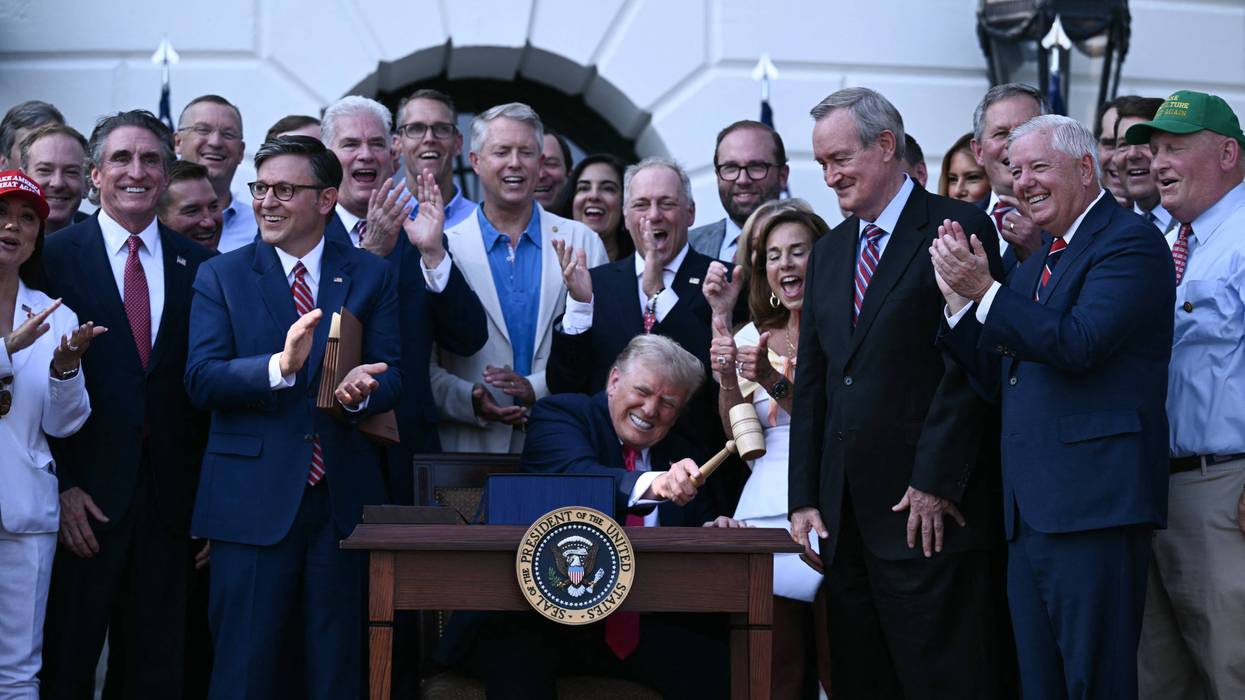
Not even a year after President Donald Trump signed the largest healthcare cuts in US history into law, around five million Americans have lost insurance coverage, according to a report out Monday from Protect Our Care, which predicted that the crisis was "only going to get worse."
The massive budget and tax legislation passed by Republicans last July, known as the One Big Beautiful Bill Act, slashed nearly $1 trillion from Medicaid and the Children's Health Insurance Program (CHIP) over the next decade while introducing tax breaks that are expected to hand an additional $1 trillion to the richest 1% of Americans.
“Five million and counting. That’s the human toll of the spiraling Republican healthcare affordability crisis,” said Protect Our Care president Brad Woodhouse. “Just one year after Trump and congressional Republicans made the largest cuts to healthcare in history to fund tax breaks for billionaires and big corporations on Wall Street, millions have lost the care they depended on to stay alive and healthy."
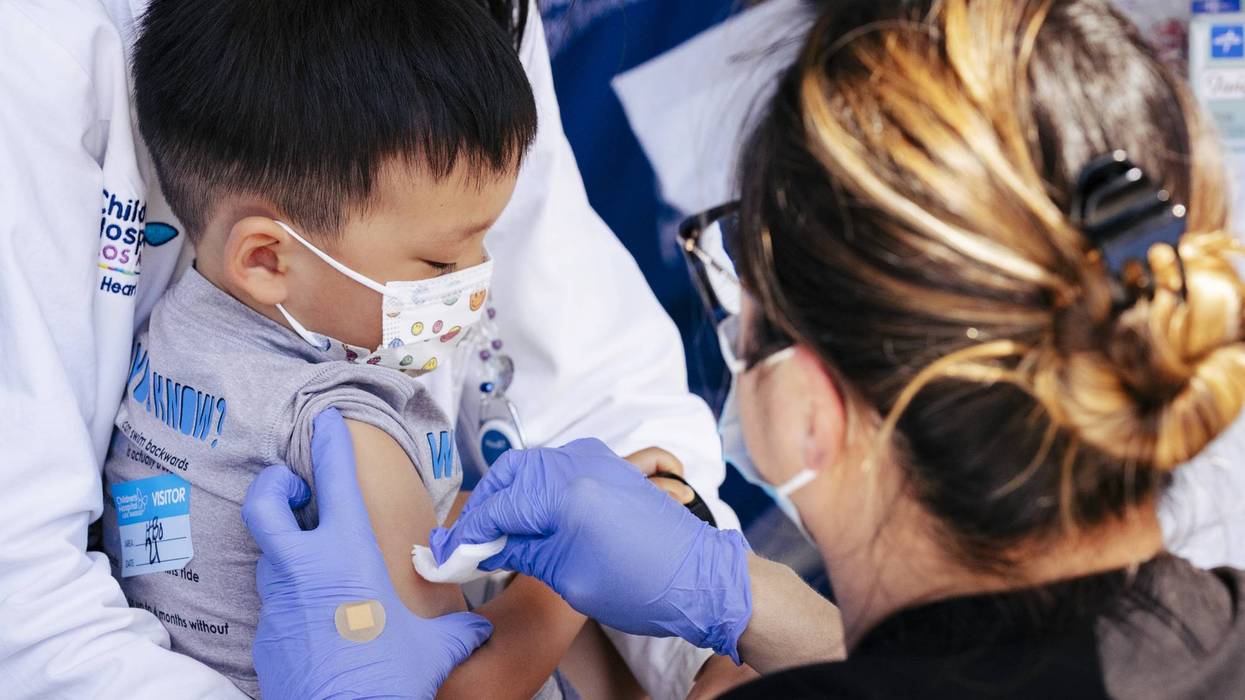
Citing the most recent data from the Centers for Medicare and Medicaid Services (CMS) and state agencies, the report found that the number of Americans enrolled in Medicaid and CHIP had fallen to just 76.9 million, down from 80.8 million a year before—a decline of more than 3.8 million people.
Another 1.2 million are also estimated to have lost coverage due to the massive spike in premiums after Republicans voted not to renew tax credits for consumers under the Affordable Care Act (ACA) that lowered costs for Americans who purchased coverage through ACA marketplaces.
During open enrollment in 2025, 24.3 million Americans selected insurance plans through the ACA. This year, as the average premium was projected to more than double on average, the number of Americans enrolled through the ACA fell to just 23.1 million—a drop of nearly 1.2 million.
The millions of other families still enrolled in insurance through the ACA exchanges saw an average increase of $780, and according to KFF, it's only been that low because many families have opted to switch to cheaper, less comprehensive plans.
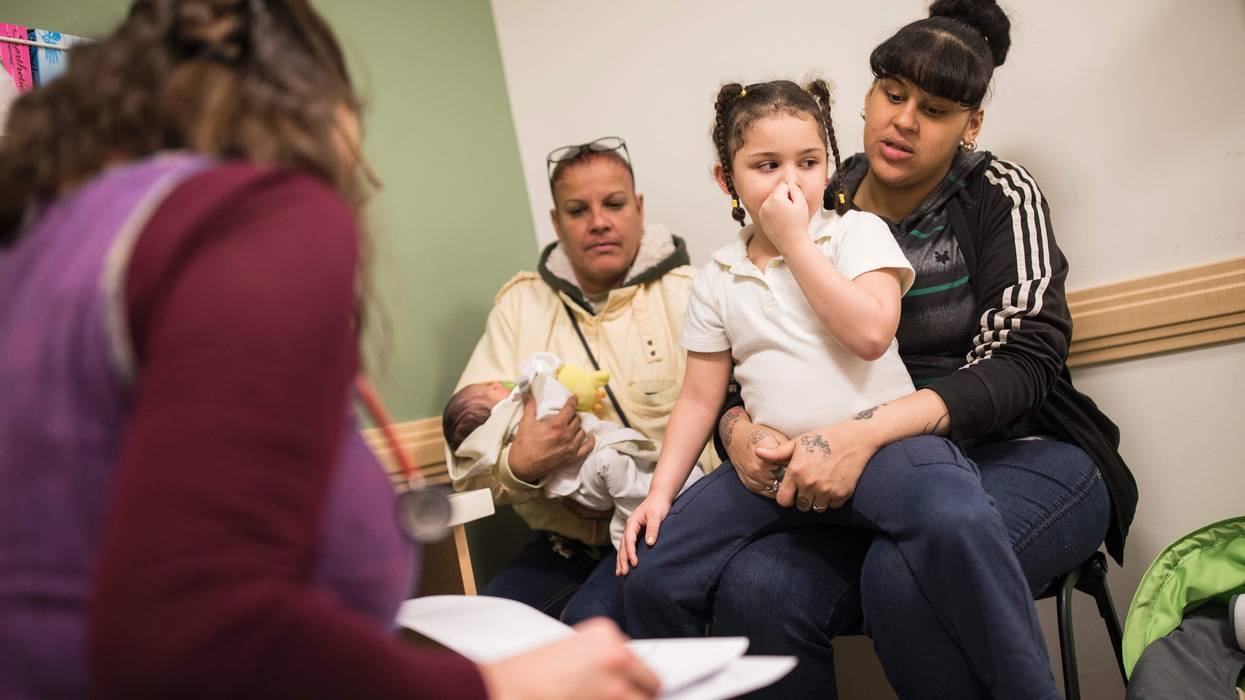
The loss of insurance coverage "is only a small piece of the puzzle," Woodhouse said.
"Millions more are making impossible choices every day to keep their coverage, including skipping rent or cutting back on groceries so they can see a doctor," he said. "Their pain and suffering are incalculable."
The report said the coverage losses over the first year are "just the beginning" and that "millions more will lose coverage once deeper cuts go into effect."
The full slate of changes to Medicaid from the GOP bill has not yet been enacted. Next year, many adult recipients will be required to submit proof that they are doing at least 80 hours of work or other qualifying activity each month in order to maintain benefits, which the nonpartisan Congressional Budget Office (CBO) estimated could increase the uninsured population by 5.3 million by 2034.
Another paperwork hurdle, the requirement that certain Medicaid expansion enrollees prove their eligibility every six months, is expected to result in another 700,000 people becoming uninsured by 2034.
In total, CBO analyses estimate that over the next decade, roughly 15 million Americans would lose their insurance coverage as a result of the legislation.
"These are our neighbors, our friends, our loved ones. These are small business owners and farmers. These are seniors. Veterans. Moms," Woodhouse said. "These are millions of working people now scrambling to find insulin pumps, taking thousands out of retirement just to see a doctor for that cough that’s not getting better, or, worse, not getting care at all."
With healthcare costs now a top concern among voters—66% of whom said they were worried about affording it, according to a KFF poll in January—cuts to healthcare spending appear to be a glaring liability for Republicans entering the midterm elections.
Another KFF poll from April found that 37% of voters said they trusted Democrats to address healthcare costs, while just 26% said they trusted Republicans. Meanwhile, 67% of voters said they disapproved of the Trump administration's handling of healthcare costs.
"Every single day, the affordability crisis mounts, and more Americans will find themselves joining the five million struggling to keep up with skyrocketing healthcare costs," Woodhouse said. "The American people won’t forget this betrayal in November.”
Democrats have seized on Monday's report as part of their election pitch, including Rep. Greg Landsman, who faces a competitive reelection fight in Ohio's 1st Congressional District.
He wrote on social media Tuesday that Republicans "cut healthcare by nearly a trillion to pay for tax cuts for the super wealthy... five million people no longer have healthcare."
"The healthcare crisis in America is dominating the lives of millions, and will soon dominate all of our lives," he said. "We need a new Congress to restore people’s healthcare and to end this crisis. There is no other way."
"Their plan would force the largest Medicaid cuts in American history—all to pay for more tax giveaways to billionaires," said Democratic Rep. Brendan Boyle.
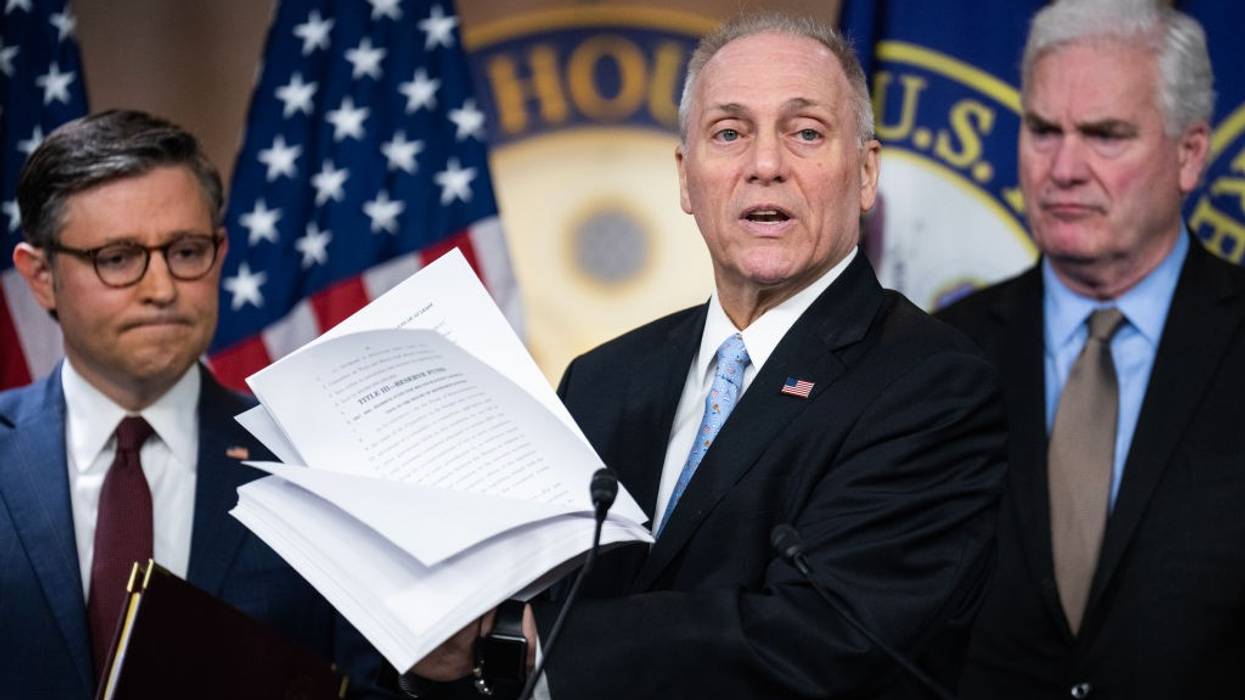
At a press conference last week, U.S. House Majority Leader Steve Scalise claimed Democrats are lying when they warn that Medicaid is in the Republican Party's crosshairs.
"The word Medicaid is not even in this bill," Scalise (R-La.) declared, waving the text of a budget resolution that House Republicans went on to pass over unified Democratic opposition.
But an analysis released late Wednesday by the nonpartisan Congressional Budget Office (CBO) makes clear that deep cuts to Medicaid would be required under the House GOP resolution, which President Donald Trump has endorsed.
The analysis, produced at the request of leading House Democrats, shows that Medicaid accounts for 93% of projected mandatory spending under the jurisdiction of the House Energy and Commerce Committee over the next decade, not including Medicare.
That means Republicans would have to cut Medicaid, the Children's Health Insurance Program (CHIP), or Medicare to achieve the $880 billion in spending reductions that the House budget resolution instructs the energy and commerce panel to impose between fiscal years 2025 and 2034.
"This analysis from the nonpartisan CBO confirms what we've been saying all along: Republicans are lying about their budget," said Rep. Brendan Boyle (D-Pa.), the top Democrat on the House Budget Committee. "Their plan would force the largest Medicaid cuts in American history—all to pay for more tax giveaways to billionaires."
I keep hearing Republicans claim their budget doesn't cut Medicaid. We all know that's a lie — so I asked the nonpartisan CBO to look into it. Their analysis confirms it: the Republican budget delivers the largest Medicaid cuts in history to pay for giveaways to billionaires.
[image or embed]
— Rep. Brendan Boyle (@congressmanboyle.bsky.social) March 5, 2025 at 5:45 PM
According to the CBO, just $135 billion in spending under the House Energy and Commerce Committee's jurisdiction over the next decade would be available for cuts when excluding Medicaid, Medicare, CHIP, and programs that are "budget-neutral with revenues offsetting spending."
That would leave the GOP far short of the $880 billion in energy and commerce spending reductions proposed in the House budget resolution, which still must make its way through the Republican-controlled Senate before the GOP can move ahead with Trump's legislative agenda.
The CBO's analysis comes a day after Trump neglected to mention Medicaid during his first address to Congress of his second term, a decision that one advocate said confirms the president "knows his plan to cut nearly $1 trillion from Medicaid is so deeply unpopular that he would rather sweep it under the rug."
Rep. Frank Pallone, Jr. (D-N.J.), the top Democrat on the House Energy and Commerce Committee, said Wednesday that the CBO analysis "confirms what we've been saying all along: The math doesn't work without devastating Medicaid cuts."
"The reality is the only way Republicans can cut at least $880 billion within the Energy and Commerce Committee's jurisdiction is by making deep, harmful cuts to Americans' healthcare," said Pallone. "Republicans know their spin is a lie, and the truth is they have no problem taking healthcare away from millions of Americans so that the rich can get richer and pay less in taxes than they already do."
Donald Trump is famed for his head-snapping reversals. One day he's taking troops out of the Middle East; the next he's sending more in. One day he's on the verge of an agreement with China on trade; the next he's tweeting about holding off until after the election.
On one thing, however, Trump and his administration have been clear, consistent, coordinated and relentless: waging a war on the poor. Not a war on poverty but a war on the most vulnerable themselves.
Despite low unemployment, millions of Americans--the Brookings Institution estimates an astounding 44% of all workers in the prime working ages of 18-64--struggle to get by on median wages of little over $10 an hour or $18,000 a year. The working poor face soaring costs of housing, health care, transportation, utilities and, of course, debt--all rising faster than their wages.
The official "poverty rate" is far lower than any accounting of the true needs of a family. The National Center for Children in Poverty estimates that the average family needs about twice as much income as the poverty level to meet basic needs.
Cruelly, the Trump response to this is to make it worse. The administration and Republicans in Congress oppose raising the minimum wage and won't even allow a vote on it in the Senate. Now the administration proposes lowering the poverty line over time by pegging the inflation adjustments lower than the actual increase in costs. All programs that help low-wage workers would be affected. The Center on Budget and Policy Priorities projects that 250,000 seniors would get less help in purchasing prescription drugs, 300,000 children would lose health care under the Children's Health Insurance Program (CHIP). This rule combined with others that the administration has imposed will cost literally millions of low-wage workers to face cutbacks in food assistance.
Student loan debt is now $1.5 trillion, primarily loans taken out by the children of middle- or low-income families trying to better themselves through education. Bernie Sanders, running for president, has pledged to eliminate all student debt, paying for it with taxes on the wealthy, and to make all public colleges tuition free. Elizabeth Warren has joined in a plan to eliminate the debt for most students and make colleges tuition free.
Trump is reportedly worried that these plans are very popular. His administration is scrambling to respond. One proposal, as the Washington Post reported, is to cap the loans a student could get in relation to their projected income. That's right, the Trump plan may call for reducing student debt by cutting the availability of loans to students--effectively closing the doors to college to the children of middle- and low-income families.
Add to this Trump's most recent plan to take $2 billion out of the Pell Grant program--which supports college grants to children from families with less than $50,000 in income--to pay for sending NASA back to the moon. The maximum Pell Grant once covered nearly 80% of the cost of tuition, fees, room and board at public four-year college; now it covers less than 30%.
This is a program that needs more funding, not less.
Trump, of course, brags on his economy and the low unemployment. He argues--without evidence--that his tax cut is trickling down to workers. What he doesn't realize is that this economy continues to generate jobs that won't support a family. That's why so-called poverty programs--from CHIP to food stamps to public housing to low income heating assistance to Medicaid--are so necessary. They give vital support to low-wage workers who do some of the hardest, most taxing jobs in our country.
Cuts in student aid, cuts in Pell grants, cuts in food stamps, cuts in the poverty level--Trump is putting low wage workers and their families in a box with no way out except down. Our country is paying a very high price for this meanness.