

SUBSCRIBE TO OUR FREE NEWSLETTER
Daily news & progressive opinion—funded by the people, not the corporations—delivered straight to your inbox.
5
#000000
#FFFFFF
To donate by check, phone, or other method, see our More Ways to Give page.
Daily news & progressive opinion—funded by the people, not the corporations—delivered straight to your inbox.
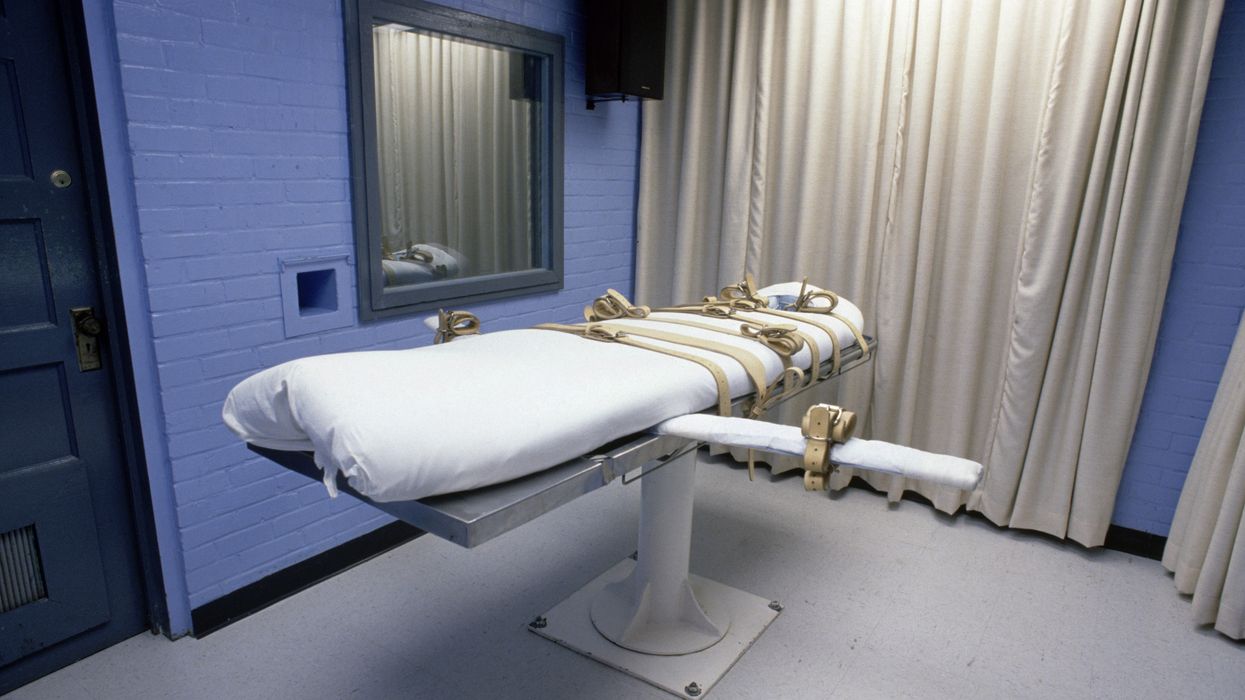
My opposition to this execution is not a betrayal of my father. It is an affirmation of the values he lived by, and that I have tried to instill in my children.
At the tender age of 9, I lost my father, Doug Battle, when he was killed during a robbery. Like many children faced with sudden violence, I asked a simple question with no answer: Why did you have to kill him?
Today, I am asking a different question… one that should concern all of us.
Why is the state preparing to execute Charles Burton, a man who did not kill my father?
In 1991, six men robbed an AutoZone store in Alabama. Mr. Burton had already left the store with the money. Derrick DeBruce remained inside and made his own decision, in accordance with no one, to shoot my father as he lay face-down on the floor alongside employees and customers. There is no evidence that Mr. Burton knew, or had any intent, that a shooting would occur.
Executing a man who did not commit the killing does not heal wounds or strengthen public trust. It weakens it.
Both men were initially sentenced to death. Later, DeBruce, the shooter, had his sentence overturned and the state agreed to resentence him to life without parole. Mr. Burton, the non-shooter, remains on death row.
If this is allowed to stand, this would represent a fundamental flaw in how capital punishment is applied in America.
Mr. Burton is now 75 years old, wheelchair-bound, and suffering from severe rheumatoid arthritis. He is frail, in declining health, and poses no threat to public safety. Yet the state plans to execute him using nitrogen hypoxia, a method that raises serious ethical and constitutional concerns.
As a child, I believed justice meant punishment. I thought executions would bring closure. Over time, I learned that justice cannot be reduced to finality. A system that values procedural rigidity over truth demonstrates to me that it does not revere justice.
Mr. Burton’s continued presence on death row does not reflect a moral judgment. From what I understand, it has persisted in part because technical rules prevent courts from correcting past errors. When a legal system allows a man who did not commit the killing to die because the process itself blocks reconsideration, it reveals how fragile justice can be.
Earlier this year, I was informed that the state intended to move forward with Mr. Burton’s execution. When I was contacted by the Attorney General's Victims' Assistance Office and said I opposed the execution, I was told my opinion did not matter. As the victim’s child, I was not consulted about mercy, only about logistics.
My opposition to this execution is not a betrayal of my father. It is an affirmation of the values he lived by, and that I have tried to instill in my children. Justice can be measured by our commitment to truth and our willingness to show mercy.
Executing a man who did not commit the killing does not heal wounds or strengthen public trust. It weakens it.
I wrestle with my feelings on whether capital punishment should exist at all, but if it must be applied, it should be done so with restraint, proportionality, and humility. This case fails on all three counts.
I lost my father to violence. Another death will not bring him back. It will only deepen my trauma and the moral cost we all share.
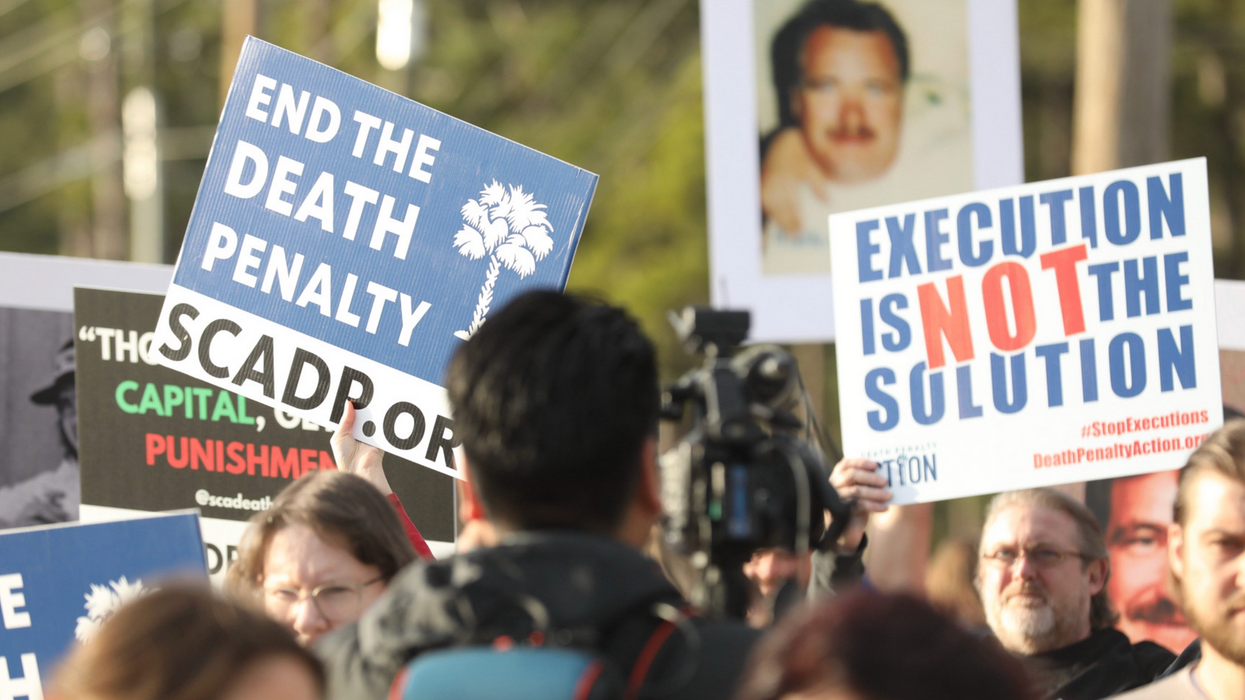
"By executing Brad Sigmon, South Carolina has also executed the possibility of redemption," said one critic. "Our state is declaring that no matter what you do to make up for your wrongdoing, we reserve the right to kill you."
South Carolina executed Brad Keith Sigmon by firing squad on Friday evening, drawing international attention to a method that hasn't been used for 15 years in the United States and prompting renewed calls to abolish capital punishment.
Sigmon, 67—who was convicted of beating his ex-girlfriend's parents, David and Gladys Larke, to death with a baseball bat in 2001—was shot by a firing squad consisting of three volunteers at the Broad River Correctional Institution in Columbia, the state capital, at 6:05 p.m. local time Friday, according to a statement from the South Carolina Department of Corrections. He was pronounced dead by a physician three minutes later.
Gerald "Bo" King, an attorney representing Sigmon, read his client's final statement shortly before his execution.
"I want my closing statement to be one of love and a calling to my fellow Christians to help us end the death penalty," Sigmon wrote. "An eye for an eye was used as justification to the jury for seeking the death penalty."
"At that time, I was too ignorant to know how wrong that was," he added. "Why? Because we no longer live under the Old Testament law but now live under the New Testament. Nowhere does God in the New Testament give man the authority to kill another man."
A hood was then placed over Sigmon's head and a bullseye over his heart. The three volunteers then fired their rifles from an opening in a wall 15 feet (4.5 meters) away.
"There was no warning or countdown," wrote witness and journalist Jeffrey Collins. "The abrupt crack of the rifles startled me. And the white target with the red bullseye that had been on his chest, standing out against his black prison jumpsuit, disappeared instantly as Sigmon's whole body flinched... A jagged red spot about the size of a small fist appeared where Sigmon was shot."
"I've now watched through glass and bars as 11 men were put to death at a South Carolina prison," Collins noted. "None of the previous 10 prepared me for watching the firing squad death of Brad Sigmon on Friday night."
King, who also witnessed Sigmon's killing, described the execution as "horrifying and violent."
"He chose the firing squad knowing that three bullets would shatter his bones and destroy his heart," said King. "But that was the only choice he had, after the state's three executions by lethal injection inflicted prolonged and potentially torturous deaths on men he loved like brothers."
"He chose the firing squad knowing that three bullets would shatter his bones and destroy his heart."
A desire to resume executions during a 10-year pause due to a shortage of lethal injection drugs prompted Republican state lawmakers to pass and GOP South Carolina Gov. Henry McMaster in 2021 to sign legislation forcing the state's death row inmates to choose between the electric chair, firing squad, or lethal injection (if available) as their method of execution.
King said state officials failed to provide information about lethal injection drugs.
"Brad only wanted assurances that these drugs were not expired, or diluted, or spoiled—what any of us would want to know about the medication we take, or the food we eat, much less the means of our death," the attorney explained.
Sigmon's legal team had unsuccessfully argued that brain damage and mental illness should have spared him from execution.
Rev. Hillary Taylor, executive director of the advocacy group South Carolinians for Alternatives to the Death Penalty (SCADP), said in a
statement Friday that "by executing Brad Sigmon, South Carolina has also executed the possibility of redemption."
"As Brad's spiritual advisor, I can personally attest to the fact that he is a different man today than the person he was more than 20 years ago, when he harmed the Larke family," she continued. "Our state is declaring that no matter what you do to make up for your wrongdoing, we reserve the right to kill you."
"But the question is not whether Brad deserved to die: The question is whether we deserved to kill," Taylor asserted. "In John 8, Jesus had very pointed instructions about which people can kill other people: 'Only those without sin can cast the first stone."
"The last time I checked, no person on this Earth fits that description, not even Gov. Henry McMaster, whose hardened heart remains the reason why executions continue in the first place," she added.
South Carolina has been executing condemned inmates at a rate described by ACLU of South Carolina communications director Paul Bowers as an "assembly line." The state has put four people to death since last September: Freddie Eugene Owens, killed by lethal injection last September 20; Richard Bernard Moore, killed by lethal injection (after changing his choice from firing squad) last November 1; Marion Bowman Jr., killed by lethal injection on January 31; and Sigmon.
State records show 28 inmates on South Carolina's death row.
Across the United States, there are five more executions scheduled this month, according to the Death Penalty Information Center.
This is the first of six executions scheduled in six states this month. From the Death Penalty Information Center, one is scheduled for next week and then a horrifying four the week after that. This appears, however, to be more confluence than some big change. deathpenaltyinfo.org/executions/u...
[image or embed]
— Chris Geidner (@chrisgeidner.bsky.social) March 7, 2025 at 3:52 PM
Addressing the issue of capital punishment in South Carolina, SCADP's Taylor said Friday that "despite national and international media news coverage, most South Carolinians will go to bed tonight unaware that we have executed another person—let alone with a firing squad."
"That's how little this issue impacts our citizens," she continued. "South Carolina should be known by other states and countries for its radical care of its citizens. Instead, we are known for our state-sponsored violence."
"If executions made us safer, we would be the 9th-safest state in the country," Taylor argued. "But they don't, and we aren't. It is not the state leaders who will reap the consequences of the death penalty: it is the everyday South Carolina citizens themselves. As long as we have the death penalty, we will fail to address the true causes of violence, including poverty, abuse, and neglect."
South Carolina carries out execution by firing squad, first in USA since 2010. A reminder that these 6 MAGA men also intro'd a bill to codify abortion as murder—enabling the horrific scenario that a woman who gets an abortion could be executed by firing squad. www.qasimrashid.com/p/s-carolina...
[image or embed]
— Qasim Rashid, Esq. (@qasimrashid.com) March 8, 2025 at 5:38 AM
Yet instead of curtailing executions, many South Carolina Republicans want to expand the category of crimes that qualify for capital punishment. In 2023, more than 20 Republican state lawmakers backed a bill to make people who obtain abortion care eligible for execution.
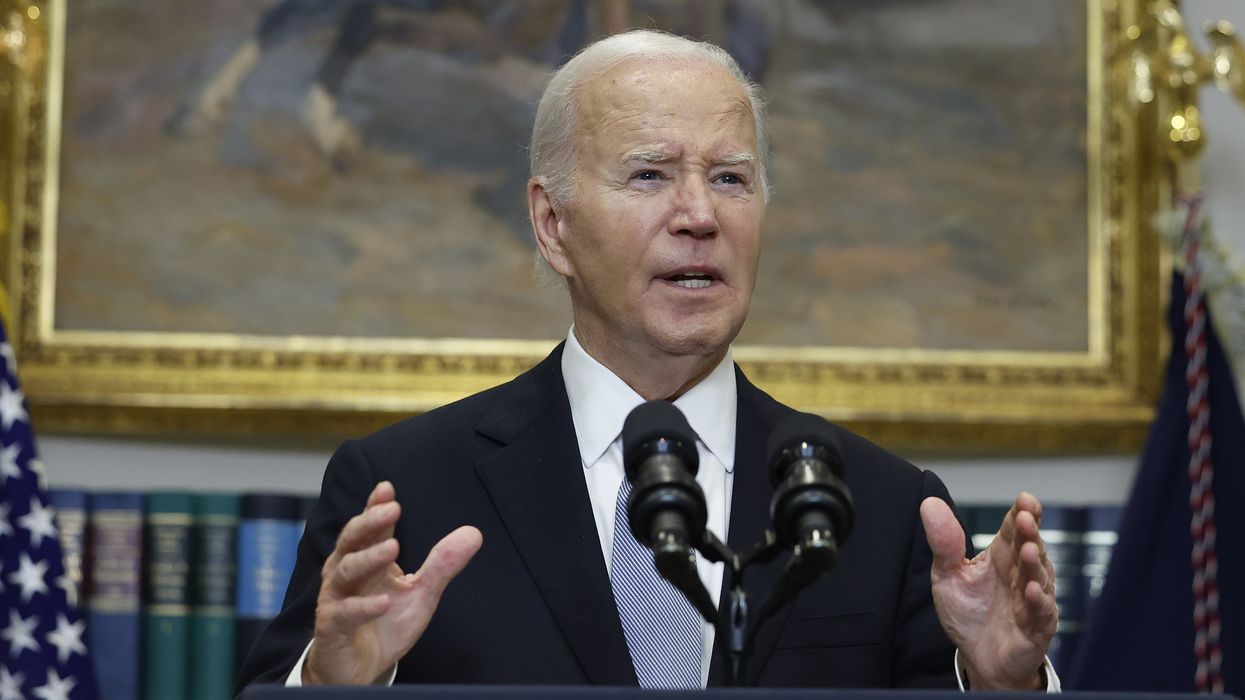
The former president, warned a broad rights coalition, "executed more people than the previous ten administrations combined."
A large and diverse coalition of broad coalition of rights organizations on Monday sent a letter to U.S. President Biden Monday, urging him to commute the sentences of all 40 individuals who are on federal death row.
The letter adds to a chorus of voices—including prosecutors and law enforcement officials—advocating for Biden to use his clemency powers to issue such commutations before he departs office.
The calls for Biden to issue pardons and commutations have only grown since the president issued a pardon for his son, clearing Hunter Biden of wrongdoing in any federal crimes he committed or may have committed in the last 11 years.
The joint letter to Biden was backed by over 130 organizations, including the ACLU, Brennan Center for Justice, and The Sentencing Project, commends his administration's "actions to repudiate capital punishment, including imposing a moratorium on executions for those sentenced to death, and for publicly calling for an end to the use of the death penalty during your 2020 campaign. In the face of a second Trump administration, more is necessary."
"President Trump executed more people than the previous ten administrations combined. Of those he executed, over half were people of color: six Black men and one Native American. The only irreversible action you can take to prevent President-elect Trump from renewing his execution spree, as he has vowed to do, is commuting the death sentences of those on federal death row now," the letter states.
The letter cites additional reasons that Biden ought to commute the sentences, including that the death penalty "has been rooted in slavery, lynchings, and white vigilantism."
A separate letter to Biden—sent in November by group of attorneys general, law enforcement officials, and others—argues that "condemning people to death by the state does not advance public safety. The death penalty fails as an effective deterrent and does not reduce crime. As an outdated, error-riddled, and racially-biased practice, its continued use—and the potential for its abuse—erodes public trust in the criminal legal system and undermines the legitimacy of the entire criminal legal system."
Matt Bruenig, president of the People's Policy Project think tank, directly tied Biden's inaction on this issue to the pardon he issued for his son in a blog post last week, writing that "if Biden does not act, there is little doubt that Trump will aggressively schedule executions in his next term. Their blood will primarily be on Trump's hands, but, if Biden does not act to prevent it, his hands will be bloody too."
The call for commutations for death row prisoners aligns with a wider push for the President to use his clemency powers before he leaves office.
Rep. Ayanna Pressley (D-Mass.), who has been particularly vocal on this issue, said Sunday on social media that President Biden "must use his clemency power to change lives for the better. And we have some ideas on who he can target: Folks in custody with unjustified sentencing disparities, the elderly and chronically ill, people on death row, women punished for crimes of their abusers, and more."
Pressley was one of over 60 members of Congress who sent a letter to Biden last month, encouraging Biden to intervene to help these groups.
Several lawmakers have specific pardons or commutations in mind, according to Axios. For example, Rep. Thomas Massie (R-Ky.) has urged Biden to pardon Julian Assange of WikiLeaks, and Rep. Alexandria Ocasio-Cortez (D-N.Y.) has called for a pardon of Indigenous activist Leonard Peltier, per Axios.
So far, Biden has granted far fewer clemency petitions (161 total) than former President Barrack Obama, according to the Department of Justice's Office of the Pardon Attorney, and a few dozen less than President-elect Trump did during his entire first presidency. However, in 2022, Biden did grant full and unconditional pardons to all U.S. citizens convicted of simple federal marijuana possession—a move that was cheered by advocates.
According to The New York Times, White House press secretary Karine Jean-Pierre said last week that Biden was expected to make more clemency announcements "at the end of his term."
"He's thinking through that process very thoroughly," she said.
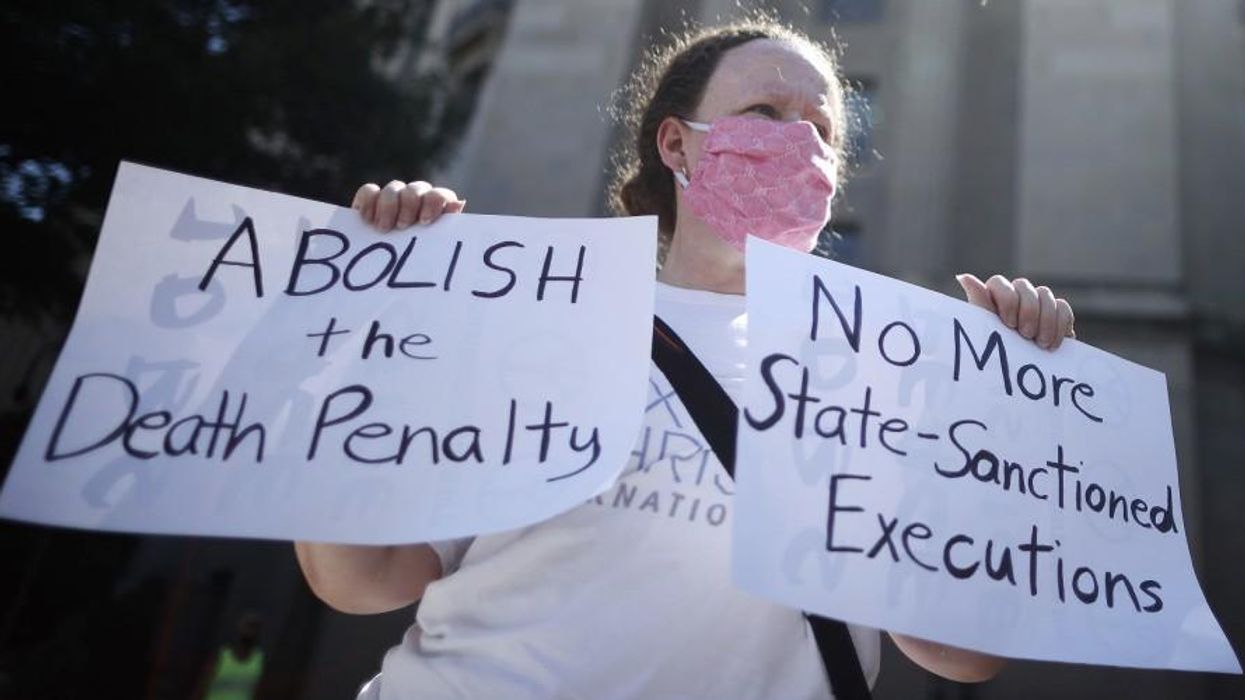
"The death penalty is the ultimate cruel, inhuman, and degrading punishment, and we urge Alabama Gov. Kay Ivey to use her clemency power to stop the execution of Kenneth Smith before it's too late," said one group.
The U.S. Supreme Court on Wednesday denied an application to stop the execution of a man on Alabama's death row who is set to become the first person in the country to be killed with nitrogen gas in a method rejected by veterinarians for euthanizing animals and condemned by United Nations human rights experts as possible torture.
The justices rejected assertions by lawyers representing 58-year-old Kenneth Smith—who was convicted and sentenced to death for the 1988 murder of Elizabeth Sennett—that execution by the untested method of suffocation with nitrogen gas violates the U.S. Constitution's prohibition of "cruel and unusual punishment."
The attorneys' argument was based largely on the fact that Smith survived a botched attempt to execute him by lethal injection in November 2022.
Smith's petition for a writ of certiorari asked: "Does a second attempt to execute a condemned person following a single, cruelly willful attempt to execute that same person violate the prohibition against cruel and unusual punishments under the Eighth and 14th amendments to the United States Constitution?"
A separate challenge by Smith to the use of nitrogen gas in his execution is pending before the 11th U.S. Circuit Court of Appeals.
Two other states, Mississippi and Oklahoma, have approved the use of nitrogen gas for executions. States have scrambled to find alternative means of killing condemned inmates after the European Union banned the sale and export of lethal injection drugs in 2011.
Earlier this month, Ravina Shamdasani, a spokesperson for the United Nations Office of the High Commissioner for Human Rights, warned that the U.S. may be violating the Covenant on Civil and Political Rights and the Convention Against Torture and Other Cruel, Inhuman, or Degrading Treatment or Punishment by allowing Smith's execution by nitrogen asphyxia.
Shamdasani noted that the American Veterinary Medical Association recommends sedating animals before euthanizing them with nitrogen—a step that is not included in Alabama's protocol.
In addition to concerns over the method of Smith's impending execution, advocates have also pointed to flaws in his sentencing process. The jury that convicted him in 1996 voted 11-1 to recommend a sentence of life imprisonment without the possibility of parole, but a judge invoked a since-outlawed rule to override the jurors.
Rights groups urged Alabama's Republican governor to halt Smith's execution—a move she declined in 2022.
"The death penalty is the ultimate cruel, inhuman, and degrading punishment, and we urge Alabama Gov. Kay Ivey to use her clemency power to stop the execution of Kenneth Smith before it's too late," Amnesty International implored Wednesday.
Abraham Bonowitz, co-founder of the abolitionist group Death Penalty Action, called Wednesday "a shameful day for our country."
"The discussion that is missing in all of this hubbub around nitrogen hypoxia is the mental torture of a second execution attempt," he added. "That, and the fact that if Kenny Smith were on trial today, he could not be sentenced to death at all because his jury was not unanimous regarding his sentence. Jury overrides were outlawed in Alabama in 2017. Alabama's capital punishment system as a whole is broken and cannot be trusted to get it right."

"Rather than inventing new ways to implement capital punishment, we urge all states to put in place a moratorium on its use, as a step towards universal abolition," said the U.N. Human Rights Office.
As the United States insists on continuing state-sanctioned killings despite a European ban on drugs commonly used in capital punishment, the United Nations Human Rights Office warned Tuesday that Alabama officials may soon violate international laws banning torture as they plan to use nitrogen gas in an upcoming execution.
A number of U.N. officials have said in recent days that the planned execution of Kenneth Smith, who was convicted for a 1988 murder, should be halted as it likely will violate the U.S. Constitution's ban on cruel and unusual punishment. Smith is scheduled to face the death penalty at Alabama's Holman Correctional Facility on January 25, with authorities binding a mask to his face to forcibly administer nitrogen gas, which would deprive him of oxygen.
On Tuesday, Ravina Shamdasani, a spokesperson for the U.N. Office of the High Commissioner for Human Rights (OHCHR), said that by allowing the execution, the U.S. may also breach two international human rights treaties—the Covenant on Civil and Political Rights and the Convention Against Torture and Other Cruel, Inhuman, or Degrading Treatment or Punishment.
"The death penalty is inconsistent with the fundamental right to life. There is an absence of proof that it deters crime, and it creates an unacceptable risk of executing innocent people," said Shamdasani. "Rather than inventing new ways to implement capital punishment, we urge all states to put in place a moratorium on its use, as a step towards universal abolition."
Pro-death penalty officials in the U.S. have in recent years sought to carry out executions using obsolete or untested methods, as the European Union has banned pharmaceutical companies from selling medications that can be used in capital punishment.
"What does it say about the morally-enervated condition of our political culture that the state of Alabama is so eager to try for a second time to kill someone... that it's willing to put the lives of a pastor and its prison execution team at risk?"
Experts say Smith would be the first person in the world to be killed via capital punishment using "asphyxiation with an inert gas."
A federal judge ruled last week that Alabama could proceed with Smith's execution using nitrogen. Smith had sued the Alabama Department of Corrections, arguing that the execution, if botched, could leave him in a permanent vegetative state or cause a stroke, and that the method carries the risk of "particular pain and suffering."
A previous attempt to execute Smith was botched by Alabama prison officials in 2022, when, as journalist Robyn Pennachia wrote at Wonkette, officials "spent hours and hours trying and failing to properly insert an IV while Smith was strapped to a gurney."
Shamdasani noted that Alabama's plan to execute Smith does not even meet the standards put forth by the American Veterinary Medical Association, which recommends sedating animals that are euthanized using nitrogen gas.
"Nitrogen gas has never been used in the United States to execute human beings," said Shamdasani. "Alabama's protocol for execution by nitrogen asphyxiation makes no provision for sedation of human beings prior to execution."
Mississippi and Oklahoma have also approved the use of nitrogen gas for executions in the absence of barbiturates for lethal injections, while Utah, South Carolina, and Idaho are among the states that have approved firing squads as a capital punishment method.
The U.N. Human Rights Committee, said Shamdasani, "has also criticized the use of asphyxiation by gas as an execution method, the use of untested methods, as well as widening the use of the death penalty in states that continue to apply it."
Amnesty International has pointed out that the jury that convicted Smith in 1996 supported life imprisonment without the possibility of parole, but a judge imposed a death sentence "under a judicial override system outlawed in Alabama in 2017."
As Jeffrey St. Clair wrote at Counterpunch last week, Alabama officials seem "uncertain about how the execution might unfold," and are requiring Smith's spiritual adviser, who is permitted to be in the execution chamber, to sign a waiver requiring him to stay three feet away from Smith due to the risk that "a hose supplying nitrogen to Smith's mask detaches from his face, filling an area around him with the potentially deadly odorless, tasteless, invisible gas."
"What does it say about the morally-enervated condition of our political culture that the state of Alabama is so eager to try for a second time to kill someone (whose own jury didn't think should be put to death in the first place) that it's willing to put the lives of a pastor and its prison execution team at risk?" wrote St. Clair. "Other states are eagerly awaiting the death notice from Holman Prison so that they can accelerate their stalled rosters of slated killings by using this ghastly new method. The execution of Kenneth Smith will signal yet another triumph of American efficiency culture, where death always seems to find a way."
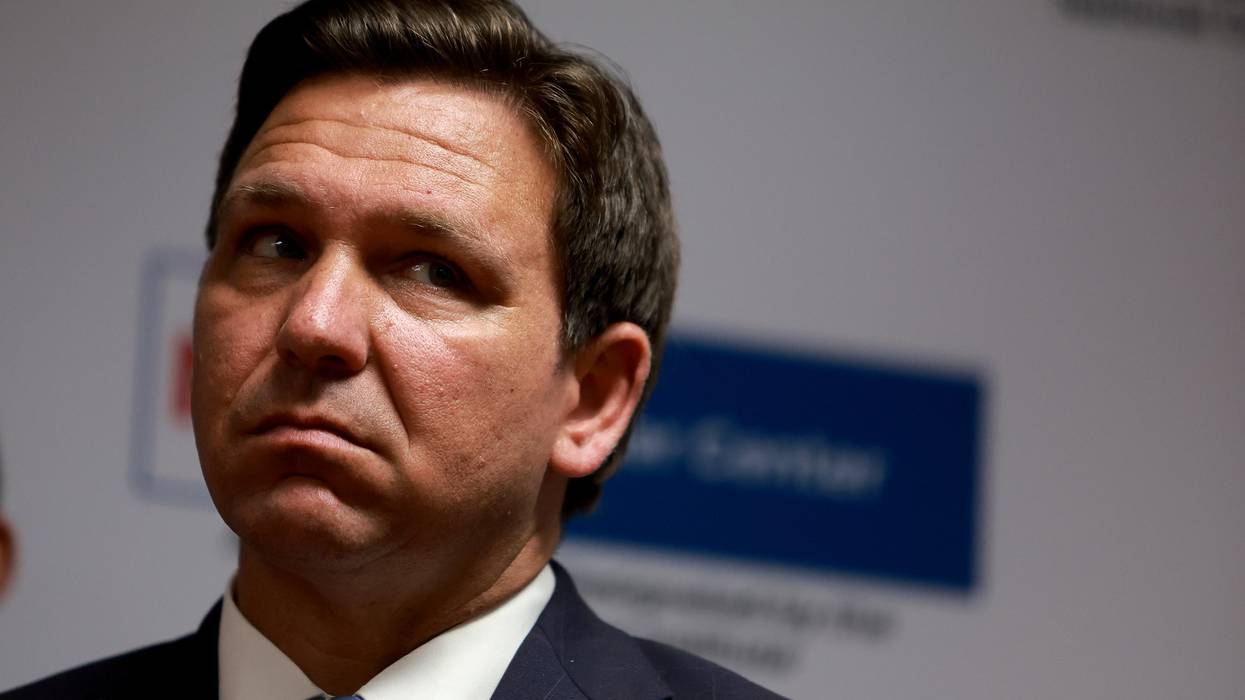
The Florida governor approved the executions of six people this year, and the state imposed five new death sentences.
Florida governor and 2024 presidential candidate Ron DeSantis made a return to capital punishment in his state a key element of his "tough on crime" campaign messaging this past year, and the result was an overall increase in the use of the death penalty in the United States, according to a new annual report.
The Death Penalty Information Center (DPIC) found that although a majority of U.S. states—29 of them—have now either abolished the death penalty or enacted a moratorium on executions, the number of people killed by state governments rose from 18 in 2022 to 25 in 2023.
The group attributed the rise to Florida's return to capital punishment after a four-year hiatus, with DeSantis moving forward with the executions of six people—the highest number in the state since 2014.
The state's new pattern of putting Floridians to death showed no sign of slowing down in the coming year, as it also imposed five new death sentences—the most of any state in 2023.
The DPIC catalogued other laws signed by DeSantis this year as he joined the Republican presidential primary race, in which he is currently trailing former Republican President Donald Trump by more than 47 points, with an average of 12.6% of Republicans backing him according to the latest polls.
In April Florida passed a law allowing the state to execute people convicted of sexual battery of a child under the age of 12 in cases in which the victim is not killed—a law that conflicts with a 2008 U.S. Supreme Court ruling that struck down a similar statute in Louisiana.
DeSantis also approved a law giving Florida the lowest threshold in the U.S. for permitting juries to sentence a convicted criminal to death, allowing a death sentence if only eight out of 12 jurors agree. Only Alabama and Florida allow non-unanimous juries to impose a death sentence, and Alabama's threshold is 10 jurors.
Florida also holds the country's record for the highest number of exonerations from death row, with 30 people exonerated—the majority after being sentenced by non-unanimous juries.
"It should be hard to send someone to the death penalty," Randolph Bracy, a former Democratic Florida state senator who pushed to require a unanimous jury vote for death sentences, told The New York Times when DeSantis signed the bill. "Florida has the highest rate of wrongful convictions, I think, in the country. We needed that threshold to make sure that we were doing the right thing."
As DeSantis' policies led to an increase in executions in the U.S., the DPIC reported that the Florida governor is out of step with a growing number of Americans. For the first time this year, Gallup found that 50% of Americans believe the death penalty is administered unfairly, while only 47% believe it is used fairly.
"That important change can also be seen in the unprecedented show of support for death-sentenced prisoners from conservative lawmakers and elected officials this year, some of whom now oppose use of the death penalty in their state," said Robin M. Maher, executive director of DPIC.
Richard Glossip, who was convicted of a 1997 murder in Oklahoma and sentenced to death earlier this year, was issued a stay of execution in May after the state's Republican attorney general joined campaigners who had long advocated for Glossip's life to be spared.
The DPIC found that a majority of the people who were executed in 2023—79% of whom had impairments such as brain injuries, serious childhood trauma, or developmental disabilities—would likely not have received death sentences had they been tried today, "due to significant changes in the law, prosecutorial decision-making, and public attitudes over the past few decades."
"Today," said the group, "they would have powerful arguments for life sentences and decisions from juries who better understand the effects of mental illness, developmental impairments, and severe trauma."

"We must consider further the imperfect nature of the criminal justice system and the actual innocence that has been proven far too often after imposition of the death penalty," said Gov. John Bel Edwards.
Anti-death penalty advocates applauded after Democratic Louisiana Gov. John Bel Edwards on Wednesday directed the state Board of Pardons and Committee on Parole to consider the clemency petitions of the vast majority of death row inmates in the state.
Fifty-six out of 60 death row inmates filed a mass appeal of their death sentences in June after the governor publicly expressed his opposition to capital punishment.
The pardons board refused to set hearings on the cases in late July after Republican state Attorney General Jeff Landry wrote an opinion claiming the petitions were invalid because they were filed more than a year after the inmates' most recent appeal hearings.
In recent weeks, groups including the Promise of Justice Initiative (PJI) have stepped up pressure on Edwards to use his executive authority to call for hearings on the petitions.
"Thank you to all who have joined these efforts and added your voices," said PJI on Thursday, noting that it will take more work to advocate for the incarcerated people who have requested that their sentences be commuted to life imprisonment without the possibility of parole.
The inmates who filed petitions include LaDerrick Campbell, who was permitted to represent himself during his capital murder trial despite having been diagnosed with schizophrenia and showing signs of paranoid delusions, and Jimmie Duncan, who was convicted using bite-mark evidence, which has since been discredited by forensic experts.
In his letter to the board on Wednesday, Edwards wrote that Landry's interpretation of state law as prohibiting a clemency hearing "at any time outside of the one-year window after a direct appeal denial is misguided and yields a result that is both absurd and illogical."
"We must consider further the imperfect nature of the criminal justice system and the actual innocence that has been proven far too often after imposition of the death penalty," said Edwards.
Nine people have been exonerated from death row in Louisiana since 1999.
The board now has until January 2024, when the term-limited Edwards will leave office, to consider the petitions.

"Looking at these cases collectively makes it clear that the system is fundamentally broken," said one anti-death penalty advocate.
Anti-death penalty advocates in Louisiana are calling on Democratic Gov. John Bel Edwards to act within the next two weeks to commute the sentences of the vast majority of inmates on death row, who first appealed to the governor in June following his public statement decrying capital punishment.
Fifty-six out of 60 prisoners on Louisiana's death row filed clemency petitions with the state Board of Pardons and Committee on Parole in June, after the legislative session ended without the passage of a bill to abolish the death penalty.
They asked the board to commute their death sentences to life imprisonment without the possibility of parole and called on Edwards to act on what he said earlier this year was his strong opposition to the death penalty, owing to his religious beliefs as a Catholic and his concerns about wrongly executing innocent people.
As The Guardian reported on Thursday, nine death row inmates in the state have been exonerated in the past 25 years. More than 80% of death penalty convictions in Louisiana have been overturned on appeal since inmates secured the right to be represented by lawyers in the appeals process in 1999.
"Louisiana more often than not gets it wrong with the death penalty," Samantha Kennedy, executive director of the Promise of Justice Initiative (PJI), an advocacy group in New Orleans, told The Guardian. The organization has joined the inmates' demand for clemency.
The inmates who have joined the mass appeal include LaDerrick Campbell, who was diagnosed with schizophrenia and showed signs of paranoid delusions while in court but was nevertheless permitted to represent himself during his capital murder trial; and Jimmie Duncan, whose case rested on now-debunked bite-mark evidence.
Two-thirds of the death row inmates in Louisiana are Black, while Black people make up only 33% of the state population.
Despite evidence of the system's flaws, the pardons board refused to conduct hearings on the 56 applications, setting them aside in late July after state Attorney General Jeff Landry, a Republican who is running to replace the term-limited Edwards in this year's gubernatorial election, issued an opinion saying the petitions were invalid.
Landry said the board could only consider commutation petitions from inmates up to a year after their most recent appeal rulings were handed down, a claim that Kennedy said is inaccurate.
"There is clear history that shows that this interpretation is improper and disingenuous—it has never been interpreted this way in the 25 years of this policy, a time period which includes applications for clemency from death row which were permitted under the same conditions," Kennedy told The Guardian.
Edwards has about two weeks to instruct the board to consider the petitions in formal hearings, in order for officials to have time to review the cases before he leaves office in January, The Guardian reported.
Should Landry win the governor's seat in the conservative state, he has said he plans to restart state-sanctioned executions, which haven't been carried out in Louisiana in over a decade. He has also said he would consider using firing squads and the electric chair to bypass shortages of drugs used in lethal injections.
PJI is circulating a petition, gathering support for the push to convince Edwards to act on behalf of the inmates, saying the governor "can still choose life over death, dignity over violence, right over wrong."
"In refusing to consider these applications, the board has rescinded its own ability to use thoughtful, careful judgment to consider the worthiness of each human being," said the group in a statement. "Hiding behind the smoke and mirrors of an unprecedented misapplication of its own bureaucratic rules, the board is attempting to cover its decision to condemn these people to die. It now rests on Gov. Edwards to instruct the board to set hearings for people on death row. Each person should have a chance to be considered for a life sentence."
Kennedy told The Guardian the commutation of the sentences "would be a model for the south, and give a big push to the move away from capital punishment in the U.S."
"This large clemency effort is historic and important," she added.

"There's no humane method of execution," said one human rights group.
The three liberal justices on the U.S. Supreme Court said the right-wing majority was allowing Alabama to use a death row inmate as a "guinea pig" early Friday when the court denied an emergency request to halt James Barber's execution, making him the first person killed by the state since Gov. Kay Ivey suspended capital punishment last year.
Barber, age 64, was pronounced dead just before 2:00 am local time on Friday at the William C. Holman Correctional Facility in Atmore, Alabama, less than two hours after the Supreme Court denied the stay of execution.
Lawyers for Barber, who was convicted of murdering 75-year-old Dorothy Epps in 2001, argued that the inmate's rights under the Eighth Amendment—which forbids cruel and unusual punishment—would be violated if he was put to death via lethal injection in Alabama, where several executions were botched before Ivey halted the death penalty and ordered a review.
The program was suspended following outcry over the executions of Doyle Lee Hamm, who was punctured with needles for two-and-a-half hours as executioners struggled to access a vein in 2018, and Joe Nathan James Jr., whose execution last year took more than three hours.
Two more executions last year were cancelled in the state after prison officials could not access veins.
The "top-to-bottom" review ordered by Ivey, a Republican, resulted in a change in the personnel who work in the death chamber at Holman and an extension of the time given for killing an inmate—neither of which "constitute[s] serious efforts to fix [Alabama's] pattern of botched execution after botched execution," said lawyers for Barber.
In a dissent authored by Justice Sonia Sotomayor and signed by Justices Elena Kagan and Ketanji Brown Jackson, the court's liberals said the Eighth Amendment "demands more than the state's word that this time will be different."
"The court should not allow Alabama to test the efficacy of its internal review by using Barber as its 'guinea pig'," wrote Sotomayor, adding that the conservative justices were allowing Ivey's government "to experiment again with human life."
The human rights organization Reprieve said the state "shouldn't be resuming executions, it should be ending them once and for all."
Judge Jill Pryor of the 11th Circuit Court of Appeals also accused the Alabama Department of Corrections (ADOC) of using Barber "as its guinea pig" in a dissent on Wednesday as the court handed down a 2-1 ruling allowing the state to execute the man.
Pryor noted that Ivey's review was "conducted entirely internally, entirely outside the scope of any court's or the public's scrutiny, and without saying what went wrong or what it fixed as a result."
"Three botched executions in a row are three too many," Pryor wrote. "Each time, ADOC has insisted that the courts should trust it to get it right, only to fail again."
"Mr. Barber has raised a serious and substantial Eighth Amendment claim that the pattern will continue to repeat itself," Pryor added.
The ACLU of Alabama pointed out that Barber was sentenced to death by a non-unanimous jury, a practice permitted only in Alabama and Florida.
"That alone should be reason to question his death sentence," said the group.
Barber was the 15th person executed in the U.S. this year, according to the Death Penalty Information Center.

"This is batshit crazy," responded Democratic Rep. Mark Pocan. "This is how dictators handle crime. This man should never, ever be president again."
Former President Donald Trump has reportedly told his close associates that he wants to expand the use of the federal death penalty—and even take steps to turn the United States' internationally condemned use of capital punishment into a public spectacle—if he wins another White House term in 2024.
Citing unnamed sources familiar with the matter, Rolling Stone reported Tuesday that Trump is "still committed to expanding the use of the federal death penalty and bringing back banned methods of execution" such as firing squads, hanging, the guillotine, and group killings.
The Republican former president has even "mused about televising footage of executions, including showing condemned prisoners in the final moments of their lives," according to one of Rolling Stone's sources. "Trump has floated these ideas while discussing planned campaign rhetoric and policy desires, as well as his disdain for President Biden's approach to crime."
Democratic lawmakers and watchdog organizations reacted with alarm and disgust to the reporting, which comes as the Biden administration is facing continued pressure to abolish the death penalty at the federal level, a goal the president pledged to work toward on the campaign trail.
The Biden Justice Department, under the leadership of Attorney General Merrick Garland, is currently pursuing the death penalty for Sayfullo Saipov.
Rep. Bill Pascrell (D-N.J.) wrote in response to the Rolling Stone's reporting that "the leader of the Republican Party wants to televise live executions on tv and to start using the guillotine in America."
"This is what the Republican Party stands for," he added.
Rep. Mark Pocan (D-Wis.) tweeted that "this is batshit crazy."
"This is how dictators handle crime," the Wisconsin Democrat wrote. "This man should never, ever be president again."
In the six months before Trump left office in January 2021, his administration carried out the first federal executions in 17 years, putting 13 people to death in a widely denounced killing spree that defied court orders and steamrolled pandemic-related safety measures.
ACLU executive director Anthony Romero noted earlier this month that "among those executed in our name were two Black men who were not the triggermen in murders committed by others; two Black men with significant claims of intellectual disability; one member of the Navajo Nation; two men who were teenagers when they committed their crimes; and a mentally ill woman who had been repeatedly abused and tortured as a child, teen, and young woman."
While lethal injection was used in each of the above cases, Rolling Stone's Asawin Suebsaeng and Patrick Reis noted Tuesday that "rules made during Trump's presidency made federal firing squads more feasible."
"Previously, lethal injection was the only permissible federal method of execution," Suebsaeng and Reis observed. "But under the administration's new rules, if lethal injections are made legally or logistically unavailable, the federal government can use any method that is legal in the state where the execution is located."
"Former Attorney General Bill Barr, the ideological architect of Trump's execution binge, told Rolling Stone in December that Trump and his administration would have had more people put to death soon, had he won a second term in 2020," the outlet continued. "'Yes—that was the expectation,' Barr succinctly summarized in a phone interview."