

SUBSCRIBE TO OUR FREE NEWSLETTER
Daily news & progressive opinion—funded by the people, not the corporations—delivered straight to your inbox.
5
#000000
#FFFFFF
To donate by check, phone, or other method, see our More Ways to Give page.
Daily news & progressive opinion—funded by the people, not the corporations—delivered straight to your inbox.
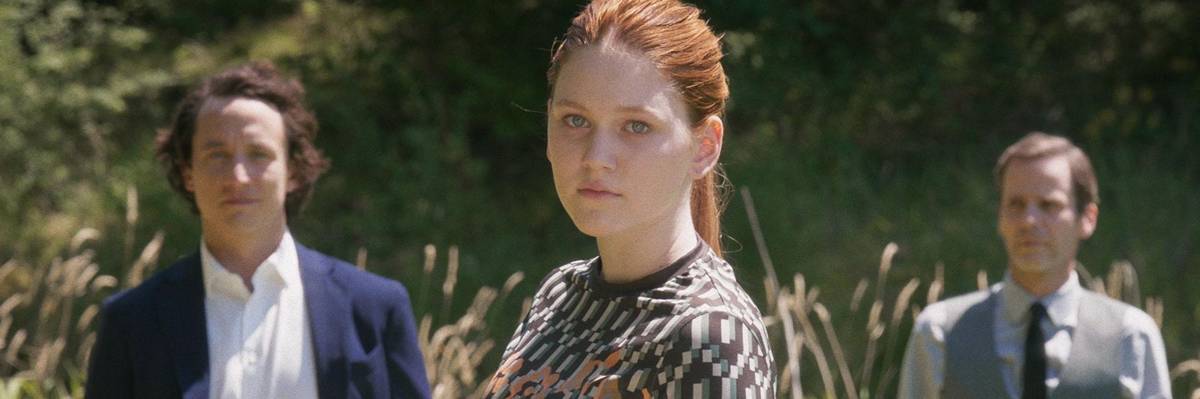
Promotional image for the film, "Veni Vidi Vici," with actors (from left) Laurence Rupp, Olivia Goschler, and Dominik Warta.
How much — in our current 21st-century plutocratic climate — can our richest now get away with?
Collecting signatures takes energy, and young people in Switzerland seem to have an abundance of just that. The young who belong to the youth wing of Switzerland’s Social Democratic Party earlier this month — after a two-year campaign — deposited over 140,000 signatures at the Federal Chancellery in Bern.
Why go to all that effort? Activists in Switzerland’s Young Socialists group want to seriously tax the huge inheritances their nation’s fabulously rich routinely pass on to family and friends. The 140,000 signatures the activists’ “For the Future” initiative has collected add up to much more than enough to place on the Swiss ballot a proposition that would, if enacted, subject all inheritances over 50 million Swiss francs — the equivalent of about $57.3 million — to a 50 percent tax.
The proceeds from that tax — an estimated $6.8 billion a year — would enable what the “For the Future” initiative is calling a “socially equitable financing of climate protection.” Swiss federal and canton authorities would be able to use the billions in proceeds from the proposed tax on everything from developing renewable energy to boosting public transportation.
All this Swiss activist interest in curbing the wealth of the wealthy should come as no surprise. Switzerland currently boasts more billionaires per capita than all but two of the world’s political nation states.
Swiss billionaires range from Rafaela Aponte-Diamant and Gianluigi Aponte, shipping magnates worth $29.4 billion each who share 54th place on the Forbes real-time world billionaire list, to Stephane Bonvin, a real-estate king who sits in 2,394th place with a fortune worth a mere $1.1 billion.
On that same Forbes billionaire list, all the way down at the bottom, sits South Korea’s Lee Jay-hyun in 2,532nd place. Lee just happens to boast a bio that touches all the billionaire bases, encompassing everything from corruption and corporate power to inherited grand fortune and political clout.
Lee’s granddad, for starters, founded the Samsung global electronics empire. That gave Lee a head-start in life that surely didn’t hurt his climb to the top of the CJ Group, the giant food and beverage conglomerate that Lee currently chairs.
Back in 2014, Lee held that same corporate power position. But a South Korean court that year found Lee, then his nation’s tenth-richest man, guilty of embezzling $156 million and stashing that tidy sum offshore. The judge in the case, citing Lee’s “social status and social responsibility,” ruled he deserved a “tough punishment” and sentenced him to four years in prison — on top of a stiff fine.
Lee ended up never having to serve that prison sentence. In 2016, “after gathering diverse opinions to unite our people and overcome an economic crisis,” South Korea’s Justice Ministry announced that the nation’s president had decided to pardon the then 56-year-old Lee in honor of the nation’s upcoming Liberation Day holiday.
VENI VIDI VICI - Sundance Film Festival 2024 Teaserwww.youtube.com
That a man of awesome means can get away with committing a major crime comes, of course, as no surprise to those of us who have watched our global rich bounce all the way back and then some from the “dark” days of the mid-20th century, a time when the developed world’s highest incomes faced tax rates of up to 91 percent.
How much — in our current 21st-century plutocratic climate — can our richest now get away with? They can, two Austrian filmmakers posit, get away with murder. Literally.
The two filmmakers, Daniel Hoesl and Julia Niemann, gave their latest collaboration a world premiere last month at the Sundance Film Festival.
“We always follow the money,” says Hoesl, the screenwriter of their just-released Veni Vidi Vici.
And the money this time led them to the story of Amon Maynard, a lavishly endowed billionaire who enjoys hunting humans.
“Decked in the epitome of rich-people elegance, Maynard seems to be the kind of man who has never heard no for an answer,” writes film critic Jose Solís in the journal Film Stage. “Killing a person doesn’t even seem to thrill him much as a fetish — it’s just something else he does in his free time.”
And what does Solis see as the “craziest thing” about Hoesl and Niemann’s “pitch-black satire about a wealthy family with a predilection for human-hunting”? The film, he notes, just “doesn’t seem that crazy.”
Why should it? As filmmaker Hoesl puts it: “Didn’t some country’s president say something like ‘I could kill someone on Fifth Avenue but still get elected?’”
Dear Common Dreams reader, It’s been nearly 30 years since I co-founded Common Dreams with my late wife, Lina Newhouser. We had the radical notion that journalism should serve the public good, not corporate profits. It was clear to us from the outset what it would take to build such a project. No paid advertisements. No corporate sponsors. No millionaire publisher telling us what to think or do. Many people said we wouldn't last a year, but we proved those doubters wrong. Together with a tremendous team of journalists and dedicated staff, we built an independent media outlet free from the constraints of profits and corporate control. Our mission has always been simple: To inform. To inspire. To ignite change for the common good. Building Common Dreams was not easy. Our survival was never guaranteed. When you take on the most powerful forces—Wall Street greed, fossil fuel industry destruction, Big Tech lobbyists, and uber-rich oligarchs who have spent billions upon billions rigging the economy and democracy in their favor—the only bulwark you have is supporters who believe in your work. But here’s the urgent message from me today. It's never been this bad out there. And it's never been this hard to keep us going. At the very moment Common Dreams is most needed, the threats we face are intensifying. We need your support now more than ever. We don't accept corporate advertising and never will. We don't have a paywall because we don't think people should be blocked from critical news based on their ability to pay. Everything we do is funded by the donations of readers like you. When everyone does the little they can afford, we are strong. But if that support retreats or dries up, so do we. Will you donate now to make sure Common Dreams not only survives but thrives? —Craig Brown, Co-founder |
Collecting signatures takes energy, and young people in Switzerland seem to have an abundance of just that. The young who belong to the youth wing of Switzerland’s Social Democratic Party earlier this month — after a two-year campaign — deposited over 140,000 signatures at the Federal Chancellery in Bern.
Why go to all that effort? Activists in Switzerland’s Young Socialists group want to seriously tax the huge inheritances their nation’s fabulously rich routinely pass on to family and friends. The 140,000 signatures the activists’ “For the Future” initiative has collected add up to much more than enough to place on the Swiss ballot a proposition that would, if enacted, subject all inheritances over 50 million Swiss francs — the equivalent of about $57.3 million — to a 50 percent tax.
The proceeds from that tax — an estimated $6.8 billion a year — would enable what the “For the Future” initiative is calling a “socially equitable financing of climate protection.” Swiss federal and canton authorities would be able to use the billions in proceeds from the proposed tax on everything from developing renewable energy to boosting public transportation.
All this Swiss activist interest in curbing the wealth of the wealthy should come as no surprise. Switzerland currently boasts more billionaires per capita than all but two of the world’s political nation states.
Swiss billionaires range from Rafaela Aponte-Diamant and Gianluigi Aponte, shipping magnates worth $29.4 billion each who share 54th place on the Forbes real-time world billionaire list, to Stephane Bonvin, a real-estate king who sits in 2,394th place with a fortune worth a mere $1.1 billion.
On that same Forbes billionaire list, all the way down at the bottom, sits South Korea’s Lee Jay-hyun in 2,532nd place. Lee just happens to boast a bio that touches all the billionaire bases, encompassing everything from corruption and corporate power to inherited grand fortune and political clout.
Lee’s granddad, for starters, founded the Samsung global electronics empire. That gave Lee a head-start in life that surely didn’t hurt his climb to the top of the CJ Group, the giant food and beverage conglomerate that Lee currently chairs.
Back in 2014, Lee held that same corporate power position. But a South Korean court that year found Lee, then his nation’s tenth-richest man, guilty of embezzling $156 million and stashing that tidy sum offshore. The judge in the case, citing Lee’s “social status and social responsibility,” ruled he deserved a “tough punishment” and sentenced him to four years in prison — on top of a stiff fine.
Lee ended up never having to serve that prison sentence. In 2016, “after gathering diverse opinions to unite our people and overcome an economic crisis,” South Korea’s Justice Ministry announced that the nation’s president had decided to pardon the then 56-year-old Lee in honor of the nation’s upcoming Liberation Day holiday.
VENI VIDI VICI - Sundance Film Festival 2024 Teaserwww.youtube.com
That a man of awesome means can get away with committing a major crime comes, of course, as no surprise to those of us who have watched our global rich bounce all the way back and then some from the “dark” days of the mid-20th century, a time when the developed world’s highest incomes faced tax rates of up to 91 percent.
How much — in our current 21st-century plutocratic climate — can our richest now get away with? They can, two Austrian filmmakers posit, get away with murder. Literally.
The two filmmakers, Daniel Hoesl and Julia Niemann, gave their latest collaboration a world premiere last month at the Sundance Film Festival.
“We always follow the money,” says Hoesl, the screenwriter of their just-released Veni Vidi Vici.
And the money this time led them to the story of Amon Maynard, a lavishly endowed billionaire who enjoys hunting humans.
“Decked in the epitome of rich-people elegance, Maynard seems to be the kind of man who has never heard no for an answer,” writes film critic Jose Solís in the journal Film Stage. “Killing a person doesn’t even seem to thrill him much as a fetish — it’s just something else he does in his free time.”
And what does Solis see as the “craziest thing” about Hoesl and Niemann’s “pitch-black satire about a wealthy family with a predilection for human-hunting”? The film, he notes, just “doesn’t seem that crazy.”
Why should it? As filmmaker Hoesl puts it: “Didn’t some country’s president say something like ‘I could kill someone on Fifth Avenue but still get elected?’”
Collecting signatures takes energy, and young people in Switzerland seem to have an abundance of just that. The young who belong to the youth wing of Switzerland’s Social Democratic Party earlier this month — after a two-year campaign — deposited over 140,000 signatures at the Federal Chancellery in Bern.
Why go to all that effort? Activists in Switzerland’s Young Socialists group want to seriously tax the huge inheritances their nation’s fabulously rich routinely pass on to family and friends. The 140,000 signatures the activists’ “For the Future” initiative has collected add up to much more than enough to place on the Swiss ballot a proposition that would, if enacted, subject all inheritances over 50 million Swiss francs — the equivalent of about $57.3 million — to a 50 percent tax.
The proceeds from that tax — an estimated $6.8 billion a year — would enable what the “For the Future” initiative is calling a “socially equitable financing of climate protection.” Swiss federal and canton authorities would be able to use the billions in proceeds from the proposed tax on everything from developing renewable energy to boosting public transportation.
All this Swiss activist interest in curbing the wealth of the wealthy should come as no surprise. Switzerland currently boasts more billionaires per capita than all but two of the world’s political nation states.
Swiss billionaires range from Rafaela Aponte-Diamant and Gianluigi Aponte, shipping magnates worth $29.4 billion each who share 54th place on the Forbes real-time world billionaire list, to Stephane Bonvin, a real-estate king who sits in 2,394th place with a fortune worth a mere $1.1 billion.
On that same Forbes billionaire list, all the way down at the bottom, sits South Korea’s Lee Jay-hyun in 2,532nd place. Lee just happens to boast a bio that touches all the billionaire bases, encompassing everything from corruption and corporate power to inherited grand fortune and political clout.
Lee’s granddad, for starters, founded the Samsung global electronics empire. That gave Lee a head-start in life that surely didn’t hurt his climb to the top of the CJ Group, the giant food and beverage conglomerate that Lee currently chairs.
Back in 2014, Lee held that same corporate power position. But a South Korean court that year found Lee, then his nation’s tenth-richest man, guilty of embezzling $156 million and stashing that tidy sum offshore. The judge in the case, citing Lee’s “social status and social responsibility,” ruled he deserved a “tough punishment” and sentenced him to four years in prison — on top of a stiff fine.
Lee ended up never having to serve that prison sentence. In 2016, “after gathering diverse opinions to unite our people and overcome an economic crisis,” South Korea’s Justice Ministry announced that the nation’s president had decided to pardon the then 56-year-old Lee in honor of the nation’s upcoming Liberation Day holiday.
VENI VIDI VICI - Sundance Film Festival 2024 Teaserwww.youtube.com
That a man of awesome means can get away with committing a major crime comes, of course, as no surprise to those of us who have watched our global rich bounce all the way back and then some from the “dark” days of the mid-20th century, a time when the developed world’s highest incomes faced tax rates of up to 91 percent.
How much — in our current 21st-century plutocratic climate — can our richest now get away with? They can, two Austrian filmmakers posit, get away with murder. Literally.
The two filmmakers, Daniel Hoesl and Julia Niemann, gave their latest collaboration a world premiere last month at the Sundance Film Festival.
“We always follow the money,” says Hoesl, the screenwriter of their just-released Veni Vidi Vici.
And the money this time led them to the story of Amon Maynard, a lavishly endowed billionaire who enjoys hunting humans.
“Decked in the epitome of rich-people elegance, Maynard seems to be the kind of man who has never heard no for an answer,” writes film critic Jose Solís in the journal Film Stage. “Killing a person doesn’t even seem to thrill him much as a fetish — it’s just something else he does in his free time.”
And what does Solis see as the “craziest thing” about Hoesl and Niemann’s “pitch-black satire about a wealthy family with a predilection for human-hunting”? The film, he notes, just “doesn’t seem that crazy.”
Why should it? As filmmaker Hoesl puts it: “Didn’t some country’s president say something like ‘I could kill someone on Fifth Avenue but still get elected?’”

