SUBSCRIBE TO OUR FREE NEWSLETTER
Daily news & progressive opinion—funded by the people, not the corporations—delivered straight to your inbox.
5
#000000
#FFFFFF
To donate by check, phone, or other method, see our More Ways to Give page.
Daily news & progressive opinion—funded by the people, not the corporations—delivered straight to your inbox.
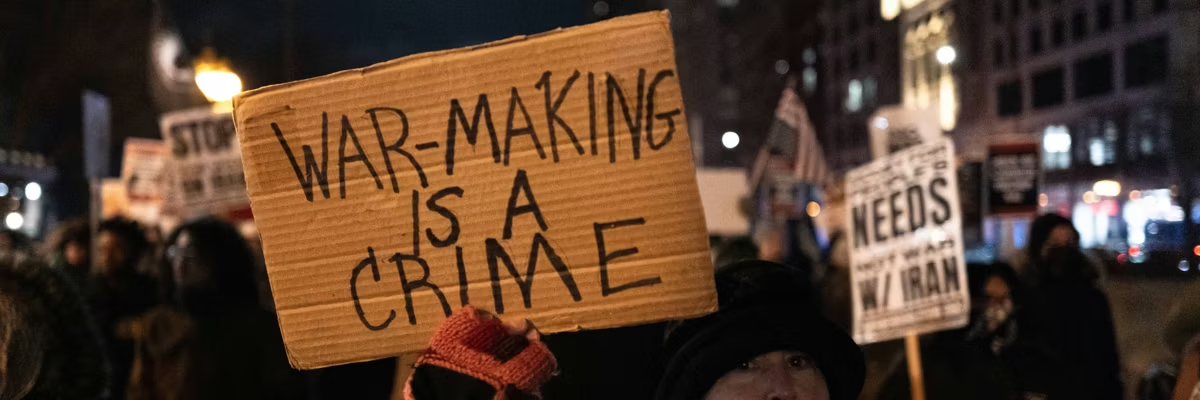
A protester holds placards reading ''war making is a crime'' during a demonstration against the war in Iran, in Chicago, Illinois, on February 28, 2026.
Right now, Iranian civilians are paying the highest price. But the collapse of the rule of law makes the future more dangerous for everyone else, too.
The US and Israeli war has, from its very beginning, violated both US domestic and international law.
The legal consequences go beyond specific violations. Washington and Tel Aviv’s breaches of the United Nations Charter and other legal frameworks also undermine the very foundations of the rule of law. Even while international legal institutions too often lack sufficient capacity to enforce their decisions, they still provide a crucial framework for protest, for pressure on individual governments, and for the hope of a future world where the rule of law is paramount.
Now, however, that future is in more danger than any other time in recent memory. Right now, Iranian civilians are paying the highest price. But the collapse of the rule of law makes the future more dangerous for everyone else, too.
On the domestic front, the US Constitution is very clear that only Congress, not the president, has the power to declare war. But President Donald Trump did not even consult with Congress before attacking Iran, let alone receive a congressional declaration of or even authorization for war.
This US war against Iran is deepening the ongoing delegitimization of the rule of law—something that must be taken seriously if future wars are to be averted.
This is nothing new, of course. In recent years, successive Congresses have abandoned their constitutional prerogative, allowing various presidents of both parties to initiate and continue the use of massive military force without even the pretense of asserting their power to declare war.
Indeed, both houses of Congress voted, in overwhelmingly partisan votes, to reject War Powers Resolutions which could have prevented or at least constrained Trump’s reckless and illegal war. They didn’t even hold votes at all until the United States and Israel had already launched their war against Iran.
International law is equally clear. The Nuremberg trials following World War II determined that the “supreme international crime” was that of aggression. The International Military Tribunal ruled in 1946 that initiating a war of aggression differed from other war crimes because “it contains within itself the accumulated evil of the whole.” War crimes, crimes against humanity, and all the related international crimes, therefore, are understood to stem from that fundamental crime of going to war illegally.
The US and Israel went to war illegally. They are waging a war of aggression against Iran. The UN Charter declares that no country may attack another country, and that “all Members shall settle their international disputes by peaceful means in such a manner that international peace and security, and justice, are not endangered.” It also prohibits UN member states from using “the threat or use of force against the territorial integrity or political independence of any state, or in any manner inconsistent with the purposes of the United Nations.”
There are only two exceptions to that prohibition on the use of force. One is if the Security Council itself authorizes the use of military force. The other is for immediate self-defense, which applies only “if an armed attack” occurs and then only “until” the Council decides collectively how to deal with the crisis.
Neither of those happened here. The Council was never asked, and certainly had not authorized anything, and Iran had not attacked the US or Israel. The US claim that it “had to” attack Iran to prevent some potential imagined retaliatory attack at some unknown point in the future does not legitimize so-called “preventive” use of force when no such imagined future attack had occurred.
Despite the dangerous trends toward international lawlessness in recent years, it wasn’t that long ago that US leaders at least made a pretense of trying to follow them.
In 2002, George W. Bush officially won congressional authorization for war against Iraq and grudgingly acknowledged the need for a UN Security Council authorization as well. For months he tried—using lies, threats, and pressure—to get a Security Council resolution passed that would authorize a US-U.K. war. Those efforts failed.
In the absence of global institutions able and willing to enforce international law, these popular movements are essential. Without them, there’s no one to hold the powerful to account.
The Council majority stood defiant, and the Bush-Blair team finally launched the war illegally, without UN approval, and without any “armed attack” by Iraq that might have justified a claim of self-defense. International law didn’t stop the war, but it lent moral and political weight to a global anti-war movement that the Bush administration was forced to contend with.
But today, Trump has consistently refused to acknowledge any need for either congressional approval or UN authorization of his war against Iran. Trump himself dismissed international law entirely, saying that the only limit on his global power was “my own morality. My own mind….I don’t need international law.” Trump’s Secretary of Defense, Pete Hegseth, infamously said that his Pentagon would have “no stupid rules of engagement” to limit its killing.
Practically no one—not the UN, not Congress, not the mainstream press, and few among foreign governments too often cowed by Trump’s threats—seems to be even mentioning the UN Charter’s restrictions against launching new wars. And although Congress debated new War Powers Resolutions designed to prevent a rogue presidential decision to go to war, there were not enough votes to pass them.
In short, this US war against Iran is deepening the ongoing delegitimization of the rule of law—something that must be taken seriously if future wars are to be averted. The weakness and lack of political will in both Congress and the United Nations have failed to prevent the US and Israel from launching a destructive new war.
Their lack of enforcement capacity means that people—in social movements and civil society organizations in the US and around the world—must step up to demand their governments actually follow the law. In the absence of global institutions able and willing to enforce international law, these popular movements are essential. Without them, there’s no one to hold the powerful to account.
The war in Iran has already killed thousands of people, displaced millions more, and put millions of others throughout the region at risk as it continues to expand. It’s created what some are calling the “Gazafication” of Tehran, causing a vast humanitarian and economic crisis that is continuing to spread. It’s undermining the very foundations of international law and the institutions created to uphold it.
And if this war continues without accountability, it threatens even more dire consequences in years ahead.
Dear Common Dreams reader, It’s been nearly 30 years since I co-founded Common Dreams with my late wife, Lina Newhouser. We had the radical notion that journalism should serve the public good, not corporate profits. It was clear to us from the outset what it would take to build such a project. No paid advertisements. No corporate sponsors. No millionaire publisher telling us what to think or do. Many people said we wouldn't last a year, but we proved those doubters wrong. Together with a tremendous team of journalists and dedicated staff, we built an independent media outlet free from the constraints of profits and corporate control. Our mission has always been simple: To inform. To inspire. To ignite change for the common good. Building Common Dreams was not easy. Our survival was never guaranteed. When you take on the most powerful forces—Wall Street greed, fossil fuel industry destruction, Big Tech lobbyists, and uber-rich oligarchs who have spent billions upon billions rigging the economy and democracy in their favor—the only bulwark you have is supporters who believe in your work. But here’s the urgent message from me today. It's never been this bad out there. And it's never been this hard to keep us going. At the very moment Common Dreams is most needed, the threats we face are intensifying. We need your support now more than ever. We don't accept corporate advertising and never will. We don't have a paywall because we don't think people should be blocked from critical news based on their ability to pay. Everything we do is funded by the donations of readers like you. When everyone does the little they can afford, we are strong. But if that support retreats or dries up, so do we. Will you donate now to make sure Common Dreams not only survives but thrives? —Craig Brown, Co-founder |
The US and Israeli war has, from its very beginning, violated both US domestic and international law.
The legal consequences go beyond specific violations. Washington and Tel Aviv’s breaches of the United Nations Charter and other legal frameworks also undermine the very foundations of the rule of law. Even while international legal institutions too often lack sufficient capacity to enforce their decisions, they still provide a crucial framework for protest, for pressure on individual governments, and for the hope of a future world where the rule of law is paramount.
Now, however, that future is in more danger than any other time in recent memory. Right now, Iranian civilians are paying the highest price. But the collapse of the rule of law makes the future more dangerous for everyone else, too.
On the domestic front, the US Constitution is very clear that only Congress, not the president, has the power to declare war. But President Donald Trump did not even consult with Congress before attacking Iran, let alone receive a congressional declaration of or even authorization for war.
This US war against Iran is deepening the ongoing delegitimization of the rule of law—something that must be taken seriously if future wars are to be averted.
This is nothing new, of course. In recent years, successive Congresses have abandoned their constitutional prerogative, allowing various presidents of both parties to initiate and continue the use of massive military force without even the pretense of asserting their power to declare war.
Indeed, both houses of Congress voted, in overwhelmingly partisan votes, to reject War Powers Resolutions which could have prevented or at least constrained Trump’s reckless and illegal war. They didn’t even hold votes at all until the United States and Israel had already launched their war against Iran.
International law is equally clear. The Nuremberg trials following World War II determined that the “supreme international crime” was that of aggression. The International Military Tribunal ruled in 1946 that initiating a war of aggression differed from other war crimes because “it contains within itself the accumulated evil of the whole.” War crimes, crimes against humanity, and all the related international crimes, therefore, are understood to stem from that fundamental crime of going to war illegally.
The US and Israel went to war illegally. They are waging a war of aggression against Iran. The UN Charter declares that no country may attack another country, and that “all Members shall settle their international disputes by peaceful means in such a manner that international peace and security, and justice, are not endangered.” It also prohibits UN member states from using “the threat or use of force against the territorial integrity or political independence of any state, or in any manner inconsistent with the purposes of the United Nations.”
There are only two exceptions to that prohibition on the use of force. One is if the Security Council itself authorizes the use of military force. The other is for immediate self-defense, which applies only “if an armed attack” occurs and then only “until” the Council decides collectively how to deal with the crisis.
Neither of those happened here. The Council was never asked, and certainly had not authorized anything, and Iran had not attacked the US or Israel. The US claim that it “had to” attack Iran to prevent some potential imagined retaliatory attack at some unknown point in the future does not legitimize so-called “preventive” use of force when no such imagined future attack had occurred.
Despite the dangerous trends toward international lawlessness in recent years, it wasn’t that long ago that US leaders at least made a pretense of trying to follow them.
In 2002, George W. Bush officially won congressional authorization for war against Iraq and grudgingly acknowledged the need for a UN Security Council authorization as well. For months he tried—using lies, threats, and pressure—to get a Security Council resolution passed that would authorize a US-U.K. war. Those efforts failed.
In the absence of global institutions able and willing to enforce international law, these popular movements are essential. Without them, there’s no one to hold the powerful to account.
The Council majority stood defiant, and the Bush-Blair team finally launched the war illegally, without UN approval, and without any “armed attack” by Iraq that might have justified a claim of self-defense. International law didn’t stop the war, but it lent moral and political weight to a global anti-war movement that the Bush administration was forced to contend with.
But today, Trump has consistently refused to acknowledge any need for either congressional approval or UN authorization of his war against Iran. Trump himself dismissed international law entirely, saying that the only limit on his global power was “my own morality. My own mind….I don’t need international law.” Trump’s Secretary of Defense, Pete Hegseth, infamously said that his Pentagon would have “no stupid rules of engagement” to limit its killing.
Practically no one—not the UN, not Congress, not the mainstream press, and few among foreign governments too often cowed by Trump’s threats—seems to be even mentioning the UN Charter’s restrictions against launching new wars. And although Congress debated new War Powers Resolutions designed to prevent a rogue presidential decision to go to war, there were not enough votes to pass them.
In short, this US war against Iran is deepening the ongoing delegitimization of the rule of law—something that must be taken seriously if future wars are to be averted. The weakness and lack of political will in both Congress and the United Nations have failed to prevent the US and Israel from launching a destructive new war.
Their lack of enforcement capacity means that people—in social movements and civil society organizations in the US and around the world—must step up to demand their governments actually follow the law. In the absence of global institutions able and willing to enforce international law, these popular movements are essential. Without them, there’s no one to hold the powerful to account.
The war in Iran has already killed thousands of people, displaced millions more, and put millions of others throughout the region at risk as it continues to expand. It’s created what some are calling the “Gazafication” of Tehran, causing a vast humanitarian and economic crisis that is continuing to spread. It’s undermining the very foundations of international law and the institutions created to uphold it.
And if this war continues without accountability, it threatens even more dire consequences in years ahead.
The US and Israeli war has, from its very beginning, violated both US domestic and international law.
The legal consequences go beyond specific violations. Washington and Tel Aviv’s breaches of the United Nations Charter and other legal frameworks also undermine the very foundations of the rule of law. Even while international legal institutions too often lack sufficient capacity to enforce their decisions, they still provide a crucial framework for protest, for pressure on individual governments, and for the hope of a future world where the rule of law is paramount.
Now, however, that future is in more danger than any other time in recent memory. Right now, Iranian civilians are paying the highest price. But the collapse of the rule of law makes the future more dangerous for everyone else, too.
On the domestic front, the US Constitution is very clear that only Congress, not the president, has the power to declare war. But President Donald Trump did not even consult with Congress before attacking Iran, let alone receive a congressional declaration of or even authorization for war.
This US war against Iran is deepening the ongoing delegitimization of the rule of law—something that must be taken seriously if future wars are to be averted.
This is nothing new, of course. In recent years, successive Congresses have abandoned their constitutional prerogative, allowing various presidents of both parties to initiate and continue the use of massive military force without even the pretense of asserting their power to declare war.
Indeed, both houses of Congress voted, in overwhelmingly partisan votes, to reject War Powers Resolutions which could have prevented or at least constrained Trump’s reckless and illegal war. They didn’t even hold votes at all until the United States and Israel had already launched their war against Iran.
International law is equally clear. The Nuremberg trials following World War II determined that the “supreme international crime” was that of aggression. The International Military Tribunal ruled in 1946 that initiating a war of aggression differed from other war crimes because “it contains within itself the accumulated evil of the whole.” War crimes, crimes against humanity, and all the related international crimes, therefore, are understood to stem from that fundamental crime of going to war illegally.
The US and Israel went to war illegally. They are waging a war of aggression against Iran. The UN Charter declares that no country may attack another country, and that “all Members shall settle their international disputes by peaceful means in such a manner that international peace and security, and justice, are not endangered.” It also prohibits UN member states from using “the threat or use of force against the territorial integrity or political independence of any state, or in any manner inconsistent with the purposes of the United Nations.”
There are only two exceptions to that prohibition on the use of force. One is if the Security Council itself authorizes the use of military force. The other is for immediate self-defense, which applies only “if an armed attack” occurs and then only “until” the Council decides collectively how to deal with the crisis.
Neither of those happened here. The Council was never asked, and certainly had not authorized anything, and Iran had not attacked the US or Israel. The US claim that it “had to” attack Iran to prevent some potential imagined retaliatory attack at some unknown point in the future does not legitimize so-called “preventive” use of force when no such imagined future attack had occurred.
Despite the dangerous trends toward international lawlessness in recent years, it wasn’t that long ago that US leaders at least made a pretense of trying to follow them.
In 2002, George W. Bush officially won congressional authorization for war against Iraq and grudgingly acknowledged the need for a UN Security Council authorization as well. For months he tried—using lies, threats, and pressure—to get a Security Council resolution passed that would authorize a US-U.K. war. Those efforts failed.
In the absence of global institutions able and willing to enforce international law, these popular movements are essential. Without them, there’s no one to hold the powerful to account.
The Council majority stood defiant, and the Bush-Blair team finally launched the war illegally, without UN approval, and without any “armed attack” by Iraq that might have justified a claim of self-defense. International law didn’t stop the war, but it lent moral and political weight to a global anti-war movement that the Bush administration was forced to contend with.
But today, Trump has consistently refused to acknowledge any need for either congressional approval or UN authorization of his war against Iran. Trump himself dismissed international law entirely, saying that the only limit on his global power was “my own morality. My own mind….I don’t need international law.” Trump’s Secretary of Defense, Pete Hegseth, infamously said that his Pentagon would have “no stupid rules of engagement” to limit its killing.
Practically no one—not the UN, not Congress, not the mainstream press, and few among foreign governments too often cowed by Trump’s threats—seems to be even mentioning the UN Charter’s restrictions against launching new wars. And although Congress debated new War Powers Resolutions designed to prevent a rogue presidential decision to go to war, there were not enough votes to pass them.
In short, this US war against Iran is deepening the ongoing delegitimization of the rule of law—something that must be taken seriously if future wars are to be averted. The weakness and lack of political will in both Congress and the United Nations have failed to prevent the US and Israel from launching a destructive new war.
Their lack of enforcement capacity means that people—in social movements and civil society organizations in the US and around the world—must step up to demand their governments actually follow the law. In the absence of global institutions able and willing to enforce international law, these popular movements are essential. Without them, there’s no one to hold the powerful to account.
The war in Iran has already killed thousands of people, displaced millions more, and put millions of others throughout the region at risk as it continues to expand. It’s created what some are calling the “Gazafication” of Tehran, causing a vast humanitarian and economic crisis that is continuing to spread. It’s undermining the very foundations of international law and the institutions created to uphold it.
And if this war continues without accountability, it threatens even more dire consequences in years ahead.