SUBSCRIBE TO OUR FREE NEWSLETTER
Daily news & progressive opinion—funded by the people, not the corporations—delivered straight to your inbox.
5
#000000
#FFFFFF
To donate by check, phone, or other method, see our More Ways to Give page.
Daily news & progressive opinion—funded by the people, not the corporations—delivered straight to your inbox.
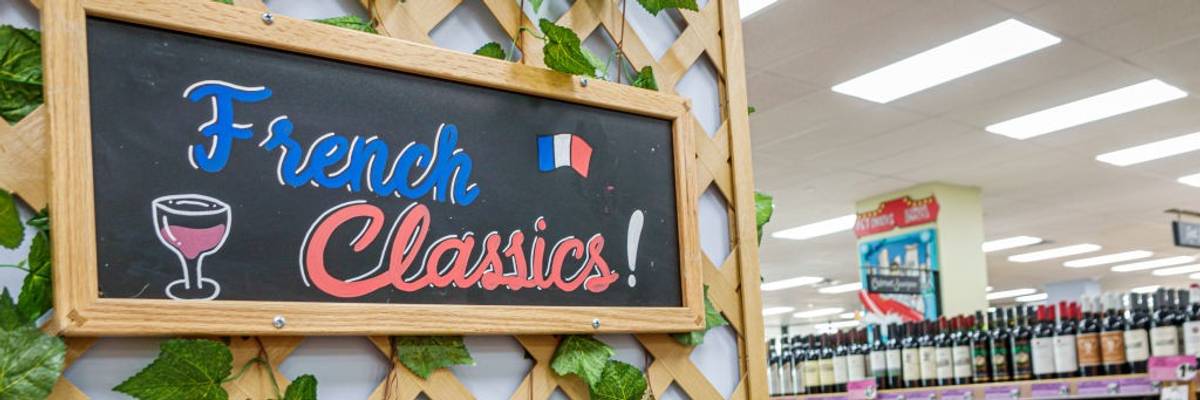
A Trader Joe's in Miami Beach, Florida advertises "French Classics."
Consumers won’t see a dime from the refunded tariffs—and in all likelihood they’ll keep paying for them
The Trump administration collected $166 billion in tariff payments before the Supreme Court struck them down. Refunds have already started hitting the bank accounts of US importers—and more could be owed soon.
As more than 300,000 companies scramble to get their money back, one large group is getting stiffed: American consumers.
After President Donald Trump imposed sweeping, indiscriminate tariffs on so-called “Liberation Day” last year, companies moved swiftly to pass on their higher prices to consumers. Consumers, already facing an affordability crisis—and reporting historic dissatisfaction with the economy—paid those higher prices at the grocery store, hardware store, and clothing store.
Instead of focusing on strategic sectors where American manufacturers were being undercut or where we’re developing new technologies, Trump imposed tariffs seemingly on a whim—hitting inputs that drove up costs for manufacturers and goods (like bananas or coffee) that are not made in the mainland United States and never will be.
With corporate profits at record highs, Congress should step in to ensure that consumers see some relief.
The results were as expected.
New data from the Federal Reserve found that businesses were able to pass through tariffs almost completely, raising core goods inflation by 3.1%. The Harvard Pricing Lab finds that retail prices for imported goods are up 5.4% compared with pre-Liberation Day trends.
Furthermore, the shock and confusion of the Liberation Day tariffs and dozens of subsequent adjustments allowed companies to take advantage of the pricing environment, raising prices even if they were not directly affected. Some even bragged about it on calls with their investors.
Unsurprisingly, consumers think this arraignment is unfair.
Polling from my organization, Groundwork Collaborative, found that 44% of Americans think refunds should go to consumers—and 34% believe that refunds should go to consumers and businesses.
Just 7% say that only businesses should get their money back. But that’s what’s happening.
Consumers won’t see a dime from the refunded tariffs—and in all likelihood they’ll keep paying for them. Prices, as retail experts like to say, are like “rockets and feathers.” When they go up, they go up quickly. But when costs fall, prices come down slowly—if they come down at all.
Big corporations that were able to pass through the price increases will now get a windfall, with no plans to pass on those savings. Costco made news by announcing they planned to use their sizable refund to lower prices, but almost no other corporations have followed their lead.
In addition to hurting consumers, the benefits of tariff refunds are unequally distributed between big and large corporations. Some 56% of small businesses reported that tariffs negatively impacted their operations, and many have shared difficulties and confusion with navigating the tariff refund portal.
Larger companies have used their size and market power to negotiate with suppliers and push costs onto consumers, but many small businesses had to pay whopping bills or risk going under. Some even sold the rights to their future refunds to Wall Street for pennies on the dollar to get cash up front to weather the storm, and now companies like Commerce Secretary Howard Lutnik’s old firm are profiting.
Families are hurting in this economy. They’re facing rising prices at the pump—up 50% because of Trump’s war in Iran—along with runaway utility bills and further uncertainty as Trump’s latest round of tariffs wind their way through the courts.
Meanwhile, the Trump administration hasn’t lifted a finger to ensure that corporations pass their savings through to consumers. In fact, Trump has even asked businesses not to claim the refunds at all, telling them he’ll “remember” companies that opt out.
With corporate profits at record highs, Congress should step in to ensure that consumers see some relief. Americans already paid these tariffs once—they shouldn’t have to pay again while corporations cash the checks.
Dear Common Dreams reader, It’s been nearly 30 years since I co-founded Common Dreams with my late wife, Lina Newhouser. We had the radical notion that journalism should serve the public good, not corporate profits. It was clear to us from the outset what it would take to build such a project. No paid advertisements. No corporate sponsors. No millionaire publisher telling us what to think or do. Many people said we wouldn't last a year, but we proved those doubters wrong. Together with a tremendous team of journalists and dedicated staff, we built an independent media outlet free from the constraints of profits and corporate control. Our mission has always been simple: To inform. To inspire. To ignite change for the common good. Building Common Dreams was not easy. Our survival was never guaranteed. When you take on the most powerful forces—Wall Street greed, fossil fuel industry destruction, Big Tech lobbyists, and uber-rich oligarchs who have spent billions upon billions rigging the economy and democracy in their favor—the only bulwark you have is supporters who believe in your work. But here’s the urgent message from me today. It's never been this bad out there. And it's never been this hard to keep us going. At the very moment Common Dreams is most needed, the threats we face are intensifying. We need your support now more than ever. We don't accept corporate advertising and never will. We don't have a paywall because we don't think people should be blocked from critical news based on their ability to pay. Everything we do is funded by the donations of readers like you. When everyone does the little they can afford, we are strong. But if that support retreats or dries up, so do we. Will you donate now to make sure Common Dreams not only survives but thrives? —Craig Brown, Co-founder |
The Trump administration collected $166 billion in tariff payments before the Supreme Court struck them down. Refunds have already started hitting the bank accounts of US importers—and more could be owed soon.
As more than 300,000 companies scramble to get their money back, one large group is getting stiffed: American consumers.
After President Donald Trump imposed sweeping, indiscriminate tariffs on so-called “Liberation Day” last year, companies moved swiftly to pass on their higher prices to consumers. Consumers, already facing an affordability crisis—and reporting historic dissatisfaction with the economy—paid those higher prices at the grocery store, hardware store, and clothing store.
Instead of focusing on strategic sectors where American manufacturers were being undercut or where we’re developing new technologies, Trump imposed tariffs seemingly on a whim—hitting inputs that drove up costs for manufacturers and goods (like bananas or coffee) that are not made in the mainland United States and never will be.
With corporate profits at record highs, Congress should step in to ensure that consumers see some relief.
The results were as expected.
New data from the Federal Reserve found that businesses were able to pass through tariffs almost completely, raising core goods inflation by 3.1%. The Harvard Pricing Lab finds that retail prices for imported goods are up 5.4% compared with pre-Liberation Day trends.
Furthermore, the shock and confusion of the Liberation Day tariffs and dozens of subsequent adjustments allowed companies to take advantage of the pricing environment, raising prices even if they were not directly affected. Some even bragged about it on calls with their investors.
Unsurprisingly, consumers think this arraignment is unfair.
Polling from my organization, Groundwork Collaborative, found that 44% of Americans think refunds should go to consumers—and 34% believe that refunds should go to consumers and businesses.
Just 7% say that only businesses should get their money back. But that’s what’s happening.
Consumers won’t see a dime from the refunded tariffs—and in all likelihood they’ll keep paying for them. Prices, as retail experts like to say, are like “rockets and feathers.” When they go up, they go up quickly. But when costs fall, prices come down slowly—if they come down at all.
Big corporations that were able to pass through the price increases will now get a windfall, with no plans to pass on those savings. Costco made news by announcing they planned to use their sizable refund to lower prices, but almost no other corporations have followed their lead.
In addition to hurting consumers, the benefits of tariff refunds are unequally distributed between big and large corporations. Some 56% of small businesses reported that tariffs negatively impacted their operations, and many have shared difficulties and confusion with navigating the tariff refund portal.
Larger companies have used their size and market power to negotiate with suppliers and push costs onto consumers, but many small businesses had to pay whopping bills or risk going under. Some even sold the rights to their future refunds to Wall Street for pennies on the dollar to get cash up front to weather the storm, and now companies like Commerce Secretary Howard Lutnik’s old firm are profiting.
Families are hurting in this economy. They’re facing rising prices at the pump—up 50% because of Trump’s war in Iran—along with runaway utility bills and further uncertainty as Trump’s latest round of tariffs wind their way through the courts.
Meanwhile, the Trump administration hasn’t lifted a finger to ensure that corporations pass their savings through to consumers. In fact, Trump has even asked businesses not to claim the refunds at all, telling them he’ll “remember” companies that opt out.
With corporate profits at record highs, Congress should step in to ensure that consumers see some relief. Americans already paid these tariffs once—they shouldn’t have to pay again while corporations cash the checks.
The Trump administration collected $166 billion in tariff payments before the Supreme Court struck them down. Refunds have already started hitting the bank accounts of US importers—and more could be owed soon.
As more than 300,000 companies scramble to get their money back, one large group is getting stiffed: American consumers.
After President Donald Trump imposed sweeping, indiscriminate tariffs on so-called “Liberation Day” last year, companies moved swiftly to pass on their higher prices to consumers. Consumers, already facing an affordability crisis—and reporting historic dissatisfaction with the economy—paid those higher prices at the grocery store, hardware store, and clothing store.
Instead of focusing on strategic sectors where American manufacturers were being undercut or where we’re developing new technologies, Trump imposed tariffs seemingly on a whim—hitting inputs that drove up costs for manufacturers and goods (like bananas or coffee) that are not made in the mainland United States and never will be.
With corporate profits at record highs, Congress should step in to ensure that consumers see some relief.
The results were as expected.
New data from the Federal Reserve found that businesses were able to pass through tariffs almost completely, raising core goods inflation by 3.1%. The Harvard Pricing Lab finds that retail prices for imported goods are up 5.4% compared with pre-Liberation Day trends.
Furthermore, the shock and confusion of the Liberation Day tariffs and dozens of subsequent adjustments allowed companies to take advantage of the pricing environment, raising prices even if they were not directly affected. Some even bragged about it on calls with their investors.
Unsurprisingly, consumers think this arraignment is unfair.
Polling from my organization, Groundwork Collaborative, found that 44% of Americans think refunds should go to consumers—and 34% believe that refunds should go to consumers and businesses.
Just 7% say that only businesses should get their money back. But that’s what’s happening.
Consumers won’t see a dime from the refunded tariffs—and in all likelihood they’ll keep paying for them. Prices, as retail experts like to say, are like “rockets and feathers.” When they go up, they go up quickly. But when costs fall, prices come down slowly—if they come down at all.
Big corporations that were able to pass through the price increases will now get a windfall, with no plans to pass on those savings. Costco made news by announcing they planned to use their sizable refund to lower prices, but almost no other corporations have followed their lead.
In addition to hurting consumers, the benefits of tariff refunds are unequally distributed between big and large corporations. Some 56% of small businesses reported that tariffs negatively impacted their operations, and many have shared difficulties and confusion with navigating the tariff refund portal.
Larger companies have used their size and market power to negotiate with suppliers and push costs onto consumers, but many small businesses had to pay whopping bills or risk going under. Some even sold the rights to their future refunds to Wall Street for pennies on the dollar to get cash up front to weather the storm, and now companies like Commerce Secretary Howard Lutnik’s old firm are profiting.
Families are hurting in this economy. They’re facing rising prices at the pump—up 50% because of Trump’s war in Iran—along with runaway utility bills and further uncertainty as Trump’s latest round of tariffs wind their way through the courts.
Meanwhile, the Trump administration hasn’t lifted a finger to ensure that corporations pass their savings through to consumers. In fact, Trump has even asked businesses not to claim the refunds at all, telling them he’ll “remember” companies that opt out.
With corporate profits at record highs, Congress should step in to ensure that consumers see some relief. Americans already paid these tariffs once—they shouldn’t have to pay again while corporations cash the checks.