

SUBSCRIBE TO OUR FREE NEWSLETTER
Daily news & progressive opinion—funded by the people, not the corporations—delivered straight to your inbox.
5
#000000
#FFFFFF
To donate by check, phone, or other method, see our More Ways to Give page.
Daily news & progressive opinion—funded by the people, not the corporations—delivered straight to your inbox.
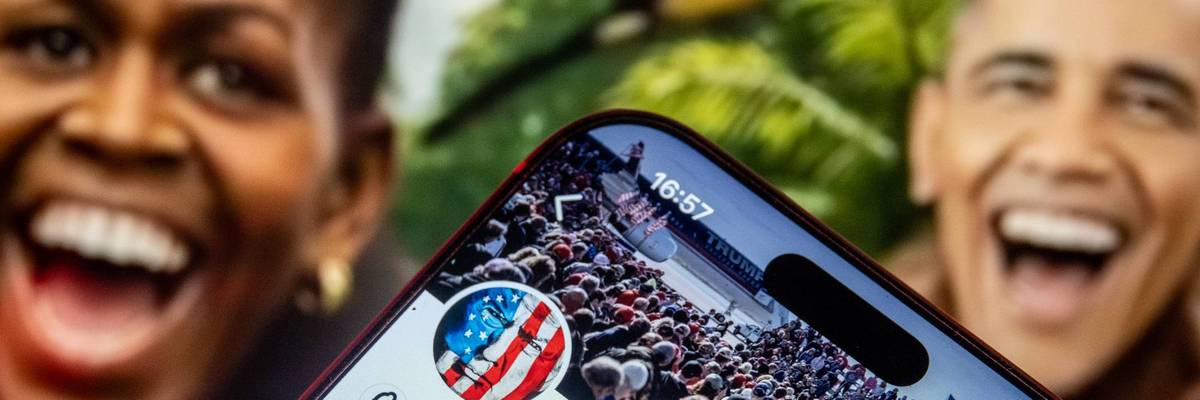
In this photo illustration a smartphone screen displays the Truth Social profile of US President Donald Trump in front of still from a social media video which showed a racist clip depicting Barack and Michelle Obama as apes, that was posted and later deleted on his account.
Trump may deny direct responsibility for this message, but denial does not absolve responsibility.
Democracy is not merely a collection of institutions, laws, and elections; democracy is, above all, a language. A language grounded in minimum respect, legitimate competition, and recognition of human dignity. When this language collapses, even if ballot boxes remain in place, the substance and meaning of democracy are hollowed out. The publication—and subsequent removal—of a humiliating video targeting Barack Obama and former first lady Michelle Obama on a social media platform affiliated with Donald Trump must be understood precisely from this perspective: not as a communication mishap or a failed joke, but as a sign of the deliberate erosion of political language in the United States.
This video, released through a platform formally associated with the President of the United States, was not merely a harsh political message; it carried symbolism deeply rooted in a long history of racial degradation. More important than the image itself is the fact that such content could be disseminated at the highest level of American political power without first being stopped by ethical, institutional, or even purely strategic filters. This was no accident, but rather the product of a distinctive style of politics that Trump has cultivated for years.
From the moment he entered politics, Trump made clear that he had no intention of playing by the classical rules of political competition. He not only discarded the unwritten norms of political civility, but consciously sought to destroy them. In this model, insult, mockery, and humiliation are not costs but political capital. The harsher the reactions, the deeper the polarization, and the more brutal the language of politics becomes, the more victorious Trump perceives himself to be. Within this framework, the publication of a humiliating video targeting a former USpresident—particularly the country’s first Black president—is not a slip, but a logical continuation of the same strategy. This behavior is less about Obama himself than it is a message to Trump’s social base: that no red lines exist and that politics can be reduced to the realm of absolute derision.
The core problem is that when such images and metaphors are circulated by an ordinary citizen, they can be relegated to the margins of online hate speech. But when they are disseminated by a president or by a network affiliated with him, they enter an entirely different realm of meaning and impact. This is no longer a matter of “political satire,” but rather the normalization of a language of humiliation at the center of power. Animalistic metaphors used to describe human beings—especially racial minorities—carry a dark and bloody historical legacy. Reproducing them, even in the form of jokes or digital imagery, sends a clear message: a return to a politics in which human dignity is sacrificed for political entertainment. Trump may deny direct responsibility for this message, but denial does not absolve responsibility.
When a president turns a platform into a personal instrument of power, the ethical and political responsibility for all its messages rests squarely with him.
The removal of the video following waves of criticism should not be mistaken for reformism or accountability. This retreat resembled a tactical maneuver more than a genuine change of course. Experience over recent years shows that Trump and the media ecosystem around him have repeatedly employed the same pattern: release provocative content, gauge reactions, and, if necessary, execute a limited retreat without a real apology or acknowledgment of wrongdoing. This pattern is dangerous because it gradually shifts the boundaries of what is considered acceptable in politics. What is deemed “removable” today may become normalized tomorrow. In this way, society is not confronted with a single dramatic shock, but with a slow erosion of norms.
Truth Social is not merely a social media platform; it is the symbol of a mode of politics in which the president, the media, the message, and the audience all operate within a closed circuit. In this space, independent journalism plays no mediating role, nor do party institutions possess the capacity to moderate messaging. The result is a politics that depends less on public persuasion and more on the mobilization of loyal supporters. Within this ecosystem, Trump is not just a user but the architect of the space itself. Therefore, he cannot be absolved of responsibility for the content disseminated within it. When a president turns a platform into a personal instrument of power, the ethical and political responsibility for all its messages rests squarely with him.
The issue extends far beyond US domestic politics. For decades, the United States has sought to present itself as a defender of values such as human dignity, equality, and the fight against discrimination. Each time the official language of American politics slides toward humiliation and mockery, these claims lose credibility in the eyes of the world. For America’s rivals, such moments are a golden opportunity: living evidence of the contradiction between rhetoric and behavior. For allies, they signal troubling normative instability. And for societies grappling with racism and discrimination, they deliver a bitter message—that even at the highest levels of power, this language still enjoys legitimacy.
Ultimately, the question is not whether a single video was offensive or not; the question is what kind of politics allows such a video to be produced and circulated in the first place. Trump is not merely an individual; he represents a style of politics in which the destruction of the language of democracy has become an ordinary tactic. If democracy is to remain more than an electoral mechanism, it must protect its language. A politics built on humiliation may win votes in the short term, but in the long run it will lose public trust, institutional credibility, and moral standing. And this is a cost that not only Trump, but American society as a whole—and the global political order—will inevitably be forced to pay.
Dear Common Dreams reader, It’s been nearly 30 years since I co-founded Common Dreams with my late wife, Lina Newhouser. We had the radical notion that journalism should serve the public good, not corporate profits. It was clear to us from the outset what it would take to build such a project. No paid advertisements. No corporate sponsors. No millionaire publisher telling us what to think or do. Many people said we wouldn't last a year, but we proved those doubters wrong. Together with a tremendous team of journalists and dedicated staff, we built an independent media outlet free from the constraints of profits and corporate control. Our mission has always been simple: To inform. To inspire. To ignite change for the common good. Building Common Dreams was not easy. Our survival was never guaranteed. When you take on the most powerful forces—Wall Street greed, fossil fuel industry destruction, Big Tech lobbyists, and uber-rich oligarchs who have spent billions upon billions rigging the economy and democracy in their favor—the only bulwark you have is supporters who believe in your work. But here’s the urgent message from me today. It's never been this bad out there. And it's never been this hard to keep us going. At the very moment Common Dreams is most needed, the threats we face are intensifying. We need your support now more than ever. We don't accept corporate advertising and never will. We don't have a paywall because we don't think people should be blocked from critical news based on their ability to pay. Everything we do is funded by the donations of readers like you. When everyone does the little they can afford, we are strong. But if that support retreats or dries up, so do we. Will you donate now to make sure Common Dreams not only survives but thrives? —Craig Brown, Co-founder |
Democracy is not merely a collection of institutions, laws, and elections; democracy is, above all, a language. A language grounded in minimum respect, legitimate competition, and recognition of human dignity. When this language collapses, even if ballot boxes remain in place, the substance and meaning of democracy are hollowed out. The publication—and subsequent removal—of a humiliating video targeting Barack Obama and former first lady Michelle Obama on a social media platform affiliated with Donald Trump must be understood precisely from this perspective: not as a communication mishap or a failed joke, but as a sign of the deliberate erosion of political language in the United States.
This video, released through a platform formally associated with the President of the United States, was not merely a harsh political message; it carried symbolism deeply rooted in a long history of racial degradation. More important than the image itself is the fact that such content could be disseminated at the highest level of American political power without first being stopped by ethical, institutional, or even purely strategic filters. This was no accident, but rather the product of a distinctive style of politics that Trump has cultivated for years.
From the moment he entered politics, Trump made clear that he had no intention of playing by the classical rules of political competition. He not only discarded the unwritten norms of political civility, but consciously sought to destroy them. In this model, insult, mockery, and humiliation are not costs but political capital. The harsher the reactions, the deeper the polarization, and the more brutal the language of politics becomes, the more victorious Trump perceives himself to be. Within this framework, the publication of a humiliating video targeting a former USpresident—particularly the country’s first Black president—is not a slip, but a logical continuation of the same strategy. This behavior is less about Obama himself than it is a message to Trump’s social base: that no red lines exist and that politics can be reduced to the realm of absolute derision.
The core problem is that when such images and metaphors are circulated by an ordinary citizen, they can be relegated to the margins of online hate speech. But when they are disseminated by a president or by a network affiliated with him, they enter an entirely different realm of meaning and impact. This is no longer a matter of “political satire,” but rather the normalization of a language of humiliation at the center of power. Animalistic metaphors used to describe human beings—especially racial minorities—carry a dark and bloody historical legacy. Reproducing them, even in the form of jokes or digital imagery, sends a clear message: a return to a politics in which human dignity is sacrificed for political entertainment. Trump may deny direct responsibility for this message, but denial does not absolve responsibility.
When a president turns a platform into a personal instrument of power, the ethical and political responsibility for all its messages rests squarely with him.
The removal of the video following waves of criticism should not be mistaken for reformism or accountability. This retreat resembled a tactical maneuver more than a genuine change of course. Experience over recent years shows that Trump and the media ecosystem around him have repeatedly employed the same pattern: release provocative content, gauge reactions, and, if necessary, execute a limited retreat without a real apology or acknowledgment of wrongdoing. This pattern is dangerous because it gradually shifts the boundaries of what is considered acceptable in politics. What is deemed “removable” today may become normalized tomorrow. In this way, society is not confronted with a single dramatic shock, but with a slow erosion of norms.
Truth Social is not merely a social media platform; it is the symbol of a mode of politics in which the president, the media, the message, and the audience all operate within a closed circuit. In this space, independent journalism plays no mediating role, nor do party institutions possess the capacity to moderate messaging. The result is a politics that depends less on public persuasion and more on the mobilization of loyal supporters. Within this ecosystem, Trump is not just a user but the architect of the space itself. Therefore, he cannot be absolved of responsibility for the content disseminated within it. When a president turns a platform into a personal instrument of power, the ethical and political responsibility for all its messages rests squarely with him.
The issue extends far beyond US domestic politics. For decades, the United States has sought to present itself as a defender of values such as human dignity, equality, and the fight against discrimination. Each time the official language of American politics slides toward humiliation and mockery, these claims lose credibility in the eyes of the world. For America’s rivals, such moments are a golden opportunity: living evidence of the contradiction between rhetoric and behavior. For allies, they signal troubling normative instability. And for societies grappling with racism and discrimination, they deliver a bitter message—that even at the highest levels of power, this language still enjoys legitimacy.
Ultimately, the question is not whether a single video was offensive or not; the question is what kind of politics allows such a video to be produced and circulated in the first place. Trump is not merely an individual; he represents a style of politics in which the destruction of the language of democracy has become an ordinary tactic. If democracy is to remain more than an electoral mechanism, it must protect its language. A politics built on humiliation may win votes in the short term, but in the long run it will lose public trust, institutional credibility, and moral standing. And this is a cost that not only Trump, but American society as a whole—and the global political order—will inevitably be forced to pay.
Democracy is not merely a collection of institutions, laws, and elections; democracy is, above all, a language. A language grounded in minimum respect, legitimate competition, and recognition of human dignity. When this language collapses, even if ballot boxes remain in place, the substance and meaning of democracy are hollowed out. The publication—and subsequent removal—of a humiliating video targeting Barack Obama and former first lady Michelle Obama on a social media platform affiliated with Donald Trump must be understood precisely from this perspective: not as a communication mishap or a failed joke, but as a sign of the deliberate erosion of political language in the United States.
This video, released through a platform formally associated with the President of the United States, was not merely a harsh political message; it carried symbolism deeply rooted in a long history of racial degradation. More important than the image itself is the fact that such content could be disseminated at the highest level of American political power without first being stopped by ethical, institutional, or even purely strategic filters. This was no accident, but rather the product of a distinctive style of politics that Trump has cultivated for years.
From the moment he entered politics, Trump made clear that he had no intention of playing by the classical rules of political competition. He not only discarded the unwritten norms of political civility, but consciously sought to destroy them. In this model, insult, mockery, and humiliation are not costs but political capital. The harsher the reactions, the deeper the polarization, and the more brutal the language of politics becomes, the more victorious Trump perceives himself to be. Within this framework, the publication of a humiliating video targeting a former USpresident—particularly the country’s first Black president—is not a slip, but a logical continuation of the same strategy. This behavior is less about Obama himself than it is a message to Trump’s social base: that no red lines exist and that politics can be reduced to the realm of absolute derision.
The core problem is that when such images and metaphors are circulated by an ordinary citizen, they can be relegated to the margins of online hate speech. But when they are disseminated by a president or by a network affiliated with him, they enter an entirely different realm of meaning and impact. This is no longer a matter of “political satire,” but rather the normalization of a language of humiliation at the center of power. Animalistic metaphors used to describe human beings—especially racial minorities—carry a dark and bloody historical legacy. Reproducing them, even in the form of jokes or digital imagery, sends a clear message: a return to a politics in which human dignity is sacrificed for political entertainment. Trump may deny direct responsibility for this message, but denial does not absolve responsibility.
When a president turns a platform into a personal instrument of power, the ethical and political responsibility for all its messages rests squarely with him.
The removal of the video following waves of criticism should not be mistaken for reformism or accountability. This retreat resembled a tactical maneuver more than a genuine change of course. Experience over recent years shows that Trump and the media ecosystem around him have repeatedly employed the same pattern: release provocative content, gauge reactions, and, if necessary, execute a limited retreat without a real apology or acknowledgment of wrongdoing. This pattern is dangerous because it gradually shifts the boundaries of what is considered acceptable in politics. What is deemed “removable” today may become normalized tomorrow. In this way, society is not confronted with a single dramatic shock, but with a slow erosion of norms.
Truth Social is not merely a social media platform; it is the symbol of a mode of politics in which the president, the media, the message, and the audience all operate within a closed circuit. In this space, independent journalism plays no mediating role, nor do party institutions possess the capacity to moderate messaging. The result is a politics that depends less on public persuasion and more on the mobilization of loyal supporters. Within this ecosystem, Trump is not just a user but the architect of the space itself. Therefore, he cannot be absolved of responsibility for the content disseminated within it. When a president turns a platform into a personal instrument of power, the ethical and political responsibility for all its messages rests squarely with him.
The issue extends far beyond US domestic politics. For decades, the United States has sought to present itself as a defender of values such as human dignity, equality, and the fight against discrimination. Each time the official language of American politics slides toward humiliation and mockery, these claims lose credibility in the eyes of the world. For America’s rivals, such moments are a golden opportunity: living evidence of the contradiction between rhetoric and behavior. For allies, they signal troubling normative instability. And for societies grappling with racism and discrimination, they deliver a bitter message—that even at the highest levels of power, this language still enjoys legitimacy.
Ultimately, the question is not whether a single video was offensive or not; the question is what kind of politics allows such a video to be produced and circulated in the first place. Trump is not merely an individual; he represents a style of politics in which the destruction of the language of democracy has become an ordinary tactic. If democracy is to remain more than an electoral mechanism, it must protect its language. A politics built on humiliation may win votes in the short term, but in the long run it will lose public trust, institutional credibility, and moral standing. And this is a cost that not only Trump, but American society as a whole—and the global political order—will inevitably be forced to pay.

