SUBSCRIBE TO OUR FREE NEWSLETTER
Daily news & progressive opinion—funded by the people, not the corporations—delivered straight to your inbox.
5
#000000
#FFFFFF
To donate by check, phone, or other method, see our More Ways to Give page.
Daily news & progressive opinion—funded by the people, not the corporations—delivered straight to your inbox.
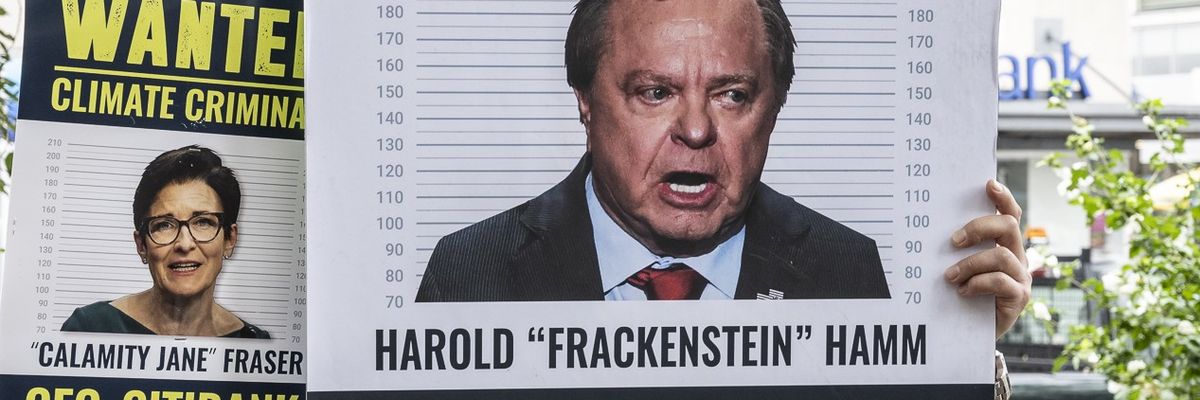
Campaigners have been targeted the executives and wealthy investors behind some of the most destructive corporations in the world fueling the climate crisis.
A new report tracks the monthly wealth of fossil fuel billionaires.
Welcome to the age of Oil-Garchy, where the concentrated wealth and power of the fossil fuel industry dominates our political system. After donating heavily to Trump’s campaign, the industry has already begun to reap return on their investments.
Trump has nominated some of the most vociferous climate deniers and advocates for the oil, gas, and coal industries for key positions overseeing the environment, energy, and public lands. Former Congressman Lee Zeldin has been nominated to run the Environmental Protection Agency and Chris Wright, CEO of fracking company Liberty Energy, is poised to oversee the Energy Department.
In addition to putting drillers in charge of the watershed, the financial returns are beginning to flow in likely anticipation of pro-oil and gas policies. The top 15 fossil fuel industry billionaires have already seen their personal combined wealth rise from $267.6 billion to $307.9 billion, a gain of over $40 billion, or 15.2 percent since April 2024.
The Climate Accountability Research Project (CARP) released its first monthly tracking report, Pipeline to Power: Trump and the “Oil-garch” Wealth Surge, that will monitor wealth gains and losses by top billionaires in the sector over the coming year. According to the report, the first wave of big wealth gainers include:
On April 11, 2024, the CEOs and leaders of the oil and gas industries gathered at Mar-A-Lago for a meeting with candidate Trump about energy policy. Trump used the occasion, according to witnesses present, to make a brazen transactional pitch: raise $1 billion for his campaign and he would do their bidding. Trump told the assembled that the amount of money they would save in taxes and legal expenses after he repealed regulations would more than cover their billion-dollar contribution. Trump implied that if elected, he would expand offshore drilling, weaken environmental rules, and scrap electric vehicle and wind policies and other regulations opposed by the industry groups. Trump vowed to reverse President Biden’s pause on new LNG exports.
Present at the Mar-a-Lago Club on that April day were industry leaders such as Harold Hamm, the wildcat fracker and chairman of Continental Resources, who played an influential role in Trump’s first administration, pushing for Scott Pruitt to serve as Trump’s head of the Environmental Protection Agency. Also present was Doug Burgum, governor of North Dakota and Trump’s nominee to Interior Secretary, a position overseeing gas leases on public lands. Other attendees included leaders from the American Petroleum Institute and executives from Chevron, ExxonMobil, ConocoPhillips, along with fracking producers Cheniere Energy and EQT.
Harold Hamm and Vicki Hollub, CEO of Occidental Petroleum, organized donors within the fossil fuel sector to support Trump and funnel money to his campaign. They didn’t raise a billion dollars, but they helped move hundreds of millions to PACs supporting Trump and directly to the candidate.
According to Climate Connections at Yale University, the fossil fuel industry spent $219 million to influence the new U.S. government. This included $26 million in direct oil and gas industry contributions to the campaigns of policymakers taking office in 2025, with 88 percent going to Republican lawmakers. The analysis found an additional $151 million in outside spending, including donations to political action committees (PACs), and $67 million to PACs supporting candidates. Nearly $23 million in oil and gas industry funds went directly to candidate Trump and his PACs.
Trump’s mega-donors included banking and oil scion Timothy Mellon and Timothy Dunn, CEO billionaire of CrownQuest, a major oil and fracking company based in Texas. George Bishop, the CEO of oil and gas company GeoSouthern Energy, donated $1 million to Trump’s campaign, with his wife forking over an additional $500,000. Fossil fuel billionaires Kelcy Warren and Harold Hamm donated $5 million and $1 million respectively to Trump's 2024 presidential campaign.
This is what “Oil-garchy” looks like. See the whole report, Pipeline to Power: Trump and the “Oil-garch” Wealth Surge, at www.climatecriminals.org.Dear Common Dreams reader, It’s been nearly 30 years since I co-founded Common Dreams with my late wife, Lina Newhouser. We had the radical notion that journalism should serve the public good, not corporate profits. It was clear to us from the outset what it would take to build such a project. No paid advertisements. No corporate sponsors. No millionaire publisher telling us what to think or do. Many people said we wouldn't last a year, but we proved those doubters wrong. Together with a tremendous team of journalists and dedicated staff, we built an independent media outlet free from the constraints of profits and corporate control. Our mission has always been simple: To inform. To inspire. To ignite change for the common good. Building Common Dreams was not easy. Our survival was never guaranteed. When you take on the most powerful forces—Wall Street greed, fossil fuel industry destruction, Big Tech lobbyists, and uber-rich oligarchs who have spent billions upon billions rigging the economy and democracy in their favor—the only bulwark you have is supporters who believe in your work. But here’s the urgent message from me today. It's never been this bad out there. And it's never been this hard to keep us going. At the very moment Common Dreams is most needed, the threats we face are intensifying. We need your support now more than ever. We don't accept corporate advertising and never will. We don't have a paywall because we don't think people should be blocked from critical news based on their ability to pay. Everything we do is funded by the donations of readers like you. When everyone does the little they can afford, we are strong. But if that support retreats or dries up, so do we. Will you donate now to make sure Common Dreams not only survives but thrives? —Craig Brown, Co-founder |
Sarah Cohen is director of the Climate Accountability Research Project.
Welcome to the age of Oil-Garchy, where the concentrated wealth and power of the fossil fuel industry dominates our political system. After donating heavily to Trump’s campaign, the industry has already begun to reap return on their investments.
Trump has nominated some of the most vociferous climate deniers and advocates for the oil, gas, and coal industries for key positions overseeing the environment, energy, and public lands. Former Congressman Lee Zeldin has been nominated to run the Environmental Protection Agency and Chris Wright, CEO of fracking company Liberty Energy, is poised to oversee the Energy Department.
In addition to putting drillers in charge of the watershed, the financial returns are beginning to flow in likely anticipation of pro-oil and gas policies. The top 15 fossil fuel industry billionaires have already seen their personal combined wealth rise from $267.6 billion to $307.9 billion, a gain of over $40 billion, or 15.2 percent since April 2024.
The Climate Accountability Research Project (CARP) released its first monthly tracking report, Pipeline to Power: Trump and the “Oil-garch” Wealth Surge, that will monitor wealth gains and losses by top billionaires in the sector over the coming year. According to the report, the first wave of big wealth gainers include:
On April 11, 2024, the CEOs and leaders of the oil and gas industries gathered at Mar-A-Lago for a meeting with candidate Trump about energy policy. Trump used the occasion, according to witnesses present, to make a brazen transactional pitch: raise $1 billion for his campaign and he would do their bidding. Trump told the assembled that the amount of money they would save in taxes and legal expenses after he repealed regulations would more than cover their billion-dollar contribution. Trump implied that if elected, he would expand offshore drilling, weaken environmental rules, and scrap electric vehicle and wind policies and other regulations opposed by the industry groups. Trump vowed to reverse President Biden’s pause on new LNG exports.
Present at the Mar-a-Lago Club on that April day were industry leaders such as Harold Hamm, the wildcat fracker and chairman of Continental Resources, who played an influential role in Trump’s first administration, pushing for Scott Pruitt to serve as Trump’s head of the Environmental Protection Agency. Also present was Doug Burgum, governor of North Dakota and Trump’s nominee to Interior Secretary, a position overseeing gas leases on public lands. Other attendees included leaders from the American Petroleum Institute and executives from Chevron, ExxonMobil, ConocoPhillips, along with fracking producers Cheniere Energy and EQT.
Harold Hamm and Vicki Hollub, CEO of Occidental Petroleum, organized donors within the fossil fuel sector to support Trump and funnel money to his campaign. They didn’t raise a billion dollars, but they helped move hundreds of millions to PACs supporting Trump and directly to the candidate.
According to Climate Connections at Yale University, the fossil fuel industry spent $219 million to influence the new U.S. government. This included $26 million in direct oil and gas industry contributions to the campaigns of policymakers taking office in 2025, with 88 percent going to Republican lawmakers. The analysis found an additional $151 million in outside spending, including donations to political action committees (PACs), and $67 million to PACs supporting candidates. Nearly $23 million in oil and gas industry funds went directly to candidate Trump and his PACs.
Trump’s mega-donors included banking and oil scion Timothy Mellon and Timothy Dunn, CEO billionaire of CrownQuest, a major oil and fracking company based in Texas. George Bishop, the CEO of oil and gas company GeoSouthern Energy, donated $1 million to Trump’s campaign, with his wife forking over an additional $500,000. Fossil fuel billionaires Kelcy Warren and Harold Hamm donated $5 million and $1 million respectively to Trump's 2024 presidential campaign.
This is what “Oil-garchy” looks like. See the whole report, Pipeline to Power: Trump and the “Oil-garch” Wealth Surge, at www.climatecriminals.org.Sarah Cohen is director of the Climate Accountability Research Project.
Welcome to the age of Oil-Garchy, where the concentrated wealth and power of the fossil fuel industry dominates our political system. After donating heavily to Trump’s campaign, the industry has already begun to reap return on their investments.
Trump has nominated some of the most vociferous climate deniers and advocates for the oil, gas, and coal industries for key positions overseeing the environment, energy, and public lands. Former Congressman Lee Zeldin has been nominated to run the Environmental Protection Agency and Chris Wright, CEO of fracking company Liberty Energy, is poised to oversee the Energy Department.
In addition to putting drillers in charge of the watershed, the financial returns are beginning to flow in likely anticipation of pro-oil and gas policies. The top 15 fossil fuel industry billionaires have already seen their personal combined wealth rise from $267.6 billion to $307.9 billion, a gain of over $40 billion, or 15.2 percent since April 2024.
The Climate Accountability Research Project (CARP) released its first monthly tracking report, Pipeline to Power: Trump and the “Oil-garch” Wealth Surge, that will monitor wealth gains and losses by top billionaires in the sector over the coming year. According to the report, the first wave of big wealth gainers include:
On April 11, 2024, the CEOs and leaders of the oil and gas industries gathered at Mar-A-Lago for a meeting with candidate Trump about energy policy. Trump used the occasion, according to witnesses present, to make a brazen transactional pitch: raise $1 billion for his campaign and he would do their bidding. Trump told the assembled that the amount of money they would save in taxes and legal expenses after he repealed regulations would more than cover their billion-dollar contribution. Trump implied that if elected, he would expand offshore drilling, weaken environmental rules, and scrap electric vehicle and wind policies and other regulations opposed by the industry groups. Trump vowed to reverse President Biden’s pause on new LNG exports.
Present at the Mar-a-Lago Club on that April day were industry leaders such as Harold Hamm, the wildcat fracker and chairman of Continental Resources, who played an influential role in Trump’s first administration, pushing for Scott Pruitt to serve as Trump’s head of the Environmental Protection Agency. Also present was Doug Burgum, governor of North Dakota and Trump’s nominee to Interior Secretary, a position overseeing gas leases on public lands. Other attendees included leaders from the American Petroleum Institute and executives from Chevron, ExxonMobil, ConocoPhillips, along with fracking producers Cheniere Energy and EQT.
Harold Hamm and Vicki Hollub, CEO of Occidental Petroleum, organized donors within the fossil fuel sector to support Trump and funnel money to his campaign. They didn’t raise a billion dollars, but they helped move hundreds of millions to PACs supporting Trump and directly to the candidate.
According to Climate Connections at Yale University, the fossil fuel industry spent $219 million to influence the new U.S. government. This included $26 million in direct oil and gas industry contributions to the campaigns of policymakers taking office in 2025, with 88 percent going to Republican lawmakers. The analysis found an additional $151 million in outside spending, including donations to political action committees (PACs), and $67 million to PACs supporting candidates. Nearly $23 million in oil and gas industry funds went directly to candidate Trump and his PACs.
Trump’s mega-donors included banking and oil scion Timothy Mellon and Timothy Dunn, CEO billionaire of CrownQuest, a major oil and fracking company based in Texas. George Bishop, the CEO of oil and gas company GeoSouthern Energy, donated $1 million to Trump’s campaign, with his wife forking over an additional $500,000. Fossil fuel billionaires Kelcy Warren and Harold Hamm donated $5 million and $1 million respectively to Trump's 2024 presidential campaign.
This is what “Oil-garchy” looks like. See the whole report, Pipeline to Power: Trump and the “Oil-garch” Wealth Surge, at www.climatecriminals.org.