SUBSCRIBE TO OUR FREE NEWSLETTER
Daily news & progressive opinion—funded by the people, not the corporations—delivered straight to your inbox.
5
#000000
#FFFFFF
To donate by check, phone, or other method, see our More Ways to Give page.
Daily news & progressive opinion—funded by the people, not the corporations—delivered straight to your inbox.
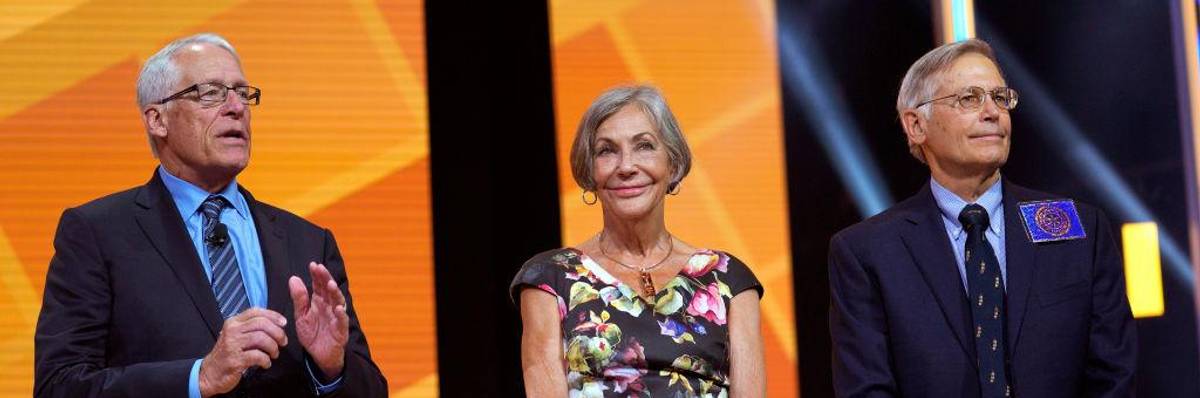
Members of the Walton family (L-R) Rob, Alice, and Jim speak during the annual Walmart shareholders meeting event on June 1, 2018 in Fayetteville, Arkansas.
What we don't know about how these uber-rich dynasties conceal their vast fortunes and dodge taxes can hurt us.
Much of what we know about the global hidden wealth system comes from leaks from within the wealth defense industry, the wealth managers and tax attorneys that facilitate the wealth vanishing act for their billionaire clients. As I wrote in my book, The Wealth Hoarders: How Billionaires Pay Millions to Hide Trillions, this enabling class has helped sequester trillions of dollars in trusts, anonymous shell companies, and offshore tax havens.
The 2016 Panama Papers and the 2021 Pandora Papers were both the result of massive data leaks from inside wealth management firms, reported by the courageous global journalists connected to the International Consortium of investigative journalists. And now, a new blockbuster investigation from The New Yorker traces the decision of a whistleblower — “a disgruntled wealth manager” — to expose how the descendants of oil tycoon J. Paul Getty use Nevada trusts to avoid California taxes.
The Getty disclosure stems from a wrongful termination lawsuit, which along with divorce is one way light occasionally shines onto this shadowy world. Wealth advisor Marlena Sonn worked for several members of the Getty family for eight years, advising them on socially responsible strategies for their investments. But she was troubled by the Getty family’s use of Nevada-based trusts and a Reno-based family office, to maintain the fiction that family members did not live in higher-tax California. When she suggested they pay their California tax obligations, she was fired. The full family gossip is well chronicled in The New Yorker piece.
We are now living through the “golden age of tax avoidance,” thanks to both the increasing concentration of wealth and the expansion of the “wealth defense industry,” a class that focuses on aggressive tax avoidance and dynastic wealth succession. The Inequality.org team estimates more than $30 trillion globally is sequestered by the wealthiest people on the planet, money that societies could be taxing and investing to broaden opportunity for everyone else.
The United States has become a premier tax haven thanks in part to the manipulation of U.S. trust law. Trusts are a lynch-pin in the wealth hiding apparatus. They are an antiquated ownership system that professional enablers have morphed and manipulated to serve the needs of their wealthy clients.
One important analytical point not included in The New Yorker piece is that the wealth defense industry has captured a number of U.S. states and lobbied for changes in trust law. These wealth advisors proclaim they are helping their clients obey the law. But they are actively writing new legislation and lobbying to have them installed.
A powerful case in point: Last week investigative journalists in Florida uncovered how the Walton family, descendants of Wal-Mart founder Sam Walton, hired tax lawyers and lobbyists to change Florida state family trust law to allow their trusts to exist for a thousand years and have less disclosure obligations. Florida Governor Ron DeSantis (R), after receiving contributions from Walton-backed intermediaries, dutifully signed the trust changes into law over the summer of 2022.
Similarly, the state governments of Nevada and South Dakota — now a global destination for billionaire dynasty trusts — are working together to become the “Delaware of the West,” attracting corporation formation and not levying corporate or income taxation. Nevada also extended its state rule against perpetuities so trusts can exist for 375 years and without the obligation to report beneficiaries. The state is working to keep information sealed about trusts, passing a law in 2009 to exempt trust company documents from public disclosure. They are possibly the only state that does not cooperate with the Internal Revenue Service (IRS) in sharing data, a vestige from the state’s secrecy around the gambling industry. California, meanwhile, is the opposite, with progressive income and corporate taxation and no exotic manipulations of trust law.
There are over a dozen states actively changing state law to compete for global trust business. And these trust systems are intentionally complicated. Complexity is the bread and butter of the wealth defense industry, who often layer multiple ownership systems to hide the transactions. As former Democratic Senator Carl Levin used to say, “enough with the MEGO (My Eyes Glaze Over) Trusts,” designed to skirt the law.
But this system can be fixed. The Biden administration is taking important steps towards investing in tax enforcement, especially shutting down some of the manipulations of trust law. But federal lawmakers should pass legislation to shut down the race between states in manipulating trust law. This includes creating a federal “rule against perpetuities’ to limit the lifespan of trusts and a federal registry for trusts that discloses beneficiaries.
In 2020, Congress passed the Corporate Transparency Act which requires the disclosure of beneficial ownership of corporations and shell companies. The law could be extended to include oversight of trusts. Institute for Policy Studies Associate Fellow Bob Lord, who is quoted at length in The New Yorker article, argues that Congress should reduce the attractiveness of trusts by levying an excise tax on trust assets, say over $25 million.
The more we learn from courageous whistleblowers like Marlena Sonn, the more outrage and pressure will build to reform trust law and eliminate the games that the Waltons and the Gettys are playing.
Dear Common Dreams reader, It’s been nearly 30 years since I co-founded Common Dreams with my late wife, Lina Newhouser. We had the radical notion that journalism should serve the public good, not corporate profits. It was clear to us from the outset what it would take to build such a project. No paid advertisements. No corporate sponsors. No millionaire publisher telling us what to think or do. Many people said we wouldn't last a year, but we proved those doubters wrong. Together with a tremendous team of journalists and dedicated staff, we built an independent media outlet free from the constraints of profits and corporate control. Our mission has always been simple: To inform. To inspire. To ignite change for the common good. Building Common Dreams was not easy. Our survival was never guaranteed. When you take on the most powerful forces—Wall Street greed, fossil fuel industry destruction, Big Tech lobbyists, and uber-rich oligarchs who have spent billions upon billions rigging the economy and democracy in their favor—the only bulwark you have is supporters who believe in your work. But here’s the urgent message from me today. It's never been this bad out there. And it's never been this hard to keep us going. At the very moment Common Dreams is most needed, the threats we face are intensifying. We need your support now more than ever. We don't accept corporate advertising and never will. We don't have a paywall because we don't think people should be blocked from critical news based on their ability to pay. Everything we do is funded by the donations of readers like you. When everyone does the little they can afford, we are strong. But if that support retreats or dries up, so do we. Will you donate now to make sure Common Dreams not only survives but thrives? —Craig Brown, Co-founder |
Much of what we know about the global hidden wealth system comes from leaks from within the wealth defense industry, the wealth managers and tax attorneys that facilitate the wealth vanishing act for their billionaire clients. As I wrote in my book, The Wealth Hoarders: How Billionaires Pay Millions to Hide Trillions, this enabling class has helped sequester trillions of dollars in trusts, anonymous shell companies, and offshore tax havens.
The 2016 Panama Papers and the 2021 Pandora Papers were both the result of massive data leaks from inside wealth management firms, reported by the courageous global journalists connected to the International Consortium of investigative journalists. And now, a new blockbuster investigation from The New Yorker traces the decision of a whistleblower — “a disgruntled wealth manager” — to expose how the descendants of oil tycoon J. Paul Getty use Nevada trusts to avoid California taxes.
The Getty disclosure stems from a wrongful termination lawsuit, which along with divorce is one way light occasionally shines onto this shadowy world. Wealth advisor Marlena Sonn worked for several members of the Getty family for eight years, advising them on socially responsible strategies for their investments. But she was troubled by the Getty family’s use of Nevada-based trusts and a Reno-based family office, to maintain the fiction that family members did not live in higher-tax California. When she suggested they pay their California tax obligations, she was fired. The full family gossip is well chronicled in The New Yorker piece.
We are now living through the “golden age of tax avoidance,” thanks to both the increasing concentration of wealth and the expansion of the “wealth defense industry,” a class that focuses on aggressive tax avoidance and dynastic wealth succession. The Inequality.org team estimates more than $30 trillion globally is sequestered by the wealthiest people on the planet, money that societies could be taxing and investing to broaden opportunity for everyone else.
The United States has become a premier tax haven thanks in part to the manipulation of U.S. trust law. Trusts are a lynch-pin in the wealth hiding apparatus. They are an antiquated ownership system that professional enablers have morphed and manipulated to serve the needs of their wealthy clients.
One important analytical point not included in The New Yorker piece is that the wealth defense industry has captured a number of U.S. states and lobbied for changes in trust law. These wealth advisors proclaim they are helping their clients obey the law. But they are actively writing new legislation and lobbying to have them installed.
A powerful case in point: Last week investigative journalists in Florida uncovered how the Walton family, descendants of Wal-Mart founder Sam Walton, hired tax lawyers and lobbyists to change Florida state family trust law to allow their trusts to exist for a thousand years and have less disclosure obligations. Florida Governor Ron DeSantis (R), after receiving contributions from Walton-backed intermediaries, dutifully signed the trust changes into law over the summer of 2022.
Similarly, the state governments of Nevada and South Dakota — now a global destination for billionaire dynasty trusts — are working together to become the “Delaware of the West,” attracting corporation formation and not levying corporate or income taxation. Nevada also extended its state rule against perpetuities so trusts can exist for 375 years and without the obligation to report beneficiaries. The state is working to keep information sealed about trusts, passing a law in 2009 to exempt trust company documents from public disclosure. They are possibly the only state that does not cooperate with the Internal Revenue Service (IRS) in sharing data, a vestige from the state’s secrecy around the gambling industry. California, meanwhile, is the opposite, with progressive income and corporate taxation and no exotic manipulations of trust law.
There are over a dozen states actively changing state law to compete for global trust business. And these trust systems are intentionally complicated. Complexity is the bread and butter of the wealth defense industry, who often layer multiple ownership systems to hide the transactions. As former Democratic Senator Carl Levin used to say, “enough with the MEGO (My Eyes Glaze Over) Trusts,” designed to skirt the law.
But this system can be fixed. The Biden administration is taking important steps towards investing in tax enforcement, especially shutting down some of the manipulations of trust law. But federal lawmakers should pass legislation to shut down the race between states in manipulating trust law. This includes creating a federal “rule against perpetuities’ to limit the lifespan of trusts and a federal registry for trusts that discloses beneficiaries.
In 2020, Congress passed the Corporate Transparency Act which requires the disclosure of beneficial ownership of corporations and shell companies. The law could be extended to include oversight of trusts. Institute for Policy Studies Associate Fellow Bob Lord, who is quoted at length in The New Yorker article, argues that Congress should reduce the attractiveness of trusts by levying an excise tax on trust assets, say over $25 million.
The more we learn from courageous whistleblowers like Marlena Sonn, the more outrage and pressure will build to reform trust law and eliminate the games that the Waltons and the Gettys are playing.
Much of what we know about the global hidden wealth system comes from leaks from within the wealth defense industry, the wealth managers and tax attorneys that facilitate the wealth vanishing act for their billionaire clients. As I wrote in my book, The Wealth Hoarders: How Billionaires Pay Millions to Hide Trillions, this enabling class has helped sequester trillions of dollars in trusts, anonymous shell companies, and offshore tax havens.
The 2016 Panama Papers and the 2021 Pandora Papers were both the result of massive data leaks from inside wealth management firms, reported by the courageous global journalists connected to the International Consortium of investigative journalists. And now, a new blockbuster investigation from The New Yorker traces the decision of a whistleblower — “a disgruntled wealth manager” — to expose how the descendants of oil tycoon J. Paul Getty use Nevada trusts to avoid California taxes.
The Getty disclosure stems from a wrongful termination lawsuit, which along with divorce is one way light occasionally shines onto this shadowy world. Wealth advisor Marlena Sonn worked for several members of the Getty family for eight years, advising them on socially responsible strategies for their investments. But she was troubled by the Getty family’s use of Nevada-based trusts and a Reno-based family office, to maintain the fiction that family members did not live in higher-tax California. When she suggested they pay their California tax obligations, she was fired. The full family gossip is well chronicled in The New Yorker piece.
We are now living through the “golden age of tax avoidance,” thanks to both the increasing concentration of wealth and the expansion of the “wealth defense industry,” a class that focuses on aggressive tax avoidance and dynastic wealth succession. The Inequality.org team estimates more than $30 trillion globally is sequestered by the wealthiest people on the planet, money that societies could be taxing and investing to broaden opportunity for everyone else.
The United States has become a premier tax haven thanks in part to the manipulation of U.S. trust law. Trusts are a lynch-pin in the wealth hiding apparatus. They are an antiquated ownership system that professional enablers have morphed and manipulated to serve the needs of their wealthy clients.
One important analytical point not included in The New Yorker piece is that the wealth defense industry has captured a number of U.S. states and lobbied for changes in trust law. These wealth advisors proclaim they are helping their clients obey the law. But they are actively writing new legislation and lobbying to have them installed.
A powerful case in point: Last week investigative journalists in Florida uncovered how the Walton family, descendants of Wal-Mart founder Sam Walton, hired tax lawyers and lobbyists to change Florida state family trust law to allow their trusts to exist for a thousand years and have less disclosure obligations. Florida Governor Ron DeSantis (R), after receiving contributions from Walton-backed intermediaries, dutifully signed the trust changes into law over the summer of 2022.
Similarly, the state governments of Nevada and South Dakota — now a global destination for billionaire dynasty trusts — are working together to become the “Delaware of the West,” attracting corporation formation and not levying corporate or income taxation. Nevada also extended its state rule against perpetuities so trusts can exist for 375 years and without the obligation to report beneficiaries. The state is working to keep information sealed about trusts, passing a law in 2009 to exempt trust company documents from public disclosure. They are possibly the only state that does not cooperate with the Internal Revenue Service (IRS) in sharing data, a vestige from the state’s secrecy around the gambling industry. California, meanwhile, is the opposite, with progressive income and corporate taxation and no exotic manipulations of trust law.
There are over a dozen states actively changing state law to compete for global trust business. And these trust systems are intentionally complicated. Complexity is the bread and butter of the wealth defense industry, who often layer multiple ownership systems to hide the transactions. As former Democratic Senator Carl Levin used to say, “enough with the MEGO (My Eyes Glaze Over) Trusts,” designed to skirt the law.
But this system can be fixed. The Biden administration is taking important steps towards investing in tax enforcement, especially shutting down some of the manipulations of trust law. But federal lawmakers should pass legislation to shut down the race between states in manipulating trust law. This includes creating a federal “rule against perpetuities’ to limit the lifespan of trusts and a federal registry for trusts that discloses beneficiaries.
In 2020, Congress passed the Corporate Transparency Act which requires the disclosure of beneficial ownership of corporations and shell companies. The law could be extended to include oversight of trusts. Institute for Policy Studies Associate Fellow Bob Lord, who is quoted at length in The New Yorker article, argues that Congress should reduce the attractiveness of trusts by levying an excise tax on trust assets, say over $25 million.
The more we learn from courageous whistleblowers like Marlena Sonn, the more outrage and pressure will build to reform trust law and eliminate the games that the Waltons and the Gettys are playing.