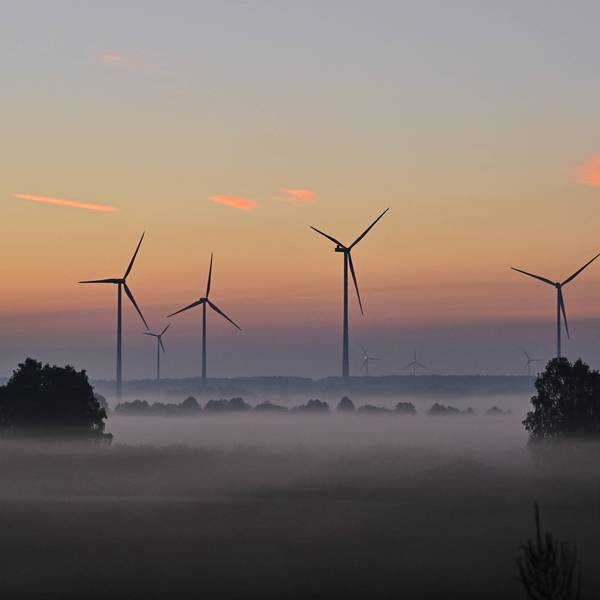

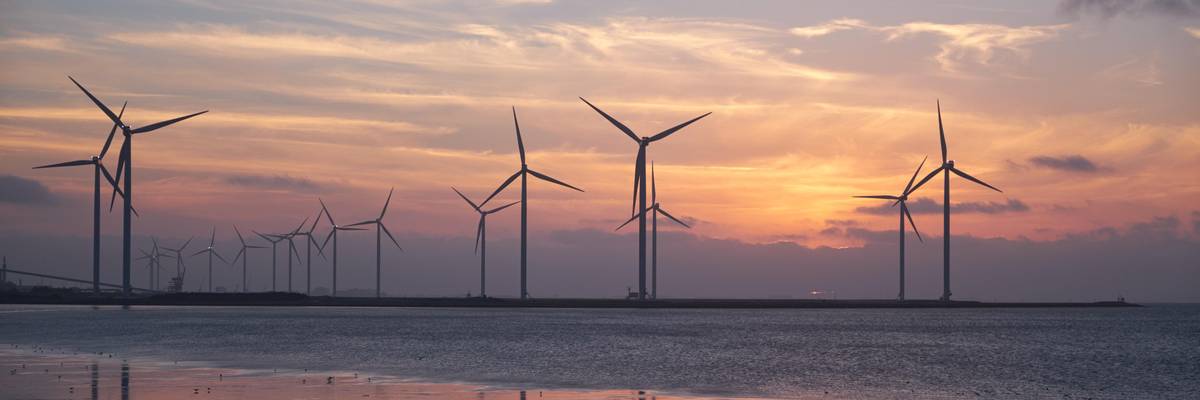
Windmills at sunset. "There’s no valid economic reason to avoid or even delay implementing every climate solution available," writes Suzuki.
It's Ridiculous Just How Good the Economic Case Is for a Rapid Clean Energy Transition
There are no valid economic arguments against rapidly shifting from burning polluting fossil fuels to cleaner energy sources.
There are no valid economic arguments against rapidly shifting from burning polluting fossil fuels to cleaner energy sources.
Working to resolve the climate crisis is a tremendous economic opportunity. Even normally conservative organizations such as the International Monetary Fund agree that the benefits far outweigh the costs.
Of course, the global consumer-based capitalist system encourages waste and destructive practices in the name of financial gain, so the necessary transformational change really requires a shift in economic paradigms. But even under the current system, or a similar one modified to remove the worst elements of greedy profiteering, the economic advantages of acting are clear.
It’s true that not adequately addressing the crisis is already causing untold misery and death, threatening the survival of human and other life, rendering any human-invented “economy” irrelevant. Still, there’s no valid economic reason to avoid or even delay implementing every climate solution available.
But even under the current system, or a similar one modified to remove the worst elements of greedy profiteering, the economic advantages of acting are clear.
IMF research shows that green development and innovation can boost gross domestic product by at least 1.7 percent after five years compared with a baseline scenario, and “other estimates show up to four times the effect.”
The IMF also reports that cheaper energy and expanding energy-efficient production processes increase the benefits, adding, “Most importantly, they come from less global warming and less frequent (and less costly) climate disasters.”
A study in Cell Reports Sustainability found increasing renewable energy in the U.S. substantially reduced sulphur dioxide and nitrogen dioxides in the atmosphere from 2019 to 2022, providing $249 billion in climate and health benefits.
In terms of coal, oil and gas versus renewable energy, the economic advantages of the latter are undeniable and multiplying. Renewable energy costs less, offers greater energy security, is subject to far less market volatility, is reliable and doesn’t pollute as much.
Russia’s invasion of Ukraine illustrates the issue of energy security. With gas supplies cut, energy shortages led to price spikes and impacts on global markets — along with more avariciousness from fossil fuel companies. That’s been cushioned by a rapid transition to renewable energy from sources such as wind and solar with energy storage. Costs for wind and solar also continue to drop, making them more affordable overall than fossil fuels — especially when the high costs of fossil fuel pollution and damage are taken into account.
Renewable energy costs less, offers greater energy security, is subject to far less market volatility, is reliable and doesn’t pollute as much.
An abundance of research and examples shows that investing in measures to combat climate change reduces energy costs and makes energy markets less volatile, spurs technological development, cuts health care expenses, avoids costly impacts on everything from agriculture to urban infrastructure and creates greater economic opportunities for a wider range of people.
Meanwhile, the price of inaction accelerates daily: increasing extreme weather events, greater numbers of people fleeing overheating areas, growing pollution- and climate-related health impacts, and worsening water shortages and agricultural losses.
One recent study in Nature conservatively estimates damages from climate change will cost six times as much as limiting global heating to 2 C within the next 26 years — with average incomes falling by 19 per cent.
Another study in Nature estimates the annual cost of climate-related extreme weather damages alone from 2000 to 2019 “average around $143 billion, which breaks down to around $16.3 million per hour,” and that “Over the past 20 years, extreme weather events globally, like hurricanes, floods and heat waves, have cost an estimated $2.8 trillion.” Those figures are rising rapidly.
There are no valid economic arguments against rapidly shifting from burning polluting fossil fuels to cleaner energy sources. It’s past time to choose a wiser path.
We’ve seen the costly devastation in Canada: heat domes, floods, drought, rising insurance rates and cost-of-living increases. As the Canadian Climate Institute says, “Between 2010 and 2019, insured losses for catastrophic weather events totalled over $18 billion, and the number of catastrophic events was over three times higher than in the 1980s.”
The fossil fuel industry has provided jobs and economic benefits to many in Canada and around the world, as did other harmful industries like tobacco — but at what price? We’ve long known about the pollution and damage, but industry has worked to downplay or cover up negative consequences. It’s important that those affected by the necessary transition are provided opportunities for better, healthier employment — especially as increasing industry automation kills more jobs. But the only ones really benefiting now from fossil fuels are those profiting from the damage.
There are no valid economic arguments against rapidly shifting from burning polluting fossil fuels to cleaner energy sources. It’s past time to choose a wiser path.
We are at a crossroads
This country and this world are at a monumental crossroads. In a few short weeks, US voters will have an opportunity to beat back the forces of fascism and confront the billionaires who are rigging the economy, our media system, and our democracy, making it increasingly impossible for ordinary people to get by. We’re not just talking about the election. We’re talking about what must be done once these fascist elements are vanquished from power. We need a bolder set of solutions than what either major party has so far been willing to offer and a working-class movement ready to fight like hell for it. Trump didn't emerge from nowhere. The conditions that fueled MAGA authoritarianism were created by decades of radical neoliberal economic policies and a corrupt political system dominated by corporate interests. They slashed taxes on the super-rich, promising that the benefits would trickle down. They said giveaways to the corporate titans would make life more affordable for the rest of us. It was all bullshit. And when a bitter, betrayed populace searches for someone to blame, right-wing demagogues have little trouble finding scapegoats. People know when they're being lied to, but you won't hear any of this from the corporate media. Only independent journalism—powered and funded by people who believe in building a better world—can deliver truly trustworthy daily news. Our Fall Campaign is underway, and we need your help. To power our newsroom through the rest of the year, we need to raise $125,000 by midnight on October 31. So if you share our vision, please contribute whatever you can to sustain our work. |
There are no valid economic arguments against rapidly shifting from burning polluting fossil fuels to cleaner energy sources.
Working to resolve the climate crisis is a tremendous economic opportunity. Even normally conservative organizations such as the International Monetary Fund agree that the benefits far outweigh the costs.
Of course, the global consumer-based capitalist system encourages waste and destructive practices in the name of financial gain, so the necessary transformational change really requires a shift in economic paradigms. But even under the current system, or a similar one modified to remove the worst elements of greedy profiteering, the economic advantages of acting are clear.
It’s true that not adequately addressing the crisis is already causing untold misery and death, threatening the survival of human and other life, rendering any human-invented “economy” irrelevant. Still, there’s no valid economic reason to avoid or even delay implementing every climate solution available.
But even under the current system, or a similar one modified to remove the worst elements of greedy profiteering, the economic advantages of acting are clear.
IMF research shows that green development and innovation can boost gross domestic product by at least 1.7 percent after five years compared with a baseline scenario, and “other estimates show up to four times the effect.”
The IMF also reports that cheaper energy and expanding energy-efficient production processes increase the benefits, adding, “Most importantly, they come from less global warming and less frequent (and less costly) climate disasters.”
A study in Cell Reports Sustainability found increasing renewable energy in the U.S. substantially reduced sulphur dioxide and nitrogen dioxides in the atmosphere from 2019 to 2022, providing $249 billion in climate and health benefits.
In terms of coal, oil and gas versus renewable energy, the economic advantages of the latter are undeniable and multiplying. Renewable energy costs less, offers greater energy security, is subject to far less market volatility, is reliable and doesn’t pollute as much.
Russia’s invasion of Ukraine illustrates the issue of energy security. With gas supplies cut, energy shortages led to price spikes and impacts on global markets — along with more avariciousness from fossil fuel companies. That’s been cushioned by a rapid transition to renewable energy from sources such as wind and solar with energy storage. Costs for wind and solar also continue to drop, making them more affordable overall than fossil fuels — especially when the high costs of fossil fuel pollution and damage are taken into account.
Renewable energy costs less, offers greater energy security, is subject to far less market volatility, is reliable and doesn’t pollute as much.
An abundance of research and examples shows that investing in measures to combat climate change reduces energy costs and makes energy markets less volatile, spurs technological development, cuts health care expenses, avoids costly impacts on everything from agriculture to urban infrastructure and creates greater economic opportunities for a wider range of people.
Meanwhile, the price of inaction accelerates daily: increasing extreme weather events, greater numbers of people fleeing overheating areas, growing pollution- and climate-related health impacts, and worsening water shortages and agricultural losses.
One recent study in Nature conservatively estimates damages from climate change will cost six times as much as limiting global heating to 2 C within the next 26 years — with average incomes falling by 19 per cent.
Another study in Nature estimates the annual cost of climate-related extreme weather damages alone from 2000 to 2019 “average around $143 billion, which breaks down to around $16.3 million per hour,” and that “Over the past 20 years, extreme weather events globally, like hurricanes, floods and heat waves, have cost an estimated $2.8 trillion.” Those figures are rising rapidly.
There are no valid economic arguments against rapidly shifting from burning polluting fossil fuels to cleaner energy sources. It’s past time to choose a wiser path.
We’ve seen the costly devastation in Canada: heat domes, floods, drought, rising insurance rates and cost-of-living increases. As the Canadian Climate Institute says, “Between 2010 and 2019, insured losses for catastrophic weather events totalled over $18 billion, and the number of catastrophic events was over three times higher than in the 1980s.”
The fossil fuel industry has provided jobs and economic benefits to many in Canada and around the world, as did other harmful industries like tobacco — but at what price? We’ve long known about the pollution and damage, but industry has worked to downplay or cover up negative consequences. It’s important that those affected by the necessary transition are provided opportunities for better, healthier employment — especially as increasing industry automation kills more jobs. But the only ones really benefiting now from fossil fuels are those profiting from the damage.
There are no valid economic arguments against rapidly shifting from burning polluting fossil fuels to cleaner energy sources. It’s past time to choose a wiser path.
There are no valid economic arguments against rapidly shifting from burning polluting fossil fuels to cleaner energy sources.
Working to resolve the climate crisis is a tremendous economic opportunity. Even normally conservative organizations such as the International Monetary Fund agree that the benefits far outweigh the costs.
Of course, the global consumer-based capitalist system encourages waste and destructive practices in the name of financial gain, so the necessary transformational change really requires a shift in economic paradigms. But even under the current system, or a similar one modified to remove the worst elements of greedy profiteering, the economic advantages of acting are clear.
It’s true that not adequately addressing the crisis is already causing untold misery and death, threatening the survival of human and other life, rendering any human-invented “economy” irrelevant. Still, there’s no valid economic reason to avoid or even delay implementing every climate solution available.
But even under the current system, or a similar one modified to remove the worst elements of greedy profiteering, the economic advantages of acting are clear.
IMF research shows that green development and innovation can boost gross domestic product by at least 1.7 percent after five years compared with a baseline scenario, and “other estimates show up to four times the effect.”
The IMF also reports that cheaper energy and expanding energy-efficient production processes increase the benefits, adding, “Most importantly, they come from less global warming and less frequent (and less costly) climate disasters.”
A study in Cell Reports Sustainability found increasing renewable energy in the U.S. substantially reduced sulphur dioxide and nitrogen dioxides in the atmosphere from 2019 to 2022, providing $249 billion in climate and health benefits.
In terms of coal, oil and gas versus renewable energy, the economic advantages of the latter are undeniable and multiplying. Renewable energy costs less, offers greater energy security, is subject to far less market volatility, is reliable and doesn’t pollute as much.
Russia’s invasion of Ukraine illustrates the issue of energy security. With gas supplies cut, energy shortages led to price spikes and impacts on global markets — along with more avariciousness from fossil fuel companies. That’s been cushioned by a rapid transition to renewable energy from sources such as wind and solar with energy storage. Costs for wind and solar also continue to drop, making them more affordable overall than fossil fuels — especially when the high costs of fossil fuel pollution and damage are taken into account.
Renewable energy costs less, offers greater energy security, is subject to far less market volatility, is reliable and doesn’t pollute as much.
An abundance of research and examples shows that investing in measures to combat climate change reduces energy costs and makes energy markets less volatile, spurs technological development, cuts health care expenses, avoids costly impacts on everything from agriculture to urban infrastructure and creates greater economic opportunities for a wider range of people.
Meanwhile, the price of inaction accelerates daily: increasing extreme weather events, greater numbers of people fleeing overheating areas, growing pollution- and climate-related health impacts, and worsening water shortages and agricultural losses.
One recent study in Nature conservatively estimates damages from climate change will cost six times as much as limiting global heating to 2 C within the next 26 years — with average incomes falling by 19 per cent.
Another study in Nature estimates the annual cost of climate-related extreme weather damages alone from 2000 to 2019 “average around $143 billion, which breaks down to around $16.3 million per hour,” and that “Over the past 20 years, extreme weather events globally, like hurricanes, floods and heat waves, have cost an estimated $2.8 trillion.” Those figures are rising rapidly.
There are no valid economic arguments against rapidly shifting from burning polluting fossil fuels to cleaner energy sources. It’s past time to choose a wiser path.
We’ve seen the costly devastation in Canada: heat domes, floods, drought, rising insurance rates and cost-of-living increases. As the Canadian Climate Institute says, “Between 2010 and 2019, insured losses for catastrophic weather events totalled over $18 billion, and the number of catastrophic events was over three times higher than in the 1980s.”
The fossil fuel industry has provided jobs and economic benefits to many in Canada and around the world, as did other harmful industries like tobacco — but at what price? We’ve long known about the pollution and damage, but industry has worked to downplay or cover up negative consequences. It’s important that those affected by the necessary transition are provided opportunities for better, healthier employment — especially as increasing industry automation kills more jobs. But the only ones really benefiting now from fossil fuels are those profiting from the damage.
There are no valid economic arguments against rapidly shifting from burning polluting fossil fuels to cleaner energy sources. It’s past time to choose a wiser path.