

SUBSCRIBE TO OUR FREE NEWSLETTER
Daily news & progressive opinion—funded by the people, not the corporations—delivered straight to your inbox.
5
#000000
#FFFFFF
To donate by check, phone, or other method, see our More Ways to Give page.
Daily news & progressive opinion—funded by the people, not the corporations—delivered straight to your inbox.
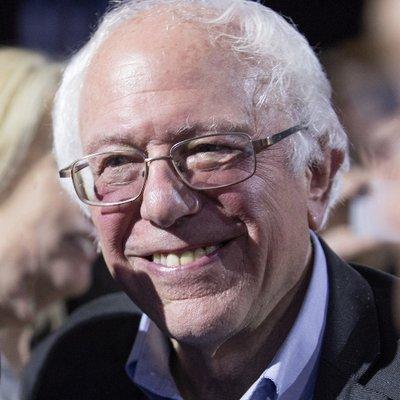
Sen. Bernie Sanders (I-Vt.) Monday gave remarks on the floor of the U.S. Senate on the growing labor movement in the United States following two major victories at an Amazon warehouse on Staten Island and a Starbucks roastery in New York City.
Sanders' remarks, as prepared for delivery, are below.
M. President, let me begin by congratulating the workers at Amazon in Staten Island who, for the first time, were able to win a union organizing campaign against that giant corporation which is owned by Jeff Bezos, the second wealthiest person in America.
Amazon spent over $4 million in trying to defeat the union drive. The independent union, the Amazon Labor Union, had almost no money at all for their grassroots campaign but ended up with 55% of the vote. Congratulations Amazon Labor Union.
I also want to congratulate the workers at Starbucks for their incredible union organizing efforts. Starbucks has coffee shops in some 15,000 locations all across the country and, until a few months ago, none of them were organized. Then, in December, workers in 2 shops in Buffalo, New York voted to join a union and that union organizing effort is now spreading like wildfire all across the nation. In fact, last Friday workers in New York City successfully voted to form the first Starbucks union roastery and tenth union Starbucks coffee shop in America. And, in the coming weeks and months, Starbucks workers in some 170 other coffee shops in 27 states will be holding union elections.
What makes these union victories so impressive is that from start to finish they were accomplished by a grassroots movement with very little financial resources.
Why is it important that we support these union organizing efforts? We live in a time of massive income and wealth inequality where CEOs make 350 times more than the average worker, where 2 people own more wealth than the bottom 42 percent.
While the billionaire class is becoming much, much richer, real weekly wages for American workers are $40 lower today than they were 49 years ago. In fact, during that period there has been a massive, massive transfer of wealth from the working class and middle class of our country to the top one percent.
According to the RAND Institute, since 1975, $50 trillion in wealth has been redistributed from the bottom 90% to the top 1% - primarily because corporate profits and CEO compensation has grown much faster than the wages of average workers.
And listen to this, which really says it all. During this terrible pandemic, when thousands of essential workers died, gave up their lives, doing their jobs, some 700 billionaires in America became nearly $2 trillion richer.
Today, multi-billionaires like Elon Musk, Jeff Bezos and Richard Branson are off taking joy rides on rocket ships to outer space, buying $500 million super-yachts and living in mansions with 25 bathrooms.
And let's be clear. It's not just income and wealth inequality. It is economic and political power. In America today, just 3 Wall Street firms (Black Rock, State Street and Vanguard) control assets of over $21 trillion which is essentially the GDP of the United States, the largest economy on Earth. 3 Wall Street firms.
Why do we want to grow the union movement? Because unions provide better wages, benefits and working conditions for their members. In fact, union workers make, on average, wages that are about 20 percent higher than their non-union counterparts. They also have much better healthcare and far better pension plans than non-union employees. And, by the way, when unions win decent contracts for their employees they drive up wages for all workers in the country.
Further, unions give workers some degree of control over their work lives and make them more than just cogs in a machine. They end the ability of companies being able to arbitrarily fire workers for any reason and to impose any schedule that they want on their employees. In other words, at a time when we are seeing more and more concentration of ownership in this country and increased corporate power, unions give workers the ability to fight back and have some control over their lives.
Similarly, when large corporations have enormous political power through the billions they spend on lobbying, campaign contributions and advertising, unions have the capability to fight back and create a legislative agenda that works for all Americans and not just the few.
What these union victories tell me is that working people all over this country are sick and tired of being exploited by corporations making record-breaking profits.
They are sick and tired of billionaires like Jeff Bezos and Howard Schultz, the founder of Starbucks, becoming obscenely rich during the pandemic, while they put their lives on the line working for inadequate wages, inadequate benefits, inadequate working conditions and inadequate schedules.
And let's be clear. If you think that the union victories at Amazon and Starbucks are an aberration, you would be sorely mistaken.
During the last year, I have been proud to stand in solidarity with courageous workers around the country who have been on strike or who are engaged in union organizing efforts.
I'm talking about the United Auto Workers who went on strike at John Deere in Iowa, Illinois and Kansas to protest against massive cutbacks to retirement benefits and totally inadequate pay raises.
I'm talking about the United Steel Workers who went on strike at Special Metals in West Virginia - a company owned by Warren Buffett worth $127 billion - to fight for good wages and good benefits.
I'm talking about Bakery Workers who went on strike at Kellogg's, Nabisco and the Jon Donaire ice cream cake factory in California fighting for justice, dignity and respect.
I'm talking about the United Mine Workers who are still on strike at Warrior Met in Alabama - a company owned by BlackRock - the largest Wall Street investment firm in the country managing $10 trillion in assets.
I'm talking about the United Food and Commercial Workers who went on strike at the King Soopers grocery store chain owned by Kroger in Colorado.
And I'm talking about graduate students and Adjunct Professors at MIT who are waging a strong union organizing effort on that campus.
Today, I want to continue to express my support for these workers who are not only organizing for themselves and for their coworkers, but for all of us - and, in fact, for the future of the entire country.
M. President, while we may not hear much talk about the struggles of the working class in communities across the country, let's be clear.
The union struggles that have been taking place against corporate greed ultimately determine the quality of wages, benefits, and working conditions that all American workers enjoy.
In other words, when unionized workers do well in raising the bar for economic and social justice, we all do well. Their success is our shared success. Make no mistake about it, we cannot have a strong middle class in this country without a strong labor movement.
Here is the bottom line. In the year 2022, the United States and the rest of the world face two very different political paths. On one hand, there is a growing movement towards oligarchy in which a small number of incredibly wealthy and powerful billionaires own and control a significant part of the economy and exert enormous influence over the political life of our country.
On the other hand, in opposition to oligarchy and corporate greed, there is a movement of working people and young people who, in ever increasing numbers, are fighting for justice in a way that we have not seen in years.
And it is that growing trade union movement that makes me so very hopeful for the future of this country - and it is a movement that I will do all that I can to support.
During the war's first 40 days, 77% of US attacks involved damage to civilian infrastructure or harm to civilians.
Following the US bombing of a wedding party in Iran earlier this week that killed at least five people—including two children—and left dozens more wounded, Trump administration officials repeated the mantra that the US military "never targets civilians."
In the days since the strike in the small southern town of Kuhestak, an analysis by Reuters found that the bombing was likely a direct hit by a US munition.
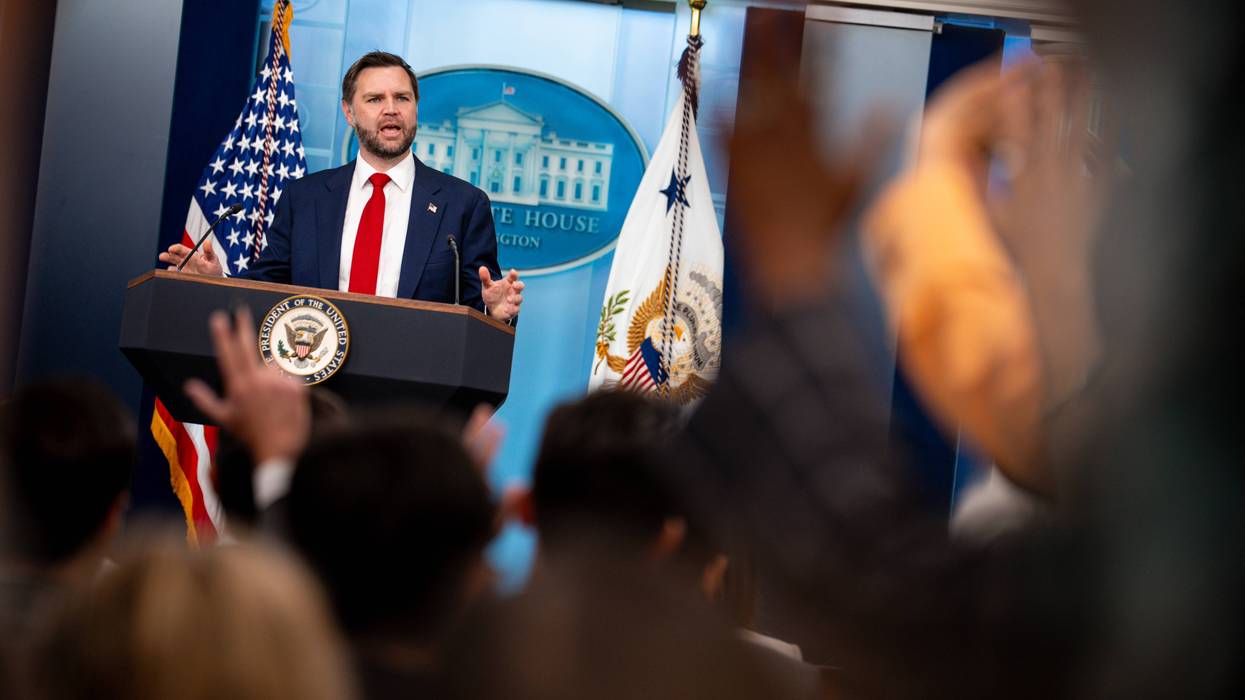
During a White House press briefing on Thursday following the report, Vice President JD Vance said the US was investigating the attack: “We’re investigating it because obviously we care," he said. "We want to know."
But, questioned about US responsibility, he reiterated: "What I can say with 100% confidence is that unlike the [Islamic Revolutionary Guard Corps], the United States never targets civilians in combat. We never will do that. We never have done that. And unfortunately, obviously, sometimes things happen."
He added: "And if we do make mistakes, again, this is a big difference between us and Iran. When our military makes mistakes, they learn from them to try to get better from them. So we’re investigating it very fully.”
The comments raised eyebrows immediately: The US-based Human Rights Activists News Agency (HRANA) has documented that between February 28, when President Donald Trump launched the war, and April 7, when a ceasefire agreement was reached, at least 1,701 civilians were killed, including at least 307 children, and 714 more people have been killed who could not be classified as either military or civilians.
The first phase of the war brought several examples of mass civilian casualty events, including the double-tap bombing of an elementary school in Minab on the war's first day, which killed at least 150 children and teachers, and precision missile strikes on a sports hall and surrounding residential areas in Lamerd, which killed at least 21 civilians, including at least seven children.
Trump administration officials have brushed these attacks off as unfortunate mistakes and denied allegations that civilians were being targeted.
In the case of Minab, the administration has still never formally accepted responsibility, although an internal Pentagon assessment concluded that US forces were "likely" responsible, and several independent investigations have presented evidence demonstrating US responsibility.
But while intent remains an open question about these specific incidents, data from the first phase of the war show that the overwhelming bulk of incidents involved the targeting of nonmilitary infrastructure.
A May investigation by HRANA found that over the war's first 40 days, 77% of the 6,324 verified incidents it documented involved either civilian harm or damage to civilian objects. This included:
The group pointed to "several patterns that raise serious concerns under international humanitarian law," including "apparent failures in target verification, use of artificial intelligence with minimal human oversight, inadequate and inaccessible warnings, the use of large explosive weapons in populated areas, repeated or 'double-tap' strikes, [and] attacks targeting widespread civilian infrastructure."
During that same period, Iranian attacks across Israel and US-allied nations in the Middle East killed at least 36 civilians, according to a country-by-country tally from Reuters on April 7, with additional fatalities in Gulf countries whose civilian or military status is not always specified.
Trump has regularly made threats to rain down mass destruction upon Iran, including threatening that "a whole civilization will die" while promising to destroy "every" bridge and power plant in the country.
Wes J. Bryant, who served as the Pentagon’s chief of civilian harm assessments and now works as a war crimes analyst, rejected the Trump administration's contention that civilian casualties in the war have been the result of mere mistakes, saying they were instead the result of US forces "recklessly and negligently endangering and killing civilians."
"Is the US intentionally targeting civilians in Iran?" Bryant told Al Jazeera. "It is."
"I can tell you from experience, every single target location is recorded at multiple levels throughout the chain of command," he said, adding that in this week's wedding attack and others like the attack on the Minab school, the military would have been able “to report within hours” if a school or wedding was struck.
The anti-war activist group CodePink noted that the bombing of weddings by US forces long predates this week's attack, citing at least 10 other cases since 2001 in which wedding parties have been bombed, leading to dozens of casualties in Iraq, Afghanistan, and Yemen.
Pointing out that the wedding attack used three Boeing-produced missiles that the company markets as the "most accurate" in the US Navy's arsenal, Danaka Katovich, the national codirector of CodePink, said, "The Trump administration did not do this by accident."
"Even if they say they're 'investigating that'... like they did with the Minab school bombing, they are in a desperate situation," she said. "They are not winning the war, and they are running out of munitions, and they have no public support. They are resorting to tactics that attempt to inflict mass civilian harm."

"Donald Trump boasted aloud that his sole intent for building this arch is to honor himself," said Congressman Don Beyer, calling for ramped-up opposition to the project.
Government watchdogs and opposition lawmakers in Congress are calling foul once again on President Donald Trump's plans for another "vanity project" in Washington, DC after his Secretary of Interior Doug Burgum announced Thursday that—despite the lack of legal authority—excavation would soon begin on a white and gold arch built to honor Trump in heart of the nation's capital.
“The administration has no legal authority to begin work on its monumental arch," said Nicolas Sansone, an attorney with Public Citizen Litigation Group—currently representing plaintiffs in a suit to block the project—following Burgum's announcement, made via social media.
"By law, the administration cannot proceed with this project unless and until Congress authorizes construction," added Sansone. "And even the administration appears to recognize that the arch requires authorization from the National Capital Planning Commission, which it has not received. Even under the administration’s own view of the law, then, the preparatory work that Secretary Burgum has announced has no legal basis.”
"Even Doug Burgum, in his heart, knows that this is immoral and disrespectful to America’s fallen heroes. All of us who oppose it must stand up and redouble our efforts to stop this monstrosity.”
In his post, Burgum said the arch would "be one of the Great Pieces of American Architecture" ever constructing, one “befitting the most powerful Capital in the World." But critics have said since the outset that a statue of this size in this area of DC would negatively impact other memorials and that any project of this magnitude would have to go through the proper process, including approval of Congress and the permitting with various federal authorities.
According to the Associated Press:
The proposed arch is one of several projects the Republican president is pursuing to leave his lasting imprint on Washington, including renaming and renovating the Kennedy Center, building a huge new White House ballroom, refurbishing the Lincoln Memorial reflecting pool and rebuilding a golf course in East Potomac Park that could significantly reduce the public’s access to running and biking paths.
While a National Park Service report released last week offered its backing of the project, it acknowledged, AP noted, that "there would be adverse effects to the sightlines between a host of iconic landmarks, disrupting the historical significance of dozens of nearby sites."
Rep. Don Beyer (D-Va.), who represents the district just outside DC that includes Arlington National Cemetery, decried the proposed arch as an "illegal, gridlock-increasing, narcissistic" project that the National Park Service has stated would disrupt the cemetery and impede local traffic.
“This project is not even close to being ready for prime time. The administration has not won the legal battle over the proposal, which is plainly illegal without congressional authorization. They have not responded to or addressed my warnings about how construction would significantly increase traffic problems across the region," Beyer said in a statement on Thursday.
"Trump boasted aloud that his sole intent for building this arch is to honor himself," Beyer added. "Even Doug Burgum, in his heart, knows that this is immoral and disrespectful to America’s fallen heroes. All of us who oppose it must stand up and redouble our efforts to stop this monstrosity.”

"Labor Day weekend travelers are facing the highest gas prices ever for this time of year," said the American Automobile Association.
The average price for a gallon of diesel fuel in the United States hit an all-time high average price of $5.85 on Friday as the Trump administration's war on Iran and its resulting disruptions to the global energy market showed no signs of ending.
"Trump did it! Diesel hits a new record high!" economist Dean Baker wrote sardonically on social media.
The Associated Press noted that "because diesel is used for many freight and delivery networks, higher diesel prices mean higher transportation costs for a long list of everyday goods."
According to the American Automobile Association (AAA), the national average price for a gallon of regular gasoline was just under $4.15 on Friday—up from $3.20 a year ago and an increase of nearly 40% since the US and Israel started bombing Iran in late February, prompting the Middle East country to retaliate by closing the Strait of Hormuz, a critical waterway for the global oil trade.
"Labor Day weekend travelers are facing the highest gas prices ever for this time of year," AAA said on Thursday. "The national average has never been above $4 per gallon on Labor Day. The current Labor Day record is $3.82, set on September 3, 2012. Even though gasoline demand decreases this time of year, typically bringing down gas prices, this year is different due to the high cost of crude oil."
Kendall Witmer, rapid response director for the Democratic National Committee, said in a statement Friday that "working families deserve to enjoy their hard-earned holiday weekends, but Trump and Republicans’ agenda has made everything from gas to groceries more expensive and left families with no breathing room."
"It’s no wonder Americans are rejecting Trump and Republicans," Witmer added, "forcing Trump’s approval ratings to fall to embarrassing lows."
President Donald Trump's White House has thus far responded dismissively to concerns about surging gas prices, even as they appear to pose a significant threat to the Republican Party's chances of retaining control of Congress in the upcoming midterm elections.
At a rally in New York last month, Trump told Americans that paying "a tiny little bit more for your gasoline" is worth the price for waging the Iran war, which is historically unpopular with the US public.
During a press conference on Thursday, US Vice President JD Vance suggested Americans should be grateful that gas prices aren't even higher.
"Gas, frankly, could’ve been much, much higher were it not for our efforts," said Vance, referring to the administration's attempts to reopen the Strait of Hormuz.
The New Republic's Hafiz Rashid observed that Vance's remarks "belie the fact that the Iran war was arbitrarily and unnecessarily started by the Trump administration."
"There was no threat to the flow of oil and gas or other maritime traffic traversing through the Strait of Hormuz prior to the war," Rashid wrote. "If not for the efforts of President Trump, gas would in fact be much, much, lower."
While the administration claims the Strait is now open and that dozens of vessels carrying millions of barrels of oil are transiting the critical waterway daily, analysts have cast doubt on the assertion. Al Jazeera noted Thursday that "according to marine analytics firm Kpler, just six vessels crossed the Strait on Wednesday, 11 on Tuesday, and five on Monday. It put the 10-day average at 13 vessels per day."

“We deeply regret that Sampurna could not be saved," said officials after the animal was found struggling to breath from smoke inhalation near a palm oil plantation.
Conservationists worldwide are mourning Friday following news that a rescued orangutan on the Indonesian island of Borneo has died—a singular though heartbreaking symbol of humanity's rapacious destruction of fragile ecosystems, in this case the ravages of the palm oil industry on the rainforests where the critically endangered primates once thrived but now struggle "dangerously close to the point of extinction."
The death of the orangutan named Sampurna was confirmed Thursday by the West Kalimantan Natural Resources Conservation Agency (BKSDA) in Borneo, who said the adult male primate died over the weekend after being found, struggling to stand or take in oxygen, by villagers near Ketapang, West Kalimantan earlier in the day.
"It was very weak, then I gave it water," said Jais, the local farmer who first found Sampurna in a roadside ditch and only goes by one name.
According to the Sarawak Tribune:
Sampurna was first reported by villagers at about 7am after he was found lying inside a dry drainage ditch in a community-owned oil palm plantation.
When rescuers from BKSDA and the Foundation for International Animal Rescue Indonesia (YIARI) arrived, Sampurna was unable to stand, could only move with difficulty and was suffering from severe breathing problems.
Emergency treatment, including oxygen therapy and intravenous fluids, was administered before he was transported to YIARI’s rehabilitation centre at about 11.30am for further medical care.
However, his condition continued to deteriorate.
With wildfires raging in the area in and around the palm tree plantation—a source of frustration for those who have for decades tried to curb the palm oil industry's destruction of fragile rainforest habitat across Indonesia—BKSDA said "lung abnormalities" found during a post-mortem of Sampura were thought to be caused by prolonged exposure to wildfire smoke, impairing lung function and leading to "acute hypoxia," or oxygen deprivation.
“We deeply regret that Sampurna could not be saved,” said BKSDA's natural conservation chief Murlan Dameria Pane in a statement.
 Karmele Llano Sanchez, CEO of wildlife foundation Yayasan Inisiasi Alam Rehabilitasi Indonesia, along with other veterinarians, gives treatment to an orangutan named Sampurna, during a rescue operation at a palm-oil plantation near an area affected by wildfires, in Kuala Satong village, Ketapang regency, West Kalimantan province, Indonesia, on Aug 30, 2026. (Photo: Reuters/Willy Kurniawan)
"Sampurna the orangutan has died," said Dr. Tom Montgomery, a marine biologist and conservationist, in a social media post. "He collapsed on a palm-oil plantation in West Kalimantan province, Indonesia—his lungs destroyed by the smoke of his burning forest."
As the German Press Agency reported:
Sampurna had been monitored by YIARI’s Orangutan Protection Unit on August 16 and was still moving actively at the time. About two weeks later, he was found collapsed in a plantation near areas affected by fires.
His death highlights the threat that forest fires pose to orangutans, which depend on increasingly fragmented forests across Borneo.
Fires can destroy food sources and habitats, forcing the critically endangered animals into plantations and other areas where they are exposed to smoke and potential conflict with people.
Karmele Llano Sanchez, CEO of YIARI, told Reuters that the "orangutan got hypoxia because of the very thick smoke in the area," and while it showed no outward signs of being burned by the fires it could not properly breath and was vomiting.
In a statement last month, the Borneo Orangutan Survival (BOS) Foundation warned that "for wild orangutan, one fire can mean losing everything." With climate change a constant threat to crucial habit, new warnings of a "supersized" El Nino event forming is only elevating concerns about the impact on threatened species in the coming years.
- YouTube youtu.be
"The forest they call home, the food they depend on, and their chance of survival," BOS said, is all under threat. "These forests are also home to countless other species and include some of the world’s most important tropical peatland ecosystems and carbon stores."
With the fire season on the island already raging in August, the group said danger of wildfires for orangutans and others species "is not a future threat."
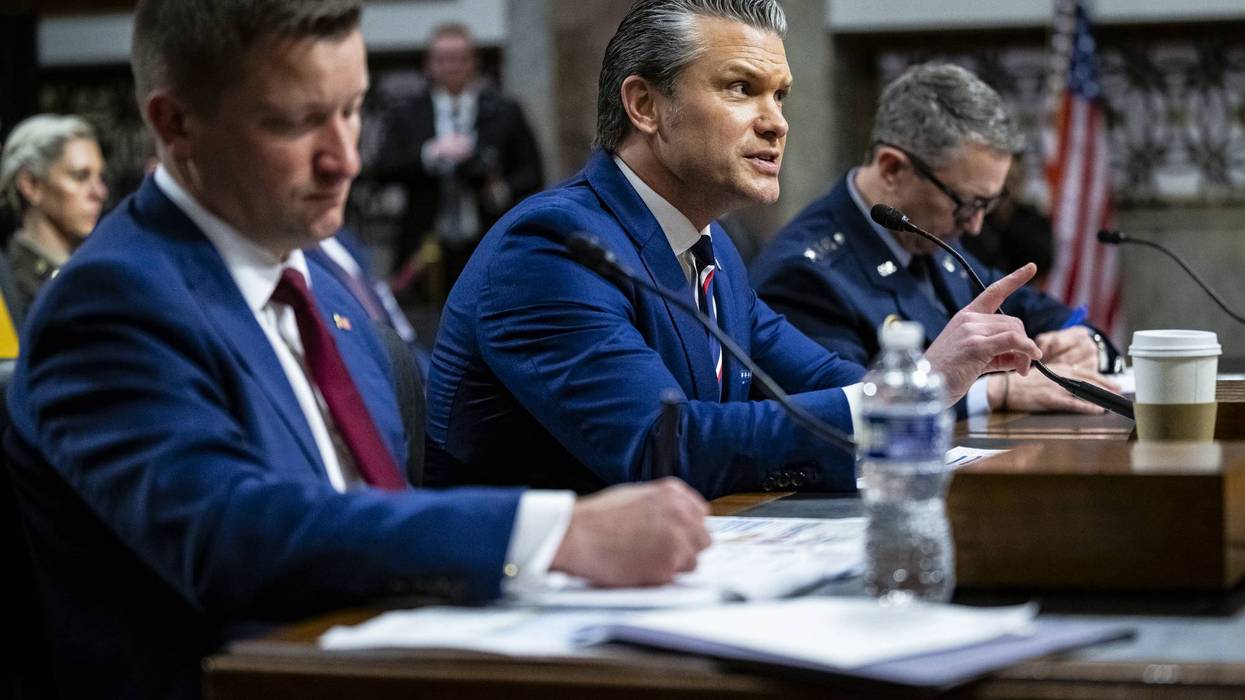
"These funds were provided for lifesaving medical research, not as extra money for the Department of Defense," said Rep. Rosa DeLauro.
US President Donald Trump's Department of Defense is reportedly working to divert billions of dollars in federal funding from the National Institutes of Health to bolster the Pentagon's budget as the administration wages a costly, destructive, and open-ended war on Iran.
Rep. Rosa DeLauro (D-Conn.), the top House Democratic appropriator, revealed late Thursday that the Pentagon—without notifying lawmakers or the public—signed an interagency agreement that could give the Defense Department "access to billions of dollars that Congress provided to NIH for critical biomedical research."
Under the deal, which the Trump administration disclosed to Congress under pressure from Democrats on the House Appropriations Committee, the Pentagon would pull funds from the National Institute of Allergy and Infectious Diseases, whose annual budget is around $7 billion. It is unclear whether NIH has signed the agreement.
"This secretive attempt to siphon research funds away from NIH is outrageous. The interagency agreement needs to be terminated immediately,” DeLauro said in a statement. “These funds were provided for lifesaving medical research, not as extra money for the Department of Defense. It is no secret that the Department of Defense is facing enormous financial pressure because of President Trump’s war of choice with Iran. But the Trump administration cannot make American patients, families, and scientists pay the price."
"Circumventing Congress to divert money intended to help Americans who are exposed to HIV, influenza, tuberculosis, and other deadly diseases—and directing those funds to the Department of Defense—is beyond the pale," DeLauro added. "DoD already has programs, funded by Congress, to research and develop medical countermeasures to chemical, biological, and nuclear threats, and does not need NIH funding to do so. The administration must provide Congress with a full accounting of how this interagency agreement was developed and exactly how much taxpayer money it is trying to transfer to DoD.”
Military spending accounts for roughly half of the federal discretionary budget, but the Pentagon in recent months has said it is facing a cash shortfall in large part due to the illegal war on Iran. The Pentagon has said publicly that the Iran war has cost the US around $37.5 billion so far, though the agency—which has never passed an independent audit—has not released a full accounting of the conflict, and experts say the figure is likely a gross undercount.
On top of pursuing an annual military budget exceeding $1.1 trillion, the Trump administration is pushing lawmakers to approve a $67 billion supplemental funding package to cover some of the Iran war's costs.
"Trump chose to start a costly war with Iran after giving billionaires and big corporations trillions of dollars in tax breaks—and now wants American patients to unknowingly foot the Defense Department’s bills," Leslie Dach, chair of the advocacy group Protect Our Care, said in a statement Thursday. "Not a single dollar Congress appropriated for life-saving disease research should go into the bumbling hands of Defense Secretary Pete Hegseth for any claimed purpose."
A Trump administration spokesperson told The Hill that the Pentagon-NIH deal would "enable nimble multi-agency resources to collaboratively respond to public health emergencies, such as the recent Ebola outbreak."
Dach argued that no one should take the Trump administration "at its word about the military research they supposedly plan to fund with taxpayer money that was meant to find cures for diseases here at home."
"Given Secretary Hegseth’s history of lying through his teeth about our national security and the fact this budgetary sleight of hand was reluctantly revealed to Congress, would anyone be surprised if these raided NIH funds were actually intended to buy more bombs?" Dach asked. "This backroom deal at the expense of public health needs to be revoked immediately, followed by a serious congressional investigation into the extent of and motives behind the Trump administration’s taxpayer money shell game.”
Sen. Patty Murray (D-Wash.), Senate Democrats' top appropriator, also called for the immediate termination of the agreement.
“As if canceling lifesaving medical research and clinical trials and firing cancer researchers en masse were not bad enough, the Trump administration is now trying to rob NIH of billions of dollars that Congress provided for medical research so that it can pad the Pentagon’s budget," said Murray. "We cannot allow this administration to shred patients’ hopes of new, lifesaving cures and treatments so that President Trump and Secretary Hegseth can secretively fund their own priorities in defiance of Congress."

"Your administration just killed a 6-year-old boy and at least 4 other people at a family wedding in Iran. Sounds like war to me."
Asked Thursday by a reporter in Washington, DC if he thought the war started by President Donald Trump on February 28—over six months ago—would be concluded by the time American voters go to the polls in November, Vice President JD Vance responded by denying the idea that a war is even what's going on.
"I wouldn't call it a war," Vance said.
Despite fresh US airstrikes on Iranian military targets this week acknowledged by Trump and the Pentagon and the US bombing of a wedding Tuesday night—an attack that killed at least five Iranian civilians, including a 6-year-old child, and wounded nearly 70 others—Vance told reporters, "Right now, there's no active shooting."
In the very next breath, Vance said, "I recognize there have been places where this has flared up," but contended that "major combat operations only lasted about six weeks," as a way to make a case that "war" is not taking place.
COLLINS: Will this war be over by the midterm elections?
JD VANCE: I wouldn't call it a war pic.twitter.com/CH2wot7pW1
— Aaron Rupar (@atrupar) September 3, 2026
Critics, however, pushed back against the vice president's characterization.
"Your administration just killed a 6-year-old boy and at least 4 other people at a family wedding in Iran," said Rep. Jim McGovern (D-Mass.) in response to Vance's remarks. "Sounds like war to me."
Earlier on Thursday, Trump's Commerce Secretary Howard Lutnick was forced to apologize after falsely claiming that no US servicemembers have died since the US President took the nation to war on February 28.
“I misspoke," Lutnick said in a social media post. "Eighteen members of our military have died, and to those families my heart breaks and I am so very sorry for their loss." Lutnick claimed he was thinking about the US military's attack on Venezuela, ordered by Trump last year and during which the nation's president and first lady were abducted by US soldiers and who remain imprisoned in New York.
Trump's war of choice against Iran, according to independent monitors, has resulted in the death of upwards of 2,100 civilians, though precise estimates vary, including hundreds of children.
On the economic side, the war has unleashed a global energy and food crisis, with gasoline and grocery prices soaring in the US and deeper regional instability unleashed across the Middle East.
During his remarks to reporters on Thursday, Vance tried to argue that "the reason gas prices are so higher right now, is because the Iranians are shooting at commercial shipping" in the Strait of Hormuz, all while refusing to acknowledge it was the Trump administration that started the war in the first place, prior to which the Strait was open to free-flowing shipping traffic.
On the public opinion front, a new poll released by Navigator research company on Thursday found that one-in-five supporters who voted for Trump in 2024 now regret their decision. Among those with buyer's remorse, the survey found that the most cited reasons were broken promises, foreign policy decisions, and the cost of living crisis they are now experiencing.
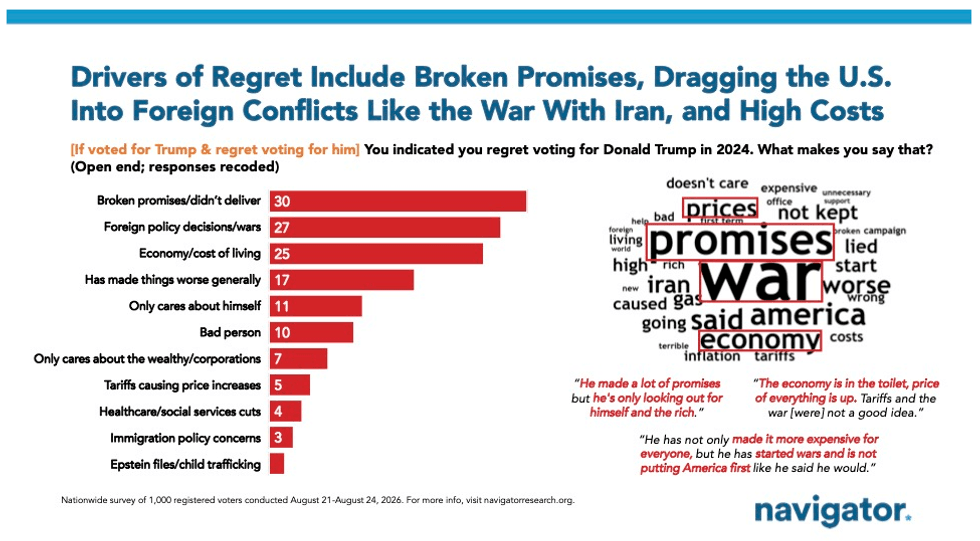
But the number one reason among those voters (45%) who regretted their vote was due to Trump's war on Iran. And yes, according to the poll, they knew enough to call it a "war."
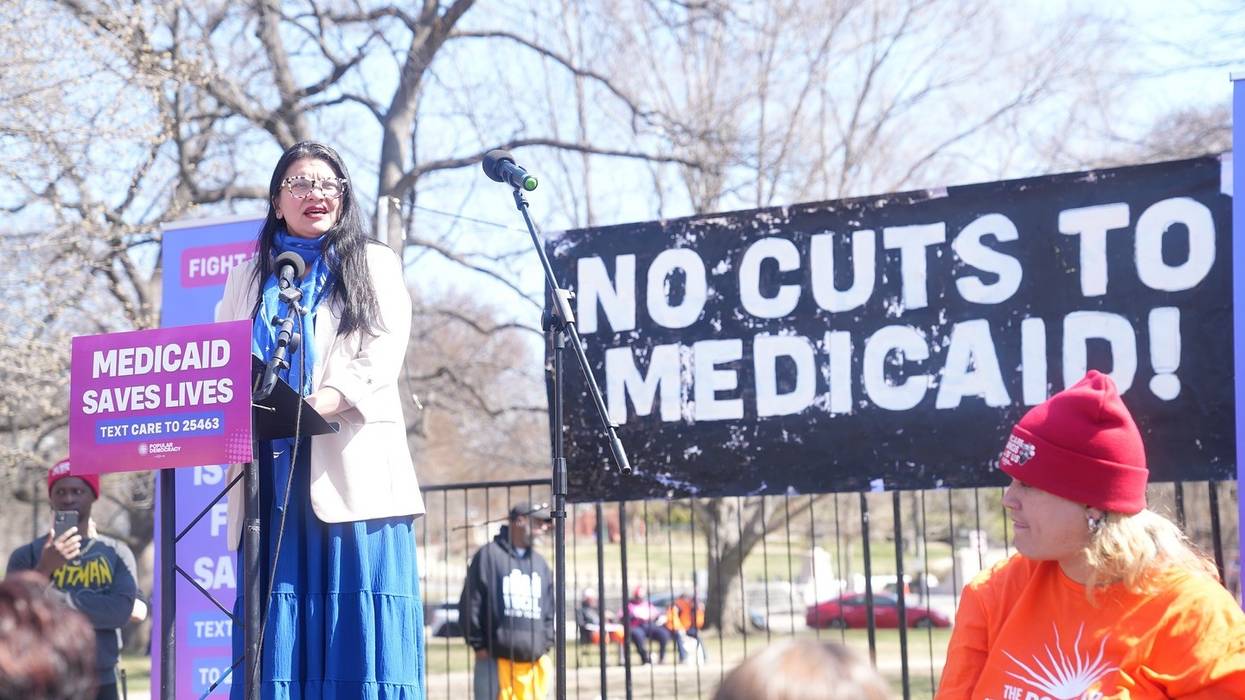
"Over half the provisions of the Big Ugly Bill have already gone into effect, and the negative results are already devastating."
Independent healthcare analyst Charles Gaba on Thursday published a detailed report estimating that up to 10 million people living in the US have lost their healthcare coverage since the start of President Donald Trump's second term.
In his analysis, Gaba brought together the most recent enrollment data for Medicaid, the Children's Health Insurance Program (CHIP), Medicare, and the Affordable Care Act (ACA).
Breaking things down by program, Gaba estimated there are 5.9 million fewer people enrolled in Medicaid and CHIP, as well as at least 4.5 million fewer people enrolled in the ACA, since Trump returned to power in January 2025.
These losses in coverage are somewhat mitigated by Medicare, whose enrollment has increased by around 1.6 million people during Trump's second term.
Losing access to these programs doesn't mean that the people were on them have gotten well paying jobs and are receiving insurance from their employer, Gaba wrote. Given that the unemployment rate has risen during Trump's second term, Gaba suggested it is highly unlikely that there are now more people who get employer-sponsored coverage now than in January 2025.
Depending on a number of variables, Gaba concluded, somewhere between 8.8 million to 10.3 million fewer people now have healthcare coverage.
Adjusting for population growth, Gaba added, "you get a grand total of between 10.27 million and 11.75 million more Americans not enrolled in a public healthcare coverage program as of May 2026 than in were as of January 2025."
The healthcare analyst noted that "this isn't quite the same thing as counting how many lost coverage, but not having healthcare sucks regardless of how you slice it."
He also pointed out that the lost in healthcare coverage all came before the Medicaid work requirements from the GOP's 2025 budget law are put into effect.
"Over half the provisions of the Big Ugly Bill have already gone into effect," wrote Gaba, "and the negative results are already devastating."
Gaba's analysis was published just days after the Georgetown University Center for Children and Families released a report estimating that nearly 2.5 million children in the US have lost access to Medicaid or CHIP during Trump's second term.
Trump and congressional Republicans have taken a number of actions that have made healthcare less affordable.
First, they cut spending on Medicaid by an estimated $900 billion over a 10-year period when they enacted the One Big Beautiful Bill Act in 2025. The Congressional Budget Office projects these cuts will leave more than 10 million fewer people enrolled in the program by 2034.
GOP lawmakers last year also refused to extend enhanced subsidies for insurance plans purchased through the ACA, even as insurers raised premiums on those plans by an average of 26% this year, according to an analysis published by KFF.
According to Wednesday reporting by Politico, hospitals are sounding the alarm about new regulations being proposed by the Centers for Medicare and Medicaid Services that they say would cost hundreds of billions of dollars in lost revenue.
"If the rules are finalized and they lose hundreds of billions on top of Congress’ funding cuts," Politico reported, "hospitals say they’ll be forced to reduce services, lay off workers, consolidate operations or shutter entirely."
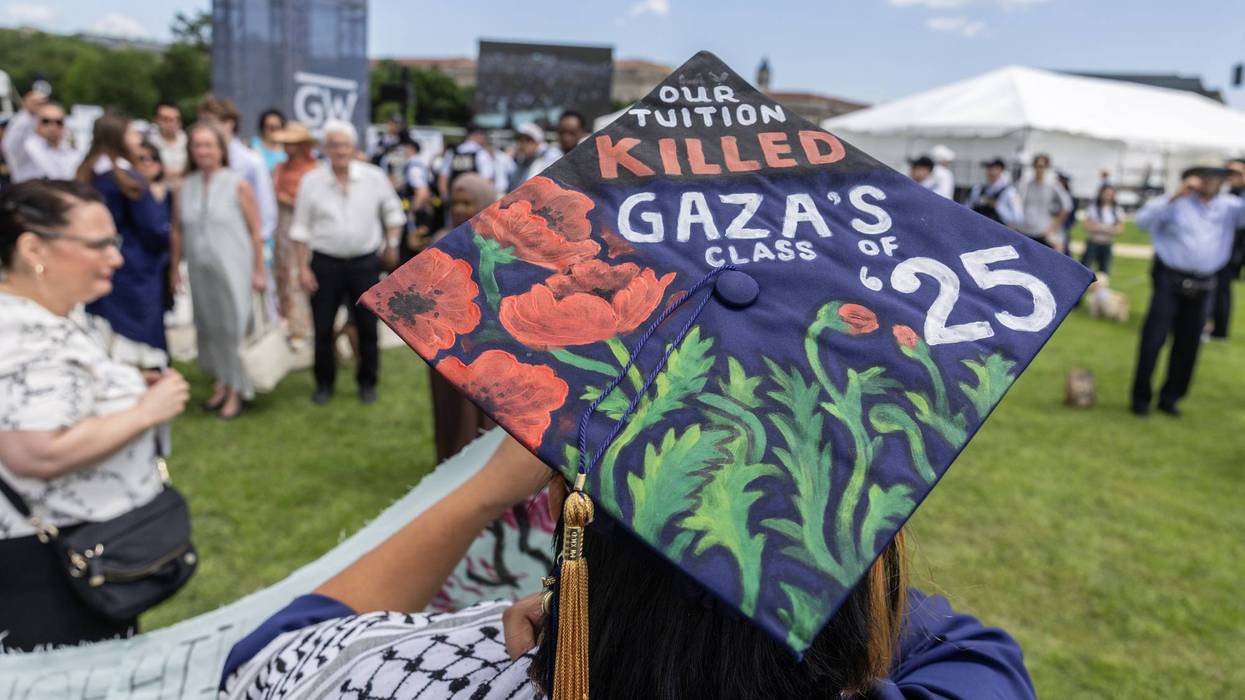
"The goal here is to basically say every university not only cannot refuse cooperation with Israel but must actively seek every opportunity to cooperate with Israel,” said one analyst.
The US House of Representatives on Thursday passed what critics say could be one of the most severe infringements on free expression in recent memory—a bill that could effectively require colleges and universities to do business with Israel or risk losing federal funds.
As Israel's genocide in Gaza and accelerating ethnic cleansing of Palestinians in the West Bank continue to fuel protests, the bill is the latest piece of legislation aimed at punishing the Boycott, Divestment, and Sanctions (BDS) movement, which uses nonviolent economic tactics to pressure Israel to end its illegal occupation of Palestinian territory and human rights abuses.
HR 4795, introduced in July 2025 by Reps. Virginia Foxx (R-NC) and Josh Gottheimer (D-NJ), is known as the Protect Economic and Academic Freedom Act. But Lara Friedman, the president of the Foundation for Middle East Peace, described it as an "Orwellian" turn of phrase for what the legislation actually does.
"The goal here is to basically say every university not only cannot refuse cooperation with Israel but must actively seek every opportunity to cooperate with Israel,” she told Responsible Statecraft. “And if they're not doing that, they're pro-BDS and anti-Israel.”
As the outlet described:
[The bill] would bar colleges that receive federal funds from engaging in what it defines as a “nonexpressive commercial boycott” of Israel, including “refusals to deal” or terminating business relationships in order to limit commercial ties without a “valid business reason.” The law would require these institutions to submit annual certification that they were giving students and faculty access to academic programs in Israel on the same terms as programs in other countries.
In a brief opposing the bill, Friedman argued that it was not just forcing universities to do business with Israel, but with its settlements in the West Bank, which are considered illegal under international law. With backing from the Israeli state, violence by Israeli settlers against Palestinians in the West Bank has exploded to never-before-seen highs this year, according to the United Nations.
"This legislation," Friedman wrote, "sets up a situation in which the alleged absence of engagement with any Israeli partner/party, including in settlements, will become the basis for an accusation of boycott, putting universities in the position where, if they universities want to avoid being accused of boycotting Israel/settlements, they will need to adopt an affirmative policy of prioritizing maximal engagement/partnership with Israeli entities (including in settlements)."
The bill passed by a 237-169 vote, with support from all but two Republicans—Reps. Thomas Massie (R-Ky.) and Warren Davidson (R-Ohio). And although the vast majority of Democratic voters now hold negative views of Israel, 33 Democrats also voted in favor of the bill.
The legislation now heads to the narrowly Republican-controlled US Senate, where it would need 60 votes to advance.
Introducing the bill last year, Gottheimer said it was necessary because BDS was an "antisemitic, hate-fueled... movement" that "seeks to destroy Israel—and has no place on our college campuses."
But even critics of the BDS movement, like Rep. Jerry Nadler (D-NY), chafed at its potential chilling effect on protected speech.
"No matter how strongly I oppose the BDS movement, I also believe that those who engage in BDS have a First Amendment right to do so," Nadler said before voting against the bill. "The First Amendment right to free speech does not apply only to agreeable speech."
He cited a letter sent to Congress by the ACLU opposing the bill's contention that schools should need a "valid business reason" to cut ties with Israel.
"Many of those engaged in boycotts of Israel do so not for commercial reasons, but because they wish to express their political opposition to the policies of the Israeli government—matters of overwhelming public concern and debate in the present moment. HR 4795’s labeling such boycotts as ‘non-expressive’ does nothing to change this reality," the letter said.
The bill comes as members of Congress, especially Democrats, are under increasing scrutiny for their support from pro-Israel lobbying groups like the American Israel Public Affairs Committee (AIPAC), whose political spending arm has poured more than $104 million into supporting its preferred candidates this election cycle.
Meanwhile, President Donald Trump has spent more than six months embroiled in a costly war with Iran that Israeli Prime Minister Benjamin Netanyahu played a key role in persuading him to launch.
"We just got dragged into a war by Benjamin Netanyahu. He's bragging about it," Rep. Mark Pocan (D-Wis.) told Julian Andreone of Drop Site News. "That's about as embarrassing as you can get... So let's leave universities alone."
Aaron Regunberg, a contributing editor at The New Republic, described it as outrageous that Democrats who supported the bill were "actively joining the far-right's war on higher education in order to shield a genocidal ethnostate that most Americans increasingly want nothing to do with."
Dylan Williams, the vice president for government affairs at the Center for International Policy, said the bill was "another effort to single out Israel for special treatment and erode Americans’ rights on its behalf."
"Will it be your child who can’t afford to go to college after 33 Democrats voted with Republicans to help Trump defund US universities? Because it certainly won’t be any of theirs," he said. "Shame on them for joining the attack on our schools and constitutional rights on behalf of Israel."

"Organizations should never face IRS scrutiny because political officials disapprove of their views."
A pair of Senate Democrats on Thursday launched an investigation into reports that the Trump administration is planning to weaponize the Internal Revenue Service against left-leaning nonprofits, targeting the tax-exempt status of groups seen as political enemies of the White House and potentially burying the organizations with huge penalties without adequate due process.
Sens. Ron Wyden (D-Ore.) and Raphael Warnock (D-Ga.) announced their inquiry in response to recent reporting by the right-wing New York Post, which reported late last month that US Treasury Secretary Scott Bessent and the IRS "could revoke the tax-free status of left-wing nonprofits such as George Soros’ Open Society Foundations, the Southern Poverty Law Center, and the Council on American-Islamic Relations."
Wyden, the top Democrat on the Senate Finance Committee, and Warnock called the story "disturbing" and argued it suggests "political considerations—including the timing of the 2026 midterm elections—are influencing" the administration's targeting of left-leaning nonprofits. The NY Post, which cited three unnamed sources familiar with the matter, reported that "Bessent’s inner circle is drafting a blueprint that could ultimately strip non-compliant organizations of their 501(c)(3) status."
"The reviews could result in massive back payments and civil penalties," the outlet added.
The Democratic senators noted in a letter to Bessent and Frank Bisignano, the chief executive of the IRS, that Section 7217 of the Internal Revenue Code prohibits senior executive branch officials from "directly or indirectly" requesting that the IRS conduct or terminate an investigation into any particular taxpayer.
"The New York Post’s reporting fits a wider pattern of the Trump administration actively using national security directives to weaponize the IRS against protected First Amendment speech," Wyden and Warnock wrote, citing the presidential memorandum known as NSPM-7. "Rather than targeting actual violence, these directives explicitly conflate terrorism with subjective political viewpoints—such as 'anti-capitalism,' 'anti-Christianity,' and views on race, migration, and gender."
Wyden and Warnock demanded that the Treasury Department and IRS turn over the reported "blueprint" crafted by Bessent's inner circle as well as "all policies, directives, guidance, criteria, and other documents concerning Treasury and IRS implementation of NSPM-7 as it relates to tax-exempt organizations, including criteria for selecting organizations for examination or possible revocation."
The senators also demanded to know whether any executive branch officials in the Trump administration have "identified or recommended" particular organizations—including any of those named in the Post report—for IRS investigation.
"Americans of every political persuasion must be able to trust that the IRS applies the tax code objectively under one set of rules," Wyden and Warnock wrote. "Organizations that violate section 501(c)(3) should face appropriate enforcement regardless of their politics—and organizations should never face IRS scrutiny because political officials disapprove of their views."
The senators launched their probe as two Democrats in the House of Representatives introduced legislation aimed at guaranteeing that the IRS can't strip nonprofit organizations of their tax-exempt status "without evidence and without a fair process."
Reps. Lloyd Doggett (D-Texas) and Terri Sewell (D-Ala.), the lead sponsors of the Protecting the Rights of Organizations Fairly (PROOF) Act, note that "under current law, many due process protections that are supposed to apply when the IRS examines most nonprofits exist only in the agency's own internal manual—guidance the IRS can rewrite or suspend on its own authority through an internal memo with no public comment, no rulemaking, and no vote, and that carries no force of law."
"The IRS should never be a weapon to punish a president's political enemies," Doggett said in a statement on Thursday. "No organization—left, right, or center—should lose its tax-exempt status on an accusation, without evidence, and without a fair chance to be heard."
"The PROOF Act is simple," he added. "If the government wants to take away a nonprofit's status, it has to show its proof and follow the law. Today, it may be an organization to which the Trump regime objects. Tomorrow, it could be any of us."

"While working families struggle to afford groceries, housing, and gas," said Sen. Chris Van Hollen, the Trump administration "focuses on tax breaks for billionaires—including tax breaks for private jets."
A group of Democratic Caucus members in the US Senate on Thursday denounced the US Treasury Department under President Donald Trump over its refusal to close a gaping loophole in the federal tax code that allows some of the wealthiest people in the country to reap tax benefits from their ownership and use of private jets—even as working people and the middle class families struggle to make ends meet in Trump's economy.
In response to a previous request made in July by Sens. Sheldon Whitehouse (D-RI), Elizabeth Warren (D-Mass.), Chris Van Hollen (D-Md.), Ed Markey (D-Mass.), and Bernie Sanders (I-Vt.) to close a rule that allows the wealthy "to substantially undervalue the taxable cost of personal travel on a corporate private jet," a letter from a top Treasury official on Thursday said such an effort would be too "burdensome," including for the uber-rich taxpayers subject to it.
Known as the Standard Industry Fare Level (SIFL) loophole, the lawmakers have argued that it has been exploited by the extremely wealthy to lower their tax burden even as they travel the country—and the world—in the least energy efficient and most polluting way possible.
"President Trump’s 2017 tax law and Big, Beautiful-for-Billionaires bill handed billionaires and big corporations massive tax breaks on private jets," said Sen. Whitehouse in a statement. "The Trump administration now says it would be ‘burdensome’ to close the private jet tax loophole because this is an administration hell-bent on using the powers of government to make the ultra-rich even richer, and they don’t care if middle-class taxpayers get stuck with the tab."'
Alongside their July letter, the lawmakers shared analyses detailing the loss of the revenue made possible by the SIFL loophole. According to the Whitehouse's office,
analyses by the nonpartisan Joint Committee on Taxation detailing the boom in private jet sales after passage of Republicans’ tax cut for corporate jets and highlighting the extent of the tax revenue lost by the abuse of the SIFL loophole. One analysis responds to an inquiry from the senators on the tax consequences of the SIFL loophole, finding that a wealthy executive would pay roughly between $1,577 and $1,804 less in taxes for a flight from JFK airport in New York City to DCA airport in Washington, D.C. under the SIFL method. The fair market value of that flight could range from $4,500 to $5,112, but under SIFL, that executive would only have to report a value of $235.77.
Van Hollen on Thursday denounced the shamefulness of yet another Trump administration position that rewards the wealthy and powerful at the expense of working people.
"Trump’s priorities revolve around enriching himself and his billionaire friends. While working families struggle to afford groceries, housing, and gas, this Administration focuses on tax breaks for billionaires—including tax breaks for private jets," said Van Hollen.
"What a disgrace,” he added.