November, 02 2018, 12:00am EDT
For Immediate Release
Contact:
Paul Kawika Martin, Peace Action, 951-217-7285 cell, pmartin@peace-action.org
Gabe Murphy, Peace Action, 510-501-3345 cell, gmurphy@peaceaction.org
WASHINGTON
Ahead of the Trump administration's reimposition of oil, banking, and shipping sanctions against Iran scheduled for November 5th, Paul Kawika Martin, Senior Director for Policy and Political Affairs at Peace Action, released the following statement:
"The reimposition of these sanctions should be seen for what it is: the latest step in a calculated campaign by this White House to provoke war with Iran. From putting Iran 'on notice' at the start of 2017, to violating and withdrawing from the successful, multilateral Iran nuclear agreement despite Iran's verifiable compliance and strong objections from our allies, to these latest actions to strangle Iran's economy, this administration is beating a path to war. As tragic and devastating as the Iraq War was, war with Iran would be far more catastrophic to the region and to global stability.
"For the administration to feign concern for the Iranian people while imposing sanctions that will devastate the financial wellbeing of the Iranian people is outrageous. As for his supposed motivation of bringing Iran back to the negotiating table, if President Trump really wanted to negotiate with Iran, he wouldn't have brought long-time advocates of regime change in Iran like John Bolton and Mike Pompeo into his inner circle. He wouldn't have threatened Iran in all caps on Twitter with 'consequences the likes of which few throughout history have ever suffered before.' In case the cheerleaders for regime change don't remember, we already helped orchestrate regime change in Iran in 1953, and the consequences of that decision haunt us to this day.
"The Trump administration should not give Saudi Arabia a pass on war crimes in Yemen and the murder of a reporter to allow Saudi oil to flow, while restricting oil needed by our allies from Iran when Tehran upheld its obligations under the successful Iran agreement.
"On Election Day, many Americans will be choosing between supporters of Trump's regime-change tactics in Congress and their challengers. That's why Peace Action is working for dozens of candidates who understand that diplomacy and the Iran agreement make Americans safer. We need a Congress that puts America's interests in diplomacy and nonproliferation over the interests of political operatives like Bolton who are still enamoured with the obscene pursuit of forcibly overthrowing governments we don't happen to agree with on everything."
Peace Action is the United States' largest peace and disarmament organization with over 100,000 members and nearly 100 chapters in 34 states, works to achieve the abolition of nuclear weapons, promote government spending priorities that support human needs and encourage real security through international cooperation and human rights.
LATEST NEWS
UN Report Details Israeli Crimes Against Humanity in Palestine, Including Extermination, Rape, and Torture
The UN-mandated commission of inquiry found that Israel's genocidal acts are ultimately aimed at "blocking any viable attempts to realize Palestinians’ right to self-determination."
Oct 26, 2026
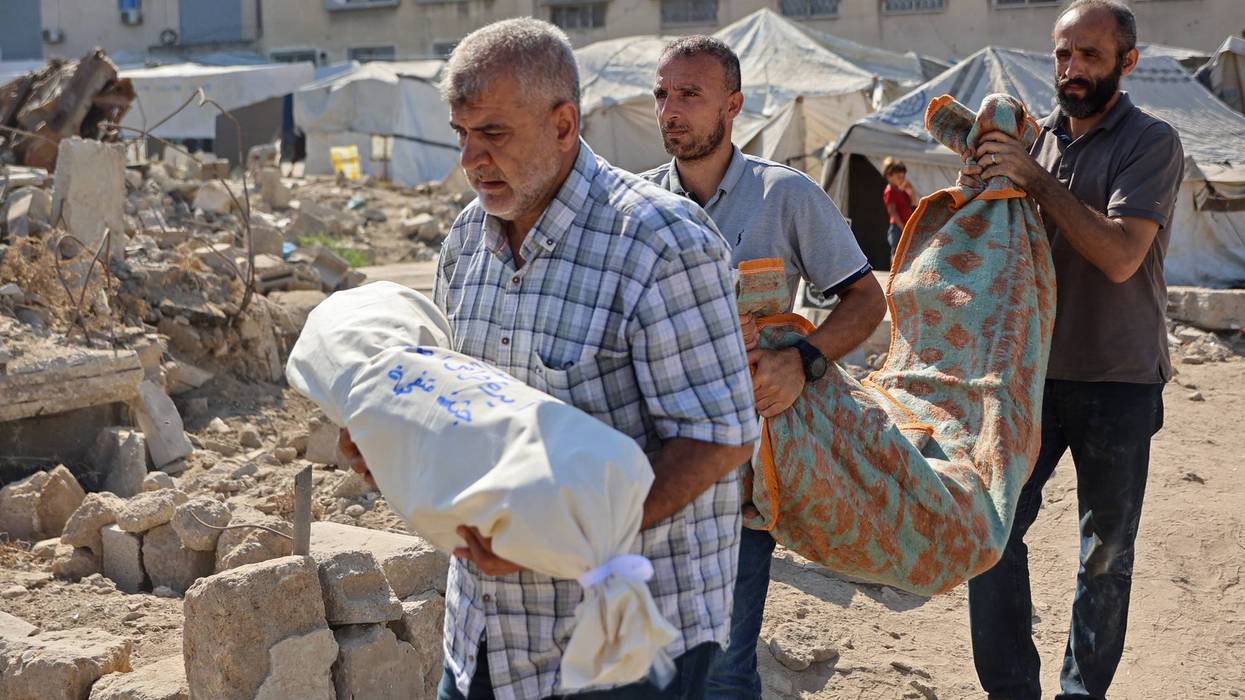
A United Nations-mandated commission of inquiry on Monday issued a report detailing Israeli crimes against humanity in the occupied Palestinian territories, while also affirming that Israel's genocide continues in Gaza, despite a nominal yearlong ceasefire.
"Israel has committed war crimes and the crimes against humanity of extermination, persecution, torture, rape, and other forms of sexual violence in the Occupied Palestinian Territory, intentionally targeting Palestinian civilians as it continues to commit genocide in Gaza," the UN Office of the High Commissioner for Human Rights (OHCHR) said in a summary of the 19-page report.
"In Gaza... Israeli authorities and forces continue to commit genocidal acts even after the so-called ceasefire agreement, with the intent to destroy the Palestinian people, in whole or in part," OHCHR saids of the report, which was authored by the UN-mandated Independent International Commission of Inquiry on the Occupied Palestinian Territory, including East Jerusalem, and Israel.
"Israeli forces have also deliberately killed and inflicted serious bodily and mental harm against children in the West Bank—as they have in Gaza—committing age-based persecution against Palestinian children," the report found. More than 21,500 Palestinian children, including over 1,000 infants, have been killed in Gaza over the past three years.
The commission documented cases of rape and sexual assault of Palestinians, including at the notorious Sde Teiman prison in Israel, where, according to the report, a prisoner "was raped with a stick and forced to insert it into his mouth until he vomited."
Previous reporting, including by The New York Times, detailed sexual violence against Palestinian prisoners, including one man who died after allegedly being sodomized by an electric baton.
The commission's report also affirmed that Israeli forces sexually abused Global Sumud Flotilla activists who were seized upon the high seas and abducted to Israel, including one male activist who was raped with a metal detector.
The report comes as Israeli forces intensify a military lockdown and ethnic cleansing in the occupied West Bank, including expulsions and home demolitions in Hebron, following the killing of two Israel Defense Forces (IDF) soldiers by Palestinians resisting the nearly half-century occupation, and ahead of Tuesday's Israeli elections.
Israeli Prime Minister Benjamin Netanyahu—who is wanted by the International Criminal Court for alleged crimes against humanity and war crimes in Gaza—is trying to shore up support for his far-right coalition ahead of the elections. Netanyahu and other senior officials, including Defense Minister Israel Katz, National Security Minister Itamar Ben-Gvir, and Finance Minister Bezalel Smotrich have vowed to annex parts or all of the West Bank and to ethnically cleanse Gaza.
Netanyahu and members of his Cabinet have also said that Israel is planning to launch the biggest military operation in the West Bank since it was captured and occupied during the 1967 Six-Day War. Both the occupation and colonization of the West Bank are illegal under international law.
More than 250,000 Palestinians have been killed or wounded in Gaza since the Hamas-led attack of October 2023. Roughly 1.9 million others have been forcibly displaced, often multiple times. Israel's conduct in Gaza is the subject of a genocide case filed by South Africa at the International Court of Justice. A ruling is not expected until at least 2029.
The new report shows how the scale of deadly violence has increased dramatically in the West Bank. Six Palestinians were killed in Israeli airstrikes there between 2008 and October 6, 2023, compared with 254 killed in aerial bombardments between October 7, 2023 and September 30, 2026.
OCHCR has documented 1,143 Palestinians killed in the occupied West Bank, including East Jerusalem, between October 7, 2023 and October 9, 2026. At least 250 of those killed were children.
“The intentional killing and injuring of Palestinian civilians and destruction of homes in the West Bank combined with Israel’s persistent denial of responsibility form part of a broader strategy to exterminate and displace Palestinians and impose conditions of life that are unliveable,” Srinivasan Muralidhar, who chairs the commission of inquiry, said in a statement. “Meanwhile, Israel’s expansion of territorial control in Gaza continues to result in the killing and harming of Palestinian civilians."
The commission also faulted the Palestinian Authority for targeting Palestinians for voicing dissent to its policies and actions and for its failure "to conduct effective and impartial investigations into incidents of killings and to ensure effective remedy, including financial compensation to victims and their family members."
The report found that Israel's actions ultimately are designed to thwart any possibility of an independent Palestinian state.
“Seizing maximum land while minimizing the Palestinian population in relation to size, autonomy, and viability stems from Israel’s colonizing policies and is rooted in historical practices and patterns of action, resulting in the excessive and discriminatory application of lethal force, displacing, injuring, and killing Palestinians over generations,” said Muralidhar.
“Attempting to equate Palestinian statehood with a threat to the existence of Israel is blocking any viable attempts to realize Palestinians’ right to self-determination," he added.
Keep ReadingShow Less

Israel Bars International Delegation From West Bank Amid Attacks on Palestinian Olive Harvesters
"It is clear that Israel is trying to erase Palestinian life in the West Bank and Gaza with minimum fuss and attention—cutting off support and solidarity from the outside world."
Oct 26, 2026
Amid international outcry over escalating settler terrorism against Palestinian farmers, the Israeli government on Monday blocked a group of European legislators seeking to observe the olive harvest in the occupied West Bank.
The group denied entry to the West Bank from Jordan included British Labour Member of Parliament Clive Lewis, Scottish National Party MP Lara Bird, Scottish Green lawmaker Kate Nevens, former Labour MP Sam Tarry, and Spanish Sen. Josu Estarrona Elizondo of EH Bildu, along with other international activists.
The lawmakers were set to join Palestinian olive harvesters on October 31 at the Qamar al-Balad Farm in the village of Farkha in the central West Bank. Earlier this month, Israeli settlers attacked the farm and attempted to burn its poultry shed before being repelled by local residents.
“I came to stand alongside Palestinians being attacked for harvesting olives on their own land. Instead, we were turned away at the border with no reason given,” Bird said. “More than ever, Palestinians are being subject to terror and violence by the [Israel Defense Forces] and illegal settlers. Increased blockades, demolitions, and unthinkable violence have become the norm for Palestinians in the West Bank.”
The United Nations has documented at least 272 attacks since September 1, eclipsing the full-season totals for 2024 and 2025, including assaults by armed Israeli settlers against farmers, journalists, and European diplomats. Last week, Israeli authorities detained around 80 volunteers accompanying Palestinian farmers, including US House candidate Brad Lander, a Jewish New York Democrat.
“For more than eight hours, we were held, interrogated, and made to feel as though we had done something wrong simply by attempting to enter,” Lewis said. “The simple truth is we had done nothing wrong. We went to show our support for the Palestinian people and highlight the terrible injustice and violence being perpetrated against them. We want to ensure that people back home do not look away from the reality of what is happening.”
The Israeli government has promised to crack down on violence by settlers, but the military has often aided them. Meanwhile, Defense Minister Israel Katz has pursued removal orders against activists seeking to protect Palestinian olive harvesters.
“We are dismayed that Israel has barred our entry to Palestine,” said Nick Dearden, director of Global Justice Now, which participated in the delegation. “But this is clearly part of a much wider campaign in which Israel is increasingly stopping politicians, observers, and even aid workers from entering the West Bank to witness or provide support to Palestinians.”
In retaliation for a UK policy cutting off trade with the settlements, which are considered illegal under international law, Israel placed 11 members of the UK Parliament on a “ban” list—including Your Party MP Jeremy Corbyn, Labour MP Diane Abbott, and Green MP Carla Denyer.
American activists who’ve traveled to Israel and the occupied territories to provide support for Palestinians at risk of settler attacks have also had their legal status revoked, including several Jewish Americans—even though Jewish Americans are generally encouraged to migrate to Israel.
The exclusion of international observers comes just before a highly visible national election on Tuesday, in which Israeli Prime Minister Benjamin Netanyahu is at risk of having his government toppled.
Netanyahu has ramped up military assaults on Palestinians in the West Bank in recent days, particularly after an attack that killed two Israeli soldiers Friday in Hebron. In what has been decried by the United Nations human rights office as "collective punishment," nearly 4,000 Palestinians have been forced from their homes while houses and businesses have been raided and demolished by the military.
While the surge in settler violence has drawn global condemnation and heightened Israel's pariah status, Netanyahu has praised Israel's "heroic settlers" in the final days of his campaign and vowed to expand settlements.
"It is clear that Israel is trying to erase Palestinian life in the West Bank and Gaza with minimum fuss and attention—cutting off support and solidarity from the outside world," Dearden said. "In this context, it is more essential than ever that the UK and other governments act with extreme urgency and courage to deter Israel’s attacks on Palestinians. This can’t wait.”
Keep ReadingShow Less
Former Biden Official With AIPAC Ties Tapped for Trump's 'Corrupt, Anti-Palestinian' Board of Peace
"Democrats should firmly oppose it regardless of how many former AIPAC employees the Trump administration sends up to the Hill to sell it," said one policy expert of the Board of Peace.
Oct 26, 2026
As President Donald Trump's Board of Peace, the organization that is tasked with overseeing a peace plan in Gaza, looks to boost its bipartisan appeal ahead of the midterm elections, in which Democrats could take control of one if not both chambers of Congress, the board announced Monday that it had appointed a former Biden administration official to help smooth the effort.
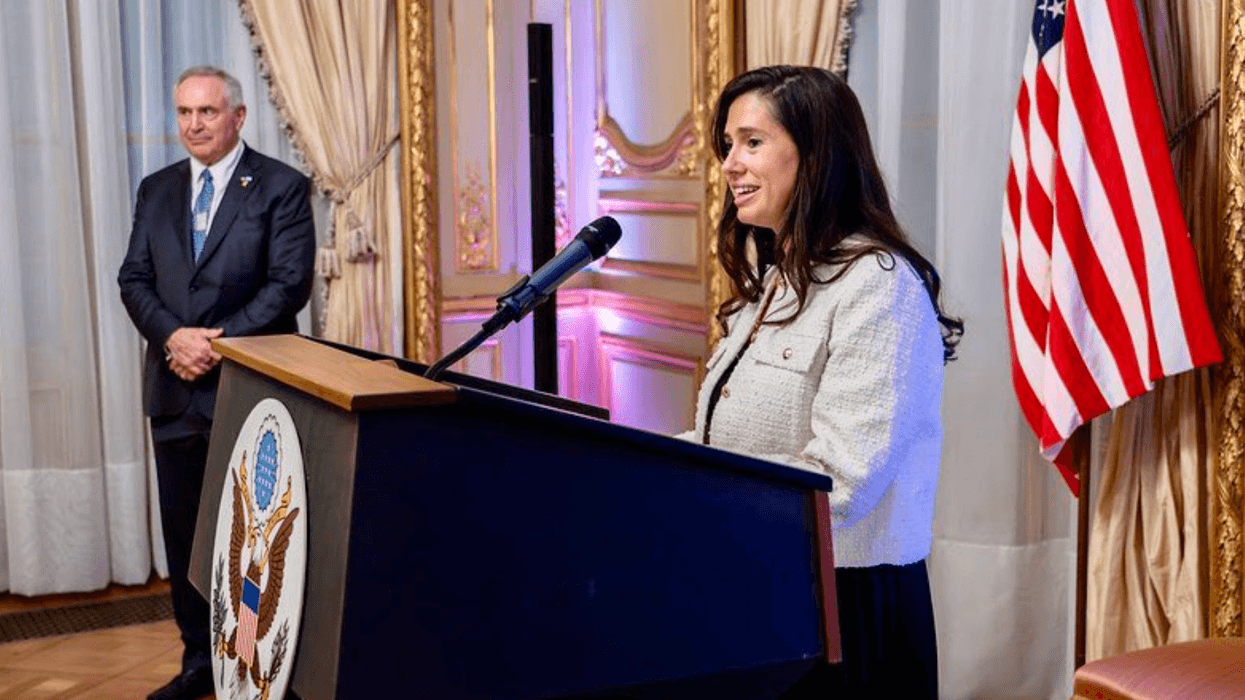
Shelley Greenspan, who served in the State Department and then as the White House liaison to the Jewish community for two years under President Joe Biden, was selected to lead external affairs, including outreach to members of Congress and think tanks in Washington, DC.
Greenspan has previously worked for Amazon in global innovation policy, for the Hillary Clinton presidential campaign in 2016, and as a legislative manager for the powerful pro-Israel lobbying group, the American Israel Public Affairs Committee (AIPAC).
Her appointment comes just before the US elections, but also legislative elections in Israel, which have held up the peace process as Prime Minister Benjamin Netanyahu has refused to take steps on the peace plan before the country goes to the polls Tuesday.
Recent polling has projected that a bloc of opposition parties could win more seats than Netanyahu's far-right nationalist alliance.
Greenspan has promoted Trump's 20-point peace plan as one that could bring "practical results" to Palestinians in Gaza.
In a statement to Axios on Monday, she said that in her last federal government role at the State Department, "I saw how the president's 20-Point Plan can tangibly deliver for the peoples of Gaza and Israel. I look forward to continuing that work with the Board."
But rights groups have warned the Board of Peace has failed to deliver safety to Palestinians. In May, five months after the board was established at the World Economic Forum in Davos, Switzerland—where Trump's son-in-law, Jared Kushner, presented a vision for a "new Gaza" complete with data centers and luxury high-rises—Human Rights Watch found that 865 Palestinians had been killed by Israeli forces since the October 2025 ceasefire and humanitarian aid was still "far below required levels."
The Board of Peace was given a mandate by the United Nations Security Council to oversee the reconstruction of Gaza, with Trump serving as "chairman for life." Last month, it unveiled a $2.45 billion recovery plan, including 66 projects.
But as Eric Reidy wrote at The New Humanitarian last week, the board "has put forward grand visions for redevelopment that are entirely disconnected from Gaza’s past and present as well as preliminary plans for stabilization that lack any viable path for implementation."
Meanwhile, Israel has continued to wage deadly attacks on Palestinians and daily life in the exclave has been "suspended in an intolerable state of limbo," he wrote.
"Trump’s 20-point peace plan says that Israel 'will not occupy or annex Gaza,' but it makes no mention of the West Bank," Reidy added. "The question of Palestinian self-determination is kicked indefinitely down the line to some point in the future when 'the conditions may finally be in place.' There is no mention of Palestinian rights or of justice and restitution, let alone recognition of Israeli crimes. Can there really be a path forward in Gaza that would benefit its people without addressing, or even acknowledging, the underlying causes of their suffering, namely Israel’s colonization and subjugation of Palestinians?"
Meanwhile, allegations of corruption have emerged, with Trump pledging $10 billion in taxpayer funds to the Board of Peace.
Matt Duss, executive vice president at the Center for International Policy, urged Democrats in Congress to oppose to board despite its attempt to cast itself as a bipartisan operation by appointing Greenspan.
"There's no 'fixing' the Board of Peace, and it's doing exactly what the world expects of it: serving as a Trump slush fund while validating continued Israeli control of Gaza, at the expense of Palestinian lives and rights," said Duss. "That is its purpose. No one should pretend otherwise."
Greenspan's appointment, said Akbar Shahid Ahmed of The Washington Sun, "underscores continuity in Biden-Trump policy for ongoing Palestinian suffering," and the "reluctance to pressure Israel even for stated US goals" such as an end to Israeli attacks on Gaza.
The Board of Peace, said progressive organizer Melissa Byrne, "is war and subjugation by another name."
Keep ReadingShow Less
Over a Million Seniors Sent Scrambling as Medicare Advantage Giants Slash Plans Under Trump
Medicare Advantage giants are seeking to boost their profits by cutting benefits and exiting counties across the US—despite receiving a big payment boost from the Trump administration.
Oct 26, 2026
Seniors across the United States are scrambling to find alternative health coverage as Humana, UnitedHealthcare, and other private insurance giants slash Medicare Advantage benefits and cancel some plans entirely—despite receiving a major payment increase from the Trump administration for the coming fiscal year.
Humana and UnitedHealthcare's plan cancellations are expected to impact more than 1 million seniors nationwide, forcing people to find new plans in the current open enrollment period that runs until December 7. Both companies have signaled that they are trying to boost their bottom lines by exiting unprofitable Medicare Advantage markets and cutting benefits such as routine dental coverage, which is not offered by traditional Medicare.
"My biggest challenge for picking a plan next year is the cost of dental plans and vision are going up," one Medicare Advantage enrollee told PBS last week.
The health policy nonprofit KFF noted in an analysis earlier this month Humana and UnitedHealthcare are withdrawing their Medicare Advantage prescription drug plans from more US counties than they are entering in 2027. UnitedHealthcare is exiting 228 counties and entering nine new ones, while Humana is leaving 62 counties and entering four new ones, KFF found.
Blue Cross Blue Shield is also eliminating some of its Medicare Advantage plans, which are funded by the federal government—at a massive cost to US taxpayers—and run by private companies. The Boston Globe reported on Monday that "about 20,000 seniors in Massachusetts will be forced to find new health insurance plans" due to the Blue Cross Blue Shield cuts.
In Minnesota, an analysis by the Star Tribune found that around two-thirds of state residents enrolled in Medicare Advantage—around 340,000 people—will have to find new coverage for the coming year due to private insurers' cuts.
"Fifteen counties are losing their remaining Medicare Advantage options next year. In 12 of those counties, though, insurers will sell a different kind of privatized Medicare coverage called a Cost plan," the Star Tribune reported last week. "Cost plans sell at typically higher monthly premiums than Medicare Advantage plans."
Nationwide, more than half of the Medicare-eligible population is enrolled in Medicare Advantage plans, which are notorious for overbilling the federal government and denying coverage for necessary care—increasingly using artificial intelligence technology.
Medicare Payment Advisory Commission estimated in a report published earlier this year that the federal government will pay roughly $76 billion more to cover seniors on Medicare Advantage plans than it would have if those same people were on traditional Medicare. Over the next decade, according to the nonpartisan Congressional Budget Office, Medicare Advantage overpayments could cost the federal government around $1 trillion.
Earlier this year, the Trump administration gave the Medicare Advantage industry a significant boost by hiking federal payments to private insurers by roughly 2.5%—a sizeable increase compared to the 0.9% raise that the administration previously floated. Reuters reported in April that the industry will also receive a "2.5% benefit from a change to risk assessment payments related to health status, for a total increase of about 5%."
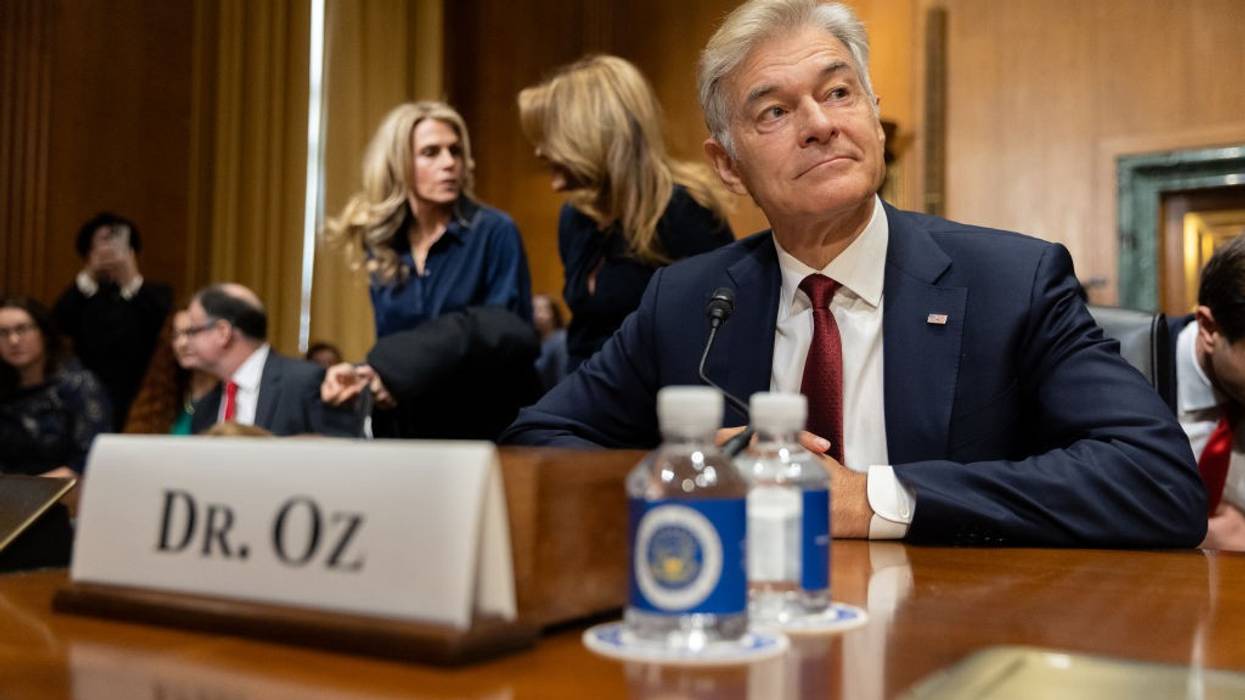
The Centers for Medicare & Medicaid Services, which announced the payment boost, is currently headed by Mehmet Oz, who once proposed a healthcare plan dubbed "Medicare Advantage for All."
The advocacy group Families USA called the 2027 payment increase for Medicare Advantage insurers "a big giveaway" that could have gone toward "bolstering benefits in Medicare for all seniors and people with disabilities."
Keep ReadingShow Less
Van Hollen Says Medicare for All Is What's Needed If Democrats Take Back the Senate
“The reality is people are facing huge increases in premiums and copays… So we need a Medicare-for-All-type solution,” Van Hollen said. “This is the kind of debate we need to have.”
Oct 26, 2026
Another possible Democratic presidential contender says the party needs to pursue “Medicare for All” as a solution to America’s healthcare crisis should the US Senate flip blue in November.
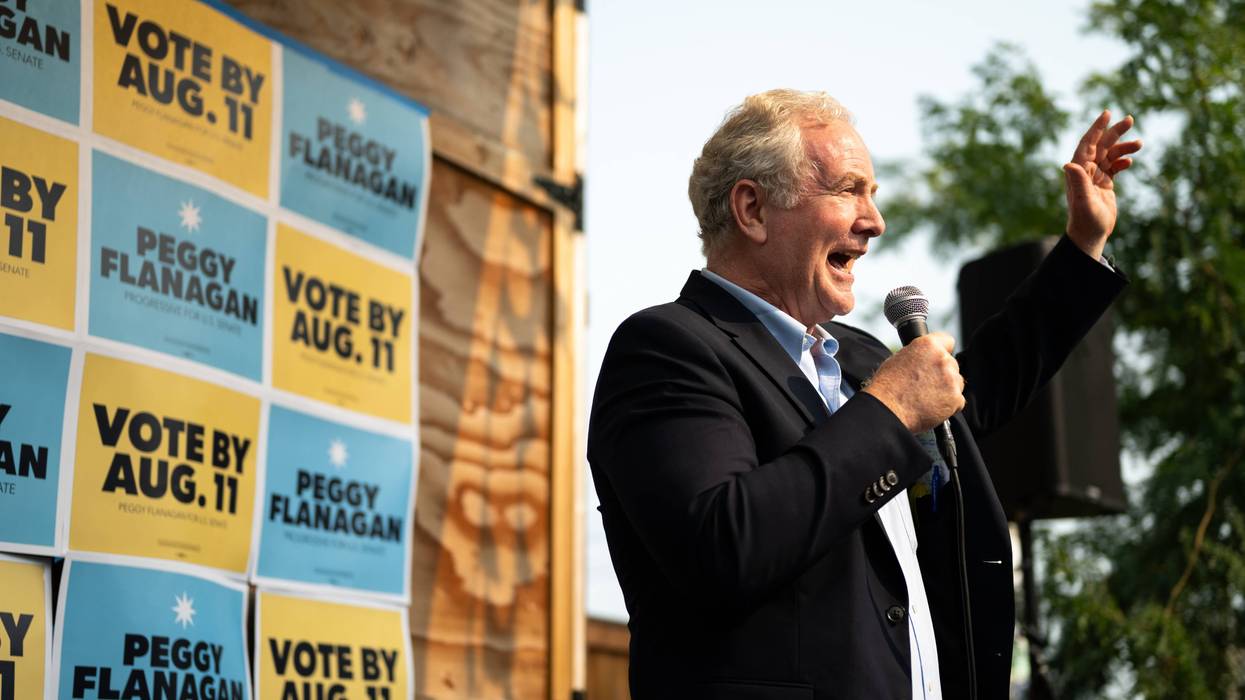
“The reality is people are facing huge increases in premiums and copays. So we need a Medicare-for-All-type solution,” Sen. Chris Van Hollen (D-Md.) said in a Monday report from Politico. “This is the kind of debate we need to have.”
Van Hollen joins a list of potential 2028 hopefuls who have endorsed the idea of a single-payer healthcare system—including Reps. Alexandria Ocasio-Cortez (D-NY) and Ro Khanna (D-Calif.), who have championed the policy for years, following the lead of Sen. Bernie Sanders (I-Vt.).
Democratic California Gov. Gavin Newsom has also declared that he believes in “universal healthcare” and “Medicare for All” but has not yet released a concrete proposal for what his version of the policy would look like.
Van Hollen, who previously backed a public health insurance option to compete with private insurance, supported Sanders' Medicare for All bill in December as premiums were set to skyrocket after Republicans allowed enhanced Affordable Care Act insurance subsidies to expire.
He declared that Congress "must stop tinkering around the edges of a broken healthcare system," pointing to the massive administrative costs and poor health outcomes under the for-profit status quo.
Medicare for All could also face a more favorable climate in the Senate than it did during the Biden presidency.
If Democrats retake the chamber this November—buoyed by promises to tackle the high costs of everything from healthcare to energy to food—Sanders is expected to once again be appointed chair of the Senate Health, Education, Labor, and Pensions (HELP) Committee.
Sanders led the committee from 2023-25, a time when Medicare for All lacked any chance of passing out of a Republican-controlled House of Representatives.
While a new Medicare for All bill would likely be routed through the Senate Finance Committee, chairing HELP would give the Vermont socialist the power to frame the debate on healthcare by holding hearings that could address problems with private insurance and launching investigations into industry practices, while making the case for a single-payer system.
In an April 2026 letter, co-signed by Sen. Ron Wyden (D-Ore.), Sanders called for a series of high-profile Senate hearings grilling insurance CEOs over rising premiums, coverage denials, executive compensation, and industry consolidation.
“The American public deserves to know why the big insurance executives... continue to get richer and richer, while over one-third of people with health insurance have been forced to skip or delay getting the care they need because of the outrageous cost,” Sanders and Wyden wrote. “It is time for our committees to hold the chief executives of the major health insurance companies accountable for their greed and to address the healthcare crisis in America."
A strong showing for Democrats in November's midterms could bring a new crop of Medicare for All supporters to Congress, such as former Detroit public health official Abdul El-Sayed and labor leader Troy Jackson, who are leading their Senate races in Michigan and Maine.
As private insurance premiums spike and millions of Americans lose coverage after the Trump administration imposed the largest federal healthcare spending cut in the nation's history, Medicare for All also has more public support than it has had in years.
A September survey by KFF found that 66% of adults said they’d favor “a national health plan in which everyone gets insurance from a single government plan.” Support came from 84% of Democrats, who’ve long backed it, as well as nearly three-quarters of independents and even just over a third of Republicans.
“If I have anything to say about it… the agenda of the Democratic Party is going to be extremely bold. It is going to take on high costs,” Sanders told Politico. “The super [political action committees] are not going to run the agenda anymore. We’re going to do what the American people want.”
Keep ReadingShow Less

Israel's Intensified Ethnic Cleansing of West Bank Spurs Calls for 'Urgent Action'
“The world cannot stand by as Israel continues its assault on Palestinians, waiting for yet more neighborhoods to be emptied and erased before intervening,” said the Israeli rights group B'Tselem.
Oct 26, 2026
Human rights groups on Monday implored the international community to act in the face of Israel's accelerating ethnic cleansing of West Bank Palestinians following a resistance attack that killed two Israel Defense Forces soldiers and ahead of Tuesday's Israeli elections.
Al Jazeera reported that more than 3,000 Palestinians have been forced from their homes in Hebron in the illegally occupied West Bank, a city long beset by Israeli settlement expansion and displacement. In addition to a military lockdown, Israeli occupation forces have detained scores of Palestinians since two IDF soldiers were shot dead on Friday.
Israeli Prime Minister Benjamin Netanyahu—whose far-right coalition is trying to shore up support ahead of Tuesday's elections—and other senior officials have openly indicated plans to ramp up the ethnic cleansing of the area. Israeli Defense Minister Israel Katz and Finance Minister Bezalel Smotrich have vowed to treat the West Bank like Gaza, where more than 250,000 Palestinians have been killed or wounded and around 1.9 million others have been forcibly displaced amid a "complete siege" since the Hamas-led attack of October 2023.
“This is not only a humanitarian crisis but a deliberate assault on the economic foundations of Palestinian life, as families lose their homes and livelihoods," Mustafa Tamaizeh, Oxfam International's West Bank response lead, said Monday. "The destruction of factories, workshops, and business premises is wiping out years of investment and hard work."
"These illegal actions amount to collective punishment and are accelerating the forced displacement of Palestinian communities across the West Bank," Tamaizeh continued. "They come during the olive harvest, one of the most important sources of income for Palestinian farming families."
“In recent days, high-ranking Israeli officials have openly acknowledged they are considering plans for the largest military operation in the West Bank since 1967, with calls for operations in the West Bank to be conducted like those in Gaza," he added. "Against this backdrop Oxfam is calling for urgent action by the international community to stop Israel’s campaign of mass forced displacement, demolitions, and state-backed settler violence, which amount to a policy of ethnic cleansing.”
The International Commission to Support Palestinian Rights (ICSPR) said Monday that it "strongly condemns the escalation of Israeli occupation crimes across the occupied Palestinian territory, including the siege, raids, home demolitions, and forced displacement of residents in Hebron and other areas of the West Bank."
"These violations coincide with raids on more than 15 towns and cities in the northern West Bank, the arrest of numerous Palestinians, escalating settler attacks, and road closures, alongside the continued mass killings and war crimes against civilians in the Gaza Strip," ICSPR continued.
"ICSPR calls on the United Nations and the states parties to the Geneva Conventions to take immediate and binding measures to halt Israeli occupation crimes and provide international protection for civilians in Gaza, the West Bank, and occupied East Jerusalem," the group added. "It calls for an end to forcible evictions, home demolitions, settler attacks, and settler terrorism."
United Nations Secretary-General António Guterres weighed in Monday, invoking the "specter of ethnic cleansing" and calling for "the realization of the legitimate rights of the Palestinian people to self-determination."
Community Peacemaker Teams (CPT), a Christian human rights group, also condemned Israel's actions, issuing a statement Monday asserting that “families should never have to live in fear of being forced out of their homes or separated from the places where they have built their lives."
CPT stressed that "every Palestinian has the right to live safely and with dignity in their own home." The group urged the international community "and diplomatic missions to act now to protect civilians in Hebron," and "people of faith and conscience to contact their elected representatives and call for action to protect Palestinian civilians."
At least one Israeli rights group also condemned the government's and IDF actions.
“The world cannot stand by," B'Tselem said, "as Israel continues its assault on Palestinians, waiting for yet more neighborhoods to be emptied and erased before intervening."
Keep ReadingShow Less

Trump Doesn't 'Give a Damn' About Iran War Price Hikes—His Oil and Gas Holdings Are Up to $81.6 Million
"Trump's Iran War has forced Americans to pay much more at the pump while Big Oil rakes in profits and the president's own stock wealth in the oil and gas industry continues to balloon."
Oct 26, 2026
After US President Donald Trump spent the weekend reminding midterm campaign rally attendees that he doesn't "give a damn" about soaring gasoline prices from his illegal Iran War, congressional Democrats on Monday released a report showing that his oil and gas stock holdings could now top $80 million.
During a Saturday rally in Georgia, Trump highlighted that due to his war of choice, the US fossil fuel industry is "making hundreds of billions of dollars," and predicted his comments will be turned into "fake headlines," but he added: "I don't give a damn, I'm going to say it: We're making a freaking fortune."
Just how much extra is the public paying at the pump because of the eight-month conflict? As of Monday, the national average was $4.29 a gallon for gasoline and $6.35 for diesel, according to the American Automobile Association.
An online tracker from the Costs of War Project at Brown University estimates US residents have paid at least $144.6 billion more for fuel—$79.8 billion for gasoline and $64.79 billion for diesel. That's over $609 per household, just for gasoline.
Data from the congressional Joint Economic Committee suggest the impact could be even worse. As JEC Democrats' Monday report notes, the panel found that US households "have now spent an additional $101 billion on gasoline since the start of the Iran War, or an average of $856 in gas costs per family."
A state-by-state breakdown in the report—released just days ahead of the midterm elections that will determine control of Congress for the remainder of Trump's second term—reveals that price increases for gasoline have hit some areas particularly hard. Wyoming, a Republican stronghold, has had the highest hike per household, at $1,454.
Rounding out the top 10 are Utah ($1,240), Alabama ($1,232), Montana ($1,180), Mississippi ($1,141), South Dakota ($1,122), Idaho at ($1,108), North Dakota ($1,087), New Hampshire ($1,029), and Iowa ($1,010). Trump won all of those states but New Hampshire in 2024—when he campaigned on a promise to serve the interests of the climate-wrecking fossil fuel industry if its executives dumped $1 billion into his run, while also claiming he would lower costs for working people.
Meanwhile, the report stresses, Trump's oil and gas holdings could have nearly doubled this year, growing by as much as $35.8 million, for a total of up to $81.6 million—and 94% of his 2026 industry stock purchases occurred after he went to war with Iran, which has restricted ship traffic through the Strait of Hormuz.
The document details Trump's holdings—which are reported in ranges—in Chevron, ConocoPhillips, ExxonMobil, Marathon Petroleum, Occidental Petroleum, Phillips 66, Valero Energy, and Williams Companies. It also warns that "the true value may in fact be higher given that Trump has yet to report stock transactions for September or October, and because he has a history of filing his transactions much later than the law requires."
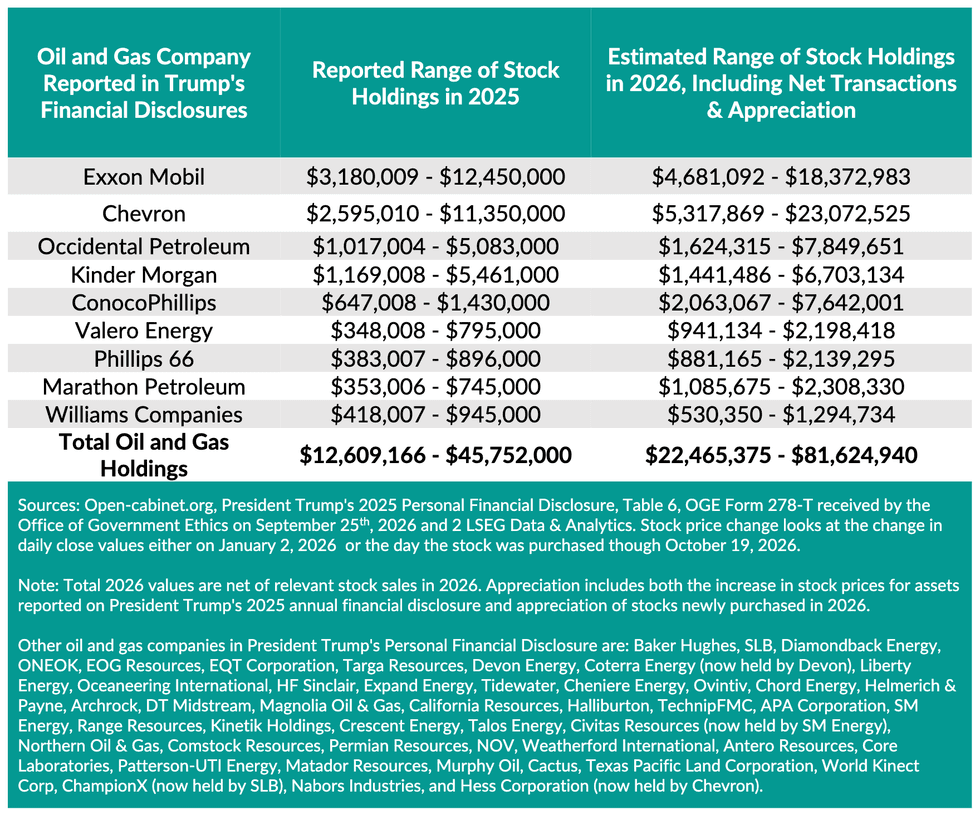 The graph published by the congressional Joint Economic Committee on October 26, 2026 shows US President Donald Trump's stock holdings in oil and gas companies.
Sen. Maggie Hassan (D-NH), the JEC's ranking member, declared that "Trump's Iran War has forced Americans to pay much more at the pump while Big Oil rakes in profits and the president's own stock wealth in the oil and gas industry continues to balloon."
Trump has faced scrutiny and criticism for cashing in on the conflict he created, which the White House has tried to dismiss by pointing out that the president's "stock and bond portfolio is independently managed by third-party financial institutions."
Such comments have not appeased critics, including Hassan, who said that "as Trump—the country's highest-ranking public employee—continues to own and trade stocks in companies that stand to benefit from his decisions, his actions raise major concerns about conflicts of interest. Unfortunately, this is nothing new from this administration and only reinforces that the president puts his own financial interests above the American people."
Keep ReadingShow Less

‘Good Day for Democracy’: Lula's Win in Brazil and Serbia Ousting Vučić Show Strength of ‘People Power’
"Israel could be next on Tuesday, then the US midterms the following week," said one human rights advocate. "The best case against the autocrats is the autocrat."
Oct 26, 2026
"There is nothing inevitable about the far right," said one former Obama administration official Sunday night as supporters of the left-wing Student List in Serbia poured into the streets of Belgrade and other cities across the Balkan country, celebrating their defeat of right-wing President Aleksandar Vučić, who has led the nation for nearly a decade and has been accused of corruption and autocratic rule.
The Student List's victory coincided with that of Brazilian President Luiz Inácio Lula da Silva, who was also backed by a student-led movement that marched through Rio de Janeiro and other cities in recent weeks, as US President Donald Trump was accused of election interference on behalf of right-wing Sen. Flávio Bolsonaro, Lula's opponent.
Both countries reported high voter turnout in the pivotal elections, proving, as journalist Anne Applebaum said, "that voters can alter what feels like a historical shift."
In Serbia, Vučić said it was "clear that we have lost the election,” as results showed his Serbian Progressive Party (SNS) had won about 105 seats while the Student List had won at least 135.
The Student List movement, officially registered by the Republic Electoral Commission as “Studentska lista—Studenti pobeđuju” (Student List—Students Win) began in November 2024 after the concrete roof of a newly renovated train station in Novi Sad collapsed, killing 16 people. Students and other Serbians blamed corruption and negligence by Vučić's government, and soon began blockades at a majority of the country's higher education institutions.
Rallies in the coming year drew hundreds of thousands of people. The political movement that grew out of the sustained protests called for an independent judiciary, a special prosecutor to hold public officials accountable, independent reviews of major infrastructure projects, a higher minimum wage, and better funding for education, healthcare, and agriculture.
A cardiologist and professor from Novi Sad, Ilija Srdanović, topped the list of 250 candidates that the Student List put forward ahead of the snap elections on Sunday, but the movement has said Srdanović will not automatically be its choice for prime minister. The list of candidates for Serbia's 250-seat Parliament includes doctors, farmers, activists, athletes, and actors.
“Never again tyrants in our country," Srdanović said after the defeat of Vučić, who was prime minister before becoming president in 2017 and has been Serbia's central political figure since 2012, developing a reputation for threatening his critics and cracking down on press freedom.
One Student List supporter, Sara, told The Guardian in Belgrade, “It’s very strange that on the very streets where the police beat us, on the streets where we retreated countless times in the face of the gendarmerie, we are now standing here as the victors."
Nebojsa Cosic said to Reuters: “The people have won! The people defeated a dictator! The people will lead Serbia!”
In Brazil, thousands rallied ahead of the runoff election between Lula and Bolsonaro, the son of convicted former President Jair Bolsonaro, a close Trump ally who is serving a 27-year sentence under house arrest for orchestrating a coup attempt after his election loss in 2022.
Right-wing candidates won a significant number of seats in the earlier elections, which followed Trump's push to secure partnerships across Latin America—stoking fears that Bolsonaro could win Sunday's runoff and pushing students to lead pro-Lula rallies and marches across the country.
At a Copacabana Beach rally in Rio on Saturday, supporters carried a yellow and green banner that read, "We are going to turn this around!"
Isabella Graze, a retired teacher who joined a 10-million member WhatsApp group aimed at mobilizing pro-Lula voters, told The Guardian that “being a soldier in Lula’s army... means fighting for Brazilian democracy. This isn’t a normal election."
The Serbian and Brazilian elections came two days before Israelis are set to vote, potentially ending the long-running term of Prime Minister Benjamin Netanyahu, an accused war criminal whose US-backed government has waged war on Gaza, killing more than 74,000 Palestinians, and pushed to violently take control of more of the occupied West Bank.
They also came just over a week before the midterm elections in the US, with Democrats pushing for congressional control to rein in Trump for the final two years of his term. The campaign has been marked by openly racist, anti-Muslim attacks by Trump and his allies on Michigan US Senate candidate Abdul El-Sayed, a Republican ad claiming that Ohio Democratic gubernatorial candidate Amy Acton lied about her abusive childhood, and persistent claims by the president that the cost of living is down, contrary to all evidence.
"Feeling so much hope from the results out of Serbia and Brazil," said Rep. Yassamin Ansari (D-Ariz.). "This took tremendous people power, organizing, and grit. Now it’s time to turn our country around, too."
Kenneth Roth, former executive director of Human Rights Watch, said Sunday was "a good day for democracy."
"Israel could be next on Tuesday, then the US midterms the following week," said Roth. "The best case against the autocrats is the autocrat."
Keep ReadingShow Less
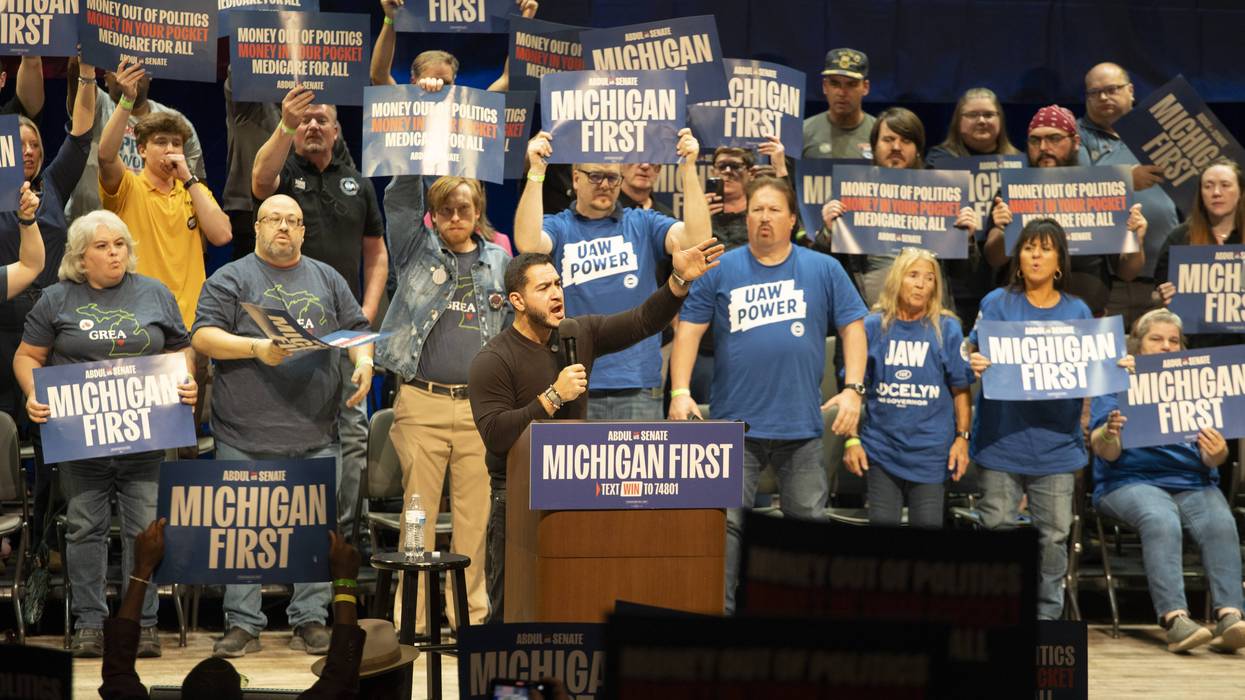
'I'll Be Senator Mohamed to You, Bro': El-Sayed Hits Back at Trump's Islamophobic Attacks
“I don’t care how he pronounces my name,” the Michigan Democrat said. “Because he can just go on and call me senator after November.”
Oct 26, 2026
Abdul El-Sayed, the Democratic candidate for US Senate in Michigan, remained undeterred on Sunday night after President Donald Trump and his supporters ramped up their overt attacks on his Muslim faith at a rally earlier that day.
Continuing to refer to the former public health official by his middle name “Mohamed,” Trump told a frothing crowd in Port Huron on Sunday afternoon that El-Sayed—who would be the first Muslim elected to the Senate—was a “jihadist Muslim Brotherhood member,” escalating the false attacks made by his Republican opponent, former US Rep. Mike Rogers.
"I get that the president takes personal offense to my first name," El-Sayed said at his own rally in Grand Rapids later that evening. "He doesn't mind as much when it's the Saudis who are funding his son-in-law's private equity. Doesn't seem to mind as much when it's the Qataris who are giving them a $400 million private jet. He just seems to have trouble pronouncing it when it's my name."
"I don't care how he pronounces my name. I don't even care that he remembers my whole name. Because he can just go on and call me senator after November," he continued. "I'll be Senator Mohamed to you, bro."
The continued attacks on El-Sayed’s name and Muslim faith were part of a barrage of racist and Islamophobic remarks from Trump and his allies at the rally, which several observers on social media, including the prominent left-wing streamer Hasan Piker, compared to a “Klan rally.”
Portraying El-Sayed as a terrorist, Trump said the Democrat should not be allowed to fly on airplanes and, if elected, should be required to pass through a metal detector when entering the Senate.
Contrasting El-Sayed with Rogers, whom he described as American as “apple pie,” Trump said that El-Sayed, who has frequently emphasized his commitment to religious pluralism on the campaign trail, wanted to impose Sharia on the United States.
He also directed his ire at Jewish voters who may vote for El-Sayed, a frequent critic of US support for Israel.
“Any Jewish person that supports this guy should be ashamed of themselves,” Trump said, again invoking the antisemitic trope that Jewish Americans hold dual loyalty to both the US and Israel. “I’m polling 99% in Israel, and I cannot understand how anybody who’s Jewish can even think about voting for this guy.”
Trump compared stopping El-Sayed to stopping the 9/11 hijackers. Underscoring the point, he brought out David Beamer, whose son Todd died fighting the hijackers aboard Flight 93, to deliver more blood-and-soil invective.
"Mike Rogers is an American. Abdul has a birth certificate. The birth certificate says he's a citizen of America," Beamer said. "A birth certificate doesn't make you an American."
"He has a birth certificate, but he's not an American," he said of El-Sayed, who was born and raised in Michigan. "He had the choice. He had the choice to be an American or not. He has chosen otherwise. He has blood that's red. However, he has chosen to remove any strain of the white and blue part in his blood."
"We cannot, cannot allow this man to invade and occupy our country," Beamer said.
Though Rogers has attacked El-Sayed’s religious background relentlessly in the final months of the campaign, an average of polls from FiftyPlusOne shows El-Sayed with roughly a three-point lead just over a week before Election Day.
Rogers has struggled to defend Trump’s unpopular record as El-Sayed has hammered him over inflation, corruption, and the Iran war. El-Sayed, meanwhile, has stayed focused on a three-part pitch to Michiganders: “Money out of politics, money in your pocket, Medicare for All.”
Joining El-Sayed in Grand Rapids, Sen. Bernie Sanders (I-Vt.) suggested Republicans were resorting to Islamophobia because they had nothing of substance to offer voters on the economy.
“Mr. President, instead of slandering Abdul and his family, what are you going to do about the healthcare crisis in America? What are you going to do about the housing crisis? What are you going to do about income and wealth inequality?” Sanders asked. “These guys have nothing to say about the real issues impacting working families, and all they can do is foment hatred and divisiveness.”
"The reason that in many respects this race here in Michigan is... the race that people all over the world are looking at, is whether or not the people of Michigan are going to stand up to that vile racism," Sanders continued. "And I have every confidence in the world that's exactly what you're going to do."
Republican attacks seem to have alienated some of the Arab American voters who unexpectedly broke for Trump in 2024 over the Biden administration's support for Israel's genocide in Gaza.
"The remarks are out of line and crazy," said Bishara Bahbah, a founder of Arab Americans for Trump. "I mean, no sane individual would say these things."
"They are crossing a red line. They are racist," Bahbah told The Associated Press. "The president of the United States saying that about a person because of his religion, that is just not acceptable. And people are going to remember that on November 3."
Keep ReadingShow Less
DOJ 'Appears to Be Covering Up' Trump-Epstein Connections, Dems Say in New Report
"Trump’s Justice Department has shut down investigations, deliberately withheld evidence and, through Todd Blanche, prevented Ghislaine Maxwell from discussing a survivor whose account implicated Trump."
Oct 26, 2026
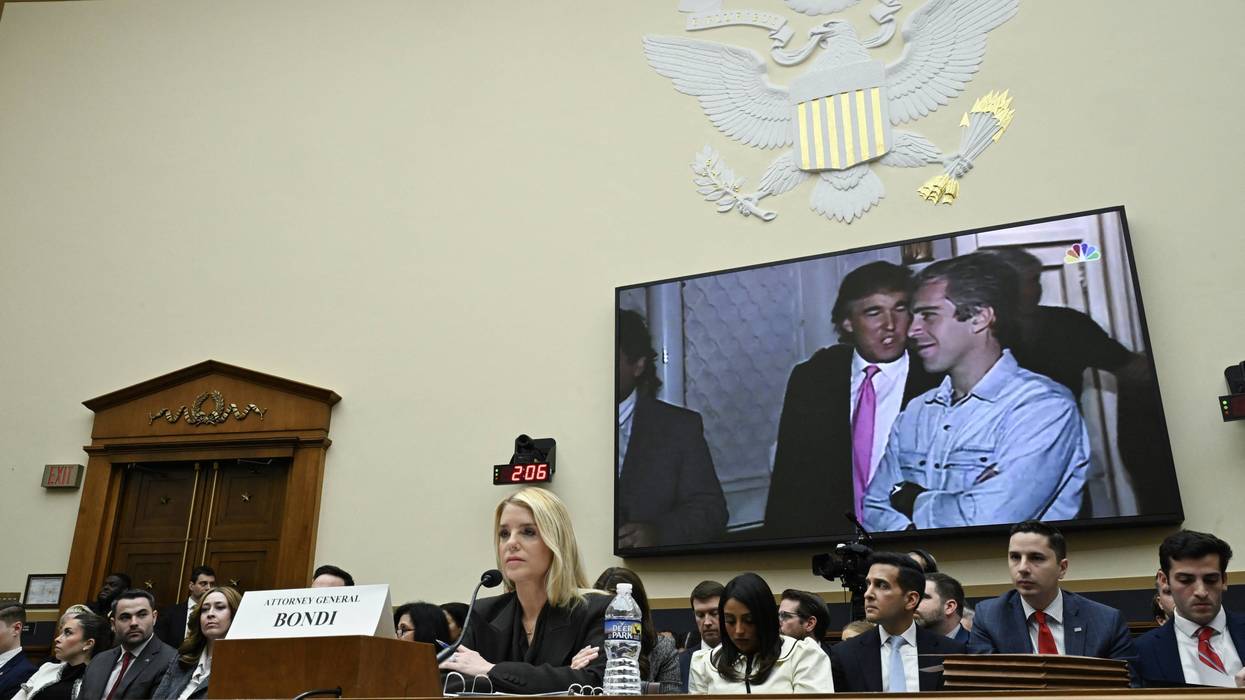
Democrats on the House Judiciary Committee published a report Monday alleging that the US Justice Department is engaged in a "desperate" attempt to cover up President Donald Trump's connections to the late sex offender Jeffrey Epstein, citing a growing body of documentary evidence and witness testimony.
The 53-page report, released days before the midterm elections, lays out the accounts of 11 women who have connected Trump to Epstein and the latter's sex-trafficking operations. Five of those women—identified as Beatrice Keul, Stacey Williams, Jill Harth, Katie Johnson, and Jane Doe—"directly accused Trump of raping or sexually assaulting them in Epstein’s company or direct physical presence," according to the new report, which calls for a special counsel investigation into "Epstein's co-conspirators" and the alleged coverup by the DOJ, currently headed by former Trump lawyer Todd Blanche.
“Trump says he knew Jeffrey Epstein ‘just like everybody in Palm Beach knew him.’ Not exactly," said Rep. Jamie Raskin (D-Md.), the ranking member of the House Judiciary Committee. "Evidence involving 11 women tells a completely different and far more damning story about their relationship and the abuse of young women and girls that took place in their network."
"Five women have directly accused Trump of rape or sexual assault in Epstein’s company or presence; others have indicated that Epstein or Maxwell attempted to traffic them to Trump," Raskin continued. "These women have spoken to investigators and, in some cases, testified under oath, yet Trump’s Justice Department has shut down investigations, deliberately withheld evidence and, through Todd Blanche, prevented Ghislaine Maxwell from discussing a survivor whose account implicated Trump—all while insisting there is no basis upon which to investigate Epstein’s possible accomplices. Trump’s Justice Department appears to be covering up these crimes to protect the president."
The report accuses the Justice Department's leaders—including Blanche and former Attorney General Pam Bondi, who oversaw the legally mandated release of some of the Epstein files—of operating "like a private legal defense firm" for the president, who has repeatedly downplayed his past relationship with Epstein and condemned the furor over the files as a "hoax."
Among the allegations featured in Democrats' report is that Trump raped Beatrice Keul in a hotel suite during his American Dream Pageant in 1993. Keul, who was 24 at the time of the alleged assault, told committee staff that Trump promised to arrange a visa for her.
The report continues:
According to Keul, after Trump stepped away from their conversation, Epstein immediately approached her saying 'I’m Jeffrey, Don’s best friend.' Epstein then spent at least 10 minutes talking to Keul, all the time looking over and grinning at Trump, who had remained in the room and was watching their conversation from afar. Epstein also made similar promises as Trump and asked Keul to attend a party at Mar-a-Lago in the coming months...
Later that day, Donald Trump’s representative invited Keul to go upstairs at the Plaza Hotel to meet with Trump. Believing this meeting to be a lucky break for the purpose of furthering her career and education, Keul accompanied Trump’s representative upstairs. He ushered her into the suite, where upon entering, Trump reportedly grabbed Keul from behind and forcibly raped her; in the process, tearing her dress and causing bleeding and bruising on multiple parts of her body.
Two allegations detailed in the House Judiciary Committee report involve allegations that Trump sexually assaulted two 13-year-old girls.
Katie Johnson, a pseudonym, "alleged to the FBI that Trump and Epstein repeatedly raped her at Epstein’s New York residence in 1994, when she was 13," the report states. "She said the men argued over who would take her virginity. Whistleblower information obtained by the committee indicates that documents linked to a case number involving Katie Johnson have been withheld from Congress and the public."
A spokesperson for Trump's White House told MS NOW in response to the report that "none of these allegations are true" and said, falsely, that Trump "has been fully exonerated of anything related to Epstein."
Raskin said Monday that "the women who survived Epstein deserve to be heard, Congress must have the complete files required by law, and an independent special counsel must investigate Epstein’s co-conspirators and DOJ’s coverup and ensure that state and foreign prosecutors have the evidence they need to pursue justice."
In addition to the grave allegations against Trump, the report suggests Blanche potentially engaged in "witness tampering and obstruction of an official proceeding—serious felonies." The report points to a 2025 conversation between Blanche and convicted sex trafficker Ghislaine Maxwell, a longtime Epstein companion and co-conspirator.
"The whole point of the conversation was not to uncover information but to create a conspiracy of silence and strategically deter Ghislaine Maxwell from sharing information that was not public at the time regarding the relationship between Trump and Epstein," the report says.
The Democrats' report expresses doubt that the Trump administration will take the "minimal step" of appointing an independent special counsel to investigate matters related to Epstein and the president.
"Accordingly," the report concludes, "Congress must continue to use its legislative and oversight powers to pursue justice for survivors and bring an end to the Trump administration’s shameful, bureaucratic, and political cover-up."
Keep ReadingShow Less
See More
Most Popular