August, 23 2016, 11:15am EDT

For Immediate Release
Contact:
Tel: (520) 623.5252,Email:,center@biologicaldiversity.org
Analysis: Burning Unleased Fossil Fuels in Gulf of Mexico Would Release 33 Billion Tons of Greenhouse Gas Pollution
Burning Oil, Gas From U.S. Offshore Leasing Could Push Global Temperatures Past Caps Set by Scientists, Nations
NEW ORLEANS
Burning the fossil fuels under unleased federal waters in the Gulf of Mexico would release the equivalent of up to 32.8 billion tons of carbon dioxide into the atmosphere -- the pollution equivalent of running 9,500 coal-fired power plants for a year, according to a new analysis by EcoShift Consulting and a coalition of conservation and community-based groups.
Today's report recommends ending new fossil fuel leasing in the Gulf to help limit global temperature increases to 1.5 degrees Celsius, the global goal set by nearly 200 nations in Paris last year. Instead the Obama administration has proposed to significantly expand offshore oil and gas leasing in the Gulf, with a final decision on its nationwide plan for 2017-2022 expected by the end of the year.
The report, Critical Gulf: The Vital Importance of Ending Fossil Fuel Leasing in the Gulf of Mexico, comes as Gulf groups and national environmental organizations are in the middle of "Another Gulf Is Possible," a series of events highlighting the oil industry's devastating impacts on Gulf communities and other systems of oppression and exploitation. The events unite racial, social and environmental-justice movements to voice opposition to the next federal offshore lease sale on Aug. 24, which follows devastating flooding from an extreme storm that is likely to become more common in Louisiana as the climate changes. The gathering began with a march Saturday in New Orleans and will include more events in the coming days.
"We can't address climate change while expanding drilling the Gulf. This report shows that new oil and gas leasing in the Gulf would be a carbon bomb that will deepen our climate crisis," said Kristen Monsell, oceans attorney at the Center for Biological Diversity. "President Obama needs to align his energy and climate policies before leaving office, starting in the Gulf."
The Gulf already accounts for about 96 percent of all offshore oil and gas production in federal waters in the United States, the report documents, and the region is suffering from increasingly severe storms, rising seas displacing people, saltwater intrusion, and a wide range of environmental-justice impacts, from health problems in communities of color near refineries to a fishing industry hurt by frequent oil spills. Ending new leasing in the Gulf would be an important step toward keeping a vast majority of fossil fuel reserves in the ground, as climate scientists have called for, and creating a just transition to renewable energy for Gulf communities.
"South Louisiana flooded last week because our atmosphere is warm and holds moisture. We are getting repeated wake up calls and yet we stay asleep," said Anne Rolfes, founding director of Louisiana Bucket Brigade. "The time is now -- this moment -- to end this leasing once and for all and keep this oil where it belongs: in the Gulf of Mexico, beneath the ground."
Developing the entire Gulf of Mexico's fossil fuel resources would nearly double the greenhouse gas pollution of all fossil fuels already under federal leases, according to the report. Upcoming events will focus on keeping fossil fuels in the ground and calls to support frontline communities in the Gulf that have suffered disproportionate impacts from the country's overreliance on fossil fuels.
" Offshore drilling in the Gulf violates our nation's commitments to combat climate disruption and protect communities on the front lines of fossil fuel destruction," said Marissa Knodel, climate campaigner at Friends of the Earth. "President Obama can solidify his climate legacy and jumpstart a just transition for Gulf Coast communities by putting an end to new oil and gas leasing in the Gulf."
Most climate models predict the Gulf Coast will increasingly be hit by more intense storms, like the 1,000-year storm that recently flooded Baton Rouge and much of southern Louisiana, including the home of Cherri Foytlin, a longtime climate activist with Bold Louisiana.
"Climate change is happening now, sending flood waters through my home and those of thousands of my neighbors," Foytlinsaid. "We can't wait any longer to begin a just transition to clean energy. That starts this week by stopping this offshore lease. Then we keep pushing for no new leases in the Gulf of Mexico."
At the Center for Biological Diversity, we believe that the welfare of human beings is deeply linked to nature — to the existence in our world of a vast diversity of wild animals and plants. Because diversity has intrinsic value, and because its loss impoverishes society, we work to secure a future for all species, great and small, hovering on the brink of extinction. We do so through science, law and creative media, with a focus on protecting the lands, waters and climate that species need to survive.
(520) 623-5252LATEST NEWS
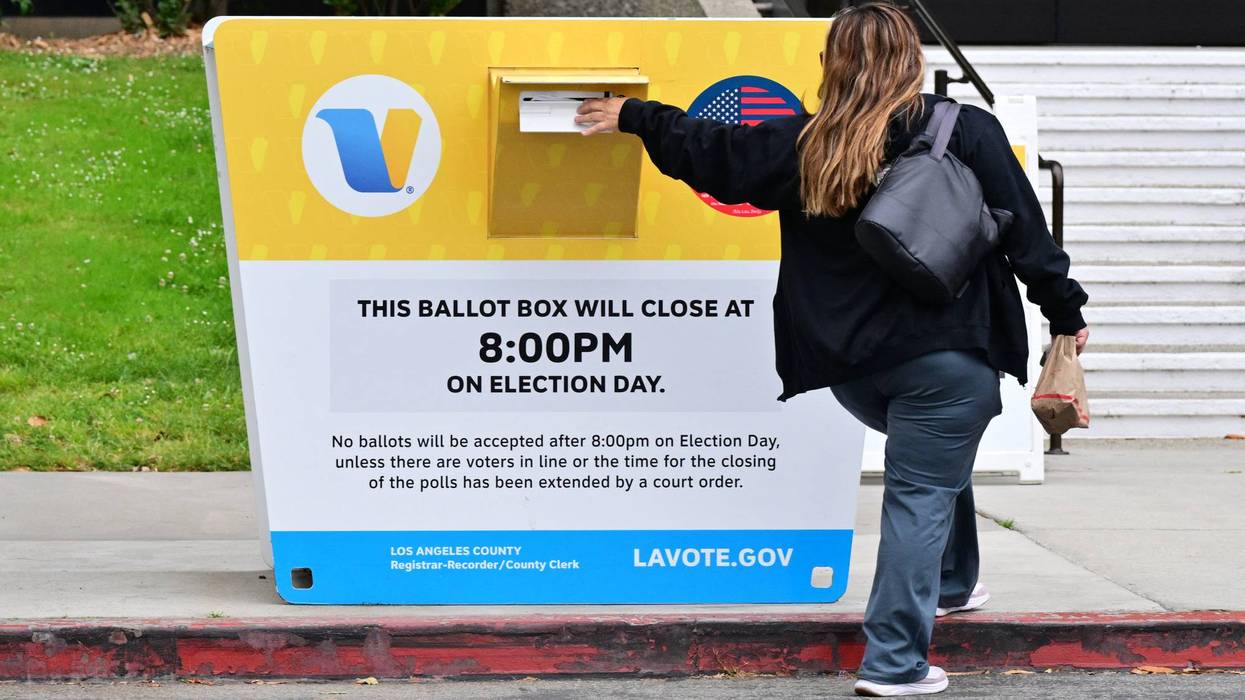
Rights Group Says Polling Places Should Be 'No ICE' Zones During Midterm Elections
"Voters should not have to fear being caught in an ICE dragnet when they head to the polls.”
Oct 20, 2026
Human Rights Watch on Tuesday called for the establishment of “No ICE” zones around polling places, early voting locations, and ballot drop boxes ahead of next month's midterm elections, warning that the presence of US Immigration and Customs Enforcement (ICE) agents could deter eligible Americans from exercising their right to vote.
“ICE officers’ abuses have already seriously affected US citizens who have been stopped, beaten, detained, deported, and even killed,” Human Rights Watch (HRW) executive director Philippe Bolopion said in a statement. “Voters should not have to fear being caught in an ICE dragnet when they head to the polls.”
As HRW noted:
Federal law generally prohibits federal officials from sending “troops or armed men” to voting sites. Several state laws prohibit any armed officers, including police, from engaging in acts that could interfere with the elections or intimidate voters by their presence near polling places. Some states bar law enforcement officers, including police, from being in close proximity to polling places at all unless they are responding to a specific incident.
Despite these robust prohibitions, neither President Donald Trump nor the heads of the US Department of Homeland Security (DHS) and the Federal Bureau of Investigation have been willing to rule out the possibility that federal agents, including ICE, may be at places where people vote.
While Trump administration officials, including Homeland Security Secretary Markwayne Mullin, have indicated there are no plans to deploy ICE agents to polling stations, many voters—especially nonwhite ones—are nonetheless wary amid mixed signals and an often violent, and sometimes deadly, anti-immigrant crackdown that's harmed both immigrants and citizens.
In a survey released last month by the Center for Transparent and Trusted Elections at the University of California, San Diego School of Social Sciences, 40% of respondents said they expected some kind of ICE presence at polling places, with nonwhite respondents even more likely to anticipate seeing immigration enforcers where they vote.
Critics point to Trump's efforts to cast doubt on the integrity of US voting, as well as the push by some of the president's allies for a martial law declaration, as cause for alarm. Trump has repeatedly promoted unsubstantiated claims of widespread election fraud and noncitizen voting—even after his own administration's Cybersecurity and Infrastructure Security Agency called the 2020 election “the most secure in American history.”
The president's "Big Lie" that Democrats stole that election fueled the deadly January 6, 2021 Capitol insurrection, while sowing doubt in the minds of right-wing voters, 82% of whom believe that the biggest problem in the nation’s elections is “ineligible people casting votes,” according to a Public Religion Research Institute survey released Tuesday.
HRW noted that three lawsuits are pending in federal courts to prevent ICE from conducting operations at polling places, with an additional case seeking to compel the federal government to disclose any plans for such deployments. Additionally, the Washington, DC Board of Elections recently asked the National Guard to limit troops' presence near midterm drop box locations after Guard members were spotted near one such box in Foggy Bottom.
“ICE agents should be publicly ordered to stay away from the polls, and anywhere ballots are being cast,” Bolopion said.
Keep ReadingShow Less
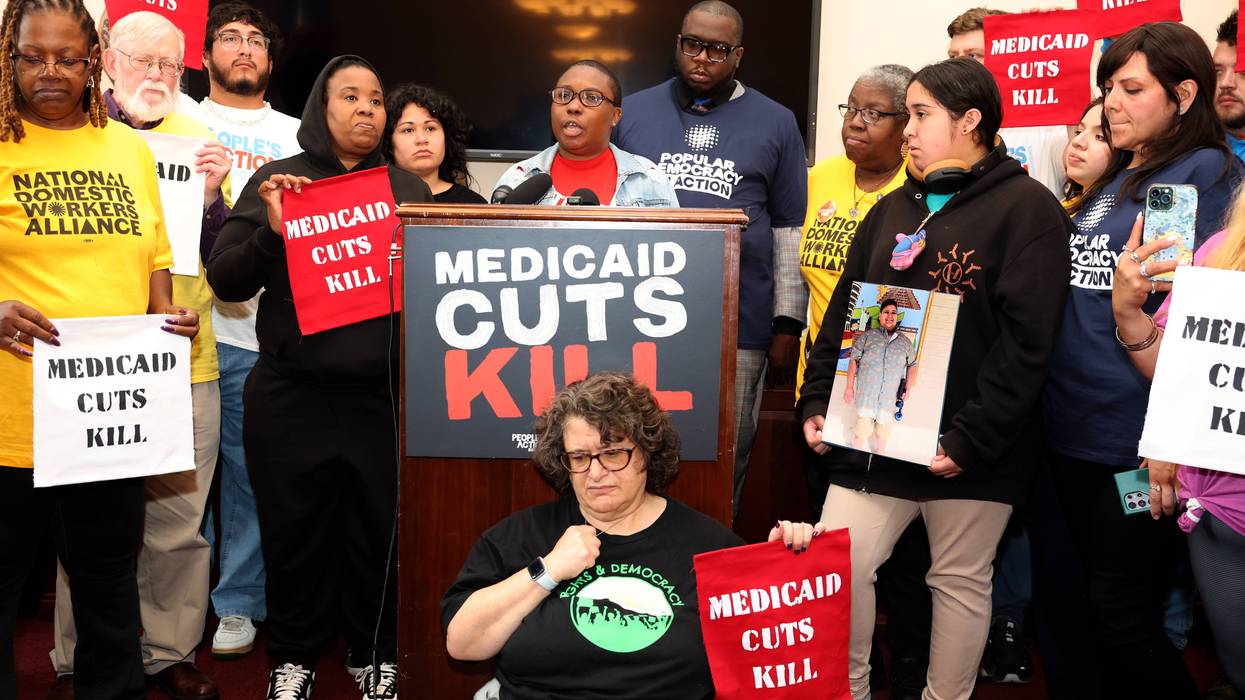
Private Medicaid Contractors Set to Cash In as Trump-GOP Cuts Take Care From Millions
"It’s plain wrong for these companies to boost their profits by kicking people off their healthcare."
Oct 20, 2026
As millions of Americans lose Medicaid coverage due to the unparalleled cuts that President Donald Trump signed into law last year, large private contractors are poised to make a financial killing as states move to implement draconian new work reporting requirements that are already wreaking havoc in several states.
A report published Tuesday by Democrats on the Senate Finance Committee warns that "a small handful of companies—some whose technology has a history of grievous errors—will be in charge of implementing historically harsh Medicaid work reporting requirements that never should have been enacted in the first place." The report spotlights five firms that hold contracts with states for Medicaid eligibility and enrollment work: Maximus, Gainwell, General Dynamics Information Technology, Conduent, and Deloitte.
"This investigation began by asking contractors a series of questions to determine whether they are up to the task of implementing Medicaid work reporting requirements on behalf of states, and the committee’s interim findings show that we cannot conclude they are," the report states. "The companies who stand to profit from new Medicaid work reporting requirements evaded hard questions about past performance, current process, and the potential for errors that cause widespread harm."
The Democrats' report comes as states are rushing to implement the new Medicaid work reporting requirements ahead of the January 1, 2027 deadline. The mandates require certain Medicaid recipients to document at least 80 hours per month of work or other qualifying activities—or lose coverage.
As KFF Health News reported earlier this year, state governments rely on private firms to "design and operate computer systems that assess whether low-income people qualify for Medicaid."
"Those state systems have a history of errors that can cut off benefits to eligible people," the outlet added, pointing to its 2024 investigation of Deloitte, which holds Medicaid-related contracts in at least 25 states.
States are paying Deloitte and other for-profit firms millions of dollars in taxpayer funds to help their governments comply with the new federal Medicaid rules, which could strip coverage from more than 10 million people by 2028.
None of the five vendors that Senate Democrats are investigating agreed to provide data on how many people their systems have reported to state Medicaid offices as potentially ineligible for coverage—though all of them denied having contract provisions that incentivize kicking people off the program. The companies also declined to disclose the compensation of their CEOs.
Nebraska, Montana, and Arkansas are so far the only US states that have begun implementing work requirements included in the Trump-GOP budget law. Preliminary data out of Nebraska indicates that red tape stemming from the work reporting mandates accounts for most of the coverage loss and denials so far.
Across the country, around 4 million people have lost Medicaid and Children's Health Insurance Program coverage since Trump signed the Republican budget package into law last July.
"The nation is just weeks away from Republicans rolling out the red tape on unsuspecting Americans who have life-or-death healthcare needs. This rushed rollout is going to be a disaster," Sen. Ron Wyden (D-Ore.), the top Democrat on the Senate Finance Committee, said in a statement on Tuesday. "It is essential to hold these contractors to a higher standard and implement commonsense accountability measures that make fast, simple, and durable enrollment in healthcare coverage the bar for earning taxpayer dollars."
Sen. Elizabeth Warren (D-Mass.) added that "as President Trump and Republicans gut healthcare for millions of Americans, big corporations are cashing in by running systems that snarl Americans in red tape and strip them of their Medicaid coverage."
"It’s plain wrong for these companies to boost their profits by kicking people off their healthcare," the senator added, "and I’ll keep fighting to end this corporate greed."
Keep ReadingShow Less
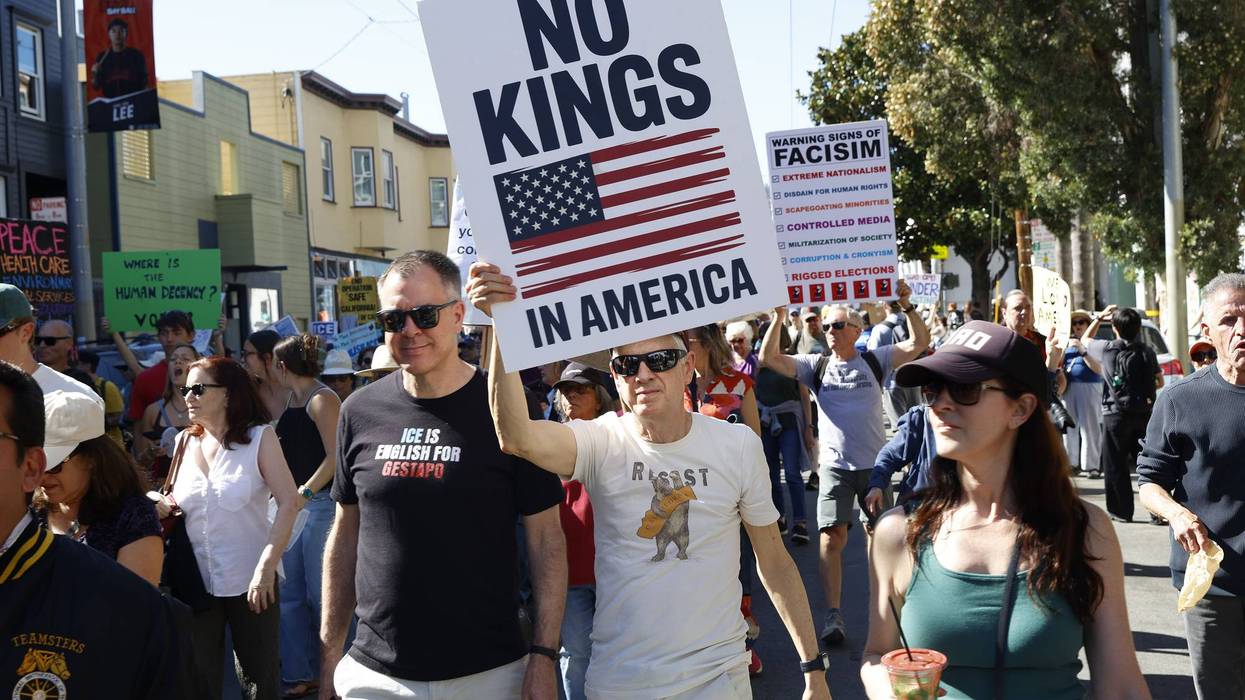
'The Public Deserves Answers': No Kings Coalition Gives Zuckerberg 24 Hours to Come Clean on Instagram Block
"Critical voter information or civic participation should not be blocked, throttled, or otherwise interfered with if Meta aspires to be a trusted actor in our democracy."
Oct 20, 2026
The coalition of organizations behind the No Kings demonstrations on Monday demanded answers from Meta CEO Mark Zuckerberg about why Instagram suspended the movement's primary account on Saturday.
In a letter to Zuckerberg, No Kings took issue with the explanations given by the company so far about the account's removal, which lasted approximately 90 minutes at the peak of rally activity.
"Public comments from representatives of Meta do not sufficiently explain these actions or the significant delay in remedying the so-called 'technical glitch,'" the letter states. "This raises serious questions among the public about why these actions were taken and the implications during the election season. Critical voter information or civic participation should not be blocked, throttled, or otherwise interfered with if Meta aspires to be a trusted actor in our democracy."
"The public deserves answers," the letter continues. "As such, the No Kings Coalition demands public response to the following questions. Americans are voting, and the election is fast approaching. Time is of the essence."
The letter then lists several questions that Meta needs to answer about the incident, giving the company until Wednesday at 5:00 pm PT to respond.
Among other things, No Kings wants Meta to release enforcement logs related to the account's suspension, to divulge any communications company officials have had with the Trump administration, and to explain any role that artificial intelligence agents potentially played in getting the account taken down.
Meta's suspension of the No Kings Instagram account is just one of many recent incidents that have raised concern about Big Tech platforms putting their thumbs on the scale on behalf of right-wing interests.
In Brazil, the campaign of President Luiz Inácio Lula da Silva filed a legal complaint last week accusing Meta of shutting down accounts promoting his candidacy while using its algorithms to promote content produced by the campaign of far-right rival Flávio Bolsonaro.
As The Associated Press reported on Thursday, a judge in Brazil’s top electoral court sided with Lula’s campaign, ruling that Meta “cannot reduce the distribution of political content, restrict searches, or remove posts in a way that creates an imbalance between Lula and Bolsonaro.”
Bleecker Street, the distributor of director Alex Gibney’s four-hour documentary about SpaceX CEO Elon Musk, told The Hollywood Reporter on Saturday that TikTok had permanently suspended the film’s promotional account.
Messages shared with The Hollywood Reporter revealed that TikTok accused the Musk documentary account of violating its rules regarding political content, but it was not clear what those violations were.
Keep ReadingShow Less
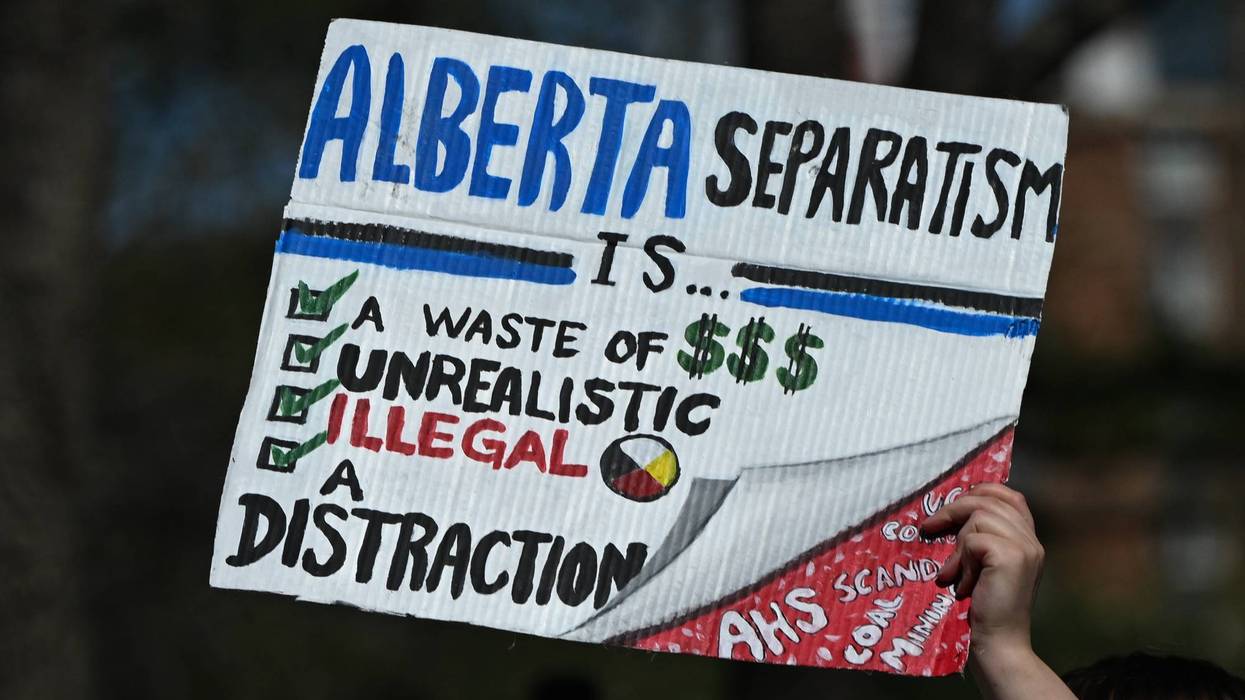
Alberta Secession Effort by Trump's Right-Wing Canadian Allies Goes Down in Flames
"The separatists and Trump lost," said one commentator. "Canada won."
Oct 20, 2026
The leader of the movement that opposed separatists' efforts to achieve independence for the Canadian province of Alberta said Monday night that voters' resounding rejection of the secession push would "send a very strong message to the rest of the world," after Trump administration officials backed the effort.
"Don’t mess with Canada," said Thomas Lukaszuk, a former deputy premier of Alberta who led the Forever Canadian campaign.
With more than 1.8 million votes counted Tuesday morning, 75.7% of Alberta voters had supported remaining in Canada with no further referendum. Just over 24% voted in favor of holding a second referendum on separating from the country, which would have been binding.
Separatist leaders, many of whom came to prominence after leading protests against public health precautions during the coronavirus pandemic, were welcomed to meetings at the US State Department in recent months, where they sought advice on their "Let Alberta Decide" campaign from Republican operatives. The meetings, said British Columbia premier David Eby, amounted to "treason."
US Treasury Secretary Scott Bessent expressed support for the separatist movement, which does not have a central leader but is backed by groups in Alberta including the Alberta Prosperity Project and Stay Free Alberta.
Bessent said in January that the province, which holds the world's fourth-largest proven oil reserves, could be “a natural partner for the US."
"I think we should let them come down into the US," Bessent told right-wing podcaster Jack Posobiec. "They have great resources. The Albertans are very independent people... Alberta has a wealth of natural resources, but they won’t let them build a pipeline to the Pacific."
Former Trump administration adviser and Republican megadonor Elon Musk also said on social media this month that Alberta "should separate" from Canada.
The referendum came as President Donald Trump has threatened to take over Canada and make it "the 51st state," accusing the Canadian government of treating the US "very badly." He has imposed 50% tariffs on a range of Canadian imports, setting off a trade war.
Separatists in Alberta, whose views have long been in the minority, have complained that the province "sends $20 billion more to Ottawa every year than it gets back," and fumed over any environmental policies that threaten Alberta’s oil industry, one of the most polluting in the world.
Canceled oil pipelines, a bill banning oil tankers from stopping and unloading at ports on British Columbia's coast, and an emissions cap have been decried as evidence that the federal government has treated Alberta as "a colony," as one separatist told The Associated Press Monday—despite the fact that the emissions cap was dropped for the province's oil and gas sector last year.
“They want to take and take and take from us, and not return anything," Dustin Degenhardt said while voting.
Danielle Smith, the leader of the United Conservative Party and the premier of Alberta, said she supported the province remaining in the country and applauded the vote results.
But at a recent online forum, Smith outlined the concerns of separatists, saying families face growing affordability struggles and asserting the province has been forced to provide hundreds of thousands of immigrants whom the federal government has resettled there.
A report released in June by the Calgary Chamber of Commerce found that seceding from Canada would shrink Alberta's economy by $62 billion per year.
Prime Minister Mark Carney said after the vote Monday night that the decision by a large majority of voters was "a great result for Canada."
"Albertans have chosen unity," said Carney. "They've chosen to build together. They've chosen to continue to take care of each other, to move forward together."
Podcast host Laura Babcock said Tuesday that "the separatists and Trump lost. Canada won."
Keep ReadingShow Less
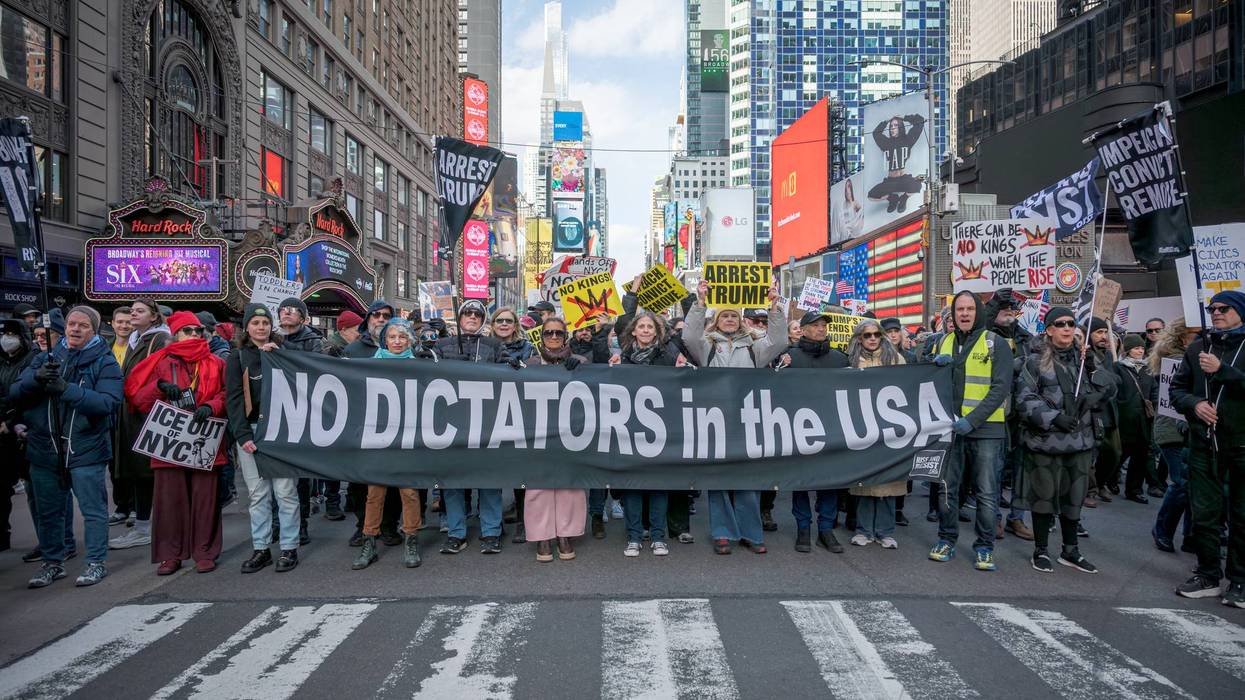
Poll: Majority Fear Trump as Dictator
The survey also found that people in the country see the president's far-right MAGA movement as "more threatening" than Democratic Socialists of America.
Oct 20, 2026
A majority of Americans believe President Donald Trump is a “potentially dangerous dictator” whose power must be checked, a new national survey released Tuesday revealed amid deepening public pessimism about the country's direction ahead of next month's midterm elections.
The 2026 American Values Survey, conducted by the nonpartisan Public Religion Research Institute (PRRI) in partnership with the Brookings Institution, found that 58% of Americans agree that “President Trump is a potentially dangerous dictator whose power should be limited before he destroys American democracy.”
That's up from 52% who said the president is a possibly dangerous dictator in last year's survey.
Among Democrats, 90% consider Trump a dangerous dictator, while 64% of independents and 20% of Republicans felt the same way.
Two-thirds (68%) of respondents said their opinion of Trump has mostly worsened over the last two years, including in communities that had been among his core supporters. Trump’s favorability among Hispanic Protestants has dropped from 51% in 2024 to 31%, and Hispanic Trump voters were twice as likely as white Trump voters to say they regret supporting the president.
“The coalition that put Donald Trump back in the White House is breaking apart, with 76% of Americans saying the economy is on the wrong track,” PRRI CEO Melissa Deckman said in a statement. “His 2024 gains are clearly not a long-term realignment, as we see Black, Hispanic, and young male voters moving back to Democrats.”
Meanwhile, just 37% of those surveyed agreed with the statement that Trump is “a strong leader who should be given the power he needs to restore America’s greatness.”
Regarding one of those powers—the ability to set immigration policy—a majority of Republicans (62%) and white evangelicals (53%) said they support locking up undocumented immigrants in "internment camps," a policy backed by 16% of Democrats and 28% of independents.
Nearly half of those surveyed (48%) said the Make America Great Again movement "poses a serious threat to the country," compared with 36% who said the same of the Democratic Socialists of America. More than 8 in 10 Democrats (82%) see MAGA as a serious threat, while 7 in 10 Republicans (72%) said the same of the DSA.
The survey showed that only about half (52%) of respondents have confidence in US elections, and that 82% of Republicans believe that the biggest problem in the nation's elections is "ineligible people casting votes," while 80% of Democrats said the biggest problem is "eligible voters being denied the right to vote."
More than one-third (35%) of respondents said that “if there are serious concerns about voter fraud in a local voting location, the president should order federal agents to seize the ballots and take over the vote counting,” with 6 in 10 Republicans agreeing with the statement.
A slim majority (51%) of respondents were more likely to agree with the statement, “Socialism is best understood as a system in which the government provides benefits such as health insurance, retirement support, and access to free higher education” than with the statement, “Socialism is best understood as a system in which the government controls major parts of the economy, such as utilities, transportation, communications, and banks," with which 43% concurred.
Four in ten Americans (41%) agree that capitalism is no longer working for average Americans and the country should consider adopting some aspects of socialism – including nearly half of Americans ages 18-29 (48%).
[image or embed]
— PRRI (@prri.org) October 20, 2026 at 5:43 AM
The survey showed growing dissatisfaction regarding the country's trajectory. Seven in 10 respondents (71%) said the United States is headed in the wrong direction, while 76% said the same of the economy. Both figures have risen substantially since last year.
The survey also found that an "empathy gap"—the level of belief in the importance of empathy—is growing between white conservatives and other Americans. While two-thirds of Americans, including 84% of Democrats and 70% of independents, said they believe that “empathy is a foundational moral value that helps build a healthy society," only 54% of Republicans and 48% of white evangelical Protestants agreed.
Fifty-four percent of white evangelical Protestants said they believe the opposite: that “empathy can become dangerous when it leads people away from building a society guided by God’s truth.”
“As Christian nationalist leaders attack the sentiment of empathy, a disturbing ‘empathy gap’ has opened, separating Republicans and white evangelicals from most other Americans,” PRRI president and founder Robert P. Jones said in a statement. “Such orchestrated attacks are typical of violent authoritarian movements and should be disturbing to all who care about the moral foundations of our pluralistic democracy.”
Keep ReadingShow Less

Tlaib Calls to Arrest Commander of IDF Unit Accused of Killing Hind Rajab as He Travels the US
The Michigan congresswoman said the US government was “obligated to arrest and investigate” Israeli Maj. Sean Glass, who is believed to have given the orders that resulted in the killing of the 5-year-old girl in Gaza.
Oct 20, 2026
US Rep. Rashida Tlaib called Monday for the US Department of Justice to arrest the commander of the Israel Defense Forces unit believed to have killed 5-year-old Hind Rajab in Gaza back in 2024.
Maj. Sean Glass, who commanded the “Vampire Empire” Company of the 52nd Armored Battalion in the 401st Armored Brigade, is traveling in the United States, according to an urgent legal complaint submitted by the Hind Rajab Foundation.
"The commander of the Israeli military unit likely responsible for killing 5-year-old Hind Rajab is currently in the US," Tlaib (D-Mich.), the only Palestinian American member of Congress, wrote on social media. "As a party to the Genocide Convention and the Geneva Conventions, our government is obligated to arrest and investigate him for these war crimes and acts of genocide."
An investigation by the foundation, in collaboration with Al Jazeera, concluded that Glass’ unit opened fire on a car, killing six of Rajab’s family members on January 29, 2024, as they attempted to flee Gaza City.
Rajab spent hours pleading with emergency dispatchers to rescue her. But Israeli forces also attacked an ambulance sent to save her, killing two paramedics. Rajab's body was discovered 12 days later.
Following international outrage, Israel initially denied responsibility for the attack, before admitting in August 2026 that its troops had fired upon the family's car and toward the ambulance.
Using satellite imagery, forensic evidence, and Israeli soldiers’ social media activity, the Hind Rajab Foundation said it established that Glass’ unit was operating a few hundred meters from Rajab’s vehicle when the attack occurred. However, the allegations have not been proven in court.
On Monday, the foundation posted photos of Glass standing on the Brooklyn Bridge and riding the New York City subway. It is not clear why he is traveling in the US or where he is currently located.
The group filed a request with the Justice Department on Monday demanding that it investigate, arrest, and prosecute Glass under the US War Crimes Act and federal genocide statutes.
"Glass is not just another man implicated in the killing of Hind Rajab," said Dyab Abou Jahjah, the foundation's general director. "He is the man who most likely gave the order to open fire on the vehicle carrying Hind and members of her family, including other children. That Glass can walk the streets of the United States as though nothing has happened is intolerable. He must be brought to justice.”
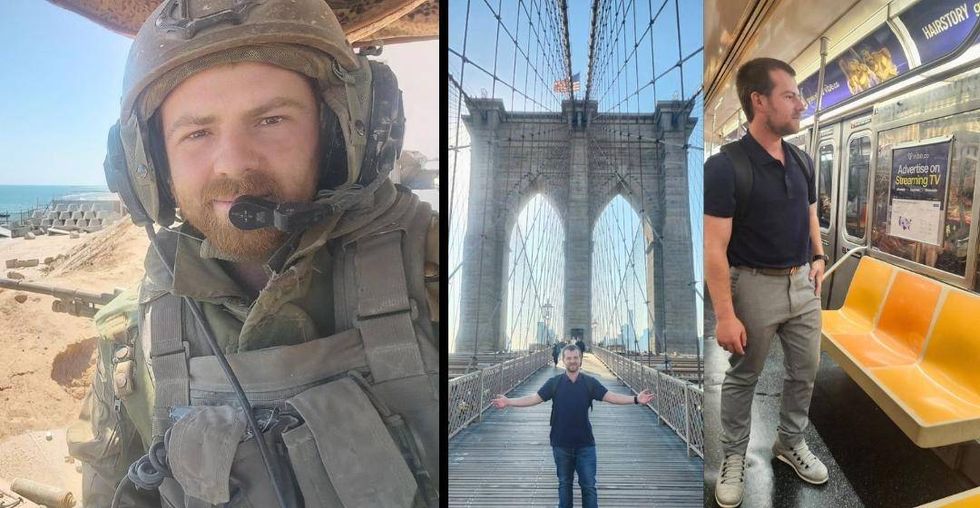 Photos posted on October 19, 2026, show Israeli Maj. Sean Glass standing on the Brooklyn Bridge and riding the New York City subway. (Photos from the Hind Rajab Foundation)
The foundation has already filed a submission with the International Criminal Court (ICC) and authorities in other countries, calling for Glass and members of his unit to be held accountable.
Glass, the foundation noted, has often publicly celebrated destruction in Gaza during Israel’s genocidal military campaign there, which has led to the deaths of more than 74,000 people, including over 21,000 children, according to official tallies. Experts warn the true death toll is likely much higher.
According to the foundation:
On Instagram, in interviews, and in a self-published book, [Glass] has proudly recounted the destruction of hospitals, UN buildings, entire neighborhoods, and the Rafah Crossing, the lifeline on which Palestinian survival depended.
Celebrating 100 days of the war, he described the campaign as a "war of existence of the eternal people" and urged his troops to "attack, attack till victory." Marking seven years in the army, he wrote there was "no more significant way to celebrate" than in Al-Shifa, "the terror nest," posting side-by-side satellite images of Al-Shifa Medical Complex before and after his forces destroyed it.
In his farewell speech to his company, he boasted that they had "destroyed every part to where we were asked to go, in all areas of the Gaza Strip," and described emptying the Zeitoun neighborhood of its residents. Days after the ceasefire took effect, still in Gaza, he filmed himself promising, "I'll rush at the opportunity to return to the battle and finish the work."
"The War Crimes Act and the Genocide Statute were written precisely for men like Sean Glass," said Jake Romm, the Hind Rajab Foundation's representative in the United States. "Congress and successive administrations promised that the United States would never be a refuge for war criminals; instead it has condoned and aided their crimes."
Calls for Glass' arrest come amid the Trump administration's efforts to "dismantle" the ICC over its attempt to prosecute Israeli Prime Minister Benjamin Netanyahu for war crimes in Gaza. Earlier this month, after targeting individual judges and prosecutors, the administration placed the ICC itself under sweeping financial sanctions. Human Rights Watch executive director Philippe Bolopion said the administration's clear goal was to "shield US and Israeli officials from facing charges before the court."
US law allows foreign nationals like Glass to be prosecuted for certain war crimes when they are present on US soil. Such prosecutions require the approval of the US attorney general or deputy attorney general.
As of Tuesday morning, Tlaib appeared to be the only US lawmaker who had issued a statement calling for the US government to arrest Glass.
"Glass and his company are responsible for some of the worst atrocities of this genocide—that he now walks free and unbothered in the US is not only an insult to his victims, but to all people of conscience here in the US as well," Romm said. "Some politicians in the US have claimed to be committed to accountability for Israeli war crimes—this filing is a good opportunity to test the sincerity of that commitment.”
Keep ReadingShow Less
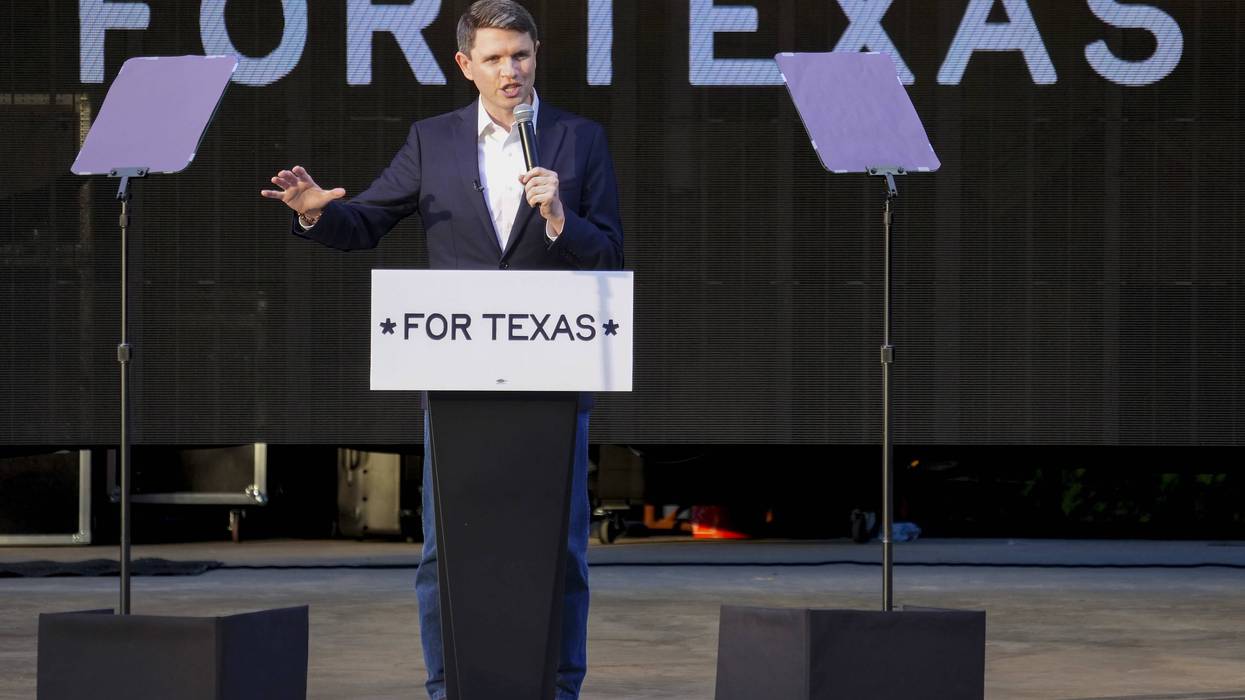
Talarico Takes Direct Aim at Elon Musk as Early Voting Shatters Record in Key Texas County
"Elon Musk wants our land, he wants our water, he wants his very own personal United States senator."
Oct 20, 2026
Texas Democratic US Senate candidate James Talarico on Monday took direct aim at far-right billionaire Elon Musk, the single biggest donor to the campaign of Republican rival Ken Paxton.
Speaking at an event in Denton, Texas, Talarico decried Musk's attempts to flood the Senate race with money, as recent financial disclosures show the SpaceX CEO has spent at least $158 million trying to boost Paxton's campaign.
"Musk is trying to buy this Senate seat in Texas," Talarico said. "We just found out that he is almost singlehandedly bankrolling this effort to install Ken Paxton in the US Senate and defeat this movement that we've built in our state."
Talarico: "We just found out that [Elon Musk] is almost single-handedly bankrolling this effort to install Ken Paxton in the U.S. Senate and defeat this movement...Elon Musk wants our land. He wants our water. He wants his very own personal United States senator. He is trying to buy Texas."
— Bulwark Clips (@BulwarkClips) October 19, 2026
Talarico outlined the ways Musk's money has impacted the Senate campaign.
"In all likelihood, if you have seen an attack ad on your TV, that was Elon," Talarico said. "If you've gotten lies in your mailbox, that was Elon. If you've received a text message saying scary things about me, that was Elon too."
The Texas Democrat contrasted Paxton's reliance on Musk with his own campaign receiving funding from over 1.3 million individual donors.
"Ken Paxton is funded by one dude," Talarico said. "Elon Musk wants our land, he wants our water, he wants his very own personal United States senator. He is trying to buy Texas. But on November 3, we are going to send a crystal-clear message... Texas is not for sale."
Talarico's remarks on Musk came amid a historic surge of early voting in the Texas Democratic stronghold of Harris County.
According to a Monday report from Click 2 Houston, Harris County recorded nearly 105,000 ballots cast on the first day of early voting, shattering the previous first-day early voting record of 63,000 votes set during the 2018 midterm elections.
In 2018, Democrat Beto O'Rourke came within two-and-a-half percentage points of ousting incumbent Sen. Ted Cruz (R-Texas), the closest a Democrat has come to winning a US Senate race in the Lone Star State in decades.
The most recent polls aggregated by elections analyst Nate Silver show that Talarico holds a narrow lead over Paxton heading into the final stretch of the campaign.
Keep ReadingShow Less
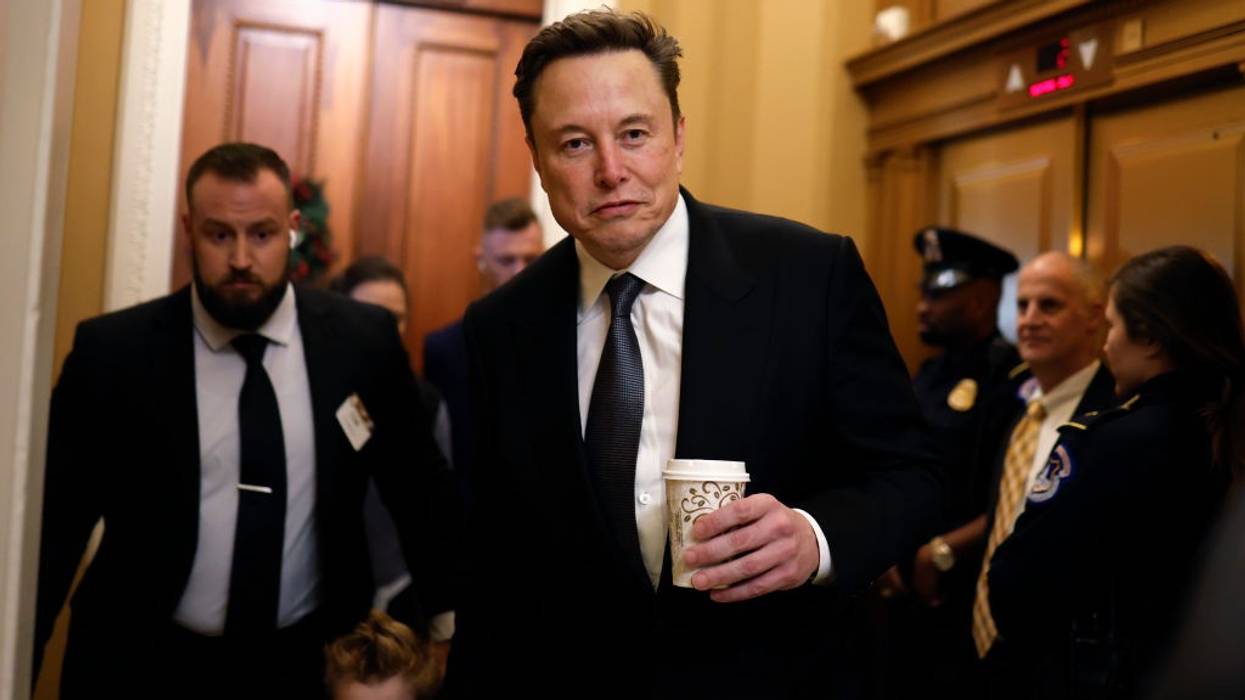
Top Economist Says Elon Musk Needs to 'Pay More Taxes,' Not Just Donate SpaceX Shares
"The American people don’t need billionaires making grand promises of generosity," said University of California, Berkeley professor Gabriel Zucman. "They need billionaires to pay their fair share."
Oct 20, 2026
A world-renowned economist said Monday that Elon Musk's pledge to donate a share of his company, SpaceX, to every American child is not nearly enough to redress the exploding wealth inequality that he personifies.
Gabriel Zucman, a professor at the University of California, Berkeley and a leading inequality expert, wrote in a series of social media posts directed at Musk that "if you really want to help the American people, I have a better suggestion than charity: pay more taxes."
"You, like your fellow billionaires, pay a lower effective tax rate than the average American," Zucman wrote, pointing to his research on the tax rates of the wealthiest Americans.
Zucman and his colleagues estimated in a 2025 paper that the total effective tax rate of the 400 wealthiest US households "averaged 24% in 2018–2020 compared with 30% for the full population and 45% for top labor income earners."
Based on available data and tax records obtained by ProPublica, Musk's effective tax rate has been far lower than average. Between 2014 and 2018, Musk—whose wealth is mostly tied up in stock that is only taxed when it is sold—paid an effective federal rate of 3.27%.
"The American people don’t need billionaires making grand promises of generosity," wrote Zucman. "They need billionaires to pay their fair share. All of them. Each year. How is it acceptable that billionaires pay a lower tax rate than the average American? The most effective way to do is with a billionaire wealth tax."
Billionaires’s extremely low tax rates are fueling oligarchic power in the United States.Look at the wealth held by the richest billionaires relative to what’s produced in a given year in the US—a good measure of the influence their wealth can buy. The economic weight of extreme wealth now far exceeds its Gilded Age peak.
— Gabriel Zucman (@gabriel_zucman) October 19, 2026
Musk, whose net worth briefly surpassed $1 trillion earlier this year following SpaceX's debut on the public market, pledged to distribute a share of the company to every American child. Based on the company's current stock price, the donation would be worth around $11 billion—a tiny percentage of Musk's total wealth.
"Giving 1% is better than giving 0%, and I applaud that," Zucman wrote in his social media thread on Monday. "But Americans don’t need charity, as in 19th Century Britain. They need everybody to contribute through the tax system, in proportion to their ability to pay."
Zucman expressed support for the Make Billionaires Pay Their Fair Share Act, legislation introduced earlier this year by Sen. Bernie Sanders (I-Vt.) and Rep. Ro Khanna (D-Calif.). The bill would impose a 5% annual wealth tax on US billionaires, whose combined net worth surged past $9 trillion over the summer.
"This would still be small relative to your wealth," Zucman said of the tax, "and yet would generate more than $4.4 trillion in revenue over the next decade. That would make a real difference to the lives of the American people. Owning one share in SpaceX won’t."
Keep ReadingShow Less
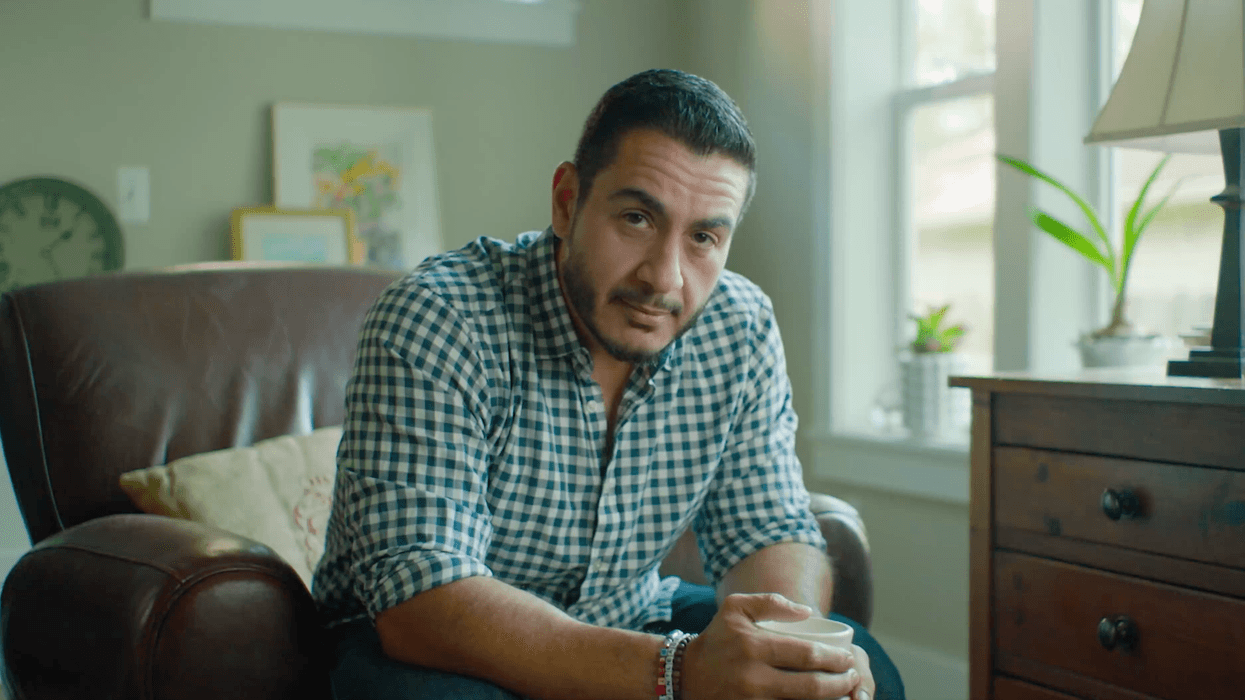
'My Name Is Abdul': El-Sayed Confronts Trump's Racist, Anti-Muslim Attacks Head-On in New Ad
"In response to attacks about his faith, Abdul doubles down on who he is," said one observer.
Oct 20, 2026
In his latest campaign ad released late Monday, Dr. Abdul El-Sayed, the Democratic US Senate candidate in Michigan, struck a resilient and matter-of-fact tone that suggested the recent racist attacks on him, his Arabic name, and his Muslim faith are no secret—but he has no plans to try to hide his identity to appease Republicans and Democrats who have claimed he's an "extremist" or accused him of terrorist ties.
"My name is Abdul," said El-Sayed in the 30-second ad. "It means servant. I pray every day. I reflect on my role in this life, on this Earth—how we leave it better than we found it."
He continued by linking his own faith traditions to those of millions of Michiganders who also "pray"—many of whom, he suggested, "feel hopeless" in President Donald Trump's America, as they face rising costs and struggle to afford groceries, healthcare, childcare, and other essentials.
As a man of faith, I pray every day. Faith is a thing there’s just too little of in Washington. https://t.co/1OUOb51AC8
— Dr. Abdul El-Sayed (@AbdulElSayed) October 19, 2026
The ad, subtly connecting El-Sayed's Muslim faith to people of all belief systems across Michigan, comes as Trump and others ramp up Islamophobic attacks on the progressive former public health official, with two weeks to go until Election Day.
The president explicitly, baselessly slandered El-Sayed as "a jihadist" at one recent rally, mocking his name as he told the crowd that El-Sayed "is a member of the Muslim Brotherhood." The Republican Senate candidate in Michigan, former Rep. Mike Rogers, has also attempted to tie El-Sayed to the political movement that was founded in Egypt in 1928.
On Monday, as El-Sayed's ad was released, Trump took aim at the candidate's name once again, calling him by his middle name, Mohamed.
"He knows my name is Abdul," El-Sayed said of the president earlier this month. "He says it every day. But he’s not just attacking me. He’s attacking all of us. He thinks so low of us. He thinks he can use my name and my faith to distract us from the suffering his policies are inflicting on us at the pump, at the grocery store, and at the doctor’s office. He thinks we don’t know any better. It’s time for change."
The Republican claims regarding El-Sayed's ties to the Muslim Brotherhood made their way into an exchange the candidate had with a town hall attendee identified as "Tommy" in Caro, Michigan over the weekend, where Tommy demanded that El-Sayed "disavow" the group.
“Sure. Yeah, absolutely,” El-Sayed said, before challenging Tommy to explain why he was asking a Muslim candidate to do so.
This is Tommy. Tommy had a question about my allegiances. Listen to the end to hear about his. https://t.co/p09eMtsh0x
— Dr. Abdul El-Sayed (@AbdulElSayed) October 18, 2026
Anti-Muslim attacks have come from both sides of the aisle since El-Sayed began his campaign, with Democratic strategists spending months fixating on his decision to campaign with popular Twitch streamer Hasan Piker and tying the candidate to Piker's earlier remarks about September 11 and Israel.
On Monday, former Michigan Democratic Party chair Lon Johnson accused El-Sayed of "extremism" and said his rhetoric threatens Jewish communities, calling on Democrats in the state to "leave the Senate race blank" to represent "a rejection of ideological absolutism." El-Sayed is a strong supporter of Palestinian rights and, like a majority of Americans, is deeply critical of US support for Israel as it continues its assault on Gaza and the West Bank.
In the ad released Monday, El-Sayed suggested that "faith" like his could bring positive change to Washington, DC, where political leaders have long claimed that big changes to systems in the US—such as its for-profit healthcare system, which El-Sayed strongly believes must be replaced by Medicare for All—would be impossible to make.
"Faith is a thing that there's just too little of in Washington," he said. "We don't have faith in our future. We don't have faith that we can actually fix things."
Mussab Ali, a former school board official in Jersey City, New Jersey, said the ad took "courage" to release.
"I think this might be the first time in American history you’ve seen a Muslim candidate demonstrate a part of their prayer in an ad like this," said Ali. "In response to attacks about his faith, Abdul doubles down on who he is."
Keep ReadingShow Less
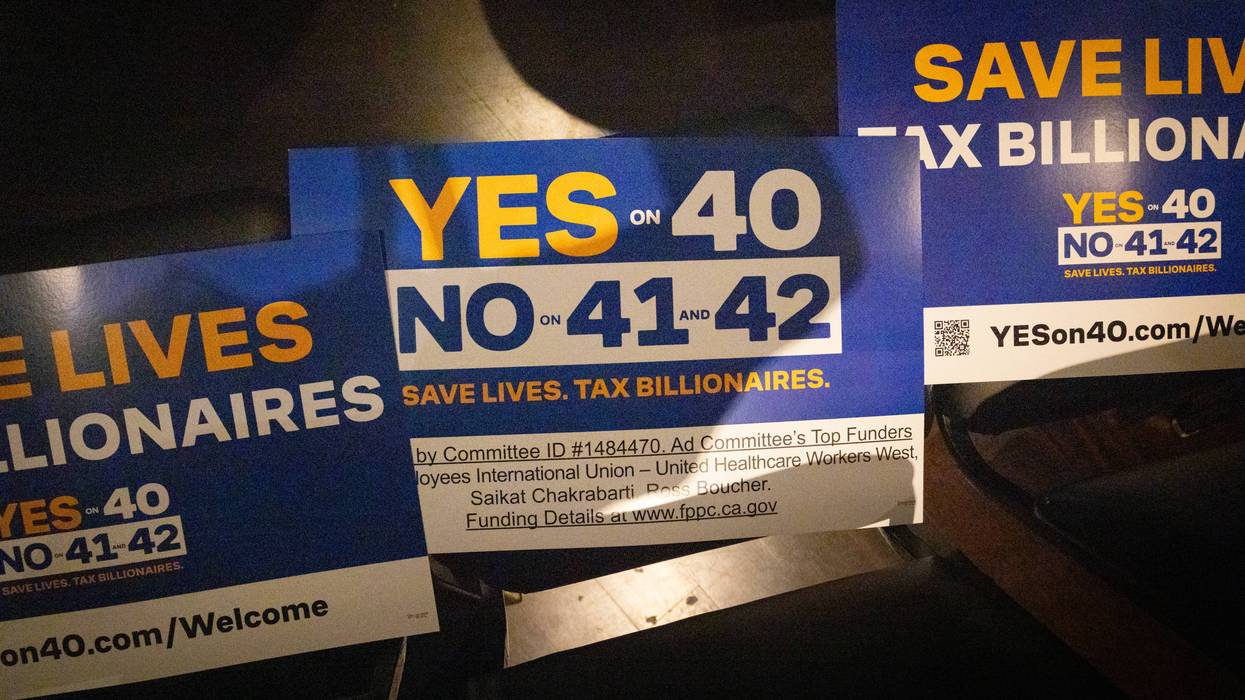
40+ California Multimillionaires Sign Open Letter Backing Billionaire Wealth Tax
"We have the chance to lead the world in establishing basic tax fairness, raising revenues for essential programs, and checking the power of the richest among us."
Oct 20, 2026
Dozens of multimillionaire Californians have signed an open letter supporting a one-time wealth tax on the state's billionaire residents, calling the proposal a "very sensible solution" to a looming healthcare disaster and runaway inequality.
"People like us can afford to live wherever we want. We choose to live in California because we love our state," reads the letter, which was organized by Patriotic Millionaires and Tax The Ultra Rich Now. "As multimillionaires, we’re willing to do our part. It’s past time for billionaires—our thousand millionaire cousins—to do theirs. Their opposition to this commonsense idea is embarrassing for all of us."
The letter's signatories, including filmmaker Tim Disney and former congressional candidate Saikat Chakrabarti, reject arguments that a 5% wealth tax on California's billionaires would hamper innovation and damage the state's economic status.
"I’m not a billionaire, but I have enough experience building wealth in California’s tech sector to know this fear is overblown," said Chakrabarti. "A one-time, retroactive tax on 200 or so billion-dollar fortunes is in no way going to disincentivize future innovators from coming to/staying in the tech capital of the world and creating new products, services, and businesses. If I can afford to pay more in tax, so can my billionaire neighbors—especially as many of them make a killing with advances in AI."
The letter comes as billionaire opponents of the tax, which will appear on California's November ballot as Proposition 40, ramp up their spending against the measure in the days ahead of the midterm elections. One recent analysis of financial disclosures estimates that the initiative's billionaire opponents—including Google co-founder Sergey Brin and venture capitalist Peter Thiel—are spending roughly $1 million per day to defeat it.
The ballot measure is also opposed by Democratic Gov. Gavin Newsom, who has endorsed a competing initiative that would cancel out the billionaire tax and prohibit future wealth taxes.
Experts say the proposed billionaire tax would raise around $100 billion in revenue, which would mostly be used to offset the impacts of federal Medicaid cuts that President Donald Trump signed into law last summer.
"Our state is one of the many starving for revenues and facing the prospect of drastic cuts to essential services like healthcare, food assistance, and education," the open letter reads. "Prop 40—a one-time, 5% tax on the wealth of billionaires—would help solve this problem and achieve what we’re after: establishing tax fairness, raising desperately needed revenues, and checking the power of the rich."
"To our fellow Californians, we have the chance to make history in November," the letter continues. "We have the chance to lead the world in establishing basic tax fairness, raising revenues for essential programs, and checking the power of the richest among us. With so much on the line, we urge you to stand up for the future of all Californians and vote 'yes' on Prop 40.
Keep ReadingShow Less
See More
Most Popular