November, 04 2014, 12:30pm EDT
For Immediate Release
Contact:
Gaelle Gourmelon, ggourmelon@worldwatch.org , (+1) 202-745-8092, ext. 510
Digital Dilemma: Is the Internet Killing (or Saving) the Planet?
Worldwatch Institute's State of the World 2014 explores the benefits and challenges that digital technologies offer for sustainability
WASHINGTON
With resource-saving notions like "the paperless office" and "telecommuting," the digital age holds great environmental promise. But have digital technologies really helped to improve global sustainability? In the Worldwatch Institute's State of the World 2014: Governing for Sustainability, Richard Worthington, professor of politics at Pomona College, posits that a dose of healthy skepticism regarding emerging digital systems may safeguard our environment and our democracy (bit.ly/SoW2014).
When the first Earth Day was celebrated on April 22, 1970, the collection of ideas and artifacts that is now known as the Internet was only a research and development program at the U.S. Department of Defense. Meanwhile, environmental advocates of the era were fighting large, complex technological systems, such as nuclear power and industrialized agriculture, as threats to both the ecosphere and democratic self-governance. Yet when big digital systems began to take hold in the 1980s, these expanding pervasive and powerful technologies were rarely criticized. Today, a true understanding of their environmental and social impacts is urgently needed in order to navigate-or resist-technology's growing influence.
Sustainable production. Studies that directly link the impacts of digital technologies to environmental benefits have yielded ambiguous results because of the difficulties in measuring these impacts. For example, it is difficult to isolate and track the Internet's contribution to energy efficiency during a time where other changes (such as energy-efficient appliances and insulation for buildings) are also unfolding.
A "'rebound effect' in which the gains of, say, telecommuting are offset by increased consumption afforded by the savings, such as taking an overseas vacation," further complicates the measurement of digital technology benefits, writes Worthington.
Although some studies address the digitization-environment link by offering projections of future savings to be had through the use of digital technologies, much of this research is sponsored by global corporations in the technology industry, leaving one to question its credibility.
Digital democracy. Among digital enthusiasts,technology is depicted as the key to creating new democratic practices. Indeed, the lower communications costs afforded by digitization have made it possible for groups to become engaged that previously had lacked the resources to participate in campaigns or policy development.
Yet many other digitally influenced developments have either resulted in very limited democratic gains or exacerbated undemocratic tendencies. In U.S. politics, for example, the use of digital systems has not increased the number of engaged citizens. Rather, it has widened the information and engagement gap by providing more opportunities for those already engaged, biasing them further toward their views. In some cases, digital technologies also have eroded the quality of political communications by generating floods of impersonal, easily ignored appeals or by shifting engagement toward event-driven, short-term responses.
Funding sustainability. Since the late 1990s, digital technology has accounted for about a third of private investment in the U.S. economy. Meanwhile, investment in sustainability, such as the support needed to set the United States on track for reducing greenhouse gas emissions, is grossly underfunded.
"At its core, investment capital is a measure of a society's freedom, representing the resources to address urgent issues and to enhance prosperity," writes Worthington. "The large claim that digital industries have on these resources in a global society that faces severe ecological disruption warrants closer attention than it has received to date."
Looking ahead. Profound changes in environmental governance have already occurred since the advent of digitization. There are no unambiguous answers about whether or how much digital systems have added to ecological destruction and sociopolitical polarization. One fact is certain, however: digital technologies cannot be ignored.
"There is little choice about engaging digital systems in environmental governance, but naive attachment to them will perpetuate distorted patterns of investment and other features of the socioeconomic model that has generated the environmental crisis," writes Worthington. "Critical engagement, careful strategizing, and most of all a commitment to profound change are preconditions for using these systems for different ends."
Worldwatch's State of the World 2014 investigates the broad concept of governance for sustainability, including action by national governments, international organizations, and local communities. The book highlights the need for economic and political institutions to serve people and preserve and protect our common resources.
State of the World 2014 's findings are being disseminated to a wide range of stakeholders, including government ministries, community networks, business leaders, and the nongovernmental environmental and development communities. For more information on the project, visit https://www.worldwatch.org/state-world-2014-governing-sustainability .
The Worldwatch Institute was a globally focused environmental research organization based in Washington, D.C., founded by Lester R. Brown. Worldwatch was named as one of the top ten sustainable development research organizations by Globescan Survey of Sustainability Experts. Brown left to found the Earth Policy Institute in 2000. The Institute was wound up in 2017, after publication of its last State of the World Report. Worldwatch.org was unreachable from mid-2019.
LATEST NEWS
'New Red Scare': ICE Protester Gets 30 Years for Leftist Zines Under Trump Antifa Decree
"The Prairieland model is in motion: inflate anti-ICE protest into a terrorism narrative, then use the courts to punish people for being part of a movement," said one observer.
Jun 23, 2026
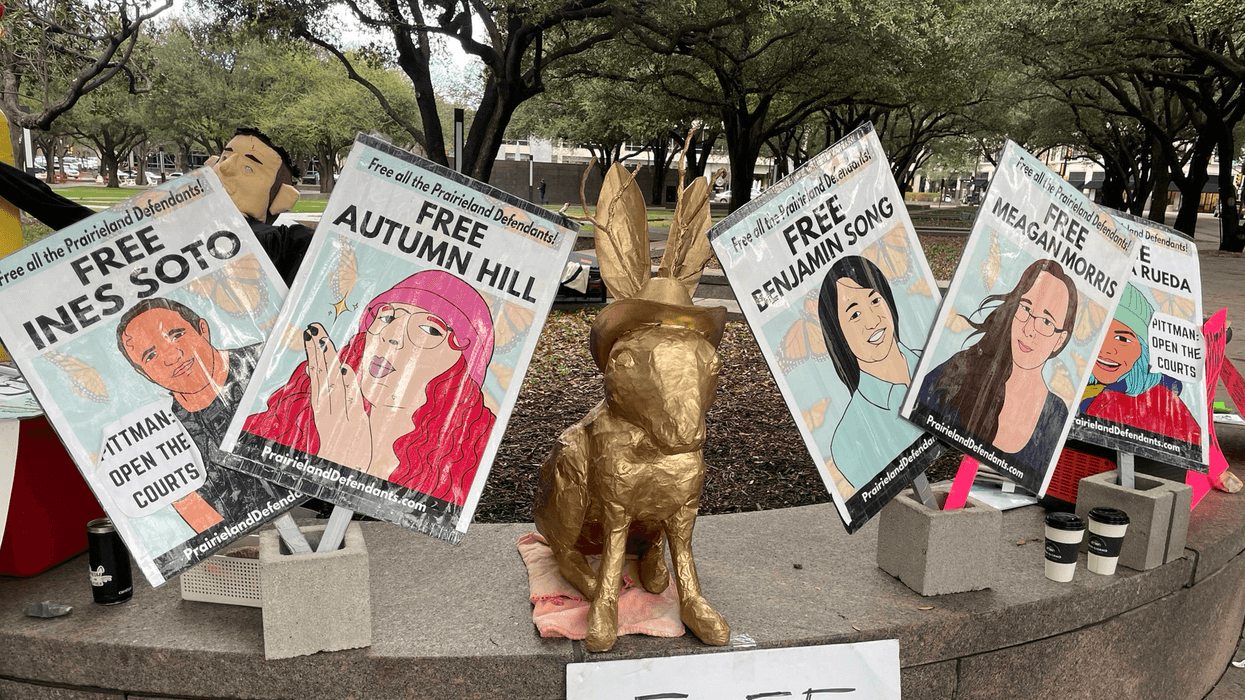
Civil liberties defenders sounded the alarm Tuesday over the draconian prison sentences imposed on a group of activists falsely accused by the Trump administration of being members of a non-existent "North Texas Antifa Cell"—including a 30-year term for a man convicted of moving a box containing leftist literature.
In what the US Department of Justice (DOJ) called "the first sentencing of defendants affiliated with Antifa following President Donald J. Trump’s executive order designating the group as a Domestic Terrorist Organization in September 2025," the defendants were sentenced in the US District Court for the Northern District of Texas in Fort Worth to between 30-100 years imprisonment for actions in connection with a July 4, 2025 protest at the Prairieland Detention Center in Alvarado, Texas, an ICE lockup run by prison profiteer LaSalle Corrections.
Despite DOJ documents showing that none of the defendants identified as Antifa—which does not exist as an organization, but is rather mostly an anti-fascist ideology and, to a lesser extent, a decentralized international movement—the targeted individuals were called "members of a North Texas Antifa Cell."
Prosecutors speciously called them "part of a larger militant enterprise made up of networks of individuals and small groups primarily ascribing to an ideology that explicitly calls for the overthrow of the United States government, law enforcement authorities, and the system of law."
The group Support the Prairieland Defendants said that relatives and supporters of the defendants "sat stunned as US District Judges Mark Pittman and Reed O’Connor delivered sentences ranging from 30-100 years in prison." They called the punishment "cruel, callous, and starkly disproportionate to the defendants’ actions."
On the night of the Prairieland protest, the group of convicted activists gathered outside what critics have called a concentration camp for what was meant to be a noise demonstration in solidarity with detainees. The group set off fireworks, and some participants vandalized property by spray-painting slogans, damaging a guard station, and damaging vehicles.
When law enforcement responded, a gunman fired from a wooded area and wounded Alvarado Police Lt. Thomas Gross in the neck. Prosecutors characterized the event as a coordinated attack, while defense attorneys argued that most participants intended only to protest and did not plan or expect violence.
Former US Marine Corps reservist Benjamin Song, who was convicted of shooting Gross, was sentenced to 100 years, officially for attempted murder of a law enforcement officer and lesser offenses including discharging a firearm during a violent crime, conspiracy to use and using an explosive, and rioting.
Song said he acted in defense of his comrades.
"When I saw... Gross stop pursuing and point his gun at the back of a running, unarmed protester, like he testified, I was terrified," he said on Tuesday. "As a firearms instructor and a United States Marine Corps veteran, I understood what I was seeing. I knew what it meant for someone to lean forward into a gun, like he testified, to prepare for recoil."
Maricela Rueda was sentenced to 70 years, officially for rioting, providing material support to terrorists, conspiracy to use and using an explosive, and conspiracy to conceal documents. Critics said her "crime" was protesting ICE oppression and asking her husband to move a box.
Savanna Batten, Zachary Evetts, Autumn Hill, Bradford Morris, and Elizabeth Soto got 50 years each, officially for rioting, providing material support to terrorists, and conspiracy to use and using an explosive. Critics said their "crime" was attending a protest.
Seven others—Seth Sikes, Nathan Baumann, Joy Gibson, Susan Kent, Rebecca Morgan, Lynette Sharp, and John Thomas—have already pleaded guilty to one count each of providing material support to terrorists and are set to be sentenced on July 1. Ines Soto, who is married to Elizabeth Soto, was convicted of the same offenses as her spouse and was granted a continuance. She is also set to be sentenced on July 1.
Most disturbingly, say free speech defenders, is the 30-year prison sentence imposed on Daniel "Des" Rolando Sanchez Estrada for conspiracy to conceal documents.
Under the auspices of National Security Presidential Memorandum 7 (NSPM-7)—signed by Trump following last year's assassination of racist influencer Charlie Kirk in an effort to target leftists—Sanchez was accused of “corruptly concealing a document or record” after he moved a box containing leftist literature, including zines titled "Another Critique of Insurrectionalism," "It's Vacant, Take It!," and "War In the Streets: Tactical Lessons From the Global Civil War Vol. I."
Prosecutors alleged that Sanchez moved the box in a bid to avoid incriminating Rueda, who is his wife.
Prior to his sentencing, Sanchez—who is a green card holder—told the court that "I worked really hard every day in this country, and I believe in human rights and helping others in need. I donate money and art to help animals and other people."
"I’m a father, a husband, and a teacher," he added. "But I’m not a terrorist.”
Judge O'Connor was not moved, telling the court that the lengthy sentences are meant to "send a message to anyone who shares a similar ideology" with the defendants, according to one observer of Tuesday's proceedings.
"These sentences are a travesty and totally unjustified, but that's the point," Congresswoman Rashida Tlaib (D-Mich.) said on social media. "Americans hate the fascist Trump regime, so the only way they can try to cling to power is brute force. NSPM-7 is a grave threat to all of us, and more bullshit 'terrorism' charges like these are coming."
The Freedom of the Press Foundation said in response to Tuesday's sentencing, "The zines at issue may have discussed controversial political views, but they said nothing about the shooting or the Prairieland protest, and prosecutors did not allege that Sanchez’s wife... fired any shots or had anything to do with the shooting."
Seth Stern, Freedom of the Press Foundation's advocacy chief, said in a statement that "if prosecutors are correct that Sanchez moved zines because he feared they’d try to use them against his wife, that’s a commentary on prosecutors’ lawlessness, not Sanchez’s."
"Under the First Amendment, possessing literature cannot be criminal, so what legitimate evidence could he possibly have been concealing?" he continued. "Political zines like those Sanchez possessed are no different from the pro-Revolution pamphlets this country’s founders had in mind when they drafted the First Amendment’s press clause."
“Sanchez’s case is the latest example of the Trump administration grasping at any legal straws it can to criminalize disfavored ideologies and writings, from conflating dissent with terrorism to deporting immigrants who report on protests or criticize wars the US bankrolls," Stern said.
"Americans should not make the mistake of believing Sanchez’s sentence only threatens immigrants, leftists, or so-called Antifa members—they’re just the low-hanging fruit, not the endgame," he added.
The prison terms for the Prairieland defendants were more severe than the longest sentences for the average US murderer or rapist, as well as for the January 6, 2021 Capitol insurrectionists—all of whom were later pardoned by Trump.
Arjun Sethi, a professor at Georgetown Law and Vanderbilt Law School, said on social media that "if you care about free speech and protest one iota, you should be aghast at the sentences just handed down in the Prairieland case."
Democratic Socialists of America (DSA) Fort Worth secretary Moishe Dovgolevsky called the sentences "the face of the new Red Scare."
Ana Marie Thorne, chair of the Social Justice Committee at All People’s Church Unitarian Universalist in Fort Worth, said that “as a congregation, we decided that this case was a fundamental test of our right to dissent against authoritarian regimes."
“These defendants are not militant monsters out to kill,” she added. “They are everyday people who saw our country literally interning people in concentration camps and decided to show up at Prairieland Detention Center to let those incarcerated there know that they mattered. We leave here today knowing that the outcome of this trial is not the end. It is the beginning.”
Moira Meltzer-Cohen, an attorney representing defendants in the case, said following Tuesday's sentencing that "this entire prosecution has been calculated to test the state's ability to quell dissent."
"But the way forward is not silence, it is courageous solidarity with those who are being punished on the basis of their protected beliefs, associations, and activities," she added. "And as devastating as this has been for those affected, I do believe their rights will be vindicated in the post-conviction process."
"This entire prosecution has been calculated to test the state's ability to quell dissent."
Song warned the American people Tuesday that while "strangers" may be targeted today, "it will be you tomorrow."
"There is no group called Antifa. Everyone knows that, but this government is so blinded by hate... they want to bury me with an idea," he said. "This idea that they hate is the very idea of being against fascism."
"What kind of people are not against fascism?" he continued. "What kind of people are not against the hate and war and genocide and concentration camps that the Nazis brought upon the world?"
"The hate has migrated into the government," Song warned. "Now that hate is taking power over me. It is taking power over you, over your words and your ideas. When will you be called a domestic terrorist, too?"
In Minneapolis, US Attorney Daniel Rosen—who was appointed by Trump last year—last week invoked NSPM-7 in the prosecution of 15 organizers with the groups Direct Action Minnesota and Black Cat Workers Collective who Rosen claims are linked to Antifa and who are accused of impeding the Department of Homeland Security's deadly anti-immigrant crackdown.
"When they killed Renee Good and Alex Pretti, they went on TV, and they called them domestic terrorists, the same day, within the hour," Song said, referring to two US citizens shot dead by Trump administration immigration enforcers in Minneapolis. "When will that happen to you?"
"I don’t fear for myself," he added. "I fear for all of you."
Keep ReadingShow Less
'End It Now': Senate Passes War Powers Resolution Rebuking Trump's Iran War
"The House and the Senate have both stood up," Democratic Washington Rep. Pramila Jayapal said. "It’s time to stop this deadly and costly conflict."
Jun 23, 2026
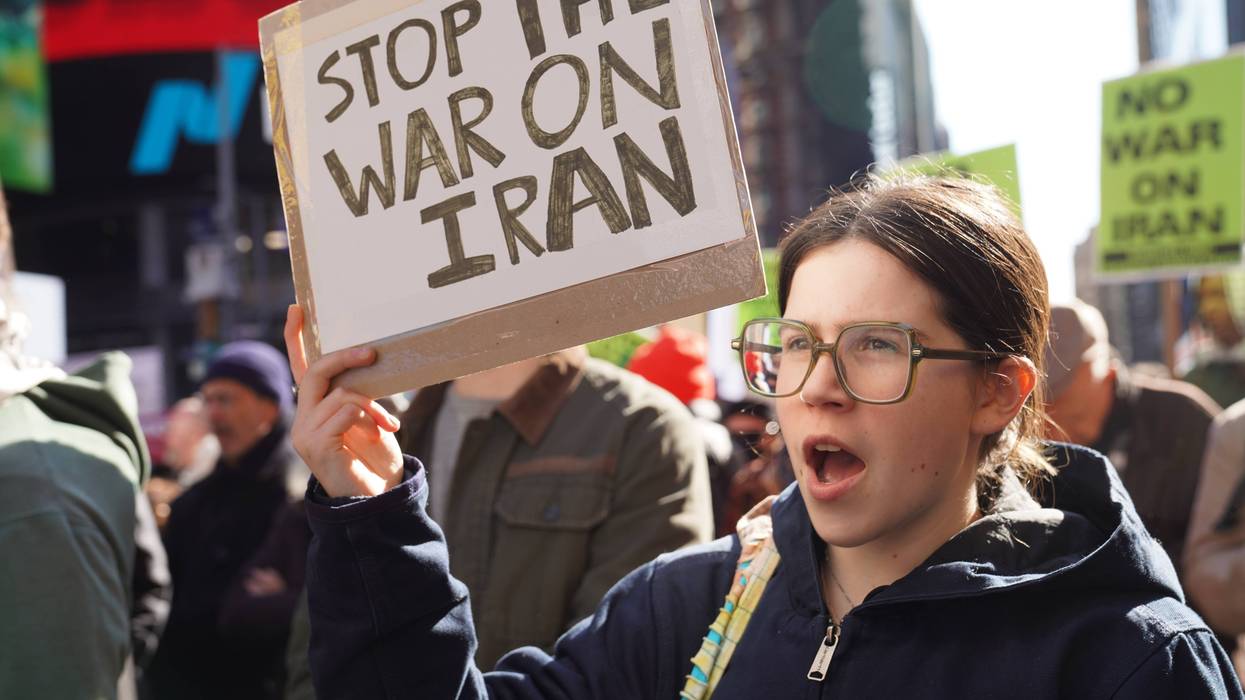
In a "major bipartisan rebuke" of President Donald Trump's illegal war on Iran, the US Senate on Tuesday passed a war powers resolution instructing Trump to withdraw US forces from Iran.
The vote was 50 to 48, with four Republicans joining the vast majority of Democrats to approve the resolution that was passed by the US House of Representatives earlier this month.
"The House and the Senate have both stood up," Rep. Pramila Jayapal (D-Wash.) wrote in celebration of the vote on social media. "It’s time to stop this deadly and costly conflict."
Republican Sens. Rand Paul (Ky.), Susan Collins (Maine), Lisa Murkowski (Alaska), and Bill Cassidy (La.) voted in favor of the resolution while Democratic Sen. John Fetterman (Pa.) voted against it.
"Congress finally passed a war powers resolution to stop Trump's illegal war in Iran. It has been a disaster from the start."
"The vote was 50-48, with four Republicans joining Democrats to say Trump should not be able to keep dragging America deeper into military conflict," attorney Aaron Parnas wrote on social media. "This is a major bipartisan rebuke of Trump’s foreign policy chaos."
Anti-war group CodePink wrote, "The will of the people is undeniable: It's time to permanently end this war of aggression."
BREAKING: US Senate passes Iran War Powers Resolution by a vote of 50-48.
The resolution demands the removal of US forces from all hostilities against Iran. It's already passed the House.
The will of the people is undeniable: it's time to permanently end this war of aggression. pic.twitter.com/27rxceRu81
— CODEPINK (@codepink) June 23, 2026
The vote was a long time coming, as Senate Minority Leader Chuck Schumer noted it was Democrats' 10th attempt to limit Trump's ability to wage undeclared war since he unilaterally embroiled the US in a joint attack on Iran with Israel, beginning on February 28.
Schumer criticized the majority of Republicans for repeatedly failing to vote against the war, which he said would "go down in the history books as one of the worst foreign policy forays America has ever made," according to The Associated Press.
Sen. Chris Van Hollen (D-Md.) wrote on social media: "Congress finally passed a war powers resolution to stop Trump's illegal war in Iran. It has been a disaster from the start. End it now."
The vote made history by being the first time both the House and Senate have passed a concurrent resolution calling for an end to a conflict since the War Powers Resolution of 1973, as The New York Times reported.
Concurrent resolutions do not require a presidential signature and therefore do not typically have the force of law. However, Democratic lawmakers and foreign policy experts argue that because Congress has the ability to declare war under the Constitution, the resolution should still restrict the president's actions.
Rep. Gregory Meeks (D-NY), who sponsored the House resolution, wrote: "With the Senate passage of my Iran War Powers Resolution, both chambers have now made clear that the president cannot continue this war of choice and must cease all hostilities against Iran. Regardless of what President Trump says, this measure is binding under the War Powers Resolution, and I will explore all legal avenues to ensure the executive complies with the will of Congress. Congress never authorized this failed war, and the president certainly has no authority to continue it indefinitely without our consent as the Constitution demands."
The vote comes about a week after the US and Iran signed a memorandum of understanding to move toward ending the war that has killed at least 3,400 in Iran and thousands more across the region. However, the subsequent ceasefire and negotiations have been rocky and uncertain due to continued Israeli attacks on Lebanon and threats from Trump.
Keep ReadingShow Less

Fearing Mass Job Loss, Working-Class US Voters Believe Government Must Act to Prevent Economic Disaster
The findings of a new poll could bolster the case made by many progressive politicians about the need to vigorously regulate the AI industry.
Jun 23, 2026
A poll commissioned by Working Families Power reveals deep anxiety among US workers about the impacts of artificial intelligence, as well as support for the government intervening to prevent potential mass unemployment.
The survey of just over 2,500 working-class American voters, conducted by Justice Research Group, finds that 73% said they were worried that AI would lead to job losses in the US, while 62% said they were concerned that AI would personally affect them or people close to them.
Workers expect that AI will negatively impact a broad number of industries, with majorities saying it will hurt truckers and delivery drivers; retail and service workers; writers, designers, and other creative workers; and office and administrative workers, according to the poll. Pluralities, meanwhile, expect AI to hurt teachers, education workers, and healthcare support workers.
With so many workers fearing massive jobs losses due to AI, they also support major government interventions to alleviate the harms caused by the technology.
Overall, 84% of those surveyed support free training or education for all workers displaced by AI, while 79% support rules to force companies to share AI productivity gains with their workers in the former of higher pay, stronger benefits, and shorter hours.
Even the least popular policy idea presented in the poll—taxing large companies that replace workers with AI and using the money to create a worker unemployment fund—received 69% support among US workers.
The poll's findings could bolster the case made by many progressive politicians about the need to vigorously regulate the AI industry to prevent it from hurting working-class Americans.
Sen. Bernie Sanders (I-Vt.) and Rep. Alexandria Ocasio-Cortez (D-NY) earlier this year introduced a bill that would impose a nationwide moratorium on AI data center construction “until strong national safeguards are in place to protect workers, consumers, and communities, defend privacy and civil rights, and ensure these technologies do not harm our environment."
Sen. Elizabeth Warren (D-Mass.) and Rep. Greg Casar (D-Texas) last month proposed a tax on the use of AI to pay for jobs programs for affected workers.
Keep ReadingShow Less
Most Popular