September, 17 2013, 01:58pm EDT
For Immediate Release
Contact:
Mark Almberg, communications director PNHP, (312) 782-6006, mark@pnhp.org.
'Stronger Medicine than Obamacare Needed to End Uninsured Crisis': Health Expert
Citing latest Census count of 48 million uninsured, researcher says Affordable Care Act will cut that figure by only half, leaving tens of millions vulnerable to unnecessary suffering and premature death
WASHINGTON
Today's Census Bureau's official estimate that 48 million Americans lacked health insurance in 2012 means approximately 48,000 people died needlessly last year because they couldn't get access to timely and appropriate care, a prominent health researcher, Dr. David Himmelstein, said today.
And contrary to many people's expectations, the number of unprotected Americans will drop by only half when Obamacare is fully implemented - even if all the as yet undecided states were to opt-in to the law's Medicaid expansion, he said.
The estimate of 48,000 deaths in 2012 is based on a peer-reviewed study by Himmelstein and other Harvard researchers published in the American Journal of Public Health in 2009, widely cited during the health reform debate, which found that for every 1 million persons who were uninsured there were about 1,000 related, preventable deaths.
Himmelstein is professor of public health at the City University of New York, visiting professor of medicine at Harvard Medical School, and a primary care doctor. He said, "The Census Bureau's latest figure, 48 million uninsured, conjures up a very grim picture: a preventable death every 11 minutes."
He said studies have shown that uninsured people with chronic illnesses like heart disease delay or forgo care, often leading to serious complications of their medical condition and, in many cases, premature death.
In another study recently published at the Health Affairs blog, Himmelstein and his colleagues found that the Affordable Care Act "will minimally alter the demographic composition of the uninsured, regardless of whether undecided states opt-in or out. While Blacks and Hispanics will continue to be overrepresented among the uninsured, the majority will be non-Hispanic, white, low-income, working-age adults, many of them employed."
The researchers continue: "The majority ... of the uninsured will be U.S. citizens, irrespective of states' acceptance of Medicaid expansion. More than 4.3 million children and nearly 1 million veterans will remain uninsured under either scenario. ... If all currently undecided states opt-in, 29.8 million people will remain uninsured [in 2016], whereas if all opt-out, the number of uninsured will total 31.0 million, 1.2 million above the opt-in scenario."
Today's Census Bureau report said in 2012 the percentage of people without health insurance had slightly decreased to 15.4 percent of the population from 15.7 percent in 2011, but that the number of uninsured people in 2012 was not statistically different from 2011, at 48.0 million. The bureau's figures show the modest gains in coverage were chiefly attributable to an increase in the number of persons covered by Medicare.
While the percentage of persons covered by employment-based insurance, 54.9 percent, was not statistically different than the previous year's figure, about a half-million fewer workers were covered by such plans in 2012.
The bureau reported that Texas had the highest percentage of uninsured, at 24.6 percent, followed by Nevada, New Mexico, and Florida, each of which exceeded 20 percent. In total numbers, California and Texas had the largest number of uninsured, each exceeding 6.4 million people.
Responding to today's Census Bureau report, Himmelstein said: "As a physician, I simply cannot accept a situation where tens of thousands of people die every year because they lack insurance coverage. And lest anyone think this problem will be solved by Obamacare, our research and the government's own Congressional Budget Office projections show that about 30 million people will still be uninsured in 2023. That figure translates into roughly 30,000 excess deaths annually - again, an intolerable prospect."
Himmelstein said the nation should adopt a "zero-tolerance policy" toward lack of health coverage, and that the Census Bureau report "underscores the urgency of going beyond the Affordable Care Act and swiftly moving to a single-payer, improved-Medicare-for-all program."
"Such a program would assure truly universal, comprehensive, high-quality coverage for everyone while simultaneously ridding us of the scourge of insurance-company-related waste, bureaucracy and profiteering," he said. "It would thereby save both lives and money."
Himmelstein is co-founder of Physicians for a National Health Program, an organization of 18,000 doctors who advocate for single-payer national health insurance. PNHP played no role in funding any of the research work cited above.
Four-year historical state-by-state data on the uninsured, from 2012-2009, compiled by PNHP staff from the annual findings published each fall by the Census Bureau, can be found here.
Physicians for a National Health Program is a single issue organization advocating a universal, comprehensive single-payer national health program. PNHP has more than 21,000 members and chapters across the United States.
LATEST NEWS
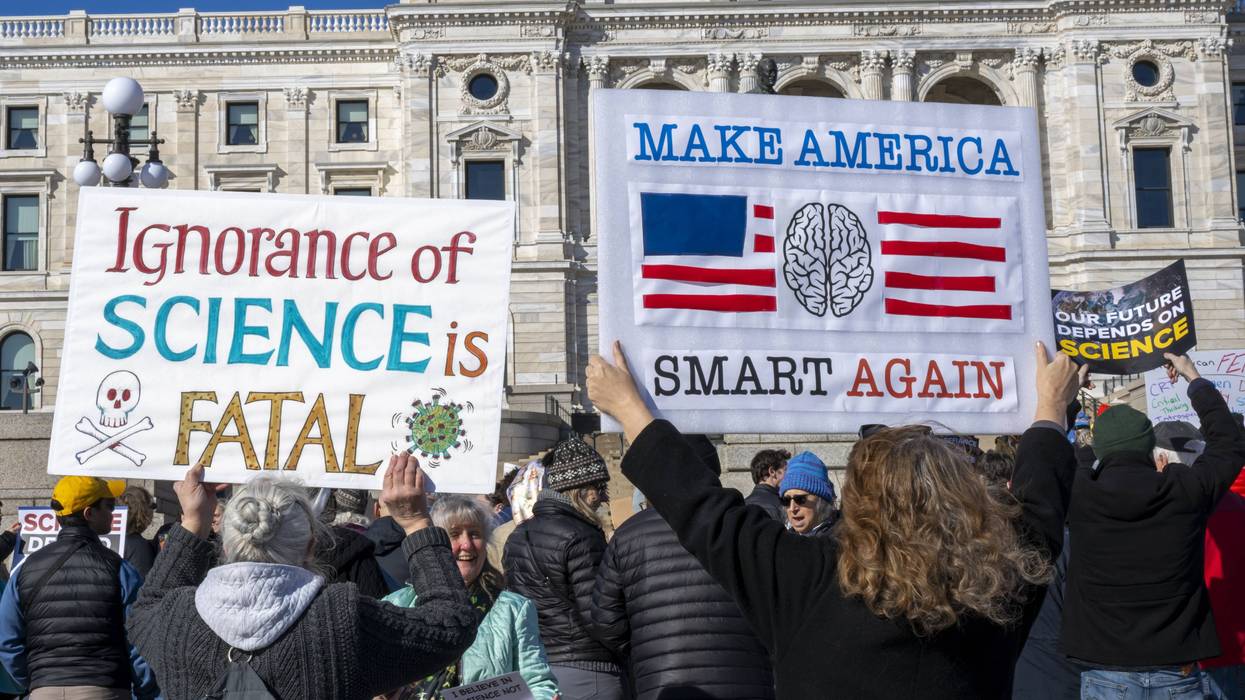
'More Destruction of Science': Trump Fires Every Member of US National Science Board
"This is the latest stupid move made by a president who continues to harm science and American innovation."
Apr 26, 2026
US President Donald Trump on Friday quietly fired every member of the independent board that governs the National Science Foundation, a move seen as an escalation of the administration's destructive war on science.
Members of the National Science Board (NSB) were notified in a brief email "on behalf of President Donald J. Trump" that their "position as a member of the National Science Board is terminated, effective immediately." One fired board member, chemist Willie May, told The New York Times that he was "disappointed" but not "entirely surprised," adding, "I have watched the systematic dismantling of the scientific advisory infrastructure of this government with growing alarm, and the National Science Board is simply the latest casualty."
The NSB sets the policies of the US National Science Foundation (NSF), approves major funding decisions for NSF, and advises Congress and the president on "policy matters related to science and engineering."
Rep. Zoe Lofgren (D-Calif.), the ranking member of the House Committee on Science, Space, and Technology, said in a statement Saturday that "this is the latest stupid move made by a president who continues to harm science and American innovation."
“The NSB is apolitical," said Lofgren. "It advises the president on the future of NSF. It unfortunately is no surprise a president who has attacked NSF from day one would seek to destroy the board that helps guide the foundation. Will the president fill the NSB with MAGA loyalists who won't stand up to him as he hands over our leadership in science to our adversaries? A real bozo the clown move."
Alondra Nelson, an academic who resigned from the NSB last May over concerns of political interference, wrote on social media that "history will not look kindly on this administration for many reasons, but the systematic silencing of independent expertise is particularly troubling."
Since the start of his second term, Trump and his deputies have assailed science across the federal government, including by eliminating the Environmental Protection Agency's scientific research arm and firing experts en masse.
In the coming fiscal year, Trump has proposed cutting NSF's budget by nearly 55%. Additionally, the president's budget would "eliminate funding for the National Oceanic and Atmospheric Administration’s Office of Oceanic and Atmospheric Research," Scientific American reported. The White House plan, if approved by Congress, would also slash NASA's budget by nearly 25%.
"This is how the US loses its scientific leadership—with a reckless budget line," Leigh Stearns, a glaciologist at the University of Pennsylvania, told Scientific American.
Keep ReadingShow Less
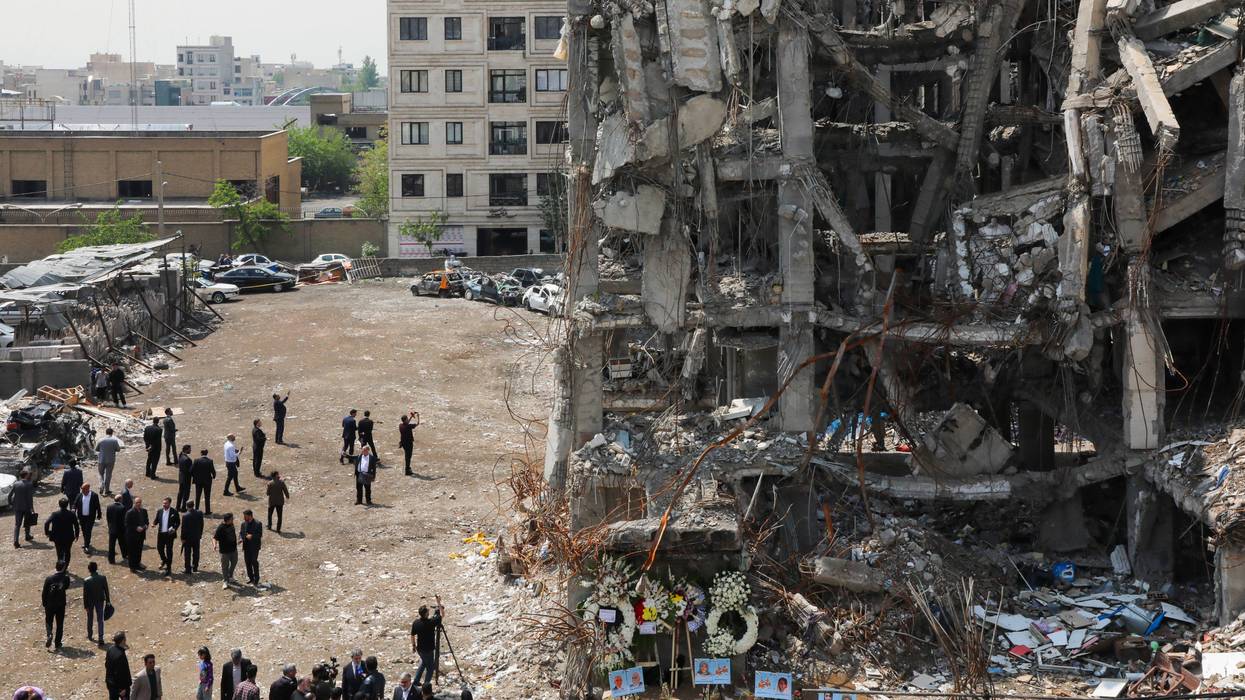
Iranian Group Submits Evidence of US-Israeli War Crimes to International Criminal Court
"All cases of attacks on civilians are being legally pursued based on the Geneva Conventions," said the head of the Iranian Red Crescent Society.
Apr 26, 2026
The head of the Iranian Red Crescent Society said Saturday that his organization has submitted evidence of US-Israeli war crimes to the International Criminal Court and other global bodies, seeking accountability for massive attacks on civilian infrastructure and other violations.
"The ICC prosecutor announced that the documents provided by the IRCS are accepted as official evidence," said Pir-Hossein Koulivand, the head of the Iranian Red Crescent Society. "All cases of attacks on civilians are being legally pursued based on the Geneva Conventions."
The IRCS estimates that US and Israeli airstrikes have destroyed more than 132,000 civilian structures throughout Iran, including hospitals, apartment buildings, universities, research facilities, and bridges. US President Donald Trump has repeatedly threatened to destroy all of Iran's bridges and power plants if the country's leadership does not succumb to his administration's demands in negotiations to end the war.
Luis Moreno Ocampo, the founding chief prosecutor of the ICC, said earlier this month that Trump could be indicted if he follows through on his threats.
“My suggestion: You read the indictment of the Russians, change the name, and it is very similar,” said Ocampo, referring to ICC arrest warrants issued against senior Russian officials in 2024 for alleged war crimes in Ukraine.
In a series of social media posts on Saturday, the IRCS provided video footage and photographic evidence of what the group described as war crimes committed by the US and Israeli militaries.
"Among the most bitter war crimes of America and Israel in Iran is the attack on the home of 19-month-old Helma in Tabriz, in which four members of her family were martyred," the IRCS wrote Saturday. "The only survivor of this family is Helma."
از: جمعیت هلال احمر جمهوری اسلامی ایران
به: همه مردم دنیا
موضوع: سند جنایت جنگی - شماره ۱۴
از تلخ ترین جنایات جنگی آمریکا و اسرائیل در ایران، حمله به خانه حلمای ۱۹ ماهه در تبریز است که ۴ نفر از اعضای خانوادهاش شهید شدند. تنها بازماندهٔ این خانواده، حلما است… https://t.co/mMw77THEyH pic.twitter.com/FIjIbMyBiw
— جمعیت هلالاحمر ایران (@Iranian_RCS) April 26, 2026
The ICC is tasked with investigating and prosecuting individuals for war crimes, crimes against humanity, and other grave violations of international law. Iran is not currently a party to the Rome Statute, which established the ICC—so the court does not have jurisdiction over war crimes committed on Iranian territory.
Human rights organizations and advocates have implored Iran to grant the ICC jurisdiction to pursue justice for war crimes committed during the illegal US-Israeli assault that began on February 28. On the first day of the war, the US bombed an elementary school in southern Iran.
"From the killing of over 150 students and teachers to strikes on hospitals full of newborns, every day more and more evidence emerges pointing to the commission of grave war crimes in Iran since the start of the war," said Omar Shakir, executive director of DAWN. "Victims deserve justice. The mechanisms exist, and the US has no veto over them."
Kenneth Roth, former executive director of Human Rights Watch, wrote earlier this month that "the Iranian government could join the court now and grant it retroactive jurisdiction, similar to what Ukraine did to allow prosecution of Russian war crimes."
Last month, the IRCS formally requested that the ICC initiate "an investigation into war crimes arising from attacks by the United States of America and the Israeli regime against civilian objects."
"According to field reports from relief workers, operational documentation, and data recorded by the Iranian Red Crescent Society, a wide range of residential areas, medical facilities, schools, humanitarian facilities, vital urban infrastructure, and public places were directly or indiscriminately targeted during the recent military attacks," the group wrote in a letter to the ICC's top prosecutor.
Keep ReadingShow Less
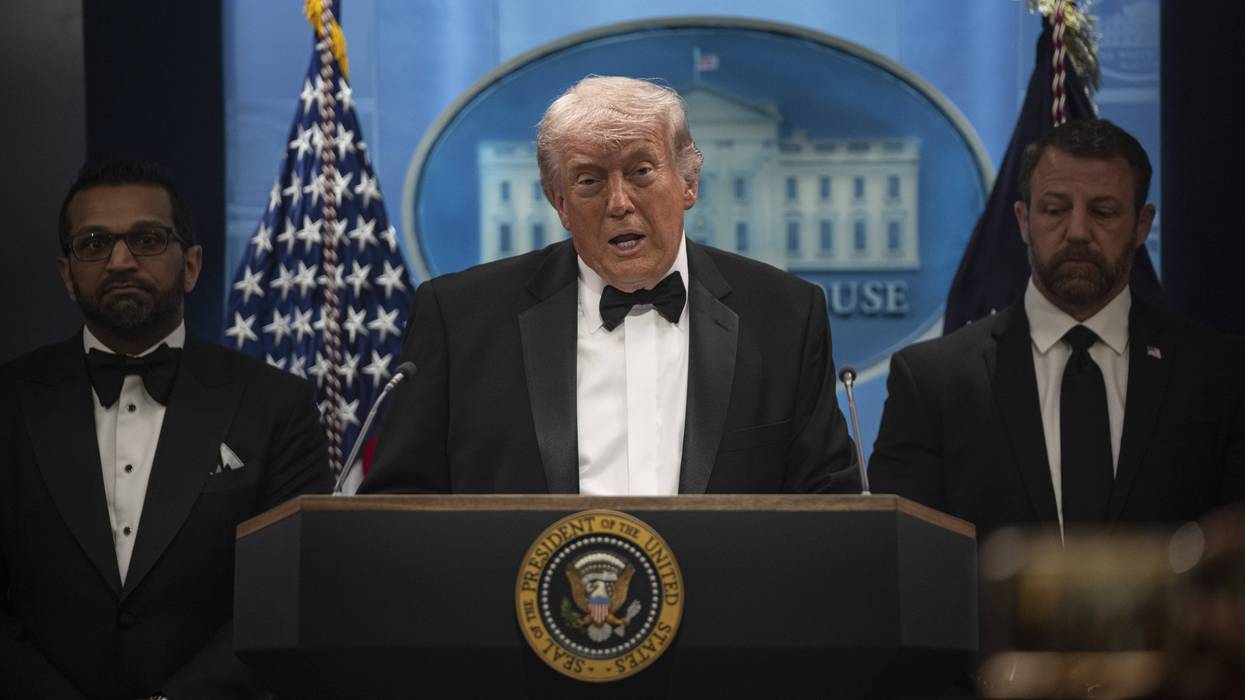
Trump Uses Shooting Outside White House Correspondents' Dinner to Boost Corrupt Ballroom
President Donald Trump was evacuated from the White House Correspondents' Dinner after a gunman charged a security checkpoint at the hotel hosting the event.
Apr 26, 2026
US President Donald Trump used a lone gunman's storming of the lobby outside the White House Correspondents' Dinner on Saturday night to promote his $400 million White House ballroom project, which is riddled with glaring conflicts of interest.
Speaking at a press conference after being evacuated from the Washington Hilton hotel hosting the White House Correspondents' Dinner, Trump declared that "this is why we have to have all of the attributes of what we're planning at the White House." The president added that "we need the ballroom," saying, "We need levels of security that probably nobody's ever seen before."
President Trump says tonight’s shooting at the WHCD is a clear example of why we need a need a new ballroom for The White House pic.twitter.com/a6dzeH9nyB
— Acyn (@Acyn) April 26, 2026
A man armed with multiple weapons, including a shotgun, charged a security checkpoint outside the White House Correspondents' Dinner on Saturday night, setting off a chaotic scramble to evacuate Trump and members of his administration who were present at the private event.
The chief of the Washington, DC police said at a press conference that the suspect, later identified as 31-year-old Cole Allen of Torrance, California, "exchanged gunfire" with law enforcement and a US Secret Service officer "was struck in his vest." The suspect was not shot and was taken into custody, the police chief said.
CBS News White House reporter Jennifer Jacobs noted on social media that the shooting "happened on the level above the ballroom where the White House Correspondents Association dinner was."
"I don't think people hearing about this—or even those of us in the room—realized how far from the president, VP, and other guests this incident was," Jacobs added. "It was on another floor, up some stairs, and several sets of security away. Because the Washington Hilton's hotel and other public spaces were open for other functions, the entire building wasn't secured by the Secret Service, just the specific areas where the WHCA dinner was held."
Trump, who skipped the annual dinner during his first term as his administration assailed press freedoms, said the event would be rescheduled "within 30 days." Some White House reporters boycotted the event, citing the president's relentless attacks on journalists.
The scene was described as "absolute chaos," with Secret Service officers rushing through the ballroom to evacuate Trump, Vice President JD Vance, and other administration officials and attendees ducking under tables in confusion and panic.
This is the moment we realized what was happening and got down on the stage. Seconds before, all we could see was a throng of law enforcement barreling toward us from the doors at the back of the room.
Secret agents swept VP Vance, who was seated next to me, into the back. I… pic.twitter.com/ZaxFeZu5p0
— Jacqui Heinrich (@JacquiHeinrich) April 26, 2026
The White House ballroom project that Trump touted at his press conference after being evacuated from the correspondents' dinner has received funding from massive corporations with interests before the federal government. Other donations to the project are shrouded in secrecy.
Public Citizen noted in a recent report that "two-thirds of corporate donors—16 out of a total of 24—have entered into government contracts."
"Lockheed is the largest of these government contractors, having received $191 billion in contracts over the last five years. Altogether, the corporate donors benefited from nearly $43 billion in contracts last year and $279 billion over the last five years," the watchdog group observed. "Most of the corporate donors—14 out of 24—are facing federal enforcement actions and/or have had federal enforcement actions suspended by the Trump administration. These include major antitrust actions involving Amazon, Apple, Meta, Microsoft, Nvidia, and T-Mobile; labor rights cases involving Amazon, Apple, Caterpillar, Google, Lockheed, and Meta; and SEC matters involving Coinbase and Ripple."
Keep ReadingShow Less
Most Popular