SUBSCRIBE TO OUR FREE NEWSLETTER
Daily news & progressive opinion—funded by the people, not the corporations—delivered straight to your inbox.
5
#000000
#FFFFFF
To donate by check, phone, or other method, see our More Ways to Give page.


Daily news & progressive opinion—funded by the people, not the corporations—delivered straight to your inbox.

Darcey Rakestraw, 202-683-2467; drakestraw(at)fwwatch.org
"Yesterday the House Subcommittee on Agriculture, Rural Development, Food and Drug Administration, and Related Agencies approved a budget bill for FY 2012 that undermines the federal government's ability to protect consumers from unsafe food. It would keep independent farmers and ranchers under the thumb of corporate meatpackers, and would fail to protect hungry people around the world from Wall Street speculation that puts food out of reach for millions.
"The cuts made by the House subcommittee are not about balancing the budget. They are ideological attacks on the ability of government agencies to do their jobs. Slashing the budgets of the agencies responsible for keeping our food supply clean, safe and accessible is short-sighted and irresponsible. The rest of the House and the Senate should reject the cuts to these vital programs laid out in the subcommittee's bill to make sure the budget bolsters our ability to provide Americans with a food system that is safe for consumers and fair to producers."
Food Safety:
"The subcommittee bill cuts U.S. Department of Agriculture's Food Safety and Inspection Service by 3.6 percent from the current budget. While making this cut, the subcommittee managed to promote two programs that are detrimental to the function of FSIS' meat and poultry inspection program. The subcommittee maintained funding for a new computer system, the Public Health Inspection System, which is proving to be unworkable in the field. It also expands a controversial pilot program called the HACCP-based Inspection Models Pilot program in poultry plants, This is a blatant attempt to reduce the number of FSIS inspectors by allowing more industry self-inspection.
The Food and Drug Administration's Center for Food Safety and Applied Nutrition budget was cut by 4.5 percent from this year's budget. This will make it difficult for the agency to meet the new implementation and inspection duties it has under the newly passed FDA Food Safety Modernization Act."
Livestock Marketing:
"The bill passed by the subcommittee would prevent USDA from finalizing much-anticipated livestock marketing rules that would protect farmers from abusive practices by big meatpackers and poultry companies and help ensure there are fair markets for farmers to sell their hogs and cattle. These rules are long overdue -- USDA proposed the rule last June to implement provisions of the three year old farm bill to provide necessary guidance to enforce the nearly century-old Packers & Stockyards Act. Now the Republican House is trying to sabotage these rules just like they sidelined mandatory country of origin labeling, which was delayed six years through similar appropriations shenanigans."
Commodity Speculation:
"The bill does not provide necessary funding for the Commodity Futures Trading Commission to police the excessive speculation on the commodity markets that is driving up gas and food prices. Without additional funding, the CFTC cannot develop, implement and enforce necessary rules called for by the Dodd-Frank financial reform law to prevent future economic meltdowns to protect consumers, farmers and investors."
Food & Water Watch mobilizes regular people to build political power to move bold and uncompromised solutions to the most pressing food, water, and climate problems of our time. We work to protect people's health, communities, and democracy from the growing destructive power of the most powerful economic interests.
(202) 683-2500"The consequences of this environmental and humanitarian catastrophe will not be confined within Iran's borders. These strikes constitute war crimes," said a spokesperson for the Iranian Foreign Ministry.
In the wake of infernos unleashed across portions of Tehran the night before, the people of Iran's capital woke up Sunday to the hideous sight of ominous gray clouds above, choking-levels of smoke, and black raindrops full of toxic oil falling across the city.
Critics described "scenes of Armageddon" and characterized the bombings and the destruction they triggered as the latest crimes committed by the US and Israel since they launched their unprovoked and illegal assault on the Middle East nation last week.
Iranian officials urged residents to stay in doors to avoid the health impacts of the air quality following Israel's intentional bombing of several oil storage and processing facilities in the city on Saturday.
"On top of everything else, Israel and the US have unleashed an environmental disaster in Tehran," said Assal Rad, a fellow at the Arab Center in Washington, DC. "How many ways can they show you they have no regard for human life?"
Iran’s Red Crescent Society warned that the toxic rainfall in Tehran, home to approximately 10 million people, could be “highly dangerous and acidic” and issued exposure guidelines for residents.
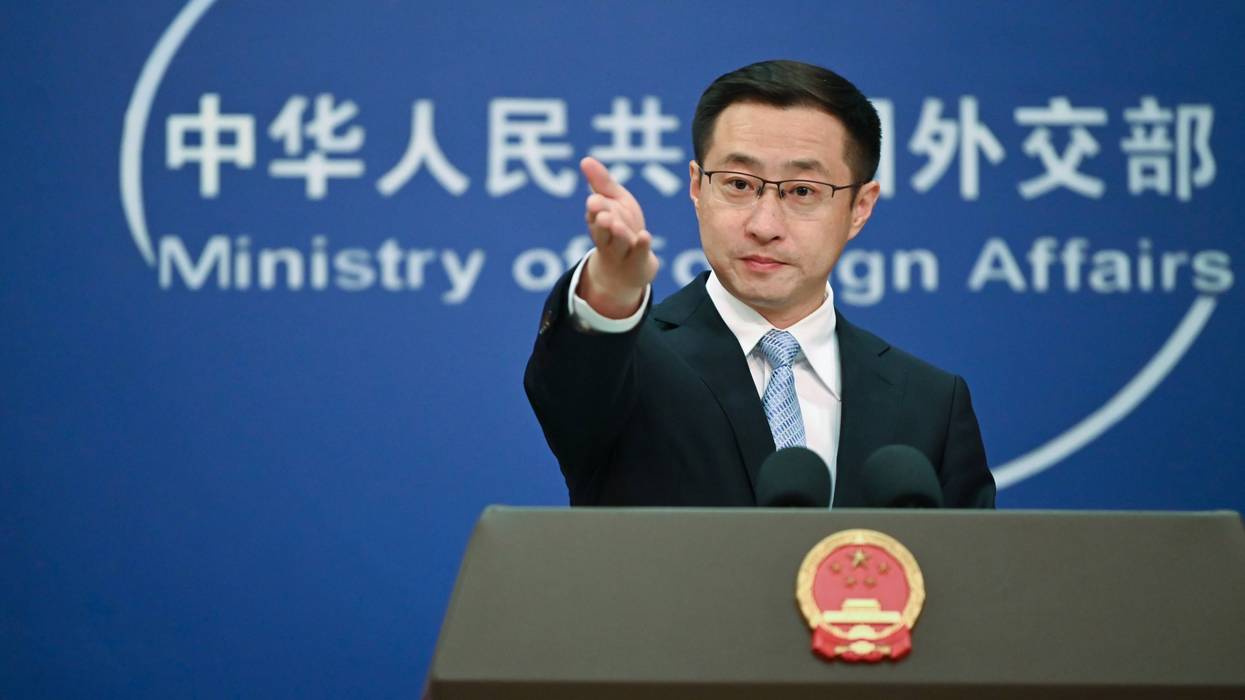
Esmaeil Baqaei, a spokesperson for the Iranian Foriegn Ministry, condemned the attacks and resulting damage in stark terms.
"The US-Israeli criminal war against the Iranian nation has entered a dangerous new phase with deliberate strikes on Iran's energy infrastructure," said Bagaei in an online statement. "These attacks on fuel storage facilities amount to nothing less than intentional chemical warfare against the Iranian citizens."
"By targeting fuel depots, the aggressors are releasing hazardous materials and toxic substances into the air, poisoning civilians, devastating the environment, and endangering lives on a massive scale," he continued. "The consequences of this environmental and humanitarian catastrophe will not be confined within Iran's borders. These strikes constitute war crimes, crimes against humanity, and genocide—all at once."
In a Sunday morning video, CNN correspondent Frederik Pleitgen showed the view from central Tehran, including the black water gathering on every surface:
It is raining oil in Tehran this morning after major airstrikes on oil facilities in the South and West of the Iranian capital. @CNN @cnni pic.twitter.com/2FBD9EnO9p
— Frederik Pleitgen (@fpleitgenCNN) March 8, 2026
Pleitgen also traveled to the Shahran oil depot, among the facilities bombed Saturday, where dark gray smoke continued to billow into the air and he described the amount of damage as "immense":
Managed to film at the Shahran oil depot in Western Tehran that was targeted by airstrikes last night. The oil still seems to be burning. We saw flames coming from some of the destroyed oil storage tanks. Also destroyed tanker trucks outside the gate. Sorry for audio issues, was… pic.twitter.com/DYrsJbaY3t
— Frederik Pleitgen (@fpleitgenCNN) March 8, 2026
"Though it is day, the sun cannot be seen in Tehran today because of all the smoke following the US and Israel bombing Tehran's oil refineries," said Trita Parsi, executive vice president for the Quincy Institute, a US-based foreign policy think tank. "People on the ground describe it as armageddon."
Though it is day, the sun cannot be seen in Tehran today because of all the smoke following the US and Israel bombing Tehran's oil refineries. People on the ground describe it as armageddon.
History will not forgive Reza Pahlavi, Masih Alinejad, Nazanin Boniadi, and all other… pic.twitter.com/Sy3LhtaDEK
— Trita Parsi (@tparsi) March 8, 2026
Parsi, who is of Iranian descent, also took aim at members of the Iranian diaspora who for weeks and months have pushed for the US and Israeli governments to attack their own country.
"History," he said, "will not forgive Reza Pahlavi, Masih Alinejad, Nazanin Boniadi, and all other 'leaders' who tricked Iranians into thinking this war would set them free."
Scenes from Tehran on Saturday were described as "apocalyptic" and widely condemned.
In what was described as a "major escalation" of an attack already denounced as an illegal war of choice, the US-Israeli military coalition bombed major oil depots and other fossil fuel infrastructure in and around Tehran on Saturday, unleashing huge fireballs, turning streets to fire, and sending plumes of black smoke into the night sky while garnering fresh condemnation from the international community.
"Your tax dollars being used to raise your gas prices," Dr. Abdul El-Sayed, the Michigan Democrat running for the US Senate, said in reaction to dramatic footage of the explosions circulating online.
"Scenes from Tehran look apocalyptic," said Assal Rad, a fellow at the Arab Center in Washington, DC, sharing footage of the massive fire storm.
Scenes from Tehran look apocalyptic. This is a city of 10 million people.
pic.twitter.com/gVj2GvrJBI
— Assal Rad (@AssalRad) March 7, 2026
Separate footage showed the Aqdasiyeh Oil Depot in flames with Iranian first responders trying to create a perimeter around the inferno:
'آتشسوزی انبار نفت اقدسیه از فاصله نزدیک'
ویدیوی دریافتی از سوهانک، انتهای بزرگراه ارتش #تهران'
شنبه ۱۶ اسفند #Iran #Tehran pic.twitter.com/ikqloDGwbm
— Vahid Online (@Vahid) March 7, 2026
"Iran is being destroyed," declared British journalist Owen Jones.
In the wake of last week's attack, ordered by US President Donald Trump and carried out in conjunction with Israeli forces, the price of crude futures jumped by 35%, which CNBC characterized as "the biggest weekly gain in the history of the futures contract dating back to 1983."
On Friday, Qatar’s energy minister, Saad al-Kaabi, told The Financial Times that crude prices could reach $150 per barrel in the coming weeks if the Strait of Hormuz remained closed to tanker traffic. Kaabi warned this could “bring down the economies of the world," though Trump has said he is not worried about gas prices, saying Thursday: "If they rise, they rise."
Meanwhile, others on Saturday shared video of a city streets of Tehran blazing with fire as oil from a destroyed depot flowed into sidewalks and sewer tunnels.
Spill of oil in the sewage system has created a flowing burning river in parts of #Tehran after oil depots were bombed earlier tonight, setting the streets in the Iranian capital on fire. pic.twitter.com/tHIFE6Z5EW
— Living in Tehran (LiT) (@LivinginTehran) March 8, 2026
"I don’t know how many times I can say this but my god," said Iranian political commentator Kev Joon in a social media post, describing what he was seeing as "apocalyptic," unprecedented, and intentionally cruel.
"I have never seen something like this," he added. "These are gutters and streams that run the sides of streets on almost every street and alley in Tehran. They are destroying a city in ways we haven’t witnessed before."
According to the New York Times:
Iran’s Ministry of Oil said in a statement that multiple oil storage depots in the provinces of Tehran and Alborz had been targeted.
The Israeli military confirmed in a statement that it had attacked several fuel storage and energy complexes in Tehran, saying the facilities were being used by Iran’s armed forces. Israel’s military called it a “significant strike” aimed at dismantling the military infrastructure of the government.
"What is happening tonight is that US and Israel are targeting oil depots and desalination plants," said Joon. "These aren’t military targets. They’re the infrastructure of everyday life. This isn’t a liberatory war. It’s an attempt to break the backs of Iranian people."
'Who cares about Israel’s genocide, apartheid, and aggression?" asked one human rights expert.
The US State Department is hiding behind the war against Iran that was started by US President Donald Trump last week to justify an emergency order to ship more than 20,000 bombs—estimated at a value of $660 million—to Israel, skirting a pending approval process for the sale by Congress.
In a statement issued quietly on Friday night, the State Department said 12,000 BLU-110A/B general purpose, 1,000-pound bombs had been determined for approval, noting that Secretary of State Marco Rubio has "provided detailed justification that an emergency exists that requires the immediate sale to the Government of Israel of the above defense articles and defense services is in the national security interests of the United States, thereby waiving the Congressional review requirements under Section 36(b) of the Arms Export Control Act."
Not included in the statement, according to the New York Times, were additional parts of the sale that "include 10,000 bombs of 500 pounds each and 5,000 small-diameter bombs."
"This is an emergency of the Trump administration's own creation." —Rep. Gregory Meeks (D-N.Y.)
According to the Times:
The State Department did not mention these details in the announcement, but two current US officials and a former, Josh Paul, who worked on weapons transfers at the State Department, said they were part of the emergency sale. The current officials spoke on the condition of anonymity to discuss sensitive arms transactions.
This is the first time that the second Trump administration has formally declared an emergency, allowed under the Arms Export Control Act, to bypass Congress to sell arms to Israel. The administration has bypassed the informal approval process in Congress three times to sell arms or send weapons aid to Israel, but previously has not declared an emergency.
The push for the "emergency" arms sale comes as Israel pummels Lebanon with airstrikes, forcing an estimate 500,000 people or more in southern regions outside of Beirut to flee their homes. It also coincides with Israeli forces hitting targets in Iran alongside the US in what experts say is a wholly illegal attack on that country.
Rep. Gregory W. Meeks (D-N.Y.), ranking member of the House Foreign Affairs Committee, denounced the move by the Rubio in a Friday statement.
“Today's invocation of the Arms Export Control Act's emergency authority to bypass congressional review for two munitions cases to Israel exposes a stark contradiction at the heart of this administration's case for war," said Meeks. "The Trump administration has repeatedly insisted it was fully prepared for this war. Rushing to invoke emergency authority to circumvent Congress tells a different story. This is an emergency of the Trump administration's own creation."
Others also questioned the emergency sale, especially given Israel's record of genocide in Gaza over the last two years and its pivotal role in pushing the Trump administration toward a war of choice with Iran.
Meeks, in his statement, argued that key questions about Trump's war in Iran remain unanswered.
"What is the endgame? What preparations have been made to protect American citizens in the region? And how much will this war cost the American people?" asked Meeks. "The administration has provided no credible answers. The American people deserve answers, and Congress must demand them.”