December, 14 2009, 01:47pm EDT

Suit to Challenge Protection Delay for 144 Species
Interior Department Fails to Act as Species Spiral Toward Extinction
WASHINGTON
The Center for Biological Diversity filed a formal notice of intent to sue
the Obama administration today for failing to make required findings to
determine whether 144 species warrant protection under the Endangered
Species Act, including the cactus ferruginous pygmy owl, 32 Pacific
Northwest mollusks, Amargosa toad, giant Palouse earthworm, and many
others.
"We had hoped the Obama administration
would move far more quickly to provide protection for endangered
species than Bush did, but so far this has not been the case," said
Noah Greenwald, endangered species director at the Center for
Biological Diversity. "Continued delay of protection places these 144
species in real jeopardy."
Under the Endangered
Species Act, the U.S. Fish and Wildlife Service is required to respond
to petitions to list species within legally enforceable timelines.
Within 90 days of receiving a petition, they are required to determine
whether the petition warrants further consideration; within 12 months
they are required to determine whether petitioned species warrant
protection or not; and finally, within 12 months of finding a species
does warrant protection, they are required to issue a final rule
listing the species. For each of the 144 species, the agency has missed
one or both of these deadlines. In several cases, findings are years
overdue.
"Wholesale reform is needed at the U.S.
Fish and Wildlife Service to unseat a culture of delay and foot
dragging," said Greenwald. "We've yet to see comprehensive reform in
the endangered species program under the Obama administration."
These
144 petitioned species add to the backlog of 249 candidate species
recognized by the Fish and Wildlife Service as warranting protection,
but for which the agency claims it lacks the resources to actually
provide protection. The agency's claims of lack of resources are
undermined by the fact that the listing budget has increased by 275
percent between 2002 and 2009 and the fact that the agency used to list
considerably more species in past years. Under the Clinton
administration, a total of 522 species were listed for a rate of 65
species per year. Since 2001, however, only 64 species have been
listed, including two by the Obama administration, for a rate of fewer
than eight species per year.
"There are hundreds
of wildlife species facing extinction and in need of protection," said
Greenwald. "With the necessary political will and a can-do attitude,
these species could easily be protected under the Endangered Species
Act in a matter of a few years; there's just no justification for
further delay."
At the Center for Biological Diversity, we believe that the welfare of human beings is deeply linked to nature — to the existence in our world of a vast diversity of wild animals and plants. Because diversity has intrinsic value, and because its loss impoverishes society, we work to secure a future for all species, great and small, hovering on the brink of extinction. We do so through science, law and creative media, with a focus on protecting the lands, waters and climate that species need to survive.
(520) 623-5252LATEST NEWS
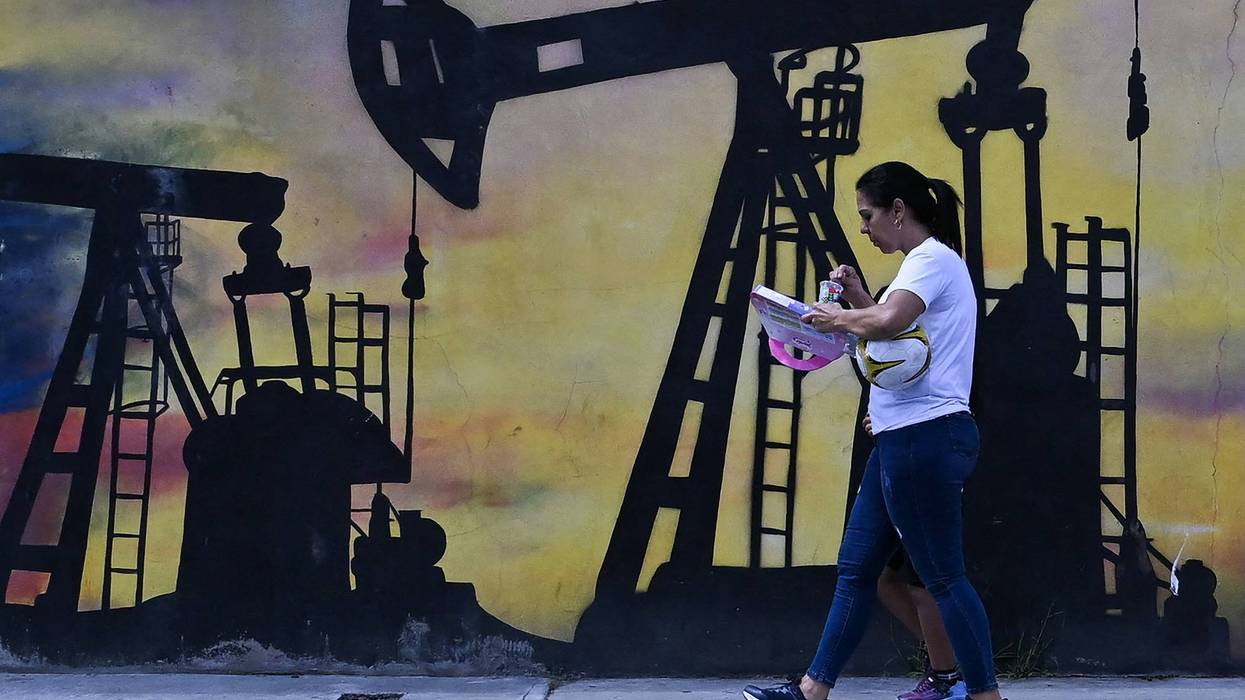
'Mobster Language': Trump Says Venezuelan Oil Will Replenish US Reserves
"I used to spend so much time trying to prove that the US was not interested in promoting democracy and just preferred autocratic governments that give us whatever we want. And now he just posts this every day on social media," one journalist wrote.
Aug 30, 2026
President Donald Trump was accused of naked gangsterism and revisionist history on Sunday when he announced that Venezuelan oil would be used to refill the US Strategic Petroleum Reserve.
"One of the things I am going to do with the Venezuelan Oil is fill up the Strategic National Reserves which, because of Sleepy Joe Biden, has been virtually emptied. The 'topping out' process will begin very shortly, and is a Gift from Venezuela to the People of the United States," Trump wrote on Truth Social.
The oil in question comes from a deal announced between the governments of Trump and acting Venezuelan President Delcy Rodriguez on Friday, which would allow the US to take majority control of 65 billion barrels worth of Venezuelan oil preserves. While Rodriguez has spoken favorably of the arrangement, it is hard to know how freely she speaks and acts given that her predecessor Nicolás Maduro was kidnapped by US forces in January.
"Describing oil you are looting by force as a 'Gift from Venezuela to the People of the United States' is straight mobster language," Drop Site News journalist Ryan Grim wrote on social media in response to Trump's statement on Sunday.
"No one told the demented jerk that he drained over 100 million barrels from the Strategic Reserves?"
Nathan J. Robinson, editor-in-chief of Current Affairs, also commented on the imperialism inherent in Trump's remarks, writing: "I feel like I used to spend so much time trying to prove that the US was not interested in promoting democracy and just preferred autocratic governments that give us whatever we want. And now he just posts this every day on social media."
In an article on Sunday entitled "Trump’s Venezuela Oil Grab Reprises Industry’s Neocolonial Past," Bloomberg reported that the oil deal reminded some analysts of 20th century US colonialism in Latin America.
Venezuelan economist Francisco Rodríguez told Bloomberg that Venezuela is “functioning as a protectorate of the US in all but name,” and that the current deal “isn’t furthering the interests of Venezuelans. It’s about securing the economic and security interests of the United States.”
New York University associate history professor Alejandro Velasco, meanwhile, compared today's Venezuela with the Central American "Banana Republics" that were heavily influenced by the US-based United Fruit Company during the first half of the 20th century.
The Venezuelan people “are entirely at the whims of whatever the US government, by way of these companies, is going to give to them,” he told Bloomberg. “Venezuela is a client state now.”
Both Rodriguez, the economist, and Robinson questioned whether the deal would survive a change in Venezuela's government.
“If I were an investor in Venezuela right now, I would be asking myself if there’s going to be a government in the future that will repudiate the contracts,” Rodriguez told Bloomberg.
Robinson, meanwhile, wrote on social media, "It's obvious that a democratic Venezuela would never hand over its oil to the US, so the US actually strongly opposes democracy in Venezuela."
Other experts pointed out that Trump lied about how the Strategic Petroleum Preserve (SPR) was depleted in the first place. While President Joe Biden did drawn upon the reserve in response to Russia's invasion of Ukraine, Trump has also relied on reserves to offset the impact of his war on Iran and the subsequent closure of the Strait of Hormuz. As of August 21, the SPR held 289.7 million barrels, a 30% decrease from the start of the year, according to the Energy Information Administration. It is supposed to fall further to 243 million barrels per Trump's orders, Drop Site News reported.
"No one told the demented jerk that he drained over 100 million barrels from the Strategic Reserves?" Dean Baker, senior economist at the Center for Economic and Policy Research, asked on social media.
It is also unclear how quickly any Venezuelan oil could top out the SPR, given that Venezuela's oil industry has been weakened by sanctions and mismanagement and needs substantial investment and work before it can increase production, according to Reuters.
At the same time, Drop Site pointed out that Delcy Rodriguez made no mention of gifting the US oil when she laid out more details of the deal on Saturday night. According to the acting Venezuelan leader, the deal would last 25 years and the country would maintain “ownership of and sovereignty” over the oil “while leveraging capital, technology, and operational expertise to support the recovery of a strategic industry that has been severely affected by sanctions," as Reuters reported.
In response, Francisco Rodriquez outlined a series of questions about the deal, including how Delcy Rodriguez's remarks compared with Trump's.
"President Trump has also said that with immediate effect, the United States' strategic oil reserve will begin to be supplied through a gift from Venezuela. Can you explain under what conditions this gift is being made?" the economist asked the Venezuelan leader on social media on Sunday. "Which articles of the law or Constitution allow you to give away Venezuelan oil property? And if that flow begins immediately, as President Trump says, does that mean it will be supplied from current production, and therefore imply lower revenues for the national treasury in the immediate term?"
Keep ReadingShow Less
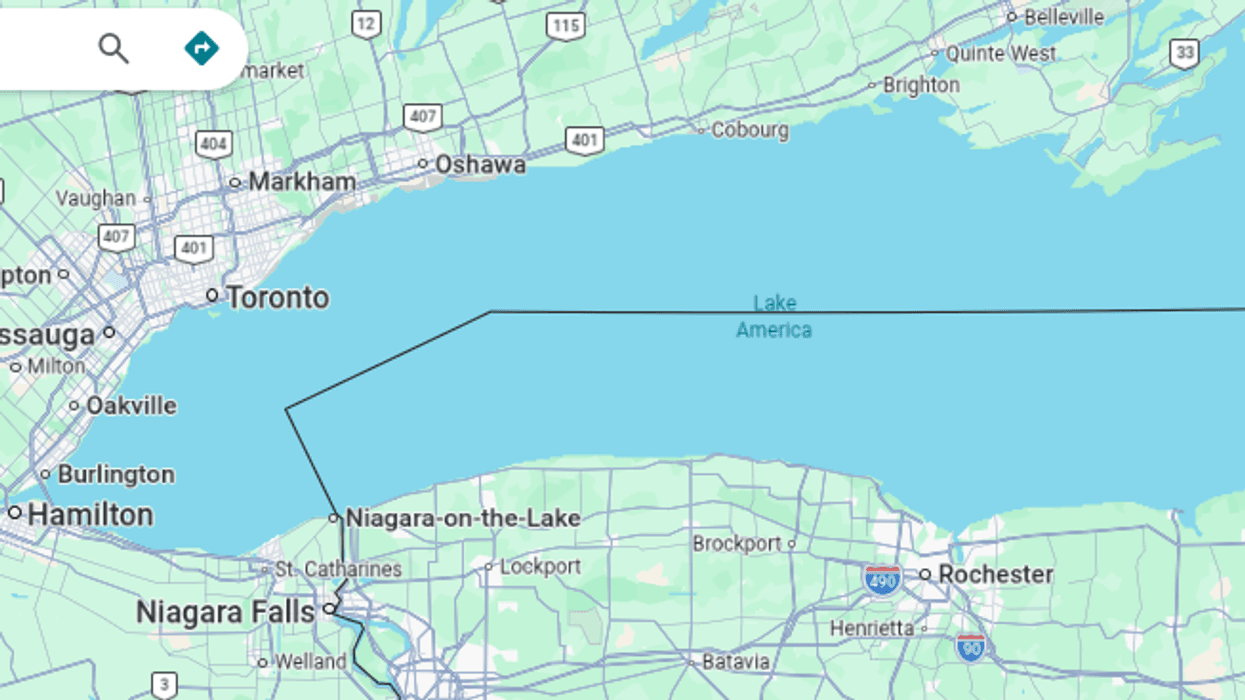
'Embarrassing': Google Maps Renames 'Lake Ontario' as 'Lake America' in US
The name change followed President Donald Trump's executive order and "served as a reminder that billionaires will always side with authoritarians, because authoritarians will always protect billionaires at the expense of democracy and the working class."
Aug 30, 2026
Tech giant Google faced widespread criticism over the weekend for becoming the first major online map provider to change the name of "Lake Ontario" to "Lake America" for its US users, after President Donald Trump ordered the name change in an executive order on Thursday.
Google presented the decision as a procedural one in its statement on Saturday:
The US Geographic Names Information System (GNIS) has formally changed the name for "Lake Ontario" to "Lake America" in the United States. Since we update Google Maps to reflect name changes in official government sources, which is GNIS for the US, people using Maps in the US will see "Lake America," those in Canada will continue to see "Lake Ontario," and those outside of the US and Canada will see both names. These updates follow our long-standing policy for bodies of water with names that vary from country to country, and are starting to roll out now.
However, advocates, lawmakers, and commenters saw the shift as another example of Big Tech in general, and Google in particular, caving to Trump's whims. Notably, the CEO of Google's parent company Alphabet, Sundar Pichai, attended Trump's inauguration with a host of other Silicon Valley moguls.
"This is so embarrassing for @Google and served as a reminder that billionaires will always side with authoritarians, because authoritarians will always protect billionaires at the expense of democracy and the working class," Melanie D'Arrigo, executive director of the Campaign for New York Health, wrote on social media.
Zero integrity over at @Google.
Resign, @sundarpichai.
Fuck you, @googlemaps. pic.twitter.com/ERxPc5sZ88
— Killed by Google (@killedbygoogle) August 30, 2026
Rep. Mark Pocan (D-Wis.) threatened the company with congressional questioning for its capitulation, writing on social media: "Hey @Google, how about an option for thinking people vs. cultish sheep? I don’t wanna have to see your brown lips from Trump. How about calling it what it is? Don’t forget, when the Majority changes in the House and Senate, you might have some answering to do. Correction. WILL."
Sen. Ruben Gallego (D-Ariz.), in response to another social media post about the change, wrote sarcastically, "That's definitely going to make food more affordable."
Kenneth Roth, the former head of Human Rights Watch, asked, "Is Google really so terrified of Trump that it has to play along with his childishness?"
Is Google really so terrified of Trump that it has to play along with his childishness? pic.twitter.com/tHOrwJoiCy
— Kenneth Roth (@KenRoth) August 30, 2026
Trump biographer Seth Abramson chastised the company, writing, "Thing #1 that you *do not do* for a psychopath: appease them."
While Google was the first digital map provider to make the change, it will not be the last, according to Wired, which reported that Apple and Bing are expected to follow suit. All three companies changed the name of the Gulf of Mexico to the Gulf of America following Trump's redesignation at the start of his second term.
Trump did receive pushback from other quarters at the time, with The Associated Press losing access to presidential events because it refused to change its style guide to prefer "Gulf of America."
This new name change, which Trump issued as part of an ongoing trade war with Canada, has also met with resistance both within and beyond the US.
On the day of Trump's order, MapQuest announced simply, "We're not changing it."
We’re not changing it. pic.twitter.com/NdeE9v2BNO
— MapQuest (@MapQuest) August 27, 2026
Canadian Prime Minister Mark Carney rejected the name change in a social media post on Thursday, pointing to the Indigenous origins of the name Ontario.
"The name Lake Ontario comes from the Wendat word Ontari’io, which, appropriately, means 'the lake is beautiful, the lake is big.' The name is more than 400 years old, predating both the Confederation of Canada and the Declaration of Independence of the United States of America," he wrote. "We know that America is changing. Their trading relationships, their foreign policies, their national monuments, their hydronyms. Canadians also know that naming reality means calling it Lake Ontario—then, now, and always."
The upstate New York-based Seneca Nation on Friday asked Trump to rescind the order, saying it violated an over 225-year-old treaty signed by President George Washington and the Haudenosaunee confederacy, of which the Seneca are a member.
Seneca Nation President J. Conrad Seneca said the name change showed "blatant disrespect" to Indigenous groups, adding, "The President cannot assert ownership over our culture or erase it through irresponsible political action."
On Saturday, Ontario Premier Doug Ford unveiled a billboard on the lake's edge that reads, "Lake Ontario, now and always" in English and French.
It’s Lake Ontario, now and always. pic.twitter.com/KNahtPAMeJ
— Doug Ford (@fordnation) August 29, 2026
"President Trump can call it whatever he wants, but I can tell you the rest of the world will always call it Lake Ontario," Ford said.
Keep ReadingShow Less
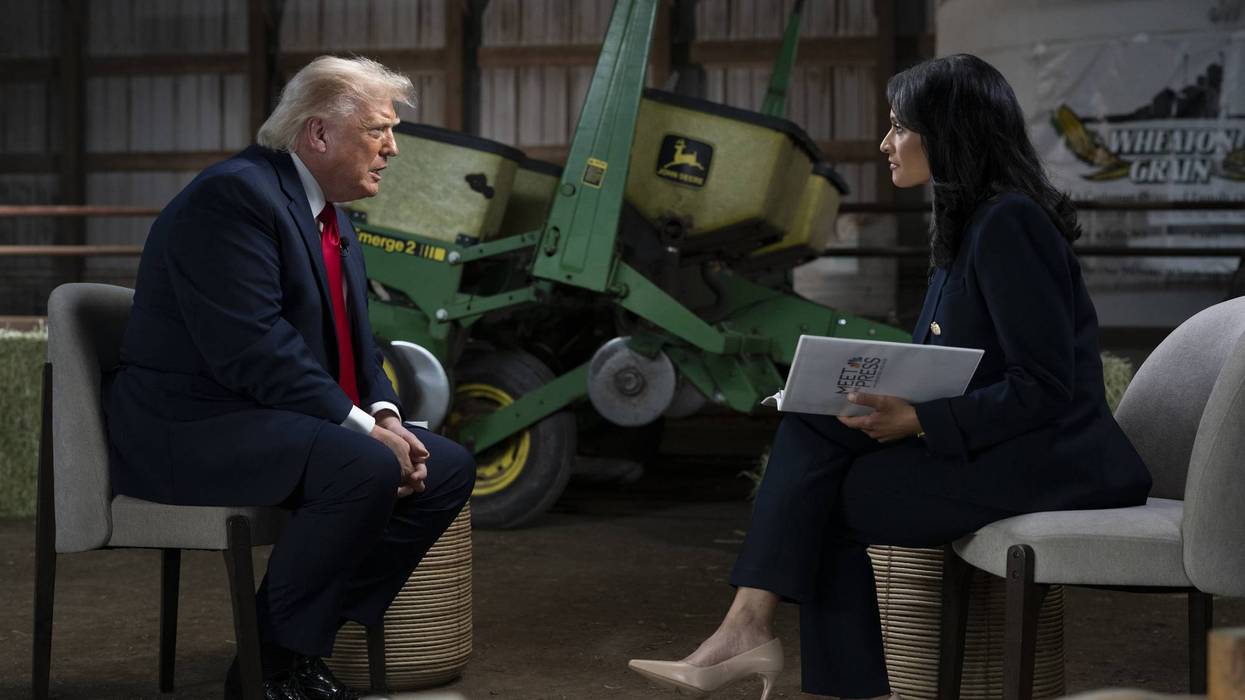
Trump Threatens NBC's Welker With 'Punishment' for Doing Her Job
"Trump, like all authoritarians, wants to silence those who disagree with him," Sen. Bernie Sanders said in response.
Aug 30, 2026
President Donald Trump took to Truth Social on Sunday to threaten NBC journalist Kristen Welker with "rebuke or punishment" from the Federal Communications Commission, or FCC, after she accurately reported that his endorsement had netted "mixed" results for Republican candidates this election cycle.
In a second post on Sunday, Trump also lashed out against reported polling results, writing, "THE FAKE POLLS USED BY OUR CROOKED MEDIA ARE OUT OF CONTROL, AND SOMETHING MUST BE DONE ABOUT IT. FCC TO THE RESCUE!"
"Trump, like all authoritarians, wants to silence those who disagree with him," Sen. Bernie Sanders (I-Vt.) wrote on social media in response. "Now he's trying to punish an NBC journalist for reporting on his mixed endorsement record. Sorry, Mr. President. In America, we believe in democracy and the First Amendment. FIGHT BACK."
Welker made the remarks that enraged Trump during a pre-"Meet the Press" promotion on NBC's Washington, DC affiliate station. They were backed up by NBC reporting that six candidates Trump endorsed for House and governor had lost their Republican primary races in August.
"Trump makes clear that he thinks it's the government's role to go after journalists who anger him."
"Kristen Welker, the Unpopular 'Hostess' of the once great Meet the Press, now considered Meet the Fake Press, just stated that Donald Trump has 'mixed results' on his Endorsements of Candidates, when the recent WINS of Darline Graham and Mike Mazzei, stand at 100% for the US Senate, and 98% for the US House, recently and over the longterm. How can anyone be allowed to say this, working for freely given Public Airwaves? Results are attached. Because of this purposeful inaccuracy, she will be reported to the FCC for rebuke or punishment," Trump wrote.
He also appealed to the head of the FCC directly, saying, "I hope that Chairman Brendan Carr, and the fine people of his Commission, will take this Threat to our Country very seriously."
"Trump is getting more explicit about weaponizing the FCC," CNN chief media analyst Brian Stelter noted in a thread on social media. While he pointed out that the FCC cannot legally punish Welker and has limited power by design, its chair Carr "has been responsive to Trump's posts in the past..."
Indeed, Carr has a history of targeting Trump critics.
In September of 2025, he pressured ABC into briefly removing Jimmy Kimmel from the air following remarks he made surrounding the Trump administration's response to conservative activist Charlie Kirk's death.
In March, Carr wrote a post on social media that appeared to threaten to revoke the broadcasting licenses of news outlets that criticized Trump's war on Iran, responding directly to Trump's own social media rant against war coverage.
In April, he ordered Disney's eight ABC stations to file their broadcast renewal requests years early, prompting ABC and Disney to file a First Amendment lawsuit against the FCC earlier this month. The renewal requests, which Carr denies were retaliatory, came a day after Trump again criticized Kimmel for making jokes about First Lady Melania Trump.
Stelter concluded: "Trump invoked Carr's name, complimented the 'fine people' of the FCC, and said he hopes the commission will 'take this Threat to our Country very seriously.' ABC is already in court fighting the FCC's unprecedented actions; it's reasonable to think NBC will be targeted next."
Chief White House correspondent for The New York Times Pete Baker wrote on social media that, with his threats against Welker, "Trump makes clear that he thinks it's the government's role to go after journalists who anger him."
"Are there really any Americans left who think this man is paying any attention to any problem any person in the United States is having right now," Trump biographer Seth Abramson wrote on social media in response to Trump's tirade. "As far as I can tell there's not a single second of his day taken up by anything but what personally interests and enriches him."
Keep ReadingShow Less

'Horrific': Masked Israeli Settlers Attack, Injure Palestinian Woman and NBC Crew
Another journalist called the assault "the latest instance of unacceptable and alarming settler violence toward journalists and Palestinians."
Aug 29, 2026
Israeli settlers attacked and wounded a Palestinian woman and four NBC team members who were interviewing her in the West Bank on Saturday, amid ongoing settler violence in the occupied Palestinian territory.
The settlers, who were wearing masks, drove up as Aida Ahmed Abdullah and her family were telling NBC about how settlers forced them from their home in the town of Jalud.
“They jumped out, beat us, then jumped back in the car,” NBC News international correspondent Matt Bradley told the outlet.
Make This Go VIRAL
Masked Israeli Settlers ATTACK Palestinian Woman and NBC News Crew in the West Bank
NBC correspondent Matt Bradley was struck twice pic.twitter.com/EMmWGsNk2X
— Ryan Rozbiani (@RyanRozbiani) August 30, 2026
Bradley was hit twice on the arm by the attackers, who carried sticks. They also threw rocks. Abdullah, Bradley, West Bank-based cameraman Khaldoon Eid, producer Producer Lawahez Jabari, and a driver were all injured in the ambush and treated afterword. Abdullah remained in the hospital as of Saturday night.
Both Eid and Jabari also described the assault.
“We didn’t expect that—that they would come to attack,” Eid told NBC. “We were in the middle of a Palestinian area next to Palestinian houses.”
Jabari said, "Suddenly a car came to us,” adding, "the settlers had sticks, I saw a gun, but they didn’t use the gun.”
Jeremy Diamond, a CNN correspondent in Jerusalem, called the incident "horrific" on social media and said it was "the latest instance of unacceptable and alarming settler violence toward journalists and Palestinians."
The NBC crew and their interviewee were not the only targets of such violence on Saturday, as attacks continued in the town of Qusra, where settlers have been conducting a nearly three-week siege of three Palestinian homes. Settlers pepper sprayed Palestinian workers, threw rocks at a building, and besieged a fourth home with at least four Palestinian residents inside, according to Hareetz and Al Jazeera.
Israeli Prime Minister Benjamin Netanyahu condemned Saturday's attacks, characterizing them as “criminal acts of violence committed in the villages of Qusra and Jalud by a handful of rioters who violate the law, cause enormous injustice to the law-abiding settler public, hinder the IDF [Israel Defense Forces] in fulfilling its missions, and harm Israel’s standing in the world.”
Yet Trita Parsi, executive vice president of the Quincy Institute for Responsible Statecraft, argued on social media:
1. The settler wouldn't do this to Americans had they not received a green light from the Israeli gov.
2. Israel's gov would not have given such a green light unless it felt confident that the US gov—and Amb. [Mike] Huckabee—wouldn't lift a finger to defend the Americans.
Journalists trying to report in both Gaza and the West Bank have long been targets of both settlers and the Israeli military. The IDF was found to be the leading killer of journalists worldwide for the third year in a row in 2025, and even before the Gaza genocide began in 2023, there were cases like the IDF killing of Palestinian-American reporter Shireen Abu Akleh in the West Bank in 2022.
The attacks on the NBC team also come amid an uptick in setter violence in the West Bank since 2023, which humans rights observers say is enabled by the Israeli government. Netanyahu's government has expanded settlements in the West Bank despite the fact that they are illegal under international law.
Keep ReadingShow Less
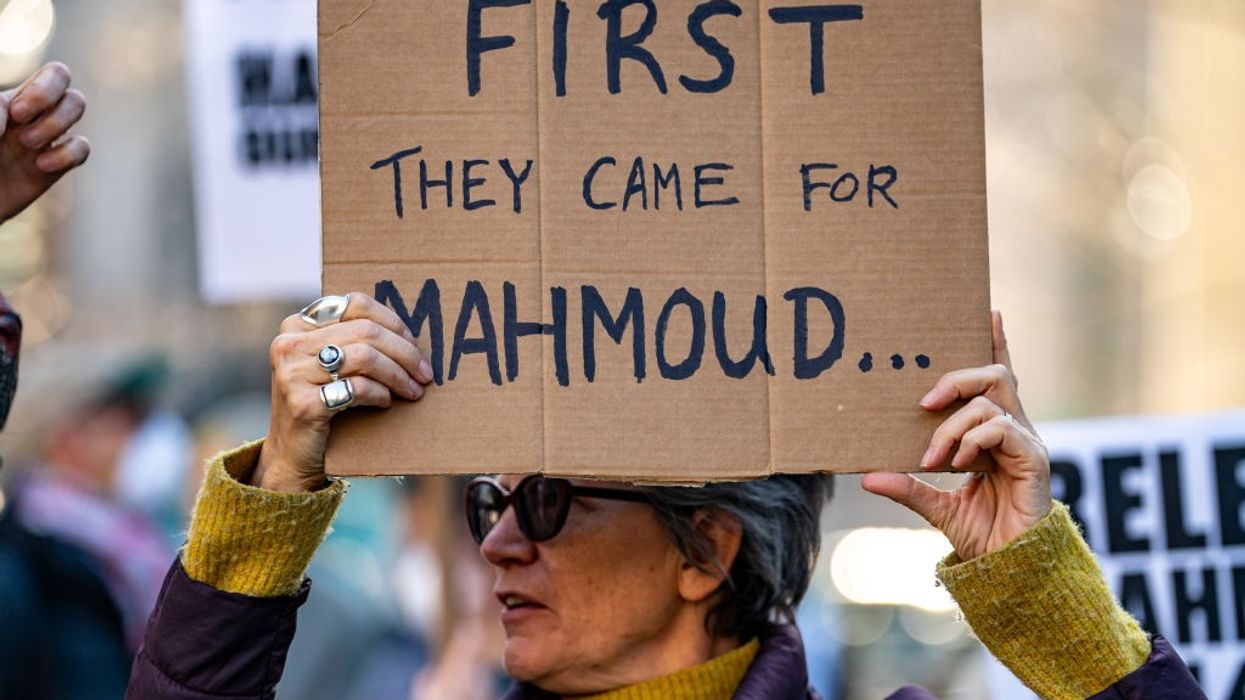
Judge Rules the Trump Admin Can't Deport International Students for Free Speech
"A federal judge just ruled that the Trump admin's use of immigration law to deport me and other noncitizen students for pro-Palestinian speech is unconstitutional. No one should fear speaking up for Palestine," Mahmoud Khalil said.
Aug 29, 2026
The Trump administration violated the Constitution when it moved to deport or rescind visas from international students who spoke up for Palestinian rights and criticized Israel's genocide in Gaza, a federal judge ruled on Friday.
Northern District of California Judge Noël Wise, who was appointed by former President Joe Biden, said that the administration's actions violated both the First Amendment of the Constitution protecting free speech and the Fifth Amendment ensuring due process.
"Stated plainly, in the United States, freedom of speech belongs to the people. It is not the government’s to take," Wise wrote.
Mahmoud Khalil, a Columbia University student who was detained by Immigration and Customs Enforcement early in the second Trump administration despite holding a green card, celebrated the ruling on Saturday.
"A federal judge just ruled that the Trump admin's use of immigration law to deport me and other noncitizen students for pro-Palestinian speech is unconstitutional. No one should fear speaking up for Palestine," Khalil wrote on social media.
The Council on American-Islamic Relations also welcomed the decision in a statement on Saturday:
This ruling reaffirms a fundamental American principle that the government cannot deport people simply because it dislikes their political views. Students do not surrender their constitutional rights at the classroom door, and international students do not surrender their freedom of expression when they come to study in the United States. Criticizing the policies of a foreign government, including the genocidal government of Israel, is protected political speech.
The lawsuit was brought by the Foundation for Individual Rights and Expression (FIRE) in August 2025 on behalf of The Stanford Daily, Stanford University's student newspaper, and an anonymous female plaintiff. The newspaper argued that student reporters on visas refrained from covering pro-Palestinian protests on campus out of fear of being deported, while the Jane Doe was a noncitizen who had spoken out on behalf of Palestine and now was worried about government retaliation.
"The reporters in our newsroom shouldn’t have to fear that writing a story will result in their deportation. Today’s victory means they won’t have to," the paper's editor-in-chief George Porteous wrote on social media on Friday.
In particular, the lawsuit challenged two provisions of the Immigration and Nationality Act that Secretary of State Marco Rubio used to justify seeking the deportations of Khalil, Columbia student Moshen Mahdawi, and Tufts University student Rümeysa Öztürk. The first allows the secretary of state to deport a noncitizen for speech if the secretary “personally determines” the speech “compromises a compelling foreign policy interest.” The second allows the secretary to revoke visas entirely at their own discretion.
Wise agreed that the provisions violated the Constitution and offered a rousing defense of free speech.
“In the United States, free speech, including the freedom to criticize the government and its leaders, is not a sign of our democracy’s fragility. It is evidence of its strength," she wrote. "That strength is diminished when members of our society—citizens and noncitizens alike—must self-censor and ‘behave’ or suffer the government’s retaliation.”
FIRE said the decision was the "first in the country to squarely rule on the constitutionality of these statutes" and that it would "reverberate in similar proceedings around the country."
“In America, free speech doesn’t just belong to the people who say things the government agrees with,” FIRE attorney Conor Fitzpatrick said in a statement Friday. “Today’s ruling proves that free speech isn’t a privilege, but the inalienable right of every man, woman, and child.”
Keep ReadingShow Less
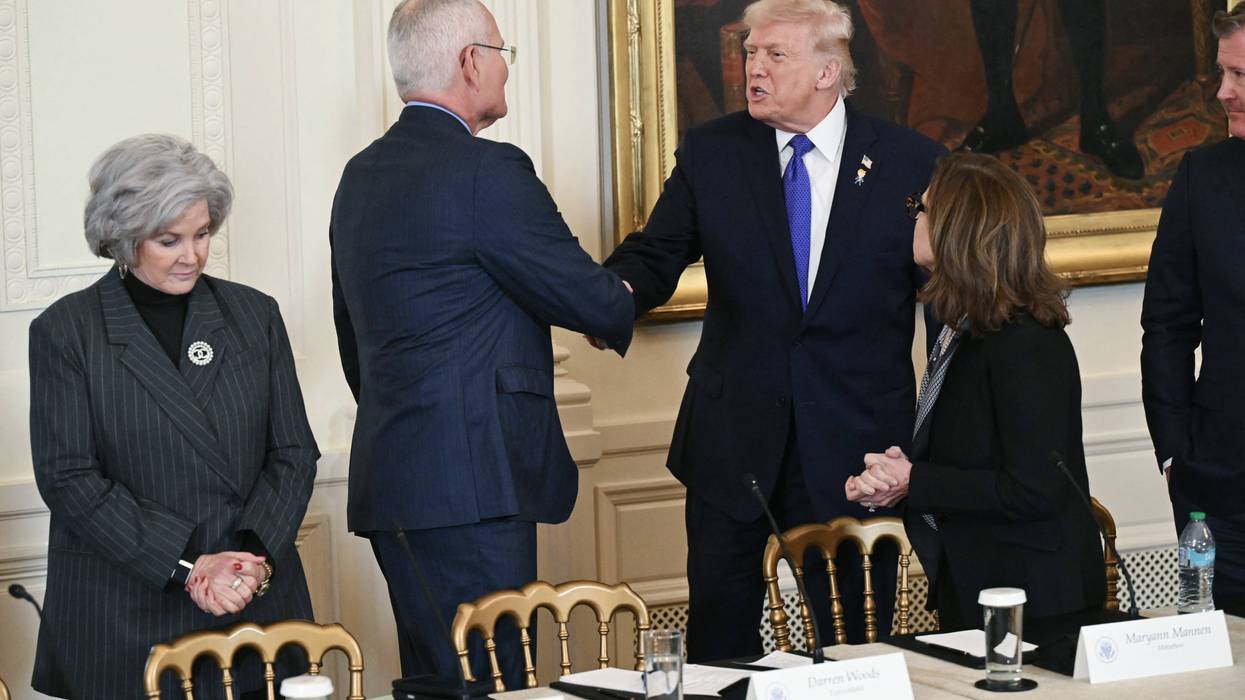
'One Big Military Theft': Trump Announces Deal for US Control of Venezuelan Oil Fields
"This is proof Trump put our service members at risk to get Venezuelan oil for his billionaire buddies," one Democratic senator said. "Putting our soldiers’ lives on the line for private profit is a gross dereliction of his constitutional duty."
Aug 29, 2026
President Donald Trump announced on Truth Social on Friday that his government had "secured majority US control" of Venezuelan oil reserves containing 65 billion barrels of oil.
The announcement followed on reporting from Axios that a deal was in the works, prompting criticisms that such a move would be "colonial" and calls for Congress to reject any such proposal.
"Let's be clear: This isn't a win," Sen. Chris Van Hollen (D-Md.) wrote on social media in response to the announcement. "This is proof Trump put our service members at risk to get Venezuelan oil for his billionaire buddies. Putting our soldiers’ lives on the line for private profit is a gross dereliction of his constitutional duty."
When US forces invaded Caracas and kidnapped Venezuelan President Nicolás Maduro and his wife First Combatant Cilia Fores on January 3, Trump's own words following the invasion confirmed suspicions that he acted largely to gain access to the country's oil.
"These are some of the largest crimes of our lifetimes."
“We’re going to get the oil flowing the way it should be,” he said in a press conference following the attack.
Friday's deal, which seems like an attempt to make good on that promise, was also announced by Secretary of State Marco Rubio and acting Venezuelan President Delcy Rodriguez, who provided more details.
According to Venezuelanalysis:
Rodríguez stated that the deal will involve private corporations developing 17 “strategic fields” with 65 billion barrels of proven reserves. She echoed Rubio’s $100 billion investment claim and pledged that the projects would yield $209 billion in tax revenues. According to the acting president, the announced agreement “ushers in a new era of growth and prosperity.”
However, economist Francisco Rodríguez, a senior research fellow at the Center for Economic and Policy Research, argued that the agreement was actually a bad deal for Venezuelans.
"President: According to your figures, this agreement will generate tax revenues of just $3.22 per barrel of Venezuelan oil. This represents 4.7% of the current price, and less than half of the royalty rate contemplated in concessions granted by Juan Vicente Gómez," he wrote on social media, addressing the current Venezuelan leader and referring to a Venezuelan dictator from the early 20th century.
Joseph Bouchard, a journalist and researcher who focuses on Latin America, agreed with Rodriguez's criticism of the deal, writing on social media that "Trump [was] 'generously' buying billions of barrels of Venezuelan oil at less than 5% its market price. He's stealing their oil for his own family and cronies' profit. Guessing this may be used as a chip to manipulate the midterms. These are some of the largest crimes of our lifetimes."
Francisco Rodriguez had earlier pointed out that the deal violated the Venezuelan Constitution, which holds that all minerals and hydrocarbons are “inalienable public domain," according to Venezuelanalysis. For the deal to go through, therefore, Venezula would have to alter its Constitution.
Former head of Human Rights Watch Kenneth Roth noted on social media that "senior Venezuelan officials, all fearing arrest, are hardly in a position to negotiate vigorously, making the whole thing seems like one big military theft."
On the plus side, no one has to argue whether the United States is imperialist anymore. https://t.co/nsb87JUARw
— Dean Baker (@DeanBaker13) August 29, 2026
Trump is under pressure to lower gas prices that have spiked due to the fallout of his war on Iran, which entered its sixth month on Friday, and promised in his announcement, "This Historic Transaction MORE THAN DOUBLES American Oil Reserves, greatly increases our Oil Supply, and will substantially lower Gas Prices for all Americans, long into the future."
However, The Associated Press pointed out: "A significant drop in US gas prices tied to the agreement should not be expected immediately. Experts have repeatedly warned that a substantial boost in Venezuelan oil production will not happen quickly as repairing and expanding infrastructure takes years and requires billions of dollars."
Exploiting Venezuela's oil reserves would also exacerbate the climate crisis, which just this summer intensified a deadly heatwave in Europe and is supercharging an El Niño that could contribute to a significant increase in food prices in 2026 and 2027.
Keep ReadingShow Less

'Break Up Big Medicine': Taking On Healthcare Industry Greed Could Save US Families $6,000+ a Year
One expert said the options are to "watch the US healthcare system spiral into profit-driven chaos or finally treat the Big Medicine disease to create a healthcare system that puts patients and clinicians in control of care."
Aug 28, 2026
As millions of working-class Americans suffer from President Donald Trump and congressional Republicans' cuts to the already dysfunctional US healthcare system, a leading anti-monopoly group this week released a report with recommendations to restore "affordability and control to patients, clinicians, and communities across the country."
"The healthcare crisis didn’t happen by accident, it is the direct result of decades of neoliberal policy choices that handed more power to corporate healthcare giants while families paid the price," said Morgan Harper, director of policy and advocacy at the American Economic Liberties Project (AELP).
"The choice now is clear: Continue to watch the US healthcare system spiral into profit-driven chaos or finally treat the Big Medicine disease to create a healthcare system that puts patients and clinicians in control of care," she explained. "This agenda presents a roadmap for how to do it."
Harper and Emma Freer, AELP's senior policy analyst for healthcare, co-authored the new report, "Break Up Big Medicine," with contributions from a trio of other experts. One of them is Dr. Will Flanary, an independent ophthalmologist in Portland, Oregon.
"The US healthcare system, once made up of mostly independent practices like mine, is now dominated by Big Medicine behemoths—including private insurance conglomerates, Big Pharma manufacturers, pharmaceutical middlemen, megahospitals, and private equity-backed practices—whose only fiduciary duty is to executives and investors," he wrote in the foreword. "This makes it increasingly difficult to keep my practice afloat and uphold my oath, resulting in moral injury."
"So, I now have a second career as an advocate," who goes by "Dr. Glaucomflecken" on social media. "What my patients need most is bold policy reforms to break up Big Medicine and build a better healthcare system, one where they can access affordable, high-quality care and independent physicians like me can thrive."
The report notes that "between 2005 and 2025, the annual cost of employer-sponsored family coverage nearly tripled, from $12,214 to $35,119," US patients pay nearly three times as much for prescription drug prices as people in other countries, and "the United States spends more than $15,000 per person on healthcare each year—roughly one-fifth of our entire economy, and more than twice what peer nations spend, in return for worse patient outcomes on a variety of metrics."
Costs continue to rise, with The Wall Street Journal reporting last week that, according to benefits consulting giant Aon, US workers with employer-sponsored insurance are expected to spend an average of $5,297 on healthcare this year, or $388 more than last year. Another consultant, WTW, found that US employers expect their healthcare costs will rise 11.1% next year.
Meanwhile, six "corporate behemoths" in the sector—Cardinal Health, Cencora, Cigna, CVS Health, McKesson, and UnitedHealth Group—"now rank among the Fortune 15, making nearly $34 billion in annual profit," collectively, as AELP detailed Thursday. "Big Medicine now employs more than four in five US doctors," and practices must spend time completing, "on average, 40 prior authorizations per physician per week, time that would be better spent on patient care."
"Our current healthcare crisis is the result of several decades of federal policymaking by both political parties based on the flawed premise that empowering private insurers to ration access to healthcare, rather than addressing the underlying root causes of high prices, would effectively contain costs," the AELP report says.
The publication lays out a four-part "treatment plan" to save Americans $795 billion annually, or more than $6,000 per household: break up Big Medicine, bring down healthcare prices, build capacity, and bolster enforcement of existing laws.
The first section highlights how some solutions already exist in Congress, pointing to various bills, including Sens. Elizabeth Warren (D-Mass.) and Josh Hawley's (R-Mo.) Break Up Big Medicine Act, their Patients Before Monopolies Act with Reps. Diana Harshbarger (R-Tenn.) and Jake Auchincloss (D-Mass.), Sen. Jeff Merkley (D-Ore.) and Rep. Val Hoyle's (D-Ore.) Patients Over Profits Act, Sen. Chris Murphy (D-Conn.) and Rep. Mary Gay Scanlon's (D-Pa.) Take Back Our Hospitals Act, and the Corporate Crimes Against Health Care Act, introduced by Rep. Maggie Goodlander (D-NH) and Sens. Richard Blumenthal (D-Conn.), Peter Welch (D-Vt.), Merkley, and Warren.
The second section calls for standardizing and capping "healthcare prices across public and private payers using traditional Medicare reimbursement rates for inpatient and outpatient services and negotiated drug prices as benchmarks." It urges a ban on prior authorization, an end to patient cost-sharing obligations, investments "in public options that eliminate Big Medicine administrative waste," and passage of Rep. Rashida Tlaib's (D-Mich.) Medicines for the People Act.
The third section calls for investments in the US prescription drug manufacturing base as well as in providers, "especially safety-net hospitals in rural and low-income metro areas, independent medical and dental practices, community pharmacies, and primary care physicians."
The final section calls on Congress to "close loopholes that allow anti-competitive business practices, which Big Medicine uses to drive up prescription drug costs," specifically promoting the repeal of the 1987 safe harbor for pharmacy benefit managers (PBMs) and other pharmaceutical middlemen, and the prohibition of "price discrimination, spread pricing, self-preferencing, network discrimination, and sole-source or exclusive contracting terms across all payers." It further advocates for an increase in funding for antitrust enforcers at the Federal Trade Commission and the US Department of Justice.
"For decades, healthcare reform has focused on expanding private coverage and putting more money into a broken system while allowing corporate giants to consolidate power and drive up costs," said Freer. "Working families have paid more only to receive lower-quality care.
"Americans need a new policy paradigm that actually takes on the root causes of the crisis: consolidation, corporate control, and lack of competition," she argued. "This agenda is about moving beyond the status quo to build a healthcare system where patients come first, clinicians can thrive, and every American can afford the care they need."
The report comes amid renewed scrutiny of the president's "most favored nation" deals with Big Pharma, with Peter Maybarduk, access to medicines director for the watchdog Public Citizen, saying last week that "Trump has three kinds of drug pricing policy: fake, exaggerated, and not-real-yet, probably-won't-happen."
After pointing out on social media Wednesday that Health and Human Services Secretary Robert F. Kennedy Jr. in April agreed to publicize the deals for medicines listed on the direct-to-consumer website TrumpRx, and "months later, still crickets," Warren wondered, "Why should Americans believe this isn't just another Trump handout to fatten Big Pharma's pockets?"
Additionally, as Americans have started contending with the Medicaid cuts in the One Big Beautiful Bill Act passed by Republicans in Congress and signed by Trump last year, as well as the GOP's refusal to extend Affordable Care Act subsidies, which has caused premiums to skyrocket, there have also been renewed calls for shifting the United States to a universal healthcare system.
A study published earlier this month by researchers at Yale University suggests the Medicare for All Act that's been repeatedly introduced by Sen. Bernie Sanders (I-Vt.) would save more than $1 trillion and over 114,000 lives annually.
"At a time when 15 million Americans are being thrown off the healthcare they have and 20 million Americans have already seen their premiums double, on average, as a result of Trump’s so-called ‘Big Beautiful Bill,’ we need Medicare for All now more than ever," Sanders said in response to the study. "The time is now to end the greed of the big insurance and drug companies and pass Medicare for All."
David Dayen, executive editor of The American Prospect and the author of books including Monopolized: Life in the Age of Corporate Power, noted in his Thursday coverage of AELP's report that "while it's complementary to a Medicare for All approach, single-payer insurance is not mentioned."
"In tandem with moving toward a Medicare for All system, we have to address consolidation that is the cause of healthcare being so expensive, with degraded quality, and the squeezing of healthcare professionals," Freer told Dayen. "Otherwise we end up with something like Medicare Advantage for All, which would be disastrous."
Keep ReadingShow Less
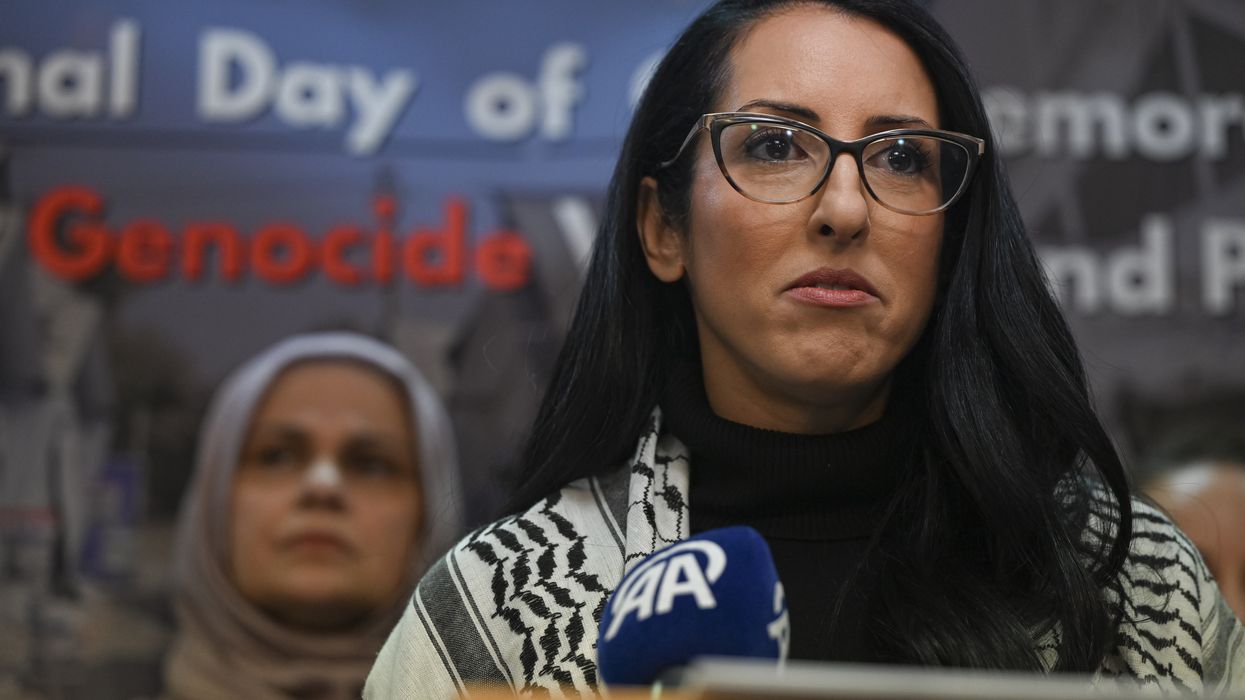
US Diplomat Who Resigned Over Gaza Condemns Biden Officials Who Defended Genocide—And Now Claim to Regret It
"They actually had the power to stop unconditional arms assistance to Israel," said Hala Rharrit. "They enabled it 100%."
Aug 28, 2026
Recent expressions of regret by top Biden administration officials who vehemently defended the United States' billions of dollars in military aid to Israel as it was bombarding Gaza have not gone far with former diplomat Hala Rharrit, who was retaliated against for speaking out about the US policy before she ultimately resigned, and who condemned her former colleagues recent "PR game" this week.
In an interview with Middle East Eye, Rharrit said the former officials who have mused that they would now support withholding weapons from Israel, or that they should have backed such a move while serving under President Joe Biden, are "just so despicable."
"They're so disgusting," Rharrit said. "Those individuals, particularly [National Security Adviser] Jake Sullivan and a handful of others, actually had the power to save human lives. They actually had the power to stop unconditional arms assistance to Israel, right? The Israelis were not killing the Palestinians by themselves. The Israelis were killing the Palestinians with American bombs, with American jets, with American everything. We enabled it 100%. They enabled it 100%."
"They’re so disgusting."
Former US diplomat Hala Rharrit, who resigned in 2024 over Gaza, responds to the Biden officials who’ve recently claimed they should have done more on Gaza.
Watch early by joining MEE's YouTube membership ➡ https://t.co/kSRg1sVXCo pic.twitter.com/szijxYjczk
— Middle East Eye (@MiddleEastEye) August 27, 2026
Rharrit, who resigned as the Arabic language spokesperson for the US State Department in April 2024, six months into Israel's US-backed assault—which has been called a genocide by leading human rights organizations and Holocaust experts—spoke to MEE months after former Secretary of State Antony Blinken said the US should have called for a ceasefire earlier than it did, "such that the suffering the people endured, the loss of the children, so many others, could have been averted.”
Sullivan last year said—weeks before a ceasefire was finally agreed to—that he'd had a change of heart regarding providing Israel with weapons, and that he would no longer support the policy.
In November, Sullivan added in an interview with The Dartmouth that "it’s fair to say that there were a lot of objections from a lot of parts of the international community about the US continuing to support Israel over the course of last year—2024—and over the course of this year in 2025. I think a lot about what we could have done differently."
Rharrit told MEE that "it's despicable that now they're trying to make themselves look like, 'Oh we should have done better and we're so sorry.'"
The former diplomat emphasized that the apology tour has taken place as it's become increasingly clear that "America has changed" in terms of its views on Israel, Palestine, and the United States' decadeslong, unconditional support for the Israeli military—despite US statutes like the Foreign Assistance Act of 1961 and Leahy Laws, which bar the government from providing military aid to countries that block humanitarian assistance and that are accused of human rights abuses.
A poll released this week showed that large majorities of Democratic voters in the first six states that will vote in the 2028 presidential primaries support cutting off weapons aid to Israel, and another survey by Hart Research Associates and Public Opinion Strategies in March found that just 32% of Americans viewed Israel positively, compared with 47% in 2023.
"America is forever changed," said Rharrit. "Americans no longer support these forever wars, they no longer support unconditional arms assistance to Israel. They no longer agree with US policy in the Middle East. And so now... they're doing a PR game. This is just pure PR."
Rharrit and other officials who resigned over the US policy on Israel and Gaza "were vindicated," she said. "Of course we were right the whole time, because it's international law. It's US law. I abided by my oath to the Constitution... That is exactly what I did. That is exactly why I resigned."
Francesca Albanese, the United Nations special rapporteur on the occupied Palestinian territories, said Rharrit is one of "a rare breed" of diplomats.
"During this genocide I've met courageous diplomats and officials who denounced it at real personal cost," said Albanese, whom the Trump administration targeted with sanctions earlier this year. "Imagine foreign policy built by more of them. Because the problem is never one unfit minister/head of state: It's whole spineless cohorts around them."
Keep ReadingShow Less
After Supreme Court Ruling, 4th Circuit Tosses Verdict Against US Company for Abu Ghraib Torture
"History will show that it was the Supreme Court that denied us justice," said Salah Al-Ejaili, one of the Iraqi plaintiffs.
Aug 28, 2026
The US Supreme Court recently delivered a "lethal blow" to lawsuits filed under an 18th-century law, including a case brought by Iraqis tortured at Abu Ghraib as part of the George W. Bush administration's invasion of Iraq, whose landmark verdict was struck down on Friday by a federal appellate court.
The Iraqis' case against US military contractor CACI Premier Technology was first filed in 2008, and eventually led to a trial and retrial in 2024. That November, a federal jury found the company liable for torture at the notorious prison in Iraq, and ordered it to pay the three prisoners a total of $42 million.
After unsuccessfully seeking another trial at the US District Court for the District of Virginia, CACI turned to the US Court of Appeals for the 4th Circuit, which this past March upheld the historic verdict in favor of the three tortured men: middle school principal Suhail Al Shimari, fruit vendor Asa'ad Zuba'e, and journalist Salah Al-Ejaili.
Then came the Supreme Court's June decision in Cisco Systems v. Doe, which effectively reversed the high court's 2004 ruling on the Alien Tort Statute (ATS), nullifying "a vital law that could check corporate abuses and provide an essential remedy to those whose rights have been violated," as University of California, Berkeley law professor Erwin Chemerinsky wrote earlier this week.
As legal experts feared, the 4th Circuit reconsidered the CACI verdict in the wake of the June decision, and determined that "just as the court concluded that the Cisco plaintiffs' ATS claims—including aiding and abetting torture—must be dismissed, so too must we dismiss plaintiffs' claims here—conspiracy to commit torture" and cruel, inhuman, and degrading treatment.
Baher Azmy, legal director of the Center for Constitutional Rights, which represented the Iraqis alongside other law firms, responded with a Friday statement calling out both the Supreme Court and CACI.
"As radical and regressive as the Supreme Court's decision in Cisco is," Azmy said, "it will never change this fundamental truth: A jury heard voluminous testimony and unanimously concluded CACI was responsible for the torture and abuse of dozens of Iraqis at Abu Ghraib, including these plaintiffs, rendering CACI, in the words of a foundational ATS-human rights case, 'hostis humani generis'—an 'enemy of all mankind.'"
"We remain in awe of the bravery and dedication of our clients, who fought for 18 years for justice for themselves, their families, and other survivors of horrific human rights abuses," Azmy added. "This Supreme Court may continue to do great damage to human rights cases, but it cannot take the courage and dignity away from our clients' historic achievement."
One of the plaintiffs in the case, Al-Ejaili, also took aim at the country's highest court, which is dominated by right-wing justices.
"What we did in pursuing accountability for 18 years for the torture we suffered at Abu Ghraib was a big thing. We trusted a US jury with our stories, and they believed us and sided with us—this is the most important part of the case," he said Friday. "History will show that it was the Supreme Court that denied us justice."
Keep ReadingShow Less
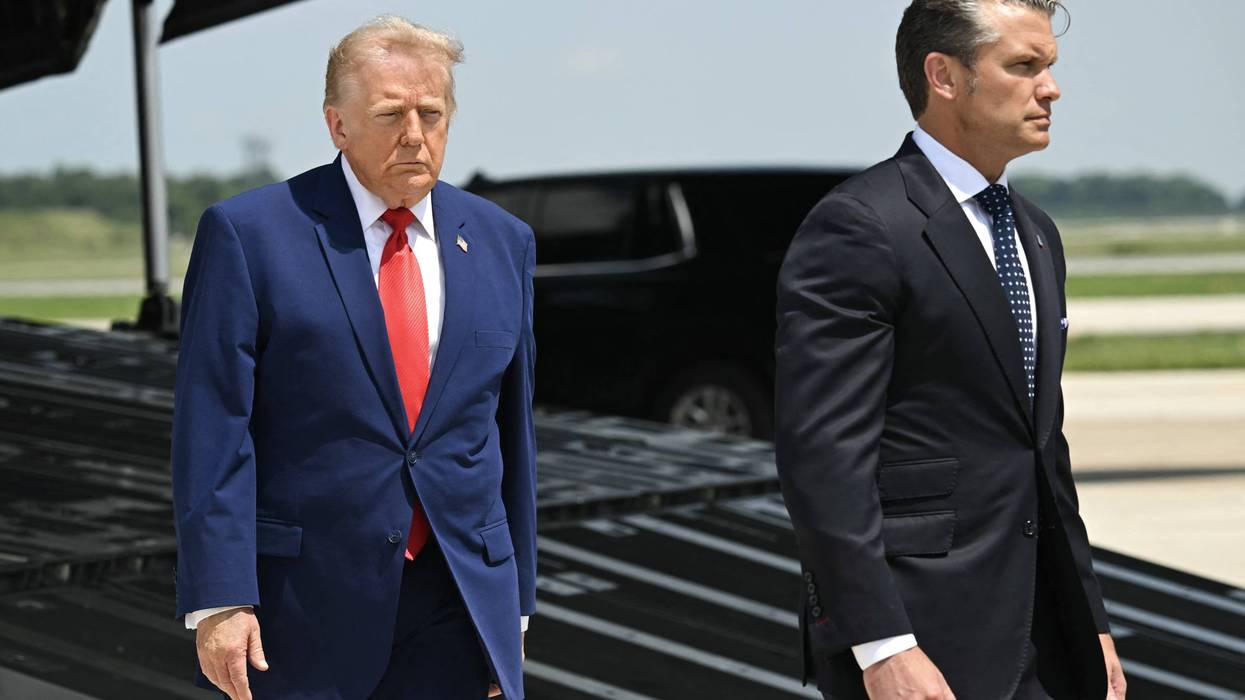
Iran War Trump Said Would Be Quick Has Now Lasted 6 Months With 'No End In Sight'
Trump has "lost the Iran War in every way possible in less than six months," said one critic.
Aug 28, 2026
The illegal war with Iran that President Donald Trump said would be over in a matter of weeks entered its sixth month on Friday, and there is little sign of it wrapping up in the near future.
A Friday report in The Washington Post marking the six-month anniversary of the illegal war noted that Trump's ability to decisively win the conflict declined markedly "after Iranian leaders discovered that they could withstand intense bombardment and slowly degrade the world’s most powerful military with a cheap combination of mines and drones."
The biggest weapon in Iran's arsenal has been its ability to shut down the Strait of Hormuz, a vital shipping lane for petroleum. Since the strait's closure, oil and gas prices have soared, costing US consumers an estimated $71.5 billion more to fill up their cars than they otherwise would have paid.
Trump this week has tried to claim that the strait has actually been reopened, but the Post found that the president's proclamations do not match reality.
"More than 100 ships traversed the Strait of Hormuz on average every day before the war," the Post wrote. "Just five went through on one day this week, according to Kpler, a commodities and shipping tracker."
A Friday report in The Associated Press focused on the White House's announcements this week of new measures to put economic pressure on Iran, which are a sign that the administration no longer thinks it can use military force to force Tehran's hand.
"The turn to using sanctions as the cudgel of choice," wrote the AP, "comes as the administration weighs diminished munitions stockpiles after months of war, sparking concerns that the prolonged conflict could undermine US military readiness in other parts of the globe."
The AP also flagged a shift in rhetoric from Trump, who once promised the war would end quickly but now says he's "not in a hurry" to end the campaign.
Harrison Mann, a former US Defense Intelligence Agency officer, wrote in an analysis published by Zeteo on Thursday that Trump has "lost the Iran War in every way possible in less than six months," which he said would mark "the arrogant, violent end of American dominance in the Middle East."
In fact, Mann argued that Trump lost the Iran War three different ways: The first in his failed attempt to force regime change in Tehran, the second in an aborted campaign to incite an Iranian Kurdish uprising, and finally in his desperate efforts to reopen the Strait of Hormuz.
All of these failures have combined to put Iran in a decisively stronger position than it was in before the war began, Mann wrote.
"After another four months of Trump threats, half-hearted bombing runs, and not one but two US blockades of Iran, Tehran’s military exercises formal authority over at least a third of the ships transiting the strait," he wrote. "Plus, it now regularly shoots at 'unauthorized' ships with impunity."
US Rep. Don Breyer (D-Va.) summed up the failure of Trump's war in a Friday social media post.
"When Trump began his illegal, unpopular war with Iran, he said it would last a week," Breyer wrote. "SIX MONTHS later: The administration has lied about our casualties and the deaths of civilians, the stated objectives haven't been met, Iran has a new economic weapon in the Strait of Hormuz, the region is less stable, our prices are higher, our allies are angry, our adversaries are emboldened, and there's no end in sight."
Keep ReadingShow Less
See More
Most Popular