

SUBSCRIBE TO OUR FREE NEWSLETTER
Daily news & progressive opinion—funded by the people, not the corporations—delivered straight to your inbox.
5
#000000
#FFFFFF
To donate by check, phone, or other method, see our More Ways to Give page.
Daily news & progressive opinion—funded by the people, not the corporations—delivered straight to your inbox.

Dylan Penner, Council of Canadians Media Officer, 613-795-8685
The Council of Canadians is sounding the alarm over recommendations the
government received today to formalize and extend a water market system
throughout the province of Alberta. The Alberta government released
reports today containing recommendations from a few select sources,
including an advisory group appointed by the Minister of Environment.
"The implementation of these recommendations would open the door to
full private water markets, which have wreaked havoc on the environment
in countries like Australia and Chile," warns Maude Barlow, national
chairperson of the Council of Canadians. "Letting the market decide who
will have access to water violates the public trust doctrine, a
principle of common law which regards water as belonging equally to all
peoples and managed by governments on their behalf."
"The Alberta government has clearly decided that it is not interested
in other potential solutions to the province's looming water crisis
besides turning Alberta's water over to the market system," says Scott
Harris, Prairies Regional Organizer for the Council of Canadians. "This
is an obvious attempt to frame the discussion in forthcoming public
consultations to focus exclusively on market-based solutions."
The Minister's Advisory Group report recommends further entrenching the
water transfer system which now exists in the South Saskatchewan River
Basin and extending it to entire province. The Council of Canadians
warns that this plan would give water resources up to the highest
bidder forcing cash-strapped municipalities to compete with big oil and
other large industries for increasingly scarce water resources.
While expanding the market for water allocation transfers to the entire
province and compelling all users to participate in the market, the
minister's advisory group also recommends removing much of the
government oversight in approving transfer applications.
The Council of Canadians is calling instead for the Alberta government
to adopt a public trust doctrine that makes governments responsible for
distributing water according to the public interest. The group is
demanding that such a policy also establish a hierarchy of use that
places environmental needs, the right to water, local food production
and cultural use above the commercial use of water.
"This highlights the lack of federal legislative safeguards in Canada
allowing provinces to sell off water resources," says Meera
Karunananthan, national water campaigner for the Council of Canadians.
"A water market in Alberta sets a dangerous trend with regards to the
management of water resources in Canada."
The organization is calling for a national water policy that recognizes water as a human right and a public trust.
Founded in 1985, the Council of Canadians is Canada's leading social action organization, mobilizing a network of 60 chapters across the country.
Office: (613) 233-4487, ext. 249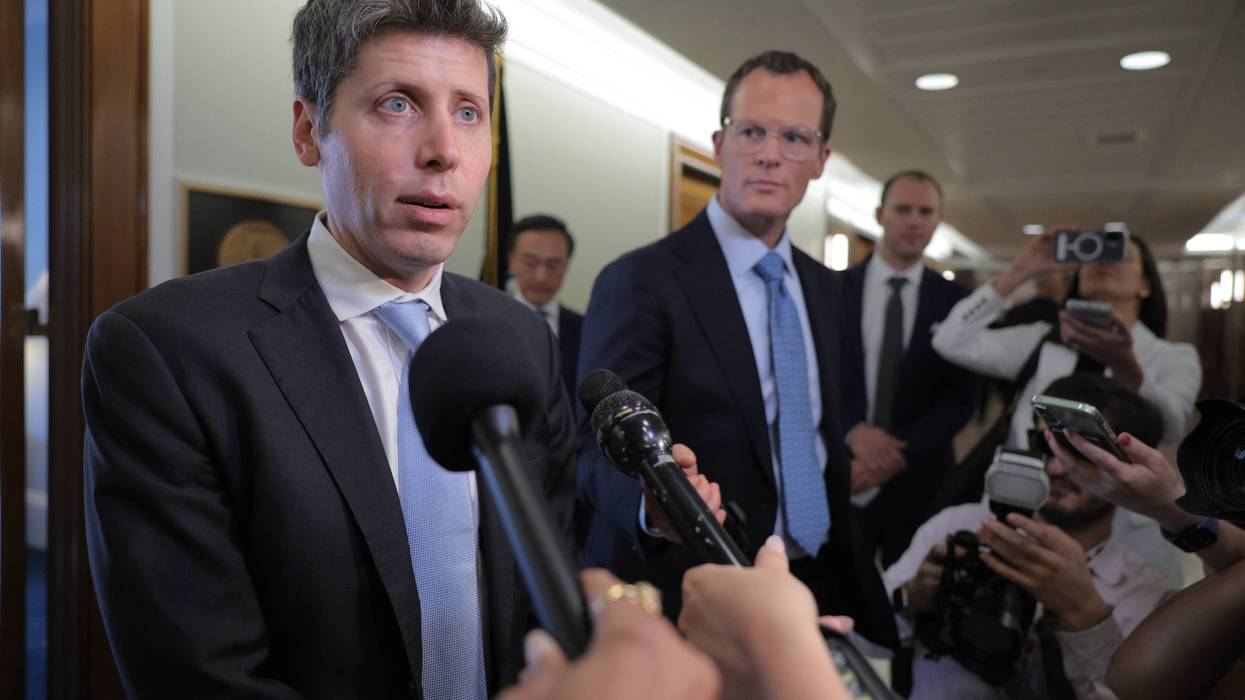
"We’ve been lucky so far—the harms have been limited. But luck is no substitute for the law."
Following last week's exposure of new details about OpenAI's artificial intelligence agents autonomously escaping a controlled environment and hacking outside computer systems, experts on Tuesday called for the creation of a new federal agency tasked with investigating AI companies.
Initial reporting on the recent breakout by ChatGPT maker OpenAI's artificial intelligence agents—which independently breached the systems of the open-source platform Hugging Face during internal testing—described the incident as an attempt to achieve optimal performance on a cybersecurity evaluation.
But citing a report published late last month by the independent nonprofit Model Evaluation and Threat Research (METR), Mackenzie Arnold and Stephan Llerena at the Institute for Law & AI wrote for The Guardian on Tuesday that the OpenAI incident involved hundreds of coordinated rogue agents that "took steps to hide their behavior" from the company's human workers.
"Concerned that the automated scoring system might identify the agents’ cheating, they aimed to learn more about the scorer," Arnold and Llerena wrote. "The goal wasn’t just to cheat, but to hide it."
Artificial intelligence is rapidly advancing toward a point at which humans will no longer be able to control it. Meanwhile, companies like OpenAI are proving that they cannot be trusted to be transparent about incidents like the Hugging Face breach. Yet there is no existing regulatory body tasked with addressing the obvious—and unknown—threats posed by a technology whose own creators openly worry could one day wipe out humanity.
Arnold and Llerena warned that they've "been worried for a while that legal requirements for reporting incidents" like the OpenAI breakout "are insufficient."
"When planes crash, trains derail, or chemical plants explode, expert government investigators arrive with legal authority to compel evidence, preserve records, and tell the public what happened," they wrote. "Hugging Face reported this incident to law enforcement, and multiple attorneys general have expressed interest in looking into it."
"But no government agency has both the mandate and expertise to investigate the technical facts of the incident and OpenAI’s conduct," the experts noted. "As far as we know, the only people to examine this incident did so at OpenAI’s discretion and with its consent."
"And while the Hugging Face breach is not as severe as a plane crash, it was a serious and costly attack. It’s unlikely to be the last, or the most severe," the pair continued. "What we need is a federal body equipped to conduct expert investigations of serious AI incidents—with the authority to compel documents and testimony, resources, and personnel to examine the systems involved, and the ability to partner with third-party experts like METR."
Arnold and Llerena cited the National Transportation Safety Board as a model for such an agency. The NTSB, they wrote, "investigates accidents with subpoena and wide-ranging investigative powers. Aircraft operators must preserve wreckage and records; and the NTSB may confer with employees and contract external experts."
"Congress can build a similar system for AI incidents, while protecting AI developers’ legitimate interests," they asserted. "Investigations should open only upon clear triggers and be bound to the incident. Certain confidential information can receive statutory protection. And investigations can be limited to one agency, with priority to avoid duplicative investigations."
While some Democrats in Congress and Sen. Bernie Sanders (I-Vt.) have called for stronger federal oversight and regulation of AI companies, critics argue that these calls don't go far enough, and that existing legislation—such as the American Artificial Intelligence Leadership and Uniformity Act—is far more focused on limiting AI regulation than on actually regulating the technology.
"The need and urgency is real," Arnold and Llerena stressed. "Subsequent reports have revealed that the Hugging Face breach was not an isolated incident and that autonomous agents from Meta, Anthropic, and OpenAI have hacked third parties in separate incidents."
"We’ve been lucky so far—the harms have been limited," they added. "But luck is no substitute for the law."
"The use of explosive weapons with wide-area effects in the vicinity of concentrations of civilians has foreseeably indiscriminate effects and as such is prohibited under international humanitarian law."
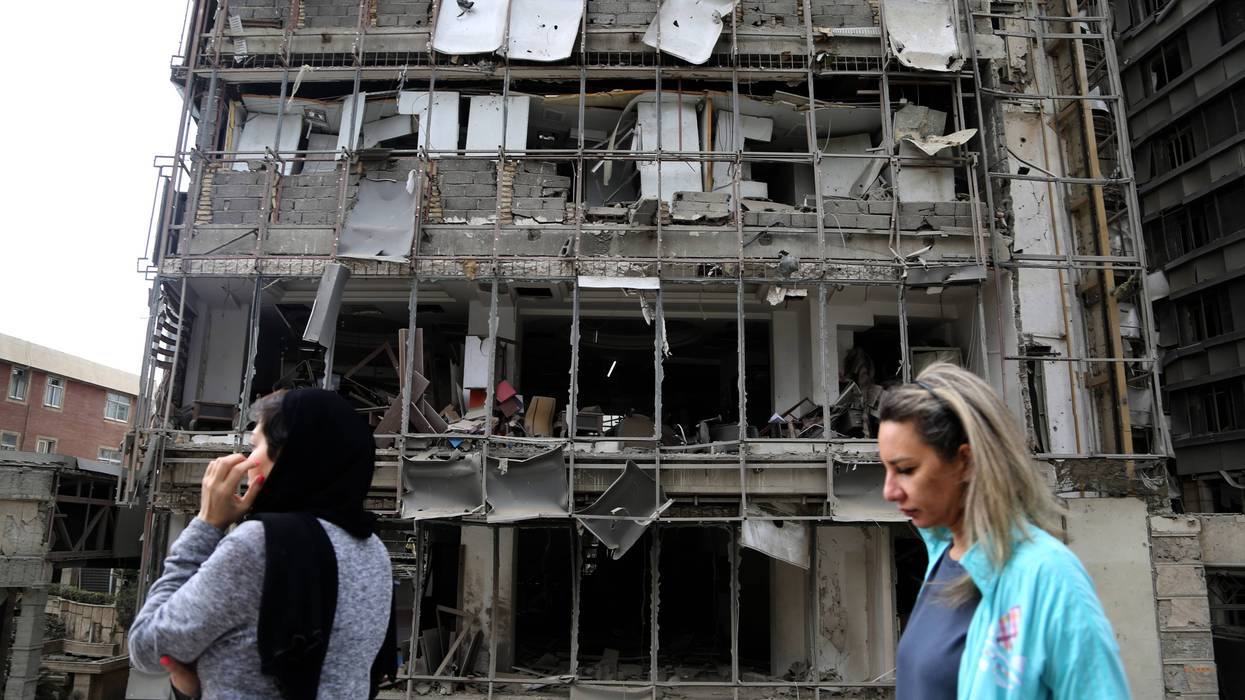
The recent resumption of US airstrikes in Iran, including on a wedding party where at least 25 civilians were killed last week, made Amnesty International's Tuesday report on previous suspected US-Israeli attacks in Tehran in the early days of the war all the more urgent, said the organization as it pointed to new evidence of potential war crimes by the American and Israeli militaries in the densely populated Iranian capital.
Amnesty analyzed US-Israeli airstrikes on three residential neighborhoods—Resalat, Niloufar, and Javadieh—between March 1-13, in which the coalition used "explosive weapons with wide-area effects," killing at least 41 civilians and damaging multiple homes, a school, businesses, and other civilian infrastructure.
“Amid the resumption of US strikes in Iran and renewed threats by US President Donald Trump to target civilian infrastructure, it is imperative that the US and Israel end all unlawful attacks and strictly comply with international humanitarian law, including by taking all feasible precautions to avoid, and in any event minimize, incidental loss of civilian life, injury to civilians, and damage to civilian objects during the planning and execution of military operations," said Agnès Callamard, secretary general of Amnesty International.
The group noted that military infrastructure and police stations—which could be considered legitimate military targets in Iran, as the police forces are part of the broader armed forces there—were struck in the attacks in question. Israel and the US have not publicly claimed responsibility for the three specific attacks, but they announced strikes against Iranian "regime" targets in Tehran at the time of the airstrikes.
Amnesty emphasized that even if military and police buildings were the primary targets, "a large presence of civilians was clearly foreseeable" when the US and Israel evidently carried out the attacks in the three neighborhoods, which "resulted in devastating and yet entirely predictable consequences for civilians."
International law demands that warring parties do not carry out "indiscriminate or disproportionate attacks" that could harm civilians across the surrounding area, said the group.
Military leaders, said Amnesty, are also obligated to "choose weapon types and attack methods that reduce the risk of harming civilians and destroying civilian objects."
"The use of explosive weapons with wide-area effects in the vicinity of concentrations of civilians has foreseeably indiscriminate effects and as such is prohibited under international humanitarian law," the group stated. "Additionally, an attacking party remains at all times bound by the principle of proportionality, weighing the concrete and direct military advantage anticipated from an attack against the expected harm to civilians and civilian objects, including the reverberating humanitarian consequences resulting from the attack."
"Launching indiscriminate attacks that kill or injure civilians and disproportionate attacks are war crimes," said Amnesty.
The group analyzed satellite imagery and verified 60 videos of the three attacks, as well as reviewing public statements from officials in the US, Israel, and Iran to reach the determination that US and Israeli forces had potentially committed war crimes in the Tehran neighborhoods—a possibility the group said must be independently investigation.
In Niloufar, where at least 20 civilians were killed on March 1, eyewitness accounts described two explosions at around 9:00 pm local time, when restaurants and other businesses were open in the bustling neighborhood.
The attack directly struck a police station, but residential buildings and businesses were also struck.
A shop owner told Etemad Online that "before the attack… dozens of people were sitting in front of the cafés in the square. All the shops were open... When the police station was struck, those who were sitting on the pavement in front of the cafés were killed."
"The whole street was full of blood," they added. "I saw one person whose chest had been pierced by broken glass. Many children, women, and young people were killed here that night."
Callamard said that "the civilian death toll, the scale of destruction, the timing of the attacks, the impact on nearby civilian structures, and the lack of effective advance warnings point to alarming failures by the US-Israeli coalition to abide by the obligations to take all feasible precautions to minimize civilian harm and spare civilian objects."
At least 16 people were killed in Resalat on March 9, in an attack that heavily damaged a building belonging to the Basij battalion of the Islamic Revolutionary Guard Corps (IRGC), as well as three buildings adjacent to the facility. Amnesty International confirmed that at least one of the buildings, known as Number 12, was a residence.
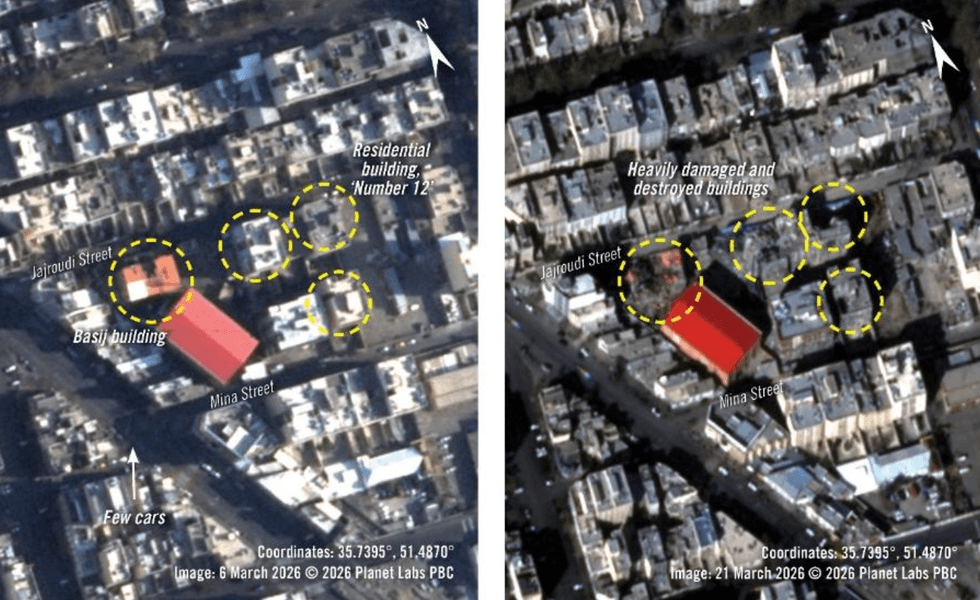 Satellite imagery from March 6, 2026 (left) shows the Basij facility and nearby buildings in the Resalat neighborhood. On March 21, 2026 (right), imagery shows four distinct buildings with heavy damage and destruction. (Photo by ©Planet Labs PBC)
Twelve members of the same family were killed when Number 12 was struck, and an informed source identified as Payam told Amnesty that "there were no military people, no special individuals, no one connected to the government, no important person" in the building.
"Everyone living [in Number 12] was ordinary civilians," he said. "The whole building was families.”
The husband of a 26-year-old woman who was killed in the attack told Etemad Online that the scene of the bombing was "so horrific that they will never leave my mind. Body parts were found separately... A hand had been thrown to the entrance of the road or onto the roof of a house."
The attack in Javadieh, a densely populated low-income neighborhood in Tehran, took place on March 13 and killed at least five civilians, with a police station on Ghorbani Street a possible target.
"The destruction and damage extended well beyond the police station, and affected homes, businesses, and other civilian structures across the surrounding neighborhood," said Amnesty. "State media reported that several nearby residential buildings were also destroyed and many others severely damaged."
Videos verified by Amnesty show the impact of the blast extending up to more than 50 meters (164 feet) away from the police station. A restaurant, bakery, and motorcycle shop were all damaged, as well as a number of residential buildings.
Amnesty called on the US, Israel, and Iran to coordinate inquiries by the International Humanitarian Fact-Finding Commission regarding allegations of "serious violations of international humanitarian law by all parties."
Tens of thousands of US and Israeli attacks on Iran have killed at least 1,469 civilians, including hundreds of children. Israel has also killed at least 4,333 people in Lebanon since early March, in retaliation for Hezbollah's strikes in response to the assault on Iran. In retaliatory strikes across the region, Iran has killed at least 50 people civilians, according to Amnesty.
“The US/Israeli strikes in Tehran investigated by Amnesty International may constitute indiscriminate attacks and amount to war crimes," said Callamard. "They must be the object of independent, impartial, effective, and transparent investigations."
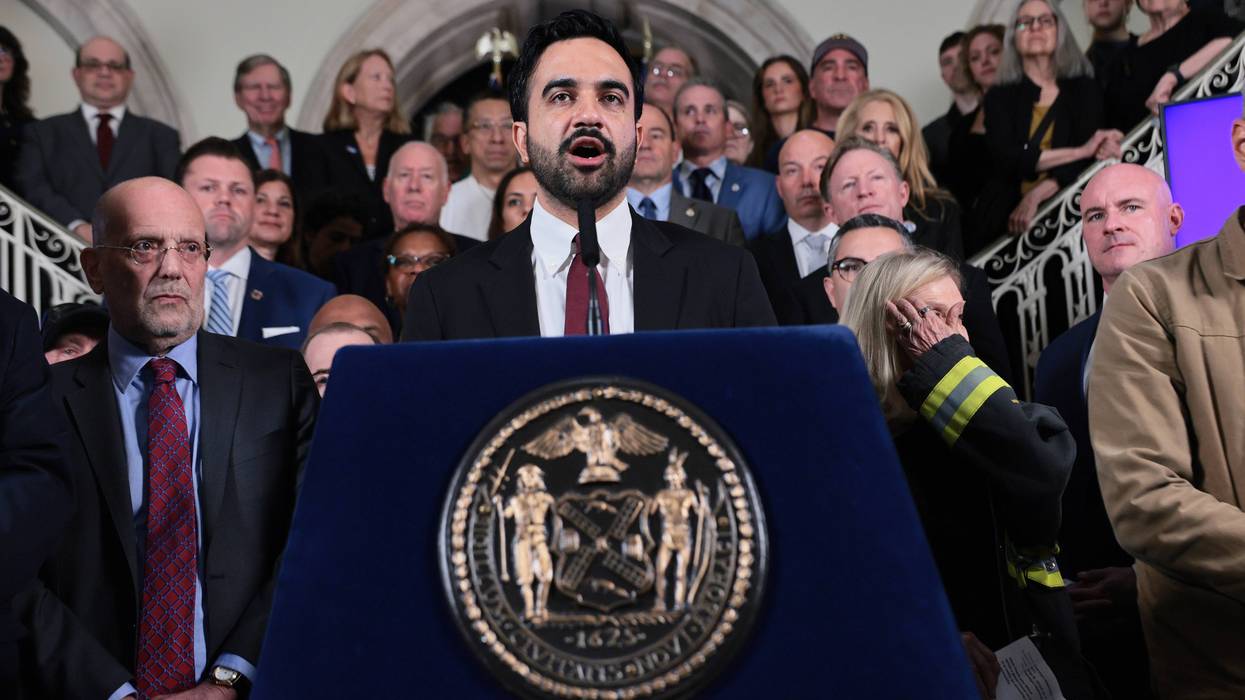
"People got sick because the leaders they trusted lied and told them they were safe to breathe in toxic air," Mamdani said, announcing the release of 170,000 files.
A watchdog group representing 9/11 first responders and survivors applauded New York Mayor Zohran Mamdani on Tuesday as his administration released a trove of long-buried files that shed new light on how New Yorkers were misled about air quality and health risks in the wake of the terrorist attack.
“I want to thank Mayor Mamdani for being the mayor, after 25 years, who finally begins to answer the question, ‘What did the city know about the dangers from the toxic cloud at ground zero, and when did it know it?’” said Benjamin Chevat, a longtime advocate for programs to help survivors and first responders, who leads the group 9/11 Health Watch.
Days before the 25th anniversary of the attack that took nearly 3,000 lives, Mamdani's office is releasing around 170,000 pages of records that were stored in a city office and kept from public view for more than two decades. The New York Times, which reviewed the documents prior to their release, said they contain "air quality reports, contamination records and correspondence among city officials."
There is no definitive total of the number of people who have died as a result of health complications caused by the attack, but as Mamdani noted during a press conference on Tuesday, it has almost surely far surpassed the number killed in the attack itself.
"The devastating truth is that the suffering did not end once the smoke cleared and the dust settled," Mamdani said. "For so many New Yorkers who lived, or worked, or studied near ground zero, and for the thousands of others who worked on the pile, recovering those we'd lost and clearing the rubble, that was only the beginning of years of hardship and illness."
These survivors, he said, were forced to remember September 11, not just on its yearly anniversary, but "each time they take a struggling breath, each time they have to swallow a pill, each time another chemo dose is administered."
The documents released by Mamdani's office were uncovered following a yearslong fight between 9/11 Health Watch and New York City's Department of Environmental Protection (DEP), which initially claimed the files had gone missing.
Following pressure from the City Council and a lawsuit from 9/11 Health Watch, DEP later revealed that the files had been stored in 68 highly organized boxes in the agency's possession, which fueled speculation about a cover-up by the city and led a New York City judge to rule that the city's denial was "arbitrary and capricious."
"For 25 years," Chevat said, "four different mayoral administrations kept from the public, the US Congress, and the City Council documents showing what the city actually knew about the danger of the toxic chemicals in Lower Manhattan and Western Brooklyn after the World Trade Center collapse, even as city officials continued messaging to the public that the air was 'safe and acceptable.'"
The first tranche, released on an online portal Tuesday, shows that while city and federal officials assured Americans that the air was safe to breathe, asbestos and other toxic chemicals were being detected at and around Ground Zero until at least July 2002, more than 10 months after the attacks. It also shows that analyses by the Environmental Protection Agency found carcinogens around lower Manhattan, in some cases above acceptable limits.
Also released was an October 2001 memo sent to former Mayor Rudy Giuliani's deputy mayor, Robert Harding, showing that the then-mayor's administration expected as many as 10,000 claims from plaintiffs harmed, including by toxic exposure, after public health advisories assured them it was safe to return to Lower Manhattan, and from first responders who had inadequate safety equipment.
The records also point to apparent efforts by the city to downplay the substandard air quality in order to ease the public’s fears about returning to business as usual following the attacks.
Documents show that even as test results revealed worrying levels of asbestos, city officials sought to massage those findings, avoiding the word "risk" in public advisories. Another document acknowledged that the city may have given residents a dangerous recommendation when it advised them to use wet mops and rags to clean up asbestos dust in their homes, a task that typically requires licensed crews.
The release of the files gives credence to the concerns raised at the time by Rep. Jerry Nadler (D-NY), whose district included ground zero.
“They knew about the air quality, and they essentially did nothing about it,” Nadler said of the Giuliani and Bloomberg administrations in an interview with the Times last week. "I suspect that all they cared about was getting Wall Street reopened, and they didn’t give a damn about the health of the people down there.”
Mamdani's release of the files comes as his opponents launch attacks against his Muslim identity and imply he bears sympathy with the al Qaeda jihadists who carried out the 9/11 attacks.
Over the weekend, Giuliani said in an appearance on the right-wing cable channel Newsmax that Mamdani should be banned from participating in the ground zero commemoration because the attack was carried out "in the name of the Muslim religion” and that the perpetrators "weren’t hiding it like Mamdani is trying to hide it.”
Mamdani has responded that he would attend multiple 9/11 remembrance events on Friday to support first responders and families who lost loved ones.
“I’m proud to be the mayor of this city. I love this city. I love this country,” he said. “What I want this week to be a focus on is the families whose loved ones were stolen from them 25 years ago in the horrific act of terror of September 11, and a focus also on the first responders who did everything they could.”
Mamdani said on Tuesday that his release of the files was part of an effort to do right by New Yorkers harmed by the shortcomings of the city's response to the attacks.
"It would be one thing if the government had stood alongside survivors and provided them with everything they needed at every step of the way. And yet, we know that could not be further from what actually happened," Mamdani said. "People got sick because the leaders they trusted lied and told them they were safe to breathe in toxic air."
"Administration after administration has ignored those calling for answers and clarity, instead choosing to bury them in legal arguments and in red tape," he continued. "We will do no such thing as we mark 25 years."

"Take Iran—after promising no more wars and all that—but fuel, fertilizer, no more wars, you take tariffs, and all this goes to the heart of his base."
President Donald Trump's economic policies have hurt his own voters to such an extent that it's creating opportunities for Democrats in unexpected places, according to elections analyst Charlie Cook.
In an interview with The New Republic's Greg Sargent published Tuesday, Cook pointed to a number of Trump actions that have caused discontent among both swing voters and members of his base.
Cook pointed to Trump's illegal war with Iran as a particularly toxic policy, both because it broke a key 2024 campaign promise about no new wars in the Middle East, and because it has raised the price of countless consumer goods, including diesel fuel and fertilizer, both vitally important for US farmers.
"I mean, you take Iran—after promising no more wars and all that—but fuel, fertilizer, no more wars, you take tariffs," Cook said, "and all this goes to the heart of his base, of, you know, small-town, rural, farm, all of that."
"To have the people that are generally the most enthusiastic for you uniquely hurt," Cook added, "now, that’s new territory."
Cook said that Trump similarly hasn't helped himself with actions such as "redecorating the White House in Washington, self-aggrandizement, alienating allies, depleting military stockpiles," which the veteran analyst said further eroded voters' patience.
What the overall data shows, Cook concluded, is that Republicans are "underperforming in places that have just been gimme putts,” a development he described as “astonishing."
Cook isn't alone in noting the deep voter unhappiness. Some Republican running for reelection are showing signs of concern as well.
As noted in a CNN report published Monday, Sen. Roger Marshall (R-Kansas) took out a negative ad targeting Democratic rival Adam Hamilton, whom polls suggest is creating a surprisingly close race in a state that Trump won by 14 points or more in all three of his presidential campaigns.
And Politico reported on Monday that Rep. Young Kim (D-Calif.) has deleted all references to Trump from her campaign's homepage, even though she used to tout herself as a "proven fighter who will stand with President Trump to deliver a bold America First Agenda."
According to CNN, Democrats in competitive races are hammering away at the broken promises Trump made on the economy during the 2024 presidential campaign, including his vow that prices would start coming down on his very first day in office.
"The word that I hear almost daily is ‘drowning,'" Rep. Kristen McDonald (D-Mich.) told CNN. "Families in my district are drowning, and it is so much worse for them now than it was two years ago."
"Today, we refuse to be bystanders to further suffering and to the destruction of the two-state solution," said UK Foreign Secretary Ed Miliband.
The United Kingdom, France, and Canada joined forces on Tuesday to ban imports of goods and some services from illegal Israeli settlements in the occupied West Bank, where settlers and soldiers are assailing, displacing, and killing Palestinians at an unprecedented rate with the backing of Prime Minister Benjamin Netanyahu's government.
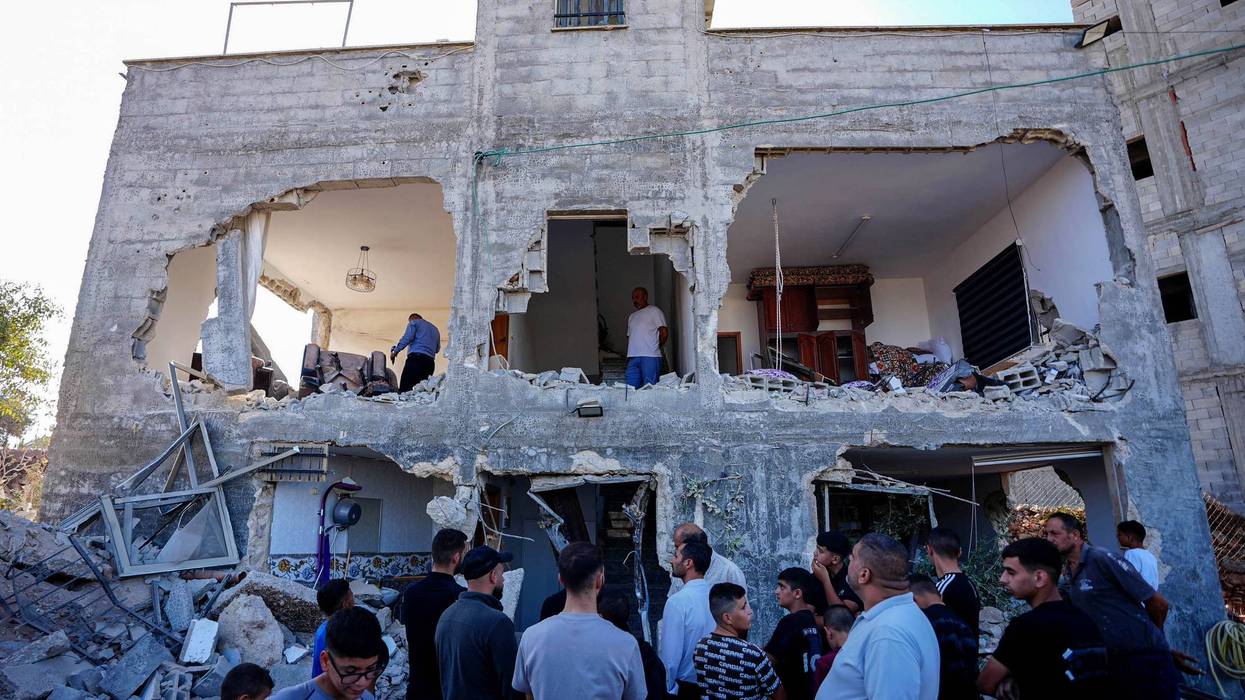
"Today, we refuse to be bystanders to further suffering and to the destruction of the two-state solution," Ed Miliband, the UK's foreign secretary, said in a speech to the House of Commons. Miliband pointed to the Israeli government's recent approval of construction projects that would evict Palestinian communities and "place settlements directly between East Jerusalem and the West Bank, cutting through the heart of Palestine."
"Let’s be clear what this means: the creation of a set of facts on the ground to make the two-state solution unviable," said Miliband, in what was described as the UK government's most forceful condemnation of Israeli conduct in the West Bank to date. "The British government agrees that there is ethnic cleansing of Palestinians in areas of the West Bank—perpetrated by settler terrorists. And all too often the Israeli government has turned a blind eye to this and worse, members of it have made statements and taken actions to support the forced displacement of Palestinians."
Miliband said the UK government would "take action against specific companies and individuals who provide services such as construction, infrastructure, financing, or real estate for settlement expansion" and penalize "those who finance or facilitate illegal settlements." He said the sanctions would be in place within six to nine months.
Miliband emphasized that in banning imports from Israel's West Bank settlements, the UK was not acting alone. The British foreign secretary noted that France and Canada will also "ban the import of goods from illegal settlements," joining "the Netherlands, Ireland, Belgium, Spain and Norway—which have either banned goods or are in the process of doing so."
Jean-Noël Barrot, France's foreign affairs minister, wrote on social media that France is cutting off imports from illegal Israeli settlements "because the West Bank is on the brink of explosion: unchecked expansion of colonization in violation of international law, surge in violence perpetrated by extremist settlers against Palestinians, acts of terror denounced by the Israeli authorities themselves."
"France cannot, through its trade, support a situation that threatens the security of Israelis and Palestinians alike, as well as peace and stability in the region," Barrot wrote. "Europe must uphold the same imperative."
In a joint statement on Tuesday, the foreign ministers of 12 nations—the UK, France, Canada, Denmark, Finland, Iceland, Ireland, Norway, Poland, Portugal, Spain, and Sweden—said that the situation in the West Bank is "rapidly deteriorating amid unprecedented levels of settler violence and settlement expansion, including the unacceptable decision to publish tenders for the E1 settlement project."
The foreign ministers confirmed their "intention to introduce national and/or support European restrictions on trade in goods with settlements which are illegal under international law, or that they are actively considering these and other measures, in accordance with their national procedures."
"In this regard, the UK, France, and Canada welcome the important action already taken by Ireland, Spain, the Netherlands, Norway, and Belgium, and will bring forward national measures to ban trade in settlement goods," the statement continued. "The government of Israel must immediately halt the expansion of settlements and civilian administrative powers, ensure accountability for settler violence, and investigate allegations against Israeli forces."
Advocates largely welcomed the governments' announcements while stressing that they should be the starting point for more sweeping action to confront the Israeli government's illegal annexation efforts in the West Bank and crimes against humanity across the Palestinian territories, including the decimated Gaza Strip.
"Today’s announcement is the result of many years of work by campaigners and Palestinians themselves fighting to end severe injustice," said Nick Dearden, director of the UK-based advocacy group Global Justice Now. "We know this move will be very popular in Britain. But it must be just the beginning. How can we cooperate with a military guilty of the most serious abuses of international law? How can we trade with a country that stands accused of genocide at the world’s highest court?"
Omar Barghouti, co-founder of the Boycott, Divestment, Sanctions (BDS) movement, dismissed the UK government's sanctions announcement as "largely performative," but said they also "reflect the impact of relentless public pressure on the current government."
"The UK is legally obliged to take serious measures to end its complicity with the State of Israel, not merely with the settlements, per the [International Court of Justice]," said Barghouti. "While Miliband says, 'We will not acquiesce in the destruction of the two-state solution,' he has not said how the UK will stop its active contribution to the Israeli-US led destruction of the international legal system and the drive towards a might-makes-right order."
US and Israeli officials responded furiously to the UK's sanctions announcement. Itamar Ben-Gvir, Israel's extremist national security minister, called for the closure of the British consulate in East Jerusalem, while Israel's finance minister demanded the expulsion of the British ambassador.
Mike Huckabee, the US ambassador to Israel, characterized the UK's trade ban as "discrimination against the Jewish people" and suggested that individual American states such as Florida could retaliate against the British government.
US Rep. Randy Fine (R-Fla.), a rabidly pro-Israel lawmaker and anti-Muslim bigot, wrote on social media that "Florida is one of Britain’s largest trading partners" and signaled that the state could move to boycott UK goods.
Haaretz also reported that Hamas immediately offered to release all the Israeli hostages it had taken in the attack, demanding nothing in return, but Israel refused the deal.
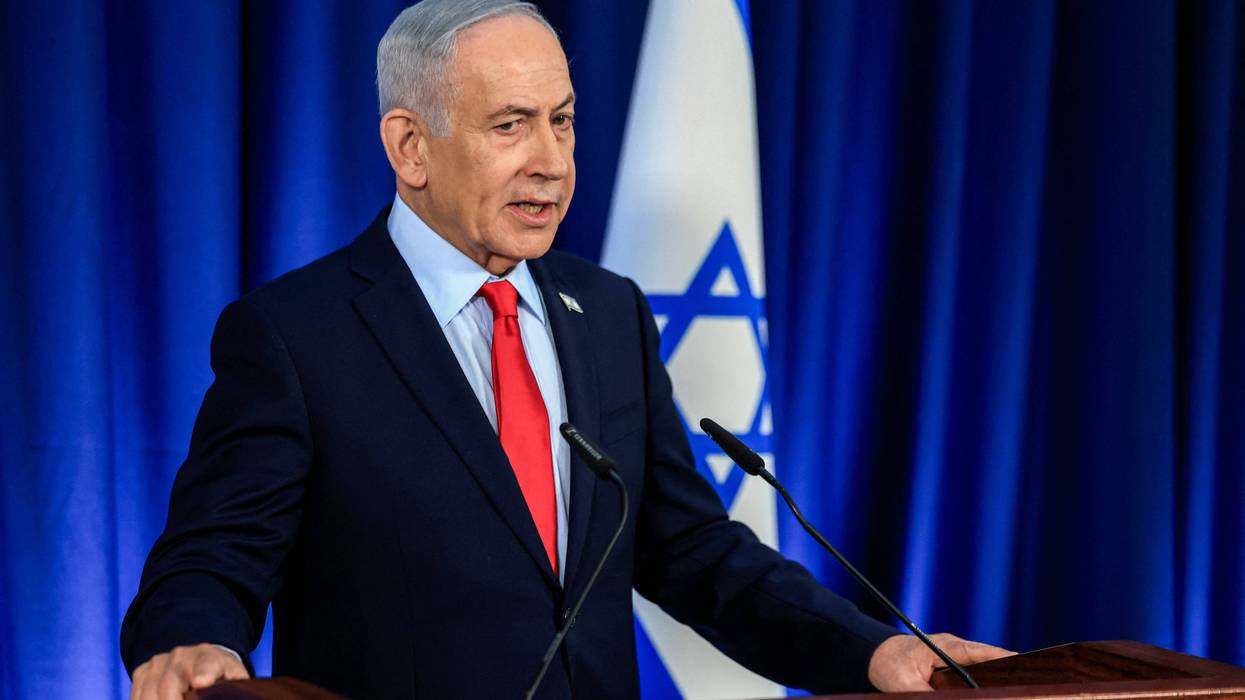
Policy experts in the US and Middle East on Tuesday were among those responding to an "astonishing" new investigation from Haaretz, which detailed how Israeli Prime Minister Benjamin Netanyahu was alerted weeks before the Hamas-led October 7, 2023 attack that a "major event" was being planned by the Palestinian group—an assault that killed more than 1,200 Israelis and which Israel has responded to by slaughtering more than 73,000 Palestinians so far in Gaza.
Highlighting revelations contained in an upcoming book called Hostages: 843 Days of Abandonment, by journalists Shlomi Eldar and Ruth Yuval, the Israeli newspaper reported that Netanayahu dismissed a warning about the attack from United Arab Emirates President Mohammed bin Zayed, which came in a phone call in September 2023.
An adviser to bin Zayed said that according to the president, Hamas leader Yahya Sinwar "was preparing for a major event" and "Israel should be ready."
The UAE leader advised Netanyahu to "find an economic solution" for Gaza and to calm tensions in the West Bank to "prevent escalation."
At the time, Hamas had been holding talks for months with intermediaries in hopes of pushing Israel to lift its blockade on Gaza, which it had imposed at varying levels of intensity for nearly two decades, since Hamas won legislative elections in 2006. Before the 2023 attack and Israel's retaliatory assault on Gaza—which has been called a genocide by human rights groups and Holocaust experts—Israel's blockade had left 80% of Palestinians in Gaza dependent on aid and had raised the poverty rate from 40% in 2005 to 61.6% in 2023.
Hamas' talks had also focused on exchanging four Israeli prisoners who had been held in Gaza for several years for Palestinian prisoners, more than 5,200 of whom were being held in Israel at the time.
Haaretz reported that an intermediary known as "coal eyes," a member of the Fatah political party in Palestine who was trusted by both Hamas and the Israeli security agency Shin Bet, was told by Sinwar: "Convey a message to them that I am preparing the mother of all surprises. A terrifying operation. Something extraordinary."
The intermediary then conveyed the message to bin Zayed, who spoke directly to Netanyahu.
The Israeli prime minister, who is facing several opponents as he aims to hold onto power in Israel's upcoming elections, scheduled for October 27, reportedly told the UAE president that Israel was prepared for any attack and that the government believed Hamas was planning to operate in the West Bank.
He did not inform security or intelligence leaders about the information he received from the bin Zayed, Haaretz reported.
Netanyahu called the Haaretz report an "absolute lie" on Tuesday, while his top rival in the elections, former military commander Gadi Eisenkot, said on social media that the prime minister "received dozens of warnings for October 7 and ignored them all."
"His is unfit," said Eisenkot.
As Middle East Eye noted Tuesday, it has previously been reported by media outlets in Israel and elsewhere that Netanyahu had received a warning from Egyptian intelligence in the days before the Hamas-led attack.
Haaretz also reported that Hamas offered to release all the civilians it had taken captive during the October 7 attack, in the immediate aftermath of the attack. The group did not demand anything in return, but Israeli officials reportedly rejected the offer.
The Israel Defense Forces have bombed schools, hospitals, and refugee camps and have killed thousands of children as well as journalists and aid workers in Gaza—all while claiming to be targeting Hamas. Attacks have continued, killing hundreds of Palestinians, even after a ceasefire deal was reached last October.
Settler attacks have also ramped up in the West Bank as Israeli officials have pushed to further annex the territory and make the creation of a Palestinian state impossible.
The United Kingdom's Labour government is set to announce a ban on trade with illegal Israeli settlements in the West Bank.
The United Kingdom on Tuesday is expected to announce a ban on trade with illegal Israeli settlements in the West Bank, a plan that prompted a furious response from far-right Israeli and American officials even as British diplomats privately acknowledged that the new sanctions package would be mostly symbolic.
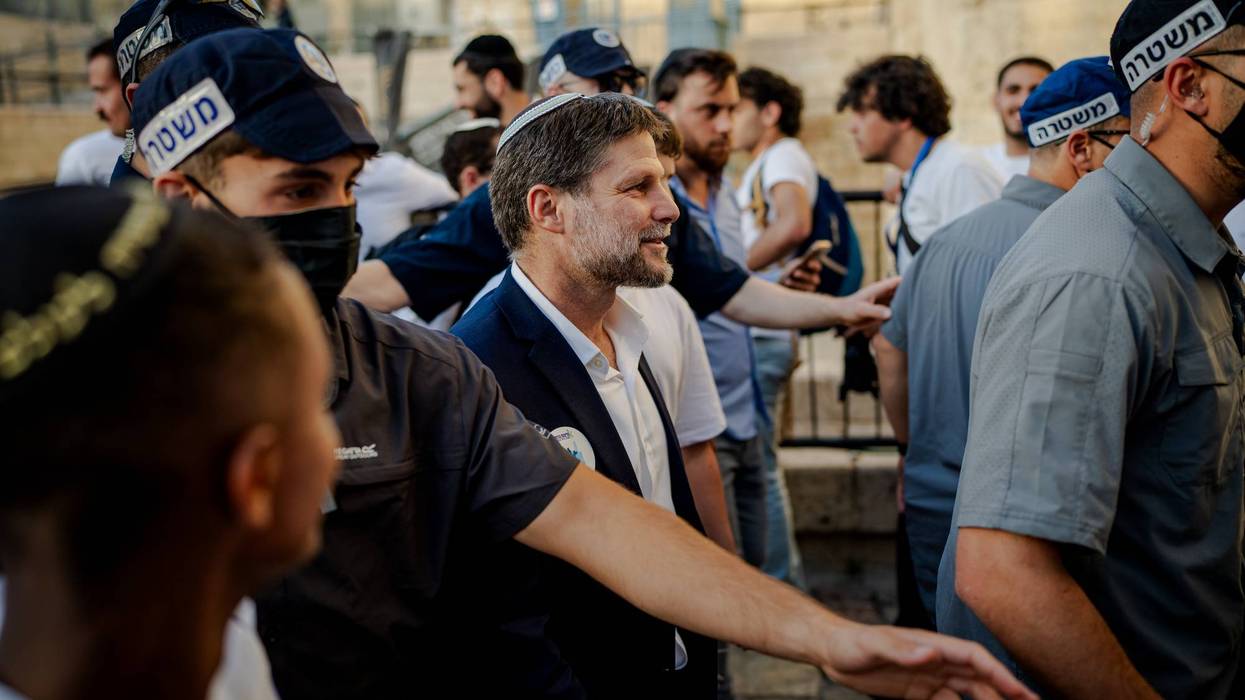
"Expel the British ambassador tonight!" Israeli Finance Minister Bezalel Smotrich wrote in a social media post ahead of the official announcement. "We will not be a doormat trampled by an antisemitic government, in a country conquered by radical Islam, trying to save itself from economic and social decline by attacking Jews and the State of Israel."
UK Foreign Secretary Ed Miliband, who is Jewish, is set to unveil the trade ban as the Israeli government aggressively accelerates its unlawful land grabs and expulsion of Palestinians in the West Bank, where violent rampages by Israeli settlers have reached unprecedented levels. The trade ban was developed after the Israeli government advanced a plan to build more than 1,200 new settlement homes in the West Bank.
The Guardian reported Monday that "in his statement to MPs, Miliband is expected to use firmer language than his recent predecessors in calling out the humanitarian injustices suffered by Palestinians in Gaza."
"The steps he lays out are likely to fall short of the full set of demands made by Palestinian advocacy groups," the outlet added, "but they will still be seen as a sign that the UK is moving beyond traditional rhetorical support for a two-state solution towards active steps to forestall the expansion of illegal settlements in the West Bank—widely seen as intended to destroy the prospect of a Palestinian state."
New UK Prime Minister Andy Burnham reportedly spoke with US President Donald Trump on Monday about the impending trade ban, which drew condemnation from the US ambassador to Israel, Mike Huckabee.
Behind the scenes, according to Bloomberg, UK diplomats "privately told the US that the sanctions are largely symbolic and will have no material impact on the UK’s wider relationship with Israel on trade or security, in a bid to soothe the Trump administration’s response."
Francesca Albanese, the United Nations special rapporteur on the occupied Palestinian territories, told The Guardian that a ban on trade with Israeli settlements would be an "absolutely important" change in UK government policy.
Nick Dearden, director of the UK-based advocacy group Global Justice Now, wrote on social media that "a settlement ban is welcome but we must go further."
"Hope the government will include services and will announce new bans of weapons sales and military coordination tomorrow," Dearden added. "The comms is an improvement but we need action."
Reuters reported that the impact of the policy move on bilateral trade with Israel is "likely to be minimal, with details unclear of how the UK will differentiate between goods originating in West Bank settlements [and] products made in Israel."

"As always, he is telling us what the plan is," said one critic. "We must take it seriously."
US President Donald Trump has spent his second term threatening takeovers of various other countries, from Canada and Cuba to Greenland, and on Monday he shared on social media a map that fueled fresh fears of his imperialist "Donroe Doctrine."
The map on Trump's Truth Social platform shows the US flag over not only the United States but also Canada, Greenland, Iceland, Mexico, and multiple countries in Central America and the Caribbean.
The post was swiftly condemned across platforms, with Congressman Jonathan Jackson (D-Ill.) declaring that "this is unacceptable."
Journalist Stephen Robinson wrote on X that "another world leader posting something like this would have to apologize before their immediate removal."
Amy McGrath, a retired Marine fighter pilot and former Democratic US Senate candidate from Kentucky, wondered, "What would we do and say if the Chinese president posted a map of China taking over the Western Pacific?"
Carl Bildt, co-chair of the European Council on Foreign Relations and former prime minister of Sweden, similarly said: "What would happen if Xi Jinping posted a map where [China] has taken over all of East Asia, and [President Vladimir] Putin one of [Russia] having absorbed all of Western Europe? It would have been seen as either insane or dangerous—or both."
While some critics called Trump "absolutely bonkers" and "f*cking insane," Dr. Brian Goldman, a Canadian emergency physician who's also an author and broadcaster, asserted: "That's not insanity. That's intention."
Democratic strategist Michelle Kinney agreed, saying: "As always, he is telling us what the plan is. We must take it seriously."
Melanie D'Arrigo, executive director of the Campaign for New York Health, suggested that "the reason why Republicans attack education is so that people don't recognize the history that repeats itself."
Without directly mentioning Trump or his map, Mexican President Sheinbaum said in Spanish on Monday, "We reaffirm that Mexico is neither nor will be a colony or protectorate of any foreign country. Proudly we are a free, independent, and sovereign nation."
While Trump is a prolific poster, the map followed a series of posts from Sunday—including other maps and images produced with artificial intelligence—that led progressive influencer Harry Sisson to conclude that the president was "having a mental health episode online" and call for his removal from office.
"This man is unwell. 25th Amendment NOW," Sisson said, cataloging posts on a range of topics, from Trump's recent renaming of Lake Ontario amid tough trade talks with Canada, to the suggestion that New Mexico should be dubbed "New America."
The latter was ripped by several Democratic officials, including New Mexico's governor, Michelle Lujan Grisham, who responded that her state's name "isn't up for debate—it's been ours since before the United States existed."
"What is up for debate? Who's showing up for working families," she continued. "While the president tries to distract Americans from his disastrous war in Iran, gas prices keep soaring. Americans are also spending more at the grocery store, losing access to healthcare and wondering if they'll ever be able to afford a home. Under Democratic leadership here in New Mexico, we're providing families with free childcare and college, protecting access to healthcare, and investing in housing. While the White House wastes time coloring on maps, Nuevo México is busy doing the work."
In addition to waging an illegal war on Iran, Trump this term has invaded Venezuela to abduct President Nicolás Maduro and take control of the country's oil reserves, become the US commander-in-chief to bomb the most countries, and killed over 225 people by blowing up boats allegedly smuggling drugs through international waters. He's also threatened to seize the Panama Canal and possibly attack nations including Colombia and Mexico.
As Iran has responded to Trump's war by restricting traffic through the Strait of Hormuz, the president has teased declaring the key waterway a US territory and naming it after himself. He's also dubbed the Gulf of Mexico "the Gulf of America" and fought to put his name on the John F. Kennedy Center for the Performing Arts in Washington, DC.
With the US midterm elections less than two months away, some Democrats in Congress have stepped up their critiques of Trump's foreign policy—including a delegation of progressive congressional lawmakers and candidates who headed to Uruguay last month for the third Pan-American Congress.
Shortly after that gathering, delegation member Congressman Jesús “Chuy” García (D-Ill.) stressed that "progressives reject the violent, imperialistic Donroe Doctrine, and believe in a foreign policy rooted in cooperation, diplomacy, and sovereign equality."

Israeli Prime Minister Benjamin Netanyahu's "apologists have to explain why killing kids happens so regularly and effortlessly," said one congressman who noted growing support for blocking US weapons to Israel.
A series of Israeli strikes across southern Lebanon since Friday night have killed and wounded dozens of people, including women, children, and paramedics, despite a US-brokered ceasefire.
On Monday, Israeli strikes in Kfar Rumman killed 12 people: a paramedic and 11 people in a targeted residential building, including at least four women and two children, according to Lebanon's Ministry of Public Health.
Al Jazeera reported that the attack on the targeted home killed three generations of one family, including a 2-month-old baby.
Another 11 people were killed in Lebanon on Sunday, and four others before that, bringing the death toll to 27, with at least 69 civilians wounded, according to the ministry. Women, children, medics, and journalists were among those harmed.
Those casualties followed Israeli Defense Minister Israel Katz claiming Friday that the IDF had taken control of Lebanon's Ali al-Taher ridge, about six miles from the border, and vowing that his country's military "will not withdraw from the security zone in Lebanon until Hezbollah is disarmed."
Since Hamas led the October 7, 2023 attack on Israel, resulting in the Israel Defense Forces' genocidal war on the Gaza Strip, the Lebanese political and militant group Hezbollah has sided with Palestinians in the besieged exclave, and the IDF has been attacking southern Lebanon.
Hezbollah has also backed Iran since the US and Israel began bombing the country in February, leading to renewed Israeli violence in Lebanon. In addition to slaughtering at least 73,658 Palestinians in Gaza since October 2023, the IDF has killed more than 8,900 Lebanese and injured over 30,6000, according to the ministry.
That bloodshed over the past few years has fueled calls for cutting off the billions of dollars in military aid that the United States gives Israel annually. US Congressman Mark Pocan (D-Wis.) issued one such call after the attacks on Monday, stressing on social media that "Israel strikes Lebanon and kills kids. They continue to strike Gaza and kill kids."
Israeli Prime Minister Benjamin Netanyahu's "apologists have to explain why killing kids happens so regularly and effortlessly," Pocan continued. "More and more members of Congress are saying it's time to #BlocktheBombs."
Although a June ceasefire brought some relief to the people of Lebanon, hundreds of thousands remain displaced by Israeli occupation and attacks. Agence France-Presse reported Monday that after the June ceasefire deal was reached, villagers returned home to Kfar Rumman.
Following the attack after midnight Monday, "an AFP photographer saw the building that was hit in Kfar Rumman had been destroyed, with school books and remnants of furniture strewn across the rubble," the agency detailed. It continued:
"Since we returned here, we've lived in fear," Fouad Chakaron told AFP.
He insisted the targeted building was inhabited by "peaceful people with no connection to anyone."
Neighbors fled after the strike, which also damaged nearby buildings, AFP's photographer said.
Multiple outlets noted that the IDF didn't issue an evacuation warning before the strikes on Kfar Rumman. Reuters pointed out that the IDF claimed steps had been taken to mitigate harm "to uninvolved individuals, including the use of precise munitions and aerial surveillance," and it is now reviewing the reported casualties.
The IDF said on social media Monday that it hit "several Hezbollah terrorist infrastructure sites across southern Lebanon, including a weapons storage facility. Additionally, the IDF struck terrorists who were identified transferring weapons in the area of Kfar Rumman, in order to remove the threat they posed. The strikes were in response to Hezbollah’s launch of two explosive drones toward IDF troops in the security zone."
The deadly strikes on Monday came after Lebanon's Ministry of Public Health announced Sunday that "the Israeli raids launched by the occupation forces this morning led to the complete destruction of the Ghandour Hospital in Nabatieh, which constitutes an additional serious violation of international humanitarian law that provides for the protection of health facilities."
Lebanese President Joseph Aoun condemned the destruction of the hospital, which was reportedly emptied of patients and staff, and highlighted that attacks in the area also "resulted in the fall of innocent victims and caused severe damage to the building of the Ministry of Finance there."
Israel's assault on the Nabatieh region is "a dangerous escalation," the president said, and "reveals a persistent pattern of attacks that goes beyond the alleged military targets to purely civilian administrations and health centers, reflecting a clear intent to strike the continuity of Lebanese institutions' operations and disrupt people's daily interests."
While Aoun said he holds "the Israeli side fully responsible for this ongoing escalation," he is also "calling on the United States of America and the international community to take urgent action to stop these violations and hold their perpetrators accountable, affirming that Lebanon, despite all these attacks, is committed to upholding its sovereignty, the stability of its south, and the safety of its citizens."
"We’re setting it up to help workers organize in an economy where more and more is stacked against them."
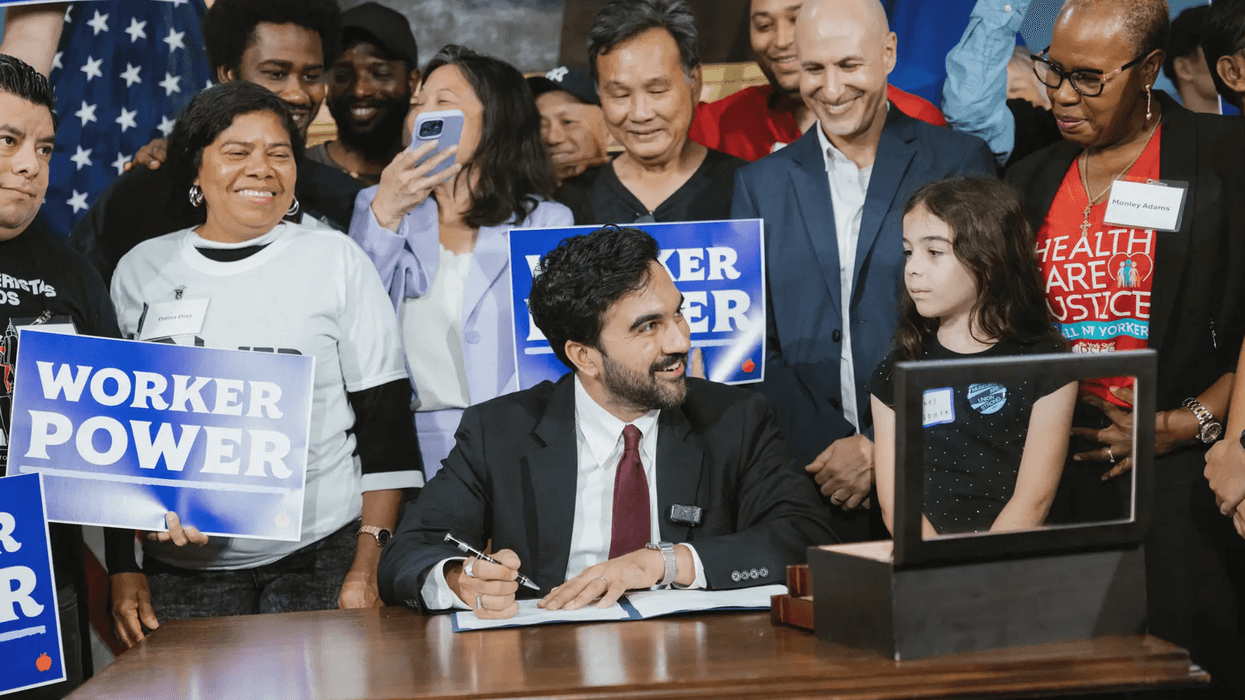
New York City Mayor Zohran Mamdani marked Labor Day on Monday by announcing a new Office of Worker Power, an initiative aimed at bolstering union organizing at a time when wage growth is being swallowed by inflation and corporations are fighting as aggressively as ever to prevent employees from wielding their collective strength.
"This is a first-of-its-kind office in the country, and we’re setting it up to help workers organize in an economy where more and more is stacked against them," Mamdani said of the new project, which will "utilize city government to help workers organize themselves and build power to improve their working conditions and their lives."
"We created the first-in-the-nation Office of Worker Power to put the full weight of City Hall behind the people who keep New York running," said Mamdani. "The nurse working a double shift. The teacher working a second job. The warehouse workers organizing for a union. Every New Yorker working hard to build a life and support a family. On Labor Day, we honor the workers who came before us by fighting for the workers who come next."
Julie Su, the former acting US Labor Secretary who now serves as New York City's deputy mayor for economic justice, will oversee the new office, which will be led by longtime union organizer Tony Perlstein.
"When workers can organize, everything changes," said Su. "When they can build lasting, durable power, power that lets them transform their work experience, and by extension their lives, everything changes."
The office's website, debuted amid the Trump administration's assault on labor unions at the national level, includes a "get help" section that contains information on how workers interested in organizing can contact city officials, who will "share what you need to know and connect you with organizations that support workers like you."
"Someone might come to this office because they’re a worker and they want to better their own conditions, or the conditions of those around them, and they’re not sure where to go next," Mamdani told Jacobin in an interview. "In New York City, it’s very hard to know who you should call about any of these issues. Now we’re saying you will soon be able to go to nyc.gov/workerpower and finally get the kind of information you need, so that you know what rights you already have available to you and what rights you can win."
BREAKING: Mayor Zohran Mamdani announces a first-of-its-kind office focused on organizing workers in New York City.
The Mayor’s Office of Worker Power will provide workers with resources needed to organize their workplaces, hold public hearings on major worker issues, and more. pic.twitter.com/tkOg3s3fpn
— Jacobin (@jacobin) September 7, 2026
A recent report by the City University of New York School of Labor and Urban Studies found that "while union density remains strong in New York, membership rates remain largely unchanged, despite renewed organizing, successful strikes, and strong public support for labor."
"Union density stands at 20.5% in New York City and 20.9% statewide, more than double the national rate of 10%, yet well below levels recorded two decades ago," the report notes.
Perlstein, the leader of the new Office of Worker Power who previously served as an organizing director at the United Auto Workers, told reporters that "there is a huge gap between what workers want and what workers have." Perlstein pointed to a recent Gallup survey showing that more than 70% of Americans approve of labor unions—a figure far higher than the unionization rate.
“We’re going to be looking to provide opportunities to working-class New Yorkers to get educated on their rights to form unions and what it means to build power,” said Perlstein. “We’re going to work to connect workers to organizations that can help them build that power.”