

SUBSCRIBE TO OUR FREE NEWSLETTER
Daily news & progressive opinion—funded by the people, not the corporations—delivered straight to your inbox.
5
#000000
#FFFFFF
To donate by check, phone, or other method, see our More Ways to Give page.
Daily news & progressive opinion—funded by the people, not the corporations—delivered straight to your inbox.
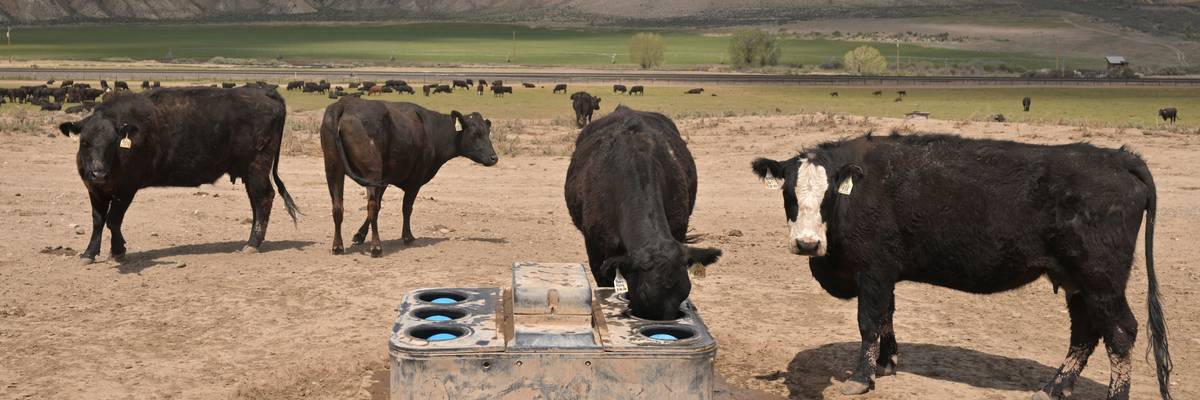
Cattle at the Colorado River Ranch drink from troughs equipped with a ball float system that helps keep the water algae-free and reduces evaporation near Gypsum, Colorado on May 20, 2024.
One GOP senator said the plan "looks like a betrayal of America first principles."
President Donald Trump has upset some of his own supporters in the American heartland with his proposal to reduce the cost of beef for US consumers by importing more of it from Argentina—and now members of his own party are calling him out.
One day after US ranchers, industry associations, and farmer advocacy groups panned Trump's proposal to buy more Argentine beef, GOP lawmakers who represent farm states are warning the president that his plan will cause a backlash among the very people who helped elect him last year.
Sen. Deb Fischer (R-Neb.) on Tuesday morning took to social media to give Trump a blunt message about the impact his policies are having on her state.
"Since hearing the president’s comments suggesting the US would buy beef from Argentina, I’ve been in touch with his administration and my colleagues to seek clarity and express my deep concerns," she wrote on X. "I’ve also been sounding the alarm on the bleak state of our agricultural economy and the negative impacts facing Nebraska’s agricultural industry—the economic driver of our state."
Fischer emphasized that the US produces "safe, reliable" beef that "is the one bright spot in our struggling agricultural economy" at the moment.
Fischer is far from the only Republican to raise major objections to Trump's plan, as Politico reported on Tuesday that "farm-state Republicans on Capitol Hill are privately and publicly livid" about it and have been making "a flurry of calls to Trump officials to get more clarity and warn about the fallout for farmers already reeling from the president’s broad tariffs."
One anonymous GOP senator told Politico that the Trump plan "looks like a betrayal of America first principles." Sen. Jodi Ernst (R-Iowa) had a more accommodating response, telling Politico that "we should always put America first, and I’m sure the president will be willing to work on this."
US Agriculture Secretary Brooke Rollins on Tuesday appeared to downplay the amount of beef Trump wanted to import from Argentina during an interview on CNBC.
"The president has said he's in discussions with Argentina, I think we'll be hearing more about that in the next day or two," she said. "But... it will not be very much. Argentina is also facing a foot and mouth disease issue, which we at [the US Department of Agriculture] have to ensure that our livestock industry is secure... Foot and mouth is a challenge."
CNBC: Is importing beef from Argentina a possibility?
BROOKE ROLLINS: Yes, the president has said he's in discussions with Argentina. It will not be very much. Argentina is also facing a foot and mouth disease issue. pic.twitter.com/UZiUpjpMAS
— Aaron Rupar (@atrupar) October 21, 2025
Trump's comments on buying more beef from Argentina came as his administration has initiated a $20 billion bailout for Argentina intended to stabilize the country's currency, which has seen its value plummet to dangerous lows over the last several months. In addition, Trump and Treasury Secretary Scott Bessent have orchestrated another $20 billion in private bailout funds to backstop the nation's beleaguered economy.
Argentina President Javier Milei, a right-wing libertarian and political ally of Trump, has been lobbying the administration for economic assistance ahead of crucial midterm elections that are scheduled for October 26.
Dear Common Dreams reader, It’s been nearly 30 years since I co-founded Common Dreams with my late wife, Lina Newhouser. We had the radical notion that journalism should serve the public good, not corporate profits. It was clear to us from the outset what it would take to build such a project. No paid advertisements. No corporate sponsors. No millionaire publisher telling us what to think or do. Many people said we wouldn't last a year, but we proved those doubters wrong. Together with a tremendous team of journalists and dedicated staff, we built an independent media outlet free from the constraints of profits and corporate control. Our mission has always been simple: To inform. To inspire. To ignite change for the common good. Building Common Dreams was not easy. Our survival was never guaranteed. When you take on the most powerful forces—Wall Street greed, fossil fuel industry destruction, Big Tech lobbyists, and uber-rich oligarchs who have spent billions upon billions rigging the economy and democracy in their favor—the only bulwark you have is supporters who believe in your work. But here’s the urgent message from me today. It's never been this bad out there. And it's never been this hard to keep us going. At the very moment Common Dreams is most needed, the threats we face are intensifying. We need your support now more than ever. We don't accept corporate advertising and never will. We don't have a paywall because we don't think people should be blocked from critical news based on their ability to pay. Everything we do is funded by the donations of readers like you. When everyone does the little they can afford, we are strong. But if that support retreats or dries up, so do we. Will you donate now to make sure Common Dreams not only survives but thrives? —Craig Brown, Co-founder |
President Donald Trump has upset some of his own supporters in the American heartland with his proposal to reduce the cost of beef for US consumers by importing more of it from Argentina—and now members of his own party are calling him out.
One day after US ranchers, industry associations, and farmer advocacy groups panned Trump's proposal to buy more Argentine beef, GOP lawmakers who represent farm states are warning the president that his plan will cause a backlash among the very people who helped elect him last year.
Sen. Deb Fischer (R-Neb.) on Tuesday morning took to social media to give Trump a blunt message about the impact his policies are having on her state.
"Since hearing the president’s comments suggesting the US would buy beef from Argentina, I’ve been in touch with his administration and my colleagues to seek clarity and express my deep concerns," she wrote on X. "I’ve also been sounding the alarm on the bleak state of our agricultural economy and the negative impacts facing Nebraska’s agricultural industry—the economic driver of our state."
Fischer emphasized that the US produces "safe, reliable" beef that "is the one bright spot in our struggling agricultural economy" at the moment.
Fischer is far from the only Republican to raise major objections to Trump's plan, as Politico reported on Tuesday that "farm-state Republicans on Capitol Hill are privately and publicly livid" about it and have been making "a flurry of calls to Trump officials to get more clarity and warn about the fallout for farmers already reeling from the president’s broad tariffs."
One anonymous GOP senator told Politico that the Trump plan "looks like a betrayal of America first principles." Sen. Jodi Ernst (R-Iowa) had a more accommodating response, telling Politico that "we should always put America first, and I’m sure the president will be willing to work on this."
US Agriculture Secretary Brooke Rollins on Tuesday appeared to downplay the amount of beef Trump wanted to import from Argentina during an interview on CNBC.
"The president has said he's in discussions with Argentina, I think we'll be hearing more about that in the next day or two," she said. "But... it will not be very much. Argentina is also facing a foot and mouth disease issue, which we at [the US Department of Agriculture] have to ensure that our livestock industry is secure... Foot and mouth is a challenge."
CNBC: Is importing beef from Argentina a possibility?
BROOKE ROLLINS: Yes, the president has said he's in discussions with Argentina. It will not be very much. Argentina is also facing a foot and mouth disease issue. pic.twitter.com/UZiUpjpMAS
— Aaron Rupar (@atrupar) October 21, 2025
Trump's comments on buying more beef from Argentina came as his administration has initiated a $20 billion bailout for Argentina intended to stabilize the country's currency, which has seen its value plummet to dangerous lows over the last several months. In addition, Trump and Treasury Secretary Scott Bessent have orchestrated another $20 billion in private bailout funds to backstop the nation's beleaguered economy.
Argentina President Javier Milei, a right-wing libertarian and political ally of Trump, has been lobbying the administration for economic assistance ahead of crucial midterm elections that are scheduled for October 26.
President Donald Trump has upset some of his own supporters in the American heartland with his proposal to reduce the cost of beef for US consumers by importing more of it from Argentina—and now members of his own party are calling him out.
One day after US ranchers, industry associations, and farmer advocacy groups panned Trump's proposal to buy more Argentine beef, GOP lawmakers who represent farm states are warning the president that his plan will cause a backlash among the very people who helped elect him last year.
Sen. Deb Fischer (R-Neb.) on Tuesday morning took to social media to give Trump a blunt message about the impact his policies are having on her state.
"Since hearing the president’s comments suggesting the US would buy beef from Argentina, I’ve been in touch with his administration and my colleagues to seek clarity and express my deep concerns," she wrote on X. "I’ve also been sounding the alarm on the bleak state of our agricultural economy and the negative impacts facing Nebraska’s agricultural industry—the economic driver of our state."
Fischer emphasized that the US produces "safe, reliable" beef that "is the one bright spot in our struggling agricultural economy" at the moment.
Fischer is far from the only Republican to raise major objections to Trump's plan, as Politico reported on Tuesday that "farm-state Republicans on Capitol Hill are privately and publicly livid" about it and have been making "a flurry of calls to Trump officials to get more clarity and warn about the fallout for farmers already reeling from the president’s broad tariffs."
One anonymous GOP senator told Politico that the Trump plan "looks like a betrayal of America first principles." Sen. Jodi Ernst (R-Iowa) had a more accommodating response, telling Politico that "we should always put America first, and I’m sure the president will be willing to work on this."
US Agriculture Secretary Brooke Rollins on Tuesday appeared to downplay the amount of beef Trump wanted to import from Argentina during an interview on CNBC.
"The president has said he's in discussions with Argentina, I think we'll be hearing more about that in the next day or two," she said. "But... it will not be very much. Argentina is also facing a foot and mouth disease issue, which we at [the US Department of Agriculture] have to ensure that our livestock industry is secure... Foot and mouth is a challenge."
CNBC: Is importing beef from Argentina a possibility?
BROOKE ROLLINS: Yes, the president has said he's in discussions with Argentina. It will not be very much. Argentina is also facing a foot and mouth disease issue. pic.twitter.com/UZiUpjpMAS
— Aaron Rupar (@atrupar) October 21, 2025
Trump's comments on buying more beef from Argentina came as his administration has initiated a $20 billion bailout for Argentina intended to stabilize the country's currency, which has seen its value plummet to dangerous lows over the last several months. In addition, Trump and Treasury Secretary Scott Bessent have orchestrated another $20 billion in private bailout funds to backstop the nation's beleaguered economy.
Argentina President Javier Milei, a right-wing libertarian and political ally of Trump, has been lobbying the administration for economic assistance ahead of crucial midterm elections that are scheduled for October 26.

