SUBSCRIBE TO OUR FREE NEWSLETTER
Daily news & progressive opinion—funded by the people, not the corporations—delivered straight to your inbox.
5
#000000
#FFFFFF
To donate by check, phone, or other method, see our More Ways to Give page.
Daily news & progressive opinion—funded by the people, not the corporations—delivered straight to your inbox.
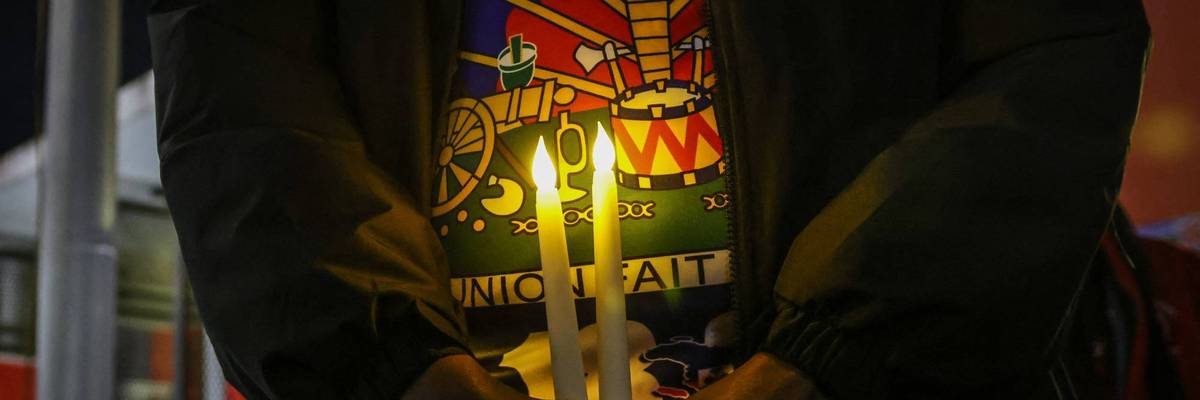
A man attends a candlelight vigil for Haitians living in the US under the Temporary Protected Status (TPS) immigration program in Miami, Florida on February 3, 2026.
UN experts say both countries are still in the midst of extreme violence and that those with protected status would face dangers if forced to return.
The US Supreme Court will hear arguments next month over whether the Trump administration can strip legal status from migrants from Haiti and Syria who have been given temporary protection after fleeing war.
The court said on Monday that it would not grant the Trump administration emergency requests demanding that Temporary Protected Status (TPS) for migrants from the two countries be immediately lifted.
For the time being, this means that more than 350,000 people from these two countries can continue to live and work legally in the United States until a ruling is reached. The order set oral arguments in the case to take place in the last week of April.
The court has previously sided with the Trump administration in its bid to strip similar protections from around 600,000 Venezuelan nationals, putting them at risk of deportation.
But Aaron Reichlin-Melnick, a senior fellow at the American Immigration Council, said that there is "one notable distinction" between the case surrounding Venezuelan migrants and those from Syria and Haiti.
The Department of Homeland Security (DHS) is required to make its determinations about terminating TPS based on whether conditions in a specific country have improved enough that they would be safe to return. This includes consulting with other government departments, such as the State Department.
Unlike in the Venezuela case, Reichlin-Melnick said there is a "factual record showing that the Trump administration completely failed to do what is required by the law; actually consider the country conditions" in the case of Haiti or Syria.
He highlighted the opinion from US District Judge Ana C. Reyes, who last month ruled that the Trump administration's attempt to strip Haitians of their status was invalid because they'd "ignored Congress' requirement" to consult with other agencies to determine the conditions in the country, which has in recent years been ravaged by a gang war that killed more than 8,000 people in 2025 and has resulted in widespread instability and displacement in the country.
She noted that the only "consultation" conducted by the Trump administration was with a DHS staffer who emailed a State Department staffer, asking him to advise DHS on the matter on the same day a court first allowed them to re-review the status of Haitians.
The State staffer responded in less than an hour, stating definitively that "State believes that there would be no foreign policy concerns with respect to a change in the TPS statue [sic.] of Haiti." An attorney for the government later confirmed that "no other agency was consulted about the decision."
Moreover, the judge pointed to a social media post from Homeland Security Secretary Kristi Noem three days after Haitians had their TPS status formally stripped, referring to them and other immigrants as "killers, leeches, and entitlement junkies," as well as "foreign invaders." This, the judge said, suggested the decision was made in part based on "racial animus."
Following a 10-day trip to Haiti, William O'Neill, the United Nations-designated expert on human rights in the country, said on Monday that the humanitarian situation there is "dire and catastrophic" and is probably worse now than when Haitians were initially granted TPS in the US back in 2010 following a devastating earthquake that killed more than 300,000 people and inflicted widespread destruction and disease.
If the roughly 300,000 Haitians currently living under TPS were suddenly deported, he said, many would have nowhere safe to go in the war-ravaged country.
"Where would they go?" he asked. "The Haitians who are currently internally displaced can barely survive now.”
In November, another federal judge blocked DHS from stripping Syrians of status for failing to adequately evaluate the conditions in that country, where President Bashar al-Assad had been overthrown less than a year prior, igniting further instability after more than a decade of chaotic civil war.
A report from the Independent International Commission of Inquiry on the Syrian Arab Republic on Friday described ongoing sectarian violence in the country, as well as arbitrary detentions, torture, and extrajudicial killings.
According to a September report from the Syrian Observatory for Human Rights, more than 10,000 people, mostly civilians, have been killed by fighting and extrajudicial executions since Assad's ouster in December 2024.
Dear Common Dreams reader, It’s been nearly 30 years since I co-founded Common Dreams with my late wife, Lina Newhouser. We had the radical notion that journalism should serve the public good, not corporate profits. It was clear to us from the outset what it would take to build such a project. No paid advertisements. No corporate sponsors. No millionaire publisher telling us what to think or do. Many people said we wouldn't last a year, but we proved those doubters wrong. Together with a tremendous team of journalists and dedicated staff, we built an independent media outlet free from the constraints of profits and corporate control. Our mission has always been simple: To inform. To inspire. To ignite change for the common good. Building Common Dreams was not easy. Our survival was never guaranteed. When you take on the most powerful forces—Wall Street greed, fossil fuel industry destruction, Big Tech lobbyists, and uber-rich oligarchs who have spent billions upon billions rigging the economy and democracy in their favor—the only bulwark you have is supporters who believe in your work. But here’s the urgent message from me today. It's never been this bad out there. And it's never been this hard to keep us going. At the very moment Common Dreams is most needed, the threats we face are intensifying. We need your support now more than ever. We don't accept corporate advertising and never will. We don't have a paywall because we don't think people should be blocked from critical news based on their ability to pay. Everything we do is funded by the donations of readers like you. When everyone does the little they can afford, we are strong. But if that support retreats or dries up, so do we. Will you donate now to make sure Common Dreams not only survives but thrives? —Craig Brown, Co-founder |
The US Supreme Court will hear arguments next month over whether the Trump administration can strip legal status from migrants from Haiti and Syria who have been given temporary protection after fleeing war.
The court said on Monday that it would not grant the Trump administration emergency requests demanding that Temporary Protected Status (TPS) for migrants from the two countries be immediately lifted.
For the time being, this means that more than 350,000 people from these two countries can continue to live and work legally in the United States until a ruling is reached. The order set oral arguments in the case to take place in the last week of April.
The court has previously sided with the Trump administration in its bid to strip similar protections from around 600,000 Venezuelan nationals, putting them at risk of deportation.
But Aaron Reichlin-Melnick, a senior fellow at the American Immigration Council, said that there is "one notable distinction" between the case surrounding Venezuelan migrants and those from Syria and Haiti.
The Department of Homeland Security (DHS) is required to make its determinations about terminating TPS based on whether conditions in a specific country have improved enough that they would be safe to return. This includes consulting with other government departments, such as the State Department.
Unlike in the Venezuela case, Reichlin-Melnick said there is a "factual record showing that the Trump administration completely failed to do what is required by the law; actually consider the country conditions" in the case of Haiti or Syria.
He highlighted the opinion from US District Judge Ana C. Reyes, who last month ruled that the Trump administration's attempt to strip Haitians of their status was invalid because they'd "ignored Congress' requirement" to consult with other agencies to determine the conditions in the country, which has in recent years been ravaged by a gang war that killed more than 8,000 people in 2025 and has resulted in widespread instability and displacement in the country.
She noted that the only "consultation" conducted by the Trump administration was with a DHS staffer who emailed a State Department staffer, asking him to advise DHS on the matter on the same day a court first allowed them to re-review the status of Haitians.
The State staffer responded in less than an hour, stating definitively that "State believes that there would be no foreign policy concerns with respect to a change in the TPS statue [sic.] of Haiti." An attorney for the government later confirmed that "no other agency was consulted about the decision."
Moreover, the judge pointed to a social media post from Homeland Security Secretary Kristi Noem three days after Haitians had their TPS status formally stripped, referring to them and other immigrants as "killers, leeches, and entitlement junkies," as well as "foreign invaders." This, the judge said, suggested the decision was made in part based on "racial animus."
Following a 10-day trip to Haiti, William O'Neill, the United Nations-designated expert on human rights in the country, said on Monday that the humanitarian situation there is "dire and catastrophic" and is probably worse now than when Haitians were initially granted TPS in the US back in 2010 following a devastating earthquake that killed more than 300,000 people and inflicted widespread destruction and disease.
If the roughly 300,000 Haitians currently living under TPS were suddenly deported, he said, many would have nowhere safe to go in the war-ravaged country.
"Where would they go?" he asked. "The Haitians who are currently internally displaced can barely survive now.”
In November, another federal judge blocked DHS from stripping Syrians of status for failing to adequately evaluate the conditions in that country, where President Bashar al-Assad had been overthrown less than a year prior, igniting further instability after more than a decade of chaotic civil war.
A report from the Independent International Commission of Inquiry on the Syrian Arab Republic on Friday described ongoing sectarian violence in the country, as well as arbitrary detentions, torture, and extrajudicial killings.
According to a September report from the Syrian Observatory for Human Rights, more than 10,000 people, mostly civilians, have been killed by fighting and extrajudicial executions since Assad's ouster in December 2024.
The US Supreme Court will hear arguments next month over whether the Trump administration can strip legal status from migrants from Haiti and Syria who have been given temporary protection after fleeing war.
The court said on Monday that it would not grant the Trump administration emergency requests demanding that Temporary Protected Status (TPS) for migrants from the two countries be immediately lifted.
For the time being, this means that more than 350,000 people from these two countries can continue to live and work legally in the United States until a ruling is reached. The order set oral arguments in the case to take place in the last week of April.
The court has previously sided with the Trump administration in its bid to strip similar protections from around 600,000 Venezuelan nationals, putting them at risk of deportation.
But Aaron Reichlin-Melnick, a senior fellow at the American Immigration Council, said that there is "one notable distinction" between the case surrounding Venezuelan migrants and those from Syria and Haiti.
The Department of Homeland Security (DHS) is required to make its determinations about terminating TPS based on whether conditions in a specific country have improved enough that they would be safe to return. This includes consulting with other government departments, such as the State Department.
Unlike in the Venezuela case, Reichlin-Melnick said there is a "factual record showing that the Trump administration completely failed to do what is required by the law; actually consider the country conditions" in the case of Haiti or Syria.
He highlighted the opinion from US District Judge Ana C. Reyes, who last month ruled that the Trump administration's attempt to strip Haitians of their status was invalid because they'd "ignored Congress' requirement" to consult with other agencies to determine the conditions in the country, which has in recent years been ravaged by a gang war that killed more than 8,000 people in 2025 and has resulted in widespread instability and displacement in the country.
She noted that the only "consultation" conducted by the Trump administration was with a DHS staffer who emailed a State Department staffer, asking him to advise DHS on the matter on the same day a court first allowed them to re-review the status of Haitians.
The State staffer responded in less than an hour, stating definitively that "State believes that there would be no foreign policy concerns with respect to a change in the TPS statue [sic.] of Haiti." An attorney for the government later confirmed that "no other agency was consulted about the decision."
Moreover, the judge pointed to a social media post from Homeland Security Secretary Kristi Noem three days after Haitians had their TPS status formally stripped, referring to them and other immigrants as "killers, leeches, and entitlement junkies," as well as "foreign invaders." This, the judge said, suggested the decision was made in part based on "racial animus."
Following a 10-day trip to Haiti, William O'Neill, the United Nations-designated expert on human rights in the country, said on Monday that the humanitarian situation there is "dire and catastrophic" and is probably worse now than when Haitians were initially granted TPS in the US back in 2010 following a devastating earthquake that killed more than 300,000 people and inflicted widespread destruction and disease.
If the roughly 300,000 Haitians currently living under TPS were suddenly deported, he said, many would have nowhere safe to go in the war-ravaged country.
"Where would they go?" he asked. "The Haitians who are currently internally displaced can barely survive now.”
In November, another federal judge blocked DHS from stripping Syrians of status for failing to adequately evaluate the conditions in that country, where President Bashar al-Assad had been overthrown less than a year prior, igniting further instability after more than a decade of chaotic civil war.
A report from the Independent International Commission of Inquiry on the Syrian Arab Republic on Friday described ongoing sectarian violence in the country, as well as arbitrary detentions, torture, and extrajudicial killings.
According to a September report from the Syrian Observatory for Human Rights, more than 10,000 people, mostly civilians, have been killed by fighting and extrajudicial executions since Assad's ouster in December 2024.