SUBSCRIBE TO OUR FREE NEWSLETTER
Daily news & progressive opinion—funded by the people, not the corporations—delivered straight to your inbox.
5
#000000
#FFFFFF
To donate by check, phone, or other method, see our More Ways to Give page.
Daily news & progressive opinion—funded by the people, not the corporations—delivered straight to your inbox.
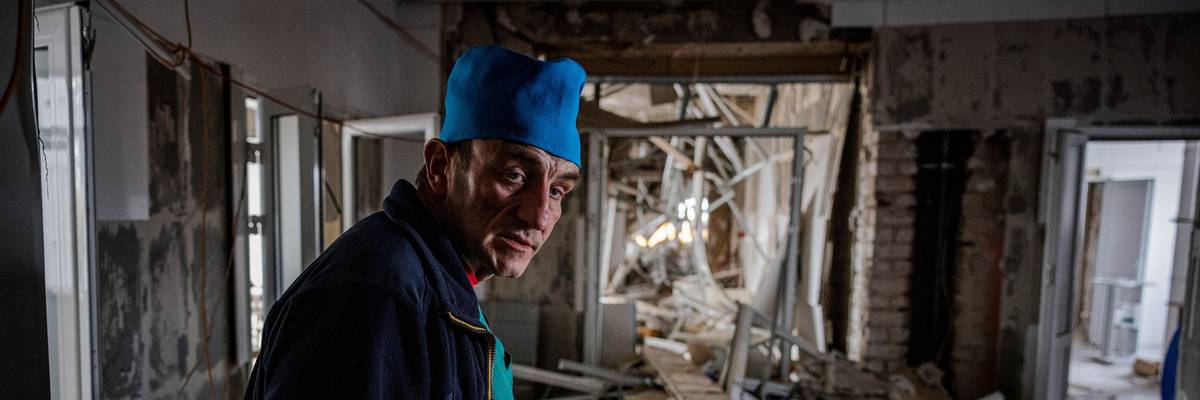
Dr. Yuri Kuznetsov, 52, stands in a destroyed surgery room at a hospital in Izyum, Ukraine on November 2, 2022, amid the Russian invasion.
"These deliberate and indiscriminate attacks on Ukraine's health system show how Russian forces use these vicious, illegal tactics to control, coerce, and punish civilians," said an expert at Physicians for Human Rights.
A global coalition on Thursday announced what it called a "horrific milestone" for Russian attacks on Ukrainian health workers, hospitals, and other medical infrastructure since the February 2022 invasion.
"For nearly 1.5 years, we have been witnessing the escalation of attacks on healthcare in Ukraine, reaching a terrifying milestone of over 1,000 incidents since the onset of Russia's full-scale invasion," said Ukrainian Healthcare Center analyst Diana Rusnak in a statement.
"These acts are not collateral damage, but a calculated means of warfare approved by Russia's higher political and military leadership," Rusnak added. "The consequences are profound, causing not only immediate devastation but also impairing the capacity to provide lifesaving care for people. Unless accountability prevails, these crimes will persist unabated."
Lyubov Smachylo, an analyst at the Media Initiative for Human Rights, similarly stressed that "Ukraine's healthcare system is severely affected by Russia's attacks," including combat medics targeted on the battlefield and "held captive in Russian places of detention as prisoners of war, where they are beaten and tortured."
"These actions are a blatant violation of international humanitarian law and are occurring regularly," Smachylo said. "It's important that those responsible for these crimes are held accountable to prevent future violations."
Both of those groups—along with Physicians for Human Rights (PHR), Insecurity Insight, and eyeWitness to Atrocities—have tracked attacks on Ukraine's healthcare system throughout the war and in February published a report and interactive map.
The coalition on Thursday released findings of 1,014 attacks through mid-July, including 414 that damaged or destroyed hospitals; 79 on ambulances; 57 affecting children's hospitals; and 40 affecting maternal health facilities. Additionally, at least 148 health workers have been killed and another 106 injured.
One hospital in Donetsk Oblast has ensured repeated shelling, most recently in June. An administrative worker there told researchers that "the missile was aimed at destroying our surgical department. There were no military [troops] there."
The hospital worker continued:
The entire infrastructure in the city was destroyed, there are no schools, no kindergartens. We had a hospital, and it had to be destroyed [by Russian forces] as well. The maternity ward was the first to be hit.
When our accounting department and the blood transfusion center caught fire, [Russian forces] started hitting that area on purpose... [They] burned down.
Carrie Bowker, director at eyeWitness to Atrocities, said that the coalition data "urgently warrants further investigation by prosecutors, and provides strong evidence upon which to pursue accountability for these devastating attacks."
PHR's director of research and investigations, Christian De Vos, agreed, saying that "these deliberate and indiscriminate attacks on Ukraine's health system show how Russian forces use these vicious, illegal tactics to control, coerce, and punish civilians."
"We call on the International Criminal Court as well as other international and domestic prosecutors to urgently prioritize the investigation of attacks on health facilities as both war crimes and crimes against humanity," De Vos declared.
Uliana Poltavets, Ukraine emergency response coordinator at PHR, said that "Russia is also obligated to make reparations, including payment for reconstruction and rehabilitation, for its breaches of international law, and compensate the Ukrainian state and individual Ukrainians for loss of life and injury. International actors should hold Russia to account in this process."
Insecurity Insight director Christina Wille highlighted the need for accountability and justice for similar violence around the world—with armed attacks on schools and hospitals in conflict zones up 112% last year, according to a June United Nations report.
"I have been analyzing attacks on healthcare for many years. These figures are truly staggering," Wille said of conditions in Ukraine.
"At this grim milestone, we should reflect on the horrific consequences of such attacks in Ukraine and in many other countries and territories around the globe, such as Myanmar, Sudan, and the occupied Palestinian territory where health facilities and workers continue to suffer dire levels of violence," she added. "We hope that this marks an inflection point to galvanize concerted action to protect healthcare globally and bring an end to these tragic attacks."
Dear Common Dreams reader, It’s been nearly 30 years since I co-founded Common Dreams with my late wife, Lina Newhouser. We had the radical notion that journalism should serve the public good, not corporate profits. It was clear to us from the outset what it would take to build such a project. No paid advertisements. No corporate sponsors. No millionaire publisher telling us what to think or do. Many people said we wouldn't last a year, but we proved those doubters wrong. Together with a tremendous team of journalists and dedicated staff, we built an independent media outlet free from the constraints of profits and corporate control. Our mission has always been simple: To inform. To inspire. To ignite change for the common good. Building Common Dreams was not easy. Our survival was never guaranteed. When you take on the most powerful forces—Wall Street greed, fossil fuel industry destruction, Big Tech lobbyists, and uber-rich oligarchs who have spent billions upon billions rigging the economy and democracy in their favor—the only bulwark you have is supporters who believe in your work. But here’s the urgent message from me today. It's never been this bad out there. And it's never been this hard to keep us going. At the very moment Common Dreams is most needed, the threats we face are intensifying. We need your support now more than ever. We don't accept corporate advertising and never will. We don't have a paywall because we don't think people should be blocked from critical news based on their ability to pay. Everything we do is funded by the donations of readers like you. When everyone does the little they can afford, we are strong. But if that support retreats or dries up, so do we. Will you donate now to make sure Common Dreams not only survives but thrives? —Craig Brown, Co-founder |
A global coalition on Thursday announced what it called a "horrific milestone" for Russian attacks on Ukrainian health workers, hospitals, and other medical infrastructure since the February 2022 invasion.
"For nearly 1.5 years, we have been witnessing the escalation of attacks on healthcare in Ukraine, reaching a terrifying milestone of over 1,000 incidents since the onset of Russia's full-scale invasion," said Ukrainian Healthcare Center analyst Diana Rusnak in a statement.
"These acts are not collateral damage, but a calculated means of warfare approved by Russia's higher political and military leadership," Rusnak added. "The consequences are profound, causing not only immediate devastation but also impairing the capacity to provide lifesaving care for people. Unless accountability prevails, these crimes will persist unabated."
Lyubov Smachylo, an analyst at the Media Initiative for Human Rights, similarly stressed that "Ukraine's healthcare system is severely affected by Russia's attacks," including combat medics targeted on the battlefield and "held captive in Russian places of detention as prisoners of war, where they are beaten and tortured."
"These actions are a blatant violation of international humanitarian law and are occurring regularly," Smachylo said. "It's important that those responsible for these crimes are held accountable to prevent future violations."
Both of those groups—along with Physicians for Human Rights (PHR), Insecurity Insight, and eyeWitness to Atrocities—have tracked attacks on Ukraine's healthcare system throughout the war and in February published a report and interactive map.
The coalition on Thursday released findings of 1,014 attacks through mid-July, including 414 that damaged or destroyed hospitals; 79 on ambulances; 57 affecting children's hospitals; and 40 affecting maternal health facilities. Additionally, at least 148 health workers have been killed and another 106 injured.
One hospital in Donetsk Oblast has ensured repeated shelling, most recently in June. An administrative worker there told researchers that "the missile was aimed at destroying our surgical department. There were no military [troops] there."
The hospital worker continued:
The entire infrastructure in the city was destroyed, there are no schools, no kindergartens. We had a hospital, and it had to be destroyed [by Russian forces] as well. The maternity ward was the first to be hit.
When our accounting department and the blood transfusion center caught fire, [Russian forces] started hitting that area on purpose... [They] burned down.
Carrie Bowker, director at eyeWitness to Atrocities, said that the coalition data "urgently warrants further investigation by prosecutors, and provides strong evidence upon which to pursue accountability for these devastating attacks."
PHR's director of research and investigations, Christian De Vos, agreed, saying that "these deliberate and indiscriminate attacks on Ukraine's health system show how Russian forces use these vicious, illegal tactics to control, coerce, and punish civilians."
"We call on the International Criminal Court as well as other international and domestic prosecutors to urgently prioritize the investigation of attacks on health facilities as both war crimes and crimes against humanity," De Vos declared.
Uliana Poltavets, Ukraine emergency response coordinator at PHR, said that "Russia is also obligated to make reparations, including payment for reconstruction and rehabilitation, for its breaches of international law, and compensate the Ukrainian state and individual Ukrainians for loss of life and injury. International actors should hold Russia to account in this process."
Insecurity Insight director Christina Wille highlighted the need for accountability and justice for similar violence around the world—with armed attacks on schools and hospitals in conflict zones up 112% last year, according to a June United Nations report.
"I have been analyzing attacks on healthcare for many years. These figures are truly staggering," Wille said of conditions in Ukraine.
"At this grim milestone, we should reflect on the horrific consequences of such attacks in Ukraine and in many other countries and territories around the globe, such as Myanmar, Sudan, and the occupied Palestinian territory where health facilities and workers continue to suffer dire levels of violence," she added. "We hope that this marks an inflection point to galvanize concerted action to protect healthcare globally and bring an end to these tragic attacks."
A global coalition on Thursday announced what it called a "horrific milestone" for Russian attacks on Ukrainian health workers, hospitals, and other medical infrastructure since the February 2022 invasion.
"For nearly 1.5 years, we have been witnessing the escalation of attacks on healthcare in Ukraine, reaching a terrifying milestone of over 1,000 incidents since the onset of Russia's full-scale invasion," said Ukrainian Healthcare Center analyst Diana Rusnak in a statement.
"These acts are not collateral damage, but a calculated means of warfare approved by Russia's higher political and military leadership," Rusnak added. "The consequences are profound, causing not only immediate devastation but also impairing the capacity to provide lifesaving care for people. Unless accountability prevails, these crimes will persist unabated."
Lyubov Smachylo, an analyst at the Media Initiative for Human Rights, similarly stressed that "Ukraine's healthcare system is severely affected by Russia's attacks," including combat medics targeted on the battlefield and "held captive in Russian places of detention as prisoners of war, where they are beaten and tortured."
"These actions are a blatant violation of international humanitarian law and are occurring regularly," Smachylo said. "It's important that those responsible for these crimes are held accountable to prevent future violations."
Both of those groups—along with Physicians for Human Rights (PHR), Insecurity Insight, and eyeWitness to Atrocities—have tracked attacks on Ukraine's healthcare system throughout the war and in February published a report and interactive map.
The coalition on Thursday released findings of 1,014 attacks through mid-July, including 414 that damaged or destroyed hospitals; 79 on ambulances; 57 affecting children's hospitals; and 40 affecting maternal health facilities. Additionally, at least 148 health workers have been killed and another 106 injured.
One hospital in Donetsk Oblast has ensured repeated shelling, most recently in June. An administrative worker there told researchers that "the missile was aimed at destroying our surgical department. There were no military [troops] there."
The hospital worker continued:
The entire infrastructure in the city was destroyed, there are no schools, no kindergartens. We had a hospital, and it had to be destroyed [by Russian forces] as well. The maternity ward was the first to be hit.
When our accounting department and the blood transfusion center caught fire, [Russian forces] started hitting that area on purpose... [They] burned down.
Carrie Bowker, director at eyeWitness to Atrocities, said that the coalition data "urgently warrants further investigation by prosecutors, and provides strong evidence upon which to pursue accountability for these devastating attacks."
PHR's director of research and investigations, Christian De Vos, agreed, saying that "these deliberate and indiscriminate attacks on Ukraine's health system show how Russian forces use these vicious, illegal tactics to control, coerce, and punish civilians."
"We call on the International Criminal Court as well as other international and domestic prosecutors to urgently prioritize the investigation of attacks on health facilities as both war crimes and crimes against humanity," De Vos declared.
Uliana Poltavets, Ukraine emergency response coordinator at PHR, said that "Russia is also obligated to make reparations, including payment for reconstruction and rehabilitation, for its breaches of international law, and compensate the Ukrainian state and individual Ukrainians for loss of life and injury. International actors should hold Russia to account in this process."
Insecurity Insight director Christina Wille highlighted the need for accountability and justice for similar violence around the world—with armed attacks on schools and hospitals in conflict zones up 112% last year, according to a June United Nations report.
"I have been analyzing attacks on healthcare for many years. These figures are truly staggering," Wille said of conditions in Ukraine.
"At this grim milestone, we should reflect on the horrific consequences of such attacks in Ukraine and in many other countries and territories around the globe, such as Myanmar, Sudan, and the occupied Palestinian territory where health facilities and workers continue to suffer dire levels of violence," she added. "We hope that this marks an inflection point to galvanize concerted action to protect healthcare globally and bring an end to these tragic attacks."