SUBSCRIBE TO OUR FREE NEWSLETTER
Daily news & progressive opinion—funded by the people, not the corporations—delivered straight to your inbox.
5
#000000
#FFFFFF
To donate by check, phone, or other method, see our More Ways to Give page.
Daily news & progressive opinion—funded by the people, not the corporations—delivered straight to your inbox.
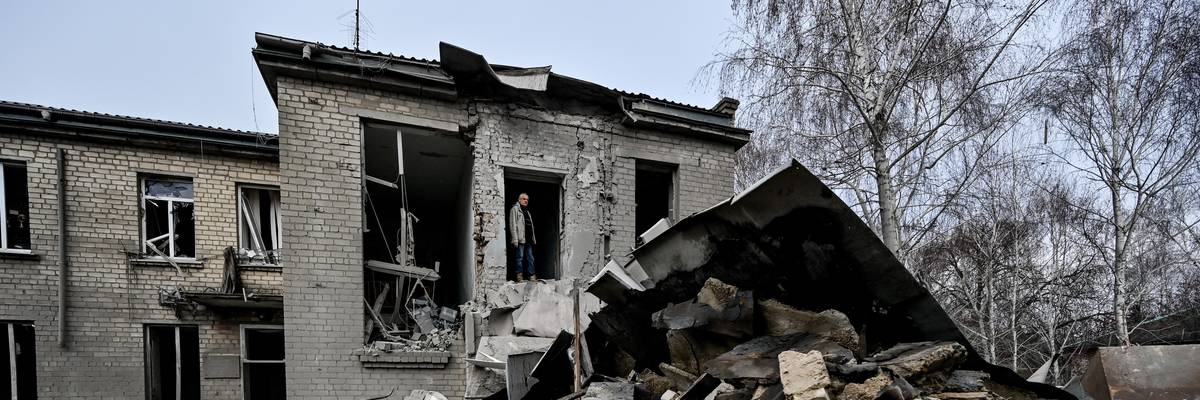
The maternity ward of the Vilniansk Multidisciplinary Hospital in southeastern Ukraine lies in ruins after a Russian missile attack that claimed the life of a two-day-old infant.
"The research shows that Russian armed forces have bombed hospitals, tortured medics, attacked ambulances, and looted clinics," said a co-author. "Evidence strongly suggests these acts constitute war crimes."
Nearly a year into Russia's invasion of Ukraine, five groups on Tuesday released a report and interactive map documenting at least 707 attacks on healthcare facilities and workers in what the researchers argue are war crimes and potentially crimes against humanity.
As the war continues—with U.S. President Joe Biden visiting Kyiv to express support for Ukraine and Russian leader Vladimir Putin ramping up nuclear fears this week—the report, Destruction and Devastation: One Year of Russia's Assault on Ukraine's Healthcare System, tracks attacks between the launch of the invasion on February 24, 2022 and the end of last year.
Compiled and published by eyeWitness to Atrocities, Insecurity Insight, Media Initiative for Human Rights (MIHR), Physicians for Human Rights (PHR), and the Ukrainian Healthcare Center (UHC), the document also features 10 case studies.
"Prosecutors must urgently investigate these attacks and hold perpetrators to account."
"Our report illustrates the staggering toll that Russia's war of aggression has had on Ukraine's doctors, nurses, and patients," explained co-author Christian De Vos, director of research and investigations at PHR. "The research shows that Russian armed forces have bombed hospitals, tortured medics, attacked ambulances, and looted clinics."
"Based on the findings of our investigation, evidence strongly suggests these acts constitute war crimes and a course of conduct that could potentially constitute crimes against humanity as well," De Vos continued. "As we mark one year since Russia's full-scale invasion of Ukraine—and with imminent threats of further violence against healthcare amid Russia's latest offensive—prosecutors must urgently investigate these attacks and hold perpetrators to account."
While recognizing that the overall figure is "likely an undercount," the publication says that researchers found:
"Healthcare workers, who became witnesses, talk about the horrific crimes committed by Russia in Ukraine," noted MIHR analyst Lyubov Smachylo. "Some were held hostage by the Russian military, others were under fire, and some were forced to work under occupation. Witnesses described these events with horror and tears in their eyes."
"It is worth emphasizing that these are just a few testimonies and only from those who survived," Smachylo added. "Witnesses share their stories to hold Russia accountable for its crimes."
Researchers suggested that accountability efforts could come from investigators and prosecutors not only in Ukraine but also at the International Criminal Court (ICC) and in other countries that can act under the principle of universal jurisdiction.
"The findings presented in the report urgently warrant further investigation by prosecutorial authorities," asserted Wendy Betts, director at eyeWitness to Atrocities. "The 10 highly detailed case studies in particular provide compelling evidence for prosecutors—be they at the ICC, in Kyiv, or beyond—to pursue accountability for these heinous acts."
According to figures from the Safeguarding Health in Conflict Coalition (SHCC), globally last year, there were at least 1,892 attacks on healthcare in conflict zones—including 628 facilities damaged, 215 workers killed, and another 287 kidnapped.
"It is a great concern that damage and destruction of the health system is common in so many conflicts around the world despite the fact that international humanitarian law protects access to healthcare," said Insecurity Insight director Christina Wille. "We have been monitoring patterns of violence against healthcare in conflict for several years around the world, and never before have we seen such widespread damage and destruction to the health system from indiscriminate use of force."
Over a third of the 2022 attacks recorded by SHCC occurred in Ukraine after Russian forces invaded. Wille said that "the frequent use of explosive weapons with wide area effects across cities of Ukraine causes unacceptable devastation to the whole health system with concerning consequences for access to healthcare."
Report co-author and UHC co-founder Pavlo Kovtoniuk pointed out that "Russia's brutal strategy is deliberately merging civilian and military targets in war. For them, destroying hospitals, schools, and the power grid is a way to achieve military aims."
"Russia used this murderous tactic before, in Chechnya and Syria, but faced no accountability," Kovtoniuk added. "If impunity doesn't end now, we will see many more hospitals destroyed as a means of war in the future. Unpunished evil always grows."
Dear Common Dreams reader, It’s been nearly 30 years since I co-founded Common Dreams with my late wife, Lina Newhouser. We had the radical notion that journalism should serve the public good, not corporate profits. It was clear to us from the outset what it would take to build such a project. No paid advertisements. No corporate sponsors. No millionaire publisher telling us what to think or do. Many people said we wouldn't last a year, but we proved those doubters wrong. Together with a tremendous team of journalists and dedicated staff, we built an independent media outlet free from the constraints of profits and corporate control. Our mission has always been simple: To inform. To inspire. To ignite change for the common good. Building Common Dreams was not easy. Our survival was never guaranteed. When you take on the most powerful forces—Wall Street greed, fossil fuel industry destruction, Big Tech lobbyists, and uber-rich oligarchs who have spent billions upon billions rigging the economy and democracy in their favor—the only bulwark you have is supporters who believe in your work. But here’s the urgent message from me today. It's never been this bad out there. And it's never been this hard to keep us going. At the very moment Common Dreams is most needed, the threats we face are intensifying. We need your support now more than ever. We don't accept corporate advertising and never will. We don't have a paywall because we don't think people should be blocked from critical news based on their ability to pay. Everything we do is funded by the donations of readers like you. When everyone does the little they can afford, we are strong. But if that support retreats or dries up, so do we. Will you donate now to make sure Common Dreams not only survives but thrives? —Craig Brown, Co-founder |
Nearly a year into Russia's invasion of Ukraine, five groups on Tuesday released a report and interactive map documenting at least 707 attacks on healthcare facilities and workers in what the researchers argue are war crimes and potentially crimes against humanity.
As the war continues—with U.S. President Joe Biden visiting Kyiv to express support for Ukraine and Russian leader Vladimir Putin ramping up nuclear fears this week—the report, Destruction and Devastation: One Year of Russia's Assault on Ukraine's Healthcare System, tracks attacks between the launch of the invasion on February 24, 2022 and the end of last year.
Compiled and published by eyeWitness to Atrocities, Insecurity Insight, Media Initiative for Human Rights (MIHR), Physicians for Human Rights (PHR), and the Ukrainian Healthcare Center (UHC), the document also features 10 case studies.
"Prosecutors must urgently investigate these attacks and hold perpetrators to account."
"Our report illustrates the staggering toll that Russia's war of aggression has had on Ukraine's doctors, nurses, and patients," explained co-author Christian De Vos, director of research and investigations at PHR. "The research shows that Russian armed forces have bombed hospitals, tortured medics, attacked ambulances, and looted clinics."
"Based on the findings of our investigation, evidence strongly suggests these acts constitute war crimes and a course of conduct that could potentially constitute crimes against humanity as well," De Vos continued. "As we mark one year since Russia's full-scale invasion of Ukraine—and with imminent threats of further violence against healthcare amid Russia's latest offensive—prosecutors must urgently investigate these attacks and hold perpetrators to account."
While recognizing that the overall figure is "likely an undercount," the publication says that researchers found:
"Healthcare workers, who became witnesses, talk about the horrific crimes committed by Russia in Ukraine," noted MIHR analyst Lyubov Smachylo. "Some were held hostage by the Russian military, others were under fire, and some were forced to work under occupation. Witnesses described these events with horror and tears in their eyes."
"It is worth emphasizing that these are just a few testimonies and only from those who survived," Smachylo added. "Witnesses share their stories to hold Russia accountable for its crimes."
Researchers suggested that accountability efforts could come from investigators and prosecutors not only in Ukraine but also at the International Criminal Court (ICC) and in other countries that can act under the principle of universal jurisdiction.
"The findings presented in the report urgently warrant further investigation by prosecutorial authorities," asserted Wendy Betts, director at eyeWitness to Atrocities. "The 10 highly detailed case studies in particular provide compelling evidence for prosecutors—be they at the ICC, in Kyiv, or beyond—to pursue accountability for these heinous acts."
According to figures from the Safeguarding Health in Conflict Coalition (SHCC), globally last year, there were at least 1,892 attacks on healthcare in conflict zones—including 628 facilities damaged, 215 workers killed, and another 287 kidnapped.
"It is a great concern that damage and destruction of the health system is common in so many conflicts around the world despite the fact that international humanitarian law protects access to healthcare," said Insecurity Insight director Christina Wille. "We have been monitoring patterns of violence against healthcare in conflict for several years around the world, and never before have we seen such widespread damage and destruction to the health system from indiscriminate use of force."
Over a third of the 2022 attacks recorded by SHCC occurred in Ukraine after Russian forces invaded. Wille said that "the frequent use of explosive weapons with wide area effects across cities of Ukraine causes unacceptable devastation to the whole health system with concerning consequences for access to healthcare."
Report co-author and UHC co-founder Pavlo Kovtoniuk pointed out that "Russia's brutal strategy is deliberately merging civilian and military targets in war. For them, destroying hospitals, schools, and the power grid is a way to achieve military aims."
"Russia used this murderous tactic before, in Chechnya and Syria, but faced no accountability," Kovtoniuk added. "If impunity doesn't end now, we will see many more hospitals destroyed as a means of war in the future. Unpunished evil always grows."
Nearly a year into Russia's invasion of Ukraine, five groups on Tuesday released a report and interactive map documenting at least 707 attacks on healthcare facilities and workers in what the researchers argue are war crimes and potentially crimes against humanity.
As the war continues—with U.S. President Joe Biden visiting Kyiv to express support for Ukraine and Russian leader Vladimir Putin ramping up nuclear fears this week—the report, Destruction and Devastation: One Year of Russia's Assault on Ukraine's Healthcare System, tracks attacks between the launch of the invasion on February 24, 2022 and the end of last year.
Compiled and published by eyeWitness to Atrocities, Insecurity Insight, Media Initiative for Human Rights (MIHR), Physicians for Human Rights (PHR), and the Ukrainian Healthcare Center (UHC), the document also features 10 case studies.
"Prosecutors must urgently investigate these attacks and hold perpetrators to account."
"Our report illustrates the staggering toll that Russia's war of aggression has had on Ukraine's doctors, nurses, and patients," explained co-author Christian De Vos, director of research and investigations at PHR. "The research shows that Russian armed forces have bombed hospitals, tortured medics, attacked ambulances, and looted clinics."
"Based on the findings of our investigation, evidence strongly suggests these acts constitute war crimes and a course of conduct that could potentially constitute crimes against humanity as well," De Vos continued. "As we mark one year since Russia's full-scale invasion of Ukraine—and with imminent threats of further violence against healthcare amid Russia's latest offensive—prosecutors must urgently investigate these attacks and hold perpetrators to account."
While recognizing that the overall figure is "likely an undercount," the publication says that researchers found:
"Healthcare workers, who became witnesses, talk about the horrific crimes committed by Russia in Ukraine," noted MIHR analyst Lyubov Smachylo. "Some were held hostage by the Russian military, others were under fire, and some were forced to work under occupation. Witnesses described these events with horror and tears in their eyes."
"It is worth emphasizing that these are just a few testimonies and only from those who survived," Smachylo added. "Witnesses share their stories to hold Russia accountable for its crimes."
Researchers suggested that accountability efforts could come from investigators and prosecutors not only in Ukraine but also at the International Criminal Court (ICC) and in other countries that can act under the principle of universal jurisdiction.
"The findings presented in the report urgently warrant further investigation by prosecutorial authorities," asserted Wendy Betts, director at eyeWitness to Atrocities. "The 10 highly detailed case studies in particular provide compelling evidence for prosecutors—be they at the ICC, in Kyiv, or beyond—to pursue accountability for these heinous acts."
According to figures from the Safeguarding Health in Conflict Coalition (SHCC), globally last year, there were at least 1,892 attacks on healthcare in conflict zones—including 628 facilities damaged, 215 workers killed, and another 287 kidnapped.
"It is a great concern that damage and destruction of the health system is common in so many conflicts around the world despite the fact that international humanitarian law protects access to healthcare," said Insecurity Insight director Christina Wille. "We have been monitoring patterns of violence against healthcare in conflict for several years around the world, and never before have we seen such widespread damage and destruction to the health system from indiscriminate use of force."
Over a third of the 2022 attacks recorded by SHCC occurred in Ukraine after Russian forces invaded. Wille said that "the frequent use of explosive weapons with wide area effects across cities of Ukraine causes unacceptable devastation to the whole health system with concerning consequences for access to healthcare."
Report co-author and UHC co-founder Pavlo Kovtoniuk pointed out that "Russia's brutal strategy is deliberately merging civilian and military targets in war. For them, destroying hospitals, schools, and the power grid is a way to achieve military aims."
"Russia used this murderous tactic before, in Chechnya and Syria, but faced no accountability," Kovtoniuk added. "If impunity doesn't end now, we will see many more hospitals destroyed as a means of war in the future. Unpunished evil always grows."