SUBSCRIBE TO OUR FREE NEWSLETTER
Daily news & progressive opinion—funded by the people, not the corporations—delivered straight to your inbox.
5
#000000
#FFFFFF
To donate by check, phone, or other method, see our More Ways to Give page.
Daily news & progressive opinion—funded by the people, not the corporations—delivered straight to your inbox.
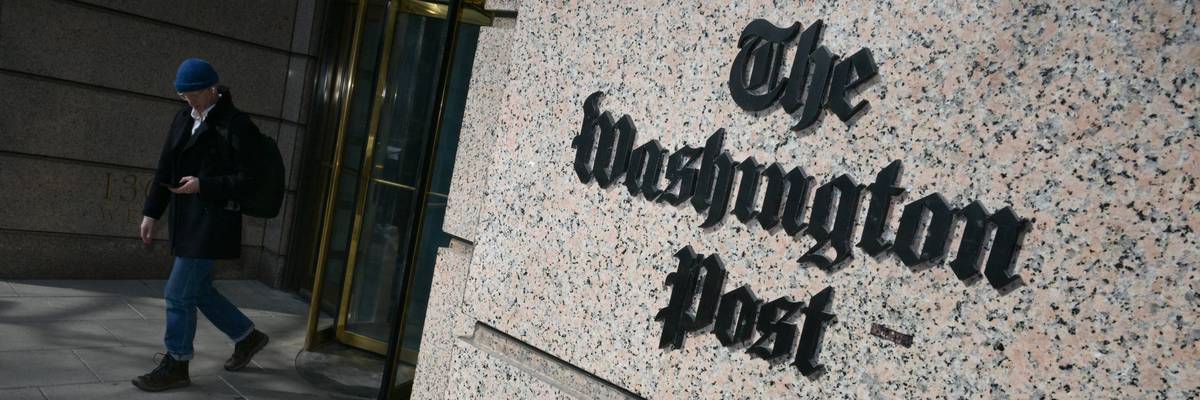
A man exits the Washington Post office building in Washington, DC, on February 4, 2026.
"When prosecutors abuse their power to facilitate efforts to silence reporting and intimidate news sources, disciplinary authorities must hold them accountable and impose real consequences," reads a filing.
Soon after the FBI raided Washington Post reporter Hannah Natanson's home in Virginia last month, the Freedom of the Press Foundation said it suspected that the Trump administration was either "ignoring or distorting" federal law when it allowed the search and seizure of Natanson's electronic devices to go forward.
On Monday, the organization said that recently unsealed court documents had proven its suspicions were correct as it filed a formal disciplinary complaint against the federal prosecutor who signed the search warrant application: Assistant US Attorney Gordon Kromberg had failed to disclose to the magistrate judge who approved the warrant the Privacy Protection Act of 1980, which strictly limit search warrants for journalists' work products and materials.
That allegation led the Freedom of the Press Foundation (FPF) to file a disciplinary complaint with the Virginia State Bar on Friday.
By not alerting Judge William B. Porter to the law, Kromberg "appears to have violated an ethical rule that requires lawyers to reveal relevant legal authority to the court, even if it undermines their arguments," said FPF.
Seth Stein, the chief of advocacy for FPF, filed the complaint nearly a month after the FBI executed the search warrant at Natanson's home and seized several devices.
The raid was completed as part of an Espionage Act investigation into Aurelio Perez-Lugones, a government contractor who's accused of leaking classified information to Natanson. The journalist has extensively covered the experiences of people in the federal workforce in the past year, as the Trump administration has fired or pushed out more than 350,000 employees.
The Privacy Protection Act prohibits searches of a journalist's materials unless there is probable cause to believe that the reporter themself has committed a crime related to their work materials. The law stipulates that the mere possession of materials by a journalist cannot trigger that exception unless the materials are child sexual abuse imagery or national security secrets.
As the New York Times reported last week, "It is disputed whether it is constitutionally permissible to apply the Espionage Act to ordinary news gathering activities by people without security clearances."
Prosecutors have never charged a traditional reporter with violating the Espionage Act for news gathering activities. The Department of Justice alarmed First Amendment advocates during President Donald Trump's first administration when it charged WikiLeaks founder Julian Assange under the Espionage Act for publishing classified files; Assange later struck a plea deal so the constitutionality of his charges were not tested in court.
Stein emphasized in the filing that Kromberg's omission of the Privacy Protection Act "could not have been a mere oversight—the warrant in question was, predictably, a subject of national news, given that raids of journalists’ homes during investigations of alleged leaks by government personnel are, according to experts, unprecedented."
"Disciplinary bodies cannot look the other way and ignore misconduct that threatens the First Amendment, particularly from an administration with a long history of misleading judges and everyone else."
"Under the Department of Justice’s own policies," reads the filing, "the search should have been discussed with and authorized by the highest levels of the DOJ, including the attorney general."
Several legal experts who specialize in ethics told the Times last week that if Kromberg knew about the Privacy Protection Act and didn't alert Porter that the search could violate the law, he violate an ethical statute called Rule 3.3, “Candor Toward the Tribunal."
New York University professor emeritus Stephen Gillers told the Times that Kromberg was required “to disclose the Privacy Protection Act because it is ‘controlling,’ which means the judge was required to consider it in his ruling on the government’s request, and because the act’s provisions are ‘adverse,’ which means its requirements could have the effect of denying the government’s request.”
Stein said in a statement that Kromberg and the federal government "omitted a federal law that should have prohibited the raid of Hannah Natanson’s home when applying for a search warrant."
Natanson and the Post filed a lawsuit demanding the return of her electronic devices and data, arguing that under the Privacy Protection Act, it is illegal for the government to review her reporting work that is unrelated to the investigation into Perez-Lugones.
In the filing on Friday, Stein warned that in addition to harming Natanson's ability to complete her work, the FBI has jeopardized the confidentiality of her sources, and "journalists and whistleblowers across the country are sure to think twice about drawing the ire of the current administration" in light of the reporter's ordeal.
"Disciplinary bodies cannot look the other way and ignore misconduct that threatens the First Amendment, particularly from an administration with a long history of misleading judges and everyone else," said Stein on Monday. "When prosecutors abuse their power to facilitate efforts to silence reporting and intimidate news sources, disciplinary authorities must hold them accountable and impose real consequences.”
FPF called on the Virginia State Bar to take "appropriate disciplinary action, up to and including disbarment," against Kromberg.
The bar, said the group, should "expedite disciplinary proceedings due to the dire consequences for First Amendment freedoms if illegal newsroom raids and seizures of journalists’ work product are allowed to go unchecked."
Dear Common Dreams reader, It’s been nearly 30 years since I co-founded Common Dreams with my late wife, Lina Newhouser. We had the radical notion that journalism should serve the public good, not corporate profits. It was clear to us from the outset what it would take to build such a project. No paid advertisements. No corporate sponsors. No millionaire publisher telling us what to think or do. Many people said we wouldn't last a year, but we proved those doubters wrong. Together with a tremendous team of journalists and dedicated staff, we built an independent media outlet free from the constraints of profits and corporate control. Our mission has always been simple: To inform. To inspire. To ignite change for the common good. Building Common Dreams was not easy. Our survival was never guaranteed. When you take on the most powerful forces—Wall Street greed, fossil fuel industry destruction, Big Tech lobbyists, and uber-rich oligarchs who have spent billions upon billions rigging the economy and democracy in their favor—the only bulwark you have is supporters who believe in your work. But here’s the urgent message from me today. It's never been this bad out there. And it's never been this hard to keep us going. At the very moment Common Dreams is most needed, the threats we face are intensifying. We need your support now more than ever. We don't accept corporate advertising and never will. We don't have a paywall because we don't think people should be blocked from critical news based on their ability to pay. Everything we do is funded by the donations of readers like you. When everyone does the little they can afford, we are strong. But if that support retreats or dries up, so do we. Will you donate now to make sure Common Dreams not only survives but thrives? —Craig Brown, Co-founder |
Soon after the FBI raided Washington Post reporter Hannah Natanson's home in Virginia last month, the Freedom of the Press Foundation said it suspected that the Trump administration was either "ignoring or distorting" federal law when it allowed the search and seizure of Natanson's electronic devices to go forward.
On Monday, the organization said that recently unsealed court documents had proven its suspicions were correct as it filed a formal disciplinary complaint against the federal prosecutor who signed the search warrant application: Assistant US Attorney Gordon Kromberg had failed to disclose to the magistrate judge who approved the warrant the Privacy Protection Act of 1980, which strictly limit search warrants for journalists' work products and materials.
That allegation led the Freedom of the Press Foundation (FPF) to file a disciplinary complaint with the Virginia State Bar on Friday.
By not alerting Judge William B. Porter to the law, Kromberg "appears to have violated an ethical rule that requires lawyers to reveal relevant legal authority to the court, even if it undermines their arguments," said FPF.
Seth Stein, the chief of advocacy for FPF, filed the complaint nearly a month after the FBI executed the search warrant at Natanson's home and seized several devices.
The raid was completed as part of an Espionage Act investigation into Aurelio Perez-Lugones, a government contractor who's accused of leaking classified information to Natanson. The journalist has extensively covered the experiences of people in the federal workforce in the past year, as the Trump administration has fired or pushed out more than 350,000 employees.
The Privacy Protection Act prohibits searches of a journalist's materials unless there is probable cause to believe that the reporter themself has committed a crime related to their work materials. The law stipulates that the mere possession of materials by a journalist cannot trigger that exception unless the materials are child sexual abuse imagery or national security secrets.
As the New York Times reported last week, "It is disputed whether it is constitutionally permissible to apply the Espionage Act to ordinary news gathering activities by people without security clearances."
Prosecutors have never charged a traditional reporter with violating the Espionage Act for news gathering activities. The Department of Justice alarmed First Amendment advocates during President Donald Trump's first administration when it charged WikiLeaks founder Julian Assange under the Espionage Act for publishing classified files; Assange later struck a plea deal so the constitutionality of his charges were not tested in court.
Stein emphasized in the filing that Kromberg's omission of the Privacy Protection Act "could not have been a mere oversight—the warrant in question was, predictably, a subject of national news, given that raids of journalists’ homes during investigations of alleged leaks by government personnel are, according to experts, unprecedented."
"Disciplinary bodies cannot look the other way and ignore misconduct that threatens the First Amendment, particularly from an administration with a long history of misleading judges and everyone else."
"Under the Department of Justice’s own policies," reads the filing, "the search should have been discussed with and authorized by the highest levels of the DOJ, including the attorney general."
Several legal experts who specialize in ethics told the Times last week that if Kromberg knew about the Privacy Protection Act and didn't alert Porter that the search could violate the law, he violate an ethical statute called Rule 3.3, “Candor Toward the Tribunal."
New York University professor emeritus Stephen Gillers told the Times that Kromberg was required “to disclose the Privacy Protection Act because it is ‘controlling,’ which means the judge was required to consider it in his ruling on the government’s request, and because the act’s provisions are ‘adverse,’ which means its requirements could have the effect of denying the government’s request.”
Stein said in a statement that Kromberg and the federal government "omitted a federal law that should have prohibited the raid of Hannah Natanson’s home when applying for a search warrant."
Natanson and the Post filed a lawsuit demanding the return of her electronic devices and data, arguing that under the Privacy Protection Act, it is illegal for the government to review her reporting work that is unrelated to the investigation into Perez-Lugones.
In the filing on Friday, Stein warned that in addition to harming Natanson's ability to complete her work, the FBI has jeopardized the confidentiality of her sources, and "journalists and whistleblowers across the country are sure to think twice about drawing the ire of the current administration" in light of the reporter's ordeal.
"Disciplinary bodies cannot look the other way and ignore misconduct that threatens the First Amendment, particularly from an administration with a long history of misleading judges and everyone else," said Stein on Monday. "When prosecutors abuse their power to facilitate efforts to silence reporting and intimidate news sources, disciplinary authorities must hold them accountable and impose real consequences.”
FPF called on the Virginia State Bar to take "appropriate disciplinary action, up to and including disbarment," against Kromberg.
The bar, said the group, should "expedite disciplinary proceedings due to the dire consequences for First Amendment freedoms if illegal newsroom raids and seizures of journalists’ work product are allowed to go unchecked."
Soon after the FBI raided Washington Post reporter Hannah Natanson's home in Virginia last month, the Freedom of the Press Foundation said it suspected that the Trump administration was either "ignoring or distorting" federal law when it allowed the search and seizure of Natanson's electronic devices to go forward.
On Monday, the organization said that recently unsealed court documents had proven its suspicions were correct as it filed a formal disciplinary complaint against the federal prosecutor who signed the search warrant application: Assistant US Attorney Gordon Kromberg had failed to disclose to the magistrate judge who approved the warrant the Privacy Protection Act of 1980, which strictly limit search warrants for journalists' work products and materials.
That allegation led the Freedom of the Press Foundation (FPF) to file a disciplinary complaint with the Virginia State Bar on Friday.
By not alerting Judge William B. Porter to the law, Kromberg "appears to have violated an ethical rule that requires lawyers to reveal relevant legal authority to the court, even if it undermines their arguments," said FPF.
Seth Stein, the chief of advocacy for FPF, filed the complaint nearly a month after the FBI executed the search warrant at Natanson's home and seized several devices.
The raid was completed as part of an Espionage Act investigation into Aurelio Perez-Lugones, a government contractor who's accused of leaking classified information to Natanson. The journalist has extensively covered the experiences of people in the federal workforce in the past year, as the Trump administration has fired or pushed out more than 350,000 employees.
The Privacy Protection Act prohibits searches of a journalist's materials unless there is probable cause to believe that the reporter themself has committed a crime related to their work materials. The law stipulates that the mere possession of materials by a journalist cannot trigger that exception unless the materials are child sexual abuse imagery or national security secrets.
As the New York Times reported last week, "It is disputed whether it is constitutionally permissible to apply the Espionage Act to ordinary news gathering activities by people without security clearances."
Prosecutors have never charged a traditional reporter with violating the Espionage Act for news gathering activities. The Department of Justice alarmed First Amendment advocates during President Donald Trump's first administration when it charged WikiLeaks founder Julian Assange under the Espionage Act for publishing classified files; Assange later struck a plea deal so the constitutionality of his charges were not tested in court.
Stein emphasized in the filing that Kromberg's omission of the Privacy Protection Act "could not have been a mere oversight—the warrant in question was, predictably, a subject of national news, given that raids of journalists’ homes during investigations of alleged leaks by government personnel are, according to experts, unprecedented."
"Disciplinary bodies cannot look the other way and ignore misconduct that threatens the First Amendment, particularly from an administration with a long history of misleading judges and everyone else."
"Under the Department of Justice’s own policies," reads the filing, "the search should have been discussed with and authorized by the highest levels of the DOJ, including the attorney general."
Several legal experts who specialize in ethics told the Times last week that if Kromberg knew about the Privacy Protection Act and didn't alert Porter that the search could violate the law, he violate an ethical statute called Rule 3.3, “Candor Toward the Tribunal."
New York University professor emeritus Stephen Gillers told the Times that Kromberg was required “to disclose the Privacy Protection Act because it is ‘controlling,’ which means the judge was required to consider it in his ruling on the government’s request, and because the act’s provisions are ‘adverse,’ which means its requirements could have the effect of denying the government’s request.”
Stein said in a statement that Kromberg and the federal government "omitted a federal law that should have prohibited the raid of Hannah Natanson’s home when applying for a search warrant."
Natanson and the Post filed a lawsuit demanding the return of her electronic devices and data, arguing that under the Privacy Protection Act, it is illegal for the government to review her reporting work that is unrelated to the investigation into Perez-Lugones.
In the filing on Friday, Stein warned that in addition to harming Natanson's ability to complete her work, the FBI has jeopardized the confidentiality of her sources, and "journalists and whistleblowers across the country are sure to think twice about drawing the ire of the current administration" in light of the reporter's ordeal.
"Disciplinary bodies cannot look the other way and ignore misconduct that threatens the First Amendment, particularly from an administration with a long history of misleading judges and everyone else," said Stein on Monday. "When prosecutors abuse their power to facilitate efforts to silence reporting and intimidate news sources, disciplinary authorities must hold them accountable and impose real consequences.”
FPF called on the Virginia State Bar to take "appropriate disciplinary action, up to and including disbarment," against Kromberg.
The bar, said the group, should "expedite disciplinary proceedings due to the dire consequences for First Amendment freedoms if illegal newsroom raids and seizures of journalists’ work product are allowed to go unchecked."