SUBSCRIBE TO OUR FREE NEWSLETTER
Daily news & progressive opinion—funded by the people, not the corporations—delivered straight to your inbox.
5
#000000
#FFFFFF
To donate by check, phone, or other method, see our More Ways to Give page.
Daily news & progressive opinion—funded by the people, not the corporations—delivered straight to your inbox.
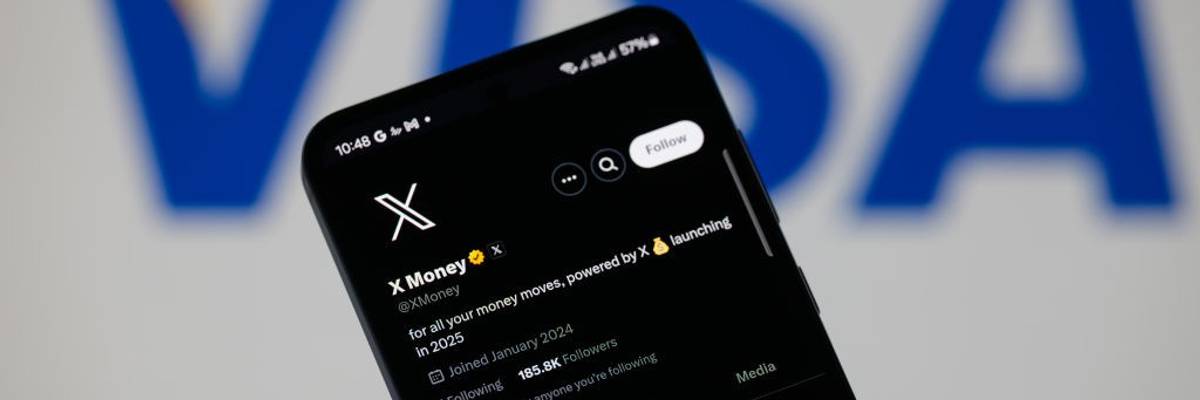
"Allowing companies like Apple, PayPal, and X Money to avoid federal laws creates a blind spot for rampant financial abuse and fraud," said one watchdog group.
House Republicans on Tuesday are expected to join their Senate colleagues in advancing a resolution that would roll back a Consumer Financial Protection Bureau rule designed to protect the American public from scammers on digital payment platforms, a move that watchdog groups say would personally benefit President Donald Trump and billionaire Elon Musk.
The House resolution, led by Rep. Mike Flood (R-Neb.), targets a CFPB rule that was finalized shortly after the November election, in the waning days of the Biden administration. The CFPB said at the time that the rule would help ensure that companies offering digital payment services "follow federal law just like large banks, credit unions, and other financial institutions."
But the CFPB is now led by Project 2025 architect Russell Vought, who has halted virtually all of the agency's work while Musk's Department of Government Efficiency overtakes the bureau, looking to gut it from the inside.
With their effort to rescind the CFPB's digital payments rule, congressional Republicans are aiding Musk's assault on the CFPB and delivering a major win for his push into financial services with X Money. The Senate voted mostly along party lines to rescind the rule last week.
"This is a gift to Big Tech and likely the personal finances of Trump and Musk themselves," Tony Carrk, executive director of Accountable.US, said in a statement as the GOP-led House Financial Services Committee took up the resolution. "These companies process over 13 billion transactions a year, and millions of Americans are relying on them for safe and secure payments."
"Allowing companies like Apple, PayPal, and X Money to avoid federal laws creates a blind spot for rampant financial abuse and fraud," Carrk added.
Accountable.US noted in a recent report that both Trump and Musk stand to benefit financially from efforts to gut the CFPB and eliminate rules enacted under the Biden administration.
"Last year, Trump Media & Technology Group filed a trademark to create a broad financial services platform Truth.Fi," the group observed. "The products and services they said they would perform included the creation of a 'downloadable computer software' that serves as a 'digital wallet' to store and trade cryptocurrencies as well as a digital payments processing platform for purchases made with cryptocurrencies."
That initiative and Musk's X Money would fall under the purview of the rule that congressional Republicans are poised to roll back.
In a CNN appearance on Monday, former CFPB Director Rohit Chopra said that Musk and other powerful corporate executives are "fixated" on the consumer bureau because it is "responsible for monitoring all of those tech companies for how they're moving our money to protect against privacy errors and fraud."
Dear Common Dreams reader, It’s been nearly 30 years since I co-founded Common Dreams with my late wife, Lina Newhouser. We had the radical notion that journalism should serve the public good, not corporate profits. It was clear to us from the outset what it would take to build such a project. No paid advertisements. No corporate sponsors. No millionaire publisher telling us what to think or do. Many people said we wouldn't last a year, but we proved those doubters wrong. Together with a tremendous team of journalists and dedicated staff, we built an independent media outlet free from the constraints of profits and corporate control. Our mission has always been simple: To inform. To inspire. To ignite change for the common good. Building Common Dreams was not easy. Our survival was never guaranteed. When you take on the most powerful forces—Wall Street greed, fossil fuel industry destruction, Big Tech lobbyists, and uber-rich oligarchs who have spent billions upon billions rigging the economy and democracy in their favor—the only bulwark you have is supporters who believe in your work. But here’s the urgent message from me today. It's never been this bad out there. And it's never been this hard to keep us going. At the very moment Common Dreams is most needed, the threats we face are intensifying. We need your support now more than ever. We don't accept corporate advertising and never will. We don't have a paywall because we don't think people should be blocked from critical news based on their ability to pay. Everything we do is funded by the donations of readers like you. When everyone does the little they can afford, we are strong. But if that support retreats or dries up, so do we. Will you donate now to make sure Common Dreams not only survives but thrives? —Craig Brown, Co-founder |
House Republicans on Tuesday are expected to join their Senate colleagues in advancing a resolution that would roll back a Consumer Financial Protection Bureau rule designed to protect the American public from scammers on digital payment platforms, a move that watchdog groups say would personally benefit President Donald Trump and billionaire Elon Musk.
The House resolution, led by Rep. Mike Flood (R-Neb.), targets a CFPB rule that was finalized shortly after the November election, in the waning days of the Biden administration. The CFPB said at the time that the rule would help ensure that companies offering digital payment services "follow federal law just like large banks, credit unions, and other financial institutions."
But the CFPB is now led by Project 2025 architect Russell Vought, who has halted virtually all of the agency's work while Musk's Department of Government Efficiency overtakes the bureau, looking to gut it from the inside.
With their effort to rescind the CFPB's digital payments rule, congressional Republicans are aiding Musk's assault on the CFPB and delivering a major win for his push into financial services with X Money. The Senate voted mostly along party lines to rescind the rule last week.
"This is a gift to Big Tech and likely the personal finances of Trump and Musk themselves," Tony Carrk, executive director of Accountable.US, said in a statement as the GOP-led House Financial Services Committee took up the resolution. "These companies process over 13 billion transactions a year, and millions of Americans are relying on them for safe and secure payments."
"Allowing companies like Apple, PayPal, and X Money to avoid federal laws creates a blind spot for rampant financial abuse and fraud," Carrk added.
Accountable.US noted in a recent report that both Trump and Musk stand to benefit financially from efforts to gut the CFPB and eliminate rules enacted under the Biden administration.
"Last year, Trump Media & Technology Group filed a trademark to create a broad financial services platform Truth.Fi," the group observed. "The products and services they said they would perform included the creation of a 'downloadable computer software' that serves as a 'digital wallet' to store and trade cryptocurrencies as well as a digital payments processing platform for purchases made with cryptocurrencies."
That initiative and Musk's X Money would fall under the purview of the rule that congressional Republicans are poised to roll back.
In a CNN appearance on Monday, former CFPB Director Rohit Chopra said that Musk and other powerful corporate executives are "fixated" on the consumer bureau because it is "responsible for monitoring all of those tech companies for how they're moving our money to protect against privacy errors and fraud."
House Republicans on Tuesday are expected to join their Senate colleagues in advancing a resolution that would roll back a Consumer Financial Protection Bureau rule designed to protect the American public from scammers on digital payment platforms, a move that watchdog groups say would personally benefit President Donald Trump and billionaire Elon Musk.
The House resolution, led by Rep. Mike Flood (R-Neb.), targets a CFPB rule that was finalized shortly after the November election, in the waning days of the Biden administration. The CFPB said at the time that the rule would help ensure that companies offering digital payment services "follow federal law just like large banks, credit unions, and other financial institutions."
But the CFPB is now led by Project 2025 architect Russell Vought, who has halted virtually all of the agency's work while Musk's Department of Government Efficiency overtakes the bureau, looking to gut it from the inside.
With their effort to rescind the CFPB's digital payments rule, congressional Republicans are aiding Musk's assault on the CFPB and delivering a major win for his push into financial services with X Money. The Senate voted mostly along party lines to rescind the rule last week.
"This is a gift to Big Tech and likely the personal finances of Trump and Musk themselves," Tony Carrk, executive director of Accountable.US, said in a statement as the GOP-led House Financial Services Committee took up the resolution. "These companies process over 13 billion transactions a year, and millions of Americans are relying on them for safe and secure payments."
"Allowing companies like Apple, PayPal, and X Money to avoid federal laws creates a blind spot for rampant financial abuse and fraud," Carrk added.
Accountable.US noted in a recent report that both Trump and Musk stand to benefit financially from efforts to gut the CFPB and eliminate rules enacted under the Biden administration.
"Last year, Trump Media & Technology Group filed a trademark to create a broad financial services platform Truth.Fi," the group observed. "The products and services they said they would perform included the creation of a 'downloadable computer software' that serves as a 'digital wallet' to store and trade cryptocurrencies as well as a digital payments processing platform for purchases made with cryptocurrencies."
That initiative and Musk's X Money would fall under the purview of the rule that congressional Republicans are poised to roll back.
In a CNN appearance on Monday, former CFPB Director Rohit Chopra said that Musk and other powerful corporate executives are "fixated" on the consumer bureau because it is "responsible for monitoring all of those tech companies for how they're moving our money to protect against privacy errors and fraud."