SUBSCRIBE TO OUR FREE NEWSLETTER
Daily news & progressive opinion—funded by the people, not the corporations—delivered straight to your inbox.
5
#000000
#FFFFFF
To donate by check, phone, or other method, see our More Ways to Give page.
Daily news & progressive opinion—funded by the people, not the corporations—delivered straight to your inbox.
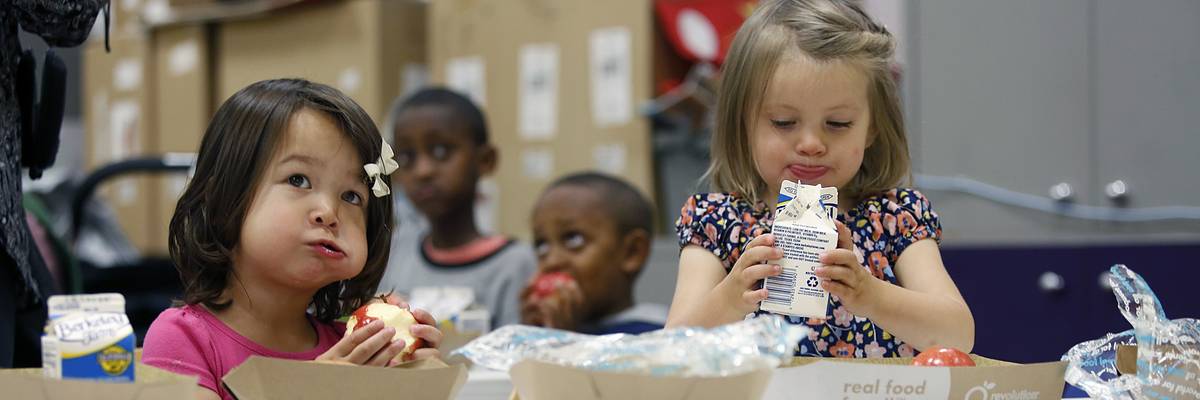
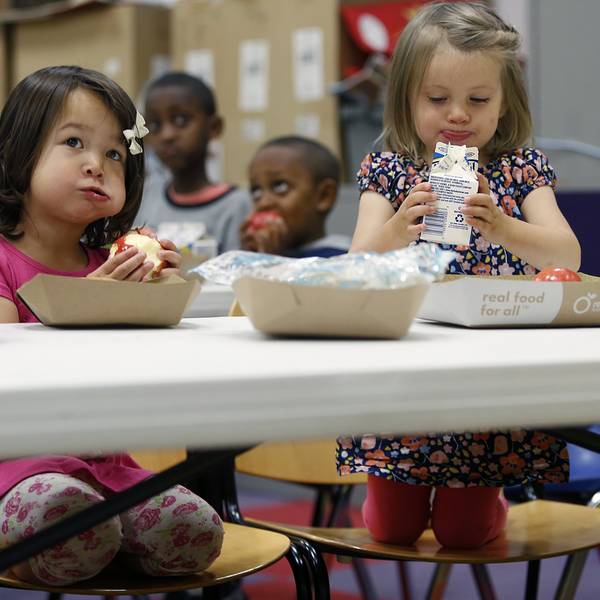
Two girls have lunch at a public library in San Francisco on July 20, 2015, as part of a free summer lunch program for children.
Four of the states also rejected Medicaid expansion.
While children's rights and anti-hunger advocates across the United States applauded Wednesday as the U.S. Department of Agriculture announced summer food aid for kids, more than a dozen Republican state leaders are rejecting the assistance.
The USDA said that 21 million children in 35 states are expected to be fed by the Summer Electronic Benefit Transfer (EBT) program set to launch this year, providing low-income parents with benefits to purchase food for their kids.
"This new child nutrition program will be a game-changer in combating summer hunger," said Feeding Indiana's Hungry, which runs food banks in the state.
No Kid Hungry New York said Democratic Gov. Kathy Hochul's decision to accept approximately $200 million to feed 2 million vulnerable children "represents a historic opportunity to dramatically reduce hunger for kids" in the state.
But advocacy groups in 15 states were left fearful and outraged by Agriculture Secretary Tom Vilsack's announcement, as 15 Republican-controlled states have declined the food aid.
Chris Bernard, chief executive of Hunger Free Oklahoma, told The Washington Post that an estimated 300,000 children in the state will lose access to free meals when the school year ends, leaving many hungry all summer after pandemic relief money helped provide them with food during school vacation for the last four years.
"We are extremely disappointed that the state says it is not able to implement Summer EBT for 2024," Bernard wrote in a column in The Oklahoman last week, pointing out that food aid has "proven to be effective in reducing child poverty and hunger rates and improving both academic and behavioral performance in school."
"In short, we know what works," wrote Bernard. "We need the policymakers to invest in these programs. The health of our children and our economy depend on it."
In states that are accepting the federal funds, families with incomes below the poverty level who already receive free or reduced-price lunches during the school year will be provided with $120 per child—or $40 each summer month—to purchase food at grocery stores or other retailers.
The program is launching following the expiration of pandemic aid programs and as grocery prices and food insecurity rates in the U.S. have soared in recent years, with the latter rising from 12.5% in 2021 to 17.3% in 2022.
Along with Oklahoma, the other 14 states that are not participating in the $2.5 billion Summer EBT program are Alabama, Alaska, Florida, Georgia, Idaho, Iowa, Louisiana, Mississippi, Nebraska, South Carolina, South Dakota, Texas, Vermont, and Wyoming.
In Florida, public policy analyst Vanessa Brito noted that Republican Gov. Ron DeSantis refused the funding weeks after a bill to weaken child labor laws advanced in the state House.
As the Post reported Wednesday, the Republican governors of Florida, Georgia, South Carolina, and Wyoming have also refused to expand Medicaid eligibility in their states, leaving low-income families without healthcare as well as summer meals.
Ife Finch Floyd, director of economic justice for the Georgia Budget & Policy Institute, denounced Republican Gov. Brian Kemp's claim that Georgia's state summer meals program is sufficient to feed low-income children, saying his decision to forgo the federal funding will leave 1,156,000 children without the Summer EBT.
In Oklahoma, three Indigenous tribes have opted to step in to help keep children in the state from going hungry over the summer.
The Cherokee, Chickasaw, and Choctaw tribes plan to provide $50 million to low-income households on their reservations, covering more than 30 counties in the state.
"I think it is mystifying that the state of Oklahoma would cut low-income children off from an additional source for food insecurity this summer," Cherokee Nation Principal Chief Chuck Hoskin told Tulsa World on Sunday. "That's not what I think we need to be doing in this state, and that's why, for another year, I will be administering this program for both Native and non-Native children."
Katie Bergh, a senior policy analyst who focuses on child nutrition at the Center on Budget and Policy Priorities, remarked that the passage of the Summer EBT program as part of a 2022 legislative package marked major progress over the past decade.
"Summer EBT is an effective model that reduces food insecurity and improves nutrition," said Bergh. "Kids shouldn't be going hungry when school is out!"
Dear Common Dreams reader, It’s been nearly 30 years since I co-founded Common Dreams with my late wife, Lina Newhouser. We had the radical notion that journalism should serve the public good, not corporate profits. It was clear to us from the outset what it would take to build such a project. No paid advertisements. No corporate sponsors. No millionaire publisher telling us what to think or do. Many people said we wouldn't last a year, but we proved those doubters wrong. Together with a tremendous team of journalists and dedicated staff, we built an independent media outlet free from the constraints of profits and corporate control. Our mission has always been simple: To inform. To inspire. To ignite change for the common good. Building Common Dreams was not easy. Our survival was never guaranteed. When you take on the most powerful forces—Wall Street greed, fossil fuel industry destruction, Big Tech lobbyists, and uber-rich oligarchs who have spent billions upon billions rigging the economy and democracy in their favor—the only bulwark you have is supporters who believe in your work. But here’s the urgent message from me today. It's never been this bad out there. And it's never been this hard to keep us going. At the very moment Common Dreams is most needed, the threats we face are intensifying. We need your support now more than ever. We don't accept corporate advertising and never will. We don't have a paywall because we don't think people should be blocked from critical news based on their ability to pay. Everything we do is funded by the donations of readers like you. When everyone does the little they can afford, we are strong. But if that support retreats or dries up, so do we. Will you donate now to make sure Common Dreams not only survives but thrives? —Craig Brown, Co-founder |
While children's rights and anti-hunger advocates across the United States applauded Wednesday as the U.S. Department of Agriculture announced summer food aid for kids, more than a dozen Republican state leaders are rejecting the assistance.
The USDA said that 21 million children in 35 states are expected to be fed by the Summer Electronic Benefit Transfer (EBT) program set to launch this year, providing low-income parents with benefits to purchase food for their kids.
"This new child nutrition program will be a game-changer in combating summer hunger," said Feeding Indiana's Hungry, which runs food banks in the state.
No Kid Hungry New York said Democratic Gov. Kathy Hochul's decision to accept approximately $200 million to feed 2 million vulnerable children "represents a historic opportunity to dramatically reduce hunger for kids" in the state.
But advocacy groups in 15 states were left fearful and outraged by Agriculture Secretary Tom Vilsack's announcement, as 15 Republican-controlled states have declined the food aid.
Chris Bernard, chief executive of Hunger Free Oklahoma, told The Washington Post that an estimated 300,000 children in the state will lose access to free meals when the school year ends, leaving many hungry all summer after pandemic relief money helped provide them with food during school vacation for the last four years.
"We are extremely disappointed that the state says it is not able to implement Summer EBT for 2024," Bernard wrote in a column in The Oklahoman last week, pointing out that food aid has "proven to be effective in reducing child poverty and hunger rates and improving both academic and behavioral performance in school."
"In short, we know what works," wrote Bernard. "We need the policymakers to invest in these programs. The health of our children and our economy depend on it."
In states that are accepting the federal funds, families with incomes below the poverty level who already receive free or reduced-price lunches during the school year will be provided with $120 per child—or $40 each summer month—to purchase food at grocery stores or other retailers.
The program is launching following the expiration of pandemic aid programs and as grocery prices and food insecurity rates in the U.S. have soared in recent years, with the latter rising from 12.5% in 2021 to 17.3% in 2022.
Along with Oklahoma, the other 14 states that are not participating in the $2.5 billion Summer EBT program are Alabama, Alaska, Florida, Georgia, Idaho, Iowa, Louisiana, Mississippi, Nebraska, South Carolina, South Dakota, Texas, Vermont, and Wyoming.
In Florida, public policy analyst Vanessa Brito noted that Republican Gov. Ron DeSantis refused the funding weeks after a bill to weaken child labor laws advanced in the state House.
As the Post reported Wednesday, the Republican governors of Florida, Georgia, South Carolina, and Wyoming have also refused to expand Medicaid eligibility in their states, leaving low-income families without healthcare as well as summer meals.
Ife Finch Floyd, director of economic justice for the Georgia Budget & Policy Institute, denounced Republican Gov. Brian Kemp's claim that Georgia's state summer meals program is sufficient to feed low-income children, saying his decision to forgo the federal funding will leave 1,156,000 children without the Summer EBT.
In Oklahoma, three Indigenous tribes have opted to step in to help keep children in the state from going hungry over the summer.
The Cherokee, Chickasaw, and Choctaw tribes plan to provide $50 million to low-income households on their reservations, covering more than 30 counties in the state.
"I think it is mystifying that the state of Oklahoma would cut low-income children off from an additional source for food insecurity this summer," Cherokee Nation Principal Chief Chuck Hoskin told Tulsa World on Sunday. "That's not what I think we need to be doing in this state, and that's why, for another year, I will be administering this program for both Native and non-Native children."
Katie Bergh, a senior policy analyst who focuses on child nutrition at the Center on Budget and Policy Priorities, remarked that the passage of the Summer EBT program as part of a 2022 legislative package marked major progress over the past decade.
"Summer EBT is an effective model that reduces food insecurity and improves nutrition," said Bergh. "Kids shouldn't be going hungry when school is out!"
While children's rights and anti-hunger advocates across the United States applauded Wednesday as the U.S. Department of Agriculture announced summer food aid for kids, more than a dozen Republican state leaders are rejecting the assistance.
The USDA said that 21 million children in 35 states are expected to be fed by the Summer Electronic Benefit Transfer (EBT) program set to launch this year, providing low-income parents with benefits to purchase food for their kids.
"This new child nutrition program will be a game-changer in combating summer hunger," said Feeding Indiana's Hungry, which runs food banks in the state.
No Kid Hungry New York said Democratic Gov. Kathy Hochul's decision to accept approximately $200 million to feed 2 million vulnerable children "represents a historic opportunity to dramatically reduce hunger for kids" in the state.
But advocacy groups in 15 states were left fearful and outraged by Agriculture Secretary Tom Vilsack's announcement, as 15 Republican-controlled states have declined the food aid.
Chris Bernard, chief executive of Hunger Free Oklahoma, told The Washington Post that an estimated 300,000 children in the state will lose access to free meals when the school year ends, leaving many hungry all summer after pandemic relief money helped provide them with food during school vacation for the last four years.
"We are extremely disappointed that the state says it is not able to implement Summer EBT for 2024," Bernard wrote in a column in The Oklahoman last week, pointing out that food aid has "proven to be effective in reducing child poverty and hunger rates and improving both academic and behavioral performance in school."
"In short, we know what works," wrote Bernard. "We need the policymakers to invest in these programs. The health of our children and our economy depend on it."
In states that are accepting the federal funds, families with incomes below the poverty level who already receive free or reduced-price lunches during the school year will be provided with $120 per child—or $40 each summer month—to purchase food at grocery stores or other retailers.
The program is launching following the expiration of pandemic aid programs and as grocery prices and food insecurity rates in the U.S. have soared in recent years, with the latter rising from 12.5% in 2021 to 17.3% in 2022.
Along with Oklahoma, the other 14 states that are not participating in the $2.5 billion Summer EBT program are Alabama, Alaska, Florida, Georgia, Idaho, Iowa, Louisiana, Mississippi, Nebraska, South Carolina, South Dakota, Texas, Vermont, and Wyoming.
In Florida, public policy analyst Vanessa Brito noted that Republican Gov. Ron DeSantis refused the funding weeks after a bill to weaken child labor laws advanced in the state House.
As the Post reported Wednesday, the Republican governors of Florida, Georgia, South Carolina, and Wyoming have also refused to expand Medicaid eligibility in their states, leaving low-income families without healthcare as well as summer meals.
Ife Finch Floyd, director of economic justice for the Georgia Budget & Policy Institute, denounced Republican Gov. Brian Kemp's claim that Georgia's state summer meals program is sufficient to feed low-income children, saying his decision to forgo the federal funding will leave 1,156,000 children without the Summer EBT.
In Oklahoma, three Indigenous tribes have opted to step in to help keep children in the state from going hungry over the summer.
The Cherokee, Chickasaw, and Choctaw tribes plan to provide $50 million to low-income households on their reservations, covering more than 30 counties in the state.
"I think it is mystifying that the state of Oklahoma would cut low-income children off from an additional source for food insecurity this summer," Cherokee Nation Principal Chief Chuck Hoskin told Tulsa World on Sunday. "That's not what I think we need to be doing in this state, and that's why, for another year, I will be administering this program for both Native and non-Native children."
Katie Bergh, a senior policy analyst who focuses on child nutrition at the Center on Budget and Policy Priorities, remarked that the passage of the Summer EBT program as part of a 2022 legislative package marked major progress over the past decade.
"Summer EBT is an effective model that reduces food insecurity and improves nutrition," said Bergh. "Kids shouldn't be going hungry when school is out!"