5
#000000
#FFFFFF
To donate by check, phone, or other method, see our More Ways to Give page.
Daily news & progressive opinion—funded by the people, not the corporations—delivered straight to your inbox.
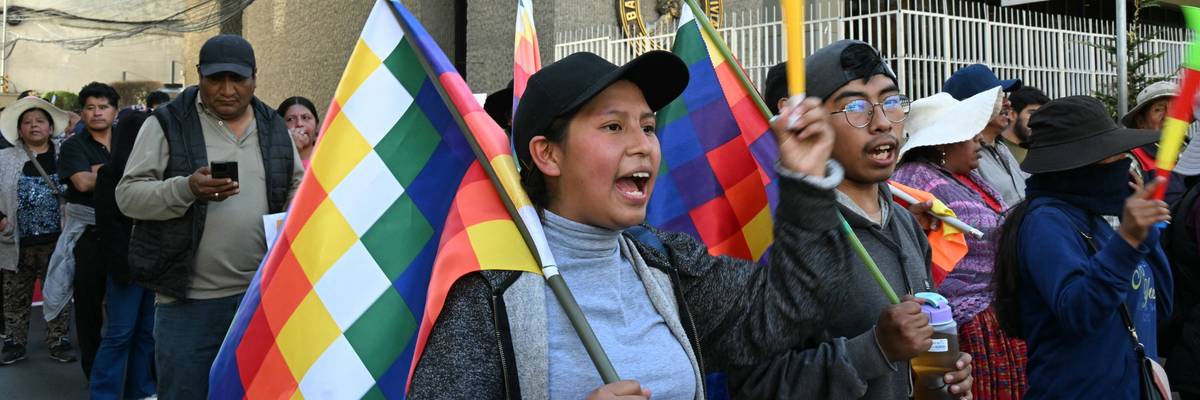
Farmers protest with Wiphala flags in demand of the resignation of Bolivia's President Rodrigo Paz in La Paz, on May 20, 2026.
"They call us all bandits and thugs," said protesters, who have been met with a police crackdown. "We are democracy."
Bolivian President Rodrigo Paz, who is facing calls for his resignation as Indigenous and labor organizers lead protests across the country, could declare a "state of exception"—described by local reporters as "essentially martial law"—as soon as Monday night after the country's Senate overwhelmingly voted to overturn a law regulating the government's ability to crack down on protests.
According to Bolivian reports, the Chamber of Senators on Sunday overturned Law 1341, which since 2020 had imposed strict time limits on emergency measures, ensured certain violable rights could not be suspended under a state of exception, required legislative oversight, and made the president criminally liable for exceeding the law's perimeters.
"Abrogating Law 1341 does not remove the state of exception from Bolivia’s legal architecture," according to The Rio Times. "It removes the apparatus that prevented that constitutional clause from being exercised at the executive’s sole discretion."
Joseph Bouchard, who has reported for Drop Site News and The Intercept from Latin America, said far-right groups linked to the 2019 coup in Bolivia have demanded "a return to martial law, to use lethal force against opposition with impunity, and crack down on opposition as much as possible."
"Many of these groups are openly fascist and white supremacist," said Bouchard.
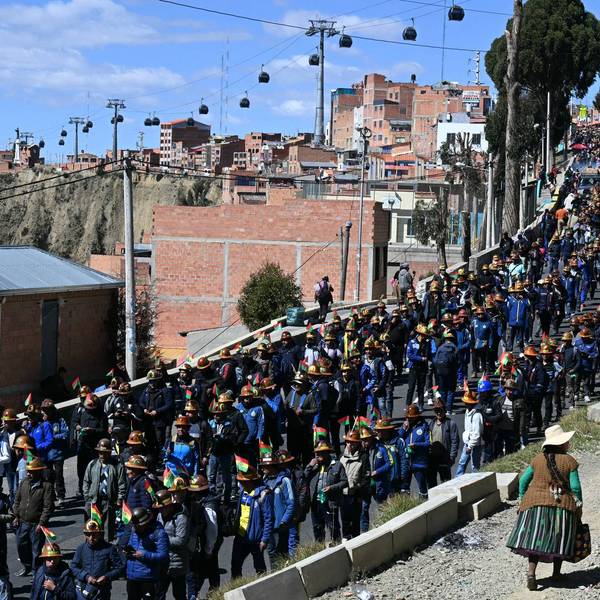
The law was overturned about three weeks into nationwide protests against Paz, who took office about six months ago. Protesters allied with former President Evo Morales have expressed anger over the administration's decision to end a fuel subsidy that was essential for working people amid an economic crisis. The demonstrators—comprised of a broad coalition which includes Indigenous groups, labor unions, and farmworkers—have demanded higher wages and an end to privatization and the broader neoliberal project under Paz.
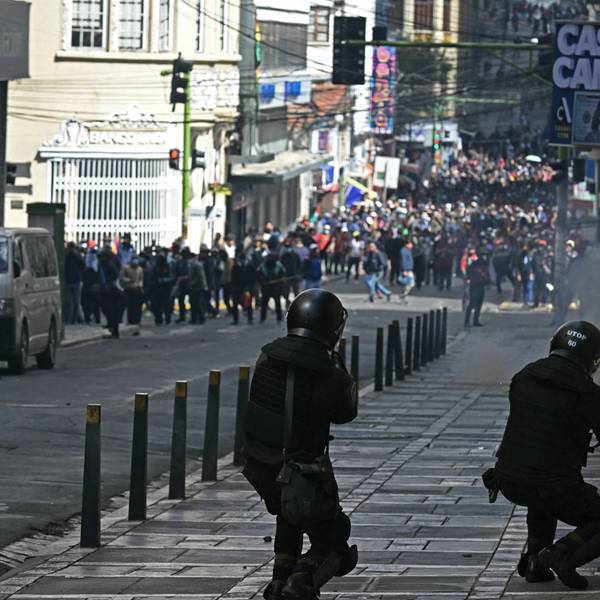
The protests have been met with a crackdown by police, in La Paz and at the sites of dozens of road blockades around the country.
Last week, the country's public prosecutor issued arrest warrants for at least two organizers, including Mario Argollo, executive secretary of the top Bolivian labor union, Central Obrera Boliviana (COB).
On Monday, TeleSUR reported that COB refused to engage in talks with Paz's government until the charges against Argollo are dropped.
Bouchard reported that if Paz's government implements a state of exception, "the measures would mean security forces could arrest anyone, for any reason, and use extraordinary measures against all opposition."
The overturning of Law 1341 struck down limits on "the use of lethal force by the security forces," he said.
Only three senators aligned with Vice President Edmand Lara voted against repealing the law.
According to The Rio Times, Lara "has been politically distancing himself from Paz almost since inauguration."
"No measure can stand above human life," said Lara, expressing "profound concern and indignation" over the Senate vote.
Dear Common Dreams reader, It’s been nearly 30 years since I co-founded Common Dreams with my late wife, Lina Newhouser. We had the radical notion that journalism should serve the public good, not corporate profits. It was clear to us from the outset what it would take to build such a project. No paid advertisements. No corporate sponsors. No millionaire publisher telling us what to think or do. Many people said we wouldn't last a year, but we proved those doubters wrong. Together with a tremendous team of journalists and dedicated staff, we built an independent media outlet free from the constraints of profits and corporate control. Our mission has always been simple: To inform. To inspire. To ignite change for the common good. Building Common Dreams was not easy. Our survival was never guaranteed. When you take on the most powerful forces—Wall Street greed, fossil fuel industry destruction, Big Tech lobbyists, and uber-rich oligarchs who have spent billions upon billions rigging the economy and democracy in their favor—the only bulwark you have is supporters who believe in your work. But here’s the urgent message from me today. It's never been this bad out there. And it's never been this hard to keep us going. At the very moment Common Dreams is most needed, the threats we face are intensifying. We need your support now more than ever. We don't accept corporate advertising and never will. We don't have a paywall because we don't think people should be blocked from critical news based on their ability to pay. Everything we do is funded by the donations of readers like you. When everyone does the little they can afford, we are strong. But if that support retreats or dries up, so do we. Will you donate now to make sure Common Dreams not only survives but thrives? —Craig Brown, Co-founder |
Bolivian President Rodrigo Paz, who is facing calls for his resignation as Indigenous and labor organizers lead protests across the country, could declare a "state of exception"—described by local reporters as "essentially martial law"—as soon as Monday night after the country's Senate overwhelmingly voted to overturn a law regulating the government's ability to crack down on protests.
According to Bolivian reports, the Chamber of Senators on Sunday overturned Law 1341, which since 2020 had imposed strict time limits on emergency measures, ensured certain violable rights could not be suspended under a state of exception, required legislative oversight, and made the president criminally liable for exceeding the law's perimeters.
"Abrogating Law 1341 does not remove the state of exception from Bolivia’s legal architecture," according to The Rio Times. "It removes the apparatus that prevented that constitutional clause from being exercised at the executive’s sole discretion."
Joseph Bouchard, who has reported for Drop Site News and The Intercept from Latin America, said far-right groups linked to the 2019 coup in Bolivia have demanded "a return to martial law, to use lethal force against opposition with impunity, and crack down on opposition as much as possible."
"Many of these groups are openly fascist and white supremacist," said Bouchard.
The law was overturned about three weeks into nationwide protests against Paz, who took office about six months ago. Protesters allied with former President Evo Morales have expressed anger over the administration's decision to end a fuel subsidy that was essential for working people amid an economic crisis. The demonstrators—comprised of a broad coalition which includes Indigenous groups, labor unions, and farmworkers—have demanded higher wages and an end to privatization and the broader neoliberal project under Paz.
The protests have been met with a crackdown by police, in La Paz and at the sites of dozens of road blockades around the country.
Last week, the country's public prosecutor issued arrest warrants for at least two organizers, including Mario Argollo, executive secretary of the top Bolivian labor union, Central Obrera Boliviana (COB).
On Monday, TeleSUR reported that COB refused to engage in talks with Paz's government until the charges against Argollo are dropped.
Bouchard reported that if Paz's government implements a state of exception, "the measures would mean security forces could arrest anyone, for any reason, and use extraordinary measures against all opposition."
The overturning of Law 1341 struck down limits on "the use of lethal force by the security forces," he said.
Only three senators aligned with Vice President Edmand Lara voted against repealing the law.
According to The Rio Times, Lara "has been politically distancing himself from Paz almost since inauguration."
"No measure can stand above human life," said Lara, expressing "profound concern and indignation" over the Senate vote.
Bolivian President Rodrigo Paz, who is facing calls for his resignation as Indigenous and labor organizers lead protests across the country, could declare a "state of exception"—described by local reporters as "essentially martial law"—as soon as Monday night after the country's Senate overwhelmingly voted to overturn a law regulating the government's ability to crack down on protests.
According to Bolivian reports, the Chamber of Senators on Sunday overturned Law 1341, which since 2020 had imposed strict time limits on emergency measures, ensured certain violable rights could not be suspended under a state of exception, required legislative oversight, and made the president criminally liable for exceeding the law's perimeters.
"Abrogating Law 1341 does not remove the state of exception from Bolivia’s legal architecture," according to The Rio Times. "It removes the apparatus that prevented that constitutional clause from being exercised at the executive’s sole discretion."
Joseph Bouchard, who has reported for Drop Site News and The Intercept from Latin America, said far-right groups linked to the 2019 coup in Bolivia have demanded "a return to martial law, to use lethal force against opposition with impunity, and crack down on opposition as much as possible."
"Many of these groups are openly fascist and white supremacist," said Bouchard.
The law was overturned about three weeks into nationwide protests against Paz, who took office about six months ago. Protesters allied with former President Evo Morales have expressed anger over the administration's decision to end a fuel subsidy that was essential for working people amid an economic crisis. The demonstrators—comprised of a broad coalition which includes Indigenous groups, labor unions, and farmworkers—have demanded higher wages and an end to privatization and the broader neoliberal project under Paz.
The protests have been met with a crackdown by police, in La Paz and at the sites of dozens of road blockades around the country.
Last week, the country's public prosecutor issued arrest warrants for at least two organizers, including Mario Argollo, executive secretary of the top Bolivian labor union, Central Obrera Boliviana (COB).
On Monday, TeleSUR reported that COB refused to engage in talks with Paz's government until the charges against Argollo are dropped.
Bouchard reported that if Paz's government implements a state of exception, "the measures would mean security forces could arrest anyone, for any reason, and use extraordinary measures against all opposition."
The overturning of Law 1341 struck down limits on "the use of lethal force by the security forces," he said.
Only three senators aligned with Vice President Edmand Lara voted against repealing the law.
According to The Rio Times, Lara "has been politically distancing himself from Paz almost since inauguration."
"No measure can stand above human life," said Lara, expressing "profound concern and indignation" over the Senate vote.