SUBSCRIBE TO OUR FREE NEWSLETTER
Daily news & progressive opinion—funded by the people, not the corporations—delivered straight to your inbox.
5
#000000
#FFFFFF
To donate by check, phone, or other method, see our More Ways to Give page.
Daily news & progressive opinion—funded by the people, not the corporations—delivered straight to your inbox.
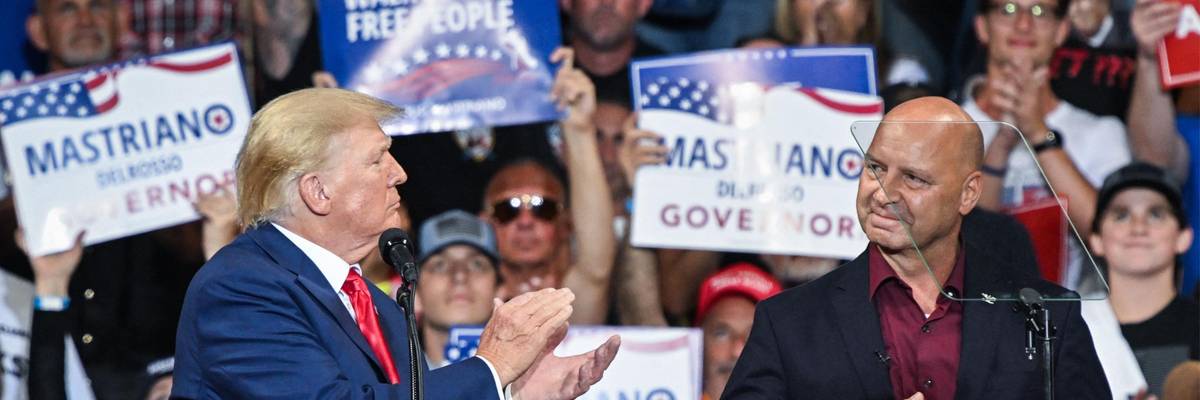
Former U.S. President Donald Trump (L) applauds Pennsylvania Republican gubernatorial candidate Doug Mastriano during a campaign rally in support of him and Mehmet Oz for U.S. Senate at Mohegan Sun Arena in Wilkes-Barre, Pennsylvania on September 3, 2022.
As political voices--including U.S. President Joe Biden--sound the alarm about the state of American democracy nine weeks away from the midterms, FiveThirtyEight on Tuesday published an analysis highlighting election deniers on the ballot.
"A political party that falsely tells supporters that a free and fair election was illegitimate is bad for American democracy."
To determine which candidates bought into former President Donald Trump's "Big Lie" that the 2020 presidential election was stolen from him, FiveThirtyEight examined campaign materials, debates, reporting, and social media, and contacted every Republican nominee for the U.S. House and Senate as well as governor, secretary of state, and attorney general.
The review revealed that of all 529 GOP candidates analyzed, 195 "either clearly stated that the election was stolen from Trump or took legal action to overturn the results, such as voting not to certify election results or joining lawsuits that sought to overturn the election."
Another 61 nominees haven't explicitly claimed the election was stolen or taken related legal action but also haven't said it was legitimate and even "raised doubts about potential fraud."
Additionally, the position of 115 candidates could not be determined. As FiveThirtyEight explained, "They either had no comment on the 2020 election or avoided answering when asked directly."
Only 71 nominees fully accepted the 2020 results and another 87 "accepted with reservations," meaning they believe President Joe Biden won "but still raised concerns about the integrity of the election." In other words, just 30% of the GOP candidates accept the election in some form.
Many election deniers and "doubters" are expected to win their races, according to FiveThirtyEight's midterm elections forecast.
Among Republican House candidates, "118 election deniers and eight election doubters have at least a 95% chance of winning." While only three Senate candidates have those odds--and seven senators who objected to the election certification are not up for reelection this year--there are a few others who "still have a real shot at winning."
At the state level, at least two election deniers and four doubters have a 95% chance of being elected governor. FiveThirtyEight doesn't forecast elections for the other positions but pointed out that "there are also seven election deniers running for attorney general and six for secretary of state, the post that oversees election administration in most states."
The analysis--part of the ABC News series "Democracy in Peril"--features a drop-down list that allows readers to input each state to review the GOP nominees along with their 2020 election positions, the sources of that information, and their chances of winning.
Along with the "terrific resource" from FiveThirtyEight, the group Common Cause on Tuesday released a scorecard showing how members of the 117th Congress voted on various democracy-related pieces of legislation, including the resolution for Trump's historic second impeachment and conviction.
As the organization's president, Karen Hobert Flynn, wrote in the scorecard's introduction, "Never has it been more important for voters to stand together and demand candidates tell them what they will do to strengthen our march toward a multiracial, multicultural, and multiethnic democracy that respects and works for everyone."
Both projects come as the Senate was back in session Tuesday and House members are set to return to Washington, D.C. next week--after which the House Select Committee to Investigate the January 6th Attack on the United States Capitol is expected to continue public hearings.
Speaking in Philadelphia late last week, Biden referenced the Capitol attack while arguing that "MAGA Republicans," including Trump, pose "a 'clear and present danger' to our democracy" and "now America must choose: to move forward or to move backward."
FiveThirtyEight's findings provoked similar warnings, with Georgetown University professor Donald Moynihan tweeting Tuesday that "a political party that falsely tells supporters that a free and fair election was illegitimate is bad for American democracy."
Dear Common Dreams reader, It’s been nearly 30 years since I co-founded Common Dreams with my late wife, Lina Newhouser. We had the radical notion that journalism should serve the public good, not corporate profits. It was clear to us from the outset what it would take to build such a project. No paid advertisements. No corporate sponsors. No millionaire publisher telling us what to think or do. Many people said we wouldn't last a year, but we proved those doubters wrong. Together with a tremendous team of journalists and dedicated staff, we built an independent media outlet free from the constraints of profits and corporate control. Our mission has always been simple: To inform. To inspire. To ignite change for the common good. Building Common Dreams was not easy. Our survival was never guaranteed. When you take on the most powerful forces—Wall Street greed, fossil fuel industry destruction, Big Tech lobbyists, and uber-rich oligarchs who have spent billions upon billions rigging the economy and democracy in their favor—the only bulwark you have is supporters who believe in your work. But here’s the urgent message from me today. It's never been this bad out there. And it's never been this hard to keep us going. At the very moment Common Dreams is most needed, the threats we face are intensifying. We need your support now more than ever. We don't accept corporate advertising and never will. We don't have a paywall because we don't think people should be blocked from critical news based on their ability to pay. Everything we do is funded by the donations of readers like you. When everyone does the little they can afford, we are strong. But if that support retreats or dries up, so do we. Will you donate now to make sure Common Dreams not only survives but thrives? —Craig Brown, Co-founder |
As political voices--including U.S. President Joe Biden--sound the alarm about the state of American democracy nine weeks away from the midterms, FiveThirtyEight on Tuesday published an analysis highlighting election deniers on the ballot.
"A political party that falsely tells supporters that a free and fair election was illegitimate is bad for American democracy."
To determine which candidates bought into former President Donald Trump's "Big Lie" that the 2020 presidential election was stolen from him, FiveThirtyEight examined campaign materials, debates, reporting, and social media, and contacted every Republican nominee for the U.S. House and Senate as well as governor, secretary of state, and attorney general.
The review revealed that of all 529 GOP candidates analyzed, 195 "either clearly stated that the election was stolen from Trump or took legal action to overturn the results, such as voting not to certify election results or joining lawsuits that sought to overturn the election."
Another 61 nominees haven't explicitly claimed the election was stolen or taken related legal action but also haven't said it was legitimate and even "raised doubts about potential fraud."
Additionally, the position of 115 candidates could not be determined. As FiveThirtyEight explained, "They either had no comment on the 2020 election or avoided answering when asked directly."
Only 71 nominees fully accepted the 2020 results and another 87 "accepted with reservations," meaning they believe President Joe Biden won "but still raised concerns about the integrity of the election." In other words, just 30% of the GOP candidates accept the election in some form.
Many election deniers and "doubters" are expected to win their races, according to FiveThirtyEight's midterm elections forecast.
Among Republican House candidates, "118 election deniers and eight election doubters have at least a 95% chance of winning." While only three Senate candidates have those odds--and seven senators who objected to the election certification are not up for reelection this year--there are a few others who "still have a real shot at winning."
At the state level, at least two election deniers and four doubters have a 95% chance of being elected governor. FiveThirtyEight doesn't forecast elections for the other positions but pointed out that "there are also seven election deniers running for attorney general and six for secretary of state, the post that oversees election administration in most states."
The analysis--part of the ABC News series "Democracy in Peril"--features a drop-down list that allows readers to input each state to review the GOP nominees along with their 2020 election positions, the sources of that information, and their chances of winning.
Along with the "terrific resource" from FiveThirtyEight, the group Common Cause on Tuesday released a scorecard showing how members of the 117th Congress voted on various democracy-related pieces of legislation, including the resolution for Trump's historic second impeachment and conviction.
As the organization's president, Karen Hobert Flynn, wrote in the scorecard's introduction, "Never has it been more important for voters to stand together and demand candidates tell them what they will do to strengthen our march toward a multiracial, multicultural, and multiethnic democracy that respects and works for everyone."
Both projects come as the Senate was back in session Tuesday and House members are set to return to Washington, D.C. next week--after which the House Select Committee to Investigate the January 6th Attack on the United States Capitol is expected to continue public hearings.
Speaking in Philadelphia late last week, Biden referenced the Capitol attack while arguing that "MAGA Republicans," including Trump, pose "a 'clear and present danger' to our democracy" and "now America must choose: to move forward or to move backward."
FiveThirtyEight's findings provoked similar warnings, with Georgetown University professor Donald Moynihan tweeting Tuesday that "a political party that falsely tells supporters that a free and fair election was illegitimate is bad for American democracy."
As political voices--including U.S. President Joe Biden--sound the alarm about the state of American democracy nine weeks away from the midterms, FiveThirtyEight on Tuesday published an analysis highlighting election deniers on the ballot.
"A political party that falsely tells supporters that a free and fair election was illegitimate is bad for American democracy."
To determine which candidates bought into former President Donald Trump's "Big Lie" that the 2020 presidential election was stolen from him, FiveThirtyEight examined campaign materials, debates, reporting, and social media, and contacted every Republican nominee for the U.S. House and Senate as well as governor, secretary of state, and attorney general.
The review revealed that of all 529 GOP candidates analyzed, 195 "either clearly stated that the election was stolen from Trump or took legal action to overturn the results, such as voting not to certify election results or joining lawsuits that sought to overturn the election."
Another 61 nominees haven't explicitly claimed the election was stolen or taken related legal action but also haven't said it was legitimate and even "raised doubts about potential fraud."
Additionally, the position of 115 candidates could not be determined. As FiveThirtyEight explained, "They either had no comment on the 2020 election or avoided answering when asked directly."
Only 71 nominees fully accepted the 2020 results and another 87 "accepted with reservations," meaning they believe President Joe Biden won "but still raised concerns about the integrity of the election." In other words, just 30% of the GOP candidates accept the election in some form.
Many election deniers and "doubters" are expected to win their races, according to FiveThirtyEight's midterm elections forecast.
Among Republican House candidates, "118 election deniers and eight election doubters have at least a 95% chance of winning." While only three Senate candidates have those odds--and seven senators who objected to the election certification are not up for reelection this year--there are a few others who "still have a real shot at winning."
At the state level, at least two election deniers and four doubters have a 95% chance of being elected governor. FiveThirtyEight doesn't forecast elections for the other positions but pointed out that "there are also seven election deniers running for attorney general and six for secretary of state, the post that oversees election administration in most states."
The analysis--part of the ABC News series "Democracy in Peril"--features a drop-down list that allows readers to input each state to review the GOP nominees along with their 2020 election positions, the sources of that information, and their chances of winning.
Along with the "terrific resource" from FiveThirtyEight, the group Common Cause on Tuesday released a scorecard showing how members of the 117th Congress voted on various democracy-related pieces of legislation, including the resolution for Trump's historic second impeachment and conviction.
As the organization's president, Karen Hobert Flynn, wrote in the scorecard's introduction, "Never has it been more important for voters to stand together and demand candidates tell them what they will do to strengthen our march toward a multiracial, multicultural, and multiethnic democracy that respects and works for everyone."
Both projects come as the Senate was back in session Tuesday and House members are set to return to Washington, D.C. next week--after which the House Select Committee to Investigate the January 6th Attack on the United States Capitol is expected to continue public hearings.
Speaking in Philadelphia late last week, Biden referenced the Capitol attack while arguing that "MAGA Republicans," including Trump, pose "a 'clear and present danger' to our democracy" and "now America must choose: to move forward or to move backward."
FiveThirtyEight's findings provoked similar warnings, with Georgetown University professor Donald Moynihan tweeting Tuesday that "a political party that falsely tells supporters that a free and fair election was illegitimate is bad for American democracy."