SUBSCRIBE TO OUR FREE NEWSLETTER
Daily news & progressive opinion—funded by the people, not the corporations—delivered straight to your inbox.
5
#000000
#FFFFFF
To donate by check, phone, or other method, see our More Ways to Give page.
Daily news & progressive opinion—funded by the people, not the corporations—delivered straight to your inbox.
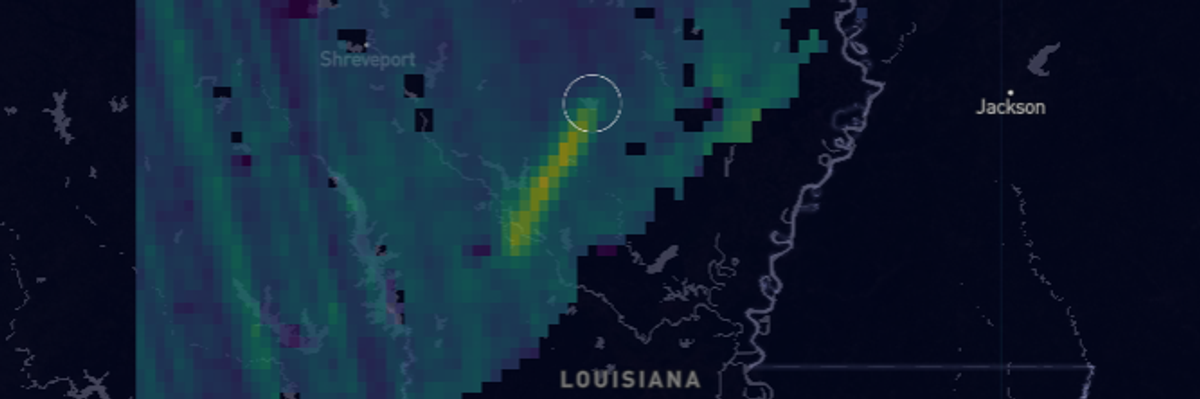
A satellite image shows a plume of methane stretching across much of Louisiana on January 21, 2022. (Image: Kayrros SAS)
Environmental justice advocates on Wednesday pointed to a methane plume so large it was seen last month from space via satellite as the latest evidence that emissions of the potent fossil fuel must be reined in.
As Bloomberg reported Monday, the geoanalytics firm Kayrros SAS detected the plume of the invisible greenhouse gas, which spanned 56 miles and covered several parishes across Louisiana, on January 21.
The methane plume is the largest concentration of the gas seen via satellite in the U.S. since last October.
"Fracked gas and methane leaks pose serious risks to our health and climate, but are too often treated like one-off events."
The firm said a plume of such size suggested an emissions rate of 105 tons of methane per hour. A release that lasted more than an hour at that rate would have had the same short-term environmental impact as yearly emissions from nearly 2,000 cars, Bloomberg reported.
Methane has 80 times the potency of carbon emissions in terms of heating the planet over a 20-year period, and has accounted for nearly 30% of global heating since pre-industrial times. As Common Dreams reported last week, atmospheric concentrations of methane surpassed 1,900 parts per billion in 2021.
The International Energy Agency said last year that flaring and venting of methane from oil and gas projects should be drastically reduced or eliminated in order to achieve a net-zero emissions energy system by 2050.
"We need comprehensive federal standards to cut methane from pipelines," said Erin Murphy, energy attorney for the Environmental Defense Fund.
The Louisiana Department of Natural Resources is investigating the cause of the plume, and Kayrros' analysis showed that it likely originated from a leak in a gas pipeline owned by fossil fuel companies Kinder Morgan, Energy Transfer, or Boardwalk Pipelines--but all three have denied responsibility.
Sierra Club denounced the latest evidence of dangerous fossil fuel pollution as "monstrous."
"This is unacceptable," said Jessi Parfait, Gulf Coast campaign representative for Sierra Club's Beyond Dirty Fuels Campaign, in a statement Tuesday. "Fracked gas and methane leaks pose serious risks to our health and climate, but are too often treated like one-off events but they can have lasting or compounding effects on our lives."
"All pollution, from enormous plumes spotted from space, to routine emissions from daily operations, impact our lives, and fossil fuel corporations must be held accountable for the harm they cause," she added.
Louisiana has more than 50,000 miles of fossil fuel-transporting pipelines, and about half of them move gas through the state.
The state is home to an 85-mile stretch of land dubbed "Cancer Alley." United Nations human rights experts last year said the area exemplified environmental racism due to the 150 petrochemical plants that operate there and the high rate of cancer diagnoses among the largely Black population.
"While this event is particularly severe, Louisiana is already forced to live through an exorbitant amount of pollution daily from fossil fuel and petrochemical plants, especially in communities of color and fenceline communities," Parfait said. "It all adds up."
Corporate lawmakers and fossil fuel companies are planning to build at least nine new liquefied gas (LNG) export terminals in South Louisiana, with businesses claiming that fracked gas projects will cause minimal pollution because they may include carbon capture schemes which hundreds of climate action groups have warned are unproven and will only delay a shift away from fossil fuel energy.
"It is ludicrous that Louisiana continues to welcome even more dangerous industry projects when it has weakened protections for its people or environment from existing industry," said Josh Smith, senior attorney for Sierra Club. "Sierra Club is monitoring this situation and will ensure that whoever is responsible for the methane leak is held accountable."
Dear Common Dreams reader, It’s been nearly 30 years since I co-founded Common Dreams with my late wife, Lina Newhouser. We had the radical notion that journalism should serve the public good, not corporate profits. It was clear to us from the outset what it would take to build such a project. No paid advertisements. No corporate sponsors. No millionaire publisher telling us what to think or do. Many people said we wouldn't last a year, but we proved those doubters wrong. Together with a tremendous team of journalists and dedicated staff, we built an independent media outlet free from the constraints of profits and corporate control. Our mission has always been simple: To inform. To inspire. To ignite change for the common good. Building Common Dreams was not easy. Our survival was never guaranteed. When you take on the most powerful forces—Wall Street greed, fossil fuel industry destruction, Big Tech lobbyists, and uber-rich oligarchs who have spent billions upon billions rigging the economy and democracy in their favor—the only bulwark you have is supporters who believe in your work. But here’s the urgent message from me today. It's never been this bad out there. And it's never been this hard to keep us going. At the very moment Common Dreams is most needed, the threats we face are intensifying. We need your support now more than ever. We don't accept corporate advertising and never will. We don't have a paywall because we don't think people should be blocked from critical news based on their ability to pay. Everything we do is funded by the donations of readers like you. When everyone does the little they can afford, we are strong. But if that support retreats or dries up, so do we. Will you donate now to make sure Common Dreams not only survives but thrives? —Craig Brown, Co-founder |
Environmental justice advocates on Wednesday pointed to a methane plume so large it was seen last month from space via satellite as the latest evidence that emissions of the potent fossil fuel must be reined in.
As Bloomberg reported Monday, the geoanalytics firm Kayrros SAS detected the plume of the invisible greenhouse gas, which spanned 56 miles and covered several parishes across Louisiana, on January 21.
The methane plume is the largest concentration of the gas seen via satellite in the U.S. since last October.
"Fracked gas and methane leaks pose serious risks to our health and climate, but are too often treated like one-off events."
The firm said a plume of such size suggested an emissions rate of 105 tons of methane per hour. A release that lasted more than an hour at that rate would have had the same short-term environmental impact as yearly emissions from nearly 2,000 cars, Bloomberg reported.
Methane has 80 times the potency of carbon emissions in terms of heating the planet over a 20-year period, and has accounted for nearly 30% of global heating since pre-industrial times. As Common Dreams reported last week, atmospheric concentrations of methane surpassed 1,900 parts per billion in 2021.
The International Energy Agency said last year that flaring and venting of methane from oil and gas projects should be drastically reduced or eliminated in order to achieve a net-zero emissions energy system by 2050.
"We need comprehensive federal standards to cut methane from pipelines," said Erin Murphy, energy attorney for the Environmental Defense Fund.
The Louisiana Department of Natural Resources is investigating the cause of the plume, and Kayrros' analysis showed that it likely originated from a leak in a gas pipeline owned by fossil fuel companies Kinder Morgan, Energy Transfer, or Boardwalk Pipelines--but all three have denied responsibility.
Sierra Club denounced the latest evidence of dangerous fossil fuel pollution as "monstrous."
"This is unacceptable," said Jessi Parfait, Gulf Coast campaign representative for Sierra Club's Beyond Dirty Fuels Campaign, in a statement Tuesday. "Fracked gas and methane leaks pose serious risks to our health and climate, but are too often treated like one-off events but they can have lasting or compounding effects on our lives."
"All pollution, from enormous plumes spotted from space, to routine emissions from daily operations, impact our lives, and fossil fuel corporations must be held accountable for the harm they cause," she added.
Louisiana has more than 50,000 miles of fossil fuel-transporting pipelines, and about half of them move gas through the state.
The state is home to an 85-mile stretch of land dubbed "Cancer Alley." United Nations human rights experts last year said the area exemplified environmental racism due to the 150 petrochemical plants that operate there and the high rate of cancer diagnoses among the largely Black population.
"While this event is particularly severe, Louisiana is already forced to live through an exorbitant amount of pollution daily from fossil fuel and petrochemical plants, especially in communities of color and fenceline communities," Parfait said. "It all adds up."
Corporate lawmakers and fossil fuel companies are planning to build at least nine new liquefied gas (LNG) export terminals in South Louisiana, with businesses claiming that fracked gas projects will cause minimal pollution because they may include carbon capture schemes which hundreds of climate action groups have warned are unproven and will only delay a shift away from fossil fuel energy.
"It is ludicrous that Louisiana continues to welcome even more dangerous industry projects when it has weakened protections for its people or environment from existing industry," said Josh Smith, senior attorney for Sierra Club. "Sierra Club is monitoring this situation and will ensure that whoever is responsible for the methane leak is held accountable."
Environmental justice advocates on Wednesday pointed to a methane plume so large it was seen last month from space via satellite as the latest evidence that emissions of the potent fossil fuel must be reined in.
As Bloomberg reported Monday, the geoanalytics firm Kayrros SAS detected the plume of the invisible greenhouse gas, which spanned 56 miles and covered several parishes across Louisiana, on January 21.
The methane plume is the largest concentration of the gas seen via satellite in the U.S. since last October.
"Fracked gas and methane leaks pose serious risks to our health and climate, but are too often treated like one-off events."
The firm said a plume of such size suggested an emissions rate of 105 tons of methane per hour. A release that lasted more than an hour at that rate would have had the same short-term environmental impact as yearly emissions from nearly 2,000 cars, Bloomberg reported.
Methane has 80 times the potency of carbon emissions in terms of heating the planet over a 20-year period, and has accounted for nearly 30% of global heating since pre-industrial times. As Common Dreams reported last week, atmospheric concentrations of methane surpassed 1,900 parts per billion in 2021.
The International Energy Agency said last year that flaring and venting of methane from oil and gas projects should be drastically reduced or eliminated in order to achieve a net-zero emissions energy system by 2050.
"We need comprehensive federal standards to cut methane from pipelines," said Erin Murphy, energy attorney for the Environmental Defense Fund.
The Louisiana Department of Natural Resources is investigating the cause of the plume, and Kayrros' analysis showed that it likely originated from a leak in a gas pipeline owned by fossil fuel companies Kinder Morgan, Energy Transfer, or Boardwalk Pipelines--but all three have denied responsibility.
Sierra Club denounced the latest evidence of dangerous fossil fuel pollution as "monstrous."
"This is unacceptable," said Jessi Parfait, Gulf Coast campaign representative for Sierra Club's Beyond Dirty Fuels Campaign, in a statement Tuesday. "Fracked gas and methane leaks pose serious risks to our health and climate, but are too often treated like one-off events but they can have lasting or compounding effects on our lives."
"All pollution, from enormous plumes spotted from space, to routine emissions from daily operations, impact our lives, and fossil fuel corporations must be held accountable for the harm they cause," she added.
Louisiana has more than 50,000 miles of fossil fuel-transporting pipelines, and about half of them move gas through the state.
The state is home to an 85-mile stretch of land dubbed "Cancer Alley." United Nations human rights experts last year said the area exemplified environmental racism due to the 150 petrochemical plants that operate there and the high rate of cancer diagnoses among the largely Black population.
"While this event is particularly severe, Louisiana is already forced to live through an exorbitant amount of pollution daily from fossil fuel and petrochemical plants, especially in communities of color and fenceline communities," Parfait said. "It all adds up."
Corporate lawmakers and fossil fuel companies are planning to build at least nine new liquefied gas (LNG) export terminals in South Louisiana, with businesses claiming that fracked gas projects will cause minimal pollution because they may include carbon capture schemes which hundreds of climate action groups have warned are unproven and will only delay a shift away from fossil fuel energy.
"It is ludicrous that Louisiana continues to welcome even more dangerous industry projects when it has weakened protections for its people or environment from existing industry," said Josh Smith, senior attorney for Sierra Club. "Sierra Club is monitoring this situation and will ensure that whoever is responsible for the methane leak is held accountable."