SUBSCRIBE TO OUR FREE NEWSLETTER
Daily news & progressive opinion—funded by the people, not the corporations—delivered straight to your inbox.
5
#000000
#FFFFFF
To donate by check, phone, or other method, see our More Ways to Give page.
Daily news & progressive opinion—funded by the people, not the corporations—delivered straight to your inbox.
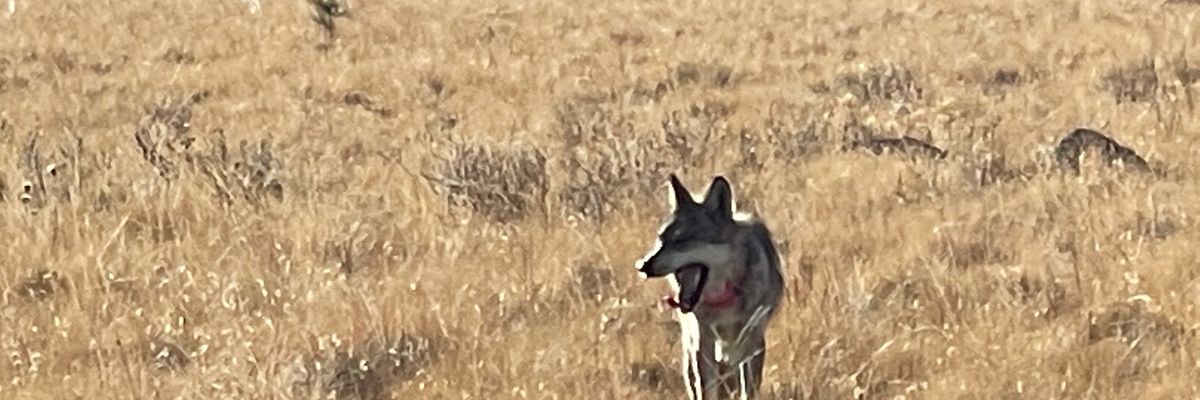
An endangered Mexican gray wolf known as Anubis was illegally shot and killed in Arizona on January 2, 2022. (Photo: Keith Hayes)
Outraged wildlife advocates demanded action from the U.S. government on Friday after learning that an endangered Mexican gray wolf--famous for wandering across the Southwest and named Anubis by schoolchildren--was illegally shot and killed in the Kaibab National Forest near Flagstaff, Arizona.
"The killing of Anubis... is another tragic reminder that the U.S. Fish and Wildlife Service needs to expand the recovery area."
"It's tragic that Anubis was killed and many of us are grieving his loss, but despite this heinous crime, it is also profound confirmation that Northern Arizona should be part of the wolf recovery effort," said Greta Anderson, deputy director of Western Watersheds Project, in a statement.
"The arbitrary boundary at Interstate 40 is not based on science or suitability but on the continued reluctance of the state game agencies to let wolves be wild and roam wherever they choose," she added.
The Arizona Republic reports that the U.S. Fish and Wildlife Service (USFWS) disclosed the January 2 killing to Anderson when she inquired about the location of Anubis, who was previously relocated by state officials.
According to the newspaper:
While details of the killing are limited because of the ongoing investigation, a USFWS official confirmed to The Arizona Republic on Friday that the wolf, also called m2520 by state and federal wildlife officials, was illegally shot.
"The U.S. Fish and Wildlife Service can confirm that Mexican wolf male 2520 was killed the first weekend in January," read a statement sent via email. "The incident is currently under investigation and therefore, no additional information will be released at this time."
Killing Mexican gray wolves--which are protected by the Endangered Species Act--can be punished with a year in jail plus thousands of dollars in penalties.
Conservation organizations are urging anyone with information about Anubis' death to call 1-844-397-8477 or email fws_tips@fws.gov. The USFWS, state agencies in Arizona and New Mexico, and wildlife groups are offering rewards for information that leads to a conviction.
Anubis' killing has increased pressure on the USFWS to expand the boundary of the recovery area for Mexican gray wolves. Proposed changes to how the species is managed at the federal level are open to public comment until January 27.
"The killing of Anubis, a Mexican gray wolf, is another tragic reminder that the U.S. Fish and Wildlife Service needs to expand the recovery area for this species to include Grand Canyon National Park," asserted Bryan Bird, Southwest program director at Defenders of Wildlife.
"The surrounding wilderness is the perfect habitat for Mexican gray wolves," he noted. "As the species continues to recover, conservation and coexistence must be a priority."
Emily Renn, executive director of the Grand Canyon Wolf Recovery Project, said that "we are heartbroken to learn that our adventurous young disperser wolf had his life illegally cut short by a human's bullet."
"Anubis filled us with the hope that wolves will keep coming back to the excellent habitat of the Grand Canyon region," she continued. "I am grateful for the time knowing he was in the forests nearby."
Renn predicted that "the power of people who love and care for wild creatures and want to see wolves restored to their rightful place will someday overcome the small minority of people who kill for no reason."
Dear Common Dreams reader, It’s been nearly 30 years since I co-founded Common Dreams with my late wife, Lina Newhouser. We had the radical notion that journalism should serve the public good, not corporate profits. It was clear to us from the outset what it would take to build such a project. No paid advertisements. No corporate sponsors. No millionaire publisher telling us what to think or do. Many people said we wouldn't last a year, but we proved those doubters wrong. Together with a tremendous team of journalists and dedicated staff, we built an independent media outlet free from the constraints of profits and corporate control. Our mission has always been simple: To inform. To inspire. To ignite change for the common good. Building Common Dreams was not easy. Our survival was never guaranteed. When you take on the most powerful forces—Wall Street greed, fossil fuel industry destruction, Big Tech lobbyists, and uber-rich oligarchs who have spent billions upon billions rigging the economy and democracy in their favor—the only bulwark you have is supporters who believe in your work. But here’s the urgent message from me today. It's never been this bad out there. And it's never been this hard to keep us going. At the very moment Common Dreams is most needed, the threats we face are intensifying. We need your support now more than ever. We don't accept corporate advertising and never will. We don't have a paywall because we don't think people should be blocked from critical news based on their ability to pay. Everything we do is funded by the donations of readers like you. When everyone does the little they can afford, we are strong. But if that support retreats or dries up, so do we. Will you donate now to make sure Common Dreams not only survives but thrives? —Craig Brown, Co-founder |
Outraged wildlife advocates demanded action from the U.S. government on Friday after learning that an endangered Mexican gray wolf--famous for wandering across the Southwest and named Anubis by schoolchildren--was illegally shot and killed in the Kaibab National Forest near Flagstaff, Arizona.
"The killing of Anubis... is another tragic reminder that the U.S. Fish and Wildlife Service needs to expand the recovery area."
"It's tragic that Anubis was killed and many of us are grieving his loss, but despite this heinous crime, it is also profound confirmation that Northern Arizona should be part of the wolf recovery effort," said Greta Anderson, deputy director of Western Watersheds Project, in a statement.
"The arbitrary boundary at Interstate 40 is not based on science or suitability but on the continued reluctance of the state game agencies to let wolves be wild and roam wherever they choose," she added.
The Arizona Republic reports that the U.S. Fish and Wildlife Service (USFWS) disclosed the January 2 killing to Anderson when she inquired about the location of Anubis, who was previously relocated by state officials.
According to the newspaper:
While details of the killing are limited because of the ongoing investigation, a USFWS official confirmed to The Arizona Republic on Friday that the wolf, also called m2520 by state and federal wildlife officials, was illegally shot.
"The U.S. Fish and Wildlife Service can confirm that Mexican wolf male 2520 was killed the first weekend in January," read a statement sent via email. "The incident is currently under investigation and therefore, no additional information will be released at this time."
Killing Mexican gray wolves--which are protected by the Endangered Species Act--can be punished with a year in jail plus thousands of dollars in penalties.
Conservation organizations are urging anyone with information about Anubis' death to call 1-844-397-8477 or email fws_tips@fws.gov. The USFWS, state agencies in Arizona and New Mexico, and wildlife groups are offering rewards for information that leads to a conviction.
Anubis' killing has increased pressure on the USFWS to expand the boundary of the recovery area for Mexican gray wolves. Proposed changes to how the species is managed at the federal level are open to public comment until January 27.
"The killing of Anubis, a Mexican gray wolf, is another tragic reminder that the U.S. Fish and Wildlife Service needs to expand the recovery area for this species to include Grand Canyon National Park," asserted Bryan Bird, Southwest program director at Defenders of Wildlife.
"The surrounding wilderness is the perfect habitat for Mexican gray wolves," he noted. "As the species continues to recover, conservation and coexistence must be a priority."
Emily Renn, executive director of the Grand Canyon Wolf Recovery Project, said that "we are heartbroken to learn that our adventurous young disperser wolf had his life illegally cut short by a human's bullet."
"Anubis filled us with the hope that wolves will keep coming back to the excellent habitat of the Grand Canyon region," she continued. "I am grateful for the time knowing he was in the forests nearby."
Renn predicted that "the power of people who love and care for wild creatures and want to see wolves restored to their rightful place will someday overcome the small minority of people who kill for no reason."
Outraged wildlife advocates demanded action from the U.S. government on Friday after learning that an endangered Mexican gray wolf--famous for wandering across the Southwest and named Anubis by schoolchildren--was illegally shot and killed in the Kaibab National Forest near Flagstaff, Arizona.
"The killing of Anubis... is another tragic reminder that the U.S. Fish and Wildlife Service needs to expand the recovery area."
"It's tragic that Anubis was killed and many of us are grieving his loss, but despite this heinous crime, it is also profound confirmation that Northern Arizona should be part of the wolf recovery effort," said Greta Anderson, deputy director of Western Watersheds Project, in a statement.
"The arbitrary boundary at Interstate 40 is not based on science or suitability but on the continued reluctance of the state game agencies to let wolves be wild and roam wherever they choose," she added.
The Arizona Republic reports that the U.S. Fish and Wildlife Service (USFWS) disclosed the January 2 killing to Anderson when she inquired about the location of Anubis, who was previously relocated by state officials.
According to the newspaper:
While details of the killing are limited because of the ongoing investigation, a USFWS official confirmed to The Arizona Republic on Friday that the wolf, also called m2520 by state and federal wildlife officials, was illegally shot.
"The U.S. Fish and Wildlife Service can confirm that Mexican wolf male 2520 was killed the first weekend in January," read a statement sent via email. "The incident is currently under investigation and therefore, no additional information will be released at this time."
Killing Mexican gray wolves--which are protected by the Endangered Species Act--can be punished with a year in jail plus thousands of dollars in penalties.
Conservation organizations are urging anyone with information about Anubis' death to call 1-844-397-8477 or email fws_tips@fws.gov. The USFWS, state agencies in Arizona and New Mexico, and wildlife groups are offering rewards for information that leads to a conviction.
Anubis' killing has increased pressure on the USFWS to expand the boundary of the recovery area for Mexican gray wolves. Proposed changes to how the species is managed at the federal level are open to public comment until January 27.
"The killing of Anubis, a Mexican gray wolf, is another tragic reminder that the U.S. Fish and Wildlife Service needs to expand the recovery area for this species to include Grand Canyon National Park," asserted Bryan Bird, Southwest program director at Defenders of Wildlife.
"The surrounding wilderness is the perfect habitat for Mexican gray wolves," he noted. "As the species continues to recover, conservation and coexistence must be a priority."
Emily Renn, executive director of the Grand Canyon Wolf Recovery Project, said that "we are heartbroken to learn that our adventurous young disperser wolf had his life illegally cut short by a human's bullet."
"Anubis filled us with the hope that wolves will keep coming back to the excellent habitat of the Grand Canyon region," she continued. "I am grateful for the time knowing he was in the forests nearby."
Renn predicted that "the power of people who love and care for wild creatures and want to see wolves restored to their rightful place will someday overcome the small minority of people who kill for no reason."