SUBSCRIBE TO OUR FREE NEWSLETTER
Daily news & progressive opinion—funded by the people, not the corporations—delivered straight to your inbox.
5
#000000
#FFFFFF
To donate by check, phone, or other method, see our More Ways to Give page.
Daily news & progressive opinion—funded by the people, not the corporations—delivered straight to your inbox.

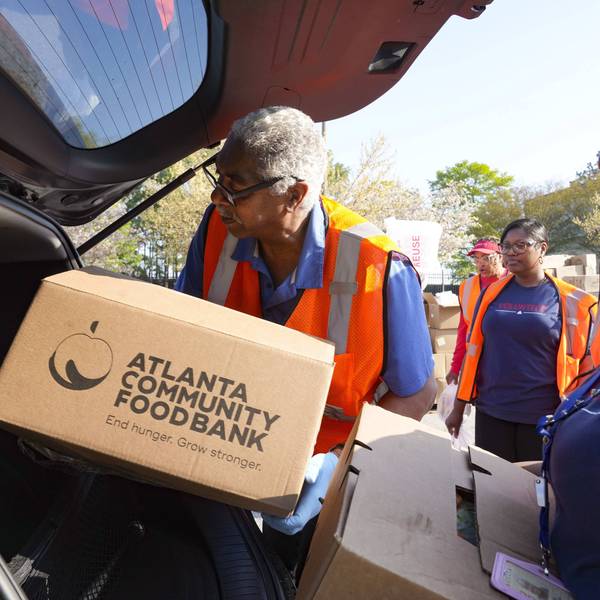
Volunteers fill boxes of food at a food distribution event in Kissimmee, Florida on December 10, 2020. (Photo: Paul Hennessy/SOPA Images/LightRocket via Getty Images)
A new study by researchers at the University of Michigan found that the direct payments Congress approved last December and this past March--totaling $2,000 per eligible individual--helped significantly reduce food shortages in households with children, lessen financial instability, and alleviate symptoms of anxiety and depression.
The results of the analysis (pdf), which draws upon household surveys conducted in recent months by the U.S. Census Bureau, were touted as further evidence that direct cash transfers are a highly effective way to combat material and emotional hardship--an argument progressives have been vocally pushing since the start of the coronavirus pandemic.
"Guaranteed living wages, healthcare, material stability, and safety--these are key conditions for mental and general public health."
--Rep. Alexandria Ocasio-Cortez
"Free access to mental healthcare is critical, but therapy isn't a solution for worker exploitation and subhuman conditions," Rep. Alexandria Ocasio-Cortez (D-N.Y.) said Wednesday in response to the new study. "You need to get paid. Guaranteed living wages, healthcare, material stability, and safety--these are key conditions for mental and general public health."
Rep. Rashida Tlaib (D-Mich.), a proponent of recurring relief payments, added that the effectiveness of the survival checks demonstrates "what advocates have been saying and demanding."
Authored by University of Michigan professors Luke Shaefer and Patrick Cooney, the study finds that reported hardship declined "sharply--across multiple domains--immediately following both the Covid-19 relief bill passed in late December 2020 and [American Rescue Plan] passed in early March 2021," and that the benefits were felt most strongly among low-income households.
"It turns out, relieving a lot of everyday hardship can be done very simply and directly by giving poor people money and support. Who knew?" Jacobin staff writer Luke Savage tweeted sarcastically.
The December relief bill, signed into law by former President Donald Trump, delivered $600 direct payments to eligible individuals and Biden's American Rescue Plan (ARP) approved $1,400 per qualifying individual. The December package passed with bipartisan support while the ARP, which Biden signed in March, did not receive a single Republican vote.
Thanks to the two relief measures, the study found, reported food insecurity dropped by 42% and financial instability fell by 45%. The analysis also showed that the share of individuals reporting "frequent symptoms of depression and anxiety" declined by 20%.
Shaefer and Cooney argued that the two rounds of direct payments--as well as the enhanced unemployment benefits approved under both legislative packages--were so effective in relieving economic pain because the government eschewed aggressive income-based means testing in favor of aid "as broad-based as any federal income transfer support program ever implemented."
"The vast majority of American households received [Economic Impact Payment] checks, and every recipient of unemployment insurance received the same federal supplement," the pair wrote. "Perhaps because of the broad nature of the relief, we see hardship decline for middle-income as well as low-income households. We also see that the federal response was very popular among Americans."
"We believe the response was effective because it relied primarily on a flexible resource in cash transfers," Shaefer and Cooney added, noting that millions of households spent the money on food, housing, and other basic expenses. "Rather than provide targeted and in-kind aid, the government provided cash directly to American households, allowing them to use it to meet their immediate needs as they saw fit."
Dear Common Dreams reader, It’s been nearly 30 years since I co-founded Common Dreams with my late wife, Lina Newhouser. We had the radical notion that journalism should serve the public good, not corporate profits. It was clear to us from the outset what it would take to build such a project. No paid advertisements. No corporate sponsors. No millionaire publisher telling us what to think or do. Many people said we wouldn't last a year, but we proved those doubters wrong. Together with a tremendous team of journalists and dedicated staff, we built an independent media outlet free from the constraints of profits and corporate control. Our mission has always been simple: To inform. To inspire. To ignite change for the common good. Building Common Dreams was not easy. Our survival was never guaranteed. When you take on the most powerful forces—Wall Street greed, fossil fuel industry destruction, Big Tech lobbyists, and uber-rich oligarchs who have spent billions upon billions rigging the economy and democracy in their favor—the only bulwark you have is supporters who believe in your work. But here’s the urgent message from me today. It's never been this bad out there. And it's never been this hard to keep us going. At the very moment Common Dreams is most needed, the threats we face are intensifying. We need your support now more than ever. We don't accept corporate advertising and never will. We don't have a paywall because we don't think people should be blocked from critical news based on their ability to pay. Everything we do is funded by the donations of readers like you. When everyone does the little they can afford, we are strong. But if that support retreats or dries up, so do we. Will you donate now to make sure Common Dreams not only survives but thrives? —Craig Brown, Co-founder |
A new study by researchers at the University of Michigan found that the direct payments Congress approved last December and this past March--totaling $2,000 per eligible individual--helped significantly reduce food shortages in households with children, lessen financial instability, and alleviate symptoms of anxiety and depression.
The results of the analysis (pdf), which draws upon household surveys conducted in recent months by the U.S. Census Bureau, were touted as further evidence that direct cash transfers are a highly effective way to combat material and emotional hardship--an argument progressives have been vocally pushing since the start of the coronavirus pandemic.
"Guaranteed living wages, healthcare, material stability, and safety--these are key conditions for mental and general public health."
--Rep. Alexandria Ocasio-Cortez
"Free access to mental healthcare is critical, but therapy isn't a solution for worker exploitation and subhuman conditions," Rep. Alexandria Ocasio-Cortez (D-N.Y.) said Wednesday in response to the new study. "You need to get paid. Guaranteed living wages, healthcare, material stability, and safety--these are key conditions for mental and general public health."
Rep. Rashida Tlaib (D-Mich.), a proponent of recurring relief payments, added that the effectiveness of the survival checks demonstrates "what advocates have been saying and demanding."
Authored by University of Michigan professors Luke Shaefer and Patrick Cooney, the study finds that reported hardship declined "sharply--across multiple domains--immediately following both the Covid-19 relief bill passed in late December 2020 and [American Rescue Plan] passed in early March 2021," and that the benefits were felt most strongly among low-income households.
"It turns out, relieving a lot of everyday hardship can be done very simply and directly by giving poor people money and support. Who knew?" Jacobin staff writer Luke Savage tweeted sarcastically.
The December relief bill, signed into law by former President Donald Trump, delivered $600 direct payments to eligible individuals and Biden's American Rescue Plan (ARP) approved $1,400 per qualifying individual. The December package passed with bipartisan support while the ARP, which Biden signed in March, did not receive a single Republican vote.
Thanks to the two relief measures, the study found, reported food insecurity dropped by 42% and financial instability fell by 45%. The analysis also showed that the share of individuals reporting "frequent symptoms of depression and anxiety" declined by 20%.
Shaefer and Cooney argued that the two rounds of direct payments--as well as the enhanced unemployment benefits approved under both legislative packages--were so effective in relieving economic pain because the government eschewed aggressive income-based means testing in favor of aid "as broad-based as any federal income transfer support program ever implemented."
"The vast majority of American households received [Economic Impact Payment] checks, and every recipient of unemployment insurance received the same federal supplement," the pair wrote. "Perhaps because of the broad nature of the relief, we see hardship decline for middle-income as well as low-income households. We also see that the federal response was very popular among Americans."
"We believe the response was effective because it relied primarily on a flexible resource in cash transfers," Shaefer and Cooney added, noting that millions of households spent the money on food, housing, and other basic expenses. "Rather than provide targeted and in-kind aid, the government provided cash directly to American households, allowing them to use it to meet their immediate needs as they saw fit."
A new study by researchers at the University of Michigan found that the direct payments Congress approved last December and this past March--totaling $2,000 per eligible individual--helped significantly reduce food shortages in households with children, lessen financial instability, and alleviate symptoms of anxiety and depression.
The results of the analysis (pdf), which draws upon household surveys conducted in recent months by the U.S. Census Bureau, were touted as further evidence that direct cash transfers are a highly effective way to combat material and emotional hardship--an argument progressives have been vocally pushing since the start of the coronavirus pandemic.
"Guaranteed living wages, healthcare, material stability, and safety--these are key conditions for mental and general public health."
--Rep. Alexandria Ocasio-Cortez
"Free access to mental healthcare is critical, but therapy isn't a solution for worker exploitation and subhuman conditions," Rep. Alexandria Ocasio-Cortez (D-N.Y.) said Wednesday in response to the new study. "You need to get paid. Guaranteed living wages, healthcare, material stability, and safety--these are key conditions for mental and general public health."
Rep. Rashida Tlaib (D-Mich.), a proponent of recurring relief payments, added that the effectiveness of the survival checks demonstrates "what advocates have been saying and demanding."
Authored by University of Michigan professors Luke Shaefer and Patrick Cooney, the study finds that reported hardship declined "sharply--across multiple domains--immediately following both the Covid-19 relief bill passed in late December 2020 and [American Rescue Plan] passed in early March 2021," and that the benefits were felt most strongly among low-income households.
"It turns out, relieving a lot of everyday hardship can be done very simply and directly by giving poor people money and support. Who knew?" Jacobin staff writer Luke Savage tweeted sarcastically.
The December relief bill, signed into law by former President Donald Trump, delivered $600 direct payments to eligible individuals and Biden's American Rescue Plan (ARP) approved $1,400 per qualifying individual. The December package passed with bipartisan support while the ARP, which Biden signed in March, did not receive a single Republican vote.
Thanks to the two relief measures, the study found, reported food insecurity dropped by 42% and financial instability fell by 45%. The analysis also showed that the share of individuals reporting "frequent symptoms of depression and anxiety" declined by 20%.
Shaefer and Cooney argued that the two rounds of direct payments--as well as the enhanced unemployment benefits approved under both legislative packages--were so effective in relieving economic pain because the government eschewed aggressive income-based means testing in favor of aid "as broad-based as any federal income transfer support program ever implemented."
"The vast majority of American households received [Economic Impact Payment] checks, and every recipient of unemployment insurance received the same federal supplement," the pair wrote. "Perhaps because of the broad nature of the relief, we see hardship decline for middle-income as well as low-income households. We also see that the federal response was very popular among Americans."
"We believe the response was effective because it relied primarily on a flexible resource in cash transfers," Shaefer and Cooney added, noting that millions of households spent the money on food, housing, and other basic expenses. "Rather than provide targeted and in-kind aid, the government provided cash directly to American households, allowing them to use it to meet their immediate needs as they saw fit."