SUBSCRIBE TO OUR FREE NEWSLETTER
Daily news & progressive opinion—funded by the people, not the corporations—delivered straight to your inbox.
5
#000000
#FFFFFF
To donate by check, phone, or other method, see our More Ways to Give page.
Daily news & progressive opinion—funded by the people, not the corporations—delivered straight to your inbox.
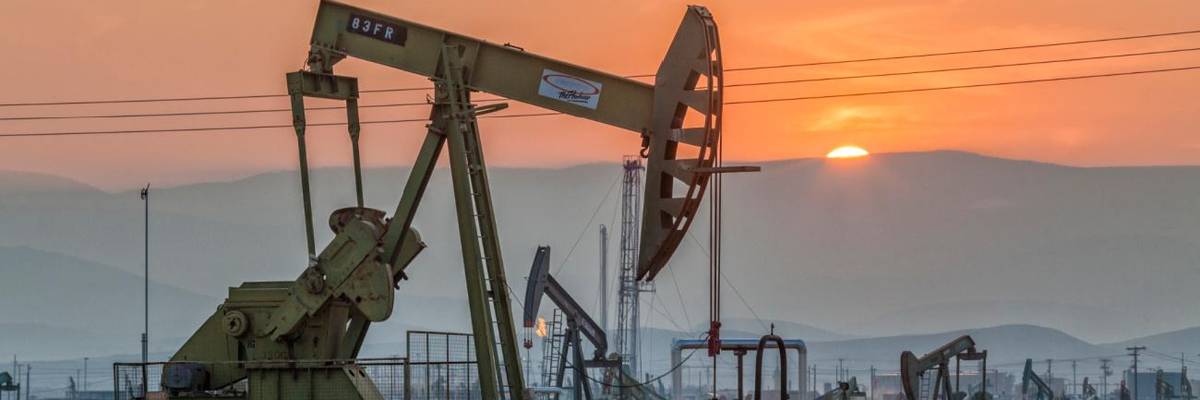
Pump jacks operate at the Belridge Oil Field and hydraulic fracturing site in Kern County, San Joaquin Valley, California. (Photo: Citizens of the Planet/Education Images/Universal Images Group via Getty Images)
Climate campaigners on Friday cautiously applauded California Gov. Gavin Newsom's moves to cut off new hydraulic fracturing permits by 2024 and evaluate phasing out oil production by 2045, while also stressing that the timeline still needs to be accelerated.
"California is the highest-producing jurisdiction in the world so far to commit to a phaseout of oil extraction, and other major producers need to join the state in committing to move beyond oil and gas."
--Collin Rees, OCI
The embattled Democratic governor of the world's fifth-largest economy directed the state Department of Conservation's Geologic Energy Management (CalGEM) Division to initiate regulatory action to stop new fracking permits and requested that the California Air Resources Board (CARB) analyze how to stop extracting oil statewide.
"It's historic and globally significant that Gov. Newsom has committed California to phase out fossil fuel production and ban fracking, but we don't have time for studies and delays," said Kassie Siegel, director of the Climate Law Institute at the Center for Biological Diversity, in a statement.
"Californians living next to these dirty and dangerous drilling operations need protection from oil industry pollution today," she added. "Every fracking and drilling permit issued does more damage to our health and climate."
Food & Water Watch California director Alexandra Nagy agreed that the governor's steps were significant and shared Siegel's frustrations with Newsom's refusal to immediately ban fracking by executive action.
"This announcement is a half-measure as it allows continued drilling and fracking for the next two-and-a-half years," Nagy said. "Directing his regulatory agencies to do the work over two-and-a-half years that the governor can do today is more of the dodging we've seen from Newsom during his entire tenure."
Since taking office in January 2019, he has approved 8,610 oil and gas well permits, according to Consumer Watchdog and FracTracker's "Newsom Well Watch" website.
Reporting on Newsom's announcement Friday, the Los Angeles Times noted that he's long been under pressure to outlaw fracking:
In September, Newsom called on lawmakers to send him legislation banning the oil extraction practice. That pronouncement was greeted with skepticism by lawmakers who said barring the controversial practice would require more from Newsom than just words.
Sweeping legislation to ban fracking and other "enhanced oil recovery" methods, as well as to mandate health and safety buffer zones around oil and gas wells, failed in the state Senate last week. R.L. Miller, chair of the California Democratic Party's environmental caucus, criticized Newsom for not doing more to support the bill, even though it went far beyond his request for solely a ban on fracking.
Climate, justice, labor, and public health groups in the state continue to call for not only cutting off new fossil fuel drilling permits immediately and phasing out existing extraction but also establishing a 2,500-foot health and safety buffer around oil wells that would--as Oil Change International (OCI) senior campaigner Collin Rees put it--"help Californians suffering from the deadly impacts of neighborhood drilling."
"Newsom's announcement shows the tide is turning swiftly against fossil fuel extraction," Rees also said. "California is the highest-producing jurisdiction in the world so far to commit to a phaseout of oil extraction, and other major producers need to join the state in committing to move beyond oil and gas. Our climate emergency demands bold action, and time is of the essence."
While demanding bolder and more urgent climate action, campaigners did welcome Newsom's steps so far as inspirational for other elected officials.
"Stopping new permits for fracking and a plan for phasing out oil production are critical steps in the energy transition," said Matt Krogh, U.S. Oil & Gas Campaign director at Stand.earth, "and the governor should be applauded for that vision."
"This is a huge win for frontline communities and activists who have been fighting the oil industry in California, and an important statement for a world that must leave fossil fuels behind to have a chance at limiting climate change to 1.5 degrees," he added, referring to the more ambitious temperature target of the 2015 Paris agreement.
Jamie Henn, director of Fossil Free Media, said that "California's announcement today is the future of climate action: a clear commitment to keep fossil fuels in the ground... This is exactly the type of commitment that we need to see from the Biden administration and other governments around the world."
Henn, of course, added that "the challenge now is to speed up the timeline so that it meets the urgency that science and justice demand. Drilling for fossil fuels is just as dangerous today as it will be in 2045."
The governor, whose state is bracing for another devastating wildfire season, said in a statement that "the climate crisis is real, and we continue to see the signs every day."
"As we move to swiftly decarbonize our transportation sector and create a healthier future for our children," Newsom added, "I've made it clear I don't see a role for fracking in that future and, similarly, believe that California needs to move beyond oil."
Greenpeace USA senior climate campaigner Amy Moas said Friday's announcement "signals an important first step by Gov. Newsom towards climate and environmental justice" but falls short of what's needed.
"California already faces the intensifying impacts of the climate crisis, which could get even worse just as the state aims to recover from the pandemic--and Gov. Newsom has a golden opportunity to lead the rest of the country in tackling the number one driver of the climate crisis," she said.
"For Gov. Newsom to reclaim California's title as an innovator and climate leader," Moas added, "he must take bold steps to protect people and the planet from dangerous fossil fuel expansion: by committing to a 2,500-foot buffer zone to protect communities living near drilling, jump-starting investments in a just transition so no workers and communities are left behind by the decline of the fossil fuel industry, and beginning a bold phaseout of fossil fuels today. These are the kinds of solutions we urgently need to address fossil fuel racism, public health disparities, and give workers and communities a chance to live safe, secure, and healthy lives."
Dear Common Dreams reader, It’s been nearly 30 years since I co-founded Common Dreams with my late wife, Lina Newhouser. We had the radical notion that journalism should serve the public good, not corporate profits. It was clear to us from the outset what it would take to build such a project. No paid advertisements. No corporate sponsors. No millionaire publisher telling us what to think or do. Many people said we wouldn't last a year, but we proved those doubters wrong. Together with a tremendous team of journalists and dedicated staff, we built an independent media outlet free from the constraints of profits and corporate control. Our mission has always been simple: To inform. To inspire. To ignite change for the common good. Building Common Dreams was not easy. Our survival was never guaranteed. When you take on the most powerful forces—Wall Street greed, fossil fuel industry destruction, Big Tech lobbyists, and uber-rich oligarchs who have spent billions upon billions rigging the economy and democracy in their favor—the only bulwark you have is supporters who believe in your work. But here’s the urgent message from me today. It's never been this bad out there. And it's never been this hard to keep us going. At the very moment Common Dreams is most needed, the threats we face are intensifying. We need your support now more than ever. We don't accept corporate advertising and never will. We don't have a paywall because we don't think people should be blocked from critical news based on their ability to pay. Everything we do is funded by the donations of readers like you. When everyone does the little they can afford, we are strong. But if that support retreats or dries up, so do we. Will you donate now to make sure Common Dreams not only survives but thrives? —Craig Brown, Co-founder |
Climate campaigners on Friday cautiously applauded California Gov. Gavin Newsom's moves to cut off new hydraulic fracturing permits by 2024 and evaluate phasing out oil production by 2045, while also stressing that the timeline still needs to be accelerated.
"California is the highest-producing jurisdiction in the world so far to commit to a phaseout of oil extraction, and other major producers need to join the state in committing to move beyond oil and gas."
--Collin Rees, OCI
The embattled Democratic governor of the world's fifth-largest economy directed the state Department of Conservation's Geologic Energy Management (CalGEM) Division to initiate regulatory action to stop new fracking permits and requested that the California Air Resources Board (CARB) analyze how to stop extracting oil statewide.
"It's historic and globally significant that Gov. Newsom has committed California to phase out fossil fuel production and ban fracking, but we don't have time for studies and delays," said Kassie Siegel, director of the Climate Law Institute at the Center for Biological Diversity, in a statement.
"Californians living next to these dirty and dangerous drilling operations need protection from oil industry pollution today," she added. "Every fracking and drilling permit issued does more damage to our health and climate."
Food & Water Watch California director Alexandra Nagy agreed that the governor's steps were significant and shared Siegel's frustrations with Newsom's refusal to immediately ban fracking by executive action.
"This announcement is a half-measure as it allows continued drilling and fracking for the next two-and-a-half years," Nagy said. "Directing his regulatory agencies to do the work over two-and-a-half years that the governor can do today is more of the dodging we've seen from Newsom during his entire tenure."
Since taking office in January 2019, he has approved 8,610 oil and gas well permits, according to Consumer Watchdog and FracTracker's "Newsom Well Watch" website.
Reporting on Newsom's announcement Friday, the Los Angeles Times noted that he's long been under pressure to outlaw fracking:
In September, Newsom called on lawmakers to send him legislation banning the oil extraction practice. That pronouncement was greeted with skepticism by lawmakers who said barring the controversial practice would require more from Newsom than just words.
Sweeping legislation to ban fracking and other "enhanced oil recovery" methods, as well as to mandate health and safety buffer zones around oil and gas wells, failed in the state Senate last week. R.L. Miller, chair of the California Democratic Party's environmental caucus, criticized Newsom for not doing more to support the bill, even though it went far beyond his request for solely a ban on fracking.
Climate, justice, labor, and public health groups in the state continue to call for not only cutting off new fossil fuel drilling permits immediately and phasing out existing extraction but also establishing a 2,500-foot health and safety buffer around oil wells that would--as Oil Change International (OCI) senior campaigner Collin Rees put it--"help Californians suffering from the deadly impacts of neighborhood drilling."
"Newsom's announcement shows the tide is turning swiftly against fossil fuel extraction," Rees also said. "California is the highest-producing jurisdiction in the world so far to commit to a phaseout of oil extraction, and other major producers need to join the state in committing to move beyond oil and gas. Our climate emergency demands bold action, and time is of the essence."
While demanding bolder and more urgent climate action, campaigners did welcome Newsom's steps so far as inspirational for other elected officials.
"Stopping new permits for fracking and a plan for phasing out oil production are critical steps in the energy transition," said Matt Krogh, U.S. Oil & Gas Campaign director at Stand.earth, "and the governor should be applauded for that vision."
"This is a huge win for frontline communities and activists who have been fighting the oil industry in California, and an important statement for a world that must leave fossil fuels behind to have a chance at limiting climate change to 1.5 degrees," he added, referring to the more ambitious temperature target of the 2015 Paris agreement.
Jamie Henn, director of Fossil Free Media, said that "California's announcement today is the future of climate action: a clear commitment to keep fossil fuels in the ground... This is exactly the type of commitment that we need to see from the Biden administration and other governments around the world."
Henn, of course, added that "the challenge now is to speed up the timeline so that it meets the urgency that science and justice demand. Drilling for fossil fuels is just as dangerous today as it will be in 2045."
The governor, whose state is bracing for another devastating wildfire season, said in a statement that "the climate crisis is real, and we continue to see the signs every day."
"As we move to swiftly decarbonize our transportation sector and create a healthier future for our children," Newsom added, "I've made it clear I don't see a role for fracking in that future and, similarly, believe that California needs to move beyond oil."
Greenpeace USA senior climate campaigner Amy Moas said Friday's announcement "signals an important first step by Gov. Newsom towards climate and environmental justice" but falls short of what's needed.
"California already faces the intensifying impacts of the climate crisis, which could get even worse just as the state aims to recover from the pandemic--and Gov. Newsom has a golden opportunity to lead the rest of the country in tackling the number one driver of the climate crisis," she said.
"For Gov. Newsom to reclaim California's title as an innovator and climate leader," Moas added, "he must take bold steps to protect people and the planet from dangerous fossil fuel expansion: by committing to a 2,500-foot buffer zone to protect communities living near drilling, jump-starting investments in a just transition so no workers and communities are left behind by the decline of the fossil fuel industry, and beginning a bold phaseout of fossil fuels today. These are the kinds of solutions we urgently need to address fossil fuel racism, public health disparities, and give workers and communities a chance to live safe, secure, and healthy lives."
Climate campaigners on Friday cautiously applauded California Gov. Gavin Newsom's moves to cut off new hydraulic fracturing permits by 2024 and evaluate phasing out oil production by 2045, while also stressing that the timeline still needs to be accelerated.
"California is the highest-producing jurisdiction in the world so far to commit to a phaseout of oil extraction, and other major producers need to join the state in committing to move beyond oil and gas."
--Collin Rees, OCI
The embattled Democratic governor of the world's fifth-largest economy directed the state Department of Conservation's Geologic Energy Management (CalGEM) Division to initiate regulatory action to stop new fracking permits and requested that the California Air Resources Board (CARB) analyze how to stop extracting oil statewide.
"It's historic and globally significant that Gov. Newsom has committed California to phase out fossil fuel production and ban fracking, but we don't have time for studies and delays," said Kassie Siegel, director of the Climate Law Institute at the Center for Biological Diversity, in a statement.
"Californians living next to these dirty and dangerous drilling operations need protection from oil industry pollution today," she added. "Every fracking and drilling permit issued does more damage to our health and climate."
Food & Water Watch California director Alexandra Nagy agreed that the governor's steps were significant and shared Siegel's frustrations with Newsom's refusal to immediately ban fracking by executive action.
"This announcement is a half-measure as it allows continued drilling and fracking for the next two-and-a-half years," Nagy said. "Directing his regulatory agencies to do the work over two-and-a-half years that the governor can do today is more of the dodging we've seen from Newsom during his entire tenure."
Since taking office in January 2019, he has approved 8,610 oil and gas well permits, according to Consumer Watchdog and FracTracker's "Newsom Well Watch" website.
Reporting on Newsom's announcement Friday, the Los Angeles Times noted that he's long been under pressure to outlaw fracking:
In September, Newsom called on lawmakers to send him legislation banning the oil extraction practice. That pronouncement was greeted with skepticism by lawmakers who said barring the controversial practice would require more from Newsom than just words.
Sweeping legislation to ban fracking and other "enhanced oil recovery" methods, as well as to mandate health and safety buffer zones around oil and gas wells, failed in the state Senate last week. R.L. Miller, chair of the California Democratic Party's environmental caucus, criticized Newsom for not doing more to support the bill, even though it went far beyond his request for solely a ban on fracking.
Climate, justice, labor, and public health groups in the state continue to call for not only cutting off new fossil fuel drilling permits immediately and phasing out existing extraction but also establishing a 2,500-foot health and safety buffer around oil wells that would--as Oil Change International (OCI) senior campaigner Collin Rees put it--"help Californians suffering from the deadly impacts of neighborhood drilling."
"Newsom's announcement shows the tide is turning swiftly against fossil fuel extraction," Rees also said. "California is the highest-producing jurisdiction in the world so far to commit to a phaseout of oil extraction, and other major producers need to join the state in committing to move beyond oil and gas. Our climate emergency demands bold action, and time is of the essence."
While demanding bolder and more urgent climate action, campaigners did welcome Newsom's steps so far as inspirational for other elected officials.
"Stopping new permits for fracking and a plan for phasing out oil production are critical steps in the energy transition," said Matt Krogh, U.S. Oil & Gas Campaign director at Stand.earth, "and the governor should be applauded for that vision."
"This is a huge win for frontline communities and activists who have been fighting the oil industry in California, and an important statement for a world that must leave fossil fuels behind to have a chance at limiting climate change to 1.5 degrees," he added, referring to the more ambitious temperature target of the 2015 Paris agreement.
Jamie Henn, director of Fossil Free Media, said that "California's announcement today is the future of climate action: a clear commitment to keep fossil fuels in the ground... This is exactly the type of commitment that we need to see from the Biden administration and other governments around the world."
Henn, of course, added that "the challenge now is to speed up the timeline so that it meets the urgency that science and justice demand. Drilling for fossil fuels is just as dangerous today as it will be in 2045."
The governor, whose state is bracing for another devastating wildfire season, said in a statement that "the climate crisis is real, and we continue to see the signs every day."
"As we move to swiftly decarbonize our transportation sector and create a healthier future for our children," Newsom added, "I've made it clear I don't see a role for fracking in that future and, similarly, believe that California needs to move beyond oil."
Greenpeace USA senior climate campaigner Amy Moas said Friday's announcement "signals an important first step by Gov. Newsom towards climate and environmental justice" but falls short of what's needed.
"California already faces the intensifying impacts of the climate crisis, which could get even worse just as the state aims to recover from the pandemic--and Gov. Newsom has a golden opportunity to lead the rest of the country in tackling the number one driver of the climate crisis," she said.
"For Gov. Newsom to reclaim California's title as an innovator and climate leader," Moas added, "he must take bold steps to protect people and the planet from dangerous fossil fuel expansion: by committing to a 2,500-foot buffer zone to protect communities living near drilling, jump-starting investments in a just transition so no workers and communities are left behind by the decline of the fossil fuel industry, and beginning a bold phaseout of fossil fuels today. These are the kinds of solutions we urgently need to address fossil fuel racism, public health disparities, and give workers and communities a chance to live safe, secure, and healthy lives."