SUBSCRIBE TO OUR FREE NEWSLETTER
Daily news & progressive opinion—funded by the people, not the corporations—delivered straight to your inbox.
5
#000000
#FFFFFF
To donate by check, phone, or other method, see our More Ways to Give page.
Daily news & progressive opinion—funded by the people, not the corporations—delivered straight to your inbox.
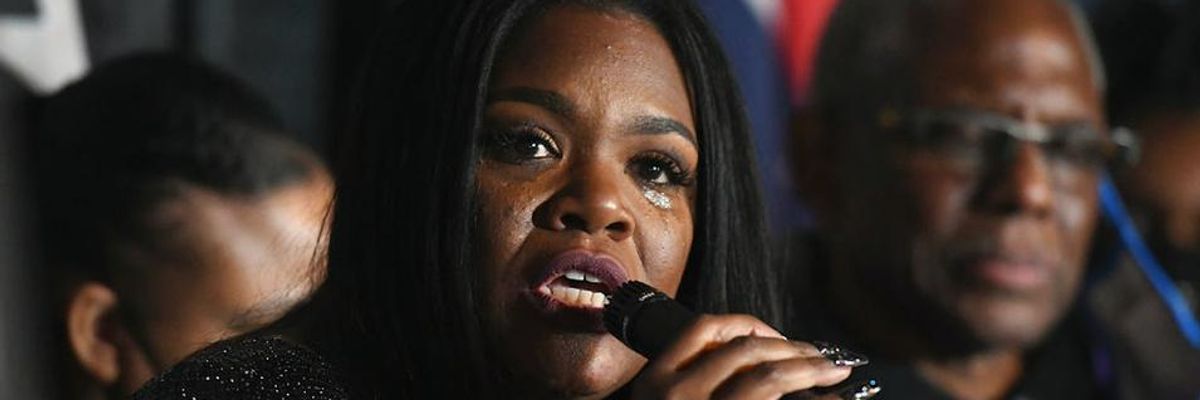
Rep. Cori Bush (D-Mo.) introduced an amendment to H.R. 1 that would have granted voting rights to incarcerated Americans. (Photo: Michael B. Thomas/Getty Images)
Progressive lawmakers vowed on Tuesday to keep fighting after 119 House Democrats joined all of their Republican colleagues in defeating an amendment to an election reform bill that would have restored voting rights to incarcerated Americans.
"We will never end mass incarceration until we start treating all of our nation's people like human beings, and the right to vote is a key component of recognizing that humanity."
--Udi Ofer, ACLU
The House voted 328-97 against the amendment by Rep. Cori Bush (D-Mo.) to H.R. 1, the For the People Act--a sweeping reform bill that if passed would expand voting rights, limit partisan gerrymandering, take on the power of so-called "dark money," establish new ethics rules for federal elected officials, and more.
The For the People Act enjoys broad bipartisan public support, as well as backing from most Democratic lawmakers and leaders including President Joe Biden.
The same cannot be said of the Bush amendment. While Biden said during the 2020 presidential campaign that he supports restoring voting rights to former felons, Sen. Bernie Sanders (I-Vt.) was alone among last year's Democratic presidential candidates in supporting voting rights for incarcerated people. He hails from one of only two states--Vermont and Maine--plus the District of Columbia, where prisoners can vote.
Bush noted the historic nature of her amendment. "For the first time ever, the House took a vote on whether or not to end the cruelty of denying incarcerated people their right to vote," she tweeted after the measure's defeat. "Our amendment didn't pass, but 97 Democrats voted with us. We will not stop fighting until we dismantle white supremacy in all of its forms."
Rep. Rashida Tlaib (D-Mich.), one of the 97 lawmakers who voted for the amendment, noted the historic, racist roots of felon disenfranchisement.
Civil and voting rights advocates voiced their support for the Bush amendment. Udi Ofer, director of the ACLU's Justice Division, noted the impact of felon disenfranchisement laws on Black Americans.
"More than 15% of the Black population Alabama, Florida, Kentucky, Mississippi, Tennessee, Virginia, and Wyoming were legally barred from voting under these laws in 2020," he tweeted. "This is what we mean when we say that mass incarceration is the New Jim Crow. We will never end mass incarceration until we start treating all of our nation's people like human beings, and the right to vote is a key component of recognizing that humanity."
"No American should be denied the right to vote," added Ofer. "Doing so is equivalent of denying their humanity. Cori Bush heroically tried to add this provision to H.R. 1. Her own party failed her. We still have so much to teach Democrats."
This country and this world are at a monumental crossroads. US voters have an opportunity to beat back the forces of fascism and confront the billionaires who are rigging the economy, our media system, and our democracy, making it increasingly impossible for ordinary people to get by. We’re not just talking about the election. We’re talking about what must be done once these fascist elements are vanquished from power. We need a bolder set of solutions than what either major party has so far been willing to offer and a working-class movement ready to fight like hell for it. Trump didn't emerge from nowhere. The conditions that fueled MAGA authoritarianism were created by decades of radical neoliberal economic policies and a corrupt political system dominated by corporate interests. They slashed taxes on the super-rich, promising that the benefits would trickle down. They said giveaways to the corporate titans would make life more affordable for the rest of us. It was all bullshit. And when a bitter, betrayed populace searches for someone to blame, right-wing demagogues have little trouble finding scapegoats. People know when they're being lied to, but you won't hear any of this from the corporate media. Only independent journalism—powered and funded by people who believe in building a better world—can deliver truly trustworthy daily news. If you share our vision, please contribute whatever you can to sustain our work. |
Progressive lawmakers vowed on Tuesday to keep fighting after 119 House Democrats joined all of their Republican colleagues in defeating an amendment to an election reform bill that would have restored voting rights to incarcerated Americans.
"We will never end mass incarceration until we start treating all of our nation's people like human beings, and the right to vote is a key component of recognizing that humanity."
--Udi Ofer, ACLU
The House voted 328-97 against the amendment by Rep. Cori Bush (D-Mo.) to H.R. 1, the For the People Act--a sweeping reform bill that if passed would expand voting rights, limit partisan gerrymandering, take on the power of so-called "dark money," establish new ethics rules for federal elected officials, and more.
The For the People Act enjoys broad bipartisan public support, as well as backing from most Democratic lawmakers and leaders including President Joe Biden.
The same cannot be said of the Bush amendment. While Biden said during the 2020 presidential campaign that he supports restoring voting rights to former felons, Sen. Bernie Sanders (I-Vt.) was alone among last year's Democratic presidential candidates in supporting voting rights for incarcerated people. He hails from one of only two states--Vermont and Maine--plus the District of Columbia, where prisoners can vote.
Bush noted the historic nature of her amendment. "For the first time ever, the House took a vote on whether or not to end the cruelty of denying incarcerated people their right to vote," she tweeted after the measure's defeat. "Our amendment didn't pass, but 97 Democrats voted with us. We will not stop fighting until we dismantle white supremacy in all of its forms."
Rep. Rashida Tlaib (D-Mich.), one of the 97 lawmakers who voted for the amendment, noted the historic, racist roots of felon disenfranchisement.
Civil and voting rights advocates voiced their support for the Bush amendment. Udi Ofer, director of the ACLU's Justice Division, noted the impact of felon disenfranchisement laws on Black Americans.
"More than 15% of the Black population Alabama, Florida, Kentucky, Mississippi, Tennessee, Virginia, and Wyoming were legally barred from voting under these laws in 2020," he tweeted. "This is what we mean when we say that mass incarceration is the New Jim Crow. We will never end mass incarceration until we start treating all of our nation's people like human beings, and the right to vote is a key component of recognizing that humanity."
"No American should be denied the right to vote," added Ofer. "Doing so is equivalent of denying their humanity. Cori Bush heroically tried to add this provision to H.R. 1. Her own party failed her. We still have so much to teach Democrats."